Womens Health Rehabilitation Products Market Analysis & Forecast: 2026-2033

Women's Health Rehabilitation Products Market Size and Forecast – 2026 – 2033
The Global Women’s Health Rehabilitation Products Market size is estimated to be valued at USD 1.8 billion in 2026 and is expected to reach USD 3.5 billion by 2033, exhibiting a compound annual growth rate (CAGR) of 9.7% from 2026 to 2033.
Global Womens Health Rehabilitation Products Market Overview
The Women’s Health Rehabilitation Products market includes a wide range of products designed to support recovery, mobility, and wellness in women after surgery, childbirth, or injury. Key product categories include pelvic floor trainers, breast pumps, post-surgical garments, orthotic supports, physiotherapy equipment, and wearable rehabilitation devices. These products help improve muscle strength, pain management, posture correction, and postpartum recovery. Increasing awareness of women’s health, rising cases of musculoskeletal disorders, and advancements in digital health devices are driving innovation. Manufacturers are focusing on smart, portable, and user-friendly rehabilitation solutions that offer personalized care and remote monitoring capabilities for better recovery outcomes.
Key Takeaways
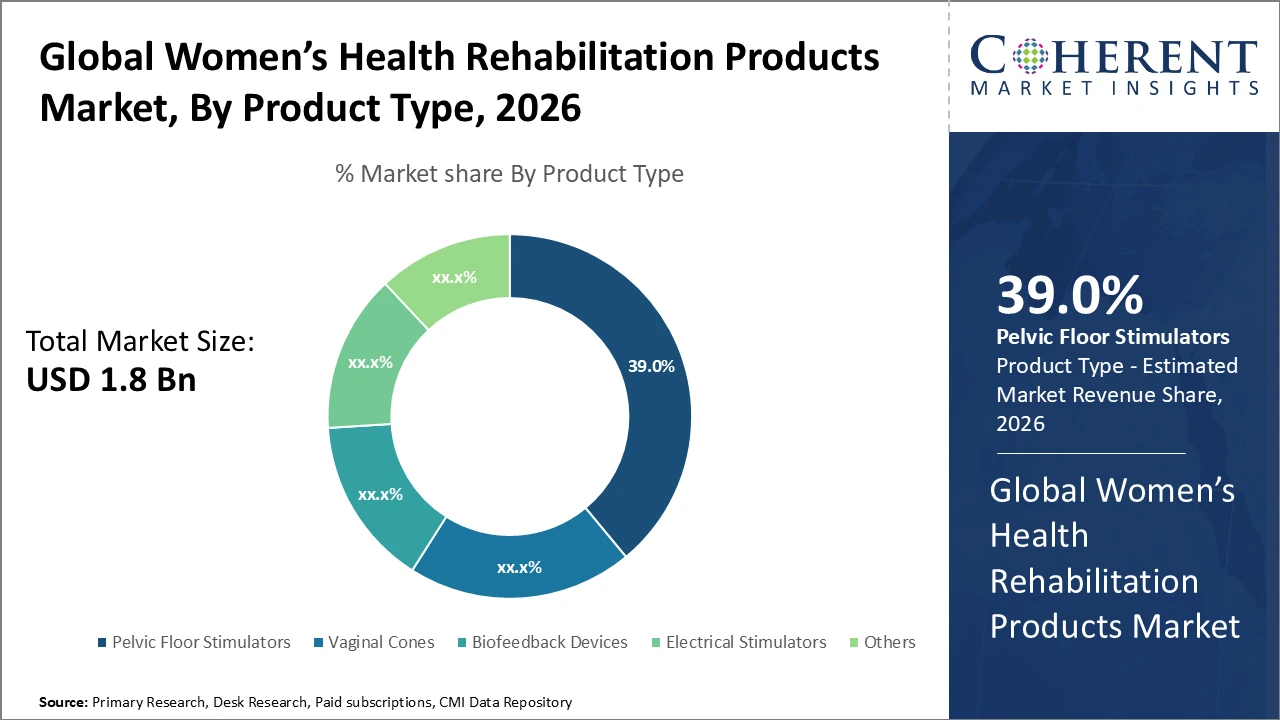
Pelvic floor stimulators hold the largest share at approximately 39%, driven by strong clinical effectiveness, high patient adoption, and increasing preference for targeted rehabilitation solutions. Meanwhile, vaginal cones are the fastest-growing subsegment due to rising demand for low-cost, non-invasive recovery options.
The urinary incontinence application segment dominates overall usage, supported by growing prevalence rates, greater awareness, and expanding women’s health initiatives globally.
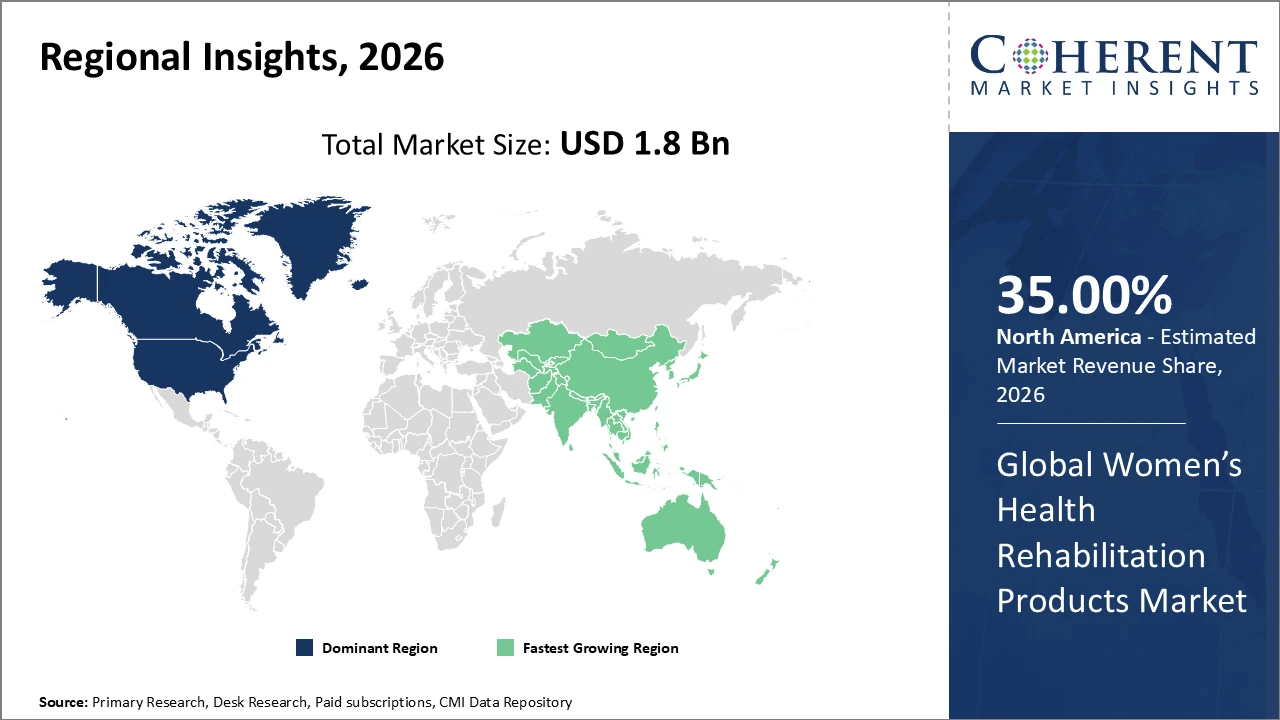
North America leads the market with over 35% share in 2026, backed by advanced healthcare infrastructure, strong reimbursement systems, and high adoption of rehabilitation technologies.
Asia Pacific is the fastest-growing region, with a CAGR exceeding 11%, driven by demographic expansion, improving healthcare access, and rapid adoption of innovative medical devices.
Europe shows steady growth, supported by strong regulatory frameworks and active clinical research collaborations that encourage product innovation and adoption.
Women's Health Rehabilitation Products Market Segmentation Analysis
To learn more about this report, Request Free Sample
Women's Health Rehabilitation Products Market Insights, By Product Type
Pelvic floor stimulators dominate the market with a 39% share due to strong clinical effectiveness, widespread physician recommendation, and proven patient outcomes that support consistent adoption in clinical rehabilitation settings. The fastest-growing subsegment is vaginal cones, driven by rising demand for affordable, non-invasive, and home-based therapy solutions that enable discreet pelvic floor strengthening without medical supervision. Biofeedback devices are also gaining traction due to improved patient engagement and compliance features. Electrical stimulators continue steady growth because of their versatility in treating multiple pelvic disorders, while the others segment includes emerging wearable rehabilitation technologies serving niche therapeutic applications.
Women's Health Rehabilitation Products Market Insights, By Application
Urinary incontinence is the dominant application segment in the women’s health rehabilitation products market due to its high global prevalence and consistent demand for effective management solutions. Growth in this segment is supported by rising diagnosis rates, increased awareness, and improved insurance coverage in developed regions. The fastest-growing application is postpartum rehabilitation, driven by growing focus on maternal health, early intervention programs, and expanding adoption in both hospital and homecare settings. Pelvic organ prolapse applications are also gaining traction due to advancements in supportive and post-surgical therapies. Sexual dysfunction remains a smaller but emerging segment, supported by increasing awareness and reduced stigma.
Women's Health Rehabilitation Products Market Insights, By End User
Hospitals and clinics dominate the market share due to extensive use of women’s health rehabilitation products during clinical treatment and recovery phases, supported by professional medical supervision and established healthcare infrastructure. However, homecare settings are the fastest-growing end-user segment, driven by increasing adoption of telehealth services, availability of portable rehabilitation devices, and growing preference for privacy, convenience, and self-managed recovery. Ambulatory surgical centers are also witnessing rising adoption, supported by advancements in minimally invasive procedures that require effective post-operative rehabilitation. The others segment includes specialty rehabilitation centers and wellness clinics, which are gradually contributing to overall market expansion and service diversification.
Women's Health Rehabilitation Products Market Trends
The Women’s Health Rehabilitation Products market is increasingly shaped by digitalization, with IoT- and AI-enabled devices improving patient engagement through real-time feedback and personalized therapy solutions.
Adoption of app-driven pelvic floor stimulators in the U.S. rose by 38% in 2026, reflecting a clear shift toward technology-integrated and data-driven rehabilitation care.
Geographic revenue diversification is accelerating, with Asia Pacific emerging as a key growth region due to improving healthcare infrastructure and rising awareness of women’s health rehabilitation solutions.
Emerging economies are rapidly adopting advanced rehabilitation products as access to healthcare services expands and affordability improves.
Sustainability is becoming an important trend, with manufacturers focusing on bio-based materials and eco-friendly designs to reduce environmental impact.
Overall, the market is evolving toward more personalized, accessible, and environmentally conscious healthcare solutions.
Women's Health Rehabilitation Products Market Insights, By Geography
To learn more about this report, Request Free Sample
North America Women's Health Rehabilitation Products Market Analysis and Trends
North America dominates the Women’s Health Rehabilitation Products market, supported by advanced healthcare systems, high healthcare expenditure, and favorable reimbursement policies, accounting for approximately 35% of global market share. The United States leads regional growth due to widespread adoption of innovative pelvic floor stimulation devices, strong insurance coverage, and a growing aging population requiring rehabilitation support. Increasing awareness of women’s health conditions and early diagnosis also contribute to product demand. Additionally, leading medical device companies have well-established distribution and service networks across the region, ensuring strong product availability, continuous innovation, and sustained revenue growth in both clinical and homecare settings.
Asia Pacific Women's Health Rehabilitation Products Market Analysis and Trends
The Asia Pacific region is witnessing the fastest growth in the Women’s Health Rehabilitation Products market, with a CAGR exceeding 11%. This rapid expansion is driven by increasing investments in healthcare infrastructure, a large and growing female population, and rising prevalence of reproductive and pelvic health conditions. Government initiatives focused on women’s wellness and preventive healthcare are further supporting market adoption. Countries such as China and India are leading demand, supported by improving healthcare access and affordability. Additionally, domestic manufacturers are developing cost-effective and innovative rehabilitation devices tailored to local needs, significantly improving market penetration and accessibility across the region.
Women's Health Rehabilitation Products Market Outlook for Key Countries
USA Women's Health Rehabilitation Products Market Analysis and Trends
The USA represents the largest market for women’s health rehabilitation products globally, supported by advanced medical device research and development, strong insurance reimbursement frameworks, and growing clinical awareness of pelvic floor disorders. In 2025, the U.S. market generated more than USD 650 million in revenue, driven by high adoption of technologically advanced solutions such as biofeedback systems and neuromuscular stimulation devices. Leading companies like Boston Scientific and Medtronic have strengthened their positions through early FDA approvals and strategic clinical collaborations. These factors collectively support continuous innovation, high product penetration, and sustained growth across both hospital and homecare settings.
Germany Women's Health Rehabilitation Products Market Analysis and Trends
Germany serves as a key strategic hub in the European Women’s Health Rehabilitation Products market, supported by strong healthcare regulations and favorable reimbursement frameworks that encourage adoption of advanced rehabilitation devices. In 2026, healthcare centers in Germany recorded a 16% rise in the use of vaginal cone therapy, reflecting growing patient preference for non-invasive and home-based treatment options. Collaboration between local manufacturers and global medical device companies has improved product accessibility and innovation. Additionally, government-led women’s health initiatives are expanding awareness and treatment coverage, positioning Germany as an important driver of regional market growth and technological advancement.
Analyst Opinion
The rising prevalence of pelvic floor disorders and urinary incontinence is a key demand driver, with over 30% of women aged 40+ in North America receiving rehabilitation treatment in 2025, marking a 12% increase from 2024 and expanding the patient base.
Technological innovations in non-invasive rehabilitation devices, including biofeedback and neuromuscular electrical stimulation systems, have improved treatment effectiveness and compliance, with Europe reporting a 15% increase in adoption in 2026.
Supply chain resilience and manufacturing expansion are strengthening market supply, with Asia Pacific production output rising by 18% in 2026 to meet growing global demand from emerging markets.
Pricing strategies aligned with value-based healthcare models are improving accessibility, with Latin America experiencing a 10% price reduction in 2025 for women’s rehabilitation devices, supporting higher sales volumes.
Market Scope
| Report Coverage | Details | ||
|---|---|---|---|
| Base Year: | 2025 | Market Size in 2026: | USD 1.8 billion |
| Historical Data for: | 2020 To 2024 | Forecast Period: | 2026 To 2033 |
| Forecast Period 2026 to 2033 CAGR: | 9.7% | 2033 Value Projection: | USD 3.5 billion |
| Geographies covered: |
|
||
| Segments covered: |
|
||
| Companies covered: | ConvaTech Group plc, Hologic, Inc., Medtronic plc, RenovaCare Inc., LoProstiX Solutions, DJO Global Inc., Coloplast A/S, Boston Scientific Corporation, BTL Industries Ltd., Sani Medical | ||
| Growth Drivers: |
|
||
Uncover macros and micros vetted on 75+ parameters: Get instant access to report
Women's Health Rehabilitation Products Market Growth Factors
The aging global female population is a major growth driver, as women above 60 years increasingly require rehabilitation products for pelvic floor disorders and related conditions. In 2025, Asia Pacific recorded a 22% rise in elderly female users adopting rehabilitation devices, supporting overall market expansion. Government initiatives also play a crucial role, with Europe introducing reimbursement schemes in countries like Germany and France in 2026, improving product accessibility. Rising awareness of postnatal care has expanded adoption in North America, with postpartum rehabilitation device sales increasing by 17% year over year in 2026. Additionally, wearable and connected technologies are driving innovation, with adoption in developed markets rising by 30% in 2025.
Women's Health Rehabilitation Products Market Development
In January 2026, Shri Bone & Joint Clinic launched Shri Physio & Rehab (SPR), an expanded rehabilitation and wellness facility in Chennai, marking a key milestone in its healthcare services.
Key Players
Leading Companies of the Market
Hologic Inc.
ConvaTech Group plc
BTL Industries Ltd.,
DJO Global Inc.
LoProstiX Solutions
RenovaCare Inc.
Sani Medical
Coloplast A/S
Medtronic plc
Boston Scientific Corporation
Several leading companies in the Women’s Health Rehabilitation Products market have strengthened their competitive positioning through mergers, acquisitions, and strategic partnerships. For instance, Boston Scientific’s acquisition of BTL’s pelvic health business significantly expanded its product portfolio and market reach, contributing to a 20% increase in its North American revenues in 2025. This move enhanced its dominance in pelvic health solutions and improved access to advanced rehabilitation technologies. Similarly, ConvaTec has formed strategic partnerships with telehealth platforms to support remote patient care and rehabilitation, leading to a 25% rise in homecare application usage in 2026 as demand for digital health solutions continues to grow.
Women's Health Rehabilitation Products Market Future Outlook
The Women’s Health Rehabilitation Products market is expected to witness strong growth in the coming years, driven by rising awareness of pelvic health disorders, increasing aging female population, and expanding postpartum care needs. Technological advancements such as AI-enabled pelvic floor trainers, wearable rehabilitation devices, and telehealth-integrated solutions will enhance treatment accessibility and patient engagement. Growing adoption of homecare-based rehabilitation and digital health platforms will further accelerate market expansion. Emerging economies in Asia Pacific will play a key role due to improving healthcare infrastructure and affordability. Additionally, sustainability and personalization trends will shape product innovation, creating a more patient-centric and connected care ecosystem globally.
Women's Health Rehabilitation Products Market Historical Analysis
The Women’s Health Rehabilitation Products market has shown steady historical growth driven by increasing awareness of pelvic floor disorders, postpartum recovery needs, and aging female populations. In earlier years, treatment options were largely limited to clinical settings, but the market evolved with the introduction of portable and non-invasive devices such as pelvic floor stimulators and vaginal cones. Between 2018 and 2023, rising healthcare spending and improved diagnosis rates significantly expanded product adoption, especially in North America and Europe. Technological advancements and the emergence of digital health solutions further accelerated market development, shifting care from hospital-based treatment toward homecare and personalized rehabilitation solutions globally.
Sources
Primary Research Interviews:
Gynecologists, urogynecologists, and physiotherapists specializing in pelvic floor disorders, postpartum rehabilitation, and women’s musculoskeletal recovery
Hospital procurement managers, rehabilitation clinic operators, and homecare service providers involved in adoption of pelvic floor stimulators, biofeedback devices, and post-surgical recovery products
Medical device company executives, R&D heads, and product engineers working on women’s health rehabilitation technologies such as wearable stimulators, neuromuscular devices, and digital therapy platforms
Magazines:
Medical Device Network – Updates on rehabilitation devices and women’s health innovations
Fierce Medtech – Industry news on medical devices, digital therapeutics, and wearable rehab technologies
MedTech Dive – Market trends, regulatory updates, and product launches in women’s health
HealthTech Magazine – Digital health integration and connected rehabilitation solutions
Journals:
Journal of Women’s Health Physical Therapy – Research on pelvic floor rehabilitation and therapeutic interventions
International Urogynecology Journal – Clinical studies on pelvic floor disorders and treatment technologies
Journal of Medical Devices – Innovation in wearable and neuromuscular rehabilitation technologies
Newspapers:
The Wall Street Journal – Healthcare device industry investments and women’s health market trends
Financial Times – Medical technology growth and global healthcare innovation
Reuters Health – Regulatory updates, clinical approvals, and industry developments
Bloomberg Healthcare – Market analysis, company performance, and healthcare technology trends
Associations:
American Urogynecologic Society (AUGS) – Clinical guidelines and research on pelvic floor disorders
International Continence Society (ICS) – Global standards for incontinence and pelvic health treatment
World Confederation for Physical Therapy (WCPT) – Rehabilitation therapy standards and practices
European Association of Urology (EAU) – Clinical research and treatment guidelines for women’s urological health
Share
Share
Komal Dighe is a Management Consultant with over 8 years of experience in market research and consulting. She excels in managing and delivering high-quality insights and solutions in Health-tech Consulting reports. Her expertise encompasses conducting both primary and secondary research, effectively addressing client requirements, and excelling in market estimation and forecast. Her comprehensive approach ensures that clients receive thorough and accurate analyses, enabling them to make informed decisions and capitalize on market opportunities.

Credibility and Certifications

860519526


9001:2015

27001:2022


Need a Custom Report?
We can customize every report - free of charge - including purchasing stand-alone sections or country-level reports
Customize NowJoining thousands of companies around the world committed to making the Excellent Business Solutions.
View All Our Clients