

Global Aircraft Interior Market Size and Forecast – 2026-2033
The Global Aircraft Interior Market is estimated to be valued at USD 36.40 billion in 2026 and is expected to reach USD 63.94 billion by 2033, exhibiting a compound annual growth rate (CAGR) of 8.4% from 2026 to 2033.
Key Takeaways of the Global Aircraft Interior Market:
- The seating segment is expected to lead the market holding an estimated share of 35.1% in 2026.
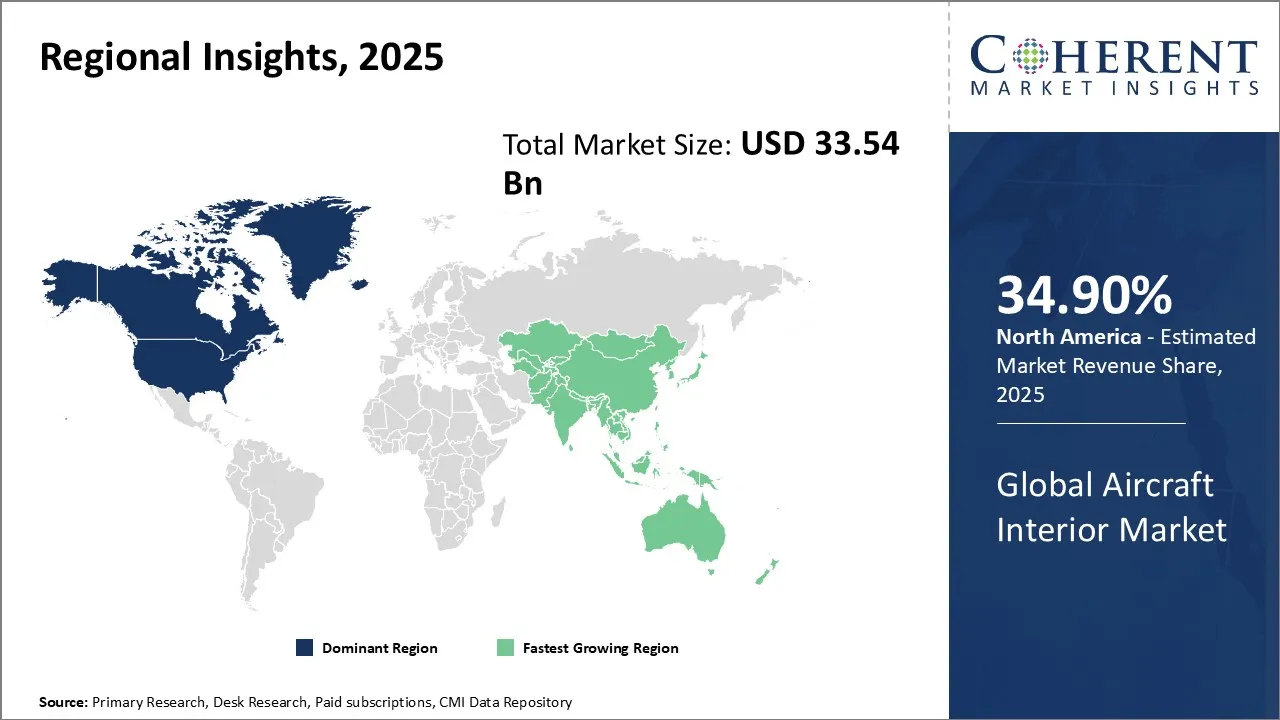
- North America is estimated to lead the market with a share of 34. 9% in 2026.
- Asia Pacific, holding a share of 21. 4% in 2026, is projected to be the fastest growing region.
Market Overview:
The market trend for the aircraft interior market is characterized by a focus on lightweight materials, advanced technologies, and customization. Airlines are investing in cabin upgrades to differentiate themselves and attract customers, leading to the adoption of premium seating, in-flight entertainment systems, and personalized services. Additionally, the incorporation of sustainable materials and eco-friendly designs is gaining traction as the industry aims to reduce its environmental impact and meet the changing preferences of environmentally conscious passengers.
Current Events and their Impact:
Current Events | Description and its impact |
Technological Innovation in Aircraft Interiors |
|
Regulatory and Certification Changes |
|
Segmental Analysis
- Current Industry Events of 2026
- Market Size Estimation
- Regional Breakdown
- Competitive Landscape
- Customer Intelligence
- Segmental Analysis
- Pricing Analysis
- Key Market Drivers, Challenges & Future Trends
- Customized Insights Section
Global Aircraft Interior Market Insights, by Component – Advancements in Seating Technology Drive the Growth of the Aircraft Interior Market
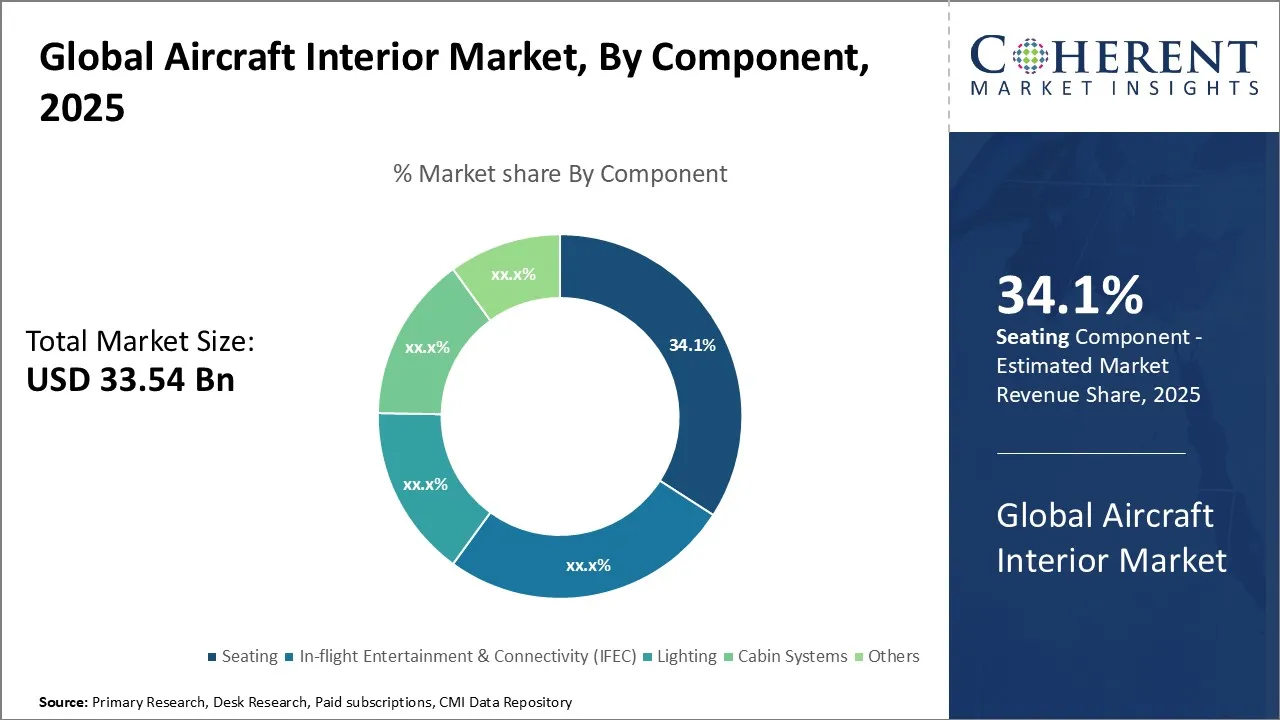
In terms of component, the seating segment is expected to contribute the highest share of 35.1% in the market in 2026. Manufacturers are investing in research and development to create seating designs that offer enhanced comfort, functionality, and aesthetics. With the aim of reducing aircraft weight and improving fuel efficiency, manufacturers are incorporating advanced materials such as carbon fiber composites and titanium in seat construction.
Moreover, the trend towards customization and personalization of aircraft interiors has significantly impacted the seating segment. Airlines are collaborating with seating manufacturers to develop bespoke seating solutions that align with their brand identity and passenger preferences.
Role of Artificial Intelligence (AI) in the Market:
Artificial Intelligence (AI) is playing an increasingly transformative role in the aircraft interior market, particularly in enhancing passenger experience and optimizing cabin design. Airlines and OEMs are leveraging AI-driven data analytics to study passenger behavior, preferences, and feedback, enabling more informed decisions around seating layouts, lighting, and in-flight services. AI is also being used to personalize the in-flight experience through smart cabin systems that adjust lighting, temperature, or entertainment options based on individual preferences. Additionally, predictive maintenance powered by AI ensures that interior components like seats, overhead bins, and IFEC systems are monitored for wear and performance, improving safety and reducing downtime.
A prominent example of AI application is Panasonic Avionics’ “Wellness Suite,” which integrates AI to monitor and enhance passenger health and comfort in real time. The system collects biometric data (e.g., heart rate, movement) through in-seat sensors and adjusts cabin elements like lighting and airflow to reduce fatigue and jet lag.
Regional Insights:
North America Aircraft Interior Market Analysis and Trends
North America, holding a share of 34.9% in 2026, the dominance in the global aircraft interior market can be attributed to several factors. The region boasts a robust aerospace industry, with the presence of major aircraft manufacturers and a well-established supply chain. The high demand for air travel, coupled with the need for fleet modernization and expansion, has driven the growth of the aircraft interior market in North America. The region's stringent safety regulations and emphasis on passenger comfort have also contributed to the adoption of advanced interior solutions.
Moreover, North America's technological advancements and focus on innovation have led to the development of cutting-edge interior designs and materials. Notable companies such as Boeing, Collins Aerospace, and Safran have significantly contributed to the region's market leadership through their extensive product portfolios and strong market presence.
Asia Pacific Aircraft Interior Market Analysis and Trends
The Asia Pacific region, holding a share of 21.4% in 2026, is expected to exhibit the fastest growth in the global aircraft interior market. The rapid expansion of the aviation industry in countries like China, India, and Southeast Asian nations has fueled the demand for aircraft interiors. The region's growing middle class, increasing disposable incomes, and rising tourism have led to a surge in air travel, necessitating the expansion of aircraft fleets. Governments in the Asia Pacific region have implemented favorable policies and investments to support the aviation sector's growth, attracting foreign investments and fostering domestic manufacturing capabilities. Additionally, the region's focus on enhancing passenger experience and adopting sustainable practices has driven the demand for eco-friendly and lightweight interior solutions. Companies such as AVIC (Aviation Industry Corporation of China), JAMCO Corporation, and ST Engineering have played significant roles in driving innovation and market growth in the Asia Pacific region.
Global Aircraft Interior Market Outlook for Key Countries:
U.S. Aircraft Interior Market Analysis and Trends
The U.S. aircraft interiors market is characterized by its mature and technologically advanced ecosystem. The country is home to major aircraft manufacturers, such as Boeing, and a robust network of suppliers and service providers. The U.S. aircraft interior market focuses on innovation, with a strong emphasis on developing lightweight materials, advanced seating systems, and enhanced connectivity solutions. The demand for premium cabin experiences and the retrofitting of existing aircraft to improve efficiency and passenger comfort are key drivers in the U.S. market. Leading interior suppliers, such as Collins Aerospace and Panasonic Avionics Corporation, have a strong presence in the country, offering a wide range of interior products and services.
China Aircraft Interior Market Analysis and Trends
China aircraft interior market has experienced significant growth in recent years, driven by the country's rapid economic development and expanding aviation industry. The Chinese government's initiatives to promote domestic aircraft manufacturing and upgrade existing fleets have created substantial opportunities for interior suppliers. Chinese companies, such as AVIC and HAECO, have emerged as key players in the market, offering comprehensive interior solutions and collaborating with international partners to enhance their capabilities.
Germany Aircraft Interior Market Analysis and Trends
Germany continues to be a leading player in the Europe aircraft interior market, supported by its strong technological expertise and renowned automotive industry. The country's focus on precision engineering, quality craftsmanship, and innovative design has positioned it as a hub for aircraft interior manufacturing. German companies, such as Diehl Aviation and Recaro Aircraft Seating, are known for their high-end seating solutions and cabin management systems. The market in Germany is driven by the demand for premium interiors, customization options, and energy-efficient solutions. Collaborations between German interior suppliers and major aircraft manufacturers have further strengthened the country's position in the global market.
India Aircraft Interior Market Analysis and Trends
India aircraft interior market is experiencing rapid growth, fueled by the country's expanding aviation sector and increasing air passenger traffic. The Indian government's initiatives, such as the Regional Connectivity Scheme (RCS), have boosted the demand for regional aircraft and interior modifications. The country's cost-effective manufacturing capabilities and skilled workforce have attracted global interior suppliers to establish production facilities in India. Domestic companies, such as Tata Advanced Systems and Cyient, have emerged as key players, providing interior components and engineering services to international clients. The market in India is characterized by a focus on cost optimization, customization, and the adoption of advanced technologies to enhance passenger comfort and operational efficiency.
Market Players, Key Players, and Competitive Intelligence:
Key Developments:
- In November 2024, Singapore Airlines (SIA), the flag carrier of Singapore, invested USD 852.1 million (SGD 1,100 million) in a multi-year program to install its all-new long-haul cabin products across 41 Airbus A350-900 long-haul and ultra-long-range (ULR) aircraft.
- In December 2022, aviation interior specialists, AeroVisto Group of Switzerland and Germany’s Vartan Aviation Group, partnered on a new offering, “360°CabinService,” providing a full complement of à la carte interior work for any or all portions of cabin refurbishment projects on business aircraft.
- In November 2022, J&C Aero, an international aviation design and production company, and a Libyan startup airline, Crown Airlines, signed an agreement for aircraft refurbishing and branding support during the delivery of the carrier’s first two Airbus A320s.
- In October 2022, Singapore Airlines (SIA) revealed revamped seats in its First, Business and Economy classes
Top Strategies Followed by Global Aircraft Interior Market Players
- Established players are investing heavily in R&D to create cutting-edge solutions that enhance passenger comfort, safety, and overall travel experience.
- Safran has made significant investments in developing next-generation Interspace aircraft seating technology, which provides adjustable privacy wings to improve passenger comfort in economy and premium economy classes.
- Mid-level players are striving to provide quality products at competitive prices, catering to the needs of airlines and customers looking for budget-friendly options.
- Geven supplies seating solutions for narrow-body aircraft like the Airbus A320 family and Boeing 737s, offering durable and cost-effective seats with optional IFE systems.
- Small-scale players are specializing in specific segments of the market, such as seating, lighting, or in-flight entertainment, and are focusing on delivering differentiated solutions to capture market share.
- Unum focuses exclusively on premium business-class seating, offering modular, lightweight, and customizable mini-suites designed for long-haul aircraft.
Market Report Scope
Aircraft Interior Market Report Coverage
| Report Coverage | Details | ||
|---|---|---|---|
| Base Year: | 2025 | Market Size in 2026: | USD 36.40 Bn |
| Historical Data for: | 2020 To 2024 | Forecast Period: | 2026 To 2033 |
| Forecast Period 2026 to 2033 CAGR: | 8.4% | 2033 Value Projection: | USD 63.94 Bn |
| Geographies covered: |
| ||
| Segments covered: |
| ||
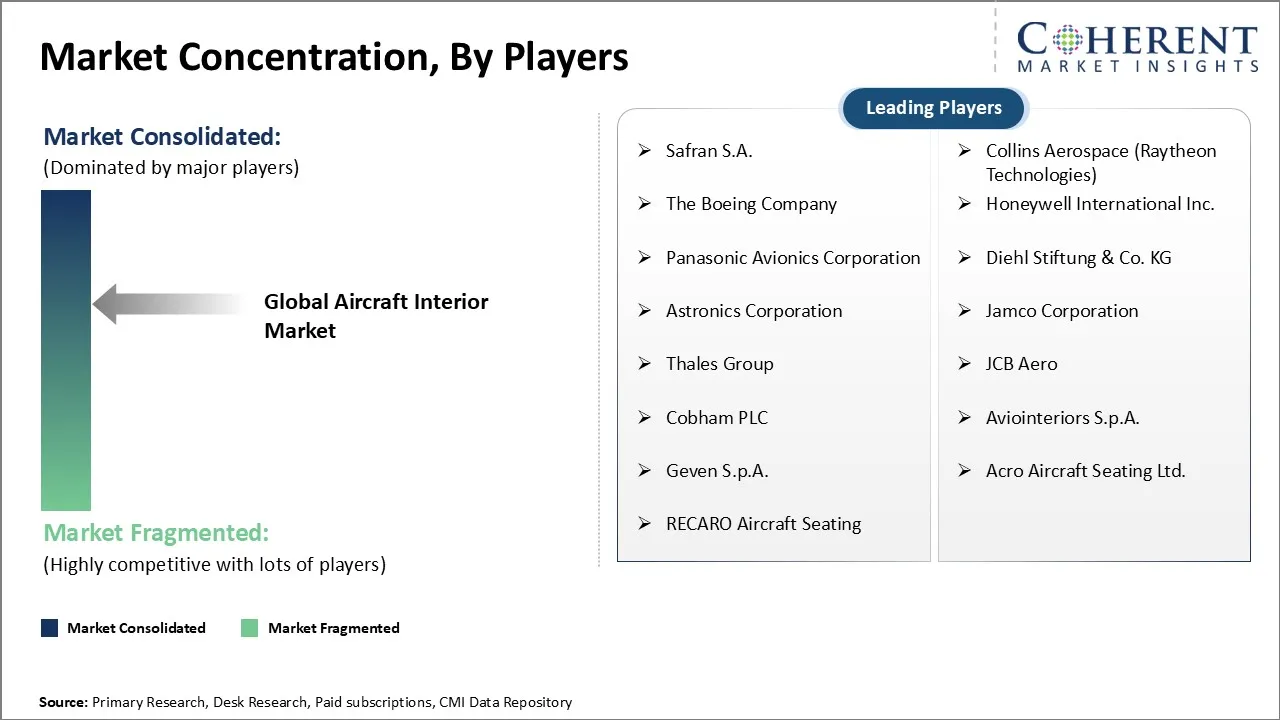
| Companies covered: | Safran S.A., Collins Aerospace (Raytheon Technologies), The Boeing Company, Honeywell International Inc., Panasonic Avionics Corporation, Diehl Stiftung & Co. KG, Astronics Corporation, Jamco Corporation, Thales Group, JCB Aero, Cobham PLC, Aviointeriors S.p.A., Geven S.p.A., Acro Aircraft Seating Ltd., and RECARO Aircraft Seating | ||
| Growth Drivers: |
| ||
| Restraints & Challenges: |
| ||
Market Dynamics
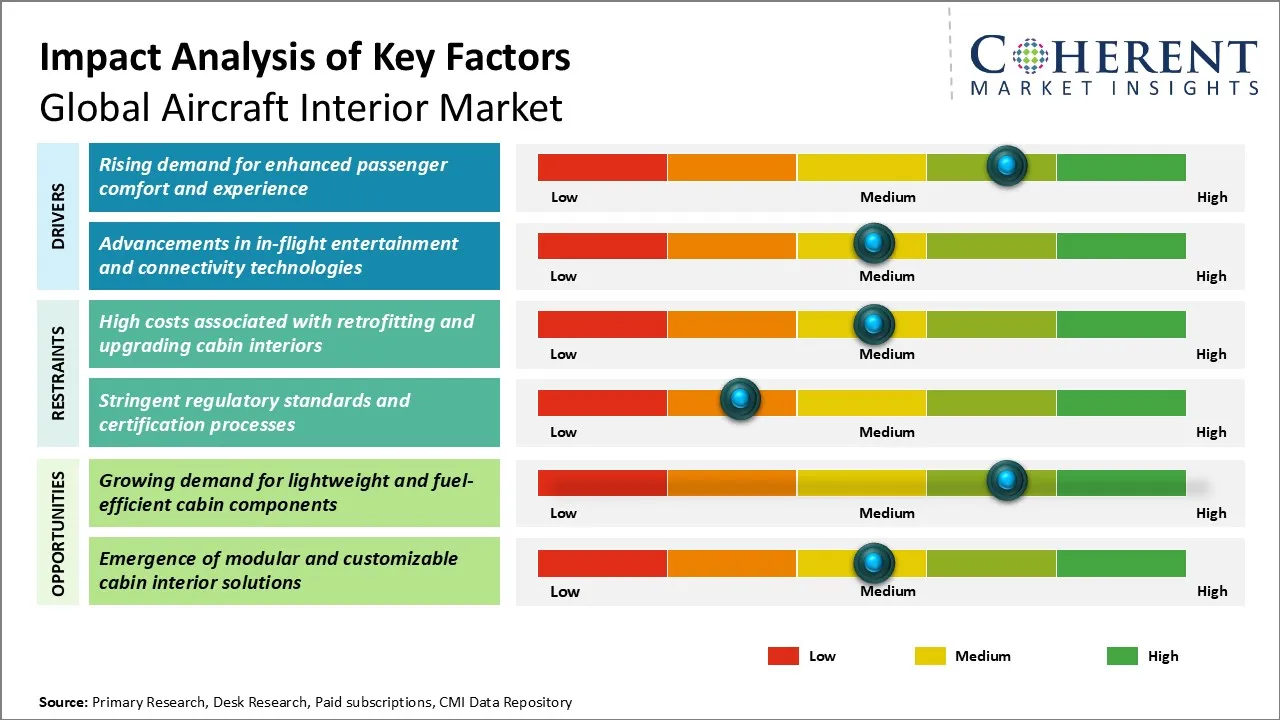
Global Aircraft Interior Market Driver - Rising demand for enhanced passenger comfort and experience
Airlines are increasingly recognizing the importance of providing a superior in-flight experience to attract and retain customers in a highly competitive industry. To cater to the evolving preferences of passengers, airlines are investing in advanced aircraft interiors that offer improved comfort, convenience, and entertainment options. This includes features such as ergonomic seating, premium materials, mood lighting, and state-of-the-art in-flight entertainment systems.
Additionally, the growing trend of customization and personalization in aircraft interiors allows airlines to differentiate themselves and create unique brand experiences. Emirates has introduced a premium economy cabin on its A380 and Boeing 777 aircraft in response to customer demand for a more comfortable yet affordable experience compared to business class.
Global Aircraft Interior Market Opportunity: Growing Demand for Lightweight and Fuel-Efficient Cabin Components
As the aviation industry faces increasing pressure to reduce its carbon footprint and improve fuel efficiency, there is a growing focus on developing and implementing lightweight cabin interior solutions. Lightweight materials, such as composites and advanced alloys, offer the potential to significantly reduce the overall weight of the aircraft, leading to improved fuel efficiency and reduced operating costs for airlines.
Furthermore, the development of innovative aircraft cabin interior designs and layouts that optimize space utilization and reduce weight can further contribute to fuel efficiency. Safran Seats, a major player in the aircraft interior market, developed the Z200 economy-class seat, which is up to 30% lighter than previous generations.
Analyst Opinion (Expert Opinion):
- Geopolitical conflicts—such as the Russia-Ukraine war and rising tensions in the Asia Pacific region—have disrupted global supply chains for raw materials and electronic components essential to aircraft interiors. Restrictions on imports and exports, coupled with increased scrutiny on cross-border transactions, have led to delays in production timelines and higher procurement costs.
- In response to rising uncertainty and trade restrictions, airlines and manufacturers are pursuing localization strategies to reduce dependence on volatile international supply chains. While this enhances supply chain resilience, it also raises initial investment costs and may reduce access to cutting-edge technologies concentrated in specific regions (e.g., Western Europe or the U.S.).
- Airlines operating in or near conflict zones are delaying fleet upgrades or halting new interior investments due to declining passenger traffic and economic instability. Conversely, markets in North America, Europe, and parts of Asia-Pacific are benefiting as OEMs and MRO providers redirect focus and capital to more stable, high-growth regions.
Speak to the analyst
Want personalized insights?
Take the findings above to one of our principal consultants, or have the report rebuilt around the segments, geographies and competitors you actually track.
Market Segmentation
- Component Insights (Revenue, USD Bn, 2021 - 2033)
- Seating
- In-flight Entertainment & Connectivity (IFEC)
- Lighting
- Cabin Systems
- Others
- Regional Insights (Revenue, USD Bn, 2021 - 2033)
- North America
- U.S.
- Canada
- Latin America
- Brazil
- Argentina
- Mexico
- Rest of Latin America
- Europe
- Germany
- U.K.
- Spain
- France
- Italy
- Russia
- Rest of Europe
- Asia Pacific
- China
- India
- Japan
- Australia
- South Korea
- ASEAN
- Rest of Asia Pacific
- Middle East
- GCC Countries
- Israel
- Rest of Middle East
- Africa
- South Africa
- North Africa
- Central Africa
- North America
- Key Players Insights
- Safran S.A.
- Collins Aerospace (Raytheon Technologies)
- The Boeing Company
- Honeywell International Inc.
- Panasonic Avionics Corporation
- Diehl Stiftung & Co. KG
- Astronics Corporation
- Jamco Corporation
- Thales Group
- JCB Aero
- Cobham PLC
- Aviointeriors S.p.A.
- Geven S.p.A.
- Acro Aircraft Seating Ltd.
- RECARO Aircraft Seating
Sources
Primary Research Interviews:
Stakeholders:
- Aircraft Manufacturers
- Aircraft Interior OEMs and Suppliers
- Airline Procurement and Operations Executives
- MRO (Maintenance, Repair & Overhaul) Firms Specializing in Cabin Retrofits
- Cabin Component Designers and Ergonomics Specialists
- Sustainability Advisors in Aviation Interior Design
- Regulatory Experts
Databases:
- Aviation Safety Reporting System (NASA)
- International Civil Aviation Organization (ICAO) Database
- AeroSpace & Defense Index (Bloomberg)
- Aviation Forecasting Resource Center (AFRC)
- Global Aerospace Trends Repository (GATR)
Magazines:
- Aircraft Interiors International
- Aviation Business Magazine
- Airline Cabin Management Magazine
- SkyMod Cabin Design
- NextGen Aerospace Interiors Weekly
Journals:
- Journal of Aerospace Engineering and Design
- Aircraft Cabin Innovation & Technology Journal
- Journal of Aerospace Materials & Interiors
- International Journal of Aviation Technology and Systems
- Cabin Safety & Passenger Experience Journal
Newspapers:
- The Aviation Herald
- FlightGlobal News
- Airline Economics Daily
- The Aero Times
- The Japan Aviation Review
Associations:
- Aircraft Interiors Group (AIG)
- International Aviation Interiors Association (IAIA)
- Aircraft Seating & Structures Council (ASSC)
- Passenger Experience Association (PEX)
- Global Aerospace Interiors Forum (GAIF)
Public Domain Sources:
- U.S. Department of Transportation – Bureau of Transportation Statistics (BTS)
- EUROSTAT – Air Transport Data
- United Nations World Tourism Organization (UNWTO)
- World Bank – Aviation Sector Insights
- ResearchGate – Aviation Interiors Papers
Proprietary Elements:
- CMI Data Analytics Tool, Proprietary CMI Existing Repository of Information for Last 8 Years
Get access to 250+ pages report
Every segment, forecast, competitor profile and data table behind the analysis above — available for instant download.
- ESOMAR Member
- ISO 9001:2015 Certified
- D-U-N-S Registered
- GDPR & CCPA Compliant
Missing comfort of reading report in your local language? Find your preferred language:
Transform your Strategy with Exclusive Trending Reports
Frequently Asked Questions
The global aircraft interior market is estimated to be valued at USD 33.54 billion in 2025 and is expected to reach USD 58.23 billion by 2032.
The CAGR of global aircraft interior market is projected to be 8.20% from 2025 to 2032.
Rising demand for enhanced passenger comfort and experience and advancements in in-flight entertainment and connectivity technologies are the major factors driving the growth of the global aircraft interior market.
High costs associated with retrofitting and upgrading cabin interiors and stringent regulatory standards and certification processes are the major factors hampering the growth of the global aircraft interior market.
In terms of component, the seating segment is estimated to dominate the market revenue share in 2025.
Safran S.A., Collins Aerospace (Raytheon Technologies), The Boeing Company, Honeywell International Inc., Panasonic Avionics Corporation, Diehl Stiftung & Co. KG, Astronics Corporation, Jamco Corporation, Thales Group, JCB Aero, Cobham PLC, Aviointeriors S.p.A., Geven S.p.A., Acro Aircraft Seating Ltd., and RECARO Aircraft Seating are the major players.
North America is expected to lead the global aircraft interior market in 2025.