

Global Aircraft Leasing Market and Forecast: 2026 to 2033
The global aircraft leasing market is estimated to be valued at USD 208.88 Bn in 2026 and is expected to reach USD 444.72 Bn by 2033, exhibiting a compound annual growth rate (CAGR) of 11.4% from 2026 to 2033.
Key Takeaways of the Global Aircraft Leasing Market
- The narrow-body aircraft segment is expected to lead the market holding a share of 49.5% in 2026.
- The dry lease segment is projected to hold a prominent market share of 41.3 in 2026.
- The long term segment is estimated to lead the market with a share of 40.6% in 2026.
- Europe, expected to hold a share of 50.4% in 2026, dominates the market.
- Asia Pacific is expected to be the fastest growing regional market with a share of 22.1% in 2026.
Market Overview
The rapid expansion of the global aircraft leasing market shows airlines’ growing need for adaptable fleets, higher numbers of travelers flying, also a move toward rentals to improve efficiency while managing costs better across aviation operations.
Market trends show rising interest in energy-saving, modern planes - this comes from tough eco-rules and carriers aiming to cut emissions. At the same time, regions like Asia Pacific and Latin America boost leasing needs thanks to broader flight networks. Digital upgrades in rental systems along with stronger ties between owners and operators help speed up uptake of leasing models, adding flexibility and stability across the sector.
Current Events and Its Impact
Current Events | Description and its Impact |
DAE Finalized Lease Deals |
|
ALC Acquisition |
|
Segmental Insights
- Current Industry Events of 2026
- Market Size Estimation
- Regional Breakdown
- Competitive Landscape
- Customer Intelligence
- Segmental Analysis
- Pricing Analysis
- Key Market Drivers, Challenges & Future Trends
- Customized Insights Section
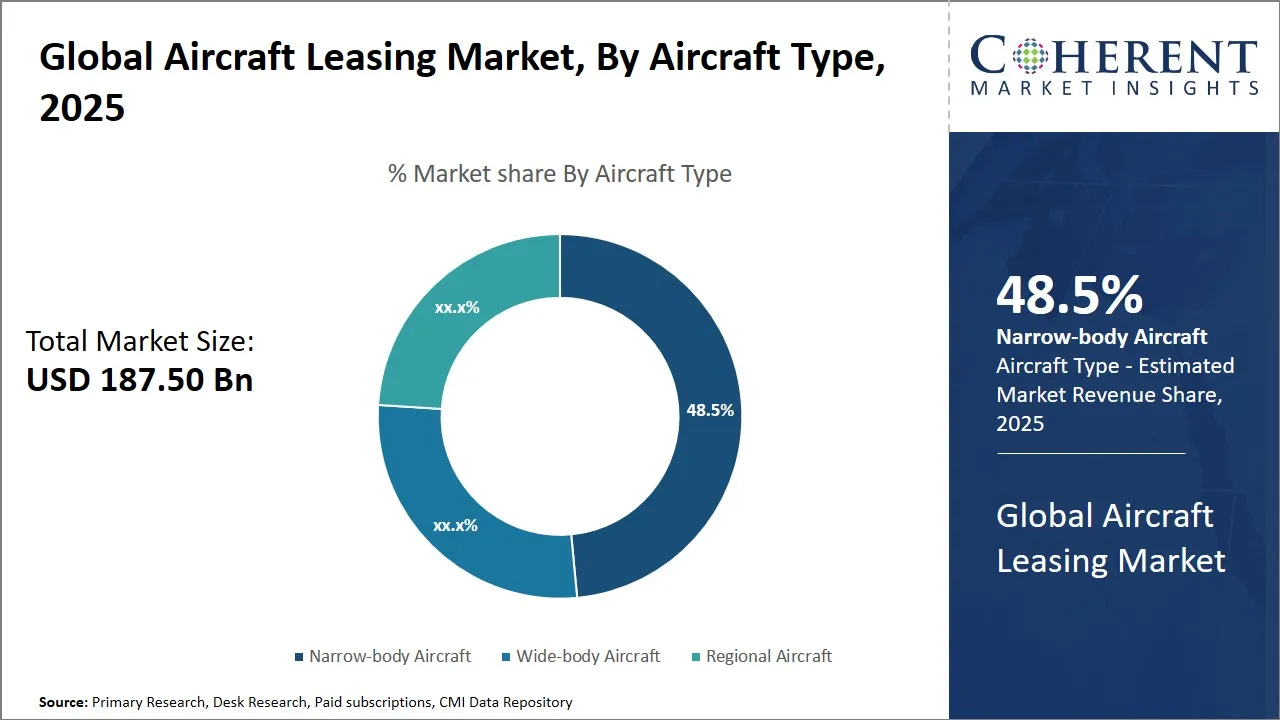
Global Aircraft Leasing Market Insights, By Aircraft Type – Narrow-body Aircraft Contributes the Highest Share of the Market Owing to its Operational Efficiency and Versatility
The narrow-body aircraft segment is expected to hold a market share of 49.5% in 2026. The popularity of narrow-body planes in the global aircraft leasing market is mainly due to strong operating performance and flexibility across different airline types. Due to their balanced efficiency, range, and capacity, these jets are preferred by airlines, particularly on short or medium routes common in global air traffic. Compared to bigger or smaller aircraft, they cost less to operate and maintain, which allows carriers to increase profits on corridors with typical demand levels.
Furthermore, planes like the Airbus A320 models or Boeing 737 variants now form the core fleet for numerous budget and traditional airlines globally; hence they represent the most common type used in passenger flights. Equipment financiers gain from this shift since need for single-aisle jets stays strong, fueled by carrier decisions to upgrade aging fleets while cutting fuel use due to growing ecological pressures alongside unstable oil pricing. Also, with air services aiming at more routes plus higher flight rates, the adaptability of these medium-sized crafts - which allow fast turnarounds and operations into regional airfields - boosts rental activity across this category.
For instance, on July 5, 2025, AirAsia Berhad, fully owned by Capital A Berhad, entered a key deal with Airbus worth USD 12.25 billion, securing 50 A321XLR jets and rights for 20 more. As part of the move, the carrier advances toward being the world’s first low-cost narrow-body network carrier.
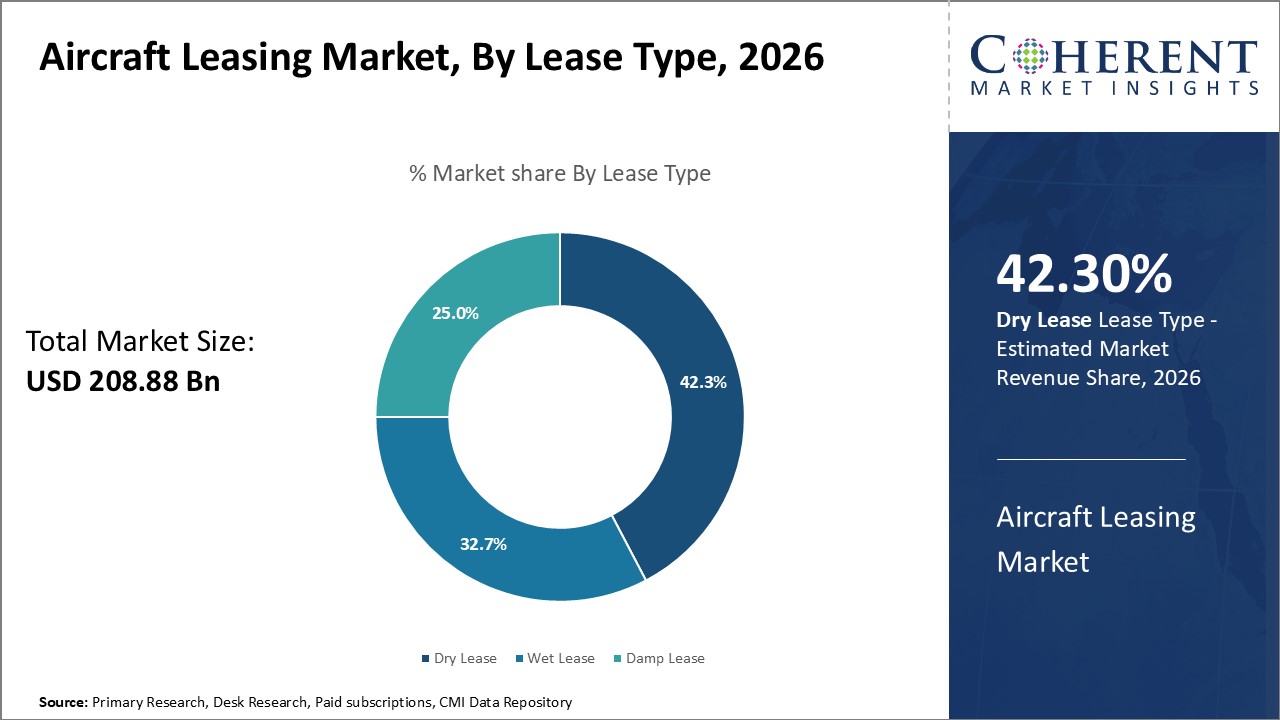
Global Aircraft Leasing Market Insights, By Lease Type – Dry Lease Leads the Market Driven by Airline Fleet Flexibility and Cost Efficiency
The dry lease segment is projected to holds a market share of 42.3% in 2026. The preference of dry leasing in aircraft markets comes from clear strategic and financial benefits for airlines. When just the plane is supplied - no crew, upkeep, or coverage - it gives operators more freedom in managing their fleet, unlike wet or damp deals. Airlines with strong internal teams for staff and repairs often prefer this setup to keep full command over daily operations.
One key reason dry leases are common is lower cost during extended periods. Because operators handle flights themselves, extra charges from wet or damp deals, where owners supply more support, are skipped. That is a main reason for established airlines to often choose this option when updating or growing their aircraft numbers. Freedom to set flight plans, use routines, and seat layouts fits better with efforts to maintain service identity and passenger satisfaction.
Global Aircraft Leasing Market Insights, By Lease Term – Long Segment Dominates Owing to Stability in Fleet Planning and Financial Predictability
The long segment holds a market share of 40.6% in 2026, due to offering steady conditions for owners and operators alike within a field defined by heavy upfront costs and durable equipment. Rather than buying planes outright, carriers choose extended rentals since these support forward-looking fleet decisions tied to expansion goals, new routes, or meeting legal timelines.
For airlines, long-term leasing means steady payments over time - reducing exposure to shifting market conditions. Such stability matters most when fuel costs jump and passenger numbers change often. These lease agreements usually run between five and twelve years - or even longer - matching closely with how long planes stay in active use. By doing so, carriers gain full use of equipment while avoiding large upfront investments in assets that lose value.
Lease Rate & Residual Value Benchmark
Type of Aircraft | Approx. Lease Rate/Month | Residual Value/Lifecycle |
New narrow ‑ body jets | USD 400,000 | 15% over 20-25 Years |
New wide ‑ body jets | USD 1.05 Mn – USD 1.15 Mn | 15% over 20-25 Years |
Legacy Narrow-Body | USD 230,000 – USD 250,000 | 15% over 20-25 Years |
Legacy Wide-Body | USD 330,000 – USD 450,000 | 15% over 20-25 Years |
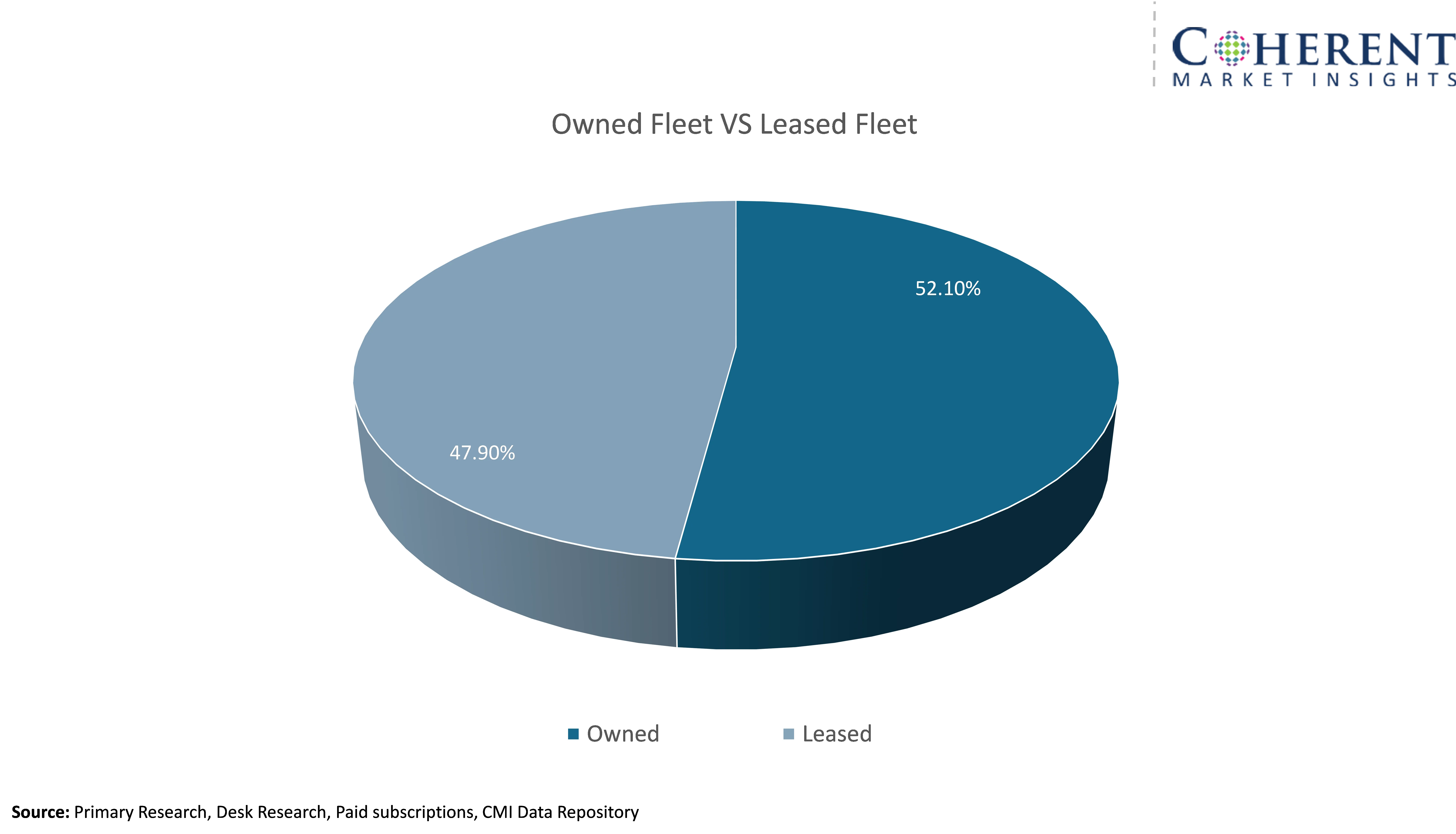
Fleet Ownership & Leasing Penetration
Regional Insights
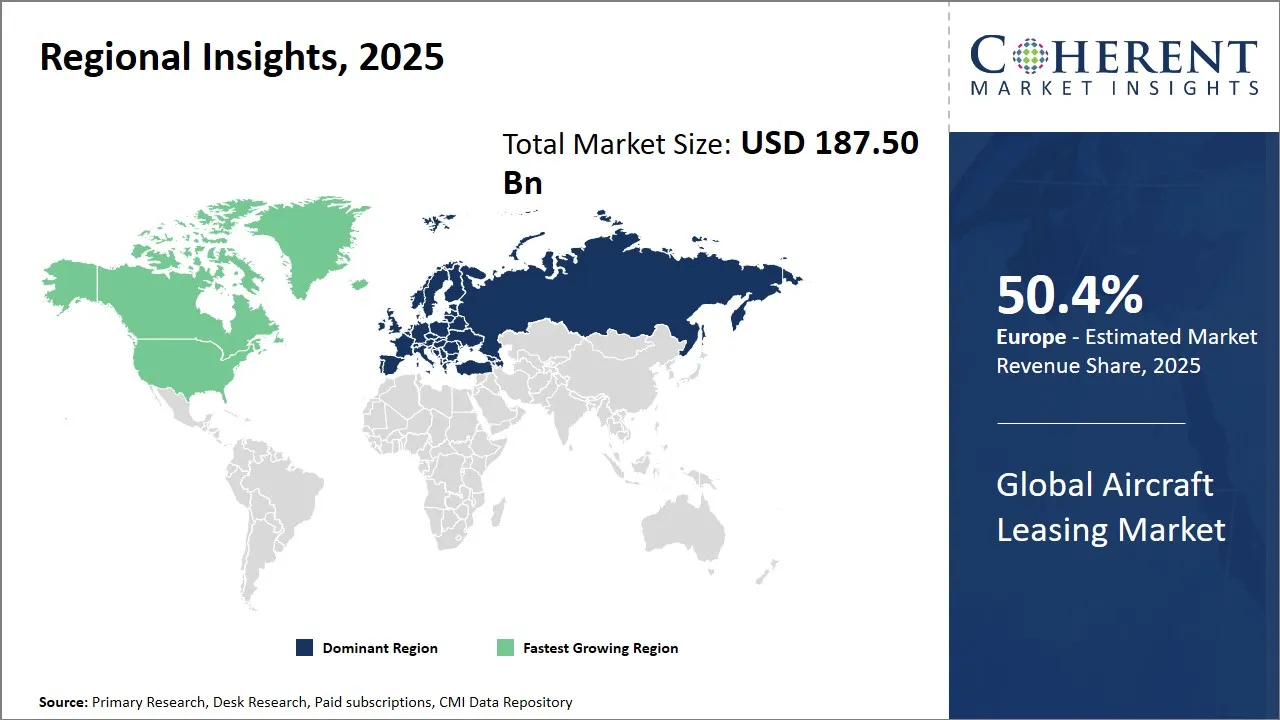
Europe Aircraft Leasing Market Analysis and Trends
Europe leads the world’s aircraft leasing sector, holding around 50.4% share in 2026. Growth continues across the region, driven by favorable regulations, financial incentives, and strong funding - especially in key hubs; at the same time, carriers are turning more toward flexible fleets, choosing leases instead of buying planes outright. One key factor behind this trend is the strong presence of major hubs like Dublin and Ireland overall, still renowned as the top global hub for aviation leasing and handling management for well above half of all leased planes worldwide. Due to this clustering, European operations serve local carriers while also providing leased fleets across international markets.
Asia Pacific Aircraft Leasing Market Analysis and Trends
Asia Pacific is expected to exhibit the fastest growth and hold a market share of 22.1% in 2026. This growth mainly comes from quick airline sector gains, driven by more air travelers, particularly in developing regions like India, China, and parts of Southeast Asia. This is why local authorities are investing more in air hubs while loosening flying rules - drawing overseas carriers and rent-out companies aiming to scale up. Higher demand for updated, efficient aircraft, combined with flexible lease options, matches what low-cost and regional airlines need during fast growth. Key players such as BOC Aviation, based in Singapore, help fill market gaps through close ties with domestic carriers. Changing trade routes alongside rising Asian travel and outbound trips from Asia Pacific are turning plane leasing into a smart choice. This shift enables quicker fleet updates while avoiding large initial costs through flexible financing options.
Global Aircraft Leasing Market Outlook for Key Countries
U.S. Aircraft Leasing Market Analysis and Trends
The U.S. stays central in global aircraft leasing market due to its large aviation network. The U.S. is home to companies like Air Lease Corp., as well as a base for AerCap’s activities. Confidence among investors comes from developed financial markets, coupled with tax benefits that back leasing arrangements. High regulatory standards lead airlines to rent newer jets fitted with advanced systems, meeting up-to-date safety rules; this trend keeps demand consistent throughout the industry.
China Aircraft Leasing Market Analysis and Trends
China’s aircraft leasing market grows fast due to strong efforts in boosting both local and global flight links. While state-backed firms like CDB Aviation and AVIC Capital play key roles, policy support helps upgrade planes and secure new route access through international deals. As more people enter the middle class, growing passenger numbers push carriers toward leases - this lets them add aircraft affordably while staying flexible amid shifting conditions.
India Aircraft Leasing Market Analysis and Trends
India’s aviation sector is picking up speed, thanks to relaxed rules and rising interest from airlines including IndiGo and SpiceJet. Because regional travel is being expanded through state-backed programs, leasing firms see growing opportunities. Airlines in India lean on operating leases which helps them save money while staying agile with their fleets. As a result, international lessors are stepping in more confidently. Firms like AerCap, which absorbed GECas, along with BOC Aviation, work closely with local operators to bring modern, economical single-aisle planes into the country.
Ireland Aircraft Leasing Market Analysis and Trends
Ireland continues to play a key role in aircraft leasing, hosting major firms such as AerCap and Avolon. Thanks to low taxes, qualified professionals, while offering a welcoming climate for global enterprises, it attracts many leasing companies. These Irish operators shape industry movements via creative rental models, serving carriers across continents. Support from national authorities strengthens the sector through solid financial rules coupled with Ireland’s geographic advantage near transatlantic routes.
Singapore Aircraft Leasing Market Analysis and Trends
Singapore acts as a key entry point for plane leasing in Asia Pacific. Thanks to firms like BOC Aviation basing operations here, the city gains advantages from solid laws, good links, or available funding. Support from authorities to build an aviation base - alongside flight deals or perks for finance sectors - boosts growth. Its involvement in lease arrangements throughout Southeast Asia, therefore shaping access to newer and established markets, strengthens its central function.
Market Players, Key Development, and Competitive Intelligence
Key Developments
- On May 15, 2025, BeauTech Power Systems acquired four Embraer E175 aircraft under lease with LOT Polish Airlines. The purchase represents its first deal with Altavair and reinforces BeauTech's E-Jet portfolio. This move highlights the firm's focus on mid-life, income-generating aircraft assets. The deal strengthens BeauTech's position in the global engine and aircraft leasing market.
- On May 10, 2024, Hanwha launched Hanwha Aviation, an engine leasing and trading platform with a long-term vertically integrated strategy for next-generation assets. The company aims to build and manage a portfolio of over 1,000 assets over the next decade, underwritten by its aero-engine strategy.
Top Strategies Followed by Aircraft Leasing Market Players
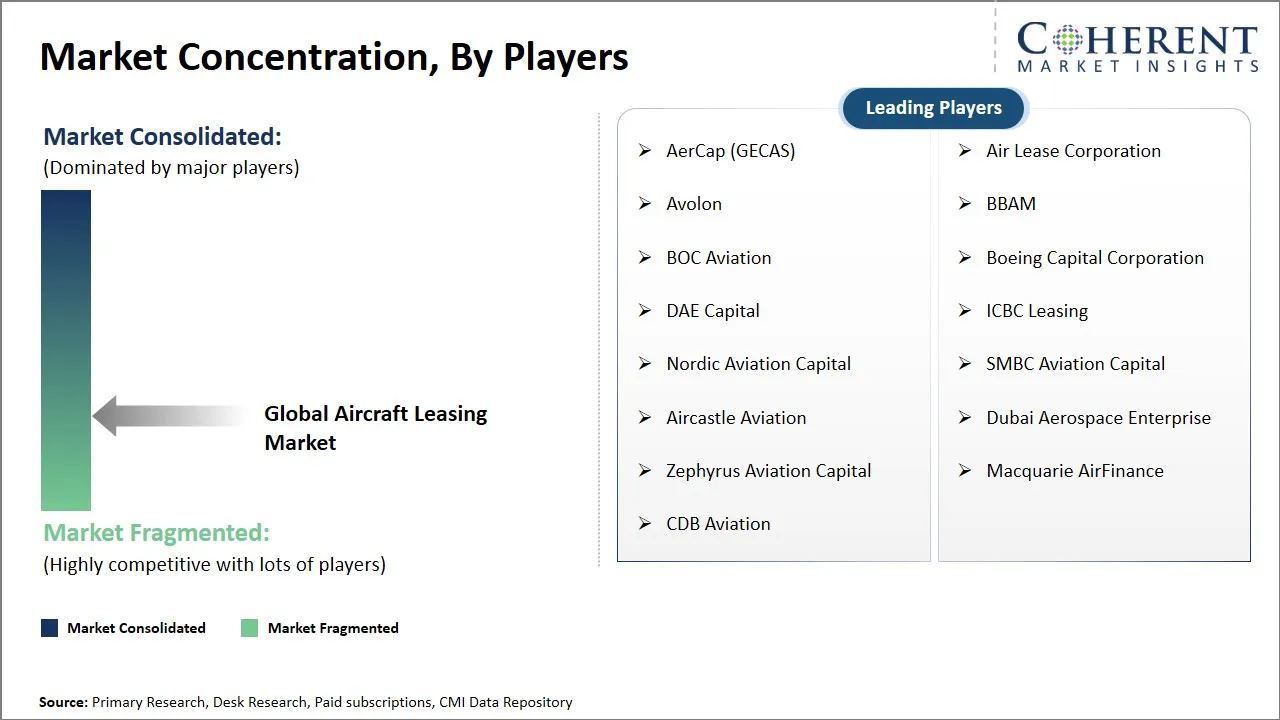
- The global aircraft leasing market sees fierce rivalry between companies of different sizes, each using unique approaches to boost their position. While larger firms typically have strong financial backing plus technical expertise, they channel funds into R&D to create better-performing planes and flexible lease options. Instead of relying on outdated systems, these organizations emphasize modern features like economical engines or upgraded navigation tools, aiming to improve performance while lowering costs for operators. As a result, top carriers show greater interest in working with them across international routes. Meanwhile, leading providers also build close collaborations with plane makers and core partners, ensuring early delivery slots and jointly designing customized rental plans.
- On October 28, 2025, BOC Aviation confirmed placing three Airbus A320NEO aircrafts from its lease order list with Zhejiang Loong Airlines. Each aircraft will feature CFM LEAP-1A engines. Deliveries are set for 2027, according to the company's schedule.
- Mid-level firms in aircraft leasing market take another path, emphasizing affordable deals that mix solid quality with lower costs. Because they aim at budget-conscious airlines - like regional services or discount-focused operators - they offer adaptable lease terms while keeping safety intact. Instead of competing on luxury, these players team up with tech developers, banks, and equipment makers to strengthen operations. Through partnerships, they gain faster access to new financing methods and smarter fleet management tools.
- On November 18, 2025, CDB Aviation revealed during the Dubai Air Show 2025 that it signed leases for four Airbus A320 neo aircrafts with a new client, Marabu Airlines, an Estonian leisure-focused carrier operating in EMEA.
- Smaller companies in aircraft leasing stand out by targeting narrow markets, also focusing on unique plane capabilities to serve particular client demands ignored by big firms. Instead of broad approaches, they use tools like data forecasting for repairs or online systems handling leases, boosting efficiency while improving visibility across operations. Because of this focus on new methods, compact operators deliver custom support built around quick response times, prioritizing direct user requirements through flexible frameworks.
Market Report Scope
Aircraft Leasing Market Report Coverage
| Report Coverage | Details | ||
|---|---|---|---|
| Base Year: | 2025 | Market Size in 2026: | USD 208.88 Bn |
| Historical Data for: | 2020 To 2024 | Forecast Period: | 2026 To 2033 |
| Forecast Period 2026 to 2033 CAGR: | 11.4% | 2033 Value Projection: | USD 444.72 Bn |
| Geographies covered: |
| ||
| Segments covered: |
| ||
| Companies covered: | AerCap (GECAS), Air Lease Corporation, Avolon, BBAM, BOC Aviation, Boeing Capital Corporation, DAE Capital, ICBC Leasing, Nordic Aviation Capital, SMBC Aviation Capital, Aircastle Aviation, Dubai Aerospace Enterprise, Zephyrus Aviation Capital, Macquarie AirFinance, and CDB Aviation | ||
| Growth Drivers: |
| ||
| Restraints & Challenges: |
| ||
Market Dynamics
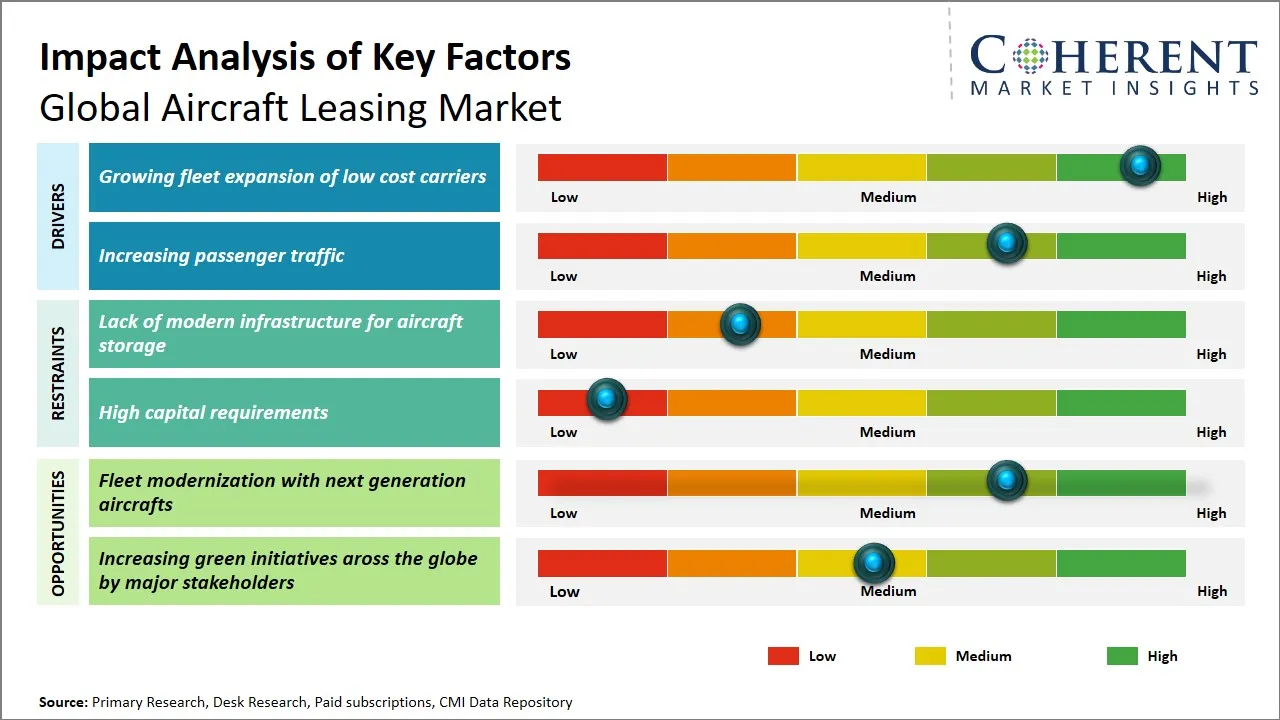
Global Aircraft Leasing Market Driver - Growing Fleet Expansion of Low-Cost Carriers
The growth of low-cost carriers is boosting global demand for leased planes. Because they want to keep fares low and expand services, these airlines add more aircraft regularly - targeting new regions and improving flight links. Instead of buying jets, many choose leases since it supports flexible operations and reduces costs. By renting instead of purchasing, they can adjust fleet management when demand changes, cut initial spending, and stay price-competitive.
Moreover, low-cost carriers often choose new planes that save fuel and this fits well with what lessors provide, since their inventories are regularly refreshed. As a result, these airlines keep turning to leases, reinforcing a pattern that pushes progress and expansion in the worldwide leasing sector.
For instance, on November 18, 2025, FlyDubai, the lower-cost sister airline to long-haul carrier Emirates, announced an lease order for 150 Airbus A321neo aircraft at the Dubai Air Show.
Global Aircraft Leasing Market Opportunity - Fleet Modernization With Next Generation Aircrafts
The global aircraft leasing sector stands to gain from rising needs to update commercial aircraft fleets, since carriers aim to swap outdated models for newer ones featuring better fuel use, fewer emissions, low operating costs instead of high ones, also improved travel comfort. With stricter eco-rules enforced plus increasing expenses faced daily, flight operators now focus more on adopting up-to-date planes to stay competitive rather than falling behind. Lessors can support this shift effectively through adaptable lease plans providing easier access without large upfront investments required otherwise.
For instance, updated jets like the Boeing 737 MAX or Airbus A320neo series including upcoming hybrid-powered types tend to require less servicing time while delivering stronger performance per trip compared to older versions used widely before. Growing interest in greener flying matches worldwide climate goals aimed at reaching zero carbon output eventually encouraging airlines to phase out inefficient machines quickly using leased alternatives ready for immediate deployment. Also, developing nations where incomes rise tend to see more people flying and this push airlines to modernize aircrafts, keeping demand high for leased advanced models. As a result, companies that buy and operate newer aircraft may gain advantage and boost earnings while industry patterns shift.
Analyst Opinion (Expert Opinion)
- The upcoming stage of development hinges on updating fleets and supporting eco-friendly practices, rather than mere scale. Because environmental demands grow stronger alongside tighter rules while carriers aim to lower expenses, rental companies shift focus toward planes that use less fuel and belong to recent models.
- There are certain risks tied to climbing interest rates and shaky world markets for leasing companies. Since buying planes demands heavy funding, usually through loans, increased rates lift borrowing expenses. This rise may reduce earnings or raise lease prices for carriers , possibly weakening their need to rent aircraft.
Speak to the analyst
Want personalized insights?
Take the findings above to one of our principal consultants, or have the report rebuilt around the segments, geographies and competitors you actually track.
Market Segmentation
- Aircraft Type Insights (Revenue, USD Bn, 2021 - 2033)
- Narrow-body Aircraft
- Wide-body Aircraft
- Regional Aircraft
- Lease Type Insights (Revenue, USD Bn, 2021 - 2033)
- Dry Lease
- Wet Lease
- Damp Lease
- Lease Term Insights (Revenue, USD Bn, 2021 - 2033)
- Long
- Short
- Medium
- Regional Insights (Revenue, USD Bn, 2021 - 2033)
- North America
- U.S.
- Canada
- Latin America
- Brazil
- Argentina
- Mexico
- Rest of Latin America
- Europe
- Germany
- U.K.
- Spain
- France
- Italy
- Russia
- Rest of Europe
- Asia Pacific
- China
- India
- Japan
- Australia
- South Korea
- ASEAN
- Rest of Asia Pacific
- Middle East
- GCC Countries
- Israel
- Rest of Middle East
- Africa
- South Africa
- North Africa
- Central Africa
- North America
- Key Players Insights
- AerCap (GECAS)
- Air Lease Corporation
- Avolon
- BBAM
- BOC Aviation
- Boeing Capital Corporation
- DAE Capital
- ICBC Leasing
- Nordic Aviation Capital
- SMBC Aviation Capital
- Aircastle Aviation
- Dubai Aerospace Enterprise
- Zephyrus Aviation Capital
- Macquarie AirFinance
- CDB Aviation
Sources
Primary Research Interviews
- Aircraft Leasing Company Executives
- Airline Fleet Management Directors
- Aviation Finance Specialists
- Aircraft Manufacturers Representatives
Databases
- Ascend by Cirium
- Flight Global Fleet Database
- IATA Economics Database
- Aviation Week Intelligence Network (AWIN)
Magazines
- Aviation Week & Space Technology
- Aircraft Economics
- Airfinance Journal
- Flight International
Journals
- Journal of Air Transport Management
- International Journal of Aviation Management
- Transportation Research Part E
Newspapers
- Financial Times
- The Wall Street Journal
- Reuters Aviation News
- Bloomberg Aviation
- Aviation Daily
Associations
- International Air Transport Association (IATA)
- Aircraft Leasing Association of Europe (ALAE)
- International Association of Aircraft Dealers (IAAD)
- Aviation Working Group (AWG)
Public Domain Sources
- Federal Aviation Administration (FAA) Reports
- European Aviation Safety Agency (EASA) Publications
- International Civil Aviation Organization (ICAO) Statistics
- Boeing Commercial Market Outlook
Proprietary Elements
- CMI Data Analytics Tool
- Proprietary CMI Existing Repository of information for last 8 years
Get access to 250+ pages report
Every segment, forecast, competitor profile and data table behind the analysis above — available for instant download.
- ESOMAR Member
- ISO 9001:2015 Certified
- D-U-N-S Registered
- GDPR & CCPA Compliant
Missing comfort of reading report in your local language? Find your preferred language:
Transform your Strategy with Exclusive Trending Reports
Frequently Asked Questions
The global aircraft leasing market is estimated to be valued at USD 208.88 Bn in 2026 and is expected to reach USD 444.72 Bn by 2033
The CAGR of the global aircraft leasing market is projected to be 11.4% from 2026 to 2033.
Growing fleet expansion of low-cost carriers and increasing passenger traffic are the major factors driving the growth of the global aircraft leasing market.
Lack of modern infrastructure for aircraft storage and high capital requirements are the major factors hampering the growth of the global aircraft leasing market.
In terms of aircraft type, the narrow-body aircraft is estimated to dominate the market revenue share in 2026.
AerCap (GECAS), Air Lease Corporation, Avolon, BBAM, BOC Aviation, Boeing Capital Corporation, DAE Capital, ICBC Leasing, Nordic Aviation Capital, SMBC Aviation Capital, Aircastle Aviation, Dubai Aerospace Enterprise, Zephyrus Aviation Capital, Macquarie AirFinance, and CDB Aviation are the major players.
Europe is expected to lead the global aircraft leasing market in 2026.