

Global Artificial Intelligence in Life Science Market Size and Forecast – 2026 to 2033
The Global Artificial Intelligence in Life Science Market is estimated to be valued at USD 4.68 Bn in 2026 and is expected to reach USD 22.95 Bn by 2033, exhibiting a compound annual growth rate (CAGR) of 25.5% from 2026 to 2033. This rapid expansion is driven by the increasing adoption of AI technologies in drug discovery, genomics, and personalized medicine, enabling improved efficiency and accuracy in life science research and clinical applications.
Key Takeaways of the Global Artificial Intelligence in Life Science Market
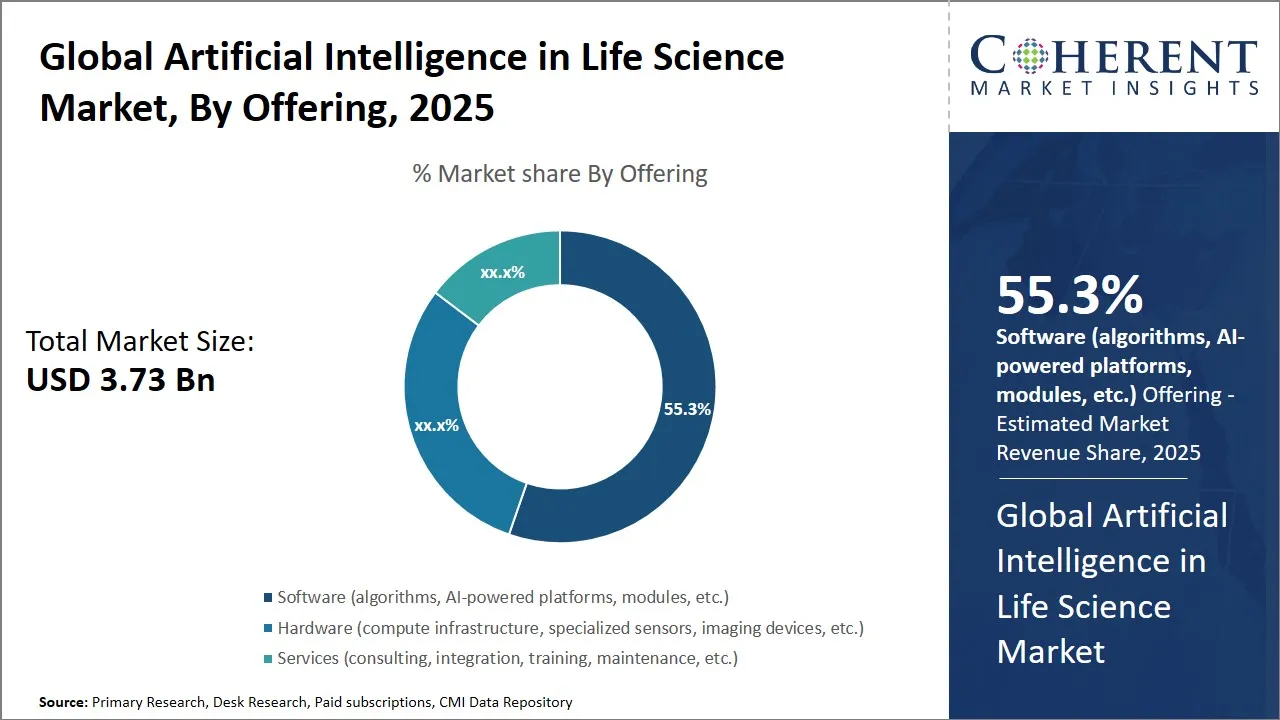
- In 2026, the software (algorithms, AI-powered platforms, modules, etc.) segment is projected to account for 56.3 % of the market share.
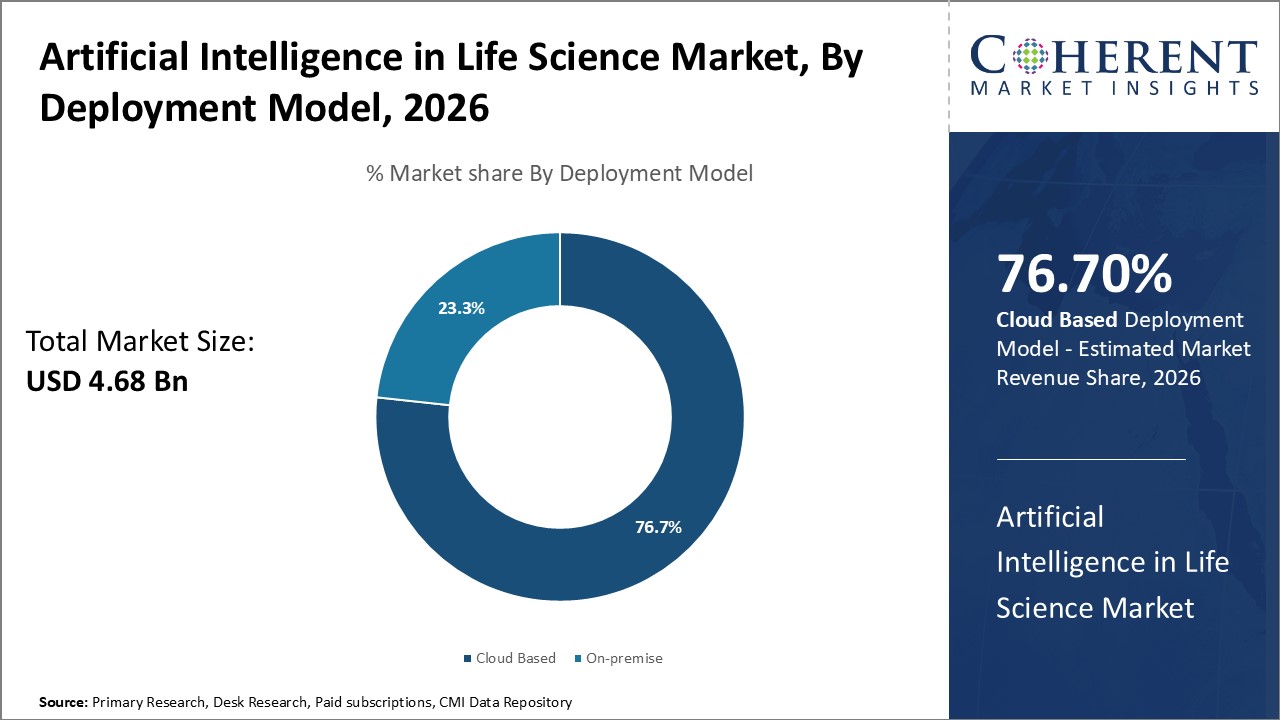
- By deployment model, the cloud based segment is expected to dominate with a 76.7 % share in 2026.
- Within the analytics segment, the descriptive/reporting sub-segment is estimated to lead the market, representing 41.1 % of the market share in 2026.
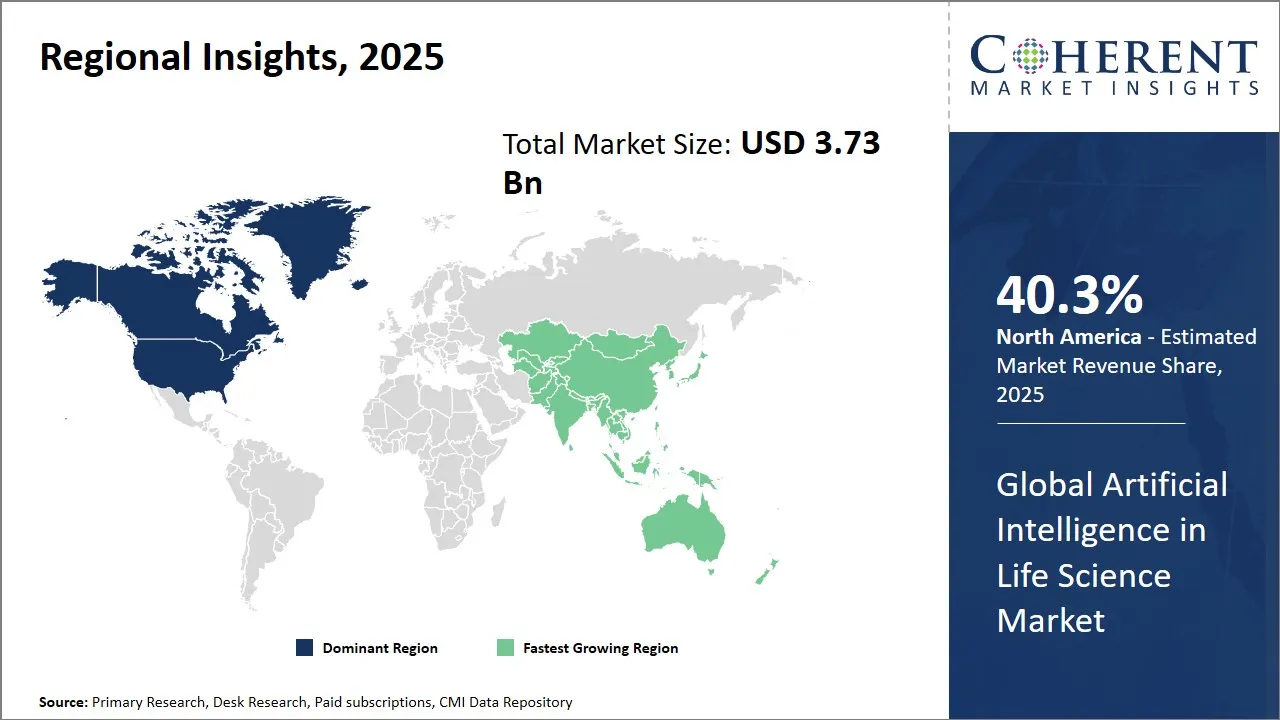
- North America is expected to lead the market, holding a share of 40.3 % in 2026. Asia Pacific is anticipated to be the fastest-growing region, with a market share of 23.4% in 2026.
Market Overview
Market trends indicate a significant shift towards integrating AI-powered platforms with big data analytics and cloud computing to enhance predictive modeling and molecular simulations. Additionally, advancements in machine learning algorithms and natural language processing are transforming data extraction from scientific literature and clinical trials. Collaborations between tech companies and pharmaceutical firms are also accelerating innovation, pushing the market growth further by enabling faster drug discovery and development cycles and more targeted therapeutic approaches.
Current Events and Its Impact
Current Events | Description and its Impact |
Implementation of the EU AI Act |
|
Widespread Adoption of Generative AI in Life Sciences |
|
Segmental Insights
- Current Industry Events of 2026
- Market Size Estimation
- Regional Breakdown
- Competitive Landscape
- Customer Intelligence
- Segmental Analysis
- Pricing Analysis
- Key Market Drivers, Challenges & Future Trends
- Customized Insights Section
Artificial Intelligence in Life Science Market Insights, By Offering - Software (algorithms, AI-powered platforms, modules, etc.) Dominance is Driving Advanced Life Science Solutions
The software (algorithms, AI-powered platforms, modules, etc.) segment has the greatest share in the global artificial intelligence in life science market with an estimated share of 56.3% in 2026. This supremacy is largely brought about by the unrivaled scalability and flexibility which such software solutions have with regard to various applications in the life sciences industry. Biological data are quite complex and diverse, and therefore demand highly powered computing tools that are capable of running the complex analytics, pattern recognition, and predictive modeling which can only be achieved with software algorithms and software platforms.
In April 2025, Siemens AG, a Germany-based global technology and industrial software leader, announced the acquisition of U.S.-based Dotmatics, a prominent life sciences R&D software company, for USD 5.1 billion. The deal expands Siemens’ AI-powered Product Lifecycle Management (PLM) portfolio into the life sciences sector, integrating research and development with manufacturing through its Siemens Xcelerator platform
Artificial Intelligence in Life Science Market Insights, By Deployment Model – Cloud Based Deployment is Enabling Scalability and Agility
The cloud based segment is expected to lead the market with 76.7% share in 2026, owing to its ability to provide scalable, flexible and cost-effective systems to a wide variety of stakeholders in the industry of life sciences.
The models of cloud deployment deal with key issues of data storage, processing power, and collaboration that are urgent when working with immense and intricate datasets that are common in life science research.
Artificial Intelligence in Life Science Market Insights, By Analytics - Descriptive/Reporting Analytics is Anchoring Data-Driven Insights in Life Sciences
In the analytics segment, the descriptive/reporting sub-segment has the largest share in the artificial intelligence in life science market with an estimated 41.1% of the market share in 2026, owing to the fact that such analytics has been the basic foundation on which advanced analytics functions are supported.
Descriptive analytics concentrates on summarizing both historical and real-time data and is used to render critical insights by means of data visualization and data reporting dashboards and trend analysis, which helps the stakeholders understand the complex biological and clinical data
Regional Insights
North America Artificial Intelligence in Life Science Market Analysis and Trends
In North America, the global market share in artificial intelligence in the life science area is dominated with a projected share of 40.3% 2026, propelled by a well-developed health care facility as well as a comprehensive investment in research and development activities. The availability of major pharmaceutical corporations, biotech companies and AI technology developers will provide a synergistic ecosystem that helps in promoting innovation and commercialization.
In April 2026, Honeywell, a U.S.-based global leader in industrial automation and digital technologies, launched TrackWise Manufacturing, an AI-assisted cloud platform designed to modernize life sciences manufacturing. The new system integrates digital and physical production environments to improve workflow management, reduce manual errors, and speed up drug development.
Asia Pacific Artificial Intelligence in Life Science Market Analysis and Trends
The Asia Pacific region is expected to exhibit the fastest growth in the market contributing 23.4% share in 2026, because of the high rate of digitization, growing healthcare infrastructure and rising government support in major nations like China, Japan, South Korea and India. The area enjoys high population sizes, increasing healthcare requirements and major investments in the AI and biotech industries.
In June 2026, Deloitte, a global leader in consulting and professional services, launched its Asia Pacific Agentic AI Centre of Excellence in Singapore to accelerate AI transformation in the life sciences and broader healthcare sectors.
Artificial Intelligence in Life Science Market Outlook for Key Countries
U.S. Artificial Intelligence in Life Science Market Analysis and Trends
The U.S. is the market leader in the artificial intelligence in life science sector due to its global research capabilities, thriving entrepreneurial culture, and favorable government policies promoting the use of AI in the healthcare setting. In the area of clinical trial optimization, IBM Watson Health and Moderna are the first companies to use AI applications, and in the field of mRNA vaccine development respectively. The good intellectual property regime and a high amount of venture capital funding in the country leads to constant innovation, making the U.S. a world center in AI-led advancements in life sciences.
In February 2026, U.S. pharmaceutical company, Eli Lilly, announced a partnership with OpenAI to speed up antimicrobial research using large language models.
China Artificial Intelligence in Life Science Market Analysis and Trends
The China artificial intelligence in life science market is booming because of the giant governmental investments in artificial intelligence infrastructure and modernization of the health care systems. Baidu and Ping A Healthcare are among the industry leaders that are using AI technologies in drug discovery and medical image analysis. Global pharma partnerships and a growing base of AI startups enable the nation to leverage big data and cloud computing to enhance precision medicine and accelerate new therapy development.
In March 2026, China-based, Insilico Medicine, launched PandaOmics Box, an on-premise AI system for secure drug target discovery.
India Artificial Intelligence in Life Science Market Analysis and Trends
The growth of the artificial intelligence in life science market in India is driven by the expanding healthcare sector, rapid digital transformation, and supportive government initiatives such as Digital India and Make in India, which collectively foster innovation and technology adoption across the life sciences landscape. Such companies like Tata Consultancy Services (TCS) and Dr. Reddy Labs are currently working on AI-based applications in drug discovery and diagnostics to help solve local health problems. The presence of vast IT talent in the country and the lower cost of digital solutions in the nation gives it a chance to grow AI-based life science practices in new urban and rural markets with ease.
In March 2026, Switzerland-based, Tenthpin Management Consultants, a global technology advisory firm specializing in life sciences, launched the Tenthpin AI Labs (TAIL) in Hyderabad, India. The new Global Centre of Excellence aims to accelerate AI-driven transformation across pharmaceuticals, MedTech, biotech, and research organizations.
Japan Artificial Intelligence in Life Science Market Analysis and Trends
The artificial intelligence in life science market in Japan is defined by the high level of government support due to such strategies as Society 5.0 intending to apply AI to healthcare innovation and managing the aging population. Fujitsu and Takeda Pharmaceutical are the major companies that are implementing AI to improve drug development pipelines and patient care. The robotics sector in the country is developed and it goes hand in hand with AI programs in the clinical facility. Moreover, the partnership of Japan with the global biotech companies makes it easier to implement the latest AI technologies within the life science infrastructure.
In April 2026, AstraZeneca, a global leader in biopharmaceuticals, and Japan’s Daiichi Sankyo received U.S. FDA Priority Review for Enhertu, the first tumour-agnostic HER2 therapy powered by AI-identified biomarkers.
End User Feedback and Unmet Needs in the Artificial Intelligence in Life Science Market
- AI is transforming life sciences by speeding up drug discovery, diagnostics, and data analysis. Pharmaceutical firms report faster, more accurate research through AI-driven modeling and compound screening tools.
- Meanwhile, users frequently mention such potential problems as high cost of deployment, incompatibility with older systems, and lack of customization to specific areas of research. This has been impeded by a biotechnology lab, which failed in integrating AI analytics into its proteomics data because of a poor data mapping.
- These gaps indicate a gap in requirements of affordable, flexible and readily integrated AI tools. By solving these challenges, the adoption may be enhanced, the user confidence may be boosted, and the new opportunities to innovate and collaborate in the AI life sciences market worldwide may be created.
Market Players, Key Developments, and Competitive Intelligence
Key Developments
- In September 2025, Oracle, a global leader in enterprise software and cloud infrastructure, announced a suite of new AI-driven healthcare solutions at its annual Oracle Health and Life Sciences Summit in Orlando, Florida. Led by Seema Verma, executive vice president and general manager of Oracle Health and Life Sciences, the company unveiled generative AI capabilities within its patient portal, an autonomous reimbursement platform, and a new agentic electronic health record system
- In June 2025, IQVIA, a U.S.-based global leader in clinical research, healthcare analytics, and life sciences technology, introduced its new AI agents at the GTC Paris conference. Built in collaboration with NVIDIA, a leading computing technology company, these agents are designed to enhance workflows and accelerate decision-making across life sciences.
- In May 2025, Sanofi, a France-based global biopharmaceutical company, announced the launch of its third Digital Accelerator in Val de Reuil, France, marking a major milestone in its goal to become the first biopharma company powered by AI at scale.
- In May 2025, U.S.-based biopharmaceutical company Incyte partnered with AI drug discovery firm Genesis Therapeutics in a USD 30 million collaboration, with up to USD 295 million per target in milestones, to use the GEMS platform for small-molecule discovery.
Top Strategies Followed by Global Artificial Intelligence in Life Science Market Players
- Established players dominate the industry by continuously investing heavily in research and development (R&D). This focus on innovation allows them to create high-performance AI-driven products that meet sophisticated demands in drug discovery, diagnostics, and personalized medicine. These companies prioritize forming strategic partnerships with major industry players, original equipment manufacturers (OEMs), and technology firms to enhance their product offerings and solidify their market presence.
- In February 2025, EY-Parthenon, the global strategy consulting arm of Ernst & Young, partnered with Microsoft, a leading technology company, to introduce a new AI Maturity Framework aimed at accelerating digital transformation in the life sciences sector.
- Mid-level players in the artificial intelligence in life science market adopt a slightly different approach, balancing innovation with cost-effectiveness to appeal to a broader customer base, particularly price-sensitive institutions and emerging market players. These companies focus on producing reliable AI solutions that do not compromise quality but are offered at a more accessible price point.
- On October 10, 2025, Maryland-based, Shuttle Pharmaceuticals, entered the market with a USD 10 million acquisition of Molecule.ai, an AI firm founded by scientist ZT Zhang. The move aims to enhance cost-effectiveness and accelerate cancer therapy development through advanced machine learning and autonomous drug discovery tools.
- On the other end of the spectrum, small-scale entrants focus on specializing in niche applications or highly innovative AI-driven solutions tailored to specific life science challenges. These companies often adopt cutting-edge technologies such as advanced machine learning algorithms, synthetic biology integration, or edge computing to differentiate themselves from larger players.
- Notable examples include Peptone using AI for protein engineering, Aqemia applying quantum-inspired modeling for drug design, Cyclica focusing on drug-protein interaction prediction, and Iktos leveraging generative AI for rapid molecule creation all targeting niche, innovation-driven areas in life sciences.
Market Report Scope
Artificial Intelligence in Life Science Market Report Coverage
| Report Coverage | Details | ||
|---|---|---|---|
| Base Year: | 2025 | Market Size in 2026: | USD 4.68 Bn |
| Historical Data for: | 2020 To 2024 | Forecast Period: | 2026 To 2033 |
| Forecast Period 2026 to 2033 CAGR: | 25.5% | 2033 Value Projection: | USD 22.95 Bn |
| Geographies covered: |
| ||
| Segments covered: |
| ||
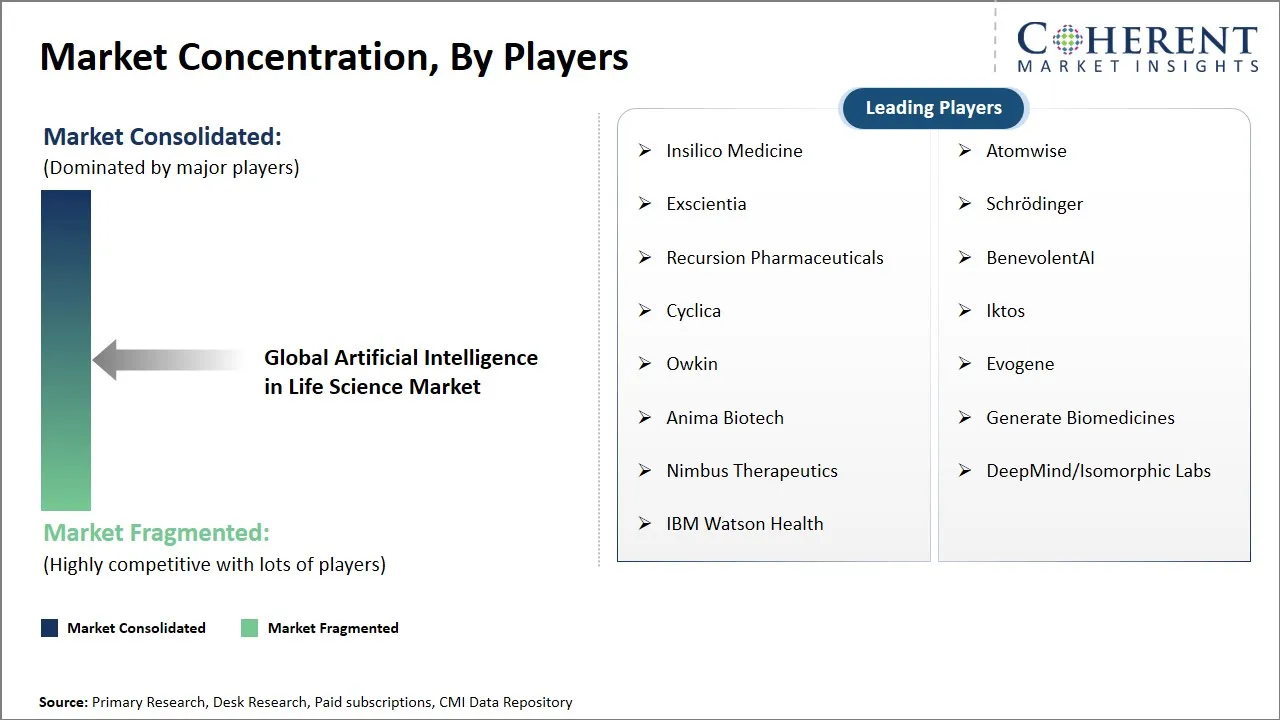
| Companies covered: | Insilico Medicine, Atomwise, Exscientia, Schrödinger, Recursion Pharmaceuticals, BenevolentAI, Cyclica, Iktos, Owkin, Evogene, Anima Biotech, Generate Biomedicines, Nimbus Therapeutics, DeepMind/Isomorphic Labs, and IBM Watson Health | ||
| Growth Drivers: |
| ||
| Restraints & Challenges: |
| ||
Artificial Intelligence in Life Science Market Dynamics
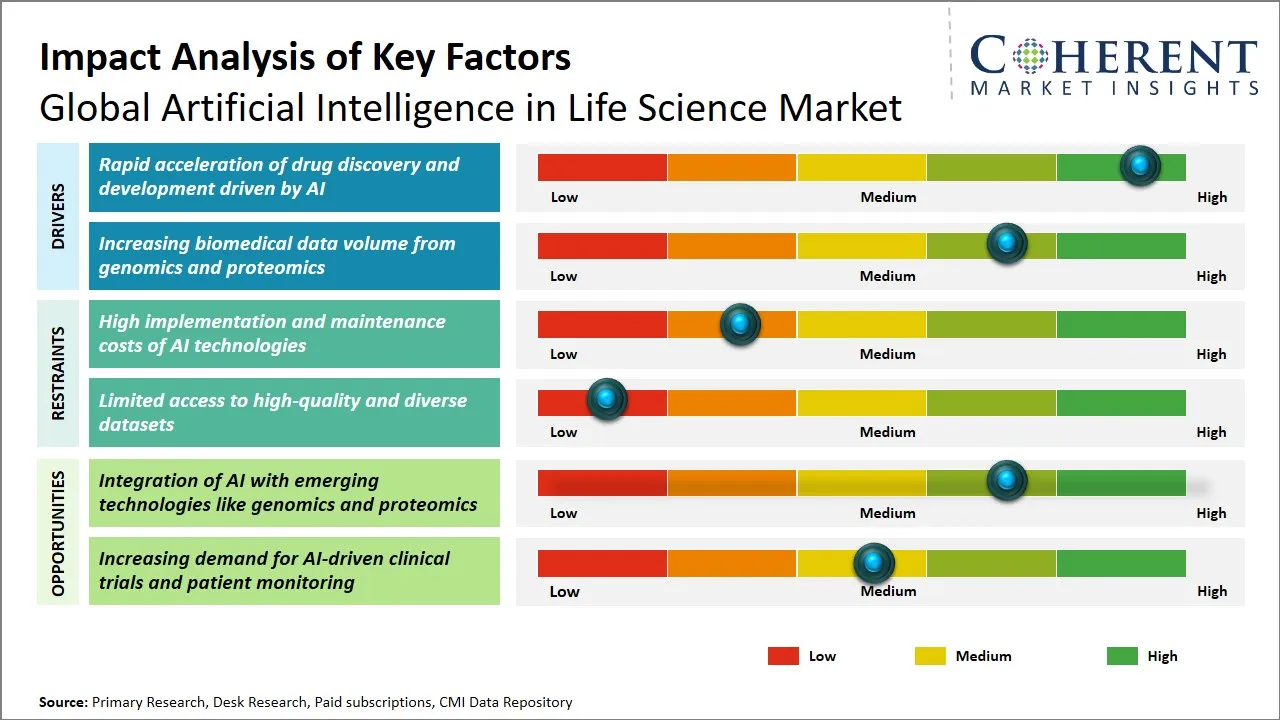
Artificial Intelligence in Life Science Market Driver - Rapid Acceleration of Drug Discovery and Development Driven by AI
The field of drug discovery and development is undergoing a paradigm shift with the advent of artificial intelligence that is hugely reducing timelines and improving the accuracy of the research process. Historically, the process of search and discovery of viable drug candidates was a lengthy and expensive experimental process, and was usually filled with uncertainty. In order to predict molecular interactions and any potential therapeutic effects much more accurately, AI-based algorithms, based on deep learning and sophisticated data analytics, can now make their predictions on large datasets, including genomics, proteomics, and clinical trial results, in a much shorter period.
In September 2025, Merck and Siemens formalized a new Memorandum of Understanding (MoU) to advance digital transformation across the life sciences sector. The partnership aims to integrate AI, data analytics, and automation into a seamless workflow connecting drug discovery, development, and manufacturing.
Artificial Intelligence in Life Science Market Opportunity - Integration of AI with Emerging Technologies like Genomics and Proteomics
This combination of artificial intelligence (AI) and using the latest technologies in such areas as genomics and proteomics is a great opportunity in the global artificial intelligence in life science market. Due to the increasing amounts of biological information that are being produced by next-generation sequencing and high-throughput proteomic technologies, conventional methods of analysis are finding it hard to keep up. AI-based algorithms are efficient in handling, responding to, and deriving actionable knowledge of such in-depth data. Using both machine learning and deep learning models along with genomic and proteomic data, scientists can discover new biomarkers and detect genetic changes that are associated with diseases and speed up drug discovery.
In January 2025, NVIDIA announced new partnerships with IQVIA, a global leader in health data analytics, Illumina, a pioneer in genomic sequencing, Mayo Clinic, a leading medical research center, and Arc Institute, a non-profit bioscience research organization, to advance genomics, drug discovery, and healthcare innovation.
Analyst Opinion (Expert Opinion)
- Artificial intelligence in life science market is developing a powerful pace when pharmaceutical and biotechnology firms make an even more rapid transition to digital. The deep learning, bioinformatics, and generative AI developments are transforming the process of drug discovery and management of clinical trials. Favorable regulatory environments in the U.S. and Europe, as well as the increase in data availability by electronic health records and genomics research, are widening the role of AI in precision medicine and diagnostics. Despite these possibilities, industry participants are still grappling with such issues as data privacy, interoperability, and AI algorithm authentication within a clinical setting.
- Global conferences like BioData World Congress, AI in Healthcare Summit, Intelligent Health AI and the World Health Summit have emerged as relevant platforms of collaboration and policy discussions in the last three years. Such activities have led to collaborations between research centers, technology innovators, and life science companies to speed up the use of ethical and transparent AI systems.
- Applied advances might include, but are not limited to, the collaboration between the Isomorphic Labs of Google DeepMind and large pharmaceutical firms to discover new drugs using their AI, the NIH Bridge2AI program supporting the standardization of data, and projects funded by the EU under Horizon Europe to develop AI applications in healthcare.
Speak to the analyst
Want personalized insights?
Take the findings above to one of our principal consultants, or have the report rebuilt around the segments, geographies and competitors you actually track.
Market Segmentation
- Offering Insights (Revenue, USD Bn, 2021 - 2033)
- Software (algorithms, AI-powered platforms, modules, etc.)
- Hardware (compute infrastructure, specialized sensors, imaging devices, etc.)
- Services (consulting, integration, training, maintenance, etc.)
- Deployment Model Insights (Revenue, USD Bn, 2021 - 2033)
- Cloud Based
- On-premise
- Analytics Insights (Revenue, USD Bn, 2021 - 2033)
- Descriptive/Reporting
- Predictive
- Prescriptive/Decision support
- Generative/Synthetic data/AI-driven molecule generation
- Application Insights (Revenue, USD Bn, 2021 - 2033)
- Drug Discovery and Development
- Clinical Trials Design and Optimization
- Medical Diagnosis and Imaging/Biomarker Detection
- Precision and Personalized Medicine
- Biotechnology/Bioprocessing/Omics
- Patient Monitoring and Real-World Evidence (RWE)
- Regulatory/Safety and Pharmacovigilance
- End User Insights (Revenue, USD Bn, 2021 - 2033)
- Pharmaceutical and Biotechnology Companies
- Contract Research Organizations (CROs)/Clinical Research Firms
- Medical Device Manufacturers
- Academic and Research Institutions
- Healthcare Providers (Hospitals/Diagnostic Clinics)
- Regulatory Agencies and Safety Boards
- Enabling Technology Insights (Revenue, USD Bn, 2021 - 2033)
- Machine Learning/Statistical Models
- Natural Language Processing (NLP)/Text Mining
- Computer Vision/Imaging AI
- Deep Learning/Neural Networks
- Hybrid and Multi-modal AI(fusion of modalities)
- Distribution Channel Insights (Revenue, USD Bn, 2021 - 2033)
- Hospital Pharmacies
- Retail Pharmacies
- Online Pharmacies
- Regional Insights (Revenue, USD Bn, 2021 - 2033)
- North America
- U.S.
- Canada
- Latin America
- Brazil
- Argentina
- Mexico
- Rest of Latin America
- Europe
- Germany
- U.K.
- Spain
- France
- Italy
- Russia
- Rest of Europe
- Asia Pacific
- China
- India
- Japan
- Australia
- South Korea
- ASEAN
- Rest of Asia Pacific
- Middle East
- GCC Countries
- Israel
- Rest of Middle East
- Africa
- South Africa
- North Africa
- Central Africa
- North America
- Key Players Insights
- Insilico Medicine
- Atomwise
- Exscientia
- Schrödinger
- Recursion Pharmaceuticals
- BenevolentAI
- Cyclica
- Iktos
- Owkin
- Evogene
- Anima Biotech
- Generate Biomedicines
- Nimbus Therapeutics
- DeepMind/Isomorphic Labs
- IBM Watson Health
Sources
Primary Research Interviews
Industry Stakeholders list
- Biopharma R&D directors
- Clinical trial operations leaders (sponsors/CROs)
- Regulatory affairs heads (drug, device, diagnostics)
- Hospital/health-system CIOs and CMIOs
- Medical device AI product owners
- Health-tech data governance officers
End Users List
- Oncologists and radiologists using AI tools
- Clinical laboratory directors and pathologists
- Bioinformaticians and data scientists
- Trial investigators and study coordinators
- Pharmacovigilance and safety officers
- Payers’ medical directors and HTA reviewers
Government and International Databases
- U.S. FDA databases (Drugs@FDA, 510(k), De Novo, PMA, CDS)
- EMA Clinical Data and EPARs
- ClinicalTrials.gov and WHO ICTRP
- NIH RePORTER and PubMed
- OECD AI Policy Observatory
- Eurostat and EU Open Data Portal
Trade Publications
- STAT
- Endpoints News
- BioPharma Dive
- Healthcare IT News (HIMSS)
- MD+DI (Medical Device & Diagnostic Industry)
- Nature News & Views (industry coverage)
Academic Journals
- Nature Biotechnology
- The Lancet Digital Health
- npj Digital Medicine
- JAMIA (Journal of the American Medical Informatics Association)
- PLOS Computational Biology
- Patterns (Cell Press)
Reputable Newspapers
- Financial Times
- The Wall Street Journal
- The New York Times
- The Guardian
- Nikkei Asia
- The Washington Post
Industry Associations
- AMIA (American Medical Informatics Association)
- HIMSS (Healthcare Information and Management Systems Society)
- HL7 International
- ISO/TC 215 Health Informatics
- IEEE Standards Association
- DIA (Drug Information Association)
Public Domain Resources
- Human Protein Atlas
- Allen Brain Atlas
- Our World in Data
- UCI Machine Learning Repository
- OpenAlex
- European Centre for Disease Prevention and Control (ECDC) data portal
Proprietary Elements
- CMI Data Analytics Tool: Proprietary analytics tool to analyze real-time market trends, consumer behavior, and technology adoption in market
- Proprietary CMI Existing Repository of Information for Last 8 Years
Get access to 250+ pages report
Every segment, forecast, competitor profile and data table behind the analysis above — available for instant download.
- ESOMAR Member
- ISO 9001:2015 Certified
- D-U-N-S Registered
- GDPR & CCPA Compliant
Missing comfort of reading report in your local language? Find your preferred language:
Transform your Strategy with Exclusive Trending Reports
Frequently Asked Questions
The global artificial intelligence in life science market is estimated to be valued at USD 4.68 Bn in 2026 and is expected to reach USD 22.95 Bn by 2033.
The CAGR of the global artificial intelligence in life science market is projected to be 25.5% from 2026 to 2033.
Rapid acceleration of drug discovery and development driven by AI and increasing biomedical data volume from genomics and proteomics are the major factors driving the growth of the global artificial intelligence in life science market.
High implementation and maintenance costs of AI technologies and limited access to high-quality and diverse datasets are the major factors hampering the growth of the global artificial intelligence in life science market.
In terms of offering, the software (algorithms, AI-powered platforms, modules, etc.) segment is estimated to dominate the market revenue share in 2026.
Insilico Medicine, Atomwise, Exscientia, Schrödinger, Recursion Pharmaceuticals, BenevolentAI, Cyclica, Iktos, Owkin, Evogene, Anima Biotech, Generate Biomedicines, Nimbus Therapeutics, DeepMind/Isomorphic Labs, and IBM Watson Health are the major players.
North America is expected to lead the global artificial intelligence in life science market in 2026.