

Global Bee Pollen Market Size and Forecast – 2026-2033
The Global Bee Pollen Market is estimated to be valued at USD 876.9 Mn in 2026 and is expected to reach USD 1,362.7 Mn by 2033, exhibiting a compound annual growth rate (CAGR) of 6.5% from 2026 to 2033.
Key Takeaways of the Bee Pollen Market
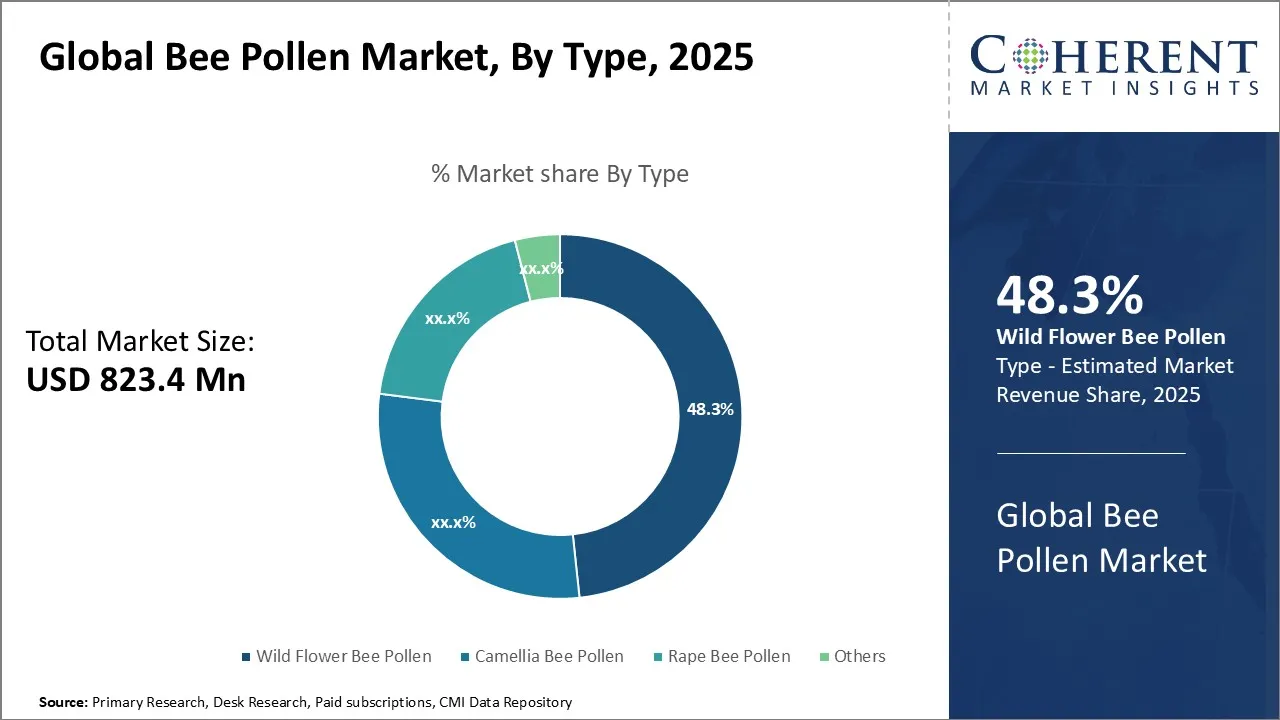
- The wild flower bee pollen segment is projected to account for 49.3 % of the global bee pollen market in 2026, driven by its diverse botanical origins that boost both its nutritional profile and attractiveness to consumers.
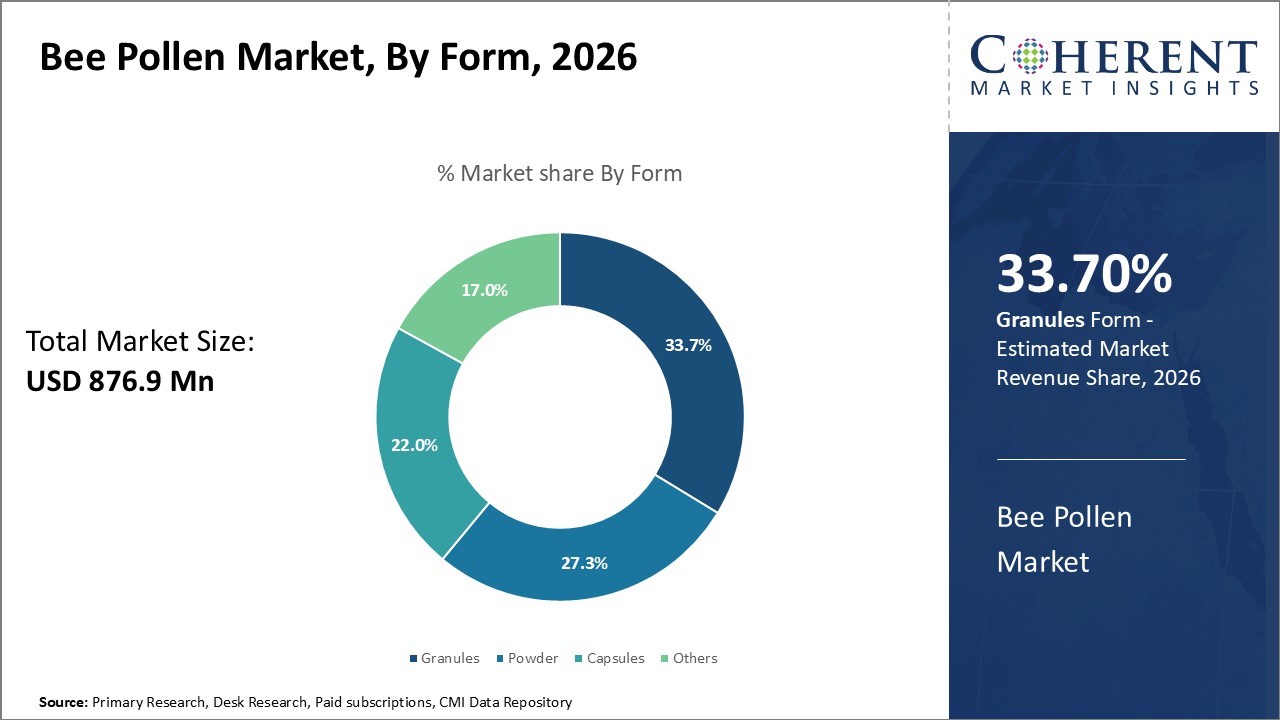
- The granules segment is expected to capture 33.7 % of the global bee pollen market in 2026, supported by its convenience, long shelf life, and versatility in various consumption formats.
- The food segment is projected to hold 29.9 % share of the market in 2026, fueled by rising consumer demand for natural, nutrient-dense ingredients that promote health and wellness.
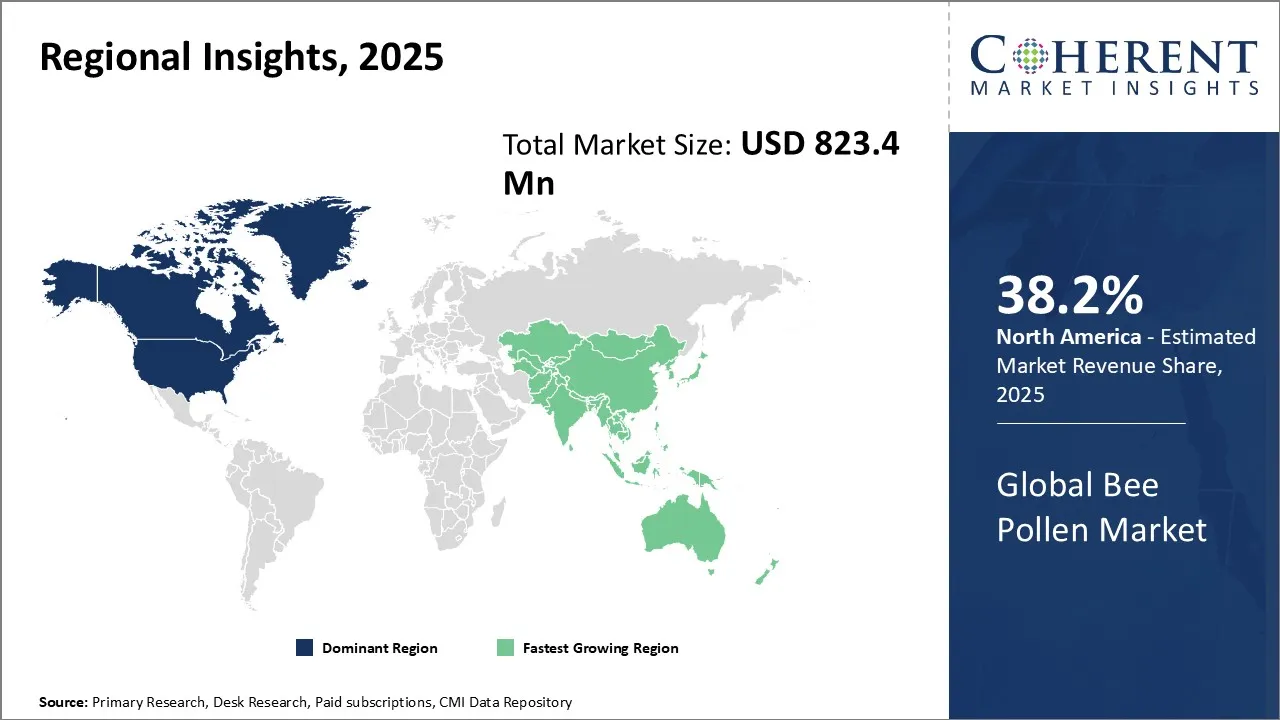
- North America is expected to lead the global bee pollen market in 2026 with 38.2 % of the market share, driven by the rising adoption of natural health supplements and strong consumer awareness of bee pollen’s nutritional benefits. Asia Pacific, with a 17.5% market share, will be the fastest-growing region, fueled by expanding health-conscious populations, increasing disposable incomes, and growing demand for organic and superfood products.
Market Overview
A key market trend is the rising preference for natural and organic products, which is fueling the adoption of bee pollen as a clean-label ingredient. Additionally, the expanding wellness industry and increasing focus on preventive healthcare are encouraging consumers to incorporate bee pollen into their daily routines. Innovations in product formulations, including the shift away from synthetic antioxidants in favor of natural alternatives, and growing distribution channels, including e-commerce, are further enabling market penetration and expanding consumer reach globally.
Current Events and Its Impact
Current Events | Description and its impact |
Rising adulteration checks in Asia Pacific |
|
EU tightens labeling for bee-derived supplements |
|
Segmental Insights
- Current Industry Events of 2026
- Market Size Estimation
- Regional Breakdown
- Competitive Landscape
- Customer Intelligence
- Segmental Analysis
- Pricing Analysis
- Key Market Drivers, Challenges & Future Trends
- Customized Insights Section
Bee Pollen Market Insights, By Type - Wild Flower Bee Pollen Segment Dominates the Market owing to its Superior Nutritional Profile and Widespread Availability
Wild flower bee pollen segment is expected to hold 49.3% share of the global bee pollen market in 2026, due to its diverse botanical origin, which enhances both its nutritional value and consumer appeal. Unlike single-source bee pollens like Camellia or Rape, wild flower bee pollen is collected from a variety of flowering plants, providing a richer mix of proteins, vitamins, amino acids, and antioxidants. This complexity caters well to health-conscious consumers seeking natural supplements that deliver broad-spectrum health benefits. Its superior nutrient density also positions it as a preferred ingredient among manufacturers in supplements and functional foods, driving demand within the broader wellness industry.
Bee Pollen Market Insights, By Form – Granules Segment Dominates the Market Driven by Ease of Use and Versatility in Applications
Granules segment is expected to hold 33.7% share of the global bee pollen market in 2026, due to their convenience, stable shelf life, and adaptability across various consumption methods. Unlike powders or capsules, granules retain the integral shape and texture of bee pollen, which many consumers associate with authenticity and freshness. This tactile experience often influences purchase decisions, especially among consumers looking for minimally processed natural products.
The granular form can be easily incorporated into daily diets—sprinkled on cereals, mixed into smoothies, or added to salads—making it an attractive choice for health enthusiasts and culinary innovators alike. Moreover, granules offer controlled dosing opportunities while preserving the bioactive compounds better than finely milled powder, which may degrade more rapidly. This quality advantage makes granules particularly appealing not only to consumers but also to food and beverage manufacturers seeking to leverage bee pollen’s natural properties without losing efficacy during processing.
Bee Pollen Market Insights, By Application - Food Segment Dominates the Market due to Increasing Demand for Natural and Functional Ingredients
The food segment is expected to contribute 29.9% share of the market in 2026, because of expanding consumer interest in natural, nutrient-rich ingredients that improve health and wellness. Bee pollen, with its reputation as a “superfood,” is increasingly integrated into a variety of food products including dietary supplements, energy bars, beverages, baked goods, and health-focused snacks. This integration is driven by rising awareness about immunity, antioxidant support, and overall vitality, making bee pollen an attractive addition to functional food lines.
Manufacturers are capitalizing on clean-label trends, where consumers prefer foods with naturally derived components rather than synthetic additives. Bee pollen’s natural provenance aligns perfectly with this movement, allowing food producers to enhance product appeal by marketing these items as wholesome and beneficial. Additionally, the broad nutrient profile of bee pollen supplements dietary gaps that modern diets often present, catering both to health-conscious individuals and specific demographics such as athletes, elderly consumers, and specialty diet followers.
Regional Insights
North America Bee Pollen Market Analysis and Trends
The North America region is projected to lead the market with a 38.2% share in 2026, driven by a mature health and wellness industry that integrates modern apiculture practices with high consumer demand for natural, nutrient-rich supplements. The region benefits from stringent regulatory oversight by agencies such as the U.S. Food and Drug Administration (FDA) and Health Canada, ensuring product quality, safety, and accurate labeling, which strengthens consumer trust.
Government and industry-led initiatives promoting sustainable beekeeping, biodiversity preservation, and pollinator health have enhanced domestic bee pollen production capacity. North America also leverages advanced research institutions and universities that conduct in-depth studies on the therapeutic, nutritional, and functional applications of bee pollen, fostering continuous product innovation. The U.S. and Canada are home to several prominent players, including Y.S. Eco Bee Farms, Bee Pollen Buzz, and CC Pollen Co., known for sustainable sourcing, diversified product portfolios, and robust retail and e-commerce distribution networks.
Asia Pacific Bee Pollen Market Analysis and Trends
The Asia Pacific region is expected to exhibit the fastest growth in the market contributing 17.5% share in 2026, propelled by escalating consumer interest in natural health supplements driven by increasing health awareness and rising disposable incomes. The region’s diverse climatic conditions are conducive to beekeeping, especially in countries like China, India, Japan, and South Korea, fostering local production alongside imports. Government support through agricultural subsidies and initiatives aimed at rural development and beekeeping sustainability fuels expansion.
Additionally, the growing presence of health-conscious urban consumers and the expansion of e-commerce platforms make bee pollen more accessible. Major players such as Apiary Group Co., Ltd. (China), Dabur India Ltd., and Morinaga & Company (Japan) have ramped up product portfolios catering to both traditional and modern consumer preferences. The convergence of improving infrastructure, increasing export focus, and expanding domestic demand underpins the rapid market growth in this region.
Global Bee Pollen Market Outlook for Key Countries
U.S. Bee Pollen Market Trends
The U.S. bee pollen market reflects strong consumer trends toward organic and natural health products, where bee pollen is gaining increased traction as a dietary supplement. The presence of established players like NOW Foods, Stakich, and Beekeeper’s Naturals supports a diverse product range from raw pollen to blended nutraceuticals. The U.S. market benefits from stringent FDA regulations that ensure quality and safety, enhancing consumer trust. Additionally, sustained investments in apiculture research and initiatives promoting sustainable beekeeping practices contribute to stable supply chains. The growing demand through wellness-oriented retail channels and innovative formulations reinforces the market's expansion in the U.S.
Germany Bee Pollen Market Trends
Germany maintains a leading position in the Europe bee pollen market due to its long-standing tradition of natural medicine and high consumer standards for purity and efficacy. German companies such as Apis Flora and Wacker Chemie AG emphasize scientific validation and product certifications, which appeals to discerning customers. The country's robust organic farming policies and incentives for environmental sustainability encourage growth in bee pollen production. German retail channels, including pharmacies and organic stores, support widespread product availability, while export activities to neighboring EU countries further strengthen Germany’s role in the global market.
China Bee Pollen Market Trends
China is a critical player in the Asia Pacific bee pollen market, combining substantial production capabilities with rapidly growing domestic consumption. Local companies like Apiary Group Co., Ltd. focus on integrating traditional Chinese medicine perspectives with modern health trends, expanding product ranges that include bee pollen supplements and wellness products. Government investments in rural beekeeping projects and export facilitation policies have enhanced supply reliability. Additionally, e-commerce platforms have catalyzed wider consumer reach, especially among younger urban populations prioritizing health and longevity. The interplay of these factors makes China a powerhouse for both production and consumption within the global bee pollen ecosystem.
Brazil Bee Pollen Market Trends
Brazil represents a leading market within Latin America, benefiting from vast natural flora diversity that supports year-round beekeeping activities. The country’s supportive agricultural policies and rising health consciousness among consumers fuel interest in natural supplements like bee pollen. Brazilian companies such as Apis Global and Bee Happy Nutri focus on leveraging the country's biodiversity, ensuring organic and ethically sourced products. Brazil also has growing export relations with neighboring Latin America countries and beyond, positioning it as a key player in regional trade for bee pollen and related apiculture products.
Japan Bee Pollen Market Trends
Japan’s bee pollen market thrives on a culture that deeply respects natural and functional foods. The demand for bee pollen as a supplement is supported by consumers seeking products with scientifically backed health benefits. Japanese firms, including Morinaga & Company and Meiji Holdings, actively innovate by incorporating bee pollen into dietary products and functional beverages with enhanced bioavailability. Government health initiatives that encourage preventive health practices and dietary supplementation strengthen market adoption. Moreover, Japan's advanced retail infrastructure and health-conscious population continuing to drive demand for premium bee pollen products.
Macro and Micro Economic Factors Impacting on Bee Pollen Market Growth
Macroeconomic Factors
- Global Economic Growth & Disposable Income: Higher GDP and income growth, especially in North America, Europe, and Asia-Pacific, drive demand for premium and health-related products, including bee pollen.
- Health and Wellness Trends: Global shifts toward health-consciousness, demand for natural supplements, and increased awareness of bee pollen’s nutritional benefits strongly fuel market expansion. The market benefits from growing adoption of clean-label, organic, and chemical-free products.
- Sustainability and Environmental Awareness: Sustainability trends and ethical consumerism, centered on pollinator health, biodiversity, and eco-friendly sourcing, contribute positively to the market.
- Geopolitical and Supply Chain Disruptions: Events like the Ukraine-Russia conflict and China’s Zero-COVID policies have impacted European and Asian supply chains and consumer demand, although the long-term outlook remains robust.
- Inflation and Price Sensitivity: Inflation especially in Latin America affects consumer purchasing power, leading to price sensitivity and occasional trading down to lower-priced products.
Microeconomic Factors
- Product Innovation and Diversification: Active R&D efforts enable differentiation through new applications of bee pollen across food, beverage, cosmetics, and even animal feed segments. Versatility of bee pollen allows businesses to capture value across multiple industry verticals.
- Marketing and Digital Access: Increased digital marketing, influencer promotions, and the rise of e-commerce make bee pollen products more accessible to global audiences.
- Quality, Safety, and Certifications: Certifications such as organic and non-GMO enhance credibility and drive consumer trust, fostering premiumization within the market. Producers must manage challenges like allergy risks and regulatory compliance to maintain market growth.
Market Players, Key Development, and Competitive Intelligence
Key Developments
- In January 2024, Forever Living Products India introduced Forever Bee Pollen to its portfolio, marking a noteworthy advancement in its offerings. Leveraging the natural resources of honeybees, this product emphasizes holistic wellness by harnessing the potent health benefits of bee pollen.
- In October 2022, Stakich Inc., a family-owned company renowned for its all-natural bee hive products and supplements, rolled out a new range of 100% pure and natural bee pollen products. Designed for busy individuals and athletes, these versatile products can be seamlessly added to everyday diets, enhancing smoothies, yogurt, toast, salads, and others.
Top Strategies Followed by Global Bee Pollen Market Players
- Established players dominate the landscape by leveraging their significant financial resources and technological expertise. A key strategy for these market leaders is heavy investment in research and development (R&D), enabling them to innovate high-performance bee pollen products with enhanced purity, bioavailability, and health benefits.
- For example, NOW Foods (U.S.) invests in advanced purification and freeze-drying techniques to retain the nutritional value of bee pollen. It also launches products fortified with additional antioxidants to target health-conscious consumers.
- Mid-level players in the bee pollen market adopt strategies that revolve around balancing cost and quality to attract price-sensitive customer segments without compromising the product’s nutritional value. These companies tend to focus on cost-effective manufacturing processes and streamlined supply chains to offer value-driven products. They often target middle-income consumers in both developed and developing economies who seek the health benefits of bee pollen at affordable prices.
- For example, Stakich Inc. (U.S.), which launched its 100% pure bee pollen line in 2022, emphasizes affordability without additives, catering to both brick-and-mortar and online retail customers.
- Small-scale players in the global bee pollen market carve out specialized niches by concentrating on unique product features or innovative formulations that differentiate them from larger competitors. They often emphasize organic certification, rare pollen sources, or blends targeted at specific health conditions.
- For example, Bee & You (Turkey) uses proprietary extraction and drying technologies to develop bee pollen-based supplements targeting immunity and allergy relief.
Market Report Scope
Bee Pollen Market Report Coverage
| Report Coverage | Details | ||
|---|---|---|---|
| Base Year: | 2025 | Market Size in 2026: | USD 876.9 Mn |
| Historical Data for: | 2020 To 2024 | Forecast Period: | 2026 To 2033 |
| Forecast Period 2026 to 2033 CAGR: | 6.5% | 2033 Value Projection: | USD 1,362.7 Mn |
| Geographies covered: |
| ||
| Segments covered: |
| ||
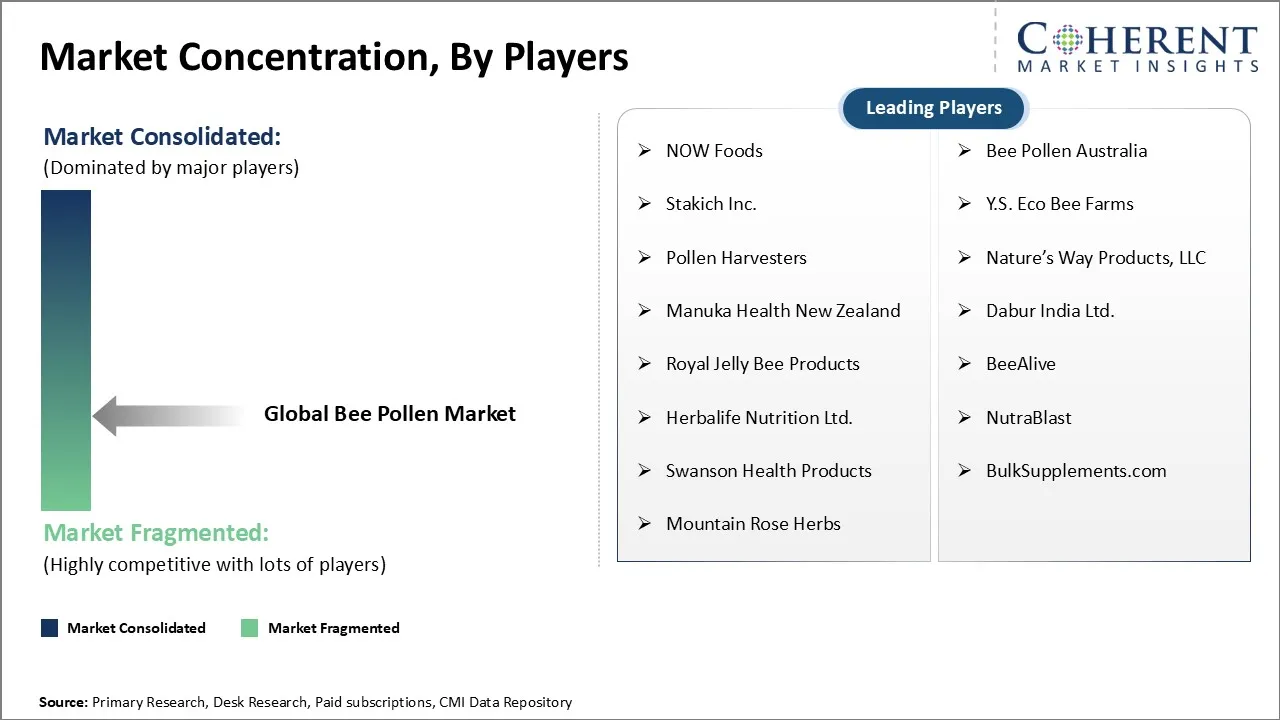
| Companies covered: | NOW Foods, Bee Pollen Australia, Stakich Inc., Y.S. Eco Bee Farms, Pollen Harvesters, Nature’s Way Products, LLC, Manuka Health New Zealand, Dabur India Ltd., Royal Jelly Bee Products, BeeAlive, Herbalife Nutrition Ltd., NutraBlast, Swanson Health Products, BulkSupplements.com, and Mountain Rose Herbs | ||
| Growth Drivers: |
| ||
| Restraints & Challenges: |
| ||
Bee Pollen Market Dynamics
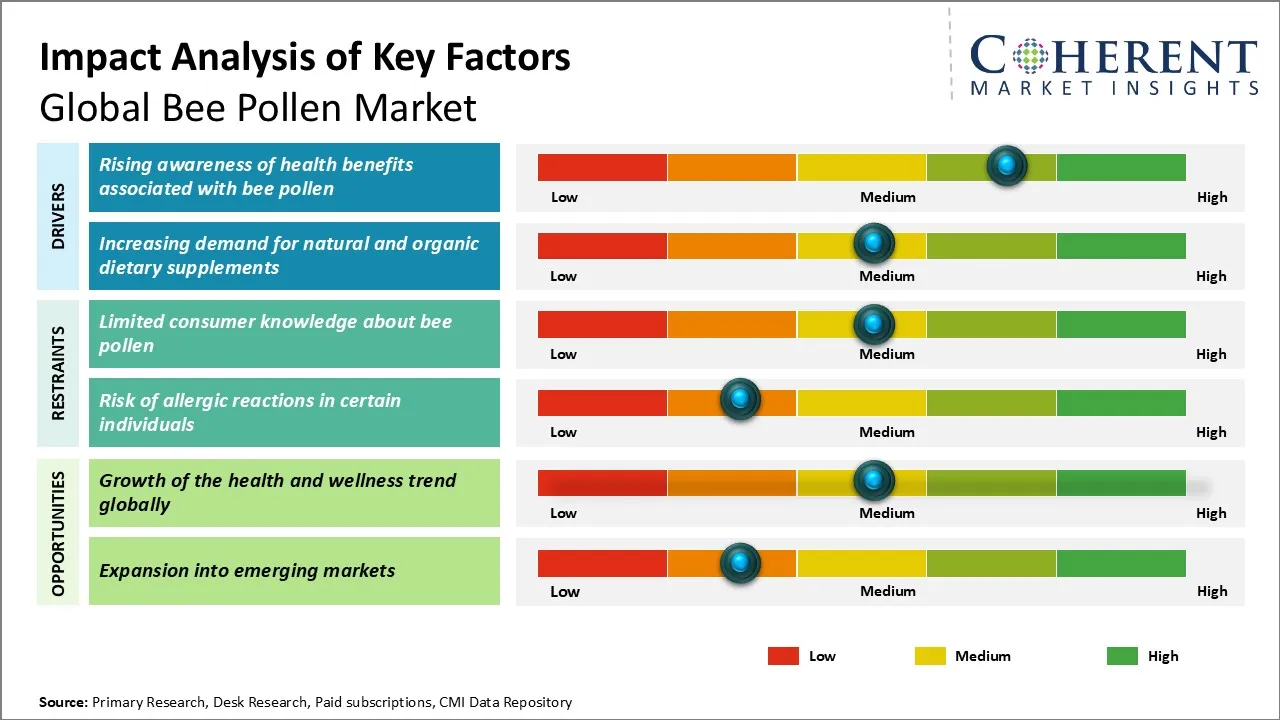
Bee Pollen Market Driver - Rising Awareness of Health Benefits Associated with Bee Pollen
Growing consumer consciousness regarding natural and holistic health remedies has significantly contributed to the increasing demand for bee pollen globally. Bee pollen is gaining recognition as a potent superfood, primarily due to its rich nutritional profile encompassing vitamins, minerals, antioxidants, and amino acids that support overall well-being. Many individuals are turning to bee pollen to enhance immunity, improve energy levels, and boost digestive health, driven by the desire for preventive healthcare and natural supplements.
In U.S. and Europe, where brands like NOW Foods and Swanson Health Products have expanded their product lines to include organic, non-GMO bee pollen capsules and granules. These products are prominently marketed for their immune-boosting and energy-enhancing properties, aligning with the consumer shift toward plant-based and natural health remedies.
Bee Pollen Market Opportunity - Expansion Driven by the Global Health and Wellness Trend
The burgeoning global health and wellness trend presents a significant growth opportunity for the bee pollen market, as consumers increasingly prioritize natural and nutrient-rich products to support their overall well-being. Bee pollen, known for its high protein content, vitamins, minerals, antioxidants, and anti-inflammatory properties, aligns well with the rising consumer inclination toward holistic and preventive health measures. This trend is being fueled by heightened awareness of lifestyle-related diseases, increasing disposable incomes, and a shift toward organic and clean-label products.
For example, companies like Nature’s Goodness have leveraged the health and wellness boom by launching premium bee pollen powders and capsules positioned as natural energy boosters and immune support supplements.
Analyst Opinion (Expert Opinion)
- The global bee pollen market is gaining momentum, driven by increasing consumer awareness of natural health supplements and the growing trend towards holistic wellness. Insights from the International Apitherapy Conference (2023) and the Natural Products Expo (2022) highlighted the rising popularity of bee pollen as a superfood, revered for its nutritional benefits.
- Brands like Bee Harmony and Y.S. Eco Bee Farms are leading the charge, offering high-quality, organic bee pollen products that cater to health-conscious consumers. For example, Bee Harmony's commitment to sustainable sourcing and local beekeepers reflects a growing emphasis on ethical consumption.
- At these events underscored the importance of educating consumers about the health benefits of bee pollen, particularly its potential to enhance energy levels and support immune function. As the market expands, companies that prioritize quality, transparency, and sustainability will likely capture a larger share. The future of the global bee pollen market will depend on the industry's ability to adapt to consumer preferences, navigate regulatory challenges, and promote the environmental importance of bee conservation while meeting the rising demand for natural health products.
Speak to the analyst
Want personalized insights?
Take the findings above to one of our principal consultants, or have the report rebuilt around the segments, geographies and competitors you actually track.
Market Segmentation
- Type Insights (Revenue, USD Mn, 2021 - 2033)
- Wild Flower Bee Pollen
- Camellia Bee Pollen
- Rape Bee Pollen
- Others
- Form Insights (Revenue, USD Mn, 2021 - 2033)
- Granules
- Powder
- Capsules
- Others
- Application Insights (Revenue, USD Mn, 2021 - 2033)
- Food
- Pharmaceutical
- Cosmetic and Personal Care
- Others
- Distribution Channel Insights (Revenue, USD Mn, 2021 - 2033)
- Online Retail
- Specialty Stores
- Supermarkets/Hypermarkets
- Others
- Regional Insights (Revenue, USD Mn, 2021 - 2033)
- North America
- U.S.
- Canada
- Latin America
- Brazil
- Argentina
- Mexico
- Rest of Latin America
- Europe
- Germany
- U.K.
- Spain
- France
- Italy
- Russia
- Rest of Europe
- Asia Pacific
- China
- India
- Japan
- Australia
- South Korea
- ASEAN
- Rest of Asia Pacific
- Middle East
- GCC Countries
- Israel
- Rest of Middle East
- Africa
- South Africa
- North Africa
- Central Africa
- North America
- Key Players Insights
- NOW Foods
- Bee Pollen Australia
- Stakich Inc.
- Y.S. Eco Bee Farms
- Pollen Harvesters
- Nature’s Way Products, LLC
- Manuka Health New Zealand
- Dabur India Ltd.
- Royal Jelly Bee Products
- BeeAlive
- Herbalife Nutrition Ltd.
- NutraBlast
- Swanson Health Products
- BulkSupplements.com
- Mountain Rose Herbs
Sources
Primary Research Interviews
- R&D Director – Leading Bee Pollen Manufacturer/Processor
- Procurement Manager – Major Natural Products Retailer specializing in bee products
- Product Development Head – Well-Known Nutraceutical/Vitamin Brand (Bee Pollen Division)
- Beekeeping Operations Manager – Commercial Apiculture Organization
- Sustainability & Certification Manager – Food Supplement Certification Body
Stakeholders
- Manufacturers: Bee pollen processors, packagers, exporters, organic bee pollen producers
- End-use Sectors:
- Dietary Supplements (Bee pollen capsules, powders, nutrition blends)
- Functional Foods & Beverages (Nutrition bars, wellness drinks, energy blends)
- Cosmetics & Personal Care Brands using bee pollen infusion
- Pharmaceutical companies (nutraceutical formulations, immune health, allergy relief)
- Animal Feed producers (specialty pollen blends)
- Regulatory & Certification Bodies:
- Food safety/labeling authorities, organic certification agencies
- Apicultural associations, bee product trade organizations
- E-commerce Platforms and Retailers:
- Major online supplement portals and health product retailers
- Traditional health food stores, wellness chains
- Technology Integration Players:
- Traceability, supply chain analytics providers for apicultural products
- AI-based market intelligence and personalization services
Databases
- UN Comtrade Database (Bee pollen imports/exports, HS Code 041000)
- Global Bee Pollen Import Export databases (Volza, India EXIM, US Import/Export stats)
Magazines
- Nutrition & Wellness Magazine – Trends in superfoods and bee products
- Global Health Insights – Rise of bee pollen in dietary supplementation
- Health Food Business Review – Organic and functional food segment updates
- Natural Products Insider – Ingredient innovation
Journals
- Journal of Apicultural Science – Bee pollen composition, health, and trade studies
- Food Research International – Bioavailability and nutritional value of bee pollen
- International Journal of Nutrition – Benefits, absorption, and consumer trends
- Journal of Dietary Supplements – Studies on bee pollen efficacy
- Journal of Food Science & Technology – Formulation trends and processes
Newspapers
- The Financial Times – Market growth of bee products and wellness segment
- The Guardian – Consumer trends in superfoods, including bee pollen
- Asia Health Journal – Growth of bee pollen consumption and export in Asia-Pacific
- European Nutrition News – Food supplement regulations, bee pollen standards
- The New York Times – Global shift towards natural, functional supplements
Associations
- International Honey Commission (IHC)
- Apimondia (International Federation of Beekeepers’ Associations)
- American Beekeeping Federation (ABF)
- National Honey Board
- Council for Responsible Nutrition (CRN)
Public Domain Sources
- U.S. FDA – Guidelines for dietary supplements, label requirements for bee pollen
- USDA – Bee pollen grading, research on health and sustainability (2024 update to pollen quality and bee health research)
- European Commission – Food supplement regulations, novel foods approval
- World Health Organization (WHO) – Health impact, food safety guidelines
Proprietary Elements
- CMI Data Analytics Tool, Proprietary CMI Existing Repository of information for last 8 years.
Get access to 250+ pages report
Every segment, forecast, competitor profile and data table behind the analysis above — available for instant download.
- ESOMAR Member
- ISO 9001:2015 Certified
- D-U-N-S Registered
- GDPR & CCPA Compliant
Missing comfort of reading report in your local language? Find your preferred language:
Transform your Strategy with Exclusive Trending Reports
Frequently Asked Questions
The global bee pollen market is estimated to be valued at USD 876.9 Mn in 2026 and is expected to reach USD 1,362.7 Mn by 2033.
The CAGR of global bee pollen market is projected to be 6.5% from 2026 to 2033.
The price of 1 kg of bee pollen varies based on quality, origin, and vendor. In India, prices range from USD 27.97 to USD 99.99 per kilogram, depending on factors like purity and sourcing.
Rising awareness of health benefits associated with bee pollen and increasing demand for natural and organic dietary supplements are the major factors driving the growth of the global bee pollen market.
Limited consumer knowledge about bee pollen and risk of allergic reactions in certain individuals are the major factors hampering the growth of the global bee pollen market.
In terms of type, wild flower bee pollen is estimated to dominate the market revenue share in 2026.
NOW Foods, Bee Pollen Australia, Stakich Inc., Y.S. Eco Bee Farms, Pollen Harvesters, Nature’s Way Products, LLC, Manuka Health New Zealand, Dabur India Ltd., Royal Jelly Bee Products, BeeAlive, Herbalife Nutrition Ltd., NutraBlast, Swanson Health Products, BulkSupplements.com, and Mountain Rose Herbs are the major players.