

Global Biologics Contract Manufacturing Market Size and Forecast – 2026 to 2033
The global biologics contract manufacturing market is estimated to be valued at USD 39.72 Bn in 2026 and is expected to reach USD 80.40 Bn by 2033, exhibiting a compound annual growth rate (CAGR) of 10.6% from 2026 to 2033. The cause of this huge growth of the market is the growing demand for biologics, improvements in manufacturing technologies, and strategic partnership between pharmaceutical firms and Contract Manufacturing Organizations (CMOs) in order to maximize production efficiency and cost-effectiveness.
Key Takeaways of the global biologics contract manufacturing market
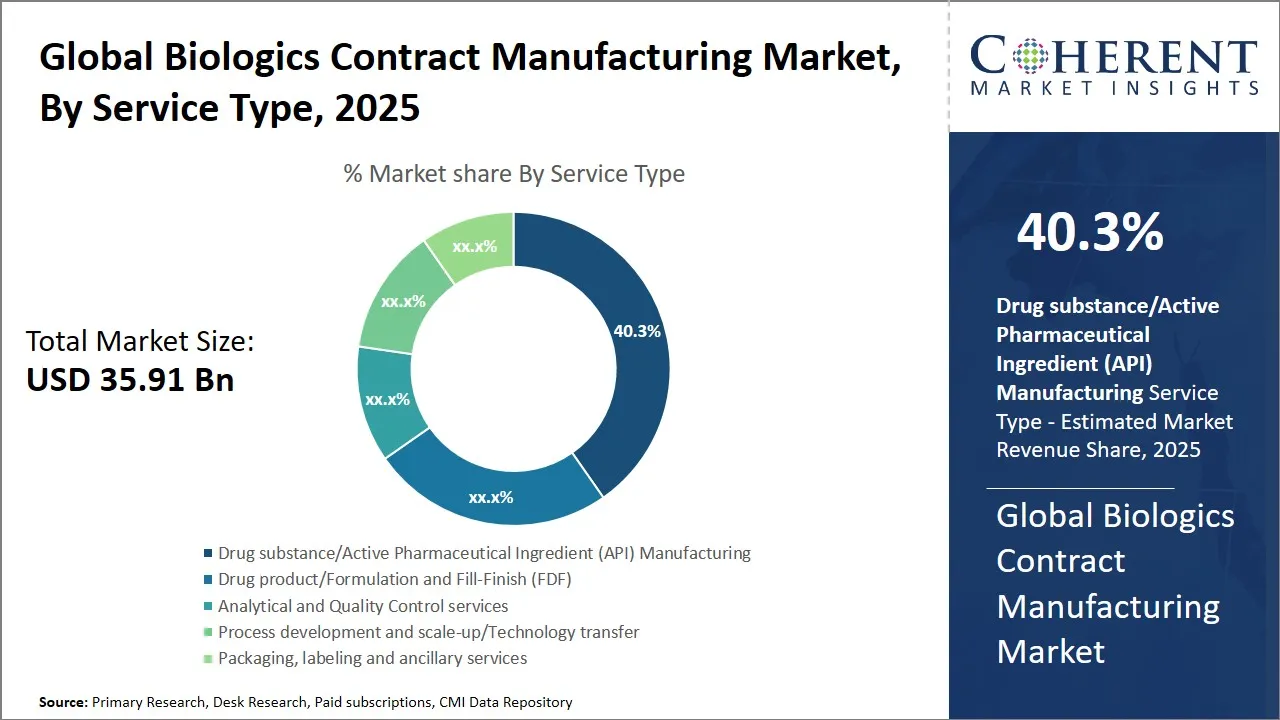
- In the global biologics contract manufacturing market, the drug substance/Active Pharmaceutical Ingredient (API) manufacturing segment is projected to account for the largest market share at 41.3 % in 2026.
- By biologic type, the monoclonal antibodies (mAbs) segment is expected to lead the market with 35.3 % share in 2026, underscoring their pivotal role in modern therapeutic approaches.
- Based on production system, the mammalian systems (CHO, NS0, HEK) segment is expected to dominate with 44.4 % of the market share in 2026.
- North America is expected to lead the market, holding a share of 40.3 % in 2026. Asia Pacific is anticipated to be the fastest-growing region, with an estimated market share of 34.5% in 2026.
Market Overview
In terms of market trends, the biologics contract manufacturing sector is witnessing a shift towards advanced and flexible manufacturing platforms, such as single-use technologies and continuous processing, which enhance scalability and reduce contamination risks. Additionally, growing investments in biosimilars and personalized medicine are propelling the demand for specialized manufacturing services. Regulatory harmonization and emphasis on quality control are also influencing contract manufacturing organizations to adopt more stringent compliance measures, fostering innovation and strengthening their competitive positioning in the market.
Current Events and Its Impact
Current Events | Description and its Impact |
Expansion of manufacturing capacity by leading CDMOs |
|
Rapid Advancement of AI and Automation in Bioprocessing |
|
Segmental Insights
- Current Industry Events of 2026
- Market Size Estimation
- Regional Breakdown
- Competitive Landscape
- Customer Intelligence
- Segmental Analysis
- Pricing Analysis
- Key Market Drivers, Challenges & Future Trends
- Customized Insights Section
Biologics Contract Manufacturing Market Insights, by Service Type – Dominance of Drug Substance/API Manufacturing in Biologics Contract Services Driven by High Complexity, Cost, and Rising Demand for Large-Molecule Therapies
Drug Substance/Active Pharmaceutical Ingredient (API) manufacturing is projected to account for the largest share of services in the global biologics contract manufacturing market, representing an estimated 41.3% in 2026. This leadership is mainly because of inherent complexity and technical standards that are related to biologic APIs as compared to small-molecule drugs. Monoclonal antibodies, recombinant proteins, and vaccines are biologics that must either be prepared in specialized production facilities, which must have the capability of handling large biomolecules and living cell cultures in stringent sterile conditions.
For example, in June 2025, Veranova, a U.S.-based contract development and manufacturing organization, specializing in active pharmaceutical ingredients, announced that it will invest an extra USD 20 million to its Devens, Massachusetts campus, extending its bioconjugation development and production capacity, over USD 50 million in total site investment, and 70 jobs by the next year.
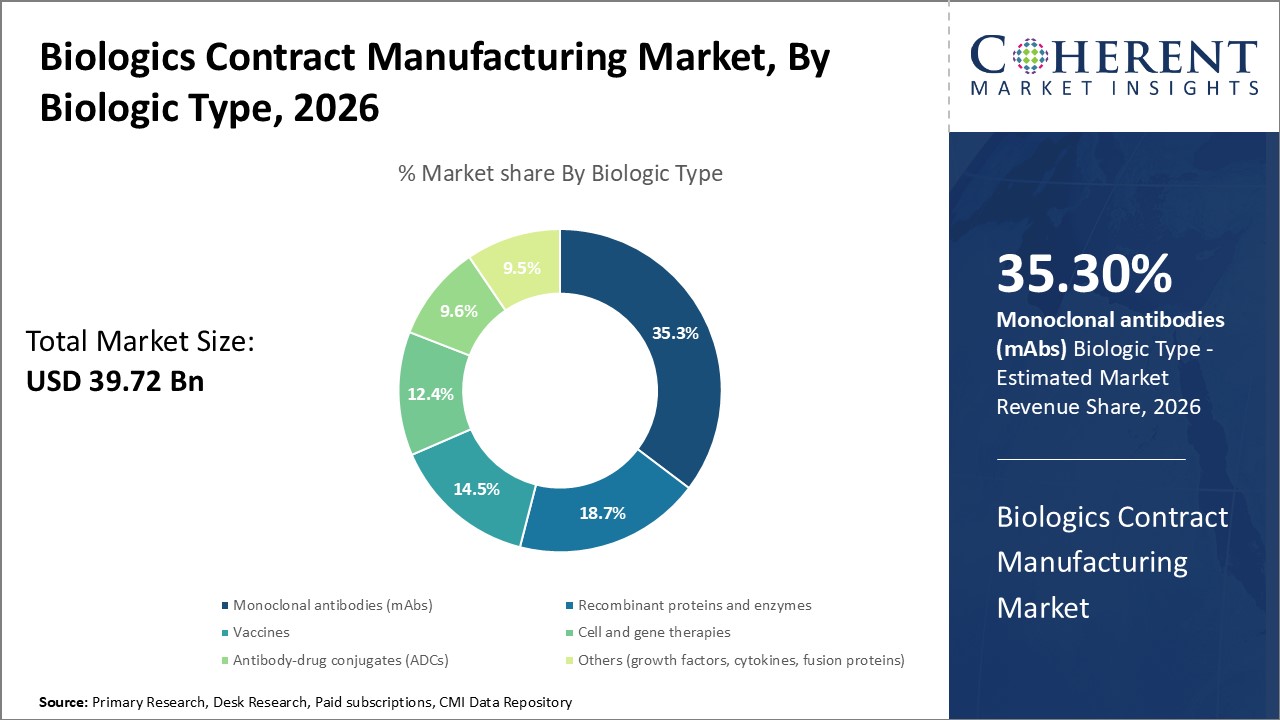
Biologics Contract Manufacturing Market Insights, By Biologic Type – Monoclonal Antibodies (mAbs) Dominates Due to Therapeutic Versatility and Market Demand
Monoclonal antibodies (mAbs) is expected to occupy the largest market share in the biologics contract manufacturing market in 2026, at 35.3%, and this can be attributed to its core position in modern therapeutic approaches. The selective targeting capability of mAbs to disease-specific antigens has transformed therapies in the field of oncology, autoimmune diseases, and infectious diseases, making them blockbuster drugs.
The second major reason is the established regulatory channels and production technologies that relate to the mAbs. Contract manufacturers are considered rather mature biologic products whereby they have established a solid platform in terms of antibody expression, purification and formulation, which allows them to produce products in a manner that is consistent and cost-effective.
Biologics Contract Manufacturing Market Insights, by Production System – Mammalian Systems Lead Due to Superior Protein Expression and Complex Biologic Demand
The mammalian systems (CHO, NS0, HEK) segment is projected to command 44.4% of the market share in 2026, due to their unparalleled capability of producing complex, human-like proteins with the right post-translational modifications. The presence of biologic therapeutics, especially of monoclonal antibodies and recombinant proteins, requires complex glycosylation patterns and folding structures, which mammalian cells are the only ones that can faithfully recapitulate, and which are the determinants of efficacy and safety of the resulting drug products.
Regulatory acceptance and track record of successful commercial biologics by mammalian systems also contribute to their preferential use by pharmaceutical developers. Mammalian cell lines are able to consistently supply regulatory agencies across the world with data required to prove the comparability of glycosylation and bioactivity data.
Regional Insights
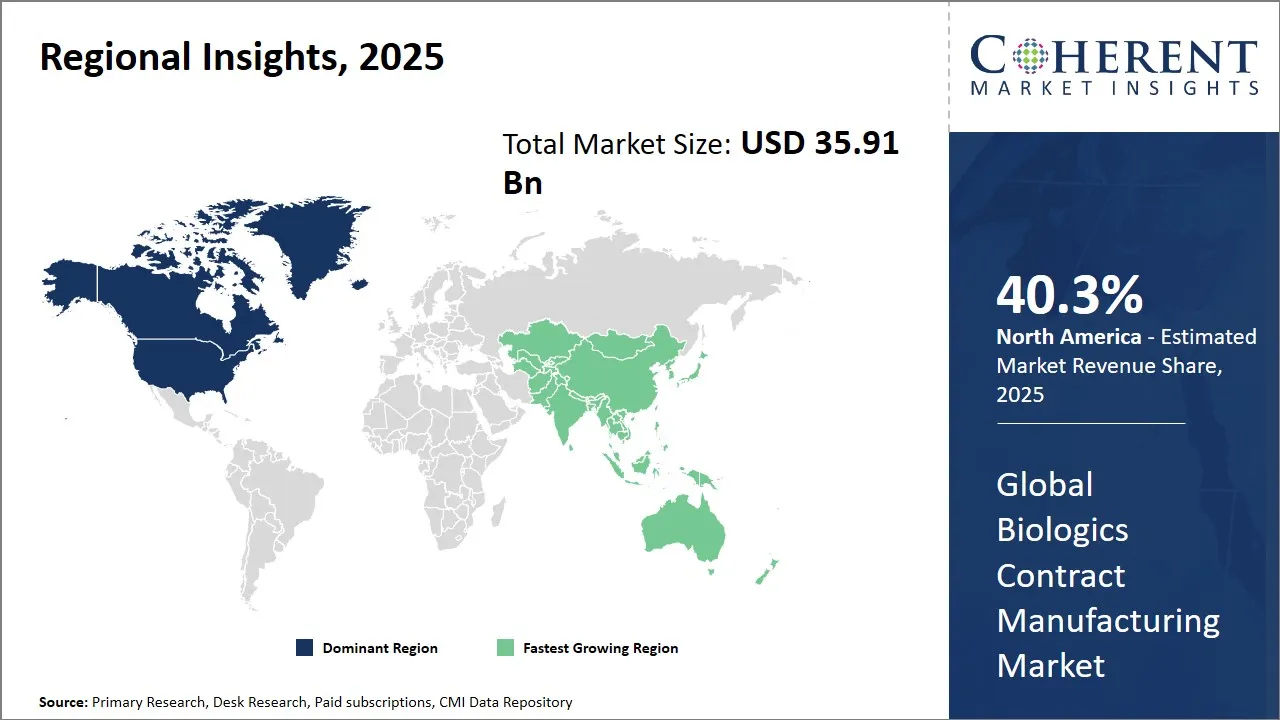
North America Biologics Contract Manufacturing Market Analysis and Trends
The dominance of the global biologics contract manufacturing market in North America is driven by its well-established pharmaceutical and biotechnology ecosystem, accounting for a 40.3% share in 2026, supported by strong government initiatives and advanced infrastructure. The existent biotech centers in the U.S., such as the Bay Area in California and biotech corridor in Massachusetts, promote innovation, as well as collaboration throughout the biologics value chain. Within the Biomedical Advanced Research and Development Authority (BARDA) and other government agencies such as the National institutes of health (NIH) funding, provides a favorable environment to the development and production of biologics.
For example, in August 2026, LOTTE BIOLOGICS Contract Development and Manufacturing Organization of South Korea signed its first production contract and expanded its facility in Antibody-Drug Conjugate in New York, U.S the company, who joined the market in 2022 by acquiring the manufacturing plant of biologics of Bristol Myers Squibb, is expanding with locations in North America and Asia Pacific to manufacture not only antibodies, but also Antibody-Drug Conjugates.
Asia Pacific Biologics Contract Manufacturing Market Analysis and Trends
In the meantime, the Asia Pacific region has the highest growth rate in biologics contract manufacturing market with an estimated share of 34.5% in 2026, owing to growing investments in biopharmaceutical facilities, friendly policies as well as rising domestic demand. Countries like China, India, Japan and South Korea have boosted their biologics production potentials by government subsidies designed to enhance biotech innovation and self-sufficiency in drug production. The economies of scale, reduced cost of production, and increased supply of skilled professionals are the factors that attract international players and make local companies develop their biologics CMOs.
For example, Aragen, a contract research, development, and manufacturing organization based in India, is set to begin GMP biologics manufacturing at its new Bangalore facility in July 2026. Equipped with single-use 2,000 L bioreactors and integrated downstream systems, the site will operate on an intensified fed-batch platform delivering productivity of over 25 g/L. This facility is designed to complement Aragen’s existing U.S. biologics site in California, U.S and will help meet the growing global demand for biologics.
Global Biologics Contract Manufacturing Market Outlook for Key Countries
U.S. Biologics Contract Manufacturing Market Analysis and Trends
U.S. biologics contract manufacturing industry will be the most competitive, with increasing investments in R&D of new biologics, a rise in the incidence of chronic diseases, increased investment in healthcare, and an increase in the number of drugs approved.
For instance, in May 2024, the U.S. FDA approved an eye treatment drug developed by Biocon Biologics. Such rising approvals across diverse drugs and therapeutic indications are expected to further accelerate market growth.
China Biologics Contract Manufacturing Market Analysis and Trends
The market in China, owing to aggressive government policies, hiked government and corporate investments and emphasis on biotechnology as a strategic industry is rapidly evolving into a global biologics manufacturing hub. The major companies like WuXi Biologics and Hangzhou Tigermed are opening up their state-of-art-the-manufacturing plants and providing end-to-end contract manufacturing and development to the local and other outsourcing clients.
For example, in July 2026, WuXiBiologics, a China-based and one of the largest Contract Research, Development and Manufacturing Organizations in the world, introduced a new high-concentration biologics platform, WuXiHigh 2.0. Protein concentrations to 230 mg/mL with proprietary excipient blends allow the technology to reduce viscosity by up to 90% and enhance formulation stability, dosing efficiency, and manufacturing scalability.
Japan Biologics Contract Manufacturing Market Analysis and Trends
By exploiting its high-level technological knowledge and developed pharmaceutical industry, Japan remains the market leader in the biologics contract manufacturing in the Asia Pacific biologics contract manufacturing market. Such companies as AGC Biologics and Fujifilm Diosynth Biotechnologies have footprints that provide high-quality contract manufacturing services that both facilitate domestic innovation and foreign clients.
For example, in June 2024, Kyowa Kirin, a Japanese pharmaceutical company, will spend up to USD 530 million to build a new biomanufacturing facility in North Carolina, U.S to produce antibodies and other biologics by 2027 on its own behalf and on behalf of third parties. Around the same period, the U.S. branch of Asahi Kasei Medical’s Bionova Scientific, a biologics contract manufacturer, announced plans to establish a new facility in The Woodlands, Texas. The plant will focus on producing plasmid DNA for cell and gene therapies as well as mRNA-based vaccines.
Germany Biologics Contract Manufacturing Market Analysis and Trends
Germany is one of the most important participants in the sphere of biologics contract manufacturing in Europe with its accuracy of engineering and innovative pharmaceutical environment. Firms such as the contract manufacturing departments of Bayer, the Boehringer Ingelheim and the Rentschler Biopharma have offered high-quality biologics manufacturing services, which are regulatory, cost effective, and sustainable. German government supports biotech SMEs and startups via grants and through public-private partnerships, which enable them to be innovative in biologics development. Its capitalist position in Europe and well-established trade relations serve to make supply chain efficient and cross border partnerships in the region.
For example, in July 2026, Simtra BioPharma Solutions, a CDMO operating in the sterile injectables field, finished a new facility at its Halle, Germany campus. This growth to a site with close to 12,000 square meters of production area, 150 jobs and four more freeze dryers to serve the growing world need of complex injectable drugs.
End User Feedback and Unmet Needs - Biologics Contract Manufacturing Market
- In the global biologics contract manufacturing market, the views of end users show both a desire to see advanced capabilities as well as complaints of ongoing limitations. The innovators in large biopharma also tend to emphasize the importance of having the ability to scale-up quickly and with flexibility that CDMOs offer, especially when faced with a rapid schedule of developing a monoclonal antibody or vaccine. Indicatively, a number of companies have presented that outsourcing the production of mammalian cell cultures enabled them to obtain clinical trial materials in time without significant capital investment. This operation flexibility has been mentioned as a key element in maintaining the R&D streams at high demand periods, driving assurance in strategic alliances with the contract manufacturers. Conversely, the mid-sized biotech firms often report the difficulties in terms of unequal communication and poor transparency in process optimization. The inability to see quality assurance data at crucial manufacturing phases is one of the most frequent concerns that cause delays in filing regulatory documents and undermine confidence in the long-term cooperation.
- The gap in the needs of this market indicates structural and technological gaps that the manufactures have to fill in to enhance client trust. Smaller developers are still faced with affordability and access, as the contract manufacturing services are still monopolized by some limited players in the world, whose pricing models are focused on the premium segment. The increased need to customize solutions, including modular manufacturing platforms, that are oriented to particular types of therapy or regional regulatory frameworks is also evident. Most clients also stress the importance of the integrated digital tools to monitor the processes in real-time and generate analytical data, which would decrease the uncertainty of its operation and expedite the decision-making process. Not only do the necessary gaps present the possibility of CDMOs differentiating based on technology and service-based models, but also allows them to better retain their customers by becoming more in line with changing therapeutic pipelines. To policymakers, the participation of wider market as assets by use of incentives or infrastructure developments may offer a solution to more capacity and development of a more competitive ecosystem, which will lead to increased access to advanced biologics globally.
Market Players, Key Developments, and Competitive Intelligence
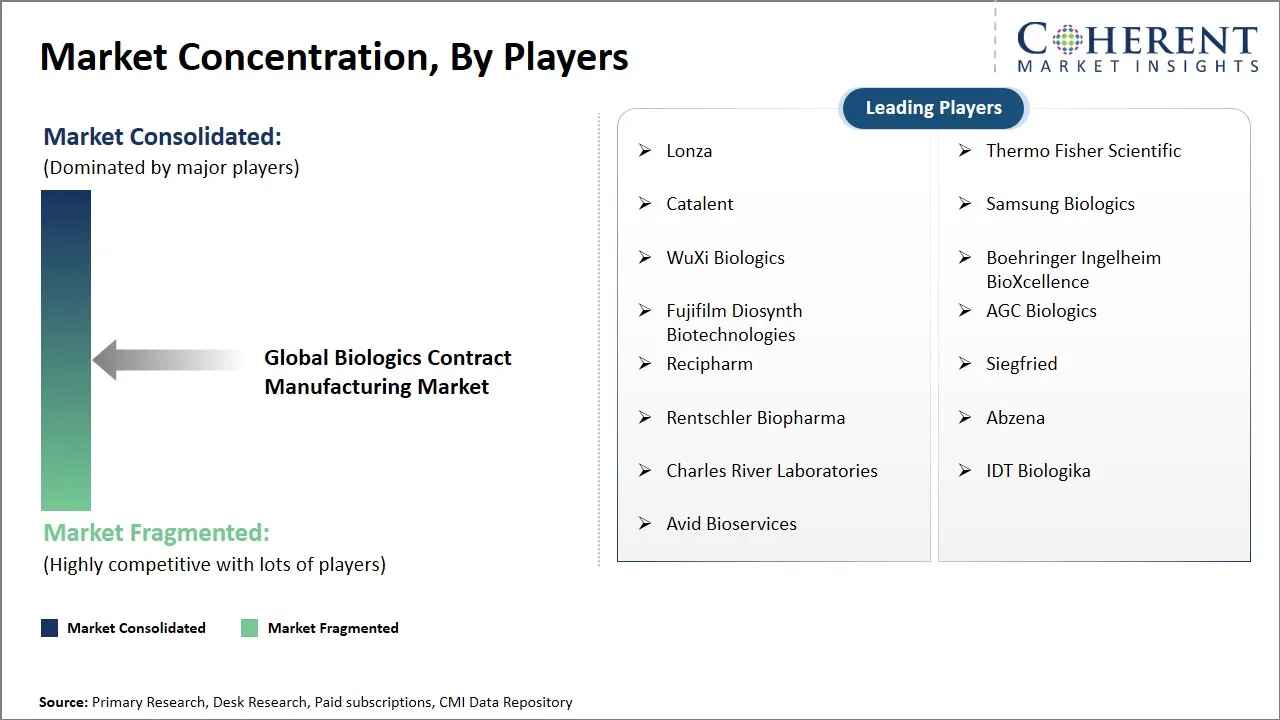
Key Developments
- On September 04, 2025, Exothera, a Belgium-based Contract Development and Manufacturing Organization (CDMO), ceased its operations, while South Korea’s Lotte Biologics, also a Contract Development and Manufacturing Organization (CDMO), secured a new manufacturing contract with an undisclosed U.S. client to expand its global partnerships. The link between these two events highlights the shifting dynamics of the biologics CDMO industry, where Exothera’s exit from the market creates gaps in capacity and collaborations that financially stronger players like Lotte Biologics are well-positioned to capture, thereby strengthening their global presence.
- In June 2025, Zydus Lifesciences, an India-based pharmaceutical company, announced its entry into the global biologics contract manufacturing market by acquiring two biologics manufacturing facilities from Agenus Inc. in California, U.S for USD 75 million plus milestone payments. The deal gives Zydus immediate access to advanced biologics capabilities, establishes a strong U.S. presence, and includes an exclusive contract to manufacture Agenus’ late-stage cancer drugs Botensilimab and Balstilimab.
- In April 2025, Samsung Biologics, a South Korean contract development and manufacturing organization, signed a USD 514 million six-year deal with an undisclosed U.S. pharmaceutical company to produce biologic products. The agreement, active until 2031, represents about 16% of Samsung Biologics’ 2024 revenue and follows a USD 1.45 billion contract the company secured with a European pharma firm.
- In February 2025, Recipharm, a global contract development and manufacturing organization, opened a new Pilot Scale Development Centre in Germany to strengthen its product development services. The facility adds GMP pilot scale capabilities for oral solid dosage forms such as tablets, capsules, and granules, complementing Recipharm’s existing expertise in biologics, sterile fill & finish, and APIs, and enabling faster transitions from development to commercial manufacturing.
Top Strategies Followed by Global Biologics Contract Manufacturing Market Players
- Established industry leaders invest heavily in research and development (R&D) to innovate high-performance biologic products that meet rigorous regulatory standards and evolving client demands. To further solidify their market presence, these players actively form strategic facility expansion, partnerships and collaborations with major pharmaceutical companies, original equipment manufacturers (OEMs), and technology providers.
- For example, in June 2025, UCB, a global biopharmaceutical company from Belgium, announced plans to build a new biologics manufacturing facility in the U.S. with an estimated economic impact of USD 5 billion. The project will create about 300 high-skilled jobs and over 500 construction jobs, while also expanding UCB’s partnerships with U.S. CMOs to support its pipeline and growing patient base.
- Mid-level players in the biologics contract manufacturing market adopt strategic initiatives that emphasize cost-effectiveness without compromising on quality. Recognizing the significant price sensitivity among certain consumer segments and biotechnology startups, these companies focus on balancing affordability with reliable production standards.
- For mid-level players, companies such as WuXi Vaccines and Rentschler Biopharma illustrate the focus on cost-effectiveness while maintaining high-quality standards. WuXi Vaccines, operating under WuXi Biologics, provides vaccine manufacturing services at competitive prices, making it appealing to biotechs seeking efficient solutions without premium costs.
- Small-scale players in the global biologics contract manufacturing space differentiate themselves through specialization and innovation. By focusing on unique product features, custom biologics, or novel therapeutic classes, these companies cater to specific client needs that may not be fully addressed by larger manufacturers. To remain competitive and agile, small-scale firms often adopt cutting-edge bioprocessing technologies and digital manufacturing solutions that allow flexible, high-quality production at lower volumes.
- For small-scale players, examples include Aldevron and Minaris Regenerative Medicine, which distinguish themselves through specialization and innovation. Aldevron, based in the U.S., concentrates on plasmid DNA, mRNA, and proteins for advanced therapies, offering tailored services for smaller biotech projects.
Market Report Scope
Biologics Contract Manufacturing Market Report Coverage
| Report Coverage | Details | ||
|---|---|---|---|
| Base Year: | 2025 | Market Size in 2026: | USD 39.72 Bn |
| Historical Data for: | 2020 To 2024 | Forecast Period: | 2026 To 2033 |
| Forecast Period 2026 to 2033 CAGR: | 10.6% | 2033 Value Projection: | USD 80.40 Bn |
| Geographies covered: |
| ||
| Segments covered: |
| ||
| Companies covered: | Lonza, Thermo Fisher Scientific, Catalent, Samsung Biologics, WuXi Biologics, Boehringer Ingelheim BioXcellence, Fujifilm Diosynth Biotechnologies, AGC Biologics, Recipharm, Siegfried, Rentschler Biopharma, Abzena, Charles River Laboratories, IDT Biologika, and Avid Bioservices | ||
| Growth Drivers: |
| ||
| Restraints & Challenges: |
| ||
Biologics Contract Manufacturing Market Dynamics
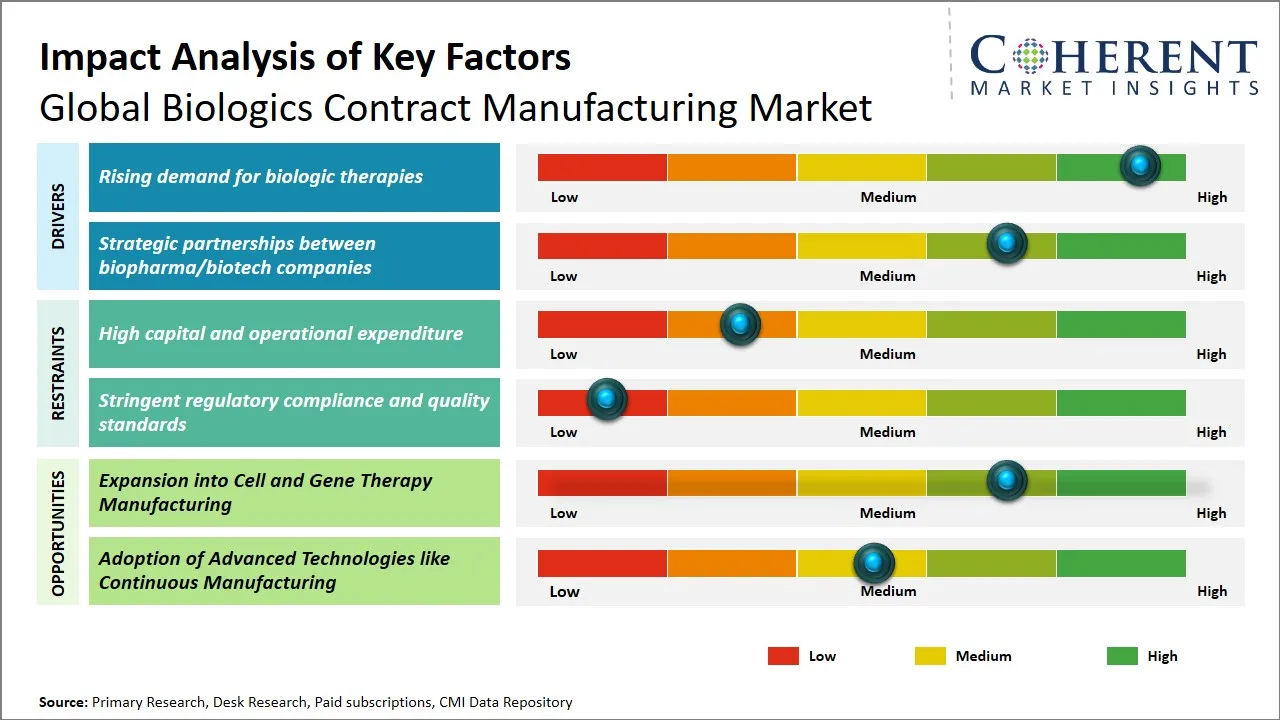
Biologics Contract Manufacturing Market Driver - Rising Demand for Biologic Therapies
The rising numbers of chronic diseases and complicated medical conditions have greatly increased the rate of biologic therapy, which has been found to be more efficient and focused as compared to the traditional chemical drugs. This explosion of demand is compelling pharmaceutical companies to increase the capacity to produce products that would satisfy the need of the patients in an effective manner. Nonetheless, owing to the complexities of biologics that entail live cells and the high-tech and skilled manufacturing approaches, in-house manufacturing poses considerable barriers regarding cost, technology, and expertise. Consequently, most biotech and pharmaceutical companies have been outsourcing their biologics production tasks to contract manufacturing organizations (CMOs) with specialized expertise in the field and advanced technology.
For example, in December 2024, Lonza, a Switzerland-based global contract development and manufacturing organization, introduced a new service to deliver orally administered biologic therapies by using its own customized Capsugel Enprotect capsules. The solution involving bi-layer manufacturing technology is aimed at smart capsule companies that are formulating special oral delivery systems to the disease like diabetes and obesity with Lonza already getting the first customer under the program.
Biologics Contract Manufacturing Market Opportunity - Expansion into Cell and Gene Therapy Manufacturing
The biologics contract manufacturing market is highly promising in terms of expansion to cell and gene therapy manufacturing as an act of market growth. Due to the recent rapid progress in the field of personalized medicine, cell and gene therapies have never been as popular as they are now, as an innovative treatment option to a variety of complex diseases, including rare genetic conditions, cancers, and autoimmune diseases. A portion of this small but rapidly growing segment of the market can be won by contract manufacturing organizations (CMOs) with investments in state-of-the-art technologies, cleanrooms, and dedicated workforce focused on cell and gene therapy manufacturing.
For instance, in June 2025 ProBio, a global contract development and manufacturing organization focused on cell and gene therapy, was inaugurated in New Jersey, U.S with the opening of its flagship Cell and Gene Therapy Center of Excellence.
Analyst Opinion (Expert Opinion)
- The market of biologics contract manufacturing is still growing at a rapid pace due to increased demand of complex therapeutics like monoclonal antibodies, vaccines, and cell and gene therapies. New bioprocessing technologies such as the single-use systems and continuous processing have enhanced efficiency and scalability, which have turned the contract services to be more appealing to both small biotech companies and the giant pharmaceutical companies. The regulatory bodies like U.S. FDA and EMA are also actively promoting innovation by providing easy approvals and revised guidelines that have motivated firms to outsource development and production. Biosimilars, viral vectors, and customized CDMO services of niche biologics are emerging opportunities, yet the company continues to face issues in its level of quality, cost management, and supply chain resilience. The knowledge sharing events that influence the momentum of the market also include BIO International Convention, CPhi Worldwide, DCAT Week, and BioProcess International Conference, during which in the last three years process breakthroughs in manufacturing technologies, regulatory harmonization, or collaborative models have been demonstrated.
- Current efforts are changing the trend of the market. The ability of Samsung Biologics to expand its capacity in South Korea, investments made by Lonza on cell and gene therapy plants and acquisitions of Thermo Fisher to increase its biologics CDMO capabilities can be considered remarkable examples of industry leadership. States have intervened too, including the U.S. Operation Warp Speed and the EU’s vaccine scale-up manufacture, which increased dependence on contract manufacturing partners to satisfy demand. These partnerships did not only speed up the production at the most crucial moment but also paved the way towards more robust public-private collaborations in the production of biologics. All these trends portend a future in which contract manufacturing continues to be a foundation of world biopharma innovation and access.
Speak to the analyst
Want personalized insights?
Take the findings above to one of our principal consultants, or have the report rebuilt around the segments, geographies and competitors you actually track.
Market Segmentation
- Service Type Insights (Revenue, USD Bn, 2021 - 2033)
- Drug substance/Active Pharmaceutical Ingredient (API) Manufacturing
- Drug product/Formulation and Fill-Finish (FDF)
- Analytical and Quality Control services
- Process development and scale-up/Technology transfer
- Packaging, labeling and ancillary services
- Biologic Type Insights (Revenue, USD Bn, 2021 - 2033)
- Monoclonal antibodies (mAbs)
- Recombinant proteins and enzymes
- Vaccines
- Cell and gene therapies
- Antibody-drug conjugates (ADCs)
- Others (growth factors, cytokines, fusion proteins)
- Production System Insights (Revenue, USD Bn, 2021 - 2033)
- Mammalian systems (CHO, NS0, HEK)
- Microbial systems (E. coli, yeast)
- Alternative/Emerging systems (insect cells, plant, cell-free)
- Scale Insights (Revenue, USD Bn, 2021 - 2033)
- Preclinical/clinical scale manufacturing
- Commercial scale manufacturing
- Company Size Insights (Revenue, USD Bn, 2021 - 2033)
- Small to Mid-sized Contract Manufacturers
- Large Contract Manufacturing Organizations (CMOs/CDMOs)
- Therapeutic Area Insights (Revenue, USD Bn, 2021 - 2033)
- Oncology/Hematology
- Immunology and Autoimmune Disorders
- Infectious Diseases and Vaccinology
- Cardiovascular and Renal Disorders
- Neurology and Central Nervous System (CNS) Disorders
- Metabolic and Endocrine Disorders (e.g., diabetes, obesity, thyroid)
- Respiratory Disorders
- Others (Dermatology, Rare and Orphan Diseases)
- Regional Insights (Revenue, USD Bn, 2021 - 2033)
- North America
- U.S.
- Canada
- Latin America
- Brazil
- Argentina
- Mexico
- Rest of Latin America
- Europe
- Germany
- U.K.
- Spain
- France
- Italy
- Russia
- Rest of Europe
- Asia Pacific
- China
- India
- Japan
- Australia
- South Korea
- ASEAN
- Rest of Asia Pacific
- Middle East
- GCC Countries
- Israel
- Rest of Middle East
- Africa
- South Africa
- North Africa
- Central Africa
- North America
- Key Players Insights
- Lonza
- Thermo Fisher Scientific
- Catalent
- Samsung Biologics
- WuXi Biologics
- Boehringer Ingelheim BioXcellence
- Fujifilm Diosynth Biotechnologies
- AGC Biologics
- Recipharm
- Siegfried
- Rentschler Biopharma
- Abzena
- Charles River Laboratories
- IDT Biologika
- Avid Bioservices
Sources
Primary Research Interviews
- Industry Stakeholders list
- C-level/senior executives of biopharma / biotech firms
- Heads of manufacturing/operations at biologics CDMOs
- End Users list
- Clinical development/manufacturing heads at innovative biologic drug sponsors
- R&D/process development leads at biotech companies
Government & International Databases
- U.S. Food & Drug Administration (FDA) Purple Book database
- National Center for Biotechnology Information (NCBI) resources
- U.S. Census Bureau — pharmaceutical/medicinal manufacturing data
- World Health Organization (WHO) vaccine/biologic regulatory data
- European Medicines Agency (EMA) public dossiers/regulatory database
Trade Publications
- Contract Pharma
- BioSpectrum
- Fierce Biotech/Fierce Pharma
- GEN (Genetic Engineering & Biotechnology News)
- BioProcess International
- International Bioprocessing Journal
Academic Journals/Peer-Reviewed Literature
- Biotechnology Advances
- Expert Opinion on Biological Therapy
- Journal of Industrial Microbiology & Biotechnology
- Scientific Reports/Nature Biotechnology/Nature Reviews Drug Discovery
- Journal of Bioprocess Engineering/Bioprocessing journals
- ACS Biochemistry/Biotechnology special issues
Reputable Newspapers/Media
- Reuters
- Financial Times
- The New York Times
- The Wall Street Journal
- The Guardian
- Bloomberg
Industry Associations/Consortiums/Institutes
- National Institute for Innovation in Manufacturing Biopharmaceuticals (NIIMBL)
- International Society for Pharmaceutical Engineering (ISPE)
- Biotechnology Innovation Organization (BIO)
- International Federation of Pharmaceutical Manufacturers & Associations (IFPMA)
- European Federation of Pharmaceutical Industries & Associations (EFPIA)
- Parenteral Drug Association (PDA)
Public Domain/Open Access Resources
- Government regulatory guidance documents (FDA, EMA, ICH)
- Patent databases (USPTO, EPO)
- University/institutional repositories (theses, open access)
- National science/biotechnology agency publications (e.g. NIH, EU Horizon)
Proprietary Elements
- CMI Data Analytics Tool: Proprietary analytics tool to analyze real-time market trends, consumer behavior, and technology adoption in market
- Proprietary CMI Existing Repository of Information for Last 8 Years
Get access to 250+ pages report
Every segment, forecast, competitor profile and data table behind the analysis above — available for instant download.
- ESOMAR Member
- ISO 9001:2015 Certified
- D-U-N-S Registered
- GDPR & CCPA Compliant
Missing comfort of reading report in your local language? Find your preferred language:
Transform your Strategy with Exclusive Trending Reports
Frequently Asked Questions
The global biologics contract manufacturing market is estimated to be valued at USD 39.72 Bn in 2026 and is expected to reach USD 80.40 Bn by 2033.
The CAGR of the global biologics contract manufacturing market is projected to be 10.6% from 2026 to 2033.
Rising demand for biologic therapies and strategic partnerships between biopharma/biotech companies are the major factors driving the growth of the global biologics contract manufacturing market.
High capital and operational expenditure and stringent regulatory compliance and quality standards are the major factors hampering the growth of the global biologics contract manufacturing market.
In terms of service type, drug substance/Active Pharmaceutical Ingredient (API) manufacturing is estimated to dominate the market revenue share in 2026.
Lonza, Thermo Fisher Scientific, Catalent, Samsung Biologics, WuXi Biologics, Boehringer Ingelheim BioXcellence, Fujifilm Diosynth Biotechnologies, AGC Biologics, Recipharm, Siegfried, Rentschler Biopharma, Abzena, Charles River Laboratories, IDT Biologika, and Avid Bioservices are the major players.
North America is expected to lead the global biologics contract manufacturing market in 2026.