

Global Blue Tea Market Size and Forecast – 2026 to 2033
The Global Blue Tea Market is estimated to be valued at USD 142.6 Mn in 2026 and is expected to reach USD 214.4 Mn by 2033, exhibiting a compound annual growth rate (CAGR) of 6.0% from 2026 to 2033.
Key Takeaways of the Blue Tea Market
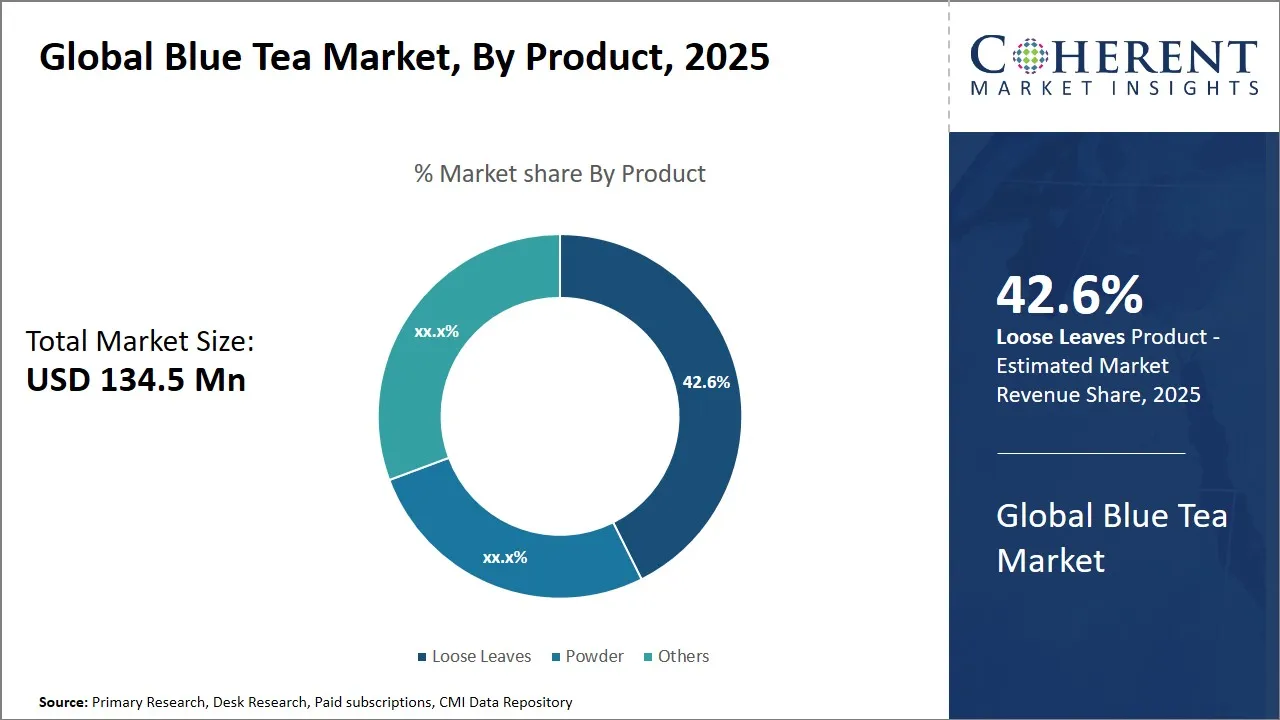
- The loose leaves segment is expected to account for 43.6% of the market share in 2026, making it the dominant product format.
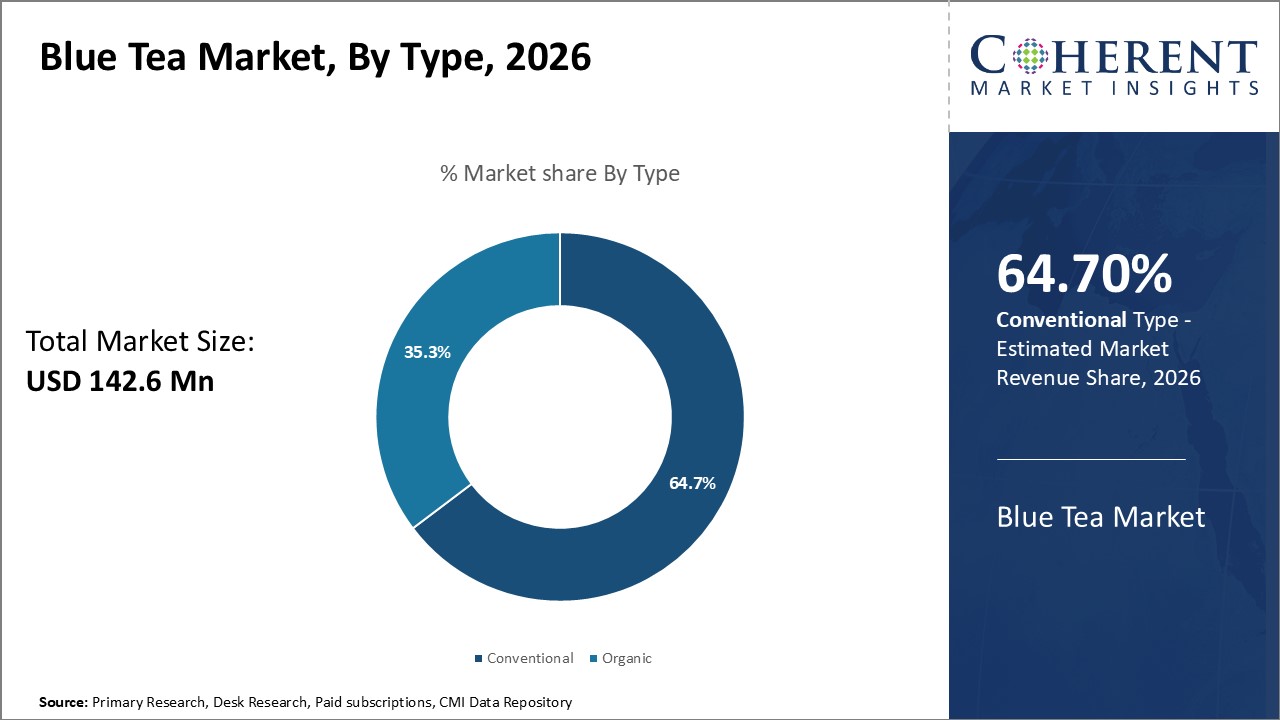
- The conventional segment leads the market with an estimated 64.7% share in 2026.
- The off-trade segment is projected to account for 57.8% of the market share in 2026.
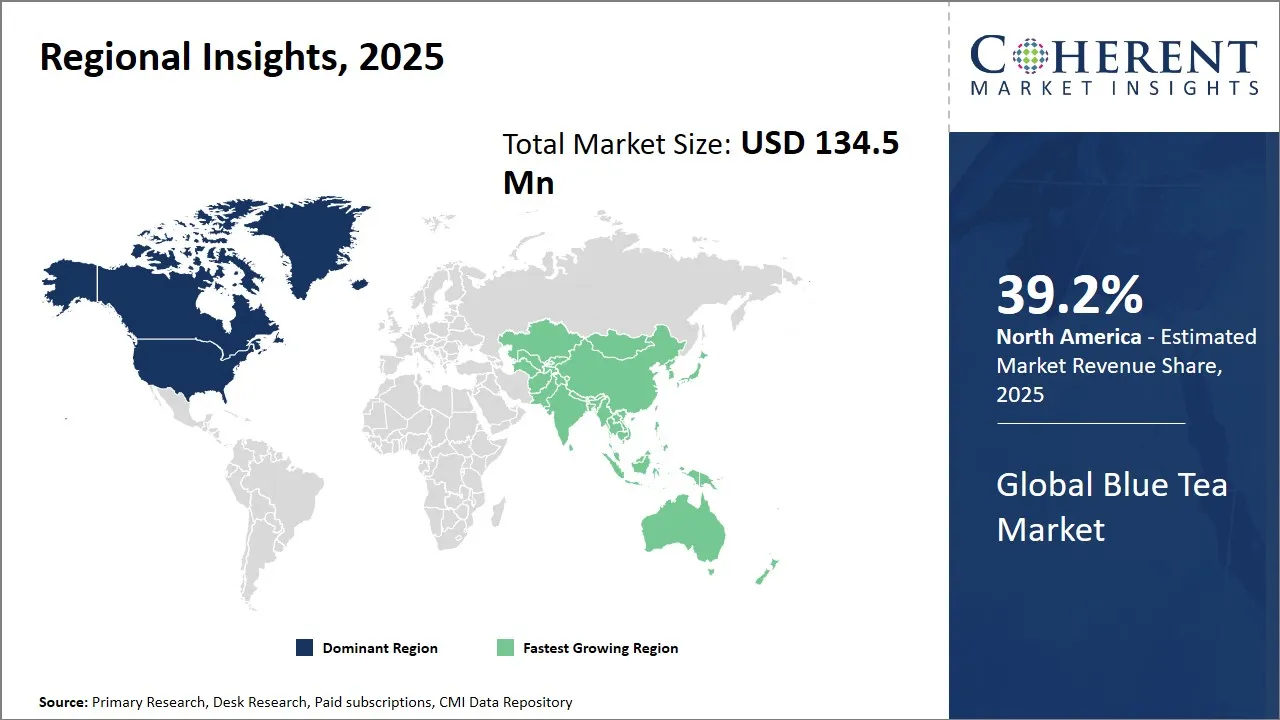
- North America leads the blue tea market in 2026 with an estimated 39.2% share in 2026.
- Asia Pacific is projected to hold 15.3% share and remain the fastest-growing regional market.
Market Overview
- The market trends of blue tea point to the growing need in the consumption of natural and antioxidative drinks since the awareness of the health advantages of drinking blue tea is growing.
- There is also innovation in the packaging and development of online retailing that is increasing accessibility and sustainable sourcing is on the rise among consumers further boosting the market expansion.
- The addition of blue tea to wellness products and functional drinks are other indicators of the changing consumer preference to holistic forms of health.
Currents Events and Its Impact
Current Events | Description and its impact |
EU enforcement signals indicate that butterfly pea flower marketed as “tea” was flagged in October 2024 for being an unauthorized novel food |
|
EU increases scrutiny of pesticide residues and MRL compliance for plant-based products |
|
Segmental Insights
- Current Industry Events of 2026
- Market Size Estimation
- Regional Breakdown
- Competitive Landscape
- Customer Intelligence
- Segmental Analysis
- Pricing Analysis
- Key Market Drivers, Challenges & Future Trends
- Customized Insights Section
Why Does Loose Leaves Dominate the Blue Tea Market in 2026?
The loose leaves segment is expected to hold 43.6% share of the blue tea market in 2026. Such dominance is mostly due to preference of consumers to authenticity and quality that is largely perceived to be offered by loose leaf blue tea. Loose leaves are more natural and less processed than powdered or other types of blue tea and therefore give a greater range of flavor and aromatic experience. In the majority of cases, tea lovers and gourus prefer loose leaves since they do not lose important oils and other nutrients during the extensive processing, which provides them with superior health and flavor.
For example, loose leaves of the premium butterfly pea flowers in Thailand and Vietnam are popular with specialty tea brands and other tea cafes. These products are positioned as whole-flower integrity, vivid natural blue infusion to market as well as the best antioxidant retention. Loose tea will be favored by high-end retailers of tea and wellness cafes that are interested in manual brewing and cold infusion, where the color clarity and flavor richness are easily seen by consumers.
Why Does Conventional Blue Tea Lead the Market Through Accessibility and Established Supply Chains?
The conventional segment is projected to command 64.7% share of the market in 2026, due to the elements regarding the convenience, economical, and historical frameworks in agriculture and distribution. The traditional blue tea enjoys the wide spread cultivation that is well integrated in the current agricultural systems in major production areas. These are fully-grown supply chains that can be easily scaled and availed constantly, making traditional blue tea a safe option among both manufacturers and consumers.
This is because the affordability of traditional blue tea compared to its organic version is a decisive growth factor. In most of the areas, consumers consider value when buying tea products and the traditional blue tea will be in a price bracket that will attract the masses to purchase. It allows the products to be accessible to more than niche markets and they can penetrate a wider range of demographic populations and geographical areas.
Off-trade Dominates the Blue Tea Market
The off-trade segment is anticipated to hold 57.8% share of the market in 2026, mainly due to the accessibility, convenience, and the changing retail environment as preferred by the consumers. Off-trade channels include supermarkets, hypermarkets, specialty stores, convenience stores and e-commerce channels, where the blue tea consumers get a wide variety of ways to purchase it. The immense increase in the contemporary retail system across the world has been of critical importance in increasing the availability of off-trade thus consolidating its position in the market.
One of the underlying reasons that explain the pre-eminence of the off-trade channels is the consumer preference towards buying packaged products to be consumed at home. Customers of blue tea are now more willing to shop in large quantities or other forms in reliable retail stores that provide convenience in making their choices and also have the advantage of being able to shop and compare different brands and variations of products in a single store. Increase in e-business has also widened the off-trade marketplace by allowing consumers to get a wide selection of products not bound by geographical boundaries, which is usually accompanied with rich background information about products and user reviews, which improves the decision-making process.
Regional Insights
North America Blue Tea Market Analysis and Trends
The North America region is projected to lead the market with a 39.2% share in 2026 fueled by the growing consumer behavior of new and health-conscious beverages along with the growing interest in a plant-based diet. The market ecosystem in this scenario is dynamic and innovation-based, and numerous new competitors are targeting ready-to-drink blue tea drinks and blends with superfoods and adaptogens. The policies by the government to favor wellness products and clean label ingredients are an additional boost to the market growth.
High penetration of the market is made easy by the great presence of specialty tea merchants, organic grocery stores, and e-commerce sites. Such players as The Republic of Tea, Rishi Tea, and Swoon Tea have also been able to make their contribution to blue tea by launching high-quality, ethically sourced tea offerings that cater to local preferences. Moreover, North America has favorable logistics facilities, including a well-established trade relationship, and thus imports and distribution of blue tea products are easily made.
Asia Pacific Blue Tea Market Analysis and Trends
The Asia Pacific region is expected to exhibit the fastest growth in the market contributing 15.3% share in 2026, which is attributed to rise in health awareness among consumers due to the presence of strong history of tea consumption and production in the regions. Some countries such as China and Japan have tea cultures that are so embedded in their culture, which offers a mature market ecosystem of blue tea products. This leadership further consolidates by the fact that there are a great number of small and big manufacturers of tea with the government policies conducive to traditional agriculture and organic farming.
Also, Asia Pacific boasts of huge cultivated lands that can cultivate butterfly pea and other blue tea botanicals that are essential in product consistency and innovations. The major brands like the Ten Fus Tea, China Tea Co., and King Tea Group have played a significant role in the innovation of products and an increase in the number of distribution outlets in the region. In addition, trade dynamics are more in favor of Asia Pacific because exporters use the cost advantage and quality standard of regions in order to cater to the global demand.
Global Blue Tea Market Outlook for Key Countries:
China Blue Tea Market Trends
China’s blue tea market has been one of the pillars of the world blue tea market as it has been associated with tea since history and has been increasingly adopting the trend of herbal infusion. Domestic producers spend a lot of money on research in order to create high quality blue tea with higher health promotion features, and they usually place the product in higher and functional beverages markets. Businesses such as Ten Fus Tea have streamlined their supply chains to ensure that quality is maintained on the farm to the shelf and increased their export capacity, hence affecting the supply around the globe. The government programs on sustainable agricultural growth and rural development also support the blue tea farming and processing.
Why Is the U.S. Emerging as a Key Growth Market for Blue Tea?
The U.S is an essential base of the growing blue tea segment due to the desire of consumers of natural and appealing drinks. The American base of companies focuses on innovation of packaging and taste compositions, and convenience packaging, serving millennials and Gen Z consumers with health-conscious habits. Especially the Republic of Tea and Rishi Tea have popularized the concept of blue tea with some of the largest marketing campaigns made about its aesthetic value as an antioxidant.
Japan Blue Tea Market Trends
Japan has remained at the top of the world blue tea market because of its advanced tea culture which emphasizes on quality, tradition and innovation. Japanese firms target to incorporate the use of blue tea into the conventional tea ceremonies and ready-to-drink tea products that will attract both domestic and tourists. Companies like Ito En and Lupicia have tried blue tea blends with the help of technology to extract, preserving taste and nutritional content. Government measures that promote the innovation of healthy food and export promotion help companies to expand their operations and venture into international markets.
Why Is India Emerging as a High-Potential Market for Blue Tea?
The blue tea market within the India region is quickly developing as the consumer knowledge on the blue tea increases with the already huge population who consume tea in the country. The established tea giants (such as Tata Global Beverages) and local specialty tea manufacturers are starting to look into butterfly pea tea and other blue botanical infusions to have a new product in their product portfolio. The governments favor organic farming and export incentives of the herbal products contribute to the growth of markets. Further, an increase in the e-commerce penetration enables the niche products to access the urban customers who want functional and innovative forms of teas.
Vietnam Blue Tea Market Trends
Vietnam is coming up as a key player in blue tea scene as a result of its good agro- climatic conditions and growing horticulture industry. Butterfly pea is slowly becoming a local crop with the help of government initiatives to increase the level of agricultural products exports and enhance the quality of products. Vinacafe Bien Hoa and other companies are considering offering blends of blue tea in order to take advantage of the fame of Vietnam as a tea exporter. The rising need all over the world is stimulating investment in processing facilities and quality certification making Vietnam to be strategically placed in Asia Pacific’s tea value chain.
Sustainability & Ethical Sourcing Impact — Blue Tea Market
- This data is an evaluation of the effect of sustainability credentials on the direct impact of demand, branding trust, and channel access within the blue tea market. It addresses such variables as organic certification, sourcing of butterfly pea flower, remuneration practices of farmers, food safety and novel food regulations.
- The high repeat purchase rates, greater acceptance in the premium retail, and quicker onboarding of health-focused distributors is observed in markets with strong sustainability narratives. The statistics show clearly that ethical sourcing is not a soft branding tool but a demand enabler particularly in North America, Europe, and high-end urban Asia, where the regulatory environment is regulatory of the business and consumer awareness is high.
Premiumization & Price Elasticity Index — Blue Tea Market
- This data measures the willingness of the consumers to pay more money on the blue tea depending on the perceived functional values, appearance, clean-label positioning, and sustainability assertions. The index of price elasticity reveals that blue tea is low to moderate price elastic in high-end markets i.e. when the product has good storytelling and product differentiation the rise in price has very little effect on the market.
- Premium loose formulas, organic and functional blends are the most resilient, whereas the mass-market format is more price sensitive. In general, the information confirms that blue tea is strategically placed as a high-end wellness tea as opposed to a commodity tea, and brands can protect margins by focusing on innovation and moral standings.
Market Players, Key Development, and Competitive Intelligence
Key Developments
- In May 2024, Numi Organic Tea, an award-winning social enterprise and founding B Corporation member known for purchasing organic, Fair Trade Certified teas, introduced its new Relax and Regenerate Herbal Supplement Tea Line featuring butterfly pea flower in its Damiana Tea range.
- In March 2023, Sparkling Botanicals by Rishi Tea, ready-to-drink beverages, introduced its newest flavor, Blue Tea Jasmine, at Natural Products Expo West. Blue Tea Jasmine is crafted by blending rare ingredients sourced directly from artisan growers around the world, resulting in a sparkling violet-colored liquid with a flavor reminiscent of concord grapes.
Top Strategies Followed by Global Blue Tea Market Players
- The established players control the market by investing in research and development (R&D) to come up with high-performance blue tea products that respond to the changing tastes and preferences of the consumers. Their research and development is directed to the enhancement of flavor, health and formulations of their products to be differentiated with their competitors.
- For example, Twinings, Teabox, and Dilmah are examples of companies that have developed lines of butterfly pea based blue tea through investments in controlled sourcing, formulation science and sensory optimization.
- The blue tea market is characterized by mid-level players who are concerned with costs to a balance between quality and affordable pricing in order to capture the price-sensitive unit of the consumers. Their strategic focus is on the creation of cost-effective blue tea products with reasonable standards of taste and health benefits and that is appealing in a wider demographic including low-end consumers. As a way of improving their competitive position, a number of mid-level firms are venturing into collaborations and joint ventures with the technology providers, contract manufacturers, or local distributors, which assist them to magnify the production capacities and enhance the supply chain efficiencies.
- Examples would be Blue Tea Co. (India), The Tea Shelf and Vahdam (select SKUs) which is simplified formulations, blended infusions and outsourced processing to manage costs. These companies can scale without a high capex by strategic partnerships with contract manufacturers and regional distributors.
- The small players in the world blue tea market have niche positions, which involve specialized features or very innovative product offerings that suit specific types of customers. In many cases, such firms focus on special blends, organic and sustainably sourced ingredients or health-focused forms of blue tea that appeal to health-conscious and environmentally conscious consumers. Small players use modern technologies like blockchain to track supply chains or discover new methods of extracting to improve product quality in order to remain competitive.
- For example, companies like Udyan Tea, Bluechai (Thailand), and boutique D2C herbal brands emphasize organic certification, single-origin butterfly pea flowers, and functional blends for sleep, detox, or stress relief. These players often adopt advanced extraction methods, traceability tools, or sustainable packaging to signal premium ethics.
Market Report Scope
Global Blue Tea Market Report Coverage
| Report Coverage | Details | ||
|---|---|---|---|
| Base Year: | 2025 | Market Size in 2026: | USD 142.6 Mn |
| Historical Data for: | 2020 To 2024 | Forecast Period: | 2026 To 2033 |
| Forecast Period 2026 to 2033 CAGR: | 6.0% | 2033 Value Projection: | USD 214.4 Mn |
| Geographies covered: |
| ||
| Segments covered: |
| ||
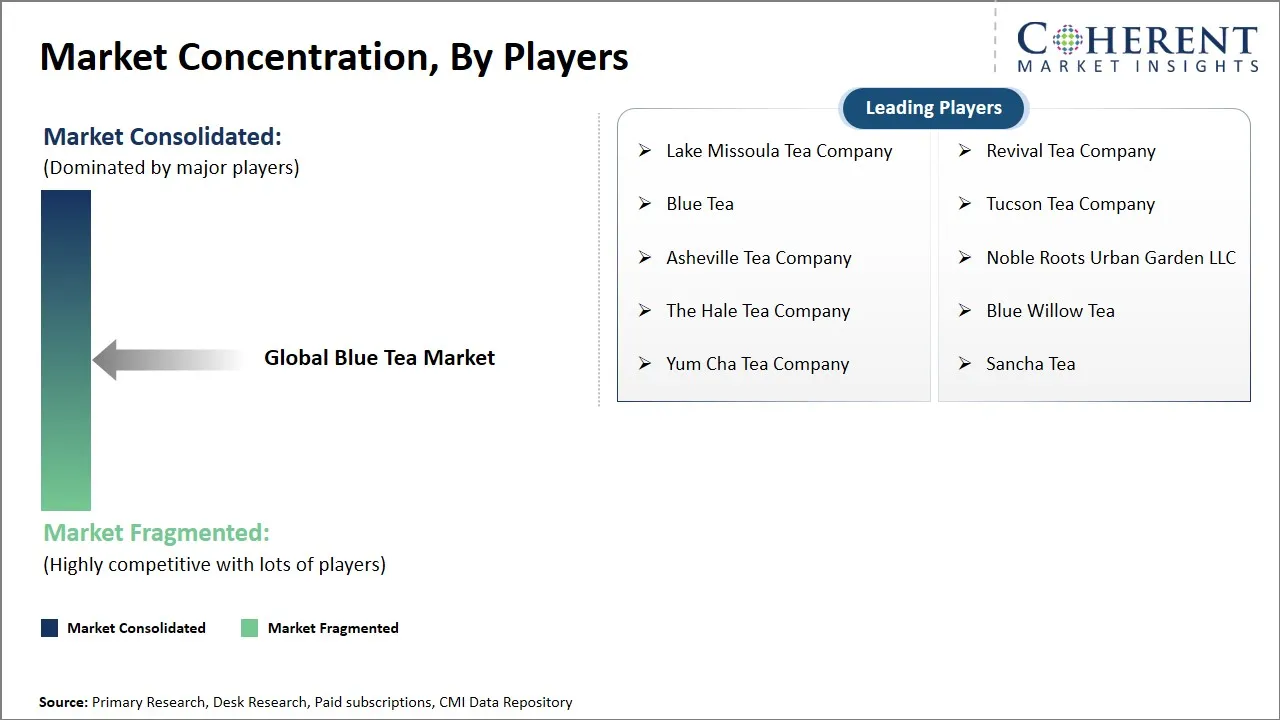
| Companies covered: | Lake Missoula Tea Company, Revival Tea Company, Blue Tea, Tucson Tea Company, Asheville Tea Company, Noble Roots Urban Garden LLC, The Hale Tea Company, Blue Willow Tea, Yum Cha Tea Company, and Sancha Tea | ||
| Growth Drivers: |
| ||
| Restraints & Challenges: |
| ||
Blue Tea Market Dynamics
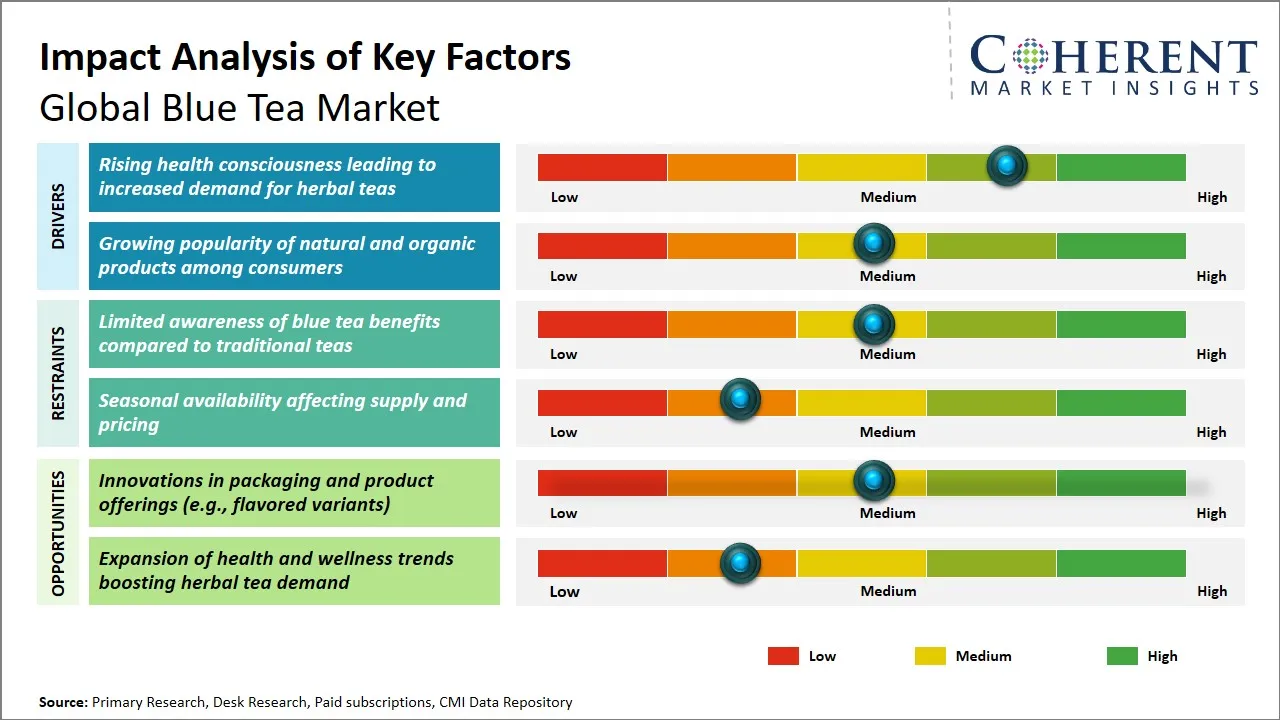
Blue Tea Market Driver - Rising Health Consciousness Leading to Increased Demand for Herbal Teas
The growing global emphasis on health and wellness is significantly fueling the demand for herbal teas, including blue tea, as consumers increasingly seek natural and functional beverages that offer medicinal benefits without adverse effects. With a shift away from sugary drinks and caffeinated options, individuals are gravitating towards herbal infusions known for their antioxidants properties, detoxifying effects, and potential to aid digestion and relaxation. Blue tea, derived from butterfly pea flowers, appeals particularly to health-conscious consumers due to its rich polyphenol content and potential cognitive and anti-inflammatory benefits.
For example, Twinings expanded its herbal and functional tea portfolio in Europe and Asia by pushing antioxidant- and wellness-led narratives, indirectly validating niche botanicals like butterfly pea flower.
Blue Tea Market Opportunity - Innovations in Packaging and Product Offerings
The global blue tea market presents a substantial opportunity through innovations in packaging and diversified product offerings, particularly flavored variants. As consumer preferences evolve towards convenience and unique taste experiences, companies can capitalize by introducing innovative packaging solutions such as single-serve sachets, eco-friendly materials, and resealable pouches that enhance shelf life and portability. These packaging advancements not only cater to the rising demand for on-the-go consumption but also align with growing environmental consciousness among consumers, thereby strengthening brand loyalty.
For example, flavored extensions such as lemon-ginger blue tea, lavender blue tea, and hibiscus-blended variants are gaining traction in Southeast Asia for taste masking and repeat consumption.
Analyst Opinion (Expert Opinion)
- The blue tea market is driven by growing consumer preference towards health and wellness tea and also the exotic nature of the butterfly pea flower tea. The Global Tea Expo (2023) and the Herbal Tea Congress (2022) have given insights into the trends and it can be seen that such brands as Teavana and Adagio Teas were highly innovative in their flavor blends and packaging.
- A recent product introduction of a blended blue tea, which is a mixture of butterfly pea flower, hibiscus and lemongrass, by Teavanas reflects the interest of the industry in selling unique and visually appealing products which appeal to health-conscious consumers. Debates made at these conferences emphasized the need to inform consumers of the health benefits related to blue tea, including its antioxidant quality and its possible stress relieving properties. Nevertheless, saturation in the market or the necessity to perform the effective differentiation within the competitive environment was also mentioned as a challenge.
- Businesses that prioritize sustainability in their supply chain and packaging as well as use social media to develop social stories about their products are bound to succeed. Finally, the future expansion of the blue tea industry will rely on its capacity to keep innovating and at the same time adopting consumer needs in terms of wellness and beauty in the drinks they consume.
Speak to the analyst
Want personalized insights?
Take the findings above to one of our principal consultants, or have the report rebuilt around the segments, geographies and competitors you actually track.
Market Segmentation
- Product Insights (Revenue, USD Mn, 2021 - 2033)
- Loose Leaves
- Powder
- Others
- Type Insights (Revenue, USD Mn, 2021 - 2033)
- Conventional
- Organic
- Distribution Channel Insights (Revenue, USD Mn, 2021 - 2033)
- Off-trade
- On-trade
- Regional Insights (Revenue, USD Mn, 2021 - 2033)
- North America
- U.S.
- Canada
- Latin America
- Brazil
- Argentina
- Mexico
- Rest of Latin America
- Europe
- Germany
- U.K.
- Spain
- France
- Italy
- Russia
- Rest of Europe
- Asia Pacific
- China
- India
- Japan
- Australia
- South Korea
- ASEAN
- Rest of Asia Pacific
- Middle East
- GCC Countries
- Israel
- Rest of Middle East
- Africa
- South Africa
- North Africa
- Central Africa
- North America
- Key Players Insights
- Lake Missoula Tea Company
- Revival Tea Company
- Blue Tea
- Tucson Tea Company
- Asheville Tea Company
- Noble Roots Urban Garden LLC
- The Hale Tea Company
- Blue Willow Tea
- Yum Cha Tea Company
- Sancha Tea
Sources
Primary Research Interviews
- CEO – Leading Butterfly Pea Tea Producer (e.g., Butterfly Pea Flower Co., Blue Tea Co.)
- Supply Chain Director – Major Herbal Tea Distributor
- Production Lead – Organic Blue Tea Manufacturer
- Sustainability Officer – Butterfly Pea Flower Certification Authority
Stakeholders
- Manufacturers
- End-use Sectors
- Beverage Industry (Functional Teas, Ready-to-Drink)
- Health & Wellness Brands
- Food & Cosmetics (Natural Colorants, Extracts)
- Regulatory & Certification Bodies (e.g., FDA for herbal teas, EU Organic Standards)
- E-commerce Platforms and Retailers (Amazon, Alibaba, Etsy, Specialty Tea Shops)
- Technology Integration Players: Functional beverage innovators using butterfly pea extracts
Databases
- UN Comtrade Database (HS 0902 for Tea, including herbal variants)
- India Import Export (EXIM) Database
- Verified Market Reports – Blue Tea Market Database
- WiseGuy Reports – Blue Tea Industry Analytics
- Volza Trade Data for Blue Tea Exports
Magazines
- Tea & Coffee Trade Journal – Trends in specialty herbal teas
- Glass International – Adaptations for natural colorants (cross-industry)
- Specialty Tea Magazine – Blue tea innovations
- Beverage Industry Magazine – Functional tea market dynamics
- Wellness Trends – Butterfly pea health beverages
Journals
- International Journal of Agricultural – Commercial viability of blue tea
- Journal of Food Science – Butterfly pea anthocyanins and stability
- Food Chemistry – Clitoria ternatea health benefits
- Journal of Ethnopharmacology – Traditional uses of butterfly pea
- Phytotherapy Research – Antioxidant properties in blue tea
Newspapers
- The Wall Street Journal – Global functional beverage demand
- Business Standard (India) – Herbal tea imports and Asia growth
- Reuters – Specialty tea market expansions
- Economic Times – Butterfly pea cultivation trends
- The Guardian – Sustainability in herbal tea sourcing
Associations
- International Tea Committee (ITC)
- Tea Association of the USA
- Indian Tea Association (ITA)
- Ethical Tea Partnership (ETP)
- World Tea Trade Association
- Specialty Tea Institute (STI)
Public Domain Sources
- FDA – Guidelines for herbal tea labeling
- European Commission – Novel food regulations for butterfly pea
- World Health Organization – Safety of herbal infusions
- USDA – Agricultural reports on Clitoria ternatea
- FAO – Herbal tea production statistics
Proprietary Elements
- CMI Data Analytics Tool
- Proprietary CMI Existing Repository of information for last 8 years.
Get access to 250+ pages report
Every segment, forecast, competitor profile and data table behind the analysis above — available for instant download.
- ESOMAR Member
- ISO 9001:2015 Certified
- D-U-N-S Registered
- GDPR & CCPA Compliant
Missing comfort of reading report in your local language? Find your preferred language:
Transform your Strategy with Exclusive Trending Reports
Frequently Asked Questions
The global blue tea market is estimated to be valued at USD 142.6 Mn in 2026 and is expected to reach USD 214.4 Mn by 2033.
The CAGR of global blue tea market is projected to be 6.0% from 2026 to 2033.
Rising health consciousness leading to increased demand for herbal teas and growing popularity of natural and organic products among consumers are the major factors driving the growth of the global blue tea market.
Limited awareness of blue tea benefits compared to traditional teas and seasonal availability affecting supply and pricing are the major factors hampering the growth of the global blue tea market.
In terms of product, loose leaves are estimated to dominate the market revenue share in 2026.
Lake Missoula Tea Company, Revival Tea Company, Blue Tea, Tucson Tea Company, Asheville Tea Company, Noble Roots Urban Garden LLC, The Hale Tea Company, Blue Willow Tea, Yum Cha Tea Company, and Sancha Tea are the major players.
North America is expected to lead the global blue tea market in 2026.