

Canned Mushroom Market Analysis & Forecast - 2026 to 3032
The canned mushroom market is estimated to be valued at USD 14.09 Bn in 2026 and is expected to reach USD 19.69 Bn by 2033, exhibiting a compound annual growth rate (CAGR) of 4.9% from 2026 to 2033.
Key Takeaways
- By Product Type, the Button canned segment is projected to dominate the global canned mushroom market with a 38.9% share in 2026.
- By Application, the Restaurant segment is expected to capture a leading 44.9% share of the canned mushroom market in 2026.
- By Region, Europe continues to lead the global canned mushroom market, accounting for a 39.3% share in 2026.
Market Overview
The global Canned Mushroom Market is experiencing steady growth, fuelled by increasing demand for convenient, ready-to-use food products and the expansion of the foodservice industry. Canned mushrooms offer long shelf life, easy preparation, and versatility, making them a popular choice across households and restaurants. The button mushroom segment leads due to widespread availability and affordability.
Current Events and its Impact on the Canned Mushroom Market
Current Event | Description and its impact |
Sustainable Farming and Processing Practices |
|
Rising Demand from the Foodservice Sector Post-Pandemic |
|
Inflation and Supply Chain Disruptions |
|
Demand for Organic and Natural Food Canned Mushroom Market
The demand for organic and natural food products is significantly influencing the growth of the canned mushroom market. Health-conscious consumers are increasingly seeking clean-label, preservative-free, and sustainably sourced food options, leading to a surge in interest for organic canned mushrooms. These products are perceived as safer and more nutritious, aligning with global trends favouring plant-based and minimally processed foods.
Manufacturers are responding by offering organic variants using mushrooms cultivated without synthetic fertilizers or pesticides, often packaged in BPA-free or eco-friendly materials. Regions like Europe and North America are witnessing the strongest demand due to higher awareness and regulatory support for organic labelling.
Additionally, the rise of vegan and vegetarian diets further boosts the consumption of mushrooms as a meat alternative. While organic canned mushrooms command a premium price, their appeal among urban, health-focused consumers continues to grow, driving innovation and differentiation within the overall canned mushroom product segment.
- Current Industry Events of 2026
- Market Size Estimation
- Regional Breakdown
- Competitive Landscape
- Customer Intelligence
- Segmental Analysis
- Pricing Analysis
- Key Market Drivers, Challenges & Future Trends
- Customized Insights Section
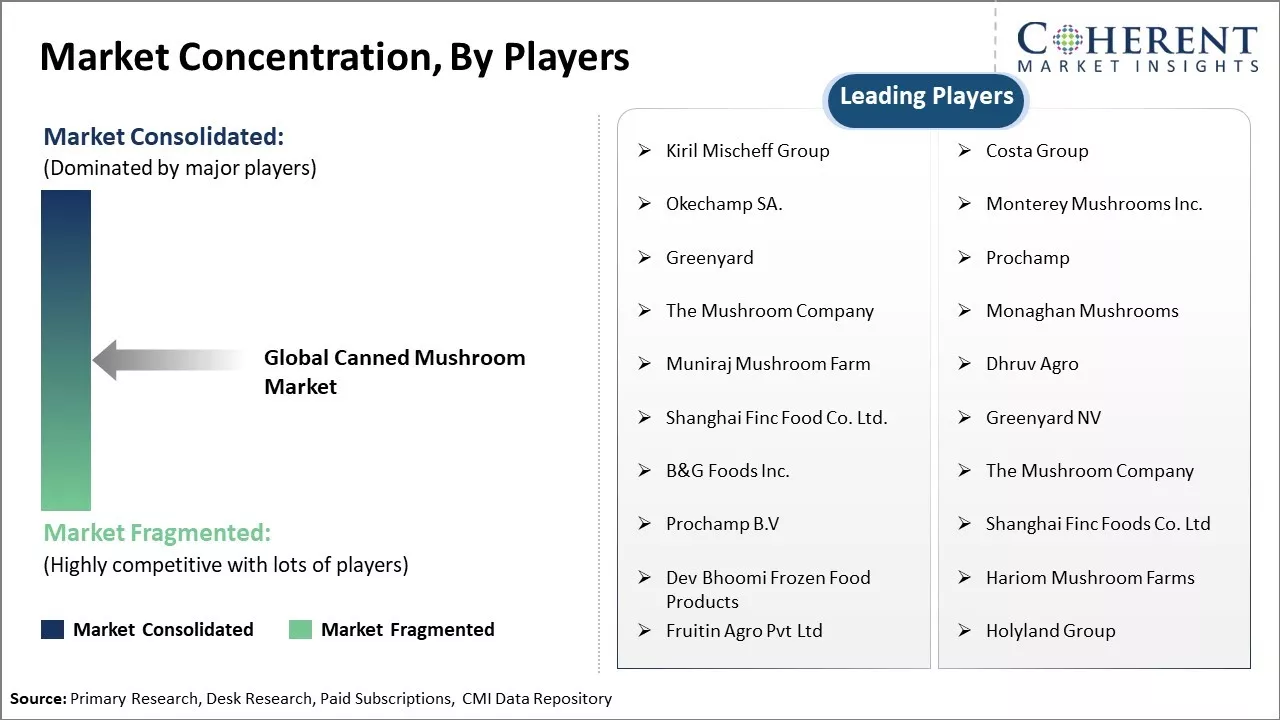
Market Concentration and Competitive Landscape
Segmental Insights
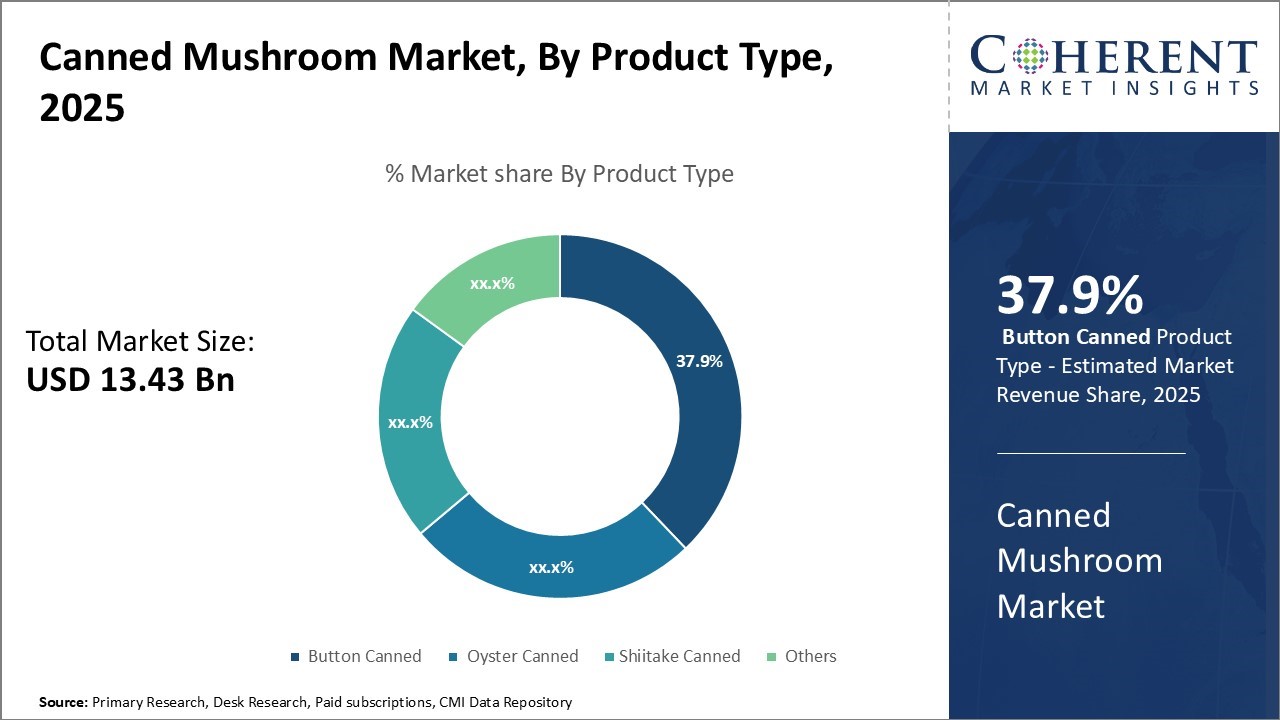
Canned Mushroom Market Insights, By Product Type
The button canned mushroom segment is projected to dominate the global canned mushroom market with a 38.9% share in 2026. This leadership is driven by the rising demand for convenience foods, particularly among urban populations seeking quick and versatile cooking solutions.
Button mushrooms are favoured for their mild flavour, widespread availability, and compatibility with a wide range of dishes, from soups to pizzas. Their long shelf life and affordability make them a popular choice for both households and commercial kitchens.
While shiitake and oyster mushrooms are gaining attention due to their nutritional value and unique taste, button mushrooms continue to lead due to their familiarity and cost-effectiveness, ensuring strong presence across global markets.
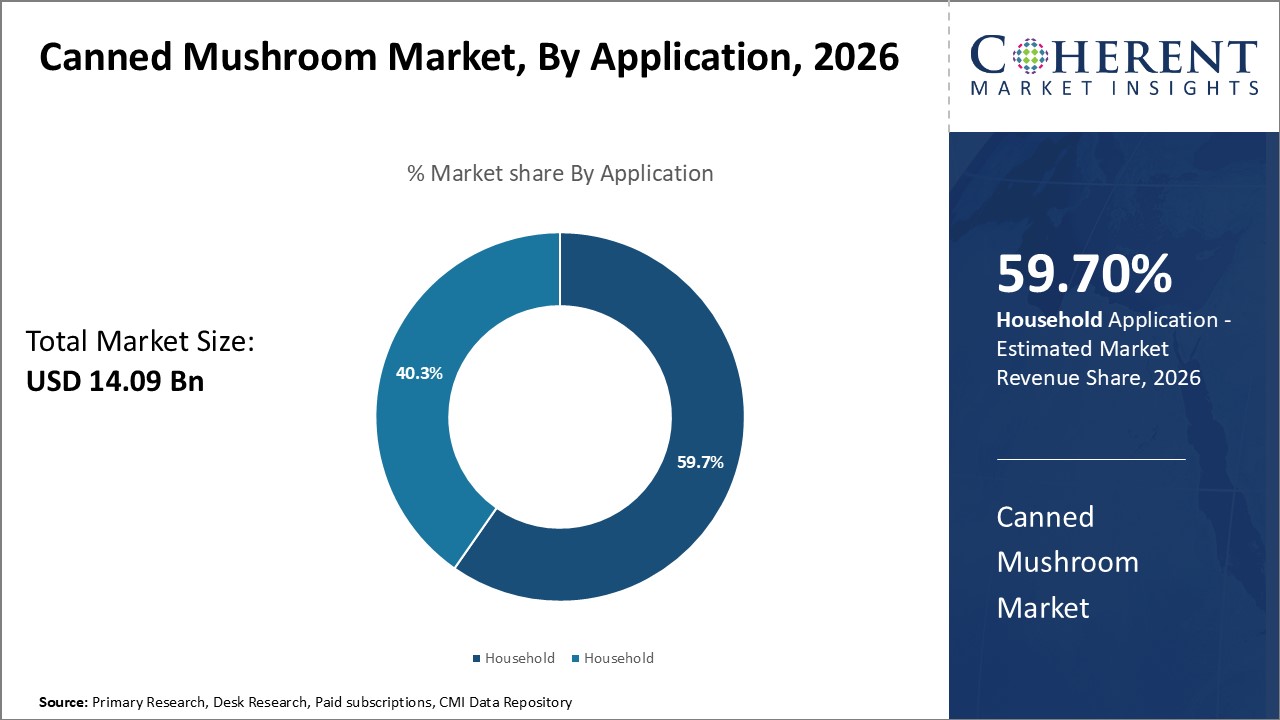
Global Canned Mushroom Market Insights, By Application
The restaurant segment is expected to capture a dominant 44.9% share of the canned mushroom market in 2026, underpinned by the global expansion of the foodservice industry. Restaurants increasingly rely on canned mushrooms for their consistent quality, time-saving preparation, and reduced spoilage compared to fresh mushrooms. This preference is particularly strong among quick-service restaurants (QSRs), casual dining outlets, and cloud kitchens, where efficiency and standardization are critical.
The trend toward delivery-based dining and meal customization further amplifies demand for shelf-stable, ready-to-use ingredients like canned mushrooms. As dining-out culture continues to grow in both developed and emerging markets, the restaurant segment remains a key driver of market expansion.
Regional Insights
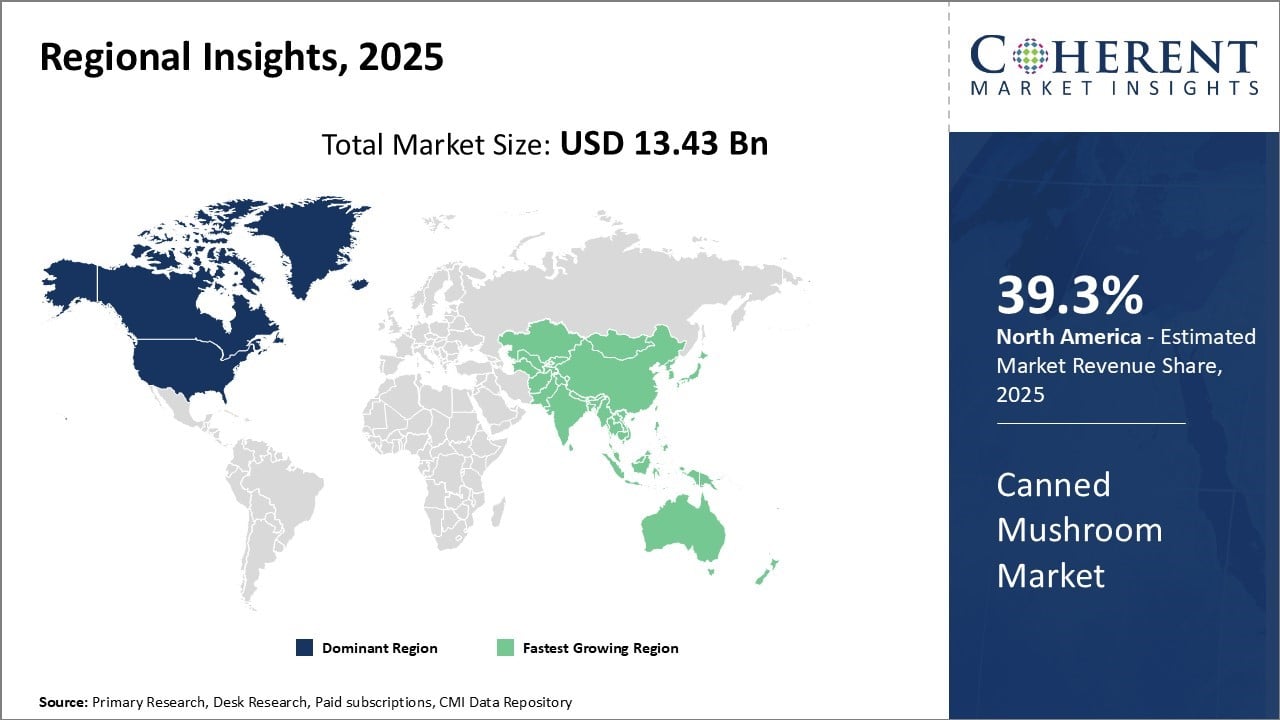
Europe Canned Mushroom Market Trends and Analysis
Europe is expected to retain its leading position in the global canned mushroom market, accounting for a substantial 39.3% share in 2026. This dominance is rooted in the region’s longstanding tradition of mushroom consumption, supported by well-established processing infrastructure and strong supply chains.
Countries such as the Netherlands, Poland, and France are major producers and exporters, benefiting from advanced agricultural practices and strict food quality standards. High demand from both the retail and hospitality sectors, along with growing consumer preference for convenience foods, sustains Europe’s market leadership.
North America Canned Mushroom Market Trends and Analysis
North America is emerging as a key growth region in the global canned mushroom market. Rising health awareness, growing interest in plant-based diets, and the widespread adoption of international cuisines are driving demand. The foodservice industry in the U.S. and Canada increasingly utilizes canned mushrooms for menu consistency and operational efficiency.
Additionally, the region’s focus on clean-label and shelf-stable food products is encouraging manufacturers to expand canned mushroom offerings, contributing to steady market expansion.
Canned Mushroom Market Dominating Countries
Netherlands, Poland, And France
The Netherlands is a global leader in canned mushroom production, known for its advanced agricultural technologies and high-yield mushroom farms. The country’s strong export capabilities and strict adherence to EU food quality standards make it a reliable supplier to global markets.
Poland is another major player in Europe, benefiting from abundant natural resources, cost-effective labor, and strong support for agricultural exports. The country is a key supplier of both raw and processed mushrooms to Western Europe and North America.
France maintains a significant presence in the European canned mushroom market due to its long-standing culinary tradition and consistent consumer demand. The country also emphasizes sustainable farming practices, aligning with growing consumer preferences for clean-label products.
Market Report Scope
Canned Mushroom Market Report Coverage
| Report Coverage | Details | ||
|---|---|---|---|
| Base Year: | 2025 | Market Size in 2026: | USD 14.09 Bn |
| Historical Data for: | 2020 To 2024 | Forecast Period: | 2026 To 2033 |
| Forecast Period 2026 to 2033 CAGR: | 4.9% | 2033 Value Projection: | USD 19.69 Bn |
| Geographies covered: |
| ||
| Segments covered: |
| ||
| Companies covered: | Kiril Mischeff Group, Costa Group, Okechamp SA., Monterey Mushrooms Inc., Greenyard, Prochamp, The Mushroom Company, Monaghan Mushrooms, Muniraj Mushroom Farm, Dhruv Agro, Shanghai Finc Food Co. Ltd., Greenyard NV, B&G Foods Inc., The Mushroom Company, Prochamp B.V, Shanghai Finc Foods Co. Ltd, Dev Bhoomi Frozen Food Products, Hariom Mushroom Farms, Fruitin Agro Pvt Ltd, and Holyland Group | ||
| Growth Drivers: |
| ||
| Restraints & Challenges: |
| ||
Canned Mushroom Market Driver
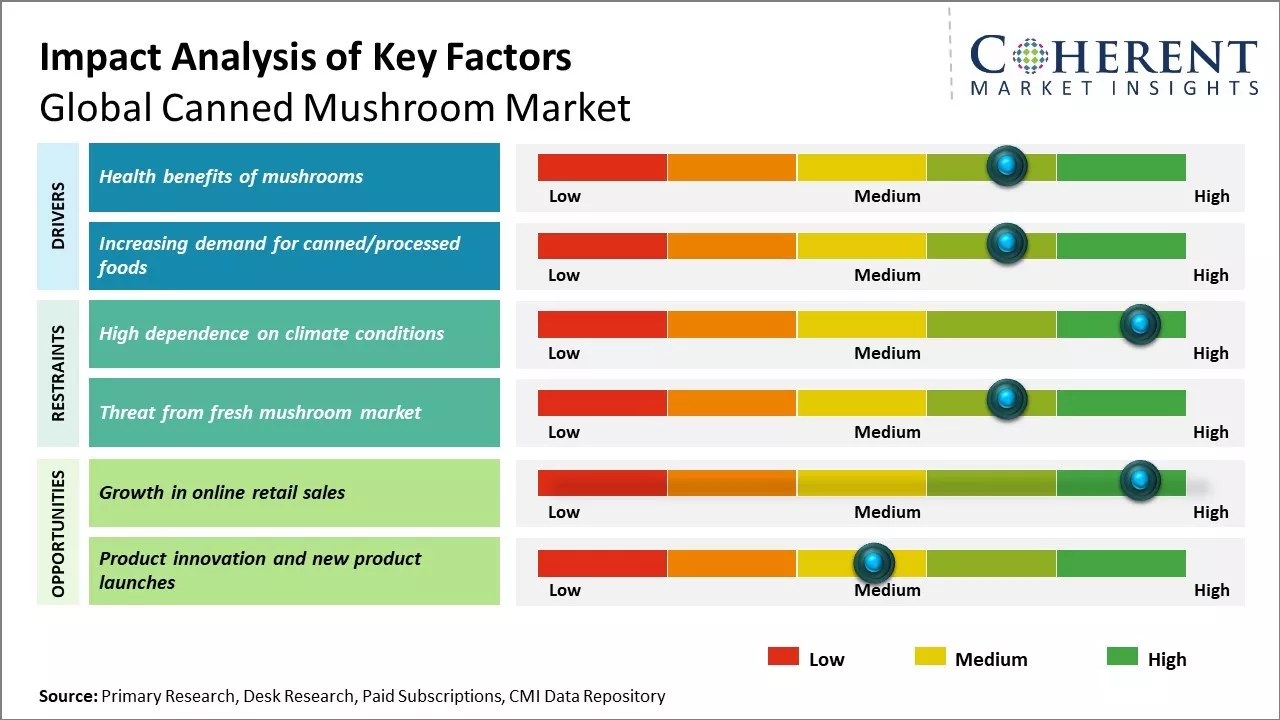
- Health benefits of mushrooms
The growing awareness among consumers regarding the various health benefits of mushrooms is a key driver behind the rise of the global canned mushroom market. Mushrooms are low in calories and fat but high in proteins, vitamins, and minerals. They are known to be a great source of selenium, copper, potassium, and vitamin D.
The rising health-conscious consumer base is actively seeking out packaged food products that are nutritious yet convenient to consume on the go. Mushrooms have gained significant popularity due to their association with various preventive health properties.
Current scientific research indicates that mushrooms show potential anti-inflammatory, antioxidant, and immune-boosting effects. They are rich in polysaccharides and phenolic compounds known to have antioxidant and anticancer activities. Studies have suggested that mushrooms may aid in reducing the risk of cancers like breast cancer and prostate cancer.
Regular consumption of mushrooms is found to support heart health by lowering blood pressure and cholesterol levels. The presence of selenium, riboflavin, niacin, and pantothenic acid in mushrooms provides them with cardioprotective benefits. Mushrooms also contain eritadenine, a compound that inhibits cholesterol synthesis in the body.
In April 2025, singer Ellie Goulding introduced her wellness startup Everystate, offering powdered “functional mushrooms” via monthly subscriptions (~£36/month) and select retail partners like Daylesford Organic. The move taps into the estimated $36 billion global functional mushroom market, aiming to enhance focus, relaxation, and skin health.
- Increasing demand for canned/processed foods
The demand for convenience and packaged foods has seen a significant rise globally in the recent past. With people's lifestyles becoming increasingly busy and fast-paced, they are relying more on canned, frozen or processed foods that offer ease of cooking and consumption.
Mushrooms are a very versatile ingredient that can be used in a variety of cuisines and dishes. With the growth in the popularity of international cuisine, exposure to new flavours, and increasing health consciousness, the consumption of mushrooms has risen steadily worldwide.
This rising demand for mushrooms has driven the canned mushroom market as canned mushrooms allow easy storage and usage. They have a long shelf life and do not require refrigeration, making them extremely convenient to store and consume.
Canned mushrooms can simply be added to dishes during cooking or as toppings on pizza, pasta, etc. Their availability in the canned form all year round satisfies the rising demand without being restricted by seasons. Food industry players are expanding their canned mushroom offerings with different varieties like button mushrooms, oyster mushrooms, shiitake mushrooms, etc. to appeal to evolving consumer preferences.
In April 2024, entrepreneur Olivia Ferdi of London-based Trip unveiled Mindful Blend canned drinks featuring magnesium, lion’s mane mushrooms, ashwagandha, and L‑theanine. The brand, valued at £23 million in sales and stocked in outlets like Waitrose and Whole Foods, aims to challenge mainstream sodas by offering functional beverage alternatives.
Canned Mushroom Market Opportunity
- Growth in online retail sales
The rise of online retail channels presents a promising growth opportunity for the global canned mushroom market. As consumers increasingly turn to e-commerce platforms for purchasing groceries and household goods, producers of canned mushrooms can leverage this shift to boost product visibility and sales. This trend is expected to positively influence the canned mushroom market forecast, driving expansion through digital convenience, broader reach, and targeted marketing strategies.
Analyst Viewpoint – Canned Mushroom Market
- Analysts generally hold a positive outlook on the global canned mushroom market, driven by the rising demand for convenient, shelf-stable, and nutritious food products. They highlight the growing preference for plant-based and ready-to-eat food items, especially among urban consumers with busy lifestyles. The versatility and affordability of canned mushrooms, particularly button mushrooms, are seen as key factors supporting their continued popularity across both household and foodservice applications.
- Experts emphasize the increasing demand for organic and clean-label canned mushroom products as a major trend shaping the market. They note that consumers are becoming more health-conscious and environmentally aware, prompting producers to invest in sustainable farming practices and eco-friendly. This shift is creating opportunities for premium product offerings and differentiation in a competitive landscape.
- Regionally, Europe remains the dominant market, supported by strong production infrastructure and consistent consumer demand. However, analysts identify Asia Pacific, especially China and India, as the fastest-growing regions due to expanding middle-class populations, evolving dietary habits, and increased adoption of Western-style processed foods. North America also shows steady growth, fuelled by rising health awareness and demand from the foodservice sector.
Canned Mushroom Market: Key Development
- In April 2025, Seneca Foods introduced a new line of organic canned button mushrooms in fully recyclable cans, targeting health-conscious consumers and aiming to improve shelf stability. This launch signals a shift toward sustainable packaging and organic offerings, catering to environmentally and health-aware customers and adding premium value to the market.
- In January 2025, Prochamp, a Netherlands-based canned mushroom supplier, launched a line of organic mushrooms under a new range. Expanding organic offerings supports the shift to clean-label products, increases Prochamp’s appeal in premium channels, and boosts its competitive positioning.
- In February 2024, South Mill Champs, a US-based mushroom grower, formed a strategic partnership with Grupo Apal to increase canned mushroom production capabilities in Mexico. The collaboration focuses on enhancing supply chain efficiency and ensuring consistent high-quality output. This alliance strengthens North American supply resilience and reduces import dependence. It also supports fresher product availability in regional markets, giving retailers and foodservice providers more reliable access to supply.
Market Segmentation
- By Product Type (Revenue, USD Bn, 2021 - 2033)
- Shiitake Canned
- Oyster Canned
- Button Canned
- Others
- By Application (Revenue, USD Bn, 2021 - 2033)
- Household
- Restaurant
- By Region (Revenue, USD Bn, 2021 - 2033)
- North America
- U.S.
- Canada
- Latin America
- Brazil
- Argentina
- Mexico
- Rest of Latin America
- Europe
- Germany
- U.K.
- Spain
- France
- Italy
- Russia
- Rest of Europe
- Asia Pacific
- China
- India
- Japan
- Australia
- South Korea
- ASEAN
- Rest of Asia Pacific
- Middle East
- GCC Countries
- Israel
- Rest of Middle East
- Africa
- South Africa
- North Africa
- Central Africa
- Company Profiles
- Kiril Mischeff Group
- Costa Group
- Okechamp SA.
- Monterey Mushrooms Inc.
- Greenyard
- Prochamp
- The Mushroom Company
- Monaghan Mushrooms
- Muniraj Mushroom Farm
- Dhruv Agro
- Shanghai Finc Food Co. Ltd.
- Greenyard NV
- B&G Foods Inc.
- The Mushroom Company
- Prochamp B.V
- Shanghai Finc Foods Co. Ltd.
- Dev Bhoomi Frozen Food Products
- Hariom Mushroom Farms
- Fruitin Agro Pvt Ltd.
- Holyland Group
- Ganfeng Lithium Co. Ltd.
- Allkem Limited
Sources
The Stakeholders Consulted
- Food processing plant managers and production supervisors
- Manufacturers and suppliers of canned and preserved food products
- Agricultural cooperatives and commercial mushroom growers
- Distributors, wholesalers, and retail chain procurement heads
- Regulatory authorities focused on food safety and standards (e.g., FSSAI, FDA, EFSA)
- Logistics and cold chain management experts
- Research institutions and universities specializing in food technology, agribusiness, and post-harvest management
- End-users across segments such as restaurants, hotels, QSRs, and institutional catering services
Databases Opened
- Food and Agriculture Organization (FAO) – Crop and Trade Statistics
- U.S. Department of Agriculture (USDA) – Canned Food Production Data
- Ministry of Food Processing Industries (India) – Agro-processing Statistics
Magazines & Trade Publications
- Food Processing Magazine
- The Grocer
- Food Business News
- Progressive Grocer
- New Food Magazine
- Global AgInvesting News
Scientific and Industry Journals
- Journal of Food Science and Technology
- International Journal of Food Microbiology
- Postharvest Biology and Technology
- Agronomy for Sustainable Development
- Journal of the Science of Food and Agriculture
- Trends in Food Science & Technology
Newspapers & Media Outlets
- The Economic Times – Agri-business and Food Industry Section
- Bloomberg – Consumer Goods and Agribusiness Coverage
- Reuters – Food and Commodities Market
- Business Standard – FMCG and Agri-Trade News
- The Hindu BusinessLine – Agriculture and Processing Sector
Associations and Regulatory Bodies
- Food Safety and Standards Authority of India (FSSAI)
- European Food Safety Authority (EFSA)
- U.S. Food and Drug Administration (FDA) – Processed Food Regulations
- Indian Council of Agricultural Research (ICAR)
- Confederation of Indian Industry (CII) – Food Processing Panel
- International Society for Horticultural Science (ISHS)
Public Domain Sources
- U.S. Department of Agriculture (USDA) – Agricultural Marketing Reports
- European Commission – Food and Beverage Sector Reports
- India Brand Equity Foundation (IBEF) – Food Processing Insights
- UN Comtrade – Global Trade Data
- International Trade Centre (ITC) – Product-Level Export/Import Statistics
Proprietary Research Elements
- CMI Data Analytics Tool
- Proprietary CMI Existing Repository of information for last 8 years
Get access to 250+ pages report
Every segment, forecast, competitor profile and data table behind the analysis above — available for instant download.
- ESOMAR Member
- ISO 9001:2015 Certified
- D-U-N-S Registered
- GDPR & CCPA Compliant
Missing comfort of reading report in your local language? Find your preferred language:
Transform your Strategy with Exclusive Trending Reports
Frequently Asked Questions
The Canned Mushroom Market size is estimated to be valued at USD 14.09 Bn in 2026, and is expected to reach USD 19.69 Bn by 2033.
The CAGR of the global Market is projected to be 4.9% from 2026 to 2033.
Health benefits of mushrooms and increasing demand for canned/processed foods are the major factors driving the growth of the global canned mushroom industry.
High dependence on climate conditions and threat from fresh mushroom market are the major factors hampering the growth of the global market.
In terms of product type, button canned is estimated to dominate the market revenue share in 2026.
Kiril Mischeff Group, Costa Group, Okechamp SA., Monterey Mushrooms Inc., Greenyard, Prochamp, The Mushroom Company, Monaghan Mushrooms, Muniraj Mushroom Farm, Dhruv Agro, Shanghai Finc Food Co. Ltd., Greenyard NV, B&G Foods Inc., The Mushroom Company, Prochamp B.V, Shanghai Finc Foods Co. Ltd, Dev Bhoomi Frozen Food Products, Hariom Mushroom Farms, Fruitin Agro Pvt Ltd, and Holyland Group are the major players.
Europe is expected to lead the global canned mushroom industry.