

Global Botox Market Size and Forecast – 2026 to 2033
The global Botox market is estimated to be valued at USD 6.88 Bn in 2026 and is expected to reach USD 14.11 Bn by 2033, exhibiting a compound annual growth rate (CAGR) of 10.8% from 2026 to 2033. This robust growth reflects increasing consumer demand for cosmetic procedures, alongside expanding therapeutic applications across neurological and muscular disorders. The market expansion is further supported by rising awareness, technological advancements, and an increasing aging population seeking minimally invasive surgeries.
Key Takeaways of the Global Botox Market
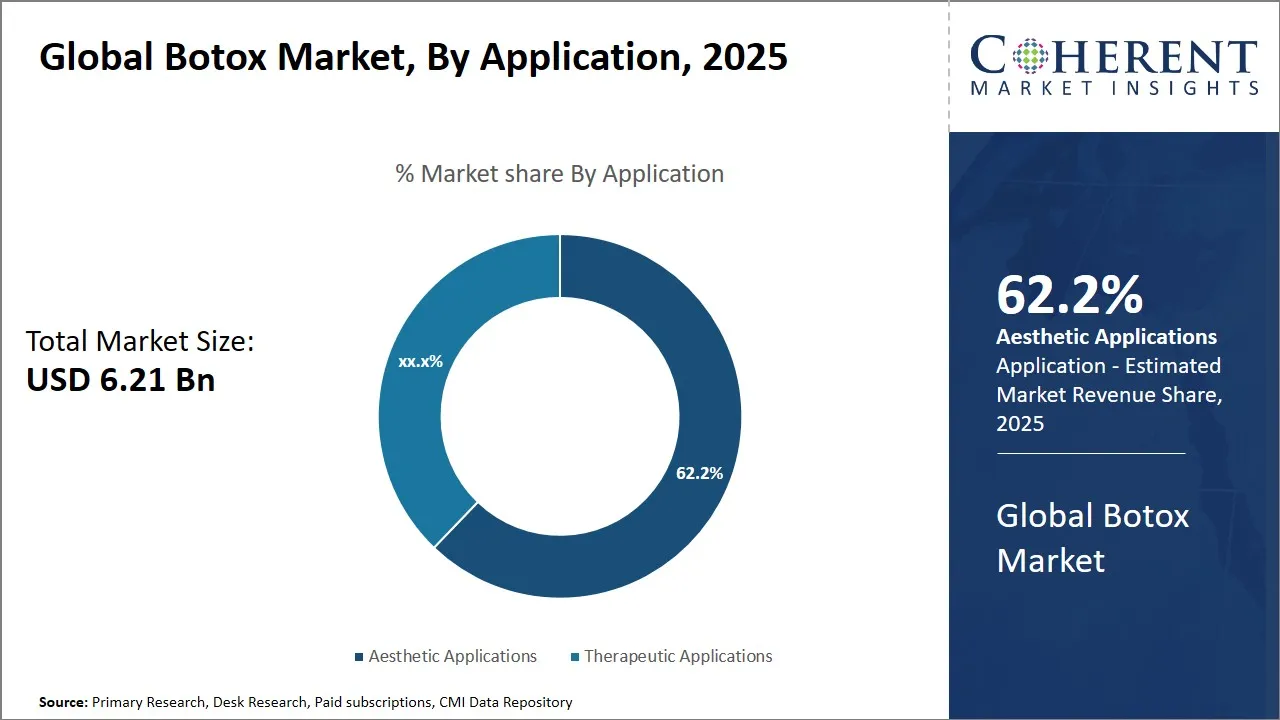
- Aesthetic applications segment is expected to hold the largest share of the market at 63.2 % in 2026.
- Liquid formulation (ready-to-use) segment is projected to lead the formulation segment with a 66.6 % share in 2026.
- Aesthetic clinics segment is estimated to dominate the end user segment with a 24.5 % share in 2026.
- In 2026, North America is estimated to dominate the market with a 39.3 % share. Asia Pacific emerges as the fastest-growing region with a 23.4% share in 2026.
Market Overview
A notable trend in the Botox market is the shift toward personalized and combination therapies, integrating Botox with other aesthetic treatments for enhanced outcomes. Furthermore, geographic expansion into emerging markets, driven by increasing disposable incomes and improved healthcare infrastructure, is accelerating adoption. Innovations in delivery methods and formulations are also improving patient safety and efficacy, reinforcing Botox's position as a preferred treatment option in both cosmetic and medical fields.
Current Events and Its Impact
Current Events | Description and its Impact |
Technological Advancements in Aesthetic Devices |
|
Surge in Wellness-Integrated Aesthetic Clinics |
|
Segmental Insights
- Current Industry Events of 2026
- Market Size Estimation
- Regional Breakdown
- Competitive Landscape
- Customer Intelligence
- Segmental Analysis
- Pricing Analysis
- Key Market Drivers, Challenges & Future Trends
- Customized Insights Section
Botox Market Insights, By Application – Aesthetic Applications are Dominant due to Rising Demand for Non-invasive Cosmetic Procedures and Strong Uptake of Facial Wrinkle Treatments
The aesthetic applications segment will hold the largest market share with 63.2% in 2026, due to increasing interest of non-invasive cosmetic surgery and rise in preference of less invasive surgeries by consumers. Facial wrinkle treatment continues to be the most evident sub-use in the aesthetic segment with glabellar wrinkle, crows feet and forehead wrinkle treatments comprising a considerable amount of Botox use.
This trend is attributed to the growing knowledge about anti-aging products and the social pressure to maintain young and fresh-looking skin, especially in middle-aged and older generations. The prospect of rapid healing, short recovery time and obvious outcomes makes Botox a favorable choice when compared to surgery.
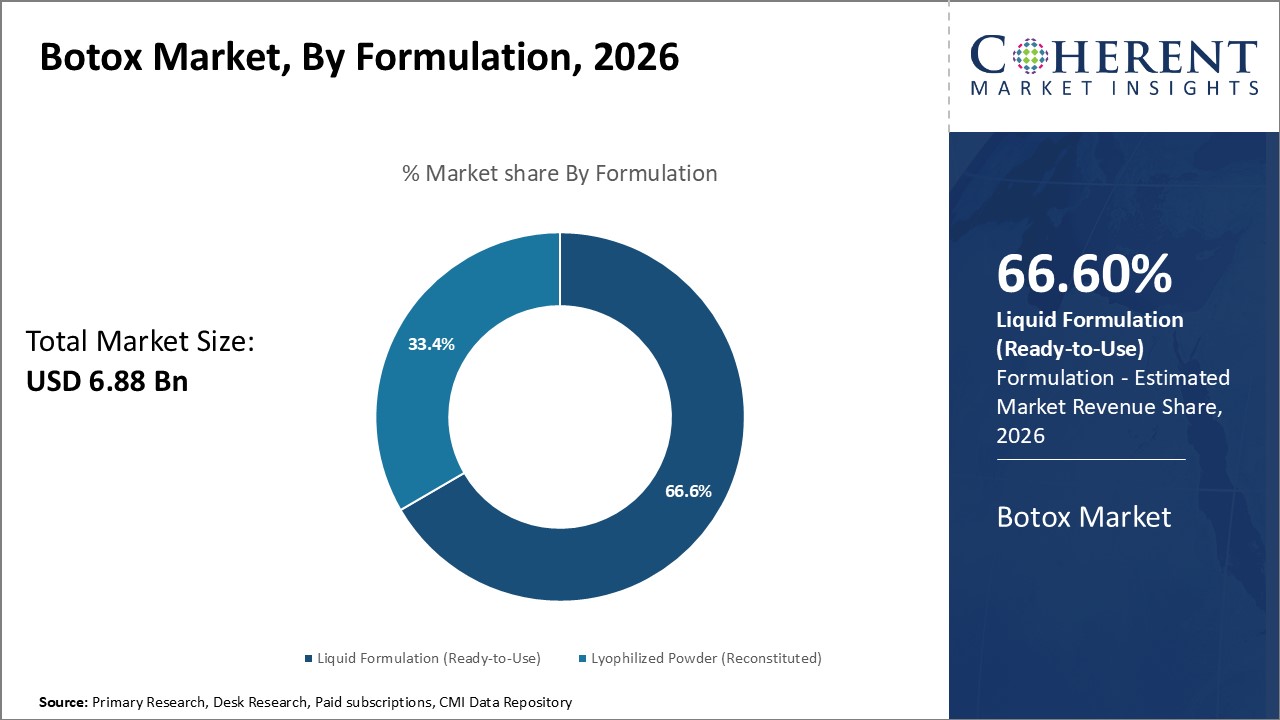
Botox Market Insights, By Formulation - Liquid Formulation (Ready-to-Use) is Dominant due to Ease of Use, Consistent Dosing and Faster Clinical Workflow
In terms of formulation, liquid formulation (ready-to-use) is projected to contribute the highest share of the market due to its ease of use with a share of 66.6% in 2026 due to convenience, and time efficiency for healthcare professionals administering Botox treatments. Ready-to-use liquid formulations eliminate the need for reconstitution, reducing preparation errors and ensuring consistent dosing, which is crucial for both safety and efficacy.
In July 2024, Galderma announced a positive European decision for Relfydess, its ready-to-use liquid neuromodulator created with proprietary PEARL Technology. Galderma is a global dermatology company offering injectable aesthetics, skincare, and therapeutic solutions. The clinical program showed rapid onset, six-month durability, and strong outcomes for frown lines and crow’s feet, placing it in direct competition with botox market.
Botox Market Insights, By End User - Aesthetic Clinics are Dominant due to Specialization in Cosmetic Treatments, Skilled Practitioners and Strong Patient Trust
The aesthetic clinics will provide the largest portion of the global Botox market with a share of 24.5% in 2026 due to the growing specialization, access, and consumer preference to special providers of cosmetic treatment. Aesthetic clinics specialize in cosmetic and non-invasive aesthetic surgeries, which results in an environment that is patient-centric and is tailored specifically to the needs of patients who want to improve their beauty through the reduction of wrinkles, and creating contour, and skin rejuvenation.
The advantage of such clinics is their team of highly qualified specialists in the field of aesthetic medicine with a specific set of treatment options and the most recent methods of Botox. This specialization leads to patient trust and satisfaction which influence repeat visits and through word-of-mouth referrals. Moreover, aesthetic clinics tend to spend a lot of money on advertisement and technological improvements, which guarantees awareness and accessibility to help the clinic maintain a steady flow of patients.
Consumer Willingness-to-Pay and Satisfaction Index Analysis in the Botox Market
- Consumer willingness-to-pay for Botox rises sharply when post-treatment satisfaction is high. Natural results, consistent efficacy and practitioner skill drive strong satisfaction scores, which reinforce the perception of value and justify premium pricing. When outcomes fall short, even discounted prices fail to sustain demand, showing that consumers prioritize results over cost.
- Brand recall, willingness to repeat and Net Promoter Score act as quick indicators of market loyalty. Strong brands with reliable outcomes secure higher repeat rates and positive referrals, boosting long-term customer value. High NPS scores amplify word-of-mouth influence, making satisfied consumers powerful demand drivers in the aesthetic segment.
Regional Insights
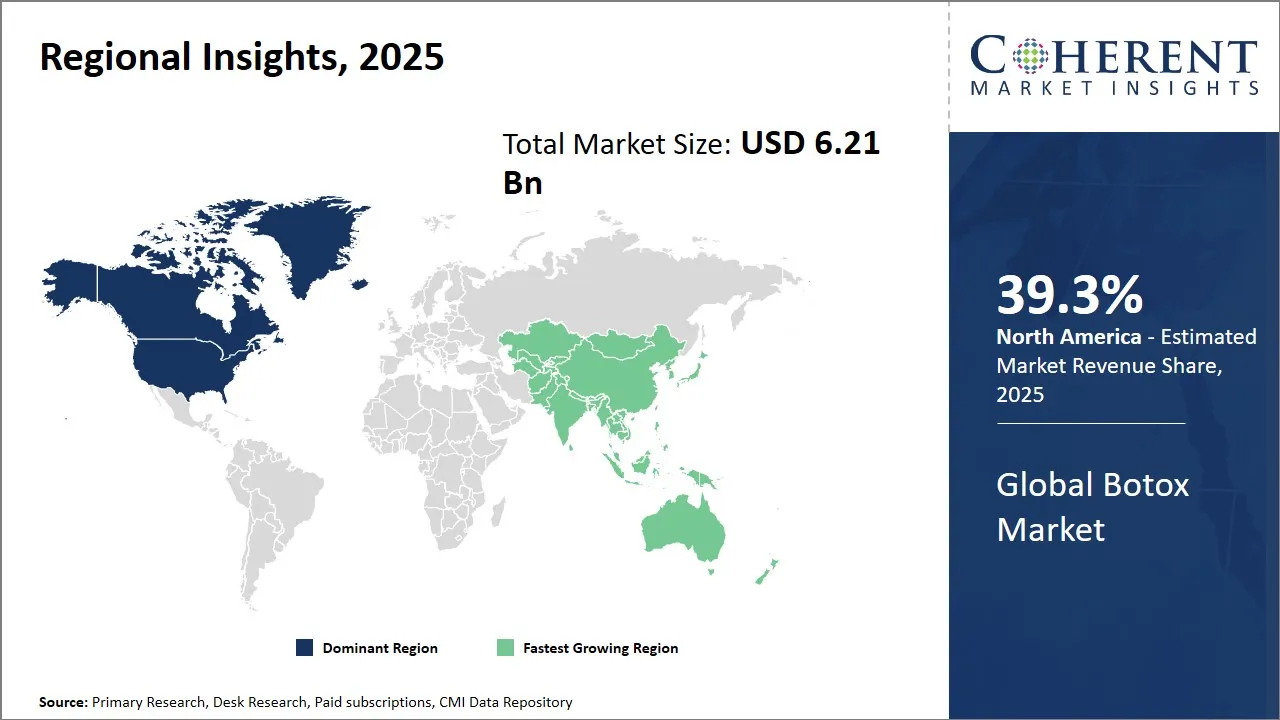
North America Botox Market Analysis and Trends
The market leadership in the Botox market in North America is due to the established health care system with an estimated 39.3% in 2026 due to good representation of major pharmaceutical and biotechnology firms, and consumer awareness in both aesthetic and therapeutic use of Botox. This aspect is favorable as the area faces favorable regulatory systems that are put in place by regulatory bodies like the U.S Food and Drug Administration (FDA) and Health Canada that simplify the approval processes and guarantee the safety of their products.
Major stakeholders, such as Allergan (an AbbVie company), Ipsen, and Revance Therapeutics, have major operations and innovation hubs in the area, and keep on increasing their product portfolios and indications.
Asia Pacific Botox Market Analysis and Trends
The Botox market in Asia Pacific is growing at the fastest rate due to growing disposable incomes, accounting for an estimated 23.4% in 2026. This growth is further driven by growing beauty and wellness consciousness, and rising medical aesthetics infrastructure in many of the emerging economies like China, India, Japan and South Korea. Medical tourism promotion efforts by government and regulatory changes that liberalize the market faster have boosted the ecosystem of the industry. The area also enjoys younger population which is involved in minimum invasive cosmetic surgeries.
Global corporations such as Allergan, Medytox, and Hugel are having regional subsidiaries that are keenly involved in local production and marketing. Also, local companies are increasing their presence capitalizing on low-cost production and local expertise to enter new markets.
Botox Market Outlook for Key Countries
U.S. Botox Market Trends
Innovation and commercialization in Botox products continues to be based in the U.S. botox market. The great expenditure on clinical trials and state-of-the-art research has resulted in diversified indications other than cosmetic, including neurological and therapeutic use. This market is led by such companies as AbbVie (Allergan), Revance Therapeutics, and Evolus, which have large marketing and distribution networks. Demand is maintained by the fact that there is high patient awareness and insurance coverage to reimburse some therapeutic uses.
Firms like Merz Aesthetics had widened clinical partnerships with neurology centers in order to research next generation neuromodulator preparations with more drawn-out profile. Galderma increased its presence in the United States by investing into physician education programs and digital patient-engagement systems, driving the adoption of therapeutic and aesthetic toxin-based products.
China Botox Market Trends
The botox market in China is witnessing a tremendous growth in the number of middle class consumers and the popularity of aesthetic procedures. The governmental attention to the enhancement of the healthcare accessibility and medical tourism contributes to the momentum. Multinationals like Allergan and Ipsen have been intensifying partnerships with local distributors and local firms like Hugel and Lanzhou Institute are adding value to the botulinum toxin development with locally produced botulinum toxin products, usually at competitive prices. Regulatory agencies have also been receptive and have given faster approvals on products and have led to penetration into the tier 2 and tier 3 cities.
Chinese biotech companies such as Bloomage Biotech stepped up the research on recombinant peptide-based injectable to augment the botulinum toxin treatments, adding to the bundled treatment requests. Chengdu Goodfeel Biotech collaborated with chains of aesthetic clinics to increase distribution of domestically engineered toxin variants that were designed to reach cost sensitive consumer segments.
Japan Botox Market Trends
Japan is still on the forefront in technological developments and consumer sophistication of the Botox market. This is brought about by the fact that the regulatory environment in the country is very stringent and guarantees that the product is very effective and safe thus boosting consumer confidence. Both Medytox and Hisamitsu Pharmaceutical are major players in this field with a tendency to form innovation collaborations with international companies.
Kaken Pharmaceutical was one of the local innovators that co-developed new therapeutic neuromodulation of facial nerve disorders, with university hospitals. Also, Kyowa Kirin developed research on specific dose neurotoxin that reduces adverse reactions to maintain the safety-conscious market in Japan.
South Korea Botox Market Trends
The botox market in South Korea is well developed and has a culture of personal beauty and low invasive surgery. The nation enjoys the benefit of having high standards in dermatological facilities and very talented doctors. The domestic firms like Hugel and Medytox have their role, and both are very export oriented. Biotech innovation and intensive advertising strategies by the government have made South Korea a significant regional centre Botox product.
South Korean companies such as Daewoong Pharmaceutical grew Korea export grade botulism toxin brands directed to high-end clinics in ASEAN and Latin America. Jetema introduced new ready-to-inject formulations supported by vigorous clinical marketing, which strengthened South Korea in the world as a provider of aesthetic neuromodulators..
Regulatory and Reimbursement Policy Landscape in the Botox Market
- Regulatory agencies such as the U.S. FDA, EMA, PMDA and NMPA require strong clinical evidence and strict safety monitoring for every approved Botox indication. These rules tighten oversight on clinical practice, advertising and off-label use while making label expansion for neurological and pain conditions more demanding but highly defensible for approved products.
- Reimbursement access varies sharply. Cosmetic Botox is paid entirely out of pocket, while therapeutic uses gain insurance coverage only when patients meet strict criteria such as documented severity and prior treatment failure. HTA bodies in Europe and Canada review cost effectiveness before approval, and limited insurance penetration in emerging markets forces manufacturers to rely on differential pricing and patient assistance models to drive adoption.
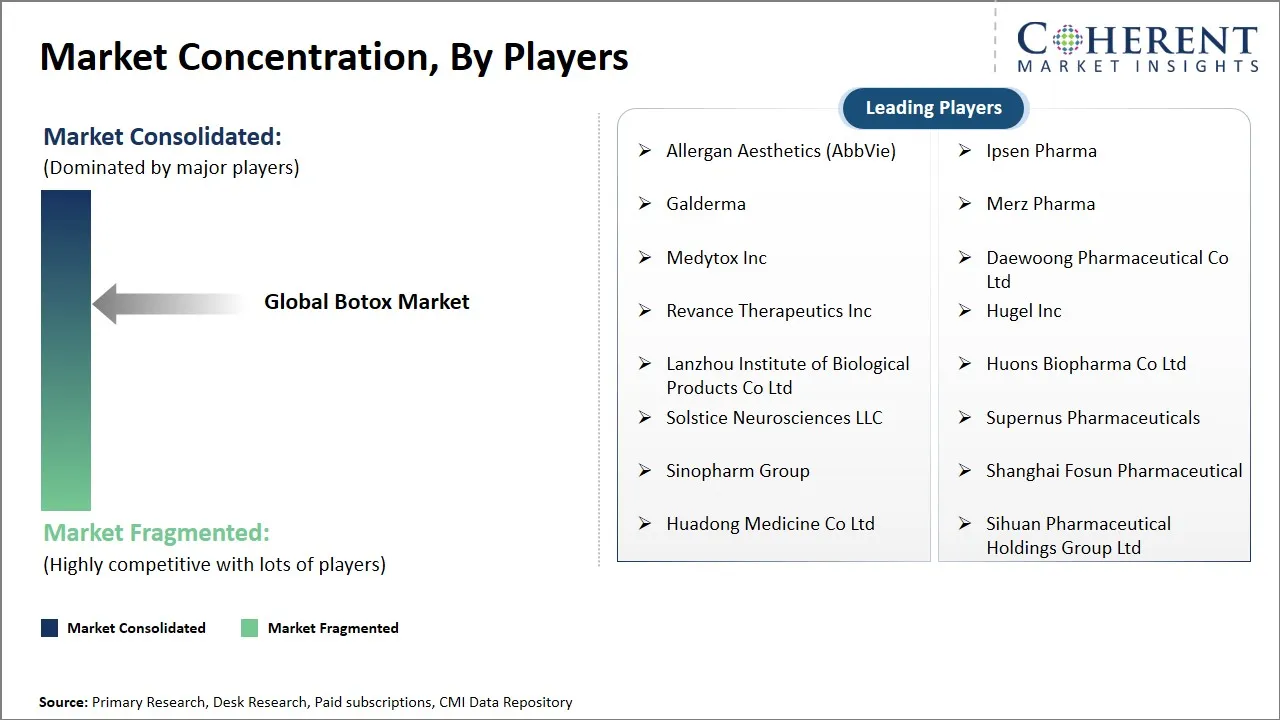
Market Players, Key Developments, and Competitive Intelligence
Key Developments
- In October 2025, AbbVie, a global biopharma leader known for Botox and neurology innovation, reported positive Phase 2 results from its ELATE trial for upper limb essential tremor. OnabotulinumtoxinA showed a significant improvement on the TREDS-R score versus placebo at week eighteen. All secondary endpoints were met, strengthening evidence for Botox in tremor management. Safety outcomes aligned with the established profile, with weakness mostly mild and temporary.
- In June 2025, Daewoong Pharmaceutical, a major Korean biopharma known for global neurotoxin brands, launched its Botox rival Nabota in Qatar, completing its entry into three key Gulf markets. The company presented Nabota at a Doha symposium attended by regional physicians as demand for premium toxins rises across the Gulf. Nabota is now available in Qatar, Saudi Arabia, and the U.A.E., strengthening Daewoong’s push in fast-growing aesthetic markets.
- In March 2025, Hugel, a Korean aesthetics manufacturer known for global neurotoxin products, gained U.S. FDA approval for Letybo as a new Botox-alternative for moderate to severe glabellar lines. The product works like Botox by relaxing targeted facial muscles for three to four months. Letybo is drawing attention for its lower cost positioning and long use in Korea, making it appealing to patients seeking affordable neuromodulator options.
- In November 2023, Viatris, a global healthcare company focused on complex generics and biosimilars, confirmed major progress on its upcoming Botox biosimilar developed with Revance Therapeutics. The firm plans to file an IND with the U.S. FDA by year end and begin a landmark clinical trial in the first half of 2024. Viatris said development and validation work is advancing well and aims for a commercial launch in 2026 as biosimilar interest accelerates.
- In October 2024, Allergan Aesthetics, an AbbVie company known for leading aesthetic brands, received U.S. FDA approval for Botox Cosmetic to treat moderate to severe platysma bands in adults. This approval made Botox the first aesthetic neurotoxin with four approved facial and neck indications. Clinical studies showed strong improvement versus placebo and high satisfaction among treated patients.
Top Strategies Followed by Global Botox Market Players
- The established players dominate the market with a high rate of research and development (R&D) in ensuring that they introduce high-performance Botox products that suit the changing consumer needs. They are doing R&D on how to increase efficacy, minimize side effects and increase the therapeutic uses beyond cosmetic uses. These are also the top companies that engage in strategic partnership with key stakeholders and OEMs to boost international presence.
- Examples of this strategy include established market competitors, including Allergan Aesthetics, Galderma and Merz Pharma, that maintain their research and development and broaden their therapeutic pipeline in Botox-type products. The international collaborations of these companies are also aimed at promoting the science of formulation and expanding the clinical uses.
- The middle-range firms in Botox market have a more price-sensitive approach and they specialize in providing products that balance between quality and affordability. These players are serving low-end consumers and collaborate with technology providers and manufacturers to enhance scale and product quality.
- Mid-level firms such as Hugel, Medytox and Daewoong build their market presence through competitively-priced neurotoxins with technology developers and contract manufacturers to build scale and consistency.
- Small-scale participants in the Botox market cut their market niche by focusing on specifications and creating new variants of products that meet the needs not yet satisfied or target particular groups of consumers. To make themselves stand out in the market, they tend to embrace the innovative technologies, including innovative formulation methods or delivery systems, among others, in order to compete with bigger firms.
- Small innovative toxin companies like Revance Therapeutics, divisions of Ipsen doing niche toxin delivery/next generation formulations to address specialized patient/practitioner requirements.
Market Report Scope
Botox Market Report Coverage
| Report Coverage | Details | ||
|---|---|---|---|
| Base Year: | 2025 | Market Size in 2026: | USD 6.88 Bn |
| Historical Data for: | 2020 To 2024 | Forecast Period: | 2026 To 2033 |
| Forecast Period 2026 to 2033 CAGR: | 10.8% | 2033 Value Projection: | USD 14.11 Bn |
| Geographies covered: |
| ||
| Segments covered: |
| ||
| Companies covered: | Allergan Aesthetics (AbbVie), Ipsen Pharma, Galderma, Merz Pharma, Medytox Inc, Daewoong Pharmaceutical Co Ltd, Revance Therapeutics Inc, Hugel Inc, Lanzhou Institute of Biological Products Co Ltd, Huons Biopharma Co Ltd, Solstice Neurosciences LLC, Supernus Pharmaceuticals, Sinopharm Group, Shanghai Fosun Pharmaceutical, Huadong Medicine Co Ltd, and Sihuan Pharmaceutical Holdings Group Ltd | ||
| Growth Drivers: |
| ||
| Restraints & Challenges: |
| ||
Botox Market Dynamics
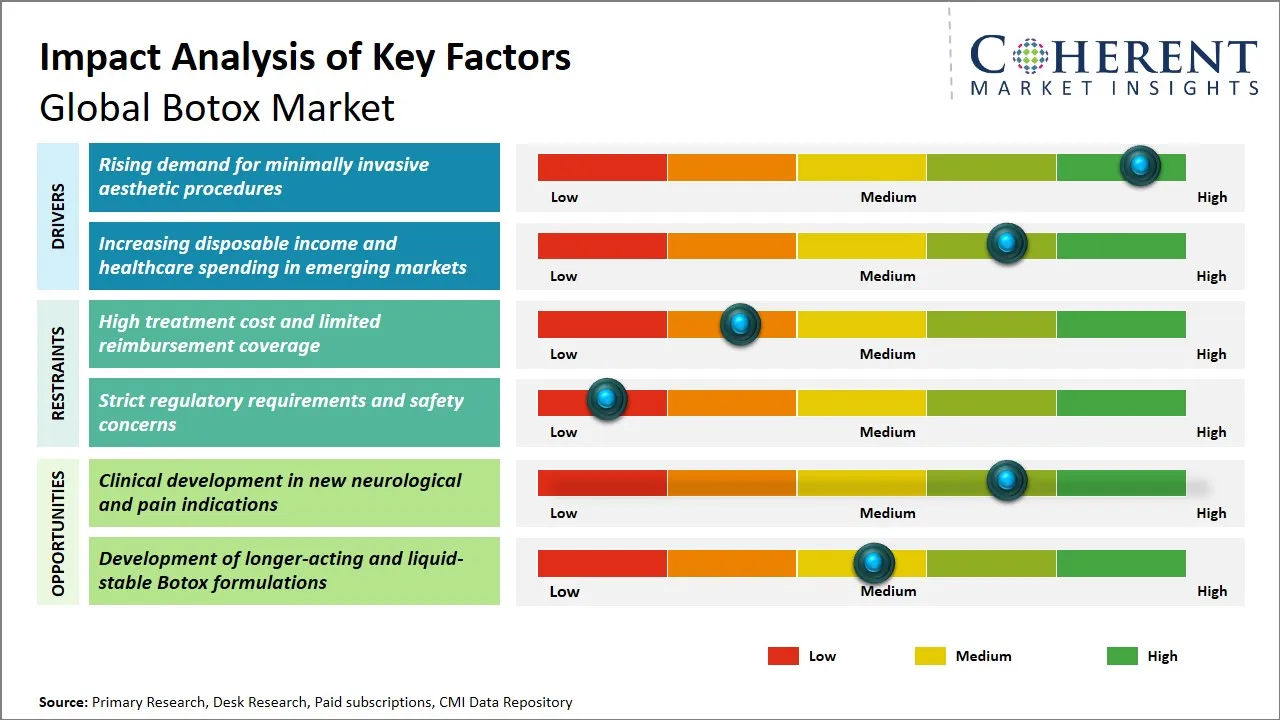
Botox Market Driver - Rising Demand for Minimally Invasive Aesthetic Procedures
The growing trend toward the use of minimally invasive aesthetic procedures will be a major driving force in the expansion of the Botox market all over the world as patients demand efficient but risk-free methods of performing cosmetic surgeries. The fast recovery rates, low level of pain, and lack of complications also make the Botox treatments attractive to the hectic schedules and the conservative nature of the contemporary patients. Moreover, new breakthroughs of methods of injection and the increased sensitivity to non-surgical cosmetic methods has resulted in Botox becoming more bearable and acceptable to a broader range of demographic groups, including the younger population that is eager to engage in preventive anti-aging procedures.
Moreover, rising disposable income and increasing emphasis on physical appearance and youthfulness have contributed to the market growth. For instance, according to the International Society of Aesthetic Plastic Surgery, SAPS, nearly 35 million aesthetic procedures were performed globally in 2023, with non-surgical treatments like botulinum toxin and hyaluronic acid accounting for USD 19.1 million highlighting the growing preference for non-invasive options due to their minimal downtime and safer profiles.
Botox Market Opportunity - Clinical Development in New Neurological and Pain Indications
Global Botox market has a big opportunity of growth due to the continuous clinical development with new neurological and pain indications. Conventionally used as a cosmetic, Botox (botulinum toxin) is currently showing therapeutic promise in a range of neurological disorders, including chronic migraine, spasticity, cervical dystonia and more recently as a treatment in emerging disorders, e.g. neuropathic pain and depression. The progress in the field of clinical research and a better perspective on the mechanism of action of the toxin have led to a shift in the utilization of the toxin beyond the aesthetics industry and led to manufacturers to branch out product pipelines and expand usage.
For example, Revance Therapeutics is advancing clinical exploration of its purified botulinum toxin formulation (DaxibotulinumtoxinA) for broader neurological applications, including cervical dystonia–related pain and potential expansion into other chronic pain segments. Hugel is pursuing clinical research on additional therapeutic indications for its botulinum toxin product (Letybo/Hutom), with early investigation into its potential relevance for neuromuscular and nerve-related pain conditions
Analyst Opinion (Expert Opinion)
- The Botox market continued to increase due to the introduction of aesthetic surgeries as the norm and therapeutic applications in migraine, spasticity, bladder disorders, and pain management. Formulation innovation, training clinicians and using devices to aid delivery led to better results, and the difficulties focused on the pressure of prices and the increasing rivalry of bio-similar products. The board of knowledge sharing activities like the IMCAS, Aesthetic and anti-aging medicine world congress and the toxic conference were crucial in that they updated the global standards, provided support in exchanging clinical evidence, and defining regulatory clarity on new indications.
- Recent activities: Allergan managed to keep its clinical programs in migraine and in pediatric spasticity, Medytox also entered into international relationships, and public-health pilot programs in Europe and Asia Pacific to expand access to therapeutic Botox. Religious organizations supported organized channels of indication growth and world aesthetic associations incorporated great conferences that were utilized to release practical discoveries that enhanced the confidence of the practitioners. All these efforts expanded the demand, enhanced the credibility of the treatment, and put the market into the perspective of the long-term diversified growth.
Speak to the analyst
Want personalized insights?
Take the findings above to one of our principal consultants, or have the report rebuilt around the segments, geographies and competitors you actually track.
Market Segmentation
- Application Insights (Revenue, USD Bn, 2021 - 2033)
- Aesthetic Applications
- Facial Wrinkle Treatment (e.g., glabellar lines, crow's feet, forehead lines)
- Other Aesthetic Enhancements (e.g., jaw slimming, gummy smile correction)
- Therapeutic Applications
- Chronic Migraine
- Muscle Spasticity (e.g., upper limb spasticity, cervical dystonia)
- Overactive Bladder & Neurogenic Detrusor Overactivity
- Hyperhidrosis (severe primary axillary sweating)
- Blepharospasm & Strabismus
- Other Therapeutic Uses (e.g., sialorrhea, bruxism)
- Aesthetic Applications
- Formulation Insights (Revenue, USD Bn, 2021 - 2033)
- Liquid Formulation (Ready-to-Use)
- Lyophilized Powder (Reconstituted)
- End User Insights (Revenue, USD Bn, 2021 - 2033)
- Aesthetic Clinics
- Dermatology Clinics
- Hospitals
- Medical Spas
- Specialty and Neurology Centers
- Ambulatory Surgical Centers
- Gender Insights (Revenue, USD Bn, 2021 - 2033)
- Female
- Male
- Age Group Insights (Revenue, USD Bn, 2021 - 2033)
- 18–30 Years
- 31–45 Years
- 46–60 Years
- Above 60 Years
- Distribution Channel Insights (Revenue, USD Bn, 2021 - 2033)
- Online
- Offline
- Regional Insights (Revenue, USD Bn, 2021 - 2033)
- North America
- U.S.
- Canada
- Latin America
- Brazil
- Argentina
- Mexico
- Rest of Latin America
- Europe
- Germany
- U.K.
- Spain
- France
- Italy
- Russia
- Rest of Europe
- Asia Pacific
- China
- India
- Japan
- Australia
- South Korea
- ASEAN
- Rest of Asia Pacific
- Middle East
- GCC Countries
- Israel
- Rest of Middle East
- Africa
- South Africa
- North Africa
- Central Africa
- North America
- Key Players Insights
- Allergan Aesthetics (AbbVie)
- Ipsen Pharma
- Galderma
- Merz Pharma
- Medytox Inc
- Daewoong Pharmaceutical Co Ltd
- Revance Therapeutics Inc
- Hugel Inc
- Lanzhou Institute of Biological Products Co Ltd
- Huons Biopharma Co Ltd
- Solstice Neurosciences LLC
- Supernus Pharmaceuticals
- Sinopharm Group
- Shanghai Fosun Pharmaceutical
- Huadong Medicine Co Ltd
- Sihuan Pharmaceutical Holdings Group Ltd
Sources
Primary Research Interviews
- Industry Stakeholders
- Board-certified dermatologists
- Aesthetic clinic owners
- End Users
- Patients undergoing cosmetic procedures
- Neurology and pain-management patients
Government and International Databases
- U.S. Food and Drug Administration
- European Medicines Agency
- World Health Organization
- National Institutes of Health
- Centers for Disease Control and Prevention
- ClinicalTrials.gov
Trade Publications
- Dermatology Times
- Aesthetics Journal
- The Aesthetic Guide
- MedEsthetics Magazine
- Practical Dermatology
- Clinics in Plastic Surgery Insights
Academic Journals
- JAMA Dermatology
- The Lancet Neurology
- Aesthetic Surgery Journal
- Plastic and Reconstructive Surgery Journal
- Neurology Journal
- Toxins (MDPI)
Reputable Newspapers
- The New York Times
- The Guardian
- The Wall Street Journal
- Financial Times
- The Washington Post
- USA Today
Industry Associations
- American Society for Dermatologic Surgery
- American Academy of Dermatology
- International Society of Aesthetic Plastic Surgery
- Aesthetic Multispecialty Society
- American Society of Plastic Surgeons
- International Neuromodulation Society
Public Domain Resources
- Google Scholar
- U.S. National Library of Medicine
- OpenFDA
- MedlinePlus
- National Health Service Publications
Proprietary Elements
- CMI Data Analytics Tool: Proprietary analytics tool to analyze real-time market trends, consumer behavior, and technology adoption in market
- Proprietary CMI Existing Repository of Information for Last 8 Years
Get access to 250+ pages report
Every segment, forecast, competitor profile and data table behind the analysis above — available for instant download.
- ESOMAR Member
- ISO 9001:2015 Certified
- D-U-N-S Registered
- GDPR & CCPA Compliant
Missing comfort of reading report in your local language? Find your preferred language:
Transform your Strategy with Exclusive Trending Reports
Frequently Asked Questions
The global Botox market is estimated to be valued at USD 6.88 Bn in 2026 and is expected to reach USD 14.11 Bn by 2033.
The CAGR of the global Botox market is projected to be 10.8% from 2026 to 2033.
Rising demand for minimally invasive aesthetic procedures and increasing disposable income and healthcare spending in emerging markets are the major factors driving the growth of the global Botox market.
High treatment cost and limited reimbursement coverage and strict regulatory requirements and safety concerns are the major factors hampering the growth of the global Botox market.
In terms of application, the aesthetic applications segment is estimated to dominate the market revenue share in 2026.
Allergan Aesthetics (AbbVie), Ipsen Pharma, Galderma, Merz Pharma, Medytox Inc, Daewoong Pharmaceutical Co Ltd, Revance Therapeutics Inc, Hugel Inc, Lanzhou Institute of Biological Products Co Ltd, Huons Biopharma Co Ltd, Solstice Neurosciences LLC, Supernus Pharmaceuticals, Sinopharm Group, Shanghai Fosun Pharmaceutical, Huadong Medicine Co Ltd, and Sihuan Pharmaceutical Holdings Group Ltd are the major players.
North America is expected to lead the global Botox market in 2026.