

Global Capecitabine Market Size and Forecast – 2026 to 2033
The Global Capecitabine Market is estimated to be valued at USD 524.8 Mn in 2026 and is expected to reach USD 820.9 Mn by 2033, exhibiting a compound annual growth rate (CAGR) of 6.6% from 2026 to 2033. This steady growth reflects the increasing demand for effective chemotherapeutic agents and the expanding prevalence of cancer worldwide. The market’s expansion is driven by ongoing advancements in drug formulation and the rising adoption of Capecitabine in combination therapies.
Key Takeaways of the global capecitabine market
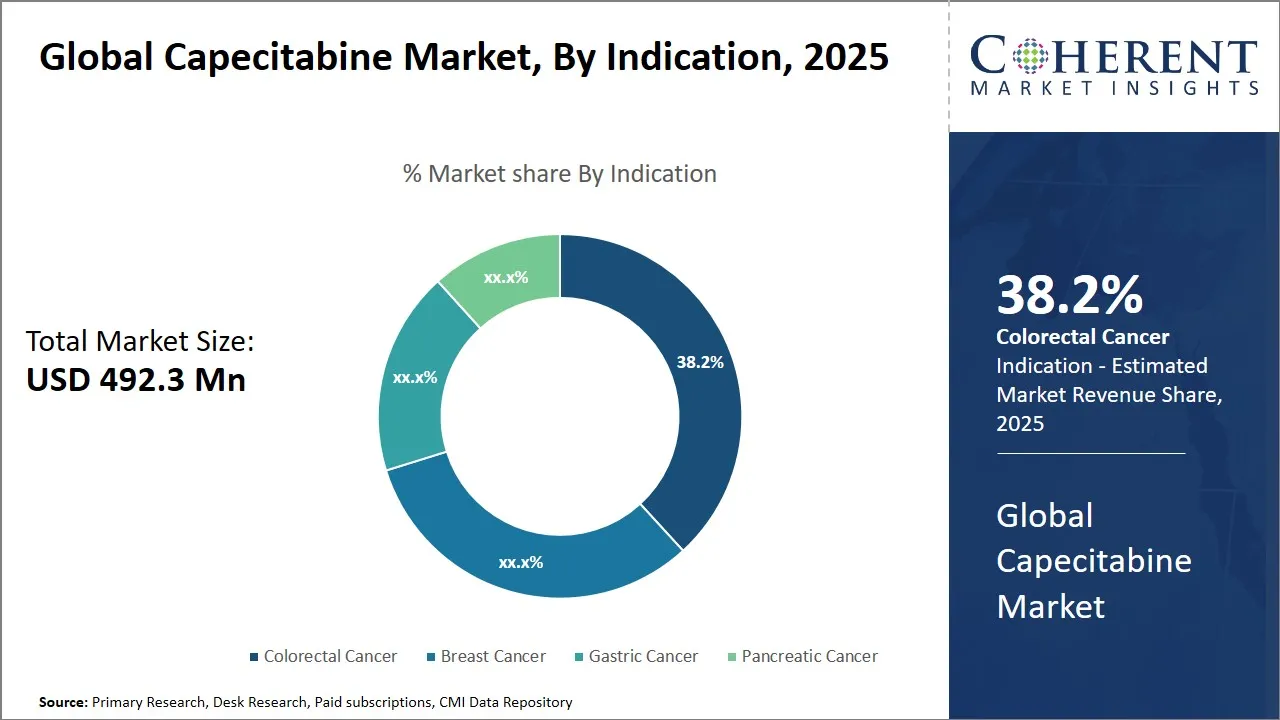
- By indication, colorectal cancer is projected to hold the largest share of the global capecitabine market at 39.2 % in 2026.
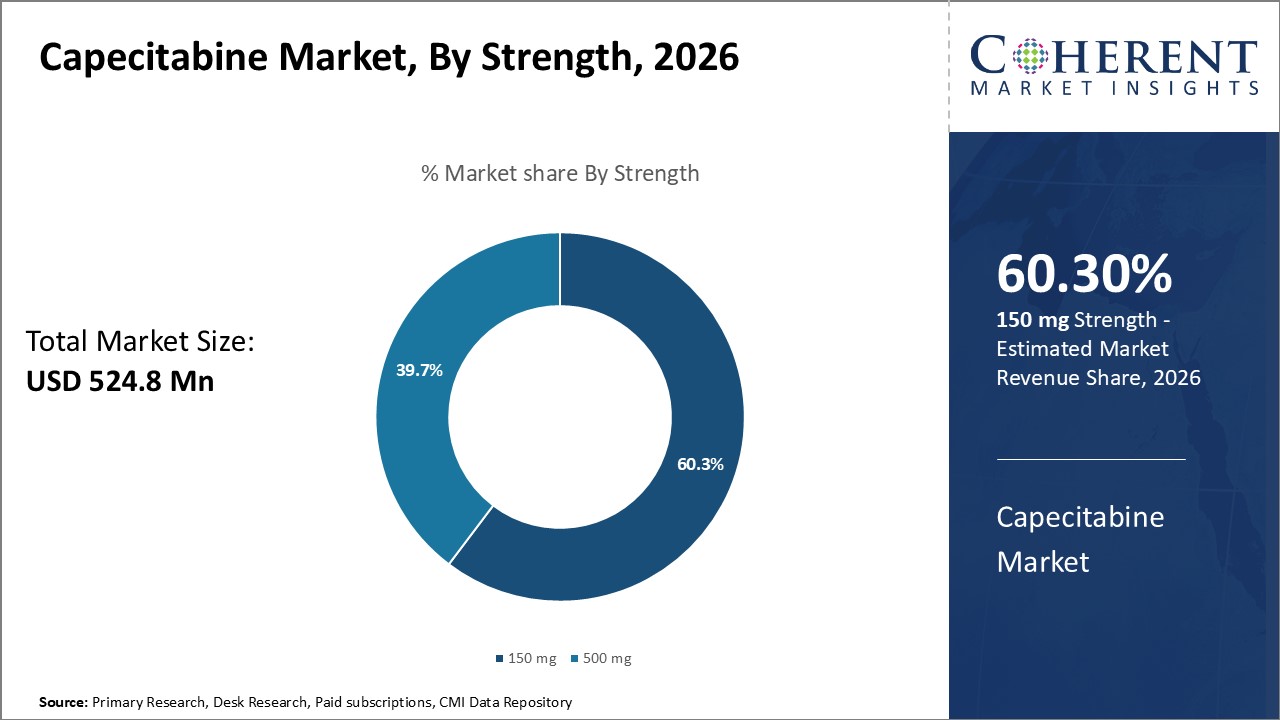
- By strength, the 150 mg segment is expected to lead with a 60.3 % share in 2026.
- Within the global capecitabine market, the generic segment will dominate with a 66.2 % share in 2026.
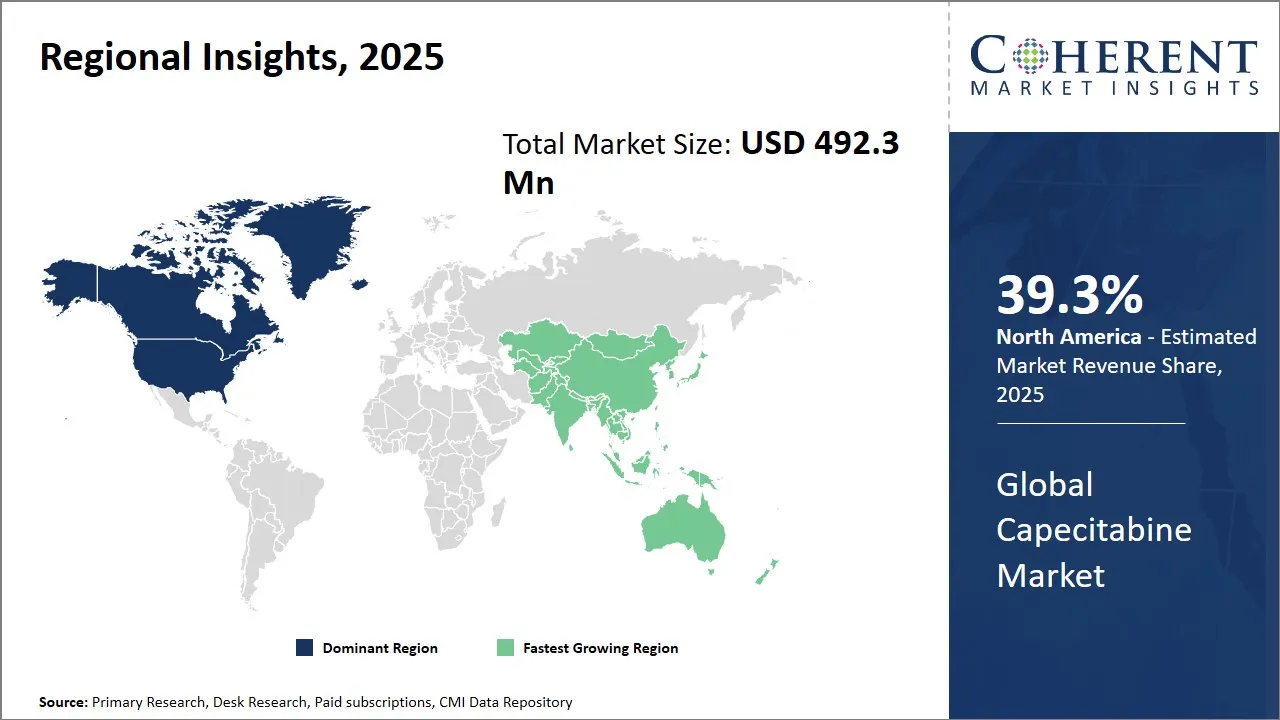
- North America is expected to lead the market, holding a share of 39.3 % in 2026. Asia Pacific is anticipated to be the fastest-growing region, with a market share of 24.2% in 2026.
Market Overview
Current market trends indicate a significant focus on personalized medicine and targeted cancer treatments, which are propelling the demand for Capecitabine. Innovations, such as oral administration and enhanced drug delivery systems, are improving patient compliance and therapeutic outcomes. Additionally, growing investments in oncology research and favorable regulatory approvals are supporting market penetration, while emerging economies are witnessing increasing access to cancer therapy, further boosting market growth.
Current Events and Its Impact
Current Events | Description and its impact |
Expansion of Generic Capecitabine Manufacturing in Asia Pacific |
|
Adoption of AI Technologies and Digital Health Tools in Oncology |
|
Segmental Insights
- Current Industry Events of 2026
- Market Size Estimation
- Regional Breakdown
- Competitive Landscape
- Customer Intelligence
- Segmental Analysis
- Pricing Analysis
- Key Market Drivers, Challenges & Future Trends
- Customized Insights Section
Capecitabine Market Insights, By Indication - Colorectal Cancer Dominance is Driven by High Prevalence and Clinical Efficacy
In terms of indication, colorectal cancer is expected to contribute the highest share of the global capecitabine market with 39.2% in 2026 owing to several critical factors. Colorectal cancer remains one of the most commonly diagnosed cancers worldwide, with a significant patient population requiring effective chemotherapeutic management. Capecitabine, an oral prodrug of 5-fluorouracil (5-FU), has demonstrated strong efficacy in both adjuvant and metastatic colorectal cancer settings, making it a preferred treatment option. Its convenience as an oral medication offers substantial advantages enhanced patient compliance, reduced hospital visits, and better quality of life compared to intravenous regimens.
In July 2023, according to WHO, colorectal cancer is the third most common cancer (≈10% of cases) and the second leading cause of cancer deaths worldwide, with 1.9 million new cases and 930,000 deaths in 2020, projected to rise sharply by 2040. Major risk factors include age (50+ years), unhealthy diet (high processed meat, low fruits/vegetables), sedentary lifestyle, obesity, smoking, and excessive alcohol use.
Capecitabine Market Insights, By Strength - Preference for 150 mg Strength is Fueled by Dosage Flexibility and Patient Tolerance
In terms of strength, the 150 mg segment is expected to command the highest share in the global capecitabine market with 60.3% in 2026, predominantly because of its adaptability and tolerance profile in clinical practice. The 150 mg dosage strength offers physicians more granular control over dosing adjustments, which is critical for personalized cancer treatment plans. Many chemotherapy regimens require titration based on patient weight, renal function, and adverse effect profile, making the availability of a lower strength tablet indispensable for dose fine-tuning during therapy. This flexibility is especially valuable in elderly patients and those with comorbidities, where dose modulation is key to maximizing efficacy while minimizing toxicity.
The 150 mg strength also improves patient compliance, as smaller doses can be incrementally combined or spaced out in treatment cycles to maintain a therapeutic window. It facilitates safer initiation and escalation of treatment, giving clinicians the ability to respond promptly to side effects such as hand-foot syndrome, gastrointestinal disturbances, or hematological toxicities. Furthermore, the 150 mg formulation aligns well with split-dose regimens frequently employed in colorectal and breast cancer therapies, supporting more tailored and patient-centric treatment approaches.
Capecitabine Market Insights, By Drug Type - Generic Capecitabine Prevails Due to Cost-Effectiveness and Accessibility
Within the global capecitabine market, the generic segment is projected to command the highest share with 66.2% in 2026, primarily because of its cost-effectiveness and wide accessibility. Generic formulations of Capecitabine are typically priced significantly lower than their branded counterparts, making them more affordable for a broader patient population, particularly in emerging and price-sensitive markets. This affordability facilitates broader adoption in both first-line and adjuvant cancer therapy, enabling healthcare providers to treat more patients without compromising on drug availability or compliance.
The expiry of patents on branded Capecitabine has catalyzed the entry of multiple generic manufacturers, intensified competition and driving prices down further. This dynamic has been beneficial not only to public healthcare systems that operate under budget constraints but also to private institutions, expanding the drug’s reach on a global scale. Additionally, generic versions undergo rigorous regulatory scrutiny to ensure bioequivalence with branded drugs, which reassures clinicians and patients regarding their efficacy and safety.
Regional Insights
North America Capecitabine Market Analysis and Trends
North America’s dominance in the global capecitabine market, with an estimated share of 39.3% in 2026, is driven by a well-established healthcare infrastructure, extensive government support for cancer research, and a mature pharmaceutical industry. The U.S. and Canada host a concentration of leading biopharmaceutical companies such as Bristol-Myers Squibb and Pfizer, which have been instrumental in enhancing capecitabine formulations and expanding their therapeutic indications.
Regulatory bodies like the USFDA have streamlined approval processes for oncology drugs, facilitating faster market introduction. Additionally, high healthcare expenditure, widespread awareness of cancer therapies, and strong intellectual property protections foster innovation and market competitiveness. The integrated supply chain ecosystem, coupled with robust clinical trial activities, further cements North America’s leading position. For Example, Apotex, a Canadian pharmaceutical company, supplies generic capecitabine tablets primarily in North America, focusing on cost-effective cancer treatment solutions.
Asia Pacific Capecitabine Market Analysis and Trends
Asia Pacific is expected to exhibit the fastest growth in the capecitabine market with a share of 24.2% in 2026, propelled by increasing cancer incidence, expanding healthcare access, and rising investments in pharmaceutical manufacturing. Countries like China, India, Japan, and South Korea are witnessing higher adoption due to enhanced medical infrastructure and government initiatives supporting cancer care and drug affordability. The presence of numerous generic manufacturers, such as Cipla and Sun Pharma in India, enables broader distribution and lower costs, boosting accessibility.
Moreover, regulatory bodies across the region are aligning with international standards, expediting approvals. The growing middle-class population and increasing healthcare insurance coverage further facilitate market expansion. Trade dynamics, including cross-border collaborations and joint ventures with multinational companies, also contribute to rapid market development. Hetero, an Indian pharmaceutical manufacturer, offers generic capecitabine tablets in domestic and export markets, with strong capabilities in oncology-focused APIs and finished formulations.
Capecitabine Market Outlook for Key Countries
U.S. Capecitabine Market Trends
The U.S.' capecitabine market is characterized by advanced oncology treatment frameworks and strong R&D investments. Major pharmaceutical giants like Bristol-Myers Squibb play a pivotal role in the market through innovation and lifecycle management of capecitabine products. The extensive reimbursement framework and insurance coverage also make these therapies accessible to a wide patient base. The country’s emphasis on personalized medicine and combination therapies supports the dynamic use of capecitabine, ensuring its continued relevance in chemotherapy protocols.
In August 2024, Camber Pharmaceuticals, a U.S.-based company known for providing affordable and high-quality generic medicines, announced the launch of 150 mg and 500 mg capecitabine tablets in 60-count bottles. The introduction of these formulations expands the availability of generic capecitabine in the United States, offering healthcare providers and patients a more cost-effective alternative to branded versions.
Japan Capecitabine Market Trends
Japan continues to lead in the Asia Pacific region due to its advanced healthcare system and aging population, which elevates demand for cancer therapeutics. Companies like Daiichi Sankyo have a strong presence, contributing various proprietary formulations of capecitabine supported by clinical innovation. Japan’s strict regulatory environment ensures high-quality standards and drug safety, while public reimbursement strongly supports patient affordability. Pharmaceutical collaborations with global companies further enhance market sophistication and drug availability.
In May 2026, data from a Japanese phase 2 study (UMIN000005209) revealed that adding bevacizumab (by Roche, a Swiss multinational healthcare company focused on pharmaceuticals and diagnostics) to capecitabine (by Roche, marketed under the brand name Xeloda) improved outcomes in metastatic colorectal cancer patients aged 76 years and older who were unable to tolerate oxaliplatin or irinotecan.
India Capecitabine Market Trends
India’s capecitabine market is fueled by cost-sensitive patient populations and a robust generic drug manufacturing base. Indian firms such as Cipla and Sun Pharma are key players, offering affordable capecitabine medicines both domestically and for export. Government schemes targeting cancer treatment accessibility and the expansion of healthcare infrastructure in tier-2 and tier-3 cities underpin market penetration.
In February 2021, Dr. Reddy’s Laboratories, a leading India-based multinational pharmaceutical company, announced the U.S. launch of Capecitabine Tablets, USP, a therapeutic equivalent generic of Xeloda (capecitabine), following approval from the U.S. Food and Drug Administration (FDA). Capecitabine, a nucleoside metabolic inhibitor with antineoplastic activity, is indicated for the treatment of adjuvant colon cancer (Dukes’ C), metastatic colorectal cancer, and metastatic breast cancer, either as monotherapy or in combination with docetaxel.
Germany Capecitabine Market Trends
Germany boasts a mature pharmaceutical landscape with high healthcare expenditure and strong insurance coverage, supporting the steady demand for capecitabine. Companies like Bayer contribute not only by supplying innovative therapeutic options but also through ongoing research in oncology. Germany’s regulatory environment, backed by the European Medicines Agency (EMA), ensures rigorous evaluation processes, fostering high trust in pharmaceutical safety. The country’s integrated healthcare ecosystem enables effective patient management and drug distribution, sustaining capecitabine’s market position.
In January 2023, CHEPLAPHARM, a Germany-based specialty pharmaceutical company known for acquiring and growing established originator brands, announced the acquisition of the commercial rights for Xeloda (capecitabine) in China from Roche, a Swiss multinational healthcare leader in pharmaceuticals and diagnostics. CHEPLAPHARM had previously secured global rights to Xeloda (excluding Japan and China) in 2022, and with this expansion, the company strengthens its oncology portfolio and presence in the world’s second-largest pharmaceutical market.
End-user Feedback and Unmet Needs in Capecitabine Market
- End users of capecitabine, including oncologists, healthcare providers, and government-backed healthcare systems, consistently highlight both the value and the limitations of the therapy in real-world settings. Many physicians report that patients appreciate the convenience of oral administration compared to intravenous chemotherapy, as it allows treatment to be continued at home while maintaining quality of life. For example, in large urban hospitals across Asia-Pacific, oncologists noted that capecitabine’s oral format has significantly reduced the burden on infusion centers, freeing up capacity for other critical cases. This accessibility has improved treatment compliance, particularly among elderly colorectal cancer patients who struggle with frequent hospital visits. However, feedback from healthcare professionals also points to recurring concerns, most notably the management of side effects such as hand-foot syndrome and gastrointestinal toxicity. In community clinics across Eastern Europe, practitioners shared that these toxicities often force dose reductions or interruptions, which can compromise treatment outcomes and add to patient stress.
- Despite its widespread use, several unmet needs remain unaddressed in the capecitabine market. There is a strong demand for more personalized formulations that reduce toxicity without compromising efficacy, as well as for supportive services that improve patient monitoring outside of hospital settings. Affordability is another pressing issue, particularly in middle- and low-income countries where even generic options can strain healthcare budgets. Policymakers and healthcare providers have also expressed the need for better integration of digital health tools to monitor side effects remotely and ensure early interventions. Addressing these gaps could open up significant opportunities for manufacturers and developers to differentiate their offerings, not only by improving safety profiles but also by aligning with broader healthcare goals such as cost containment, patient-centric care, and long-term treatment adherence. This direction could enhance market growth, inspire innovation, and strengthen trust between patients, providers, and industry stakeholders.
Market Players, Key Developments, and Competitive Intelligence
Key Developments
- In July 2025, CivicaScript, a non-profit U.S.-based company focused on providing low-cost generic medicines, announced the launch of its generic capecitabine tablets to make cancer treatment more affordable. The drug, used for colorectal, breast, gastric, esophageal, gastroesophageal junction, and pancreatic cancers, will be sold at USD 63 per bottle of 120 tablets (500 mg) with a recommended maximum retail price of USD 84 under CivicaScript’s transparent MaxRP policy.
- In December 2022, the U.S. FDA approved updated labeling for capecitabine tablets (Xeloda, Genentech, Inc.) under Project Renewal, the agency’s initiative to modernize labeling of older oncology drugs. Genentech, a U.S.-based biotechnology company and subsidiary of Roche, now has expanded indications for Xeloda, including use in Stage III colon cancer, perioperative rectal cancer, metastatic colorectal and breast cancer, gastric and esophageal cancers, HER2-positive gastroesophageal junction adenocarcinoma, and pancreatic adenocarcinoma.
- In July 2024, Processa Pharmaceuticals, Inc., a U.S.-based clinical-stage biopharma company, received U.S. FDA clearance to begin a Phase 2 trial of its Next Generation Capecitabine (NGC-Cap) in advanced breast cancer. Enrollment starts this quarter, with initial results expected by mid-2025.
Top Strategies Followed by Global Capecitabine Market Players
- The competitive landscape of the global capecitabine market is marked by a diverse range of strategies deployed by players across different tiers, each striving to carve out a distinct position amid intensifying market dynamics. Established players in the market maintain their dominance by heavily investing in research and development (R&D) to innovate and enhance the efficacy and safety profiles of capecitabine formulations. These companies prioritize the creation of high-performance products that not only meet stringent regulatory standards but also address unmet clinical needs, thereby securing patient trust and loyalty.
- For example, Cipla, an India-based pharmaceutical company, produces generic capecitabine tablets and distributes them across Asia Pacific, Africa, and Latin America, targeting price-sensitive cancer care segments. Moreover, Teva Pharmaceutical Industries Ltd, an Israel-based global generics giant, manufactures generic capecitabine formulations, offering affordable alternatives to Xeloda in multiple regulated and emerging markets, ensuring broader patient access.
- Mid-level market players adopt a distinctly pragmatic approach, concentrating on cost-effective solutions that strike a balance between product quality and affordability. Recognizing that price-sensitive consumers represent a significant segment of the global market, these companies tailor their offerings to cater specifically to the needs of healthcare providers and patients who demand reliable yet affordable cancer therapies. In doing so, mid-level players emphasize operational efficiency and supply chain optimization to reduce production costs without compromising on drug efficacy.
- For example, Dr. Reddy’s Laboratories Ltd provides capecitabine generics to regulated markets such as the U.S. and Europe, ensuring quality while keeping costs competitive through efficient production. Lupin Ltd has expanded its oncology portfolio by offering capecitabine in Latin America and South Africa, emphasizing economies of scale to maintain affordability.
- Small-scale players, though limited in resources compared to their larger counterparts, carve out niche opportunities by emphasizing specialized features or novel formulations of capecitabine that differentiate their products from mainstream offerings. They harness cutting-edge technologies such as advanced drug delivery systems, nano-formulations, or digital health integrations to remain competitive and appeal to targeted patient populations or therapeutic segments.
- For example, Sun Pharma Advanced Research Company (SPARC) in India develops novel drug delivery systems aimed at reducing side effects and improving patient compliance for oral chemotherapy, including capecitabine. Hua Medicine in China collaborates with local research institutes to enhance accessibility of next-generation oral oncology drugs and expand into underserved markets.
Market Report Scope
Capecitabine Market Report Coverage
| Report Coverage | Details | ||
|---|---|---|---|
| Base Year: | 2025 | Market Size in 2026: | USD 524.8 Mn |
| Historical Data for: | 2020 To 2024 | Forecast Period: | 2026 To 2033 |
| Forecast Period 2026 to 2033 CAGR: | 6.6% | 2033 Value Projection: | USD 820.9 Mn |
| Geographies covered: |
| ||
| Segments covered: |
| ||
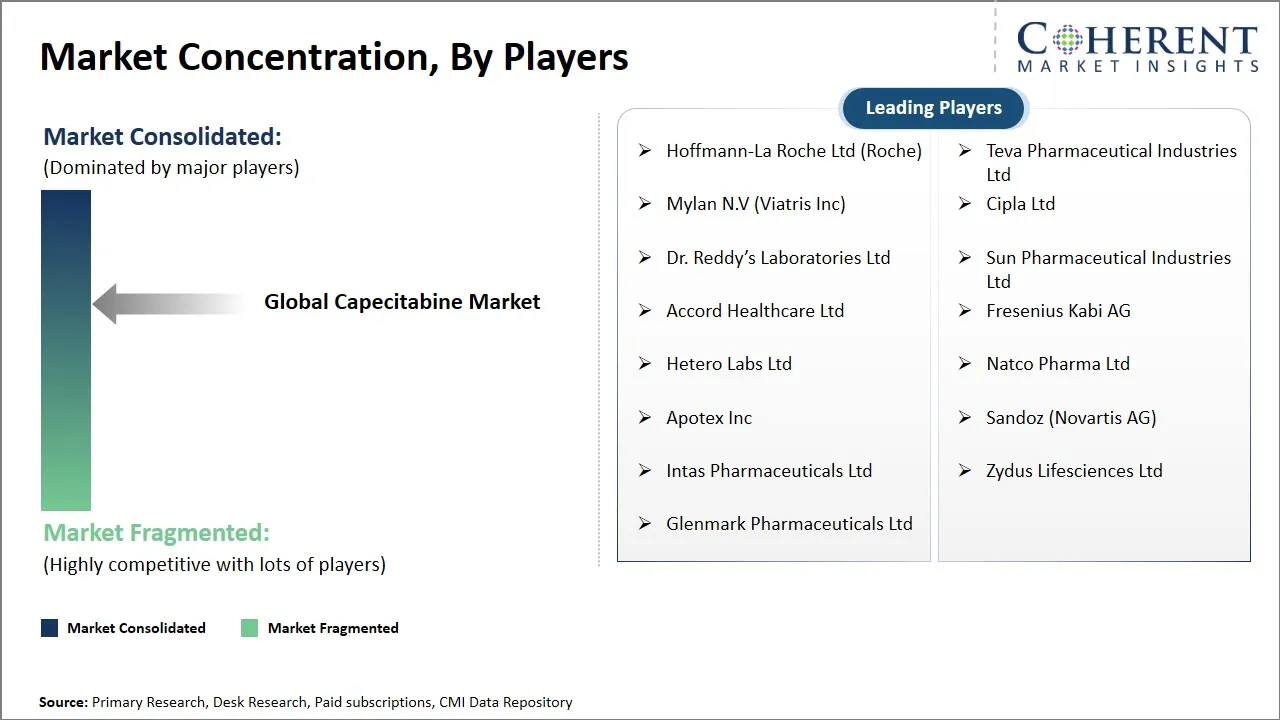
| Companies covered: | Hoffmann-La Roche Ltd (Roche), Teva Pharmaceutical Industries Ltd, Mylan N.V (Viatris Inc), Cipla Ltd, Dr. Reddy’s Laboratories Ltd, Sun Pharmaceutical Industries Ltd, Accord Healthcare Ltd, Fresenius Kabi AG, Hetero Labs Ltd, Natco Pharma Ltd, Apotex Inc, Sandoz (Novartis AG), Intas Pharmaceuticals Ltd, Zydus Lifesciences Ltd, and Glenmark Pharmaceuticals Ltd | ||
| Growth Drivers: |
| ||
| Restraints & Challenges: |
| ||
Capecitabine Market Dynamics
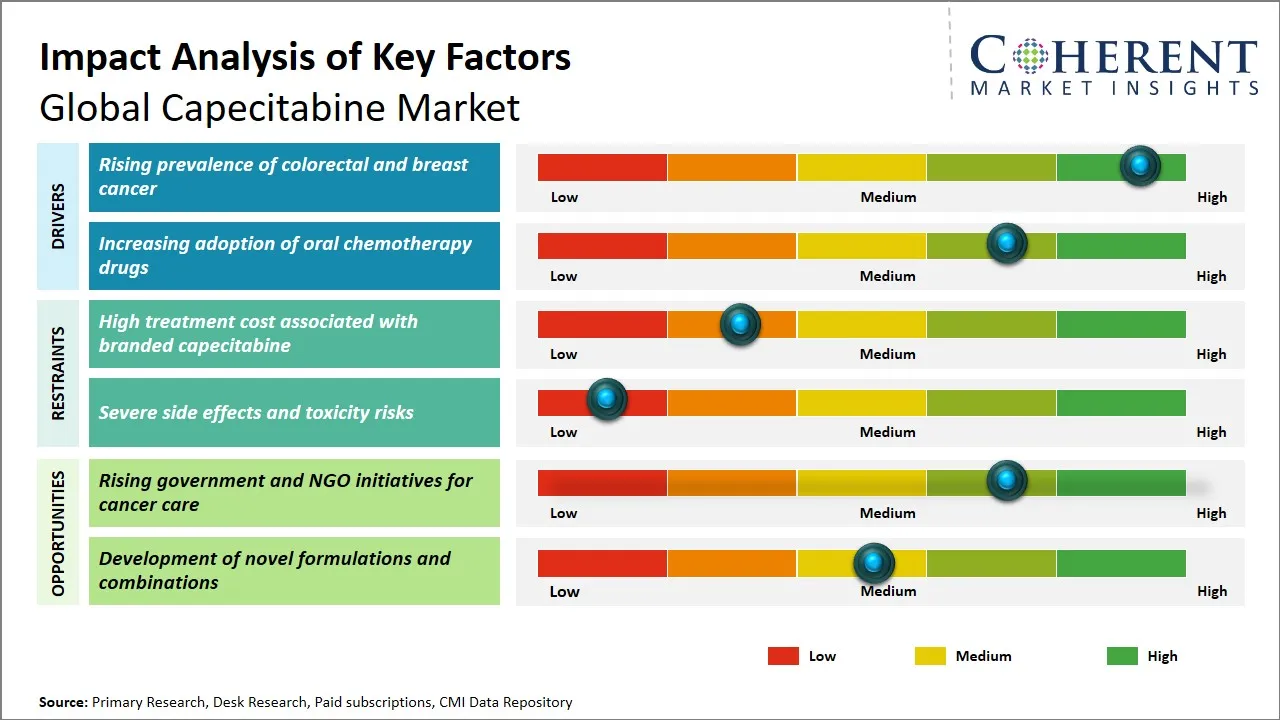
Capecitabine Market Driver - Rising Prevalence of Colorectal and Breast Cancer
The increasing incidence of colorectal and breast cancer worldwide serves as a significant driver for the global capecitabine market. Capecitabine, an oral chemotherapeutic agent, is widely prescribed for these malignancies due to its targeted mechanism and improved patient compliance compared to traditional intravenous chemotherapy. The surge in lifestyle-related risk factors such as obesity, sedentary behavior, and dietary habits has contributed to the rising number of colorectal and breast cancer cases, especially in both developed and emerging economies. Additionally, enhanced cancer screening programs and early diagnosis have led to the identification of more patients eligible for adjuvant or metastatic treatment regimens that incorporate capecitabine. As awareness around cancer treatment options grows, physicians are increasingly favoring oral chemotherapy agents that not only improve quality of life but also reduce hospital visits. This trend directly amplifies the adoption of capecitabine, further propelling its demand in oncology therapeutics.
In March 2024, according to the World Health Organization, approximately 2.3 million new cases are diagnosed annually worldwide. Developed regions like North America and parts of Europe report the highest incidence rates, with a lifetime risk of 1 in 8 women developing breast cancer. Additionally, many developing countries have seen a notable increase in breast cancer incidence due to the adoption of Western lifestyles.
Capecitabine Market Opportunity - Rising Government and NGO Initiatives for Cancer Care
The global capecitabine market stands to benefit significantly from the increasing government and non-governmental organization (NGO) initiatives aimed at improving cancer care worldwide. Governments across both developed and emerging economies are prioritizing cancer treatment through enhanced healthcare funding, development of national cancer control programs, and subsidized access to essential anticancer drugs like capecitabine. These efforts are often supported by collaborations with NGOs, which work to raise awareness, improve early diagnosis, and facilitate access to affordable cancer therapeutics. For instance, programs focusing on expanding healthcare infrastructure and integrating cancer treatment into universal health coverage frameworks create a favorable environment for the uptake of capecitabine.
In August 2022, the National Cancer Grid (NCG), in collaboration with the Koita Foundation, established the Koita Centre for Digital Oncology (KCDO) at Tata Memorial Hospital, Mumbai, India to advance digital technologies in cancer care. Supported for five years by the Koita Foundation, KCDO will help over 270 NCG partner hospitals adopt digital tools such as EMRs, AI, big data, telemedicine, and mobile health apps to improve accessibility, patient compliance, and treatment outcomes.
Analyst Opinion (Expert Opinion)
- The capecitabine market is gaining momentum as cancer prevalence continues to rise globally, particularly breast and colorectal cancers where the drug is widely prescribed. Advances in personalized medicine and oral chemotherapy delivery are improving patient adherence and outcomes, while supportive regulatory policies are ensuring faster access to treatment. Despite these positives, the market faces challenges such as adverse side effects, patent expiries, and the growing pressure of generic competition. Opportunities lie in the development of novel formulations, combination therapies, and the expansion of access programs in emerging markets. Conferences such as the American Society of Clinical Oncology (ASCO) Annual Meeting and the European Society for Medical Oncology (ESMO) Congress in the past three years have been crucial in advancing knowledge, highlighting clinical trial data, and shaping treatment guidelines for capecitabine use in oncology.
- Recent initiatives have also shaped the market outlook. Pharmaceutical companies are exploring capecitabine in new therapeutic combinations, and several ongoing clinical trials are evaluating its effectiveness in adjuvant therapies. Governments and health agencies are increasingly focusing on affordable oncology care, with pilot programs in Asia Pacific and Latin America supporting wider patient access to oral chemotherapy drugs. Collaborations between hospitals, research institutes, and industry players are ensuring real-world data collection that can refine usage guidelines. These developments signal a market that is evolving steadily, with innovation and affordability positioned as the twin pillars of future growth.
Speak to the analyst
Want personalized insights?
Take the findings above to one of our principal consultants, or have the report rebuilt around the segments, geographies and competitors you actually track.
Market Segmentation
- Indication Insights (Revenue, USD Mn, 2021 - 2033)
- Colorectal Cancer
- Breast Cancer
- Gastric Cancer
- Pancreatic Cancer
- Strength Insights (Revenue, USD Mn, 2021 - 2033)
- 150 mg
- 500 mg
- Drug Type Insights (Revenue, USD Mn, 2021 - 2033)
- Generic
- Branded
- Age Group Insights (Revenue, USD Mn, 2021 - 2033)
- Adult
- Geriatric
- Distribution Channel Insights (Revenue, USD Mn, 2021 - 2033)
- Hospital Pharmacies
- Retail Pharmacies
- Online Pharmacies
- End User Insights (Revenue, USD Mn, 2021 - 2033)
- Hospitals
- Specialty Centers
- Cancer Treatment Centers
- Homecare Settings
- Others (Academic and Research Institutes)
- Regional Insights (Revenue, USD Mn, 2021 - 2033)
- North America
- U.S.
- Canada
- Latin America
- Brazil
- Argentina
- Mexico
- Rest of Latin America
- Europe
- Germany
- U.K.
- Spain
- France
- Italy
- Russia
- Rest of Europe
- Asia Pacific
- China
- India
- Japan
- Australia
- South Korea
- ASEAN
- Rest of Asia Pacific
- Middle East
- GCC Countries
- Israel
- Rest of Middle East
- Africa
- South Africa
- North Africa
- Central Africa
- North America
- Key Players Insights
- Hoffmann-La Roche Ltd (Roche)
- Teva Pharmaceutical Industries Ltd
- Mylan N.V (Viatris Inc)
- Cipla Ltd
- Reddy’s Laboratories Ltd
- Sun Pharmaceutical Industries Ltd
- Accord Healthcare Ltd
- Fresenius Kabi AG
- Hetero Labs Ltd
- Natco Pharma Ltd
- Apotex Inc
- Sandoz (Novartis AG)
- Intas Pharmaceuticals Ltd
- Zydus Lifesciences Ltd
- Glenmark Pharmaceuticals Ltd
Sources
Primary Research Interviews
- Industry Stakeholders list
- Oncologists and Clinical Researchers
- Pharmaceutical Manufacturing Executives
- End-users list
- Hospital Oncology Departments
- Cancer Patient Advocacy Groups
Government and International Databases
- World Health Organization (WHO)
- National Cancer Institute (NCI)
- U.S. Food and Drug Administration (FDA)
- European Medicines Agency (EMA)
- National Medical Products Administration (NMPA, China)
- United Nations Comtrade Database
Trade Publications
- Pharmaceutical Technology
- BioPharm International
- PharmaTimes
Academic Journals
- The Lancet Oncology
- Journal of Clinical Oncology
- International Journal of Cancer
- Cancer Chemotherapy and Pharmacology
Reputable Newspapers
- The New York Times (Health Section)
- The Guardian (Health and Science)
- Financial Times (Pharmaceuticals and Healthcare)
Industry Associations
- American Society of Clinical Oncology (ASCO)
- European Society for Medical Oncology (ESMO)
- International Agency for Research on Cancer (IARC)
Public Domain Resources
- International Clinical Trials Registry Platform (ICTRP)
- European Commission Health Statistics Database
- World Bank Health Data
Proprietary Elements
- CMI Data Analytics Tool: Proprietary analytics tool to analyze real-time market trends, consumer behavior, and technology adoption in market
- Proprietary CMI Existing Repository of Information for Last 8 Years
Get access to 250+ pages report
Every segment, forecast, competitor profile and data table behind the analysis above — available for instant download.
- ESOMAR Member
- ISO 9001:2015 Certified
- D-U-N-S Registered
- GDPR & CCPA Compliant
Missing comfort of reading report in your local language? Find your preferred language:
Transform your Strategy with Exclusive Trending Reports
Frequently Asked Questions
The global capecitabine market is estimated to be valued at USD 524.8 Mn in 2026 and is expected to reach USD 820.9 Mn by 2033.
The CAGR of global capecitabine market is projected to be 6.6% from 2026 to 2033.
Rising prevalence of colorectal and breast cancer and increasing adoption of oral chemotherapy drugs are the major factors driving the growth of the global capecitabine market.
High treatment cost associated with branded capecitabine and severe side effects and toxicity risks are the major factors hampering the growth of the global capecitabine market.
In terms of indication, colorectal cancer is estimated to dominate the market revenue share in 2026.
Future opportunities lie in improved formulations to minimize side effects, integration with digital health monitoring for patient compliance, expansion into emerging markets, and combination therapies with targeted and immuno-oncology drugs.
Physicians and patients prefer oral chemotherapy like capecitabine because it reduces hospital visits and improves quality of life compared to intravenous chemotherapy, driving strong adoption.