

Global Cattle Vaccine Market Size and Forecast – 2026-2033
According to Coherent Market Insights, the global cattle vaccine market is estimated to be valued at USD 4.13 Bn in 2026 and is expected to reach USD 6.17 Bn by 2033, exhibiting a compound annual growth rate (CAGR) of 5.9% from 2026 to 2033. This consistent growth is driven by increasing demand for preventive healthcare in livestock, rising awareness about cattle diseases, and expanding cattle farming activities worldwide. Investments in veterinary infrastructure and advancements in vaccine technology are also projected to contribute to market expansion during this period.
Key Takeaways of the Global Cattle Vaccine Market
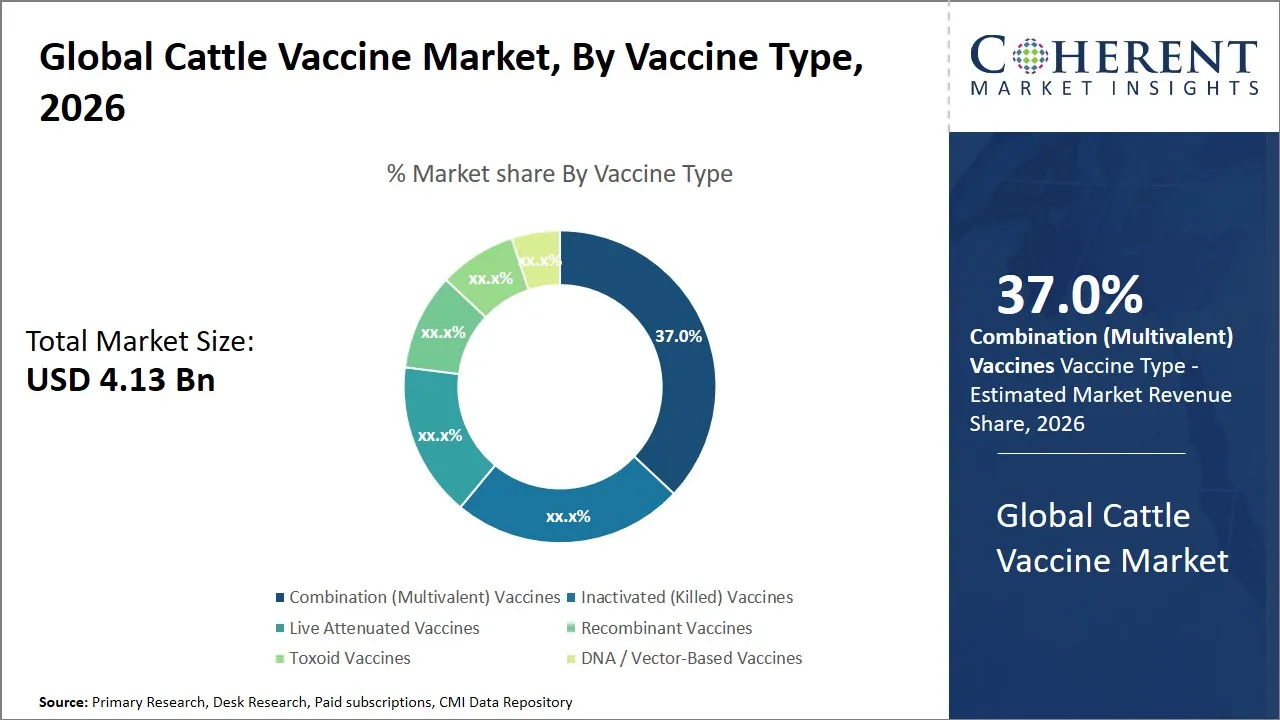
- Combination (multivalent) vaccines segment is expected to lead the cattle vaccine market, capturing 37% share in 2026.
- Bovine Respiratory Diseases (BRD Complex, IBR, BRSV, PI3) segment is estimated to represent 31% of the cattle vaccine market share in 2026.
- Dairy cattle segment is projected to dominate with 46% of the global cattle vaccine market share in 2026.
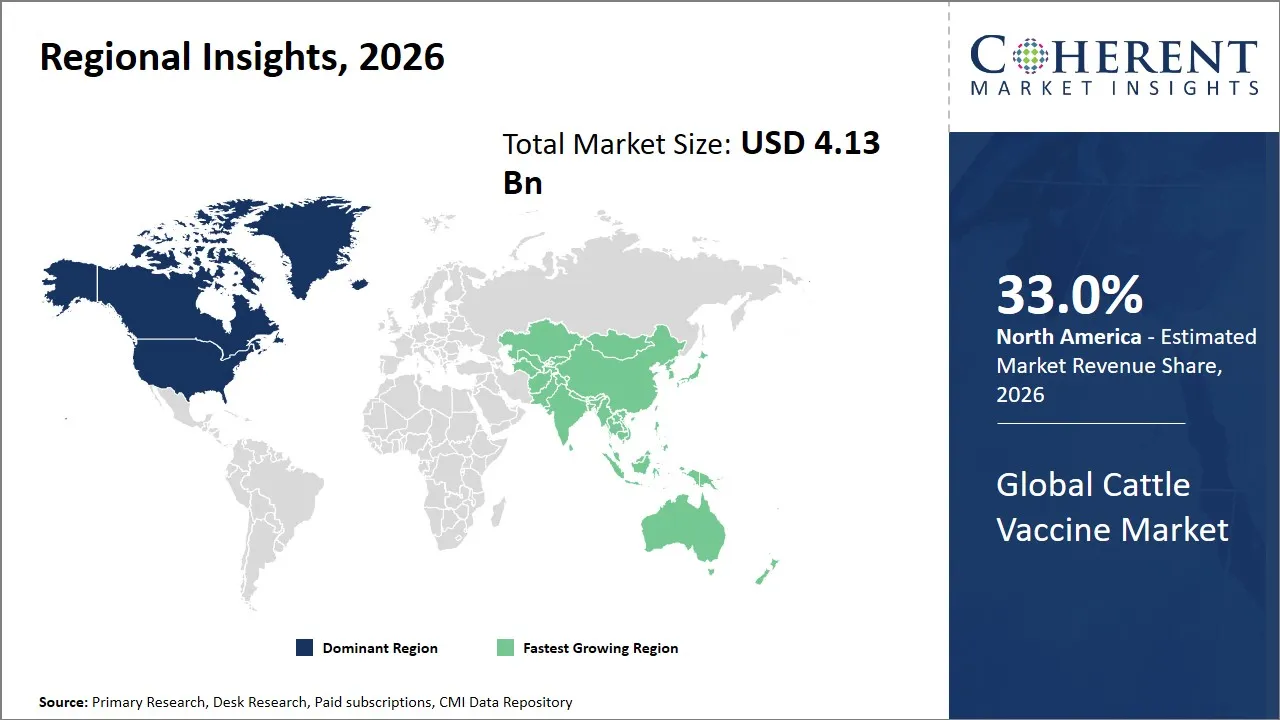
- North America is expected to lead the market, holding a share of 33% in 2026. Asia Pacific is anticipated to be the fastest-growing region, with 26% share in 2026.
Market Overview
- The cattle vaccine market is driven by rising incidence of infectious diseases such as Bovine Respiratory Disease (BRD), Foot and Mouth Disease (FMD), Bovine Viral Diarrhea (BVD), and clostridial infections, impacting dairy and beef productivity.
- The increasing commercialization of dairy and beef farming with larger herd sizes is expanding routine vaccination demand globally.
- Multivalent and long-acting injectable vaccines dominate value share due to improved compliance and higher average selling prices.
- The ongoing R&D focus on recombinant biologics and next-generation biologics is reshaping the competitive landscape and supporting premiumization of the market.
Currents Events and their Impact
Current Events | Description and its Impact |
Advancement of Bovine Tuberculosis (bTB) Vaccine Field Trials (2026) |
|
Expansion of Manufacturing Capacity by Major Animal Health Companies |
|
Segmental Insights
- Current Industry Events of 2026
- Market Size Estimation
- Regional Breakdown
- Competitive Landscape
- Customer Intelligence
- Segmental Analysis
- Pricing Analysis
- Key Market Drivers, Challenges & Future Trends
- Customized Insights Section
Why Does the Combination (Multivalent) Vaccines Segment Dominate the Global Cattle Vaccine Market in 2026?
The combination (multivalent) vaccines segment is expected to hold the largest share of 37% in 2026, attributed to several compelling factors that align with the operational and economic needs of livestock producers. Combination vaccines, which include antigens of many pathogens in one formulation, provide a broad spectrum of protection against a number of infectious agents. This method will minimize the number of individual doses to be given to the cattle, which will lead to a simplified and less labor-intensive administration of the herd.
For instance, Zoetis’ Bovi-Shield Gold One Shot, which protects cattle against multiple respiratory pathogens including Infectious Bovine Rhinotracheitis (IBR), Bovine Viral Diarrhea (BVD Types 1 & 2), Parainfluenza-3 (PI3), and Bovine Respiratory Syncytial Virus (BRSV) in a single dose, helps in reducing handling frequency and improving herd-level compliance in commercial operations.
(Source- https://www.drugs.com/vet/bovi-shield-gold-one-shot.html#:~)
The Bovine Respiratory Diseases (BRD Complex, IBR, BRSV, PI3) Segment Dominates the Global Cattle Vaccine Market
The bovine respiratory diseases (BRD Complex, IBR, BRSV, PI3) segment is projected to capture 31% share in 2026, owing to high demand given their high morbidity and economic impact. Bovine respiratory diseases (BRD), including Infectious Bovine Rhinotracheitis (IBR), Bovine Respiratory Syncytial Virus (BRSV), and Parainfluenza-3 (PI3), are the leading disease indication group due to their high prevalence and significant economic impact on cattle. These respiratory infections represent one of the most common and costly challenges faced by the cattle industry globally. The environmental and management stressors coupled with the multifactorial nature of BRD comprising of viral and bacterial pathogens complicate prevention by vaccination which is an essential part of disease control methods.
For instance, Merck Animal Health’s offering, Bovilis Vista 5 L5 SQ, a vaccine designed to protect cattle against key BRD pathogens including Infectious Bovine Rhinotracheitis (IBR), Bovine Viral Diarrhea (BVD Types 1 & 2), Parainfluenza-3 (PI3), and Bovine Respiratory Syncytial Virus (BRSV), helps reduce morbidity, mortality, and weight loss in feedlot and dairy herds.
(Source- https://www.merck-animal-health-usa.com/hub/bovilis/bovilis-vista/)
Dairy Cattle Segment Dominates the Cattle Vaccine Market
The dairy cattle segment is expected to capture the highest share of 46% in 2026, driven predominantly by the unique health challenges and production demands associated with dairy farming. Vaccination is an invaluable resource in the health protection of herd because dairy cattle need stringent health control to maintain the milk production, animal fertility, and longevity.
The high stocking densities, intimate animal-to-animal contacts, and frequent movements in and out of dairy farms are features that define intensive dairy farming practices that provide an environment favorable to the transmission of infectious diseases. This weakness makes it necessary to implement full immunization measures to eliminate the risk of outbreak that has the potential to greatly affect the production of milk and the profitability of the farm.
Impact of Cold Chain Dependency and Implementation Costs on Cattle Vaccine Adoption
- Increased Operational Costs: The dependency on cold chain logistics for storing and transporting cattle vaccines increases operational costs, making vaccine distribution more complex and costly, especially in remote or underserved regions.
- Barriers for Small-Scale Operations: High implementation costs for maintaining the required cold storage infrastructure may deter smaller operations from adopting vaccines, hindering widespread adoption and delaying disease prevention efforts in the cattle industry.
Regional Insights
North America Cattle Vaccine Market Analysis and Trends
The North America region is projected to lead the market with a 33% share in 2026, driven by a well-established veterinary infrastructure, advanced biotechnology industry, and stringent government regulations promoting livestock health. The U.S. and Canada have well-established farmlands with commercial cattle production on large scale, requiring their extensive cattle immunization efforts.
There are government policies that contribute to the stability and growth of the market, which are in favor of animal health in terms of subsidies and requirements that are put on disease prevention. Having so many multinational pharmaceutical companies, including Zoetis, Merck Animal Health and Elanco, offers high product pipeline and a wide range of distribution channels.
For instance, Zoetis supplies a wide portfolio of cattle vaccines in the U.S. including respiratory and clostridial combination vaccines widely adopted across commercial dairy farms and large feedlot operations.
(Source- https://www.buildinghealthyherds.com/products.aspx#:~)
Asia Pacific Cattle Vaccine Market Analysis and Trends
The Asia Pacific region is expected to exhibit the fastest growth in the cattle vaccine market contributing 26% share in 2026, propelled by increasing demand for meat and dairy products due to population growth and rising disposable incomes. There is an increase in government attention to livestock productivity and control of disease in countries such as India, China, and Australia in order to guarantee food security. The existence of the upcoming veterinary infrastructure and the growing cattle farming activities in these nations form good grounds for vaccine adoption.
Also, local players like Indian Immunological and Zoetis Australia are growing their portfolios in the local disease profile, further driving market penetration. The dynamics of trade favor increased exports of animal products and emphasize the need for standardized cattle vaccination strains in the region.
For instance, Indian Immunologicals Limited, which supplies Foot and Mouth Disease (FMD), Hemorrhagic Septicemia, and combined cattle vaccines across India under large-scale government immunization programs, is significantly contributing to the regional volume demand for cattle vaccine.
(Source- https://www.indimmune.com/business-unit/animal-health/vaccines/livestock-vaccines/)
Global Cattle Vaccine Market Outlook for Key Countries
How is the U.S. Helping in the Growth of the Cattle Vaccine Market?
The U.S. cattle vaccine market is defined by a strong research and development potential and wide-ranging adoption of vaccines in commercial and small-scale cattle farming activities. Key players such as Merck Animal Health and Zoetis are up to date in innovation in vaccines against major effects of diseases such as bovine respiratory disease and foot-and-mouth disease that happen to cattle.
Federal laws, such as those of the USDA, support vaccination as a prevention measure meaning the majority of farmers will accept it. Sophisticated cold chain logistics and veterinary service networks are also beneficial to the country in terms of effective distribution of the vaccines.
How is India Helping in the Growth of the Cattle Vaccine Market?
The cattle vaccine market of India is on a steady rise given that there are government efforts in the National Action Plan of Disease Control and the gradual move towards organized dairy farming. Affordability and accessibility of vaccines against endemic diseases like brucellosis and foot-and-mouth disease is boosted by the availability of local manufacturers of vaccines like Indian Immunologicals Limited. An increase in awareness among farmers in rural areas on disease prevention is increasing the penetration of vaccines. In addition, there is also the participation of public-private partnerships and NGOs in vaccination exercise, which promotes market growth both in rural and semi-urban regions.
Key Drivers for the Growth of the China Cattle Vaccine Market
High investments in animal health by both the government and the private sectors have enabled China to remain at the forefront in the development and supply of cattle vaccines in terms of innovation and scale. Government officials are concerned with the safety of food and the maintenance of livestock, which contributes to strict vaccination requirements. Firms like the Lanzhou Institute of Biological Products and Zoetis offer vaccines that are specific to the local strains and weather. The strong manufacturing capacity and export interests of China are stimulating the formulation of new vaccine preparations, which aid massive immunization.
Brazil Cattle Vaccine Market Trends
The cattle vaccine market in Brazil is determined by the fact that the country is a large exporter of beef in the world, and it would require a complex system of cattle disease control, including vaccination. Government policies encourage animal health in order to maintain its export quality particularly in the presence of regulatory authorities such as MAPA imposing vaccination mandates.
Veterinary pharmaceutical firms like Ourofino Saúde Animal as well as large agribusinesses play an important role in the provision of vaccines that target both productivity and animal welfare diseases. Bureaucracy is another advantage that is experienced by the Brazil cattle vaccine market due to the rising acceptance of bio technological innovations and integrated animal health management practices.
Regional Disparities in Vaccination Coverage and Herd Immunity Gaps in the Cattle Vaccine Market
- Inequality in vaccination coverage by region: The developed markets of North America and Western Europe have high routine adult vaccination rates of 80-90% whereas parts of South Asia and Sub-Saharan Africa have inconsistent coverage because of funding limitations; logistic voids and the smallholder farming systems are fragmented.
- Herd immunity gaps increase outbreak vulnerability: Inadequate booster compliance and partial coverage in emerging markets reduce effective herd immunity thresholds, leading to recurrent outbreaks of FMD, BRD, and clostridial diseases, thereby increasing emergency vaccine procurement and volatility in annual demand
Market Players, Key Developments, and Competitive Intelligence
Key Developments
- On February 10, 2026, Zhengye Biotechnology Holding Limited released a chairman’s letter outlining strategic priorities for 2026, focusing on deepening customer engagement with large-scale producers, expanding the product portfolio of cattle vaccine specifically in the livestock and swine sectors—and advancing into the companion animal market.
- In December 2025, Elanco Animal Healthannounced a strategic shift to consolidate its global operations by expanding its research and manufacturing footprint in Indiana, U.S. This move involves a USD 400 million investment aimed at accelerating innovation and increasing production capacity, particularly for livestock vaccines and therapeutics.
- In October 2025, the UK's Animal and Plant Health Agency (APHA) announced that field trials for a new bovine tuberculosis (bTB) cattle vaccine (CattleBCG) and its companion, Detect Infected among Vaccinated Animals (DIVA) skin test moved to Phase 3. This next phase is set to be completed in 2026, with findings being used to support applications for marketing authorizations.
Top Strategies Followed by Global Cattle Vaccine Market Players
Player Type | Strategic Focus | Examples |
Established Market Leaders | Established leaders focus on strong R&D investment, advanced biotechnology platforms, and multivalent vaccine development to maintain product differentiation and premium positioning. They pursue strategic partnerships and expand distribution networks in emerging markets to strengthen global reach and align products with regional disease patterns. | Zoetis continuously invests in next-generation cattle vaccines and expands manufacturing and distribution capabilities across North America, Latin America, and Asia Pacific to reinforce its leadership in livestock health solutions. |
Mid-Level Players | Mid-level players compete through cost-effective vaccine portfolios targeting price-sensitive dairy and beef farmers, especially in emerging markets. They optimize manufacturing efficiency and collaborate with technology partners or contract manufacturers to expand capacity, adopt improved formulations, and widen regional distribution. | Hester Biosciences Limited offers competitively priced cattle vaccines across India and Africa while leveraging strategic partnerships and localized manufacturing to strengthen market penetration. |
Small-Scale Players | Small-scale players focus on niche or region-specific cattle diseases, leveraging agility and specialized formulations to differentiate from mass-market products. They rely on local partnerships and targeted distribution networks to penetrate specific geographic markets while responding quickly to emerging outbreak needs. | Colorado Serum Company specializes in targeted livestock vaccines for specific bacterial and clostridial diseases, serving niche cattle segments in North America through focused product offerings and regional distribution strength. |
Market Report Scope
Cattle Vaccine Market Report Coverage
| Report Coverage | Details | ||
|---|---|---|---|
| Base Year: | 2025 | Market Size in 2026: | USD 4.13 Bn |
| Historical Data for: | 2020 To 2024 | Forecast Period: | 2026 To 2033 |
| Forecast Period 2026 to 2033 CAGR: | 5.9% | 2033 Value Projection: | USD 6.17 Bn |
| Geographies covered: |
| ||
| Segments covered: |
| ||
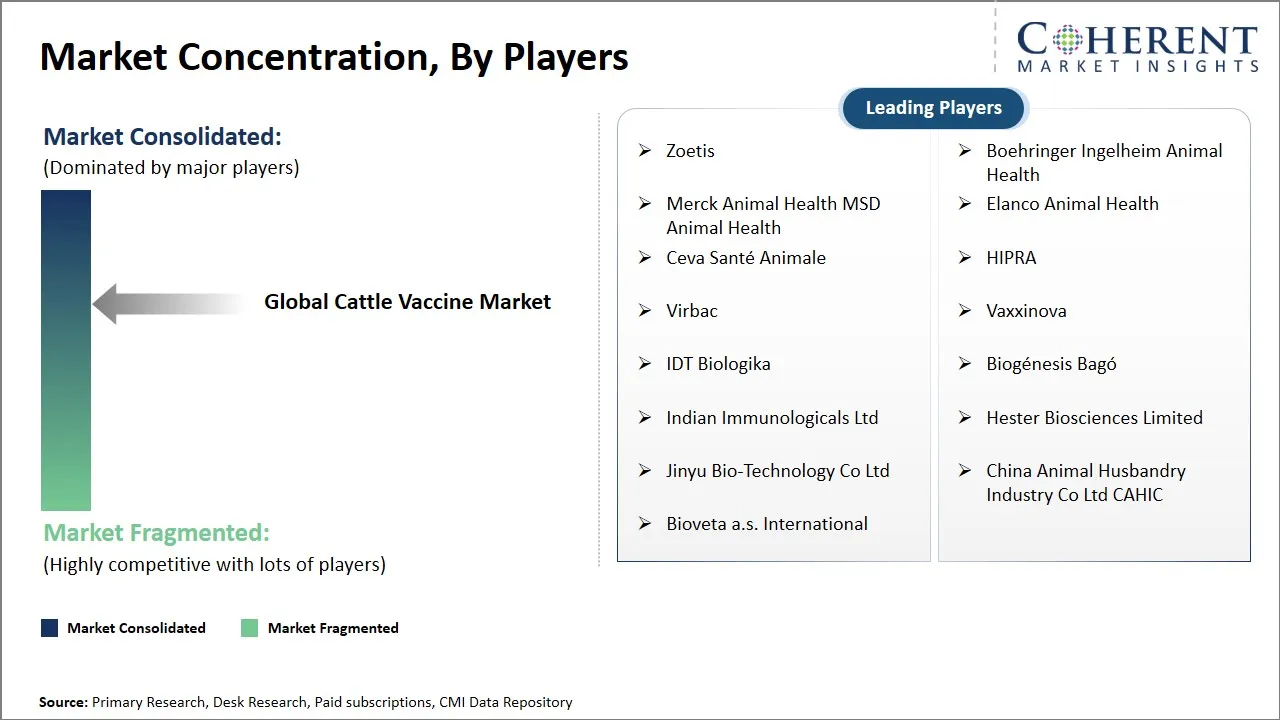
| Companies covered: | Zoetis, Boehringer Ingelheim Animal Health, Merck Animal Health MSD Animal Health, Elanco Animal Health, Ceva Santé Animale, HIPRA, Virbac, Vaxxinova, IDT Biologika, Biogénesis Bagó, Indian Immunologicals Ltd, Hester Biosciences Limited, Jinyu Bio-Technology Co Ltd, China Animal Husbandry Industry Co Ltd CAHIC, and Bioveta a.s. International | ||
| Growth Drivers: |
| ||
| Restraints & Challenges: |
| ||
Global Cattle Vaccine Market Dynamics
Global Cattle Vaccine Market Driver - Rising Incidence of Infectious Cattle Diseases and Outbreak Containment Needs
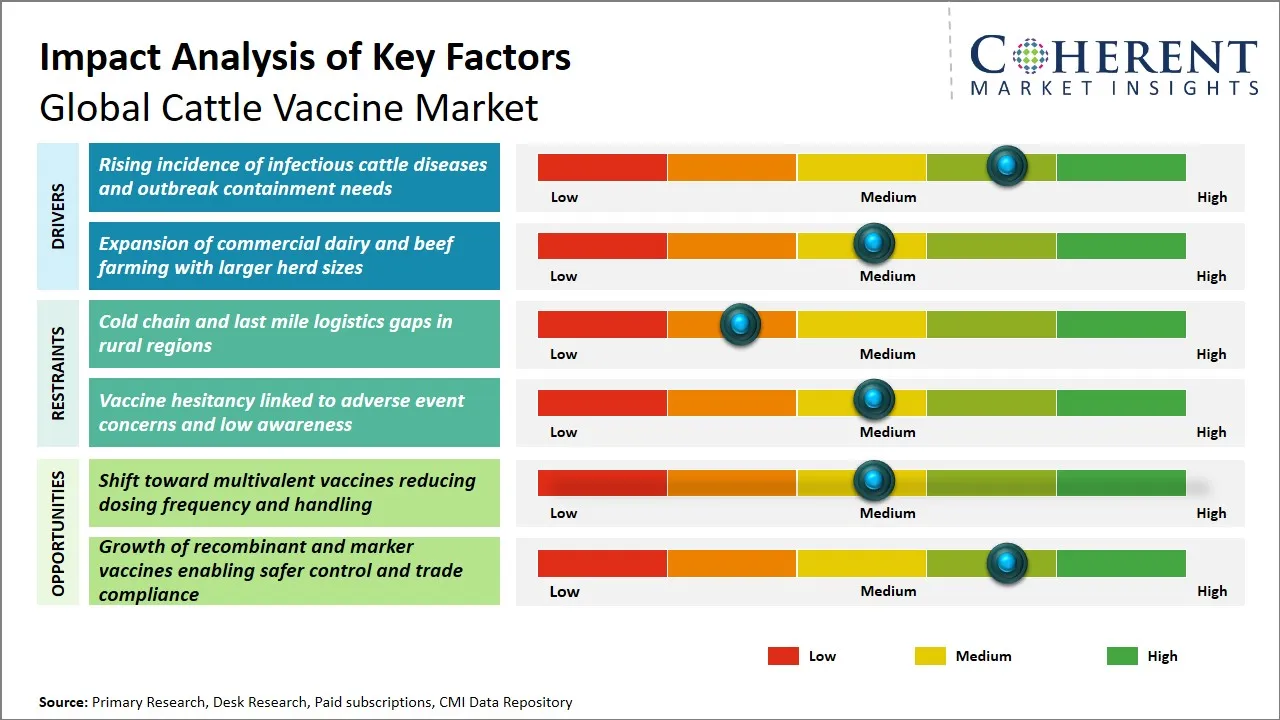
The rising occurrence of infectious diseases in cattle is greatly contributing to the need for cattle vaccines in the world. The rapid transmission of pathogens that cause diseases like bovine viral diarrhea, foot-and-mouth disease, and brucellosis is triggered by factors like intensified livestock farming, altered climatic conditions, and increased contacts between animals. Such diseases do not only pose a threat to the health of animals, but they are also very dangerous to the productivity and stability of the livestock industry. As a reaction, stakeholders such as the farmers, veterinary services providers, and the governments are putting more emphasis on preventive healthcare such as vaccination programs to reduce outbreaks before they mushroom out of proportional control.
For instance, Boehringer Ingelheim Animal Health has strengthened its respiratory vaccine portfolio and field vaccination programs in North America to support large feedlot operators in outbreak prevention and herd-level disease control.
Global Cattle Vaccine Market Opportunity - Growing Demand for Multivalent Cattle Vaccines
The global cattle vaccine market presents a significant growth opportunity, driven by the increasing preference for multi-vaccines, which offer protection against multiple diseases in a single dose. This move will solve some of the major problems encountered by cattle farmers and veterinarians, including lessening the number of vaccinations and lowering the stress of taking animals through various procedures of vaccinating them.
Multivalent vaccines simplify the task of managing the herd by reducing labor expenses and enhancing the welfare of animals, which further leads to better output and effectiveness in disease management. Also, the use of multivalent vaccines is associated with the growing tendency to adopt sustainable farming practices that reduce the risk of injury and immunosuppression in cattle caused by stress.
For instance, Bovilis Rispoval 4 (often referred to as Rispoval 4) is a comprehensive, multivalent, inactivated and live modified vaccine designed to protect cattle against four major viruses causing Bovine Respiratory Disease (BRD), also known as pneumonia. It is developed for active immunization of cattle to reduce infection, clinical symptoms, and virus shedding related to Bovine Respiratory Syncytial virus (BRSV), Infectious Bovine Rhinotracheitis (IBR/BHV-1), Parainfluenza-3 (PI3), and Bovine Viral Diarrhoea (BVD) TypeI.
(Source- https://vetisearch.co.uk/spcs/44517-rispoval-4#:~:text=the%20Target%)
Analyst Opinion (Expert Opinion)
- The global cattle vaccine market is strengthening due to the rising pressure from infectious diseases, the growth of commercial dairy and beef production, and ongoing government-supported vaccination programs. Alternations in making multivalent vaccines and long-acting vaccines are enhancing compliance and adding value per dose, and procurement volumes are being sustained by regulatory support to transboundary disease control. However, structural issues such as cold-chain limitations, financial constraints preventing smallholders from accessing boosters, and inconsistent booster uptake remain challenges. The major role of developing discussions on disease control strategies and vaccine innovation has been set by industry conferences like the World Buiatrics Congress and World Veterinary Association Congress.
- Recent mass vaccination of Foot-and-Mouth Disease in India and Latin America as well as more sophisticated trials of bovine tuberculosis vaccines in the U.K. indicate a move towards preemptive disease control. Large manufacturers are increasing biologics production capacity to guarantee security in supply, whereas digital herd health tracking is enhancing the vaccination coverage and repeat demand. The market is slowly shifting towards outbreak-based spikes to more preventive herd health structures.
Speak to the analyst
Want personalized insights?
Take the findings above to one of our principal consultants, or have the report rebuilt around the segments, geographies and competitors you actually track.
Market Segmentation
- Vaccine Type Insights (Revenue, USD Bn, 2021 - 2033)
- Combination (Multivalent) Vaccines
- Inactivated (Killed) Vaccines
- Live Attenuated Vaccines
- Recombinant Vaccines
- Toxoid Vaccines
- DNA / Vector-Based Vaccines
- Disease Indication Insights (Revenue, USD Bn, 2021 - 2033)
- Bovine Respiratory Diseases (BRD Complex, IBR, BRSV, PI3)
- Foot and Mouth Disease (FMD)
- Clostridial Diseases (Blackleg, Enterotoxemia, Tetanus)
- Bovine Viral Diarrhea (BVD)
- Leptospirosis
- Mastitis
- Brucellosis
- Anthrax
- Others (Johne’s disease, Bluetongue, etc.)
- Cattle Type Insights (Revenue, USD Bn, 2021 - 2033)
- Dairy Cattle
- Beef Cattle
- Breeding Stock
- Calves / Young Stock
- Route of Administration Insights (Revenue, USD Bn, 2021 - 2033)
- Injectable Vaccines
- Intranasal Vaccines
- Oral Vaccines
- End User Insights (Revenue, USD Bn, 2021 - 2033)
- Commercial Dairy Farms
- Beef Farms & Ranches
- Veterinary Clinics & Hospitals
- Government & Institutional Vaccination Programs
- Distribution Channel Insights (Revenue, USD Bn, 2021 - 2033)
- Direct Sales (Manufacturers to Farms/Institutions)
- Veterinary Hospitals & Clinics
- Veterinary Pharmacies & Distributors
- Government Procurement Programs
- Regional Insights (Revenue, USD Bn, 2021 - 2033)
- North America
- U.S.
- Canada
- Latin America
- Brazil
- Argentina
- Mexico
- Rest of Latin America
- Europe
- Germany
- U.K.
- Spain
- France
- Italy
- Russia
- Rest of Europe
- Asia Pacific
- China
- India
- Japan
- Australia
- South Korea
- ASEAN
- Rest of Asia Pacific
- Middle East
- GCC Countries
- Israel
- Rest of Middle East
- Africa
- South Africa
- North Africa
- Central Africa
- North America
- Key Players Insights
- Zoetis
- Boehringer Ingelheim Animal Health
- Merck Animal Health MSD Animal Health
- Elanco Animal Health
- Ceva Santé Animale
- HIPRA
- Virbac
- Vaxxinova
- IDT Biologika
- Biogénesis Bagó
- Indian Immunologicals Ltd
- Hester Biosciences Limited
- Jinyu Bio-Technology Co Ltd
- China Animal Husbandry Industry Co Ltd CAHIC
- Bioveta a.s. International
Source
Primary Research Interviews
Industry Stakeholders List
- Veterinary biologics manufacturers
- Contract vaccine manufacturing organizations
- Livestock pharmaceutical regulatory experts
- Cold chain logistics providers for veterinary biologics
- Animal health R&D scientists
- Livestock disease surveillance officers
End Users List
- Commercial dairy farm owners
- Beef feedlot operators
- Government veterinary officers
- Rural veterinary practitioners
- Livestock cooperative managers
- Large breeding farm managers
Government and International Databases
- World Organisation for Animal Health OIE
- Food and Agriculture Organization (FAO)
- World Health Organization (WHO)
- United States Department of Agriculture (USDA)
- European Medicines Agency (EMA)
- World Bank Open Data
Trade Publications
- Bovine Veterinarian
- Animal Pharm
- Feed Strategy
- The Cattle Site
- Drovers
- Global Animal Health News
Academic Journals
- Preventive Veterinary Medicine
- Veterinary Microbiology
- Journal of Veterinary Internal Medicine
- Transboundary and Emerging Diseases
- Vaccine
- Frontiers in Veterinary Science
Reputable Newspapers
- Financial Times
- The Wall Street Journal
- The Guardian
- The New York Times
Industry Associations
- World Veterinary Association
- American Association of Bovine Practitioners
- National Cattlemen’s Beef Association
- European Federation of Animal Health
- International Dairy Federation
- Confederation of Indian Industry Dairy Division
Public Domain Resources
- FAOSTAT
- OECD Agriculture Statistics
- UN Comtrade Database
- Eurostat
- National Animal Disease Reporting Systems
- Government Livestock Census Reports
Proprietary Elements
- CMI Data Analytics Tool: Proprietary analytics tool to analyze real-time market trends, consumer behavior, and technology adoption in market
- Proprietary CMI Existing Repository of Information for Last 8 Years
Get access to 250+ pages report
Every segment, forecast, competitor profile and data table behind the analysis above — available for instant download.
- ESOMAR Member
- ISO 9001:2015 Certified
- D-U-N-S Registered
- GDPR & CCPA Compliant
Missing comfort of reading report in your local language? Find your preferred language:
Transform your Strategy with Exclusive Trending Reports
Frequently Asked Questions
The global cattle vaccine market is estimated to be valued at USD 4.13 billion in 2026 and is expected to reach USD 6.17 billion by 2033.
The CAGR of global cattle vaccine market is projected to be 5.9% from 2026 to 2033.
Rising incidence of infectious cattle diseases and outbreak containment needs and expansion of commercial dairy and beef farming with larger herd sizes are the major factors driving the growth of the global cattle vaccine market.
Cold chain and last mile logistics gaps in rural regions and vaccine hesitancy linked to adverse event concerns and low awareness are the major factors hampering the growth of the global cattle vaccine market.
In terms of vaccine type, combination (multivalent) vaccines are estimated to dominate the market revenue share in 2026.
Public vaccination initiatives for diseases like Foot and Mouth Disease and Hemorrhagic Septicemia boost large-scale vaccine procurement and improve herd immunity, stabilizing recurring demand.
Long-acting injectables improve compliance by reducing dosing frequency and handling stress on animals, making them attractive for large commercial dairy and beef operations.