

Global Competent Cells Market Size and Forecast – 2026 to 2033
The global competent cells market is estimated to be valued at USD 2.73 Bn in 2026 and is expected to reach USD 5.45 Bn by 2033, exhibiting a compound annual growth rate (CAGR) of 10.4% from 2026 to 2033. This significant growth is driven by increasing biotechnology research activities, advancements in genome engineering, and rising demand for efficient microbial transformation techniques across pharmaceutical and agricultural sectors.
Key Takeaways of the Global Competent Cells Market
- The chemically competent cells segment is expected to dominate the cell type segment with a 53.1 % share in 2026.
- The bacterial competent cells remain the largest organism type segment, projected to account for 41.2 % share in 2026.
- The molecular cloning and subcloning segment is projected to capture a 24.5 % share in 2026.
- North America is expected to lead the market, holding a share of 39.3 % in 2026. Asia Pacific is anticipated to be the fastest-growing region, with an estimated market share of 24.5% in 2026.
Market Overview
Current market trends indicate a strong shift toward the adoption of high-efficiency competent cells tailored for specific applications, such as mammalian and bacterial cell lines. Additionally, there is a growing emphasis on the development of eco-friendly and cost-effective solutions, as well as advancements in automation and synthetic biology technologies that further enhance transformation efficiency. These trends are expected to sustain the market’s robust growth trajectory over the forecast period.
Current Events and Its Impact
Current Events | Description and its Impact |
Advancements in Automated Strain Engineering and Synthetic Biology |
|
Expansion of gene editing / synthetic biology demand for transformation systems |
|
Segmental Insights
- Current Industry Events of 2026
- Market Size Estimation
- Regional Breakdown
- Competitive Landscape
- Customer Intelligence
- Segmental Analysis
- Pricing Analysis
- Key Market Drivers, Challenges & Future Trends
- Customized Insights Section
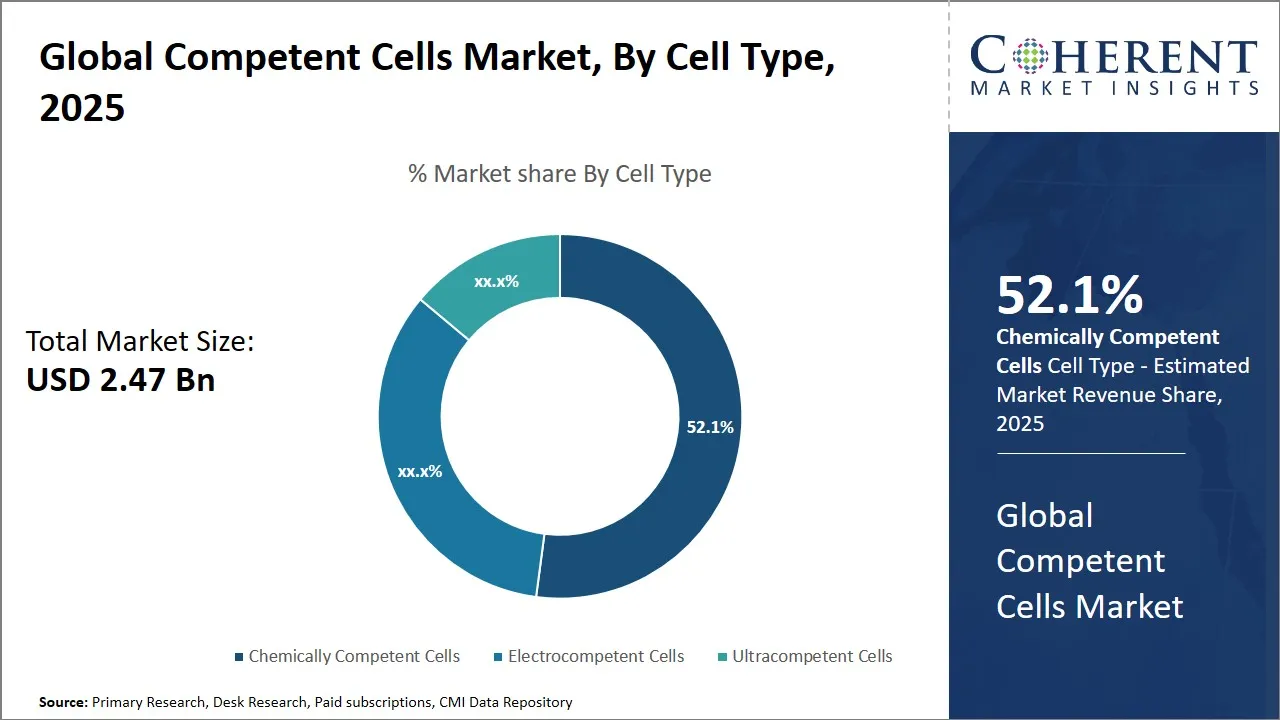
Competent Cells Market Insights, By Cell Type - Chemically Competent Cells Contribute the Highest Market Share Owing to their Ease of Use and Widespread Applicability in Laboratory Settings
Chemically competent cells segment is projected to account for 53.1% of the market share in 2026, because of their flexibility and the ease of transformation process they allow. The chemical method involves simply treating the cells with calcium chloride or other salts to make the membranes more permeable; whereas, the other methods involving electroporation for electrocompetent cells are more complicated and require specialized equipment.
The chemical method is highly preferred in both academic and commercial laboratories as an application of molecular biology because besides being cost-effective, it is also reproducible and compatible with a wide range of plasmids and bacterial strains. The widespread use of chemically competent cells is also fueled by the ever-increasing transformation rates obtained through chemical formulations that have been optimized over time.
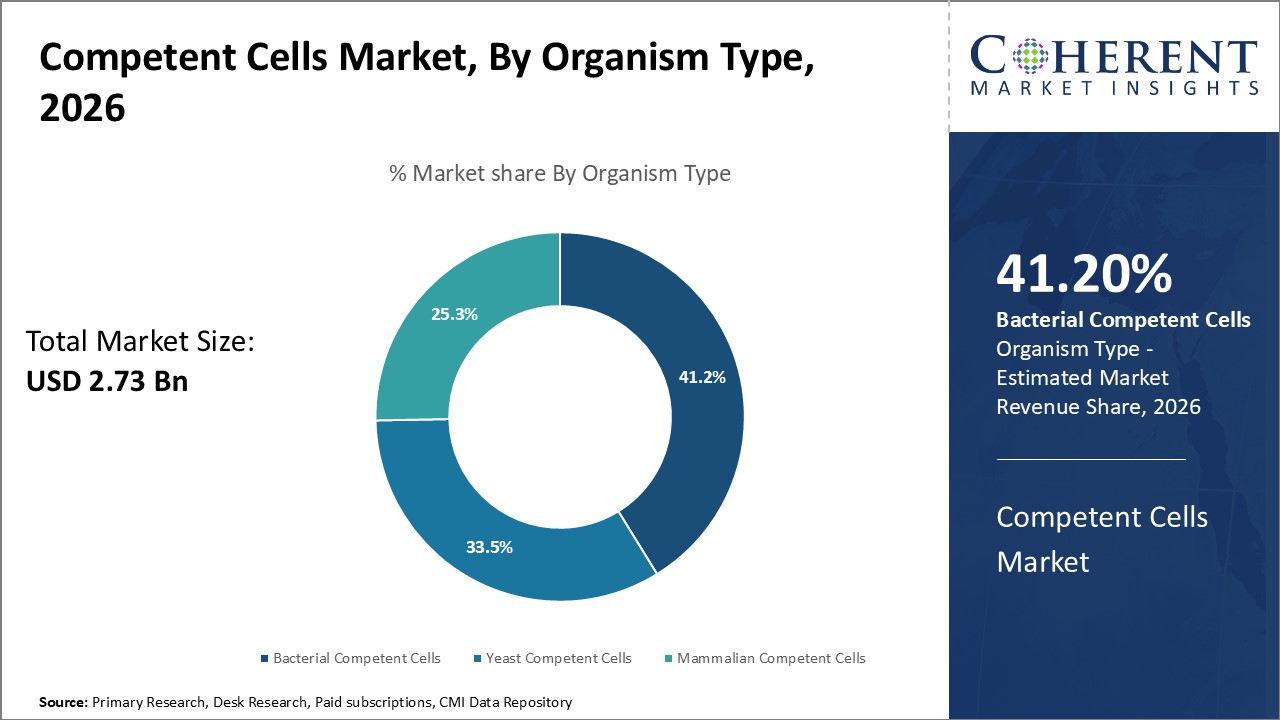
Competent Cells Market Insights, By Organism Type - Bacterial Competent Cells Dominate the Market Driven by their Fundamental Role in Genetic Engineering and Recombinant DNA Technology
Bacterial competent cells segment is projected to account for 41.2% of the market share in 2026, thus form the largest organism type segment, their core role in genetic engineering and biotech workflows being a reason for their prevalence. These cells which are mainly derived from Escherichia coli strains have been extensively optimized for high transformation efficiencies over decades and thus are essential for cloning, protein expression, and several other molecular biology techniques.
In February 2020, SGI-DNA launched Vmax X2 Competent Cells, a breakthrough protein expression system. Derived from Vibrio natriegens, it produces up to four times more soluble protein than E. coli in half the time. This faster, more efficient system accelerates vaccine and drug research, offering a flexible workflow and optimized media for quicker results.
Competent Cells Market Insights, By Application - Molecular Cloning and Subcloning Leads Owing to its Critical Role in Genetic Manipulation and Biotechnological Innovation
Molecular cloning and subcloning segment is expected to capture 24.5% market share in 2026, indicating the major role that these techniques play in genetic engineering. Those are the steps to understanding gene function, making recombinant proteins and new genetic constructs.
The cloning and subcloning processes have become such large-scale and dominant applications because of their wide range of use in biotechnology, pharmaceutical development, and basic research. The technique of molecular cloning is the main one in the chain of applications including gene editing, functional genomics, and metabolic pathway engineering.
Global R&D Hubs Powering Competent Cells Consumption
- Boston’s MIT Harvard biotech belt runs massive cloning and plasmid workflows, so labs there constantly buy high-efficiency competent cells for routine molecular biology.
- San Francisco Bay Area’s synthetic biology and CGT players run automated, high-throughput transformations, driving demand for premium, automation-ready competent cells.
- Heidelberg, anchored by EMBL and Heidelberg University, is a European training and core-facility hub, pulling in specialized competent strains for complex constructs and method development.
- Shanghai’s Zhangjiang “Pharma Valley” concentrates China’s CGT and biologics R&D, boosting regional need for GMP-aligned competent cells for plasmid and vector production.
- These four hubs set the technical and quality benchmarks; vendors that win here shape global specs and push the market toward high-performance, differentiated competent cell products.
Regional Insights
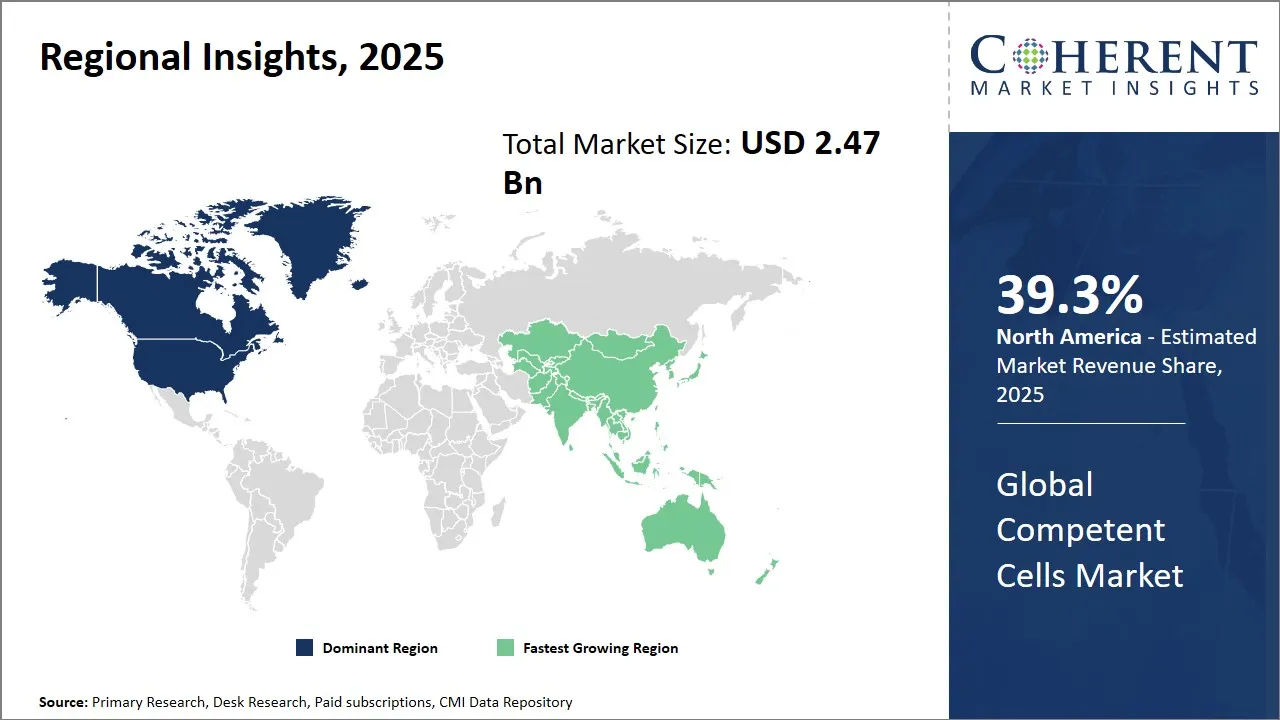
North America Competent Cells Market Analysis and Trends
North America leads the global competent cells market, accounting for an estimated 39.3% share in 2026, due to a strong biotechnology and pharmaceutical ecosystem, the substantial government life sciences research funding, and the presence of top-tier industry players. The U.S. reaps the benefits of well-established research infrastructure, encouraging FDA-like regulatory policies, and considerable private and government investments in DNA and molecular biology research.
The region’s early adoption of cutting-edge technologies in synthetic biology and recombinant DNA technology further fuels market leadership. Prominent companies like Thermo Fisher Scientific, New England Biolabs, and MilliporeSigma base their operations here, contributing through innovative competent cell products and services that cater to both academic and industrial sectors.
Asia Pacific Competent Cells Market Analysis and Trends
The Asia Pacific region holds the position of the fastest growing market for competent cells driven by a powerful increase in the pharmaceutical and biotech industries with 24.5% of the market share in 2026, rising R&D spending, and biomakers' increasing use in the growing markets like China and India. Biotech-friendly government measures like China's "Made in China 2026" and India's biotechnology parks strategy, the market expansion is only accelerated.
For instance, in July 2024, Bioserve India, a life science supplier supporting research and diagnostics, launched advanced stem cell products from REPROCELL, a global regenerative medicine company. The new tools include culture media, reprogramming kits, 3D systems, and cellular assays to help Indian researchers improve disease modeling and drug screening.
Competent Cells Market Outlook for Key Countries
U.S. Competent Cells Market Trends
The U.S. competent cells market draws from a rich research environment that includes a mix of leading research universities, research institutions, and biotech startups. The competent cell industry is dominated by major names like Thermo Fisher Scientific and New England Biolabs, who not only have their headquarters but also R&D centers in this area. This is how they are able to make new products and personalize them for the customers in the molecular biology sector. Plus, regulatory support and intellectual property protection create a strong market that guarantees a healthy and efficient supply of next-generation competent cells used in various fields like genetics, synthetic biology, and pharmaceuticals.
For instance, in February 2024, U.S. researchers introduced a naturally competent Vibrio natriegens platform that dramatically reduced plasmid transformation time and cost. V. natriegens, a fast-growing marine bacterium increasingly used in synthetic biology, enabled quicker cloning and strain engineering, driving stronger demand for high-performance competent cells that can support rapid gene expression and scalable engineering workflows.
Germany Competent Cells Market Trends
Germany competent cells market is the result of strong industrial biotechnology capabilities combined with the cooperation between academia and industry. The existing regulatory environment in the country, which prioritizes quality and compliance, further backs up the product development process with high standard support. A company like Merck KGaA not only supplies high-performance competent cells but also participates in partnerships that facilitate technological advancements.
For instance, in February 2026, acp systems AG, a Germany-based automation specialist, led a consortium with KIT, a major research university, and Fraunhofer FFB, a leading battery manufacturing institute, to develop a new battery cell stacking system under the USD 3.8 million EXINOS2 project. The team created a continuous stacking method using flexible software-controlled handling that cuts changeover time and boosts production speed.
China Competent Cells Market Trends
China is steadily moving up the ladder in the competent cells market with strategic government support and an increasing biotech manufacturing base. Local firms such as Creative Biogene team up with international ones in the development of competent cell lines that are of high quality and suitable for the domestic research. The government policies that are mainly concerned about innovation and the improvement of intellectual property rights are very encouraging for foreign direct investment and joint ventures.
For instance, in February 2026, Merck, a global life science supplier, began commercial production of its first GMP cell culture media line in Nantong, China after investing USD 7.06 million. The facility supports rising demand for high-quality custom media for vaccines and biologics and helps local manufacturers shorten lead times. Merck will supply tailored media backed by its formulation expertise to improve bioprocess efficiency.
Japan Competent Cells Market Trends
Japan remains a critical player in the competent cells market due to its advanced technological infrastructure and strong pharmaceutical sector. Companies like Takara Bio lead innovation in competent cells, developing specialized strains used in life sciences research and drug discovery. The country’s government actively promotes biotechnology through funding schemes and industrial policy, ensuring sustained advancement. Japan’s rigorous quality standards and global trade connections also enhance market stability and export growth.
For example, in September 2024, PHC Corporation, a Japanese biomedical technology company, introduced its LiCellGrow prototype to support faster and more reliable cell and gene therapy manufacturing. The system tracks glucose and lactate in real time and automatically adjusts culture conditions to improve cell quality and reduce production losses.
Key Molecular Biology Workflows Driving Demand for Competent Cells
- Cloning: It remains the primary use-case for competent cells. Routine plasmid construction, vector assembly, subcloning, and library building all depend on high-efficiency E. coli strains. This creates a large, recurring, relatively price-sensitive base demand that underpins the entire competent cells market.
- CRISPR: CRISPR workflows use competent cells for gRNA plasmids, donor templates, and editing/vector backbones. As CRISPR scales into pooled screens and therapeutic development, labs require ultra-high-efficiency, low–background strains that can handle large, multi-cassette constructs and support library-level transformations.
- Protein Expression: For protein expression, competent cells are used both to introduce expression plasmids and to establish production strains. Demand is focused on expression-optimized hosts with features like better codon usage, chaperone support, and tight promoter control, where transformation efficiency must be balanced with growth robustness and yield.
- Mutagenesis: Site-directed and random mutagenesis generate massive variant libraries that must be captured during transformation. This pushes demand for very high transformation efficiency and strains that tolerate error-prone or unstable sequences, especially in directed evolution, enzyme engineering, and affinity maturation programs.
- Phage Display: Phage display relies on transforming phagemid or helper plasmids into specialized E. coli hosts compatible with M13 or related systems. These workflows require competent cells that combine decent efficiency with reliable phage production, infection, and packaging, creating a niche but technically demanding subsegment of the market.
Market Players, Key Developments, and Competitive Intelligence
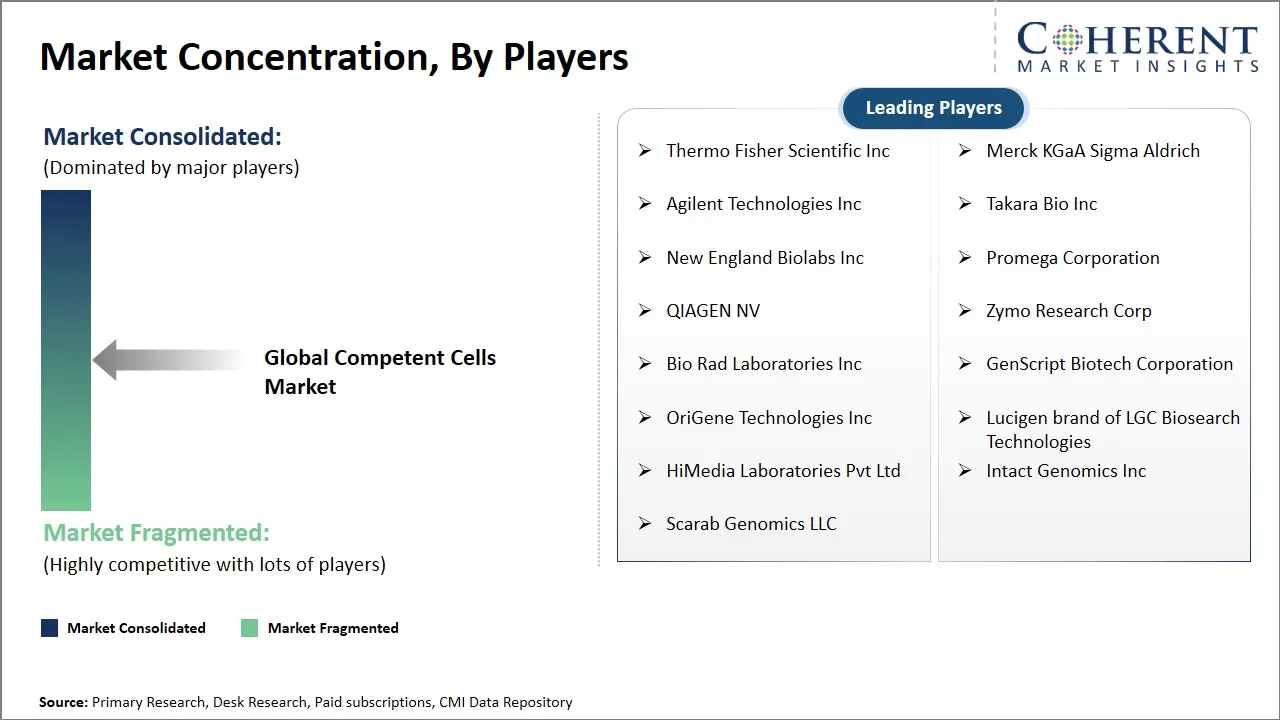
Key Developments
- In July 2025, Micron Technology, a leading U.S. memory manufacturer with active use of competent cells in its semiconductor R&D workflows, launched a new radiation-tolerant 256-Gb SLC NAND designed for space missions. The company is expanding a full portfolio of space-qualified NAND, NOR and DRAM to support rising AI-driven aerospace demand.
- In April 2025, UC Davis Health, a major U.S. academic medical center, began a new clinical trial testing a cell therapy called REACT for chronic kidney disease caused by type 2 diabetes. The therapy uses a patient’s own renal cells to support kidney repair and may slow progression toward kidney failure. The trial will enroll adults worldwide and will assess safety and effectiveness through biopsy-based cell injections and long-term monitoring.
- In March 2024, Bio-Rad Laboratories, a global life-science tools supplier, introduced validated antibodies to support rare-cell and circulating tumor cell studies using its Celselect Slides platform. Bio-Rad also develops competent cells for cloning and molecular biology, and this launch expands its oncology research portfolio. The new antibodies improve detection of surface markers and help researchers study tumor heterogeneity, cancer progression, and metastasis with greater accuracy.
Top Strategies Followed by Global Competent Cells Market Players
- Competent cell products that possess high-quality and high-performance characteristics and can adapt to the changing requirements of the scientific community are the outputs of continuous innovation undertaken by the leading companies that are heavily invested in research and development. The top-tier players remain ahead of their rivals by the sum of the resources they invest in R&D. They also get the most out of their technology in making the best formulations and having the smoothest clinical or manufacturing workflows.
- For example, Thermo Fisher Scientific, Merck KGaA, Agilent Technologies, New England Biolabs (NEB), and Takara Bio are some of the examples. These firms control high-end competent cell segments since they have the proprietary strains, patented transformation technologies, and global distribution networks. Their collaboration with pharma R&D centers and advanced research institutes helps them to thus locked-in enterprise-level customers and maintain premium pricing.
- Mid competent cell manufacturers aim at cost-effectiveness, finessingly trying to provide solutions that combine quality and affordability in a perfect ratio. Mainly targeting the low-price consumer market that consists of smaller research labs, start-up companies, and institutes situated in developing regions, these companies develop products that guarantee reliable performance yet at non-premium prices.
- For example, companies like Promega Corporation, Bio-Rad Laboratories, Qiagen, Zymo Research, and GenScript usually compete based on value. Their performance is very good, but they offer it at a lower price which makes them the suppliers of preference in the case of universities, regional CROs, biotech startups and APAC institutions when budget limitations influence purchasing decisions.
- Small players in the market see their strength in focusing on very specific niches within the competent cells market. They usually concentrate on creating new and innovative products with special or improved features that are designed for specific research areas or biotechnological applications that are being neglected by larger competitors. By using the latest technologies like synthetic biology tools, automation or new transformation protocols, the small players turn out to be competitive against the odds albeit the limited resources.
- For example, smaller specialists like Lucigen (now part of LGC Biosearch Technologies), Transformation Efficiency experts like OriGene Technologies, ArcticZymes Technologies, and China (e.g. TransGen Biotech, Tiangen) and India's (e.g. HiMedia Labs, Chromous Biotech) independent biotechnology suppliers are all focusing on niche innovations.
Market Report Scope
Competent Cells Market Report Coverage
| Report Coverage | Details | ||
|---|---|---|---|
| Base Year: | 2025 | Market Size in 2026: | USD 2.73 Bn |
| Historical Data for: | 2020 To 2024 | Forecast Period: | 2026 To 2033 |
| Forecast Period 2026 to 2033 CAGR: | 10.4% | 2033 Value Projection: | USD 5.45 Bn |
| Geographies covered: |
| ||
| Segments covered: |
| ||
| Companies covered: | Thermo Fisher Scientific Inc, Merck KGaA Sigma Aldrich, Agilent Technologies Inc, Takara Bio Inc, New England Biolabs Inc, Promega Corporation, QIAGEN NV, Zymo Research Corp, Bio Rad Laboratories Inc, GenScript Biotech Corporation, OriGene Technologies Inc, Lucigen brand of LGC Biosearch Technologies, HiMedia Laboratories Pvt Ltd, Intact Genomics Inc, and Scarab Genomics LLC | ||
| Growth Drivers: |
| ||
| Restraints & Challenges: |
| ||
Competent Cells Market Dynamics
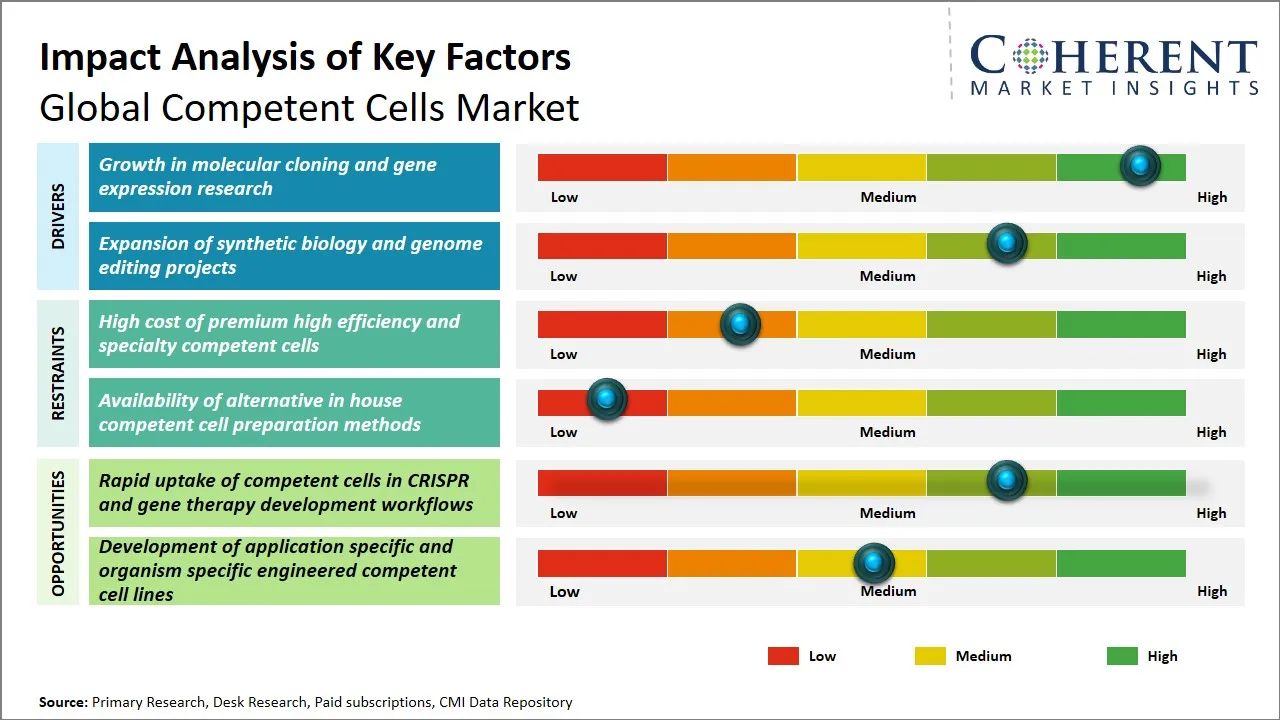
Competent Cells Market Driver - Growth in Molecular Cloning and Gene Expression Research
The rapid developments and growing interest in molecular cloning and gene expression studies are the main factors behind the global demand for competent cells. Competent cells have become indispensable tools for the successful incorporation of foreign DNA during cloning experiments, thus Researchers can manipulate genetic material with accuracy. It is said that as gene editing techniques and functional genomics are gradually getting more sophisticated, researchers will be working even harder to comprehend gene functions and devise novel therapeutics, vaccines, and genetically modified organisms through the implementation of such technologies.
For instance, on November 13, 2025, Indero, a clinical-stage dermatology innovator, reported a new early-phase method using quantitative gene expression to evaluate topical drugs faster and at lower cost, a development that also supports advancing Competent Cells–based research models. Indero said its microdosing study showed meaningful gene-expression changes within 24 hours and clear biomarker reductions by 72 hours, allowing rapid comparison of multiple new chemical entities.
Competent Cells Market Opportunity - Rapid Uptake of Competent Cells in CRISPR and Gene Therapy Development Workflows
The global market for competent cells is opening up wider and wider, with one of the main driving forces being the increasing use of CRISPR technology and gene therapy applications. In genetic engineering, competent cells are indispensable since they facilitate the very efficient incorporation of foreign DNA in the cloning and gene editing processes. The perfection and widespread use of CRISPR-Cas9 technology for genome editing have greatly increased the demand for competent cells of the highest efficiency. Biopharmaceutical and genetic researchers are more and more depending on competent cells to support the speedy cloning and alteration of genetic sequences, thus, promoting the development of new gene therapies and personalized medicines.
For instance, in August 2025, the Broad Institute of MIT and Harvard, a leading genomics research center, reported a new technology that improves CRISPR-Cas9 precision by shutting the enzyme off once editing is complete, supporting safer and more efficient Competent Cells workflows in gene-editing research.
Analyst Opinion (Expert Opinion)
- The competent cells market is enlarging as gene editing, synthetic biology, and recombinant protein production acquire the status of 'must-have' biotech and academic research areas. Stronger, automated cloning procedures, and increased funding for molecular biology are among the factors that are pulling the market up, while, on the other hand, the financial constraints in academic labs and the lack of a universal performance standard worldwide are still issues that have to be dealt with. Workshops like SLAS, ABRF, ASM Microbe, and the World Congress on Industrial Biotechnology not only introduced new transformation technologies to the market but also set the tone for discussions regarding regulatory expectations and lab modernization.
- The recent move reflects that companies are either upgrading the performance of their strains or increasing the reliability of their workflows, with NEB, Thermo Fisher, and Takara Bio introducing new competent cell systems for quicker cloning and recombinatorial gene assembly all but intensifying the contest among the players. The government-supported synthetic biology ventures along with the university-driven projects in biomanufacturing are having a big impact on the market by making it easier to use the technologies and methods, especially in CRISPR studies and setting up automatic cloning. The aforementioned advancements indicate a market that is coming to the areas of more application-specific strains, quicker workflows, and the having of close links with the newly developed genetic engineering platforms.
Speak to the analyst
Want personalized insights?
Take the findings above to one of our principal consultants, or have the report rebuilt around the segments, geographies and competitors you actually track.
Market Segmentation
- Cell Type Insights (Revenue, USD Bn, 2021 - 2033)
- Chemically Competent Cells
- Electrocompetent Cells
- Ultracompetent Cells
- Organism Type Insights (Revenue, USD Bn, 2021 - 2033)
- Bacterial Competent Cells
- Yeast Competent Cells
- Mammalian Competent Cells
- Application Insights (Revenue, USD Bn, 2021 - 2033)
- Molecular Cloning and Subcloning
- Recombinant Protein Expression
- Plasmid and Library Construction (cDNA, genomic, phage, BAC/YAC libraries)
- Mutagenesis and Directed Evolution
- CRISPR/Cas and Genome Editing Workflows
- Synthetic Biology and Metabolic Engineering
- Viral Vector Construction and Packaging Support
- Other Applications (e.g., functional genomics, pathway screening)
- Competency Level Insights (Revenue, USD Bn, 2021 - 2033)
- High Efficiency Competent Cells
- Moderate Efficiency Competent Cells
- Low Efficiency Competent Cells
- End User Insights (Revenue, USD Bn, 2021 - 2033)
- Academic and Research Institutes
- Biotechnology and Biopharmaceutical Companies
- Contract Research Organizations (CROs)
- Diagnostic and Clinical Research Laboratories
- Industrial Microbiology and Synthetic Biology Companies
- Government and Non-Profit Research Organizations
- Regional Insights (Revenue, USD Bn, 2021 - 2033)
- North America
- U.S.
- Canada
- Latin America
- Brazil
- Argentina
- Mexico
- Rest of Latin America
- Europe
- Germany
- U.K.
- Spain
- France
- Italy
- Russia
- Rest of Europe
- Asia Pacific
- China
- India
- Japan
- Australia
- South Korea
- ASEAN
- Rest of Asia Pacific
- Middle East
- GCC Countries
- Israel
- Rest of Middle East
- Africa
- South Africa
- North Africa
- Central Africa
- North America
- Key Players Insights
- Thermo Fisher Scientific Inc
- Merck KGaA Sigma Aldrich
- Agilent Technologies Inc
- Takara Bio Inc
- New England Biolabs Inc
- Promega Corporation
- QIAGEN NV
- Zymo Research Corp
- Bio Rad Laboratories Inc
- GenScript Biotech Corporation
- OriGene Technologies Inc
- Lucigen brand of LGC Biosearch Technologies
- HiMedia Laboratories Pvt Ltd
- Intact Genomics Inc
- Scarab Genomics LLC
Sources
Primary Research Interviews
Industry Stakeholders List
- Molecular biology reagent manufacturers
- Biotech R&D directors
- Academic laboratory procurement heads
- Genetic engineering workflow specialists
- Biotechnology incubator managers
- CRO molecular biology division leads
End Users List
- University molecular biology labs
- Government-funded genomics labs
- Pharmaceutical R&D labs
- Synthetic biology start-ups
- Biomedical research institutes
- Agricultural biotechnology labs
Government and International Databases
- National Center for Biotechnology Information (NCBI)
- U.S. Food and Drug Administration (FDA)
- European Medicines Agency (EMA)
- OECD Biotechnology Statistics
- Japan PMDA
- World Health Organization (WHO)
Trade Publications
- Genetic Engineering & Biotechnology News (GEN)
- BioPharm International
- Lab Manager Magazine
- The Scientist
- BioProcess International
- Labiotech.eu
Academic Journals
- Nature Biotechnology
- Journal of Biological Chemistry (JBC)
- PLOS ONE
- Applied and Environmental Microbiology
- Nucleic Acids Research
- Journal of Molecular Biology
Reputable Newspapers
- The New York Times – Science
- The Guardian – Science
- Washington Post – Health & Science
- Financial Times – Life Sciences
- The Wall Street Journal – Health & Science
- South China Morning Post – Science
Industry Associations
- Biotechnology Innovation Organization (BIO)
- International Society for Biological and Environmental Repositories (ISBER)
- American Society for Microbiology (ASM)
- European Federation of Biotechnology (EFB)
- International Society for Cell & Gene Therapy (ISCT)
- Asian Federation of Biotechnology (AFOB)
Public Domain Resources
- PubChem
- NIH RePORTER
- ClinicalTrials.gov
- Europa.eu Open Data Portal
- U.S. Census Bureau – Industry Data
Proprietary Elements
- CMI Data Analytics Tool: Proprietary analytics tool to analyze real-time market trends, consumer behavior, and technology adoption in market
- Proprietary CMI Existing Repository of Information for Last 8 Years
Get access to 250+ pages report
Every segment, forecast, competitor profile and data table behind the analysis above — available for instant download.
- ESOMAR Member
- ISO 9001:2015 Certified
- D-U-N-S Registered
- GDPR & CCPA Compliant
Missing comfort of reading report in your local language? Find your preferred language:
Transform your Strategy with Exclusive Trending Reports
Frequently Asked Questions
The global competent cells market is estimated to be valued at USD 2.73 Bn in 2026 and is expected to reach USD 5.45 Bn by 2033.
The CAGR of the global competent cells market is projected to be 10.4% from 2026 to 2033.
Growth in molecular cloning and gene expression research and expansion of synthetic biology and genome editing projects are the major factors driving the growth of the global competent cells market.
High cost of premium high efficiency and specialty competent cells and availability of alternative in house competent cell preparation methods are the major factors hampering the growth of the global competent cells market.
In terms of cell type, the chemically competent cells segment is estimated to dominate the market revenue share in 2026.
Thermo Fisher Scientific Inc, Merck KGaA Sigma Aldrich, Agilent Technologies Inc, Takara Bio Inc, New England Biolabs Inc, Promega Corporation, QIAGEN NV, Zymo Research Corp, Bio Rad Laboratories Inc, GenScript Biotech Corporation, OriGene Technologies Inc, Lucigen brand of LGC Biosearch Technologies, HiMedia Laboratories Pvt Ltd, Intact Genomics Inc, and Scarab Genomics LLC are the major players.
North America is expected to lead the global competent cells market in 2026.