

Global D Dimer Test Market Size and Forecast – 2026 to 2033
The Global D Dimer Test Market is estimated to be valued at USD 2.05 Bn in 2026 and is expected to reach USD 3.15 Bn by 2033, exhibiting a compound annual growth rate (CAGR) of 6.3% from 2026 to 2033. This growth reflects the increasing adoption of D dimer testing for diagnosing thrombotic disorders, advancements in diagnostic technologies, and rising prevalence of cardiovascular diseases globally, which are driving the demand for accurate and rapid testing solutions.
Key Takeaways of the Global D Dimer Test Market
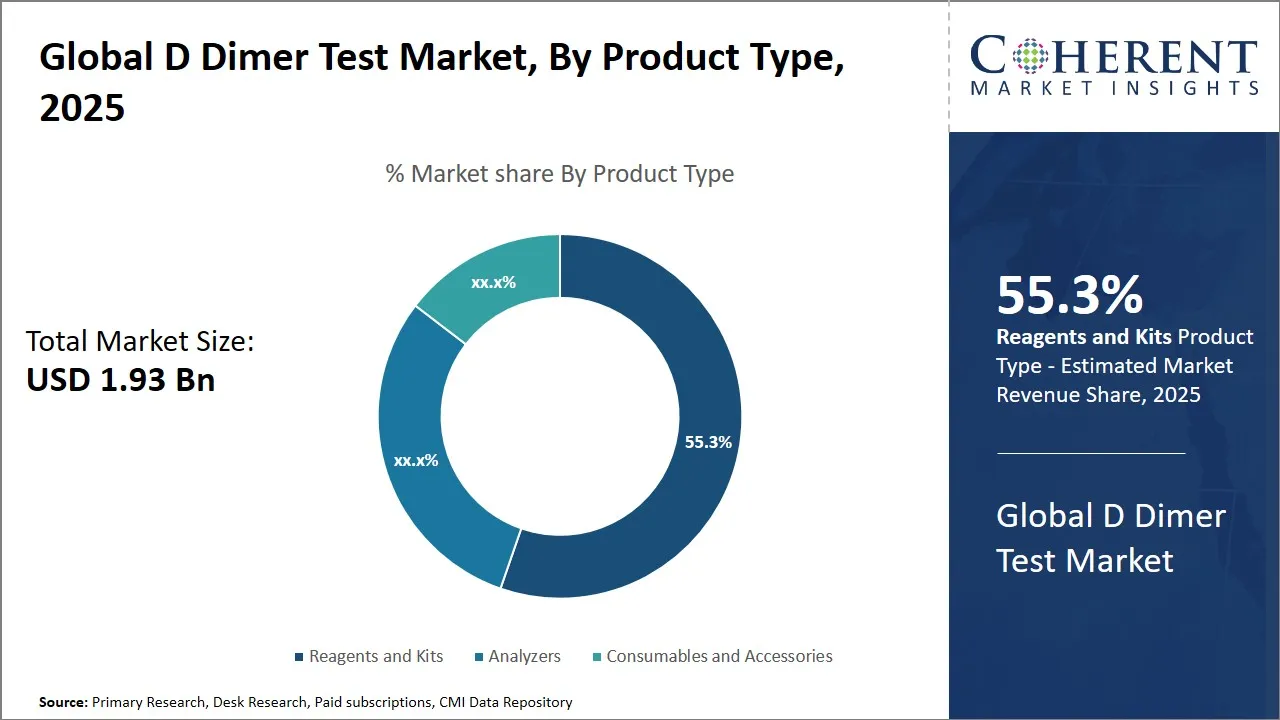
- The reagents and kits segment is projected to account for 56.3 % share in 2026.
- The laboratory-based D-dimer test segment is projected to lead the market with 61.5 % share in 2026.
- By method, the Enzyme-Linked Immunosorbent Assay (ELISA) segment is expected to capture 56.4 % share in 2026.
- North America is expected to lead the market, holding a share of 38. 5% in 2026. Asia Pacific is anticipated to be the fastest-growing region, with a market share of 24.5% in 2026.
Market Overview
A significant market trend is the integration of point-of-care testing and automation in D dimer assays, enhancing test efficiency and accessibility. Additionally, growing awareness about the importance of early diagnosis in conditions such as deep vein thrombosis and pulmonary venous embolism is fueling the market expansion. Increasing investments in R&D to develop highly sensitive and specific tests also contribute to evolving market dynamics, while digital health platforms and telemedicine adoption further bolster the market growth trajectory.
Current Events and Its Impact
Current Events | Description and its Impact |
Release of ICSH Guidance on POC Testing (March 2023) |
|
Technology Advancement: Point-of-Care and Automation |
|
Segmental Insights
- Current Industry Events of 2026
- Market Size Estimation
- Regional Breakdown
- Competitive Landscape
- Customer Intelligence
- Segmental Analysis
- Pricing Analysis
- Key Market Drivers, Challenges & Future Trends
- Customized Insights Section
D Dimer Test Market Insights, by Product Type - Reagents and Kits Segment Contributes the Highest Share of the Market Owing to their Indispensable Role in Diagnostic Accuracy and Workflow Efficiency
The reagents and kits segment dominate the global D dimer test market with an estimated 56.3% share in 2026, because they form the backbone of the testing procedure. The reliability and precision of the D dimer test hinge significantly on the quality and sensitivity of the reagents used. These kits often come standardized with optimized reagents that facilitate consistent performance across various laboratory settings, which appeals to healthcare providers who prioritize accuracy in thrombotic disorder diagnosis.
Another key driver behind the prominence of reagents and kits is their compatibility and ready-to-use nature. They simplify the testing process by reducing preparation time and potential for human error, which is crucial in clinical environments that demand rapid results, such as emergency rooms or outpatient clinics. The availability of comprehensive kits that bundle all necessary components further streamlines procurement and reduces the operational burden on laboratories.
For example, the D Dimer Microlisa Test Kit by J. Mitra & Co. Pvt. Ltd. is an ELISA-based diagnostic solution for quantitative detection of D dimer in human plasma. It delivers results within 55 minutes, with high analytical sensitivity of 25 ng/ml and a wide measuring range (25–10,000 ng/ml). Featuring ready-to-use reagents, breakaway microwells, and color-coded components, the kit ensures convenience, accuracy (co-efficient 0.995), and precision (CV <10% within run, <15% between runs).
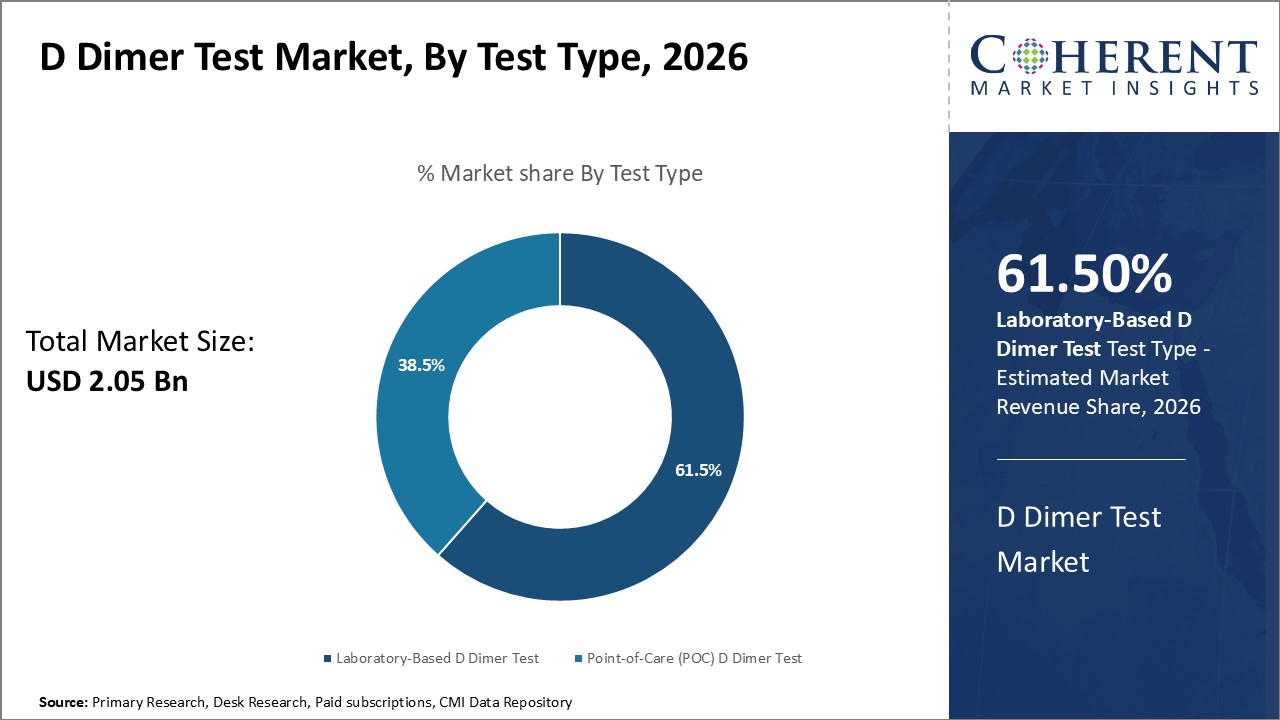
D Dimer Test Market Insights, by Test Type - Laboratory-Based D Dimer Test Segment Hold the Prevailing Share Driven by High Throughput Capabilities and Superior Diagnostic Reliability
The laboratory-based D dimer test segment is expected to capture 61.5% share in 2026, because it effectively supports comprehensive diagnostic workflows that demand high accuracy and reproducibility. These tests are generally performed in centralized clinical laboratories equipped with sophisticated instrumentation, allowing for large-scale processing of patient samples with stringent quality controls.
One of the primary growth factors fueling laboratory-based testing is its unparalleled capacity for simultaneous multi-sample analysis, which is essential for hospitals and reference labs managing high patient volumes. This scalability makes the laboratory-based methodology preferable for routine screening as well as complex diagnostic evaluations, ensuring timely patient management without compromising result integrity.
D Dimer Test Market Insights, by Method - Enzyme-Linked Immunosorbent Assay (ELISA) Segment Lead the Market on Account of its High Sensitivity and Established Clinical Credibility
The Enzyme-Linked Immunosorbent Assay (ELISA) segment is projected to account for 56.4% share in 2026, due to its recognized efficacy in detecting low concentrations of D dimer with exceptional specificity. ELISA’s robust analytical performance ensures reliable differentiation between normal and elevated fibrin degradation products, which is vital in clinical settings where accurate diagnosis influences treatment pathways for conditions such as deep vein thrombosis and pulmonary embolism.
The wide adoption of ELISA is further driven by its standardized protocols and versatility in handling different sample types. Laboratories prefer ELISA because it allows customization of assay formats, ranging from manual to semi-automated or fully automated platforms, accommodating various operational scales and resource availabilities. This flexibility supports broad market penetration across both established hospitals and emerging diagnostic facilities.
Regional Insights
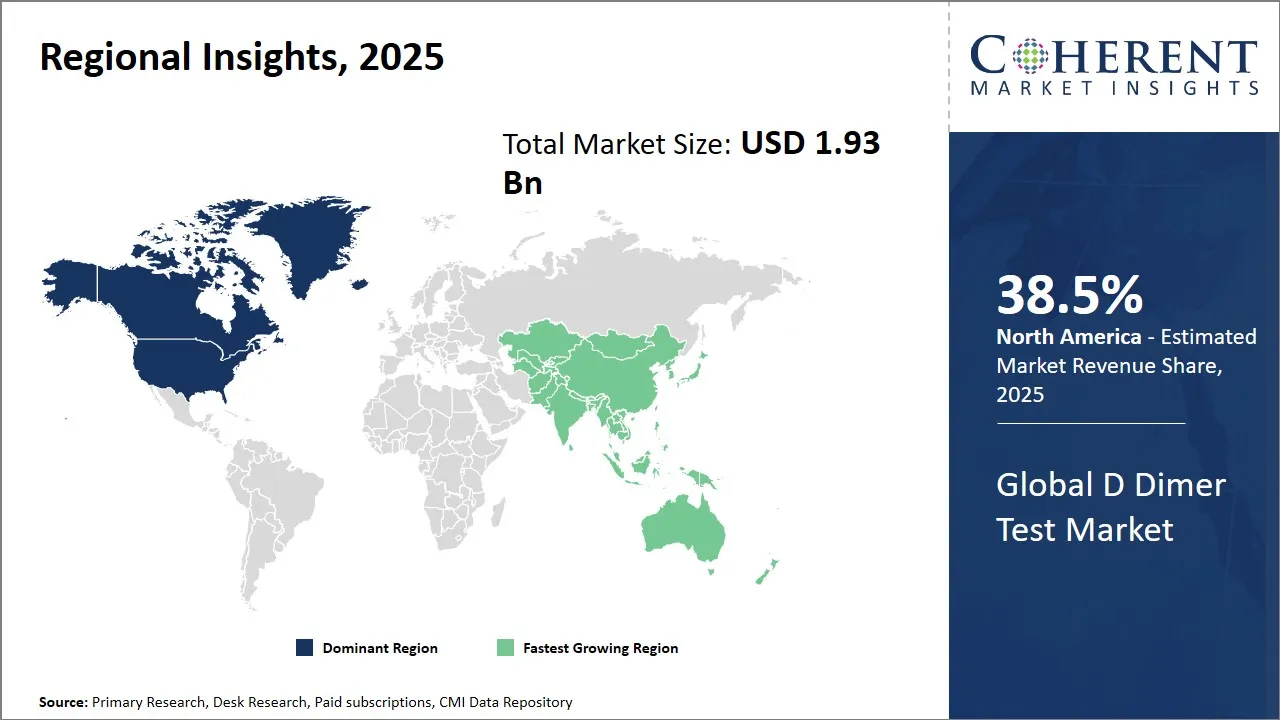
North America D Dimer Test Market Analysis and Trends
North America region is projected to lead the market with a 38.5% share in 2026, driven by a highly developed healthcare infrastructure, widespread adoption of advanced diagnostic technologies, and strong presence of key industry players. The region benefits from comprehensive government policies that promote early diagnosis and management of thrombotic disorders, which increases demand for reliable biomarker tests like the D dimer. Additionally, well-established reimbursement frameworks and robust healthcare expenditure support the market growth.
Major companies such as Abbott Laboratories, Siemens Healthineers, and Roche Diagnostics maintain substantial operations here, driving innovation through highly sensitive assay development and point-of-care testing solutions. The integration of D dimer testing in emergency departments for rapid diagnosis of conditions like Deep Vein Thrombosis (DVT) and Pulmonary Embolism (PE) further consolidates North America’s leadership in this market.
Asia Pacific D Dimer Test Market Analysis and Trends
Asia Pacific region exhibits the fastest growth in the D dimer test market with 24.5% share in 2026, due to expanding healthcare infrastructure, rising prevalence of cardiovascular and thrombotic diseases, and increased government investment in healthcare diagnostics. Rapid urbanization and growing awareness about early disease detection have propelled demand for advanced diagnostic tools. The influx of multinational companies alongside a rising number of domestic diagnostic firms accelerates technology transfer and localized product development.
For example, Metropolis Healthcare, one of India’s leading diagnostic service providers with over 40 years of experience, offers the D Dimer Test (Quantitative Plasma) to help rule out serious clotting conditions such as Deep Vein Thrombosis (DVT), Pulmonary Embolism (PE), and Disseminated Intravascular Coagulation (DIC). The test measures levels of fibrin degradation fragments in the blood, providing doctors with valuable insights into abnormal clotting activity.
D Dimer Test Market Outlook for Key Countries
U.S. D Dimer Test Market Analysis and Trends
The U.S. D dimer test market is characterized by high awareness and routine incorporation of D dimer testing in clinical protocols for thrombotic conditions. Leading diagnostic companies such as Siemens Healthineers, Roche, and Abbott have launched multiplexed assays and automated testing platforms tailored for hospital and emergency settings. Strong regulatory frameworks by the USFDA ensure test accuracy and reliability, which supports clinician confidence. Collaboration between research institutions and industry accelerates innovation, especially in point-of-care diagnostic technologies, which augment early detection and improved patient management.
For example, the Quidel Triage D Dimer Test by QuidelOrtho Corporation, a global leader in in-vitro diagnostics and point-of-care testing solutions, is a rapid quantitative immunoassay that helps clinicians assess patients with suspected Disseminated Intravascular Coagulation (DIC) and thromboembolic conditions such as Pulmonary Embolism (PE) and Deep Vein Thrombosis (DVT), delivering quick and reliable diagnostic support.
Germany D Dimer Test Market Analysis and Trends
Germany continues to lead the Europe D dimer test market, fortified by well-established healthcare systems and extensive public health funding. The country’s robust medical device industry houses giants like Siemens Healthineers and bioMérieux, which actively develop and commercialize sensitive D dimer assays. German regulatory policies emphasize quality and clinical validation, prompting widespread adoption in hospitals and specialty clinics. Additionally, increasing prevalence of Venous Thromboembolism (VTE) and cardiovascular diseases fuels demand, while integrated healthcare models promote usage of D dimer testing in diagnostic pathways.
For example, EUROLyser Diagnostica GmbH, a Germany- and Austria-based diagnostics company and part of Mars, incorporated, provides a D-dimer test tailored for point-of-care use. The assay applies monoclonal anti-D-dimer antibodies coupled to latex particles, with kinetic turbidimetric measurement at 700 nm, to identify elevated D-dimer levels associated with DVT, PE, DIC, trauma, and pregnancy complications. Delivering results in about 9 minutes, it offers a measurement range of 500–8500 ng/ml FEU (lot-specific).
Japan D Dimer Test Market Analysis and Trends
Japan D dimer test market is growing steadily due to a combination of an aging population and high incidence of thrombotic disorders. The government supports advanced diagnostics through national health insurance coverage, making D dimer tests more accessible. Companies such as Sysmex Corporation and Fujirebio Inc. play a significant role by offering technologically advanced immunoassay platforms tailored to local diagnostic preferences. Japan’s strong investment in biomedical R&D ensures continuous refinement of test sensitivity and rapidity, facilitating early clinical decision making.
An example of this trend can be seen with Sysmex Corporation, a leading Japanese diagnostics company that develops advanced hemostasis and immunoassay analyzers widely used in hospitals and laboratories across the country. Their platforms are known for high automation, precision, and integration with hospital information systems, aligning with Japan’s emphasis on efficiency and quality in diagnostics.
China D Dimer Test Market Analysis and Trends
China expanding healthcare landscape and increasing disease burden position it as a key player in the Asia Pacific D dimer test market. The Chinese government’s commitment to healthcare reforms and improved diagnostic capabilities has accelerated adoption of D Dimer testing across tier-1 and tier-2 cities. Domestic diagnostics firms including Mindray Medical International and Autobio Diagnostics have developed competitively priced assays, complementing global players such as Roche and Siemens entering the market. The growing network of hospitals and diagnostic labs, combined with rising health awareness, supports sustained the market expansion.
For example, Hipro Biotechnology Co., Ltd, a China-based diagnostics company, offers D dimer biochemistry kits for in-vitro quantitative detection of D dimer in human plasma. The test uses latex-enhanced immunoturbidimetry, delivering results in about 180 seconds with a 25-test kit format. Stored at 2–8℃ with a one-year shelf life, the assay supports clinical diagnosis of thrombosis, DIC, vascular, and obstetric disorders.
End User Feedback and Unmet Needs - D Dimer Test Market
- End users of D dimer tests ranging from hospital emergency departments and diagnostic labs to outpatient clinics consistently highlight both the reliability and clinical value of these assays, while also pointing out areas where improvements are still needed. For instance, many emergency physicians have praised the speed and sensitivity of next-generation point-of-care D Dimer tests, noting that rapid turnaround times help rule out pulmonary embolism or deep vein thrombosis in critical care situations. In one case shared by a tertiary hospital in Europe, the adoption of portable D Dimer analyzers was credited with reducing patient waiting times in the ER by nearly 30 percent, leading to quicker initiation of anticoagulant therapy and improved patient satisfaction. On the other hand, recurring concerns are also evident. Laboratory managers in mid-sized facilities often report challenges with variability across test platforms, leading to inconsistent results when patients are referred between institutions. This lack of standardization complicates longitudinal patient monitoring and sometimes erodes confidence in the reliability of results.
- Unmet needs voiced by end users reflect a desire for better integration of D dimer testing into broader diagnostic workflows. There is strong demand for assays that offer enhanced specificity, particularly in older populations or patients with comorbidities where false positives remain common. Cost remains another key concern, with smaller clinics and public health systems in emerging markets finding it difficult to adopt high-end systems due to budget constraints. Users also express a need for more robust technical support and easier connectivity with electronic medical record systems to streamline reporting. Addressing these gaps could create substantial opportunities for manufacturers, from developing more affordable and interoperable solutions to tailoring assays for population-specific challenges. In doing so, companies would not only strengthen customer loyalty but also differentiate themselves in a competitive market by directly aligning innovation with real-world clinical expectations.
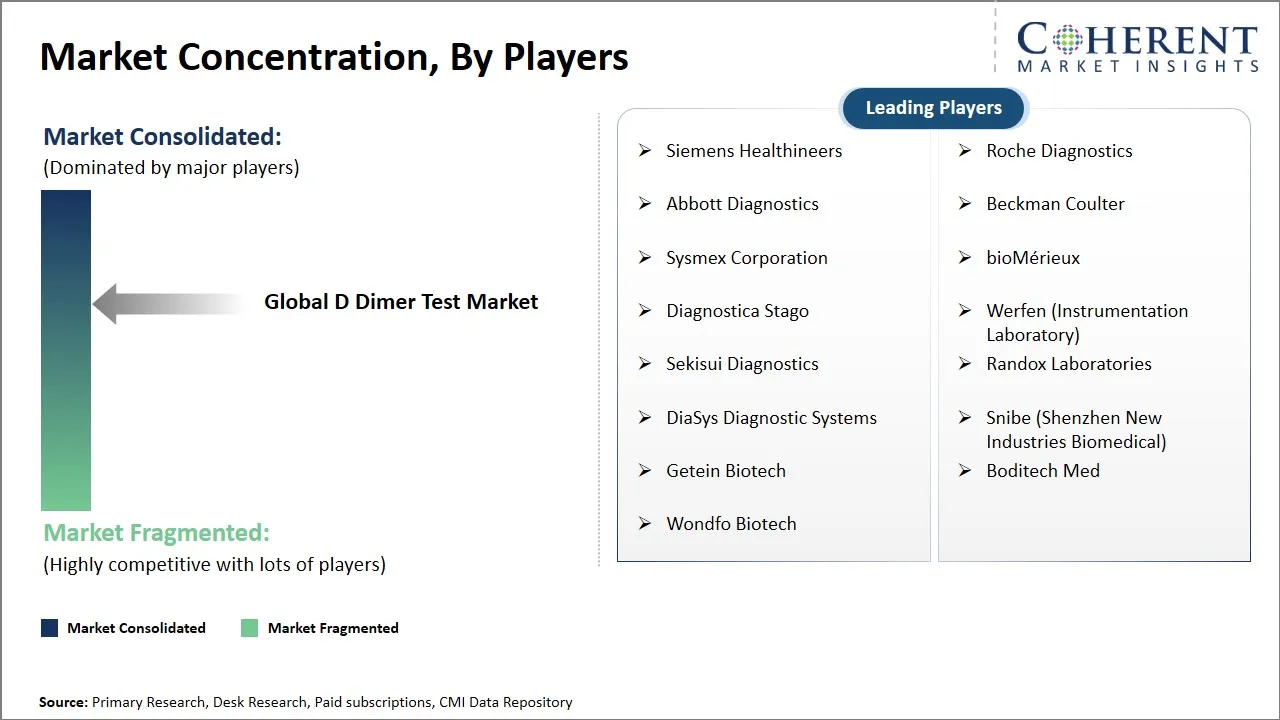
Market Players, Key Developments, and Competitive Intelligence
Key Developments
- In February 2023, a study published in the Journal of Bone & Joint Surgery, from the Rothman Orthopaedic Institute at Thomas Jefferson University, highlights the potential role of the D-dimer blood test in diagnosing Periprosthetic Joint Infection (PJI), a major complication of failed hip or knee replacements. Traditionally used to detect blood-clotting disorders, plasma D-dimer levels showed "comparable diagnostic accuracy" to standard markers such as CRP and ESR, and in some cases outperformed them.
- In June 2022 LumiraDx, a U.K.-based diagnostics company expanded its cardiovascular testing portfolio with CE marking of its NT-proBNP test and introduced a new exclusion claim for its D dimer test enabling point-of-care use alongside pre-test probability models to help clinicians rule out venous thromboembolism in symptomatic patients.
- In March 2022 SphingoTec, a German biomarker diagnostics company partnered with Rivaara Labs an Indian life sciences firm through a distribution agreement to bring point-of-care diagnostics including procalcitonin troponin D-dimer NT-proBNP and TSH to the Indian market.
- In March 2021, Randox Quality Control, a global diagnostics solutions provider, introduced its new Acusera D dimer controls designed to enhance accuracy and reliability in clot detection testing. The liquid frozen control, made from 100% human serum, offers a two-year shelf life and 28-day stability after opening, with three levels covering the full clinical range to support use across multiple diagnostic systems.
Top Strategies Followed by Global D Dimer Test Market Players
- Established industry giants lead the market through substantial investments in research and development (R&D), driving innovation in high-performance diagnostic products. These companies continuously enhance the sensitivity, specificity, and speed of their D dimer assays to meet evolving clinical needs and regulatory standards. Beyond product innovation, they form strategic partnerships with leading industry stakeholders and Original Equipment Manufacturers (OEMs) to integrate advanced technologies and expand their product portfolios. Additionally, global expansion is a critical strategy for established players; they broaden their distribution networks to penetrate emerging markets in Asia Pacific, Latin America, and Africa, capitalizing on rising awareness and increasing healthcare expenditures.
- For example, Siemens Healthineers provides advanced D-dimer testing solutions through its INNOVANCE D Dimer assay and Stratus CS Acute Care system. The INNOVANCE assay, a particle-enhanced immunoturbidimetric test, delivers results in about 11 minutes with high diagnostic sensitivity (≥98%), making it effective for safely excluding deep vein thrombosis (DVT) and pulmonary embolism (PE) when combined with clinical assessment. It also offers stable reagents and high throughput for laboratory workflows.
- Mid-level players in the D dimer test market primarily focus on offering cost-effective diagnostic solutions that deliver a balance between quality and affordability. By targeting price-sensitive consumers such as small clinical laboratories and healthcare providers in developing regions, these firms address a crucial demand segment that prioritizes efficient yet budget-friendly diagnostic options. To strengthen their competitive edge, mid-tier companies actively pursue collaborations with technology providers and manufacturing partners. Such alliances enable them to access enhanced production capabilities and novel diagnostic technologies without incurring prohibitive costs, thus broadening their market reach.
- For example, Bionote, launched a new D-dimer 5Tests/Kit for its Vcheck device, offering a convenient option for small veterinary clinics. The kit helps diagnose conditions like thrombosis, DIC, sepsis, and tumors by measuring blood clot breakdown. Compared to the 10-test kit, the 5-test format is more accessible and cost-effective, supporting wider use in veterinary hospitals.
- Small-scale players in the global D dimer test market tend to differentiate themselves by focusing on niche product features and innovative diagnostic solutions that cater to specific clinical or regional needs. These companies often adopt cutting-edge technologies, such as microfluidics or point-of-care testing platforms, to create user-friendly and rapid diagnostic kits that appeal to targeted customer segments.
- An example of this approach can be seen with companies like Abionic SA (Switzerland), which leverages microfluidic technology to develop ultra-rapid point-of-care tests, including D-dimer assays, capable of delivering results within minutes on its abioSCOPE platform. Similarly, Nano-Ditech Corporation (U.S.) focuses on developing nanotechnology-based rapid diagnostic test kits, including D-dimer tests, tailored for small clinics and emergency settings.
Market Report Scope
D Dimer Test Market Report Coverage
| Report Coverage | Details | ||
|---|---|---|---|
| Base Year: | 2025 | Market Size in 2026: | USD 2.05 Bn |
| Historical Data for: | 2020 To 2024 | Forecast Period: | 2026 To 2033 |
| Forecast Period 2026 to 2033 CAGR: | 6.3% | 2033 Value Projection: | USD 3.15 Bn |
| Geographies covered: |
| ||
| Segments covered: |
| ||
| Companies covered: | Siemens Healthineers, Roche Diagnostics, Abbott Diagnostics, Beckman Coulter, Sysmex Corporation, bioMérieux, Diagnostica Stago, Werfen (Instrumentation Laboratory), Sekisui Diagnostics, Randox Laboratories, DiaSys Diagnostic Systems, Snibe (Shenzhen New Industries Biomedical), Getein Biotech, Boditech Med, and Wondfo Biotech | ||
| Growth Drivers: |
| ||
| Restraints & Challenges: |
| ||
D Dimer Test Market Dynamics
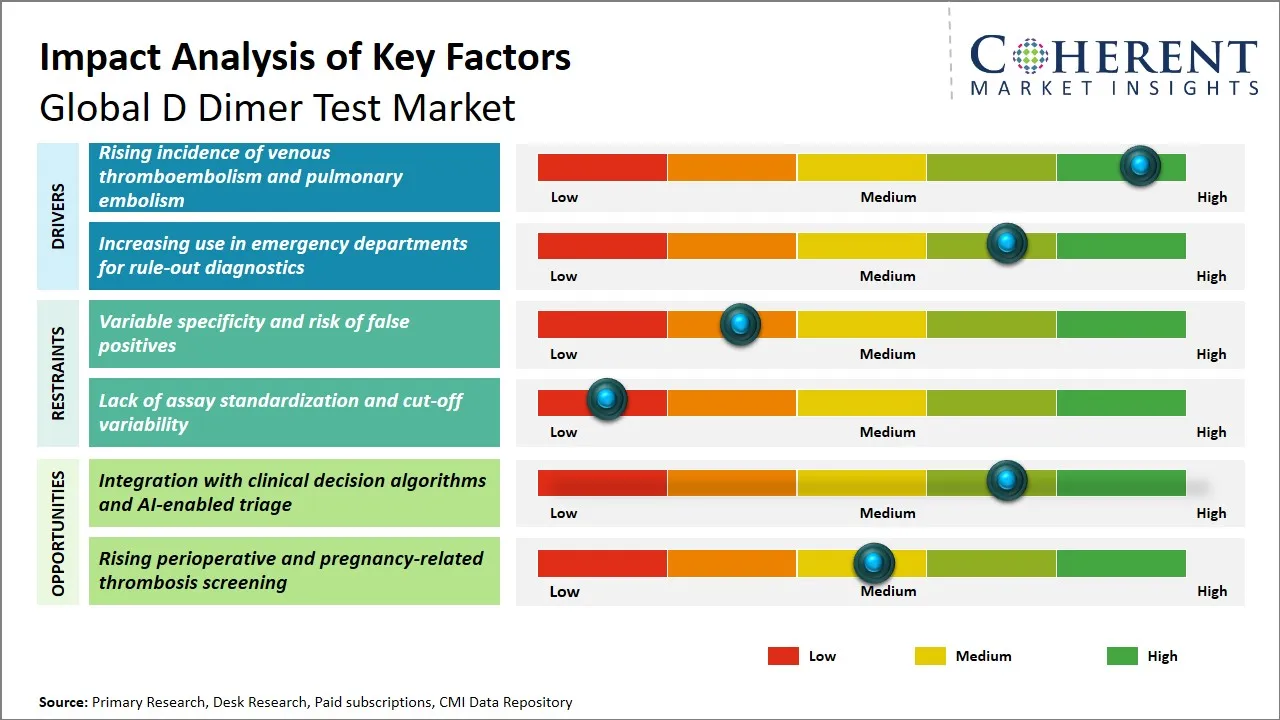
D Dimer Test Market Driver - Rising Incidence of Venous Thromboembolism and Pulmonary Embolism
The increasing prevalence of Venous Thromboembolism (VTE), including Deep Vein Thrombosis (DVT) and Pulmonary Embolism (PE), is significantly propelling the demand for D dimer testing globally. These life-threatening conditions often present with nonspecific symptoms, making early and accurate diagnosis crucial for effective treatment and prevention of complications. D dimer tests are widely recognized as a vital diagnostic tool due to their high sensitivity in detecting fibrin degradation products, which are elevated during thrombotic events. Healthcare providers rely heavily on these tests to rule out VTE and PE in patients presenting with symptoms such as unexplained leg swelling, pain, or sudden breathlessness. Furthermore, the growing awareness among clinicians regarding the importance of early detection and intervention has led to increased adoption of D dimer assays in emergency and clinical settings.
In January 2024, according to the Society of Thoracic Surgeons, Recent studies highlight the rising incidence of Venous Thromboembolism (VTE) and Pulmonary Embolism (PE) across high-risk patient groups. A meta-analysis of over 5,800 AECOPD patients found pooled prevalence rates of 11% for PE and 9% for DVT, with higher risks linked to early diagnosis and regional variations. Similarly, research from the University of Wisconsin using the STS database showed a 2.5% rate of postoperative VTE and 1.3% PE after lung cancer surgery, with mortality improving but still significant. These findings stress the urgent need for stronger awareness, preventive strategies, and timely interventions in vulnerable populations.
D Dimer Test Market Opportunity - Integration with Clinical Decision Algorithms and AI-Enabled Triage
The global D dimer test market presents a significant opportunity through the integration of D-dimer testing with advanced clinical decision algorithms and AI-enabled triage systems. As healthcare increasingly adopts digital transformation, leveraging Artificial Intelligence (AI) to enhance diagnostic accuracy and efficiency is becoming a critical focus. Incorporating D-dimer test results into AI-powered platforms can streamline the diagnostic pathway for conditions such as Deep Vein Thrombosis (DVT), Pulmonary Embolism (PE), and Disseminated Intravascular Coagulation (DIC). This integration allows real-time risk stratification and personalized patient management, reducing unnecessary imaging tests and hospital admissions, thereby optimizing resource utilization and lowering healthcare costs. Furthermore, AI algorithms can analyze large datasets to identify patterns and correlate D-dimer levels with patient symptoms and histories, improving predictive accuracy. Hospitals and diagnostic centers adopting these smart triage solutions can enhance throughput and clinical outcomes, particularly in emergency and critical care settings where prompt decision-making is essential. Additionally, regulatory bodies and healthcare providers are increasingly supporting technology-driven diagnostic pathways, facilitating market acceptance.
In January 2025, according to American Society of Hematology, new research presented by Dr. Damon E. Houghton of the Mayo Clinic validated an AI algorithm combining Electrocardiogram (ECG) signals with D-dimer testing for diagnosing Pulmonary Embolism (PE). In a study of more than 18,000 patients, the algorithm showed strong predictive power, with ECG alone achieving an AUC of 0.69 and stratifying patients into clear low-, elevated-, and high-risk groups. When paired with D-dimer results, performance rose significantly, achieving an AUC of 0.93 and a negative predictive value above 99.9%, reducing reliance on costly or risky CT pulmonary angiography. These findings highlight how AI-driven ECG interpretation, enhanced with D-dimer data, could enable earlier, safer, and more accurate detection of PE in emergency settings.
Analyst Opinion (Expert Opinion)
- The D dimer test market is experiencing steady momentum, driven by a mix of technological innovation, government support for advanced diagnostics, and the rising global burden of thrombotic disorders. Point-of-care platforms are reshaping accessibility, while automation in laboratory systems is improving accuracy and turnaround times. Opportunities are emerging in regions where healthcare infrastructure is expanding, with regulatory bodies in Asia and Europe increasingly covering D-dimer testing under insurance schemes, making them more affordable. At the same time, industry players face challenges around standardization, varying cutoff values across geographies, and the need for stronger clinical validation in non-traditional applications such as obstetrics and oncology. Discussions at global diagnostics events, such as MEDICA in Germany, the International Society on Thrombosis and Haemostasis Congress, and the American Association for Clinical Chemistry (AACC) Annual Meeting, have consistently underscored the importance of rapid clot detection technologies and their role in shaping modern emergency medicine.
- Recent industry activity reflects how quickly the market is evolving. LumiraDx’s CE mark expansion for its D-dimer test, enabling exclusion of venous thromboembolism at the point of care, is one example of how innovation is shifting care closer to patients. In India, SphingoTec’s partnership with Rivaara Labs broadened access to biomarker-based POC solutions, including D-dimer, across community settings. Meanwhile, policy frameworks such as WHO’s ongoing focus on improving VTE awareness and regional health ministries’ support for preventive diagnostic testing are reinforcing adoption. These real-world steps highlight how collaboration between manufacturers, healthcare providers, and regulators is steadily pushing the market toward faster, more accurate, and more patient-centric diagnostic care.
Speak to the analyst
Want personalized insights?
Take the findings above to one of our principal consultants, or have the report rebuilt around the segments, geographies and competitors you actually track.
Market Segmentation
- Product Type Insights (Revenue, USD Bn, 2021 - 2033)
- Reagents and Kits
- Analyzers
- Consumables and Accessories
- Test Type Insights (Revenue, USD Bn, 2021 - 2033)
- Laboratory-Based D-Dimer Test
- Point-of-Care (POC) D-Dimer Test
- Method Insights (Revenue, USD Bn, 2021 - 2033)
- Enzyme-Linked Immunosorbent Assay (ELISA)
- Latex-Enhanced Immunoassay
- Fluorescence Immunoassay
- Others (e.g., Immunoturbidimetric Assay)
- Application Insights (Revenue, USD Bn, 2021 - 2033)
- Deep Vein Thrombosis (DVT)
- Pulmonary Embolism (PE)
- Disseminated Intravascular Coagulation (DIC)
- Other Thrombotic Conditions
- End User Insights (Revenue, USD Bn, 2021 - 2033)
- Hospitals
- Diagnostic Laboratories
- Academic and Research Institutes
- Ambulatory Surgical Centers
- Others (e.g., Home Care Settings)
- Regional Insights (Revenue, USD Bn, 2021 - 2033)
- North America
- U.S.
- Canada
- Latin America
- Brazil
- Argentina
- Mexico
- Rest of Latin America
- Europe
- Germany
- U.K.
- Spain
- France
- Italy
- Russia
- Rest of Europe
- Asia Pacific
- China
- India
- Japan
- Australia
- South Korea
- ASEAN
- Rest of Asia Pacific
- Middle East
- GCC Countries
- Israel
- Rest of Middle East
- Africa
- South Africa
- North Africa
- Central Africa
- North America
- Key Players Insights
- Siemens Healthineers
- Roche Diagnostics
- Abbott Diagnostics
- Beckman Coulter
- Sysmex Corporation
- bioMérieux
- Diagnostica Stago
- Werfen (Instrumentation Laboratory)
- Sekisui Diagnostics
- Randox Laboratories
- DiaSys Diagnostic Systems
- Snibe (Shenzhen New Industries Biomedical)
- Getein Biotech
- Boditech Med
- Wondfo Biotech
Sources
Primary Research Interviews
Industry Stakeholders list
- Hematology Department Heads (tertiary care hospitals)
- Clinical Pathologists / Lab Directors (NABL/CAP-accredited labs)
- IVD Assay R&D Leads (hemostasis/coagulation)
- Regulatory Affairs Specialists (IVD manufacturers)
- Hospital Procurement Managers (lab equipment & reagents)
- Point-of-Care Testing (POCT) Program Coordinators
End User List
- Emergency Medicine Physicians
- Vascular Medicine Specialists
- Pulmonologists
- General/Internal Medicine Physicians
- Obstetricians & Gynecologists
- Critical Care Nurses / ICU Clinicians
Government and International Databases
- World Health Organization (WHO)
- U.S. Centers for Disease Control and Prevention (CDC)
- U.S. Food and Drug Administration (FDA) — 510(k)/De Novo databases
- European Centre for Disease Prevention and Control (ECDC)
- European Medicines Agency (EMA)
- Indian Council of Medical Research (ICMR)
Trade Publications
- Medical Laboratory Observer (MLO)
- Clinical Lab Products (CLP)
- 360Dx
- IVD Technology
- Medtech Insight
Academic Journals
- Journal of Thrombosis and Haemostasis
- Thrombosis Research
- Clinical Chemistry
- The Lancet Haematology
- Annals of Emergency Medicine
Reputable Newspapers
- The New York Times (Health/Science)
- The Guardian (Health/Science)
- Financial Times (Healthcare/Pharma)
- The Wall Street Journal (Healthcare)
- The Hindu (Science/Health)
- The Indian Express (Health)
Industry Associations
- International Society on Thrombosis and Haemostasis (ISTH)
- American Society of Hematology (ASH)
- Association for Diagnostics & Laboratory Medicine (ADLM, formerly AACC)
- Clinical and Laboratory Standards Institute (CLSI)
- College of American Pathologists (CAP)
- European Hematology Association (EHA)
Public Domain Resources
- WHO Global Health Observatory
- NICE Guidance (UK)
- OECD Health Statistics
Proprietary Elements
- CMI Data Analytics Tool: Proprietary analytics tool to analyze real-time market trends, consumer behavior, and technology adoption in market
- Proprietary CMI Existing Repository of Information for Last 8 Years
Get access to 250+ pages report
Every segment, forecast, competitor profile and data table behind the analysis above — available for instant download.
- ESOMAR Member
- ISO 9001:2015 Certified
- D-U-N-S Registered
- GDPR & CCPA Compliant
Missing comfort of reading report in your local language? Find your preferred language:
Transform your Strategy with Exclusive Trending Reports
Frequently Asked Questions
The global D dimer test market is estimated to be valued at USD 2.05 Bn in 2026 and is expected to reach USD 3.15 Bn by 2033.
The CAGR of the global D dimer test market is projected to be 6.3% from 2026 to 2033.
Rising incidence of venous thromboembolism and pulmonary embolism and increasing use in emergency departments for rule-out diagnostics are the major factors driving the growth of the global D dimer test market.
Variable specificity and risk of false positives and lack of assay standardization and cut-off variability are the major factors hampering the growth of the global D dimer test market.
In terms of product type, the reagents and kits segment is estimated to dominate the market revenue share in 2026.
Siemens Healthineers, Roche Diagnostics, Abbott Diagnostics, Beckman Coulter, Sysmex Corporation, bioMérieux, Diagnostica Stago, Werfen (Instrumentation Laboratory), Sekisui Diagnostics, Randox Laboratories, DiaSys Diagnostic Systems, Snibe (Shenzhen New Industries Biomedical), Getein Biotech, Boditech Med, and Wondfo Biotech are the major players.
North America is expected to lead the global D dimer test market in 2026.