

Global Elderly Care Market Size and Forecast – 2026 to 2033
The Global Elderly Care Market is estimated to be valued at USD 1.64 Tn in 2026 and is expected to reach USD 3.06 Tn by 2033, exhibiting a compound annual growth rate (CAGR) of 9.3% from 2026 to 2033. This significant growth is driven by the increasing aging population worldwide, along with rising awareness and advancements in healthcare technologies tailored to meet elderly care needs. The expanding demand for personalized and home-based care services is also contributing to the market growth.
Key Takeaways of the Global Elderly Care Market
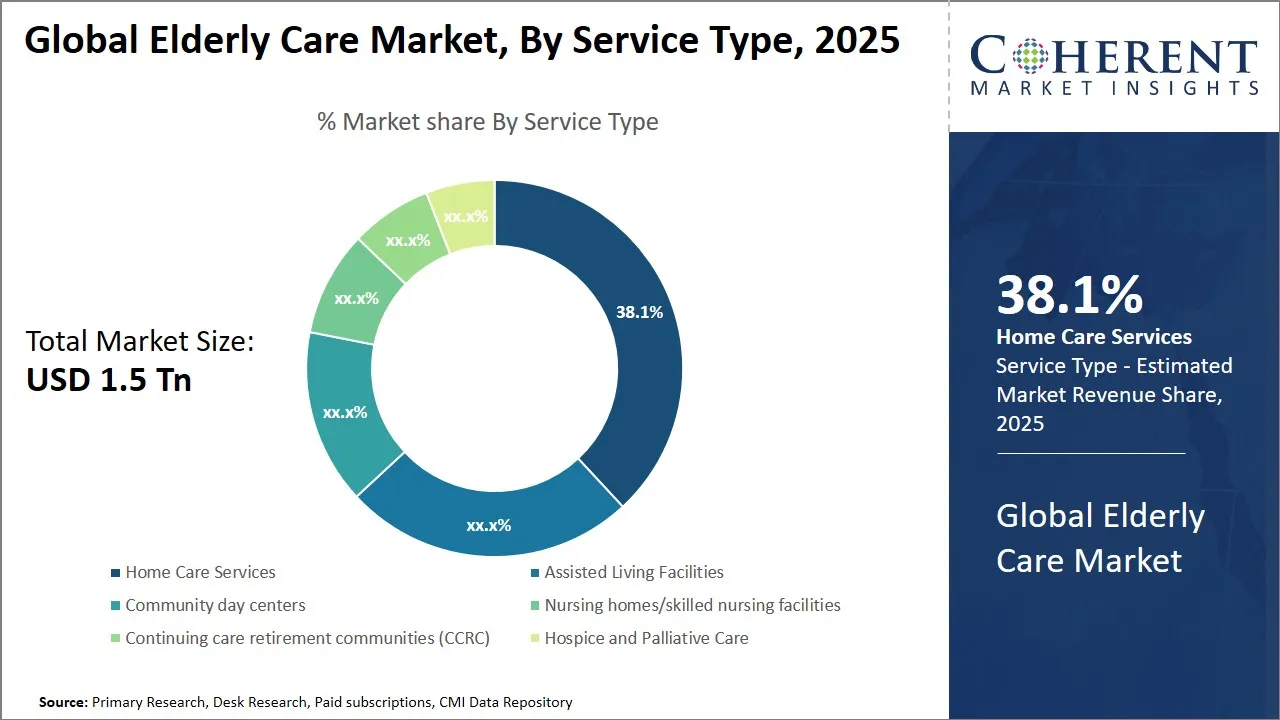
- In 2026, home care services lead the global elderly care market, accounting for an estimated 39.1 % of total market share.
- Within the care type segmentation, medical care is expected to represent the dominant category with a 67.3 % share in 2026, reflecting its critical role in senior health management.
- Under technology integration, telehealth and remote monitoring emerges as the leading segment, capturing an estimated 41.2 % of the market share in 2026.
- North America is expected to lead the market, holding a share of 41.3 % in 2026. Asia Pacific is anticipated to be the fastest-growing region, with a market share of 24.4% in 2026.
Market Overview
Current market trends indicate a shift towards digital health solutions, including telemedicine and remote monitoring devices, which enhance elderly care efficiency and accessibility. Additionally, there is a growing emphasis on integrating AI and IoT technologies to deliver customized care plans and improve patient outcomes. Increased government support and rising investments in elderly care infrastructure further propel the market, creating opportunities for innovation and improved service delivery across both developed and emerging economies.
Current Events and Its Impact
Current Events | Description and its Impact |
Surge in Technology Adoption in Elderly Care |
|
Regional Market Expansion and Government Initiatives |
|
Segmental Insights
- Current Industry Events of 2026
- Market Size Estimation
- Regional Breakdown
- Competitive Landscape
- Customer Intelligence
- Segmental Analysis
- Pricing Analysis
- Key Market Drivers, Challenges & Future Trends
- Customized Insights Section
Elderly Care Market Insights, By Service Type - Home Care Services Lead Owing to Preference for Personalized and Convenient Elderly Care
Home care services are expected to represent the dominant segment in the elderly care market, accounting for a 39.1% share in 2026. This growth is primarily driven by demographic changes, particularly the increasing elderly population. Many seniors prefer to maintain their independence and quality of life, reducing the need to move into care institutions.
In July 2026, the Rajasthan Health Department launched a home-based elderly healthcare service in Sikar district, India, under the National Palliative Care Program (NPCP). The initiative provides medical care for bedridden seniors and patients with chronic or terminal illnesses—including cancer, kidney, and heart diseases directly at their homes.
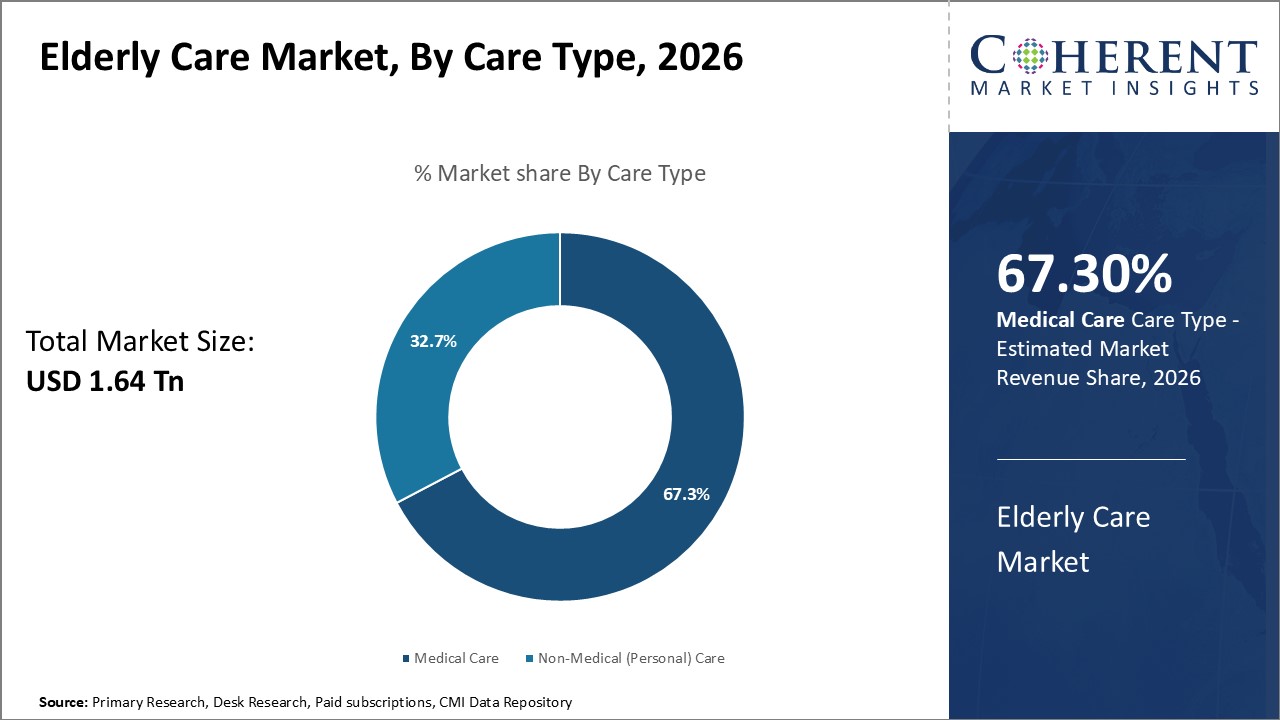
Elderly Care Market Insights, By Care Type - Medical Care Segment Dominates Through Increasing Complex Health Needs of the Elderly
Based on Care Type, the Medical Care segment is expected to hold the largest share of 67.3% in 2026. This growth is driven by the increasing number of healthcare facilities providing specialized care for the elderly, driven by the complexities of their health needs.
Since older adults have a greater rate of chronic diseases including cardiovascular diseases, diabetes, arthritis, and neurodegenerative diseases, access to holistic medical care is vital in the management of such chronic diseases as well as preventing acute health crises.
Elderly Care Market Insights, By Technology Integration - Telehealth and Remote Monitoring Lead by Enhancing Accessibility and Continuous Care
Based on technology integration, telehealth and remote monitoring is projected to account for 41.2% of the market share in 2026, due to the transformative effect of these technologies on delivering care to the elderly. Remotely measuring the vital signs, having virtual consultation, and getting medical advice in a timely manner have transformed how seniors take care of their health, particularly in remote or underserved communities where traditional healthcare services are scarce.
In May 2026, the largest U.S.-based women-focused telehealth company, Wisp, introduced its new diagnostics-focused business with the name Wisp At-Home Testing and Follow-Up Care.
Role of Artificial Intelligence (AI) in the Global Elderly Care Market
- AI is transforming the global elderly care market by enabling predictive health monitoring, automating routine care, and supporting personalized treatment. Tools like AI wearables and virtual assistants help detect early health risks, manage medication, and offer companionship, improving both efficiency and quality of life. Companies such as CarePredict and Intuition Robotics demonstrate how smart systems reduce caregiver workload while enhancing safety and engagement for seniors.
- AI also drives new business models through data analytics, remote monitoring, and predictive resource planning. It enables cost-effective scalability, smarter staffing, and real-time performance tracking. Yet, data privacy, high implementation costs, and ethical concerns remain key challenges. A balanced hybrid model combining AI-driven insights with human empathy will define the future of elderly care, ensuring innovation supports both efficiency and compassion.
Regional Insights
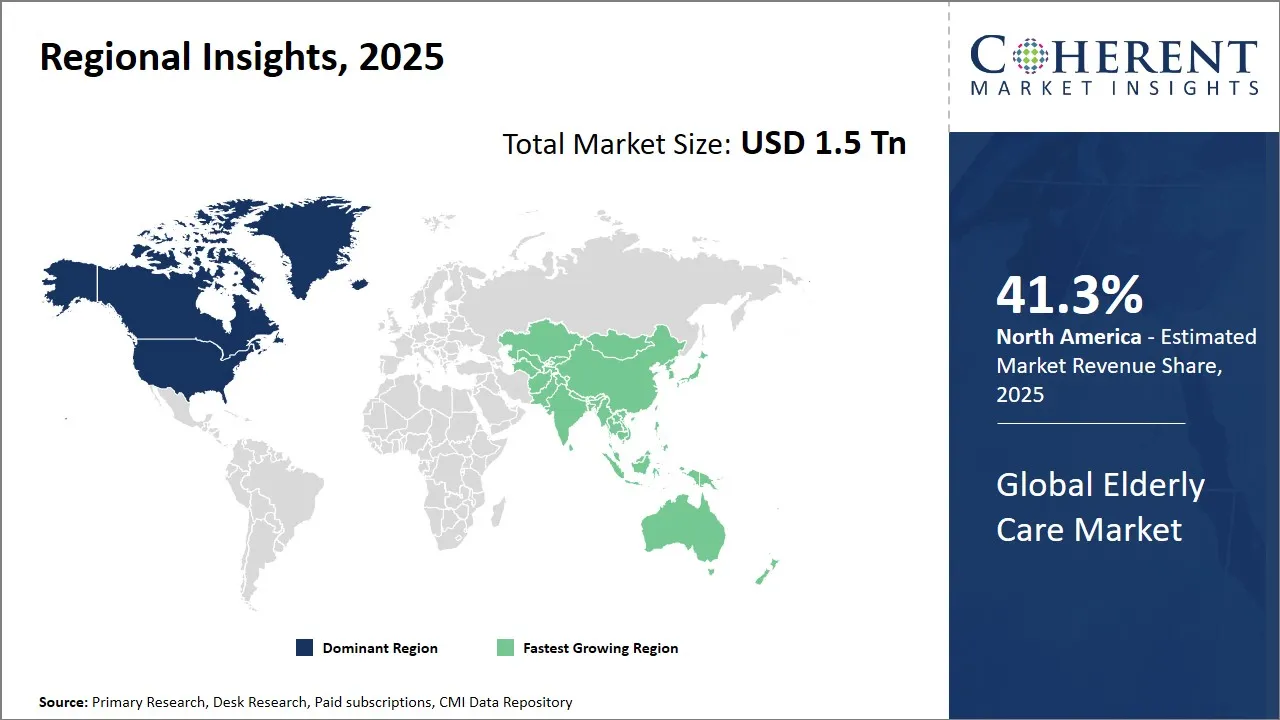
North America Elderly Care Market Analysis and Trends
In 2026, North America is expected to dominate the global elderly care market, with a 41.3% share. This is attributed to the region's well-developed healthcare infrastructure, growing awareness of elderly care needs, and significant investments in healthcare technologies and services. The U.S. and Canada especially have a very strong ecosystem of senior living communities, home healthcare providers, and high technology medical equipment suppliers.
In August 2024, the University of California, Davis (UC Davis Health) launched the Interactive Care Platform (I-Care) to help seniors in the U.S. live independently while managing cognitive decline.
Asia Pacific Elderly Care Market Analysis and Trends
Asia Pacific exhibits the fastest growth in the elderly care market, accounting for an estimated share of 24.4% in 2026. This growth is driven by high rates of aging populations, growing disposable incomes, and the changing cultural attitudes towards elderly care. The demand for institutional and home-based care solutions for the elderly is increasing more rapidly in countries such as Japan, China, South Korea, and India.
Global Elderly Care Market Outlook for Key Countries
U.S. Elderly Care Market Trends
The elderly care market in the U.S. is well-established, with advanced healthcare services and comprehensive insurance coverage systems that significantly contribute to the provision of elderly care services. The key players, Brookdale senior living and Amedisys Inc. are at the forefront in offering a broad spectrum of solutions in senior housing and home care. The U.S. elderly care market has advantages of high government investments into Medicare and Medicaid and increased focus on telehealth that increases access to care in rural and most underserved regions.
In June 2023, Harvard Business Review highlighted the U.S. Program of All-Inclusive Care for the Elderly (PACE) as a model for humane, cost-effective eldercare. Founded in 1973, PACE enables older adults needing nursing-home-level care to live independently through integrated community-based services covering medical, social, and rehabilitative needs.
China Elderly Care Market Trends
The China elderly care market is dynamic as China has a huge aging population and an increasing number of middle class. Healthy China 2030, a government initiative, focuses on the development of bigger care facilities and services provided to the elderly. Residential care is growing through local firms like Sunrise Senior Living, as well as global partnerships that integrate digital healthcare solutions.
In June 2026, the Chinese government, through the Ministry of Industry and Information Technology and the Ministry of Civil Affairs, launched a national “Robot Plan” to tackle the country’s growing elderly care crisis. The initiative aims to integrate robotics into home, community, and institutional care settings to address severe labor shortages and improve quality of life for seniors.
Germany Elderly Care Market Trends
The elderly care market growth in Germany is driven by its comprehensive social insurance system, which includes long-term care insurance that plays a crucial role in financing care for the elderly. Korian Group and Pro Seniore are the leading companies that run many skilled nursing facilities and ambulatory services. The German government promotes aging-in-place where the policies enable outpatient and home-based support, and the investments are made in the training of care personnel and digital health solutions.
In January 2026, the Federal Ministry of Health of Germany, led by Prof. Karl Lauterbach, launched the Action Plan for a Diverse, Inclusive, and Barrier-Free Healthcare System to make healthcare accessible to all citizens, especially people with disabilities, marginalized groups, and families with caregiving needs.
India Elderly Care Market Trends
The market for elderly care in India is undergoing a high rate of change due to the demographic change and growing urbanization. Despite being a family-based system in the past, changing socio-economic conditions have brought about rising demand of formal elderly care and assisted living centers. Large competitors such as Max Healthcare and Portea Medical are building home healthcare and eldercare service portfolios in the urban markets.
In May 2026, Antara Senior Care, a subsidiary of Max India Limited, opened a new 43-bed assisted living facility on Chennai’s East Coast Road to address the rising demand for elderly care. The 30,000 sq. ft. care home, Antara’s sixth in India and first in Chennai, offers 24/7 medical and nursing support, physiotherapy, nutrition management, and mental wellness programs for seniors needing rehabilitation or long-term care assistance.
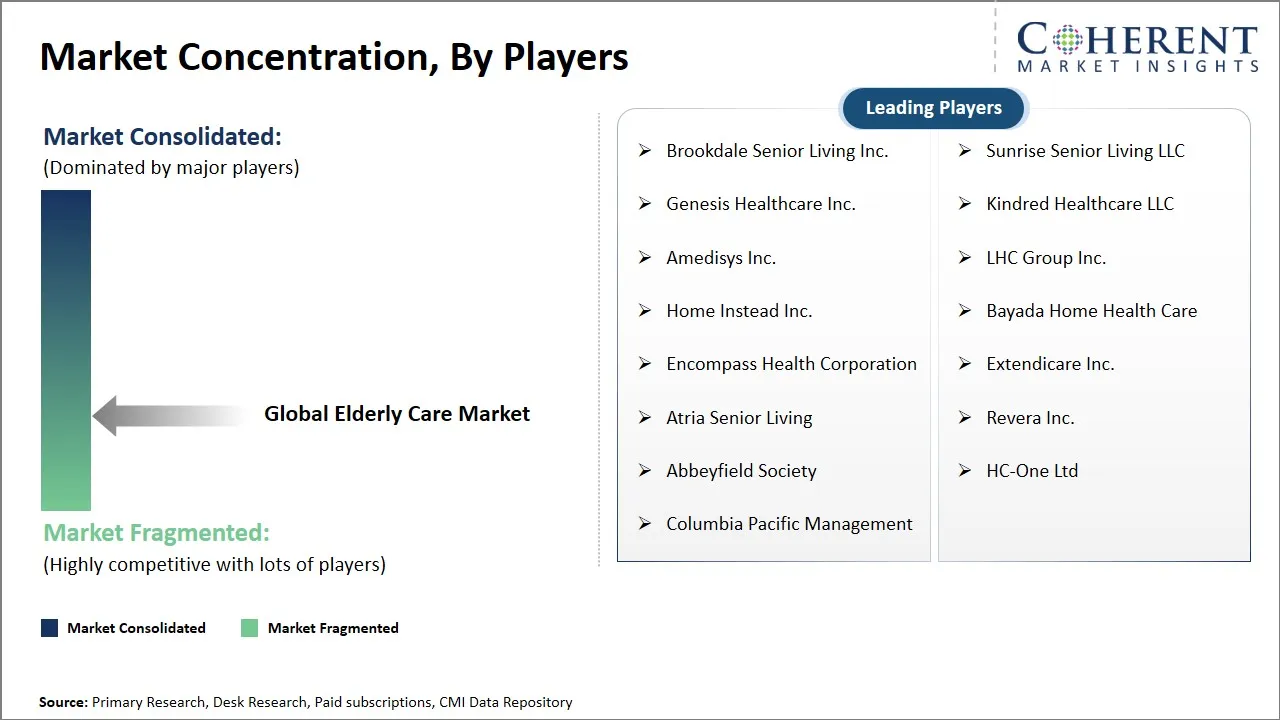
Market Players, Key Developments, and Competitive Intelligence
Key Developments
- On October 06, 2025, Hogar Geriatrico Sonrie a la Vida, a leading elderly care institution in Medellín, Colombia, launched new specialized care programs for seniors with chronic conditions such as Alzheimer’s, Parkinson’s, cardiovascular disease, and diabetes. The organization, known for its two facilities in Floresta and Calasanz, aims to enhance elderly care by integrating medical supervision, rehabilitation, and cognitive therapy tailored to individual needs.
- In August 2025, Google India, a global technology company, rolled out an Elder Care Program to help employees manage aging-parent responsibilities, offering emotional support, health screening, telemedicine, home visits, and safety services
- In April 2024, the Institute for Healthcare Improvement (IHI) launched the Age-Friendly System-Wide Spread Collaborative with 30 U.S. health systems to expand age-friendly care using the 4Ms framework, What Matters, Medication, Mentation, and Mobility. Backed by the John A. Hartford Foundation, it builds on IHI’s initiative that has already benefited over 3.29 million older adults, strengthening elderly care standards nationwide.
- In March 2025, New Day Healthcare, a U.S. based home-based care provider, acquired Patient Recovery Home Healthcare Services, a U.S. based home health agency that has operated for 15 years. The acquisition New Day’s 14th to date and second in Houston after Christian Senior Care will strengthen its presence in the competitive U.S. market and expand elderly care services.
Top Strategies Followed by Global Elderly Care Market Players
- Established players dominate by continuously investing heavily in research and development (R&D) to innovate high-performance products that cater to the evolving needs of the aging population. These innovations often encompass advanced monitoring systems, smart wearable devices, and integrated health management solutions that enhance the quality of elderly care. Additionally, these leaders form strategic partnerships with major industry players, original equipment manufacturers (OEMs), and healthcare providers to reinforce their market presence.
- In June 2025, Policybazaar, India’s leading digital insurance marketplace, launched ‘Saarthi’, an elder care concierge program designed to bridge the country’s growing senior healthcare gap. Developed in collaboration with insurer partners, Saarthi provides personalized support for elderly citizens, simplifying health insurance and medical assistance through human-led guidance and integrated care services.
- Mid-level players in the elderly care market carve out their position by concentrating on affordability without compromising quality, catering especially to price-sensitive consumers such as middle-income families and public healthcare institutions. These companies prioritize offering cost-effective solutions that strike a balance between functionality and price, making elderly care technology more accessible to a wider audience.
- On October 08, 2025, Prime Healers, a provider of home healthcare services and medical equipment rentals in India, announced plans to expand access to affordable at-home medical care and equipment leasing. The move addresses gaps in senior and chronic care across regions by bringing diagnosis, treatment, and durable medical equipment directly into patients’ homes.
- Small-scale players differentiate themselves by targeting niche segments within the elderly care market, often emphasizing highly specialized features or pioneering innovative products. For instance, some focus on user-friendly interfaces for elderly users with cognitive impairments or develop compact, portable solutions tailored to home care environments.
- In March 2024, Epoch Elder Care, a leading provider of assisted living and dementia care services in India, inaugurated its second assisted living home in Pune, named Epoch Picasso House. Located in Undri, the new 27-room facility offers personalized long-term and short-term care including dementia, Parkinson’s, palliative, and rehabilitation support for elders.
Market Report Scope
Elderly Care Market Report Coverage
| Report Coverage | Details | ||
|---|---|---|---|
| Base Year: | 2025 | Market Size in 2026: | USD 1.64 Tn |
| Historical Data for: | 2020 To 2024 | Forecast Period: | 2026 To 2033 |
| Forecast Period 2026 to 2033 CAGR: | 9.3% | 2033 Value Projection: | USD 3.06 Tn |
| Geographies covered: |
| ||
| Segments covered: |
| ||
| Companies covered: | Brookdale Senior Living Inc., Sunrise Senior Living LLC, Genesis Healthcare Inc., Kindred Healthcare LLC, Amedisys Inc., LHC Group Inc., Home Instead Inc., Bayada Home Health Care, Encompass Health Corporation, Extendicare Inc., Atria Senior Living, Revera Inc., Abbeyfield Society, HC-One Ltd, and Columbia Pacific Management | ||
| Growth Drivers: |
| ||
| Restraints & Challenges: |
| ||
Elderly Care Market Dynamics
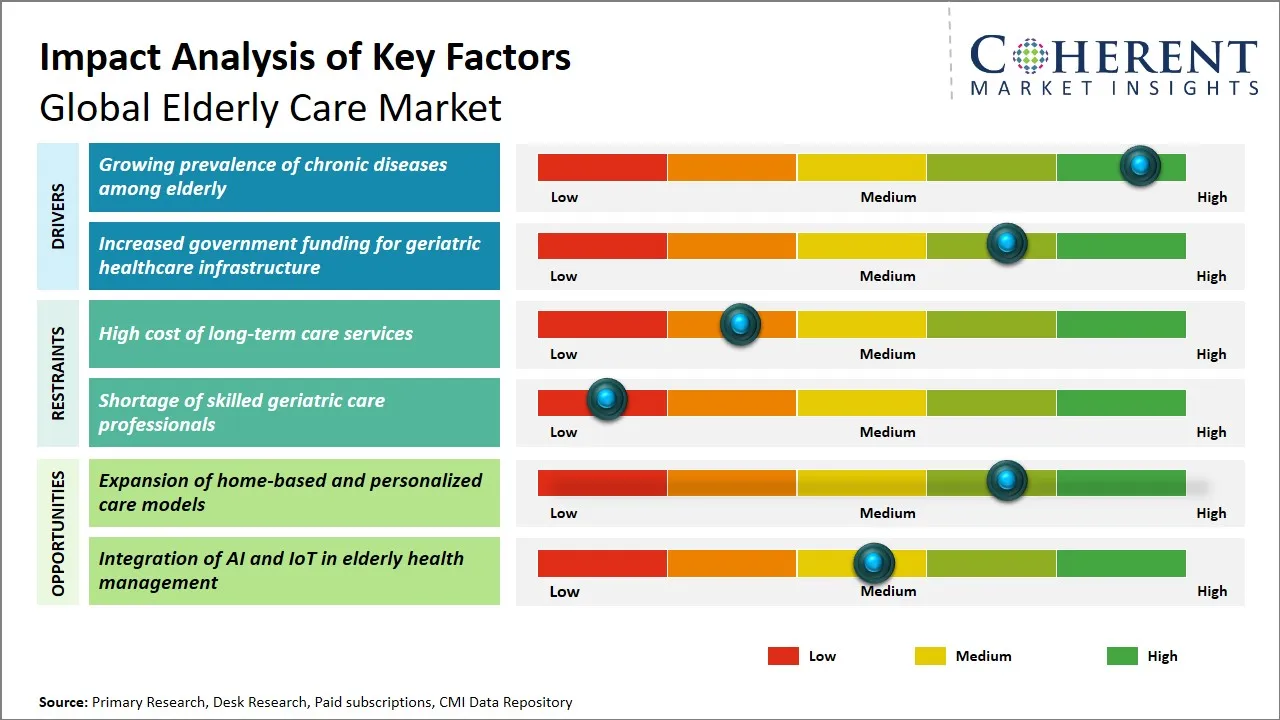
Elderly Care Market Driver - Growing Prevalence of Chronic Diseases Among Elderly
The rising prevalence rates of the aging population with chronic disease like diabetes, cardiovascular diseases, arthritis, and respiratory diseases are major causes of the demand of elderly care services in the world today. Since the aging population is experiencing long-term health-related issues, which demand constant medical care and lifestyle interventions, the necessity to provide advanced care facilities, in-home services, and individualized treatment plans increases. There is a high likelihood of chronic diseases causing low mobility, cognitive dysfunction and comorbidity, making the level of care required more complicated.
In July 2025, the National Council on Aging (NCOA) reported that nearly 93% of U.S. adults aged 65 and older have at least one chronic condition, and 79% live with two or more. The organization highlighted the top 10 chronic conditions affecting older adults—led by high blood pressure (61%), high cholesterol (55%), arthritis (51%), obesity (30%), and diabetes (24%).
Moreover, in October 2025, the World Health Organization (WHO) highlighted accelerating global population aging, warning that by 2050 nearly 80% of people over 60 will live in low- and middle-income countries. The report notes a dramatic demographic shift by 2030, one in six people will be aged 60 or older, with the number rising from 1 billion in 2020 to 1.4 billion, and doubling to 2.1 billion by 2050.
Elderly Care Market Opportunity - Expansion of Home-Based and Personalized Care Models
The world elderly care market is experiencing a great opportunity with the growth of a home-based and customized care model, with changing demographic tendency and changing consumer tastes. With the ageing population in the world, the demand to have care solutions that provide comfort, autonomy and customized care has increased in the world with familiar home setting. In-home care services that involve medical care, personal care, and daily activities care offer the advantage of receiving quality care to elderly people without institutionalization.
In November 2024, Biofourmis, a global technology-enabled care delivery company, partnered with Lee Health, a leading not-for-profit health system in Southwest Florida, to expand remote patient monitoring and introduce a new Hospital at Home program. The initiative enables patients to receive hospital-level care at home, enhancing comfort and outcomes.
Analyst Opinion (Expert Opinion)
- The market for elderly care is growing at a very high pace due to the aging of the world population, the increase in chronic illnesses and the increased acceptance of care in the home and through the internet. Governments are raising healthcare expenditure and policy subsidy of aging-in-place initiatives, and private actors are putting vast sums of money in telehealth, AI-assisted surveillance and robot assistance to enhance efficiency and comfort of patients. Nevertheless, the industry has continued to be challenged by such factors as labor shortages, expensive operations, and regional imbalanced access to digital opportunities. These forces are compelling providers to seek hybrid care models which integrate technology with human care provision to satisfy the rising demand.
- Major conferences like the Re-Envisioning Elder Care Summit, the National Research Summit on Dementia Care and Age + Action forum have showcased discussions on care innovation, alignment of policies, and integration of technology in recent years. Models such as the U.S. Program of All-Inclusive Care of the Elderly (PACE) and Vayomithram project in India provide examples of how well-integrated community-based services can revolutionize the process of providing care to the elderly. Newer technology-based startups also are bridging the affordability and workforce gap, which means the future of care delivery will be more intelligent and inclusive across the globe.
Speak to the analyst
Want personalized insights?
Take the findings above to one of our principal consultants, or have the report rebuilt around the segments, geographies and competitors you actually track.
Market Segmentation
- Service Type Insights (Revenue, USD Tn, 2021 - 2033)
- Home Care Services
- Assisted Living Facilities
- Community day centers
- Nursing homes/skilled nursing facilities
- Continuing care retirement communities (CCRC)
- Hospice and Palliative Care
- Care Type Insights (Revenue, USD Tn, 2021 - 2033)
- Medical Care
- Non-Medical (Personal) Care
- Technology Integration Insights (Revenue, USD Tn, 2021 - 2033)
- Telehealth and Remote Monitoring
- Mobility Assistance Devices
- Smart Home and IoT-Based Systems & Software
- Health Management Software Platforms
- Application Insights (Revenue, USD Tn, 2021 - 2033)
- Chronic Disease Management
- Post-Acute Care
- Preventive Health Management
- End-of-Life Care
- Duration of Care Insights (Revenue, USD Tn, 2021 - 2033)
- Short-term post-acute/transitional
- Long-term custodial
- Respite/intermittent
- Payer Insights (Revenue, USD Tn, 2021 - 2033)
- Public
- Private
- Age Group Insights (Revenue, USD Tn, 2021 - 2033)
- 60–69
- 70–79
- 80–89
- 90+
- Regional Insights (Revenue, USD Tn, 2021 - 2033)
- North America
- U.S.
- Canada
- Latin America
- Brazil
- Argentina
- Mexico
- Rest of Latin America
- Europe
- Germany
- U.K.
- Spain
- France
- Italy
- Russia
- Rest of Europe
- Asia Pacific
- China
- India
- Japan
- Australia
- South Korea
- ASEAN
- Rest of Asia Pacific
- Middle East
- GCC Countries
- Israel
- Rest of Middle East
- Africa
- South Africa
- North Africa
- Central Africa
- North America
- Key Players Insights
- Brookdale Senior Living Inc.
- Sunrise Senior Living LLC
- Genesis Healthcare Inc.
- Kindred Healthcare LLC
- Amedisys Inc.
- LHC Group Inc.
- Home Instead Inc.
- Bayada Home Health Care
- Encompass Health Corporation
- Extendicare Inc.
- Atria Senior Living
- Revera Inc.
- Abbeyfield Society
- HC-One Ltd
- Columbia Pacific Management
Sources
Primary Research Interviews
Industry Stakeholders List
- Nursing home administrators
- Home healthcare service providers
- Assisted living facility managers
- Geriatric rehabilitation specialists
- Long-term care insurers
- Medical equipment suppliers for elderly care
End-users List
- Elderly individuals receiving care
- Family caregivers
- Geriatric patients with chronic diseases
- Residents of assisted living facilities
- Hospice patients and families
- Community senior center participants
Government and International Databases
- World Health Organization (WHO)
- Organisation for Economic Co-operation and Development (OECD)
- United Nations Department of Economic and Social Affairs (UNDESA)
- U.S. Centers for Medicare & Medicaid Services (CMS)
- Eurostat
- National Institute on Aging (NIA – U.S. NIH)
Trade Publications
- Home Health Care News
- McKnight’s Long-Term Care News
- Hospice News
- Senior Housing News
- Healthcare Financial Management Journal (HFMA)
- Skilled Nursing News
Academic Journals
- The Gerontologist
- Journal of Aging & Social Policy
- Geriatric Nursing
- BMC Geriatrics
- Age and Ageing (Oxford Academic)
- Journal of the American Geriatrics Society
Reputable Newspapers
- The New York Times – Health Section
- The Guardian – Society/Health
- The Washington Post – Aging and Health
- The Wall Street Journal – Health Industry
- Financial Times – Healthcare Insights
- Reuters Health
Industry Associations
- LeadingAge
- American Health Care Association (AHCA)
- National Association for Home Care & Hospice (NAHC)
- International Association of Gerontology and Geriatrics (IAGG)
- European Association for Directors and Providers of Long-Term Care Services (EDE)
- Global Coalition on Aging
Public Domain Resources
- World Bank Open Data
- U.S. Census Bureau – Aging Statistics
- European Commission – Health and Long-Term Care Data
- National Health Service (NHS Digital, UK)
- Centers for Disease Control and Prevention (CDC)
- Health Canada – Continuing Care and Home Care Data
Proprietary Elements
- CMI Data Analytics Tool: Proprietary analytics tool to analyze real-time market trends, consumer behavior, and technology adoption in market
- Proprietary CMI Existing Repository of Information for Last 8 Year
Get access to 250+ pages report
Every segment, forecast, competitor profile and data table behind the analysis above — available for instant download.
- ESOMAR Member
- ISO 9001:2015 Certified
- D-U-N-S Registered
- GDPR & CCPA Compliant
Missing comfort of reading report in your local language? Find your preferred language:
Transform your Strategy with Exclusive Trending Reports
Frequently Asked Questions
The global elderly care market is estimated to be valued at USD 1.64 Tn in 2026 and is expected to reach USD 3.06 Tn by 2033.
The CAGR of the global elderly care market is projected to be 9.3% from 2026 to 2033.
Growing prevalence of chronic diseases among elderly and increased government funding for geriatric healthcare infrastructure are the major factors driving the growth of the global elderly care market.
High cost of long-term care services and shortage of skilled geriatric care professionals are the major factors hampering the growth of the global elderly care market.
In terms of service type, home care services are estimated to dominate the market revenue share in 2026.
Brookdale Senior Living Inc., Sunrise Senior Living LLC, Genesis Healthcare Inc., Kindred Healthcare LLC, Amedisys Inc., LHC Group Inc., Home Instead Inc., Bayada Home Health Care, Encompass Health Corporation, Extendicare Inc., Atria Senior Living, Revera Inc., Abbeyfield Society, HC-One Ltd, and Columbia Pacific Management are the major players.
North America is expected to lead the global elderly care market in 2026.