

Global Flight Training Market Size and Forecast – 2026-2033
The Global Flight Training Market is estimated to be valued at USD 12.00 Bn in 2026 and is expected to reach USD 28.41 Bn by 2033, exhibiting a compound annual growth rate (CAGR) of 13.1% from 2026 to 2033.
Key Takeaways of the Global Flight Training Market
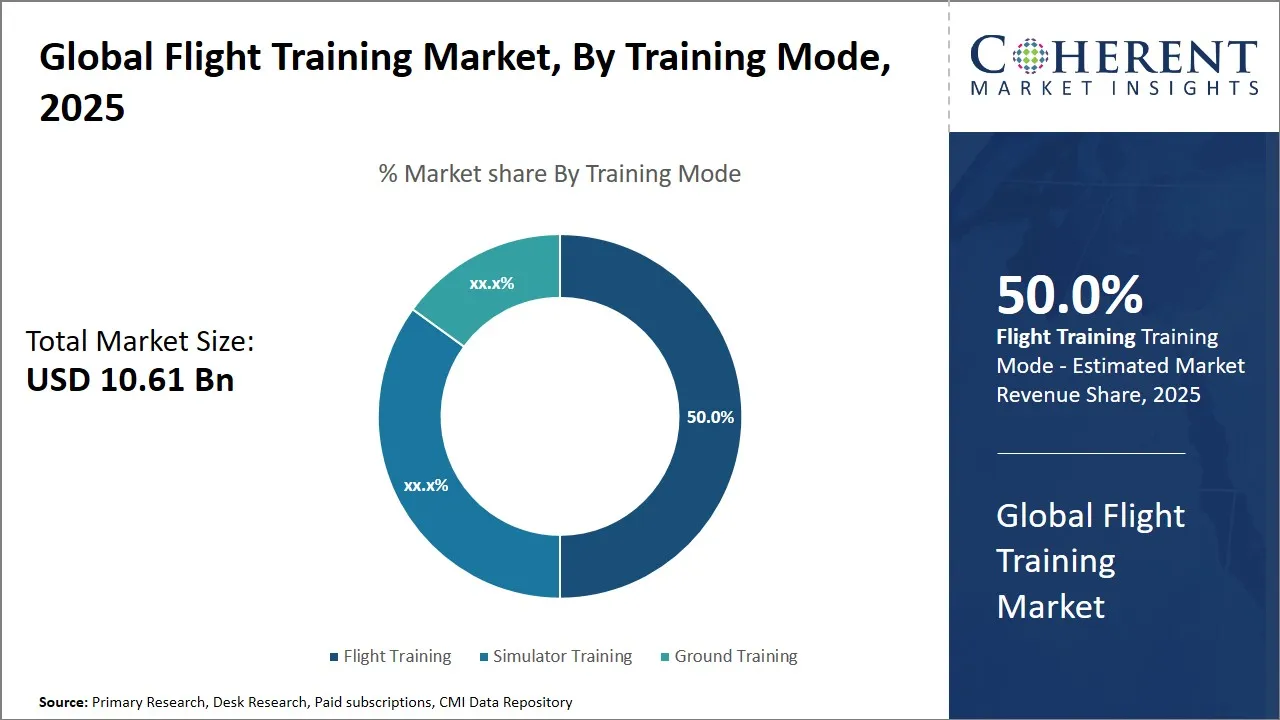
- The flight training segment is expected to lead the market holding a share of 51% in 2026.
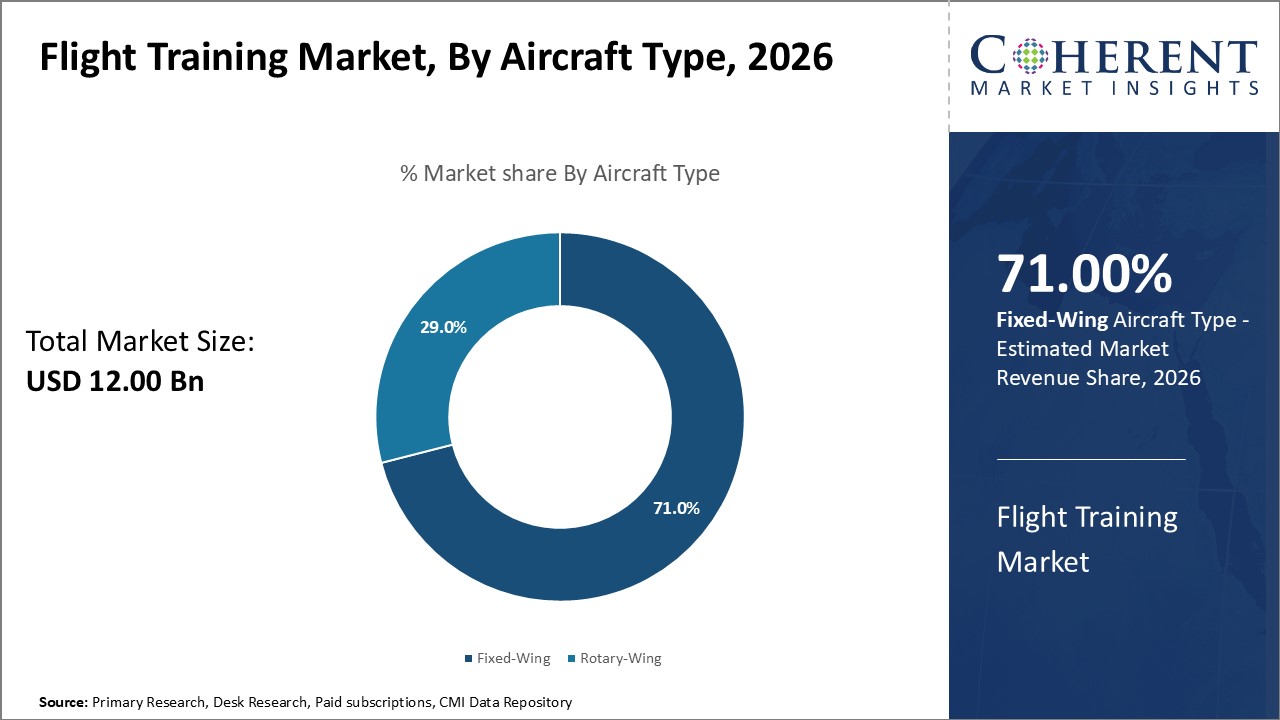
- The fixed-wing segment is projected to dominate with a share of 71% in 2026.
- The Commercial Pilot License (CPL) segment leads the market holding an estimated share of 61% in 2026.
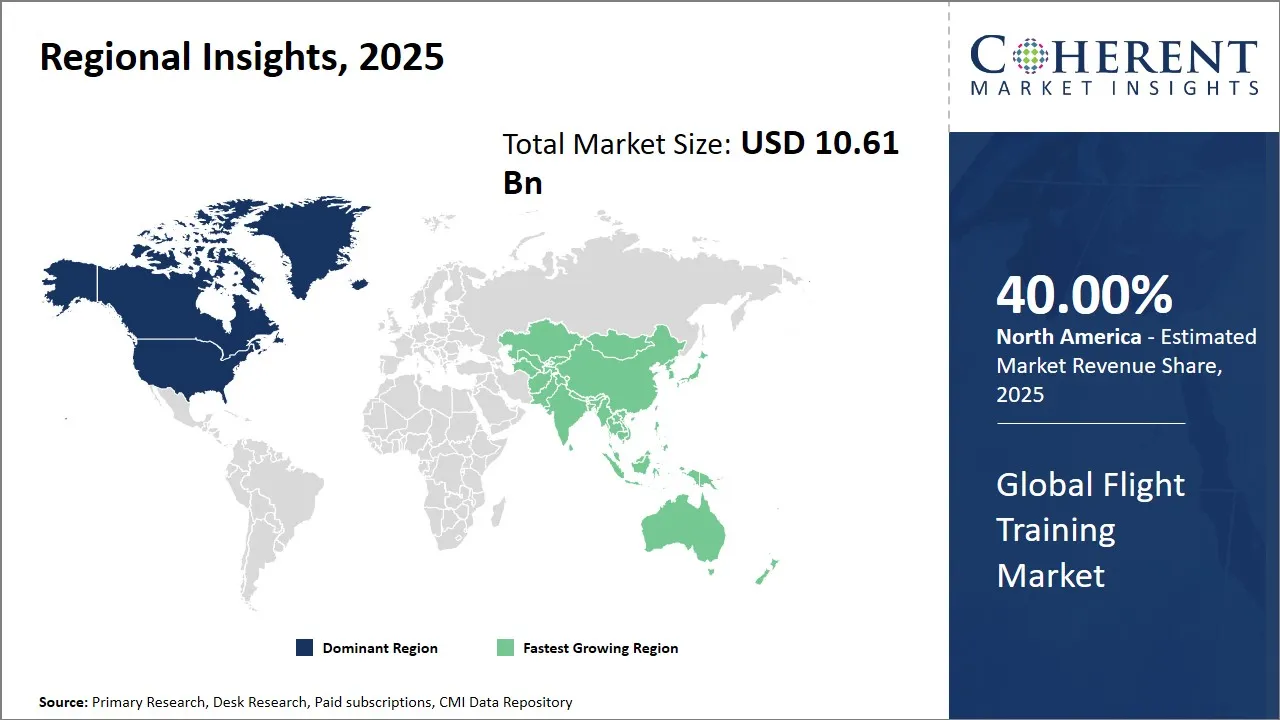
- North America, holding a projected share of 40% in 2026, dominates the market.
- Asia Pacific, holding an estimated share of 20% in 2026, shows the fastest growth in the market.
Market Overview
The market is seeing the adoption of advanced simulation technology, including Virtual Reality (VR) and Augmented Reality (AR), which enhances training efficiency and reduces costs. Also, growing focus on sustainable aviation practices is pushing flight schools to use eco-friendly methodologies. The rise of Unmanned Aerial Vehicles (UAVs) and the increasing need for specialized training programs also add to market expansion, driving innovation and attracting investments in modernized flight training solutions.
Current Events and Its Impact
Current Events | Description and its Impact |
Geopolitical and Trade Developments |
|
Economic and Industrial Trends |
|
Segmental Insights
- Current Industry Events of 2026
- Market Size Estimation
- Regional Breakdown
- Competitive Landscape
- Customer Intelligence
- Segmental Analysis
- Pricing Analysis
- Key Market Drivers, Challenges & Future Trends
- Customized Insights Section
Global Flight Training Market Insights, By Training Mode – Dominance of Flight Training Driven by Real-Time Experience and Regulatory Requirements
The Flight Training segment is expected to hold the largest share of 51% in the global flight training market in 2026, because of its big role in providing real-time aircraft handling experience and meeting strict aviation certification requirements. Flight training delivers authentic exposure to weather, air traffic, and dynamic flight conditions, building pilot confidence and competence. Regulatory mandates from bodies such as the FAA and EASA enforce minimum flight-hour thresholds, ensuring sustained demand.
In 2024, CAE Inc. expanded its partnership with Air India to deliver advanced flight training using real aircraft alongside simulators, emphasizing the criticality of hands-on flight hours for new cadets.
Global Flight Training Market Insights, By Aircraft Type – Fixed-Wing Segment Leads Because of Expanding Commercial Aviation and Technological Advances
The fixed-wing segment dominates with an estimated 71% of the market share in 2026, because of booming commercial aviation and fleet expansion. Fixed-wing training underpins airline pilot qualification programs, addressing surging global demand for skilled jet and turboprop operators. Advancements in avionics and cockpit automation have created the need for pilots trained in sophisticated fixed-wing systems. L3Harris Airline Academy’s next-gen Airbus A320 training modules use real-time flight data, supporting airline demand for technologically adept fixed-wing pilots.
Global Flight Training Market Insights, By License Type – Commercial Pilot License (CPL) Booms as the Gateway to Professional Aviation Careers
The Commercial Pilot License (CPL) segment is set to hold 61% of the market share in 2026, being the key qualification for aspiring professional pilots. As airlines grow their fleets and retirements create vacancies, CPL programs have become the primary route to employment. The training emphasizes advanced navigation, instrument flying, and regulatory compliance under standardized global frameworks.
In 2024, Emirates Flight Training Academy reported a 30% rise in CPL enrollments because of regional airline hiring initiatives and partnerships with Boeing and Airbus for career pathway programs.
Impact of AI on the Flight Training Market
Artificial Intelligence (AI) is changing flight training by improving the realism, adaptability, and efficiency of pilot education. AI-powered simulators can analyze trainee performance in real time, find errors, and suggest personalized corrective exercises, making possible faster skill acquisition and more targeted training. For example, AI algorithms can simulate complex emergency scenarios that would be too risky or costly to replicate in real aircraft, ensuring pilots are better prepared for unusual situations. Other than pilot training, AI is used in predictive maintenance of simulators themselves, reducing downtime and operational costs for training centers.
CAE’s AI-driven Smart Training System uses AI to monitor pilot responses during simulator sessions, adjusting scenarios based on the trainee’s strengths and weaknesses. Airlines like Lufthansa have integrated this technology to improve recurrent training efficiency, ensuring pilots meet high safety standards while reducing the number of required simulator hours.
Regional Insights
North America Flight Training Market Analysis and Trends
North America, holding a projected share of 40% in 2026, dominates the global flight training market because of a mature aviation ecosystem and a lot of government support for aviation safety and pilot training initiatives. The U.S. hosts a lot of world-renowned flight training organizations, like Embry-Riddle Aeronautical University and FlightSafety International, which provide comprehensive training programs ranging from private pilot licenses to advanced commercial certifications.
Also, regulatory frameworks put in place by the Federal Aviation Administration (FAA) emphasize stringent training standards that continuously fuel demand for advanced flight simulators and pilot training services. Also, partnerships between airlines, manufacturers like Boeing, and training centers make North America’s market position stronger. The presence of military flight training programs also contributes a lot, making a diversified training demand. Trade dynamics, such as favorable export policies and availability of cutting-edge aerospace technology, enable North American providers to extend their services internationally.
Asia Pacific Flight Training Market Analysis and Trends
The Asia Pacific region exhibits the fastest growth in the global flight training market, contributing a projected 20.0% share in 2026, propelled by rapidly expanding commercial aviation sectors in countries like China, India, and Southeast Asian nations. The region’s growing demand for air travel has created a rise in pilot shortages, pushing investments in flight training infrastructure. Governments in the Asia Pacific push the development of aviation education and regulatory frameworks to align with international standards, facilitating market expansion.
Major players such as CAE Inc., L3Harris Technologies, and Panasonic Avionics have established training centers and strategic partnerships in countries including Singapore and India. The market ecosystem benefits from increasing foreign direct investment and collaborations with well-established Western training institutions, allowing technology transfer and knowledge sharing. Also, regional trade agreements and growing airline fleets contribute to spreading the demand for professional flight training services.
Flight Training Market Outlook for Key Countries
U.S. Flight Training Market Analysis and Trends
The U.S. leads the flight training market because of an extensive network of flight schools, strong regulatory oversight, and ongoing innovation in training technologies. Industry giants like FlightSafety International and CAE have headquarters or centers in the U.S., offering a big portfolio of pilot training solutions, like sophisticated full-motion simulators. The FAA’s regulations keep the training standards high, attracting international students wanting quality training. The presence of big airlines like American Airlines and Delta Air Lines also supports collaboration for pilot cadet programs, adding to market growth.
China Flight Training Market Analysis and Trends
China is growing fast as a key player in the flight training market because of the huge growth of its domestic airline industry and rising demand for qualified pilots. The government has launched initiatives to grow aviation infrastructure, including establishing new flight academies backed by both public and private investments. Companies like CAE and L3Harris have made a lot of inroads by partnering with local firms and aviation authorities to supply advanced simulator equipment and training services. China’s focus on self-reliance in aviation technology and education shows potential for continued expansion of pilot training ecosystems.
India Flight Training Market Analysis and Trends
India flight training market is expanding due to increased air traffic and the government’s aviation liberalization policies encouraging private sector participation. The Directorate General of Civil Aviation (DGCA) supports the establishment of multiple approved flight training organizations. Indian startups and training centers such as Capt. Sahil Aviation Academy have gained prominence alongside global players like CAE, which provide cutting-edge simulation and training solutions. The country’s young population and growing middle class make a favorable demographic, while partnerships with foreign aviation bodies improve the skill levels of trainee pilots.
U.K. Flight Training Market Analysis and Trends
The U.K. continues to lead in the Europe flight training market, using its historical legacy of aviation excellence and a strong ecosystem of universities, military academies, and private flight schools. Companies such as BAE Systems and FlightSafety International have significant operations within the U.K., supporting both civilian and defense pilot training. The U.K. Civil Aviation Authority (CAA) maintains strict certification requirements that push quality and innovation in training. Also, the U.K. is a global aviation hub, attracting international students looking for professionally recognized pilot credentials.
Singapore Flight Training Market Analysis and Trends
Singapore flight training market sees growth because of its geographic location and government policies pushing the country as an aviation training hub. The Civil Aviation Authority of Singapore (CAAS) supports initiatives to improve pilot training capabilities with cutting-edge technology. The city-state has regional training centers operated by companies like CAE and ST Engineering, focusing on simulator-based training and specialized aviation programs. Singapore Airlines also adds to the ecosystem by operating its own pilot training academies, making a pipeline of highly skilled aviation professionals for the Asia Pacific region
Market Players, Key Development, and Competitive Intelligence
Key Developments
- In September 2025, WestJet and CAE announced the signing of a 15-year training agreement under which CAE will establish the Alberta Training Centre of Excellence (the Centre) for Aviation and Aerospace—a cutting-edge aviation training facility in Calgary, subject to customary contingencies.
- In November 2024, CAE announced that it will increase its ownership stake in its existing SIMCOM Aviation Training (SIMCOM) joint venture by purchasing a majority of SIMCOM shares from Volo Sicuro for USD 230 million, subject to customary adjustments, to be financed with CAE’s existing credit facility and cash on hand.
- In August 2024, TRU Simulation announced the Federal Aviation Administration Level D certification and delivery of a Cessna Citation Longitude Full Flight Simulator (FFS) for FlightSafety International's Columbus, Ohio Learning Center. The new simulator will support FlightSafety in providing quality training services for Textron Aviation’s flagship super-midsize Cessna Citation jet.
- In July 2021, CAE concluded the previously announced acquisition of L3Harris Technologies’ Military Training business for USD 1.05 billion subject to customary adjustments.
Top Strategies Followed by Flight Training Market Players
- Established market leaders invest a lot in research and development (R&D) to continuously innovate and deliver high-performance flight training products.
- CAE Inc. has been putting R&D efforts into AI-driven pilot performance analytics and immersive simulation technologies, including its 2024 launch of the CAE Rise platform, which uses real-time data to enhance training precision for airline cadets.
- Mid-level players in the flight training market focus on delivering cost-effective flight training solutions that offer a balance between quality and affordability.
- ALSIM Simulators’ ALSIM AL250 is a modular, multi-aircraft type simulator that provides high training versatility at lower costs.
- Small-scale players in the global flight training market try to carve out specific niches through innovative product offerings and unique features tailored to targeted customer segments.
- Redbird Flight Simulations (U.S.) has carved a niche in the general aviation and ab-initio training segment by offering compact, FAA-approved simulators like the Redbird MCX, tailored for flight schools emphasizing early-stage pilot skill development and adaptive training.
Market Report Scope
Flight Training Market Report Coverage
| Report Coverage | Details | ||
|---|---|---|---|
| Base Year: | 2025 | Market Size in 2026: | USD 12.00 Bn |
| Historical Data for: | 2020 To 2024 | Forecast Period: | 2026 To 2033 |
| Forecast Period 2026 to 2033 CAGR: | 13.1% | 2033 Value Projection: | USD 28.41 Bn |
| Geographies covered: |
| ||
| Segments covered: |
| ||
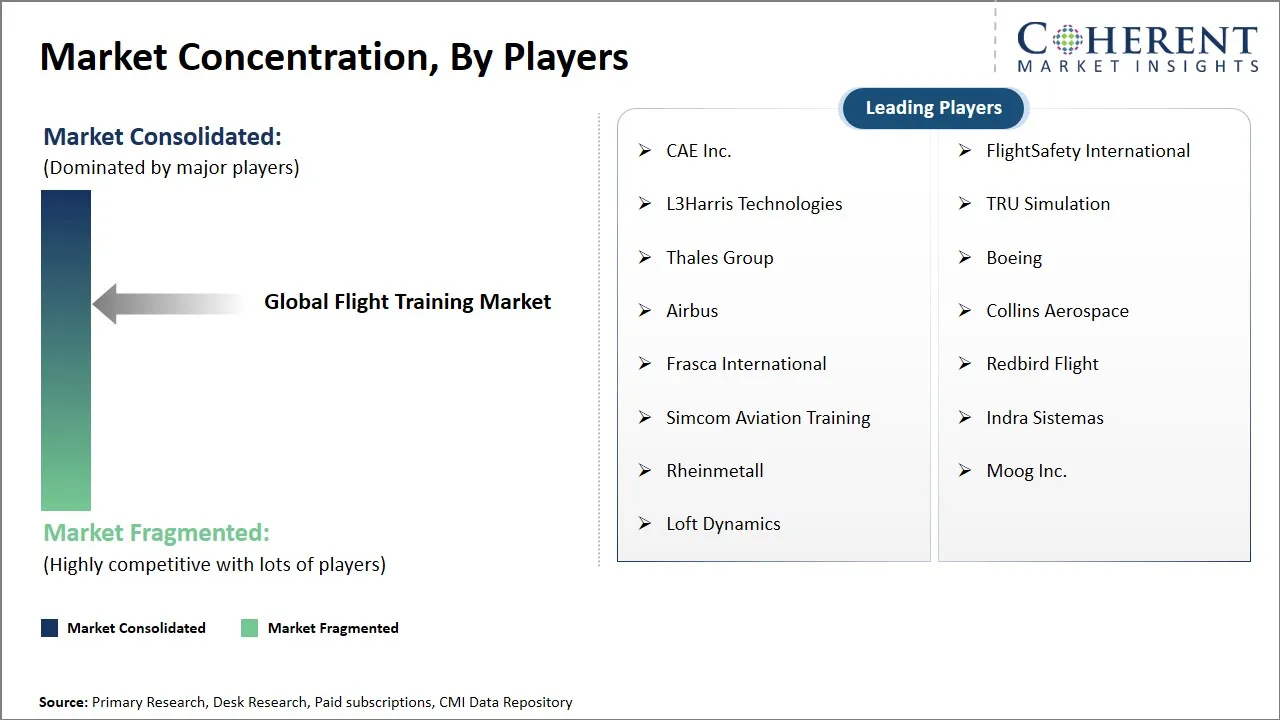
| Companies covered: | CAE Inc., FlightSafety International, L3Harris Technologies, TRU Simulation, Thales Group, Boeing, Airbus, Collins Aerospace, Frasca International, Redbird Flight, Simcom Aviation Training, Indra Sistemas, Rheinmetall, Moog Inc., and Loft Dynamics | ||
| Growth Drivers: |
| ||
| Restraints & Challenges: |
| ||
Market Dynamics
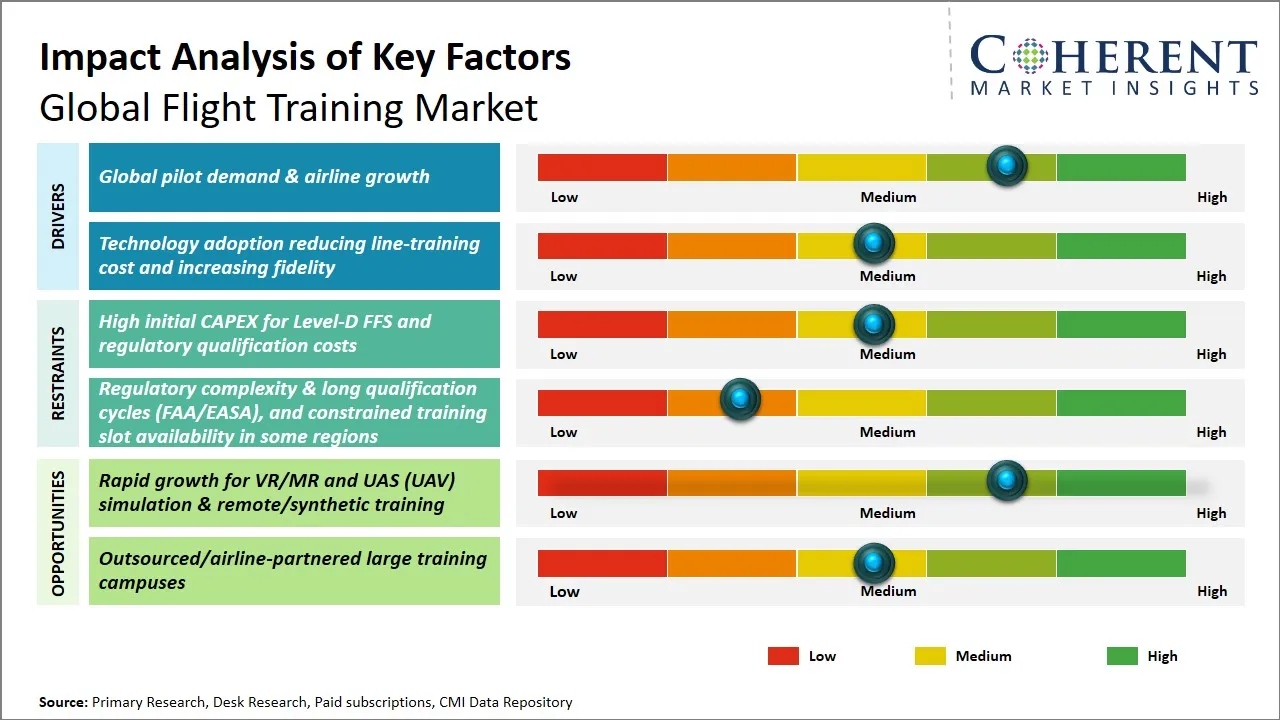
Global Flight Training Market Driver - Global Pilot Demand & Airline Growth
The surge in global pilot demand, driven primarily by the rapid expansion of the airline industry, serves as a pivotal factor propelling the flight training market forward. As passenger air traffic continues to escalate across both emerging and mature markets, airlines are compelled to expand their fleets and increase operational capacity, thereby creating an urgent need to recruit and train new pilots. This growth is further supported by the retirement of an aging pilot workforce, intensifying the pilot shortage and underscoring the importance of comprehensive flight training programs.
Additionally, the emergence of low-cost carriers and the reopening of regional routes have diversified pilot recruitment needs, pushing training institutions to adapt their curricula to meet evolving airline requirements. Collectively, these dynamics not only amplify the demand for qualified pilots but also emphasize continuous upskilling and advanced simulator training, catalyzing investment and innovation within the global flight training landscape.
Global Flight Training Market Opportunity – Rapid Growth for VR/MR and UAS (UAV) Simulation & Remote/Synthetic Training
The global flight training market is experiencing a significant opportunity driven by the rapid adoption of Virtual Reality (VR), Mixed Reality (MR), and Unmanned Aerial Systems (UAS) simulation combined with remote and synthetic training technologies. Advances in VR and MR are revolutionizing pilot training by providing immersive, cost-effective, and highly scalable simulation environments that closely replicate real-flight conditions without the risks and expenses associated with physical flight hours. This technological evolution enables flight schools and airlines to enhance training efficiency, reduce downtime, and improve pilot proficiency with real-time data analytics and adaptive learning modules. Simultaneously, the increasing deployment of UAS, also known as drones or UAVs, in commercial, military, and civil aviation sectors has created a growing need for specialized training solutions.
UAS simulation platforms integrated with synthetic training environments allow operators to gain hands-on experience in complex scenarios, including beyond-visual-line-of-sight (BVLOS) operations and urban air mobility, addressing regulatory and safety concerns. Furthermore, the shift towards remote training, propelled by the COVID-19 pandemic and the need for social distancing, has accelerated the incorporation of cloud-based platforms and decentralized learning models in flight training curricula. This trend supports continuous pilot education and certification while minimizing logistical constraints and costs, positioning VR/MR and UAS simulation as pivotal growth drivers for the flight training market globally.
Analyst Opinion (Expert Opinion)
- AI is rewriting the rules of how pilots learn. Training programs that dynamically adjust difficulty based on real-time performance are making static syllabus models obsolete. Players ignoring AI-driven analytics risk being left behind as airlines demand smarter, faster, and more cost-efficient pilot development.
- Traditional full-flight simulators are expensive and slow to scale. VR and MR solutions are finally credible enough to handle ab-initio and recurrent training at a fraction of the cost. Small and mid-sized players investing in these immersive platforms are likely to grab market share from legacy giants, unless incumbents aggressively innovate.
- The UAV training segment is underexplored but absolutely critical for the next decade. Companies that develop high-fidelity drone simulators now will control the emerging market for commercial and defense UAV pilots. Those who dismiss it are essentially betting against the future of aviation.
Speak to the analyst
Want personalized insights?
Take the findings above to one of our principal consultants, or have the report rebuilt around the segments, geographies and competitors you actually track.
Market Segmentation
- Training Mode Insights (Revenue, USD Bn, 2021 - 2033)
- Flight Training
- Simulator Training
- Ground Training
- Aircraft Type Insights (Revenue, USD Bn, 2021 - 2033)
- Fixed-Wing
- Rotary-Wing
- License Type Insights (Revenue, USD Bn, 2021 - 2033)
- Commercial Pilot License (CPL)
- Private Pilot License (PPL)
- Airline Transport Pilot License (ATPL)
- Regional Insights (Revenue, USD Bn, 2021 - 2033)
- North America
- U.S.
- Canada
- Latin America
- Brazil
- Argentina
- Mexico
- Rest of Latin America
- Europe
- Germany
- U.K.
- Spain
- France
- Italy
- Russia
- Rest of Europe
- Asia Pacific
- China
- India
- Japan
- Australia
- South Korea
- ASEAN
- Rest of Asia Pacific
- Middle East
- GCC Countries
- Israel
- Rest of Middle East
- Africa
- South Africa
- North Africa
- Central Africa
- North America
- Key Players Insights
- CAE Inc.
- FlightSafety International
- L3Harris Technologies
- TRU Simulation
- Thales Group
- Boeing
- Airbus
- Collins Aerospace
- Frasca International
- Redbird Flight
- Simcom Aviation Training
- Indra Sistemas
- Rheinmetall
- Moog Inc.
- Loft Dynamics
Sources
Primary Research Interviews
Stakeholders
- Airlines and Commercial Flight Operators
- Flight Training Device Manufacturers and Simulator Providers
- Aviation Regulatory Authorities
- Military and Defense Training Departments involved in pilot programs
- Flight Schools and Ab-Initio Pilot Academies
- Aviation Technology Consultants and AI/VR Training Experts
Databases
- Global Aviation Operations Database (GAOD)
- International Civil Aviation Organization (ICAO) Data Portal
- Air Transport Research Database (ATRD)
- Flight Simulation Device Registry (FSDR)
Magazines
- Aviation Today
- Flight Simulation International
- Airline Training Journal
- Pilot Training & Safety Magazine
Journals
- Journal of Aviation Technology & Engineering
- International Journal of Flight Simulation
- Aerospace Training and Education Journal
- Journal of Pilot Performance and Safety
Newspapers
- Aviation Daily
- FlightGlobal News
- The Aviation Herald
- The Times of Aviation
Associations
- International Federation of Air Line Pilots’ Associations (IFALPA)
- Civil Aviation Training Association (CATA)
- Global Flight Simulators Association (GFSA)
- Society of Aviation and Flight Training Professionals (SAFTP)
- International Council for Aviation Training Standards (ICATS)
Public Domain Sources
- International Civil Aviation Organization (ICAO) Reports
- Federal Aviation Administration (FAA) Publications
- European Union Aviation Safety Agency (EASA) Public Releases
- United Nations Aviation Development Division (UNAVDD)
- ResearchGate – Aviation & Pilot Training Studies
Proprietary Elements
- CMI Data Analytics Tool, Proprietary CMI Existing Repository of information for last 8 years
Get access to 250+ pages report
Every segment, forecast, competitor profile and data table behind the analysis above — available for instant download.
- ESOMAR Member
- ISO 9001:2015 Certified
- D-U-N-S Registered
- GDPR & CCPA Compliant
Missing comfort of reading report in your local language? Find your preferred language:
Transform your Strategy with Exclusive Trending Reports
Frequently Asked Questions
The global flight training market is estimated to be valued at USD 12.00 billion in 2026 and is expected to reach USD 28.41 billion by 2033.
The CAGR of the global flight training market is projected to be 13.1% from 2026 to 2033.
Global pilot demand & airline growth and technology adoption reducing line-training cost and increasing fidelity are the major factors driving the growth of the global flight training market.
High initial CAPEX for Level-D FFS and regulatory qualification costs and regulatory complexity & long qualification cycles (FAA/EASA), and constrained training slot availability in some regions are the major factors hampering the growth of the global flight training market.
The market is dominated by a few large players controlling high-end simulators and training centers.
AI, VR/MR, and cloud-based solutions enhance efficiency, reduce costs, and allow realistic scenario-based training.
In terms of training mode, the flight training is estimated to dominate the market revenue share in 2026.