

Global Formaldehyde Market Size and Forecast – 2026-2033
The Global Formaldehyde Market is estimated to be valued at USD 9,953.8 Mn in 2026 and is expected to reach USD 17,003.8 Mn by 2033, exhibiting a compound annual growth rate (CAGR) of 8.0% from 2026 to 2033.
Key Takeaways of the Formaldehyde Market
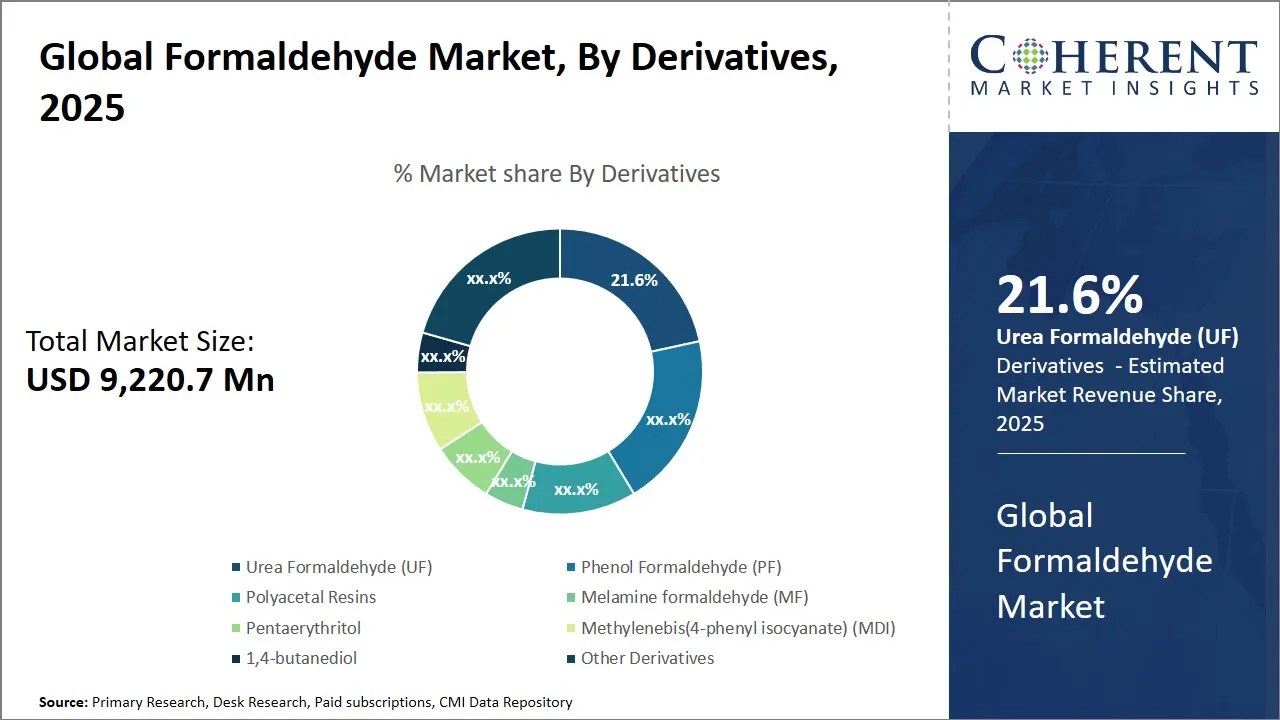
- The Urea Formaldehyde (UF) segment is expected to account for 22.6 % of the formaldehyde market in 2026, driven by its extensive use in adhesives, laminates, and molded products across industries.
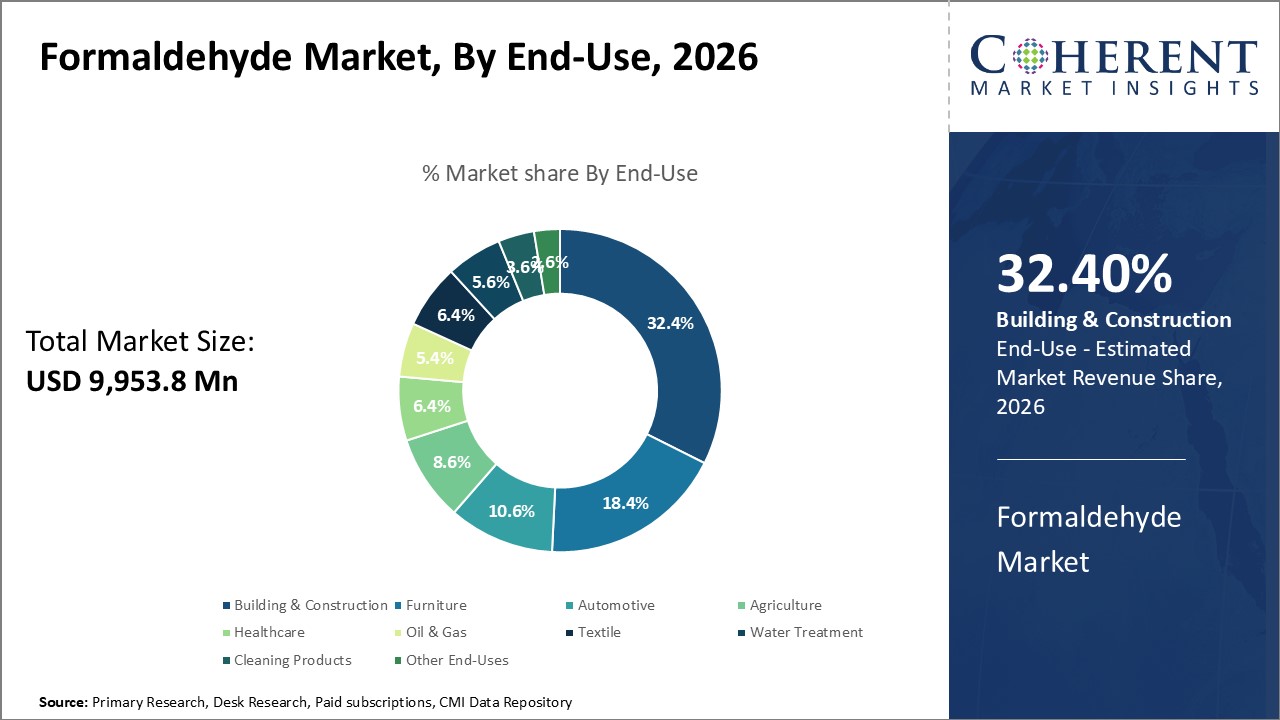
- The building & construction segment is projected to capture 32.40 % of the formaldehyde market, driven by rising global demand for residential, commercial, and industrial infrastructure.
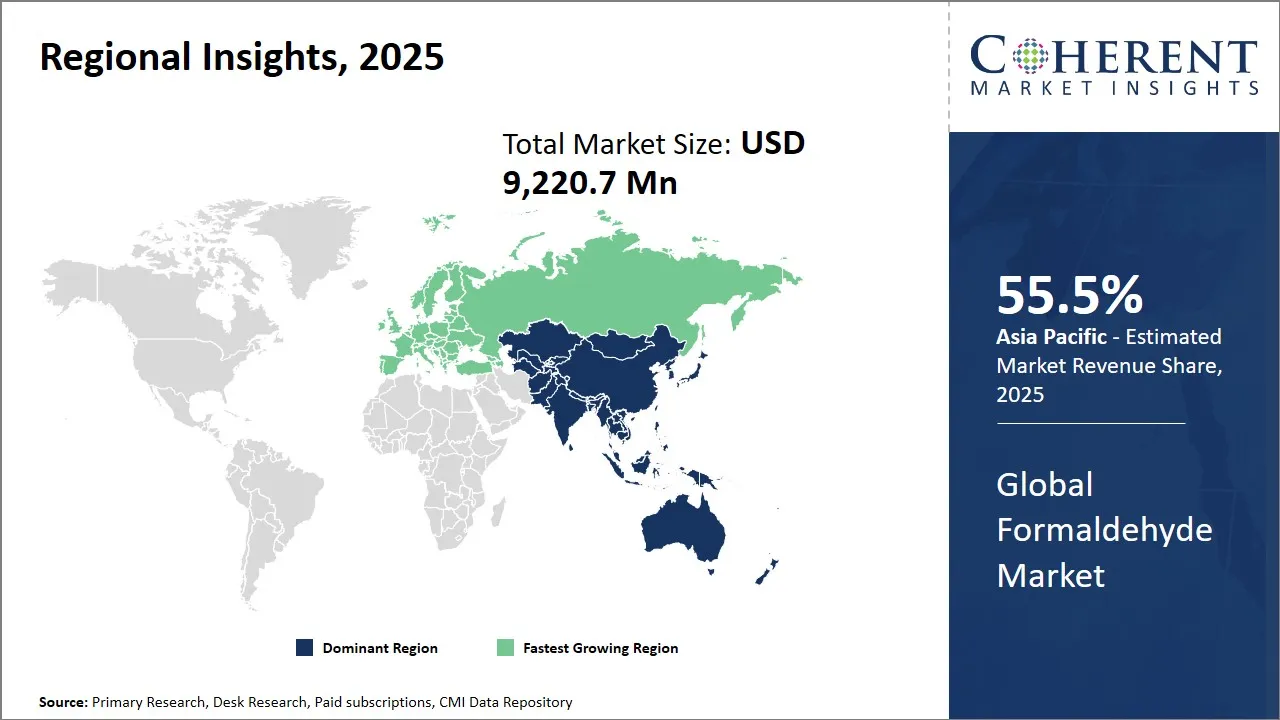
- Asia Pacific is expected to lead the formaldehyde market in 2026 with a 55.5 % share, driven by industrial and construction growth. Europe follows with an estimated 21.5% of the market share in 2026, fueled by sustainable production and rising industrial applications.
Market Overview
The present market dynamics show that there is a great move towards environmentally friendly and sustainable ways of producing formaldehyde to minimize environmental. Health risks involved in using conventional methods of producing formaldehyde products. Moreover, manufacturers are being encouraged to use greener technologies with inventions of bio-based formaldehyde and regulatory pressures. The growth in investments into the research and development and the growing use of formaldehyde-based products in the developing economies are expected to support the market growth.
Current Events and Its Impact
Current Events | Description and its impact |
EU REACH restriction on formaldehyde emissions from articles |
|
EU and U.K. scrutiny communications on formaldehyde releasers |
|
Segmental Insights
- Current Industry Events of 2026
- Market Size Estimation
- Regional Breakdown
- Competitive Landscape
- Customer Intelligence
- Segmental Analysis
- Pricing Analysis
- Key Market Drivers, Challenges & Future Trends
- Customized Insights Section
Formaldehyde Market Insights, By Derivatives - Urea Formaldehyde (UF) Segment Dominates the Market due to its Widespread Application and Cost-Effectiveness
Urea Formaldehyde (UF) segment is expected to hold 22.6% share of the formaldehyde market in 2026. This is attributed to the fact that Urea Formaldehyde (UF) is widely used in a wide range of industries, especially in adhesives, laminates, and molded products. The important reason why UF is growing is that it has a good bonding agent, and it is one of the crucial components in the production of plywood, particleboard and medium density fiber board (MDF).
These wood-based panels are popular in furniture and construction, thus driving the demand for UF resins. The increasing urbanization in the world and the growing construction works directly trigger the demand of these engineered wood products hence increasing the consumption of UF.
Moreover, the fact that UFs are more cost effective than other derivatives of formaldehyde adds to its leadership in the market. It presents a comparatively inexpensive alternative to making tough and hard substances. This cost efficacy will make manufacturers in different sectors to use UF rather than other derivatives in the event that they want cost effectiveness and performance in their final products.
Formaldehyde Market Insights, By End-Use - Building & Construction Segment Dominates the Market due to the Expanding Infrastructure and Housing Needs Worldwide
The building & construction segment is projected to hold 32.40% share of the formaldehyde market in 2026, primarily fueled by the increasing demand for residential, commercial, and industrial infrastructure around the globe.
The resins that include formaldehyde especially urea formaldehyde, phenol formaldehyde, and melamine formaldehyde play a key role in the production of all forms of construction materials including plywood, insulation panel, exterior siding, and flooring. These applications are more durable, waterproof and strong in their structure, complying with high demands of the contemporary building.
Continued urbanization and population growth have fueled construction activities particularly in emerging economies, fueling the demand for materials with formaldehyde. The necessity to have economical, sustainable, and efficient building products stimulates the application of engineered wood products and composites, which are bonded with formaldehyde-based resins. This is enhanced by governments that are concerned with low-cost housing schemes and infrastructure development initiatives.
Regional Insights
Asia Pacific Formaldehyde Market Analysis and Trends
The Asia Pacific region is projected to lead the market with a 55.5% share in 2026 due to tremendous availability of raw materials and strong demand for the downstream market. Goods produced by the automotive, construction, and furniture industries drive domination of the global formaldehyde market in Asia Pacific. China, India, and Japan are some countries that have a big number of formaldehyde manufacturers and consumers, which results to an integrated supply chain.
The regional leadership is supported by government policies promoting the growth of industries and infrastructure development, trade agreements which have helped in the export and import of goods. The presence of notable firms like Hexion Inc., Methanex Corporation, and Nippon Shokubai Co., Ltd. which have high levels of operation in this area has put pressure on innovation of product quality and sustainable manufacturing. Also, increasing urbanism and increasing consumer expenditure on domestic and automobile items increase the use of formaldehyde products, which strengthens the dominance of Asia Pacific.
Europe Formaldehyde Market Analysis and Trends
The Europe region is expected to exhibit the fastest growth in the market contributing 21.5% share in 2026, because of innovations in construction materials, automobile industry and environment-friendly production of chemicals. Formaldehyde is being consumed to make engineered wood products, especially in Germany, Poland, and Italy which are experiencing rising demand of engineered wood products mainly medium-density fiberboard (MDF) and particleboard.
In France and Czech Republic, automotive makers still use formaldehyde-plastic and lightweight coating products on automobile parts. Also, the region enjoys strong environmental regulations via REACH and high-quality standards that are fueling investments in R&D in the production of formaldehyde derivatives that are green.
Global Formaldehyde Market Outlook for Key Countries
China Formaldehyde Market Trends
The formaldehyde market in Chinas is a giant market because of its large manufacturing facility and huge consumption by its downstream products like textile, adhesive, and plywood. The government policies that have encouraged the modernization of the chemical industry and adherence to the environment have driven the domestic companies to adopt cleaner production technologies. Players in the industry such as Yuhuang Chemical and Jinan Shengquan Group have made massive investments into research and capacity building. The strong export system of Chinas is an important contributor to the global supply chains and therefore the hub of the formaldehyde market on the global front.
U.S. Formaldehyde Market Trends
The market of formaldehyde in the U.S. has high level of technology application in furniture and a stringent regulation on environmental standards that promote the innovation of low-emission formaldehyde products. Being a key driver of sustainable formaldehyde chemistry, having a powerful downstream industry of automotive and construction, key players like Hexion Inc. and INEOS are influential in driving the progression of green formaldehyde chemistry. The U.S. formaldehyde market enjoys a stable economic system and high technology in terms of R&D ventures that promote product diversification and product uses without compromising with safety standards.
Germany Formaldehyde Market Trends
Germany remains the leaders in the formaldehyde market in Europe with the help of its well-established chemical production industry and strict environmental policies that advance green formaldehyde resins. Major consumers of formaldehyde derivatives are the automotive and construction sectors of the country. German companies like BASF SE and Huntsman Corporation are also prominent in their operations base and have contributed to the innovation of technology and the care of the environment. The green chemistry programs being promoted by the governments also help in driving the development of the market based on the sustainable alternatives.
India Formaldehyde Market Trends
The formaldehyde market in India is growing fast as it enjoys the advantage of the wide infrastructure development and also with the raising furniture and plywood industry. The significant players in the market in terms of market growth are: Nagarjuna Fertilizers and Chemicals Limited and Gujarat Alkalies and Chemicals Limited that operate locally and in alliances. Rising consumer spending by the middle-income consumers and the growing urbanization are also driving the demand for formaldehyde products.
Brazil Formaldehyde Market Trends
Brazil’s formaldehyde market growth is strongly driven by the country’s robust pulp and paper sector, supported by rising demand from the construction and automotive industries. The government has policies which favor the market by stimulating investments and trade facilitation in industries. Braskem and Oxiteno, local and foreign players, have inaugurated plants that have addressed the domestic and regional demand.
Regional Production and Consumption Balance (Asia Pacific, North America, Europe)
- Asia Pacific: Dominantly surplus, high production and consumption; exports to other regions due to large-scale manufacturing.
- North America: Balanced, focused on technological upgrades and regulatory compliance; consumption matches domestic production closely.
- Europe: Consumption exceeds production in some markets due to regulatory constraints; robust demand from construction and manufacturing, but notable price sensitivity and innovation in product standards.
Market Players, Key Development, and Competitive Intelligence
Key Developments
- In October 2025, Al-Ahram Chemicals invests USD 10 Mn to establish formaldehyde derivatives complex in Sokhna. Mr. Walid Gamal El-Din, Chairperson of the Suez Canal Economic Zone (SCZONE), witnessed the signing of a contract between Al-Ahram Chemicals and Resins and Derivatives Company and the Main Development Company (MDC) to establish an industrial complex for the production of formaldehyde, form urea, and several related chemical derivatives such as glue and melamine. The new complex will be located within the Sokhna Industrial Zone, developed by MDC—the industrial arm of the Economic Zone. The project spans 14,000 square meters and represents a total investment of USD 10 Mn (EGP 473.7m). It is expected to create around 150 direct job opportunities.
- In June 2023, Inter IKEA purchased stake in a New Zealand start-up. Inter Ikea Development B.V. is investing in an Auckland, New Zealand-based start-up called Nilo Ltd. that has developed technology to create non-toxic adhesives from waste plastics. Specifically, it has developed a binding agent able to replace the urea formaldehyde currently used as an adhesive to make engineered wood products such as plywood, particle board, and medium-density fibreboard. IKEA has long worked to lower formaldehyde emissions associated with its products. The company banned the use of formaldehyde in the paint and lacquer used on its products years ago.
- In September 2022, Hexion Inc. announced that it had started employing bio-based methanol in formaldehyde production at its manufacturing facility in Baytown, U.S., to provide a more sustainable product.
Top Strategies Followed by Global Formaldehyde Market Players
- Established market leaders, typically large multinational corporations, invest heavily in research and development to drive innovation in high-performance formaldehyde-based products. Their R&D efforts focus on enhancing product quality, improving environmental compliance, and developing formulations tailored for specific industrial applications such as adhesives, resins, and chemical intermediates. This geographic diversification enables them to capitalize on increasing construction and automotive activities in these regions, further boosting their competitive edge.
- For example, BASF SE focuses on developing high-performance formaldehyde-based resins for adhesives and coatings used in the automotive and construction sectors. The company invests in low-emission and eco-friendly resin technologies to meet stringent EU regulations and strengthen its sustainability portfolio.
- Mid-level formaldehyde market participants adopt a strategy that balances cost and quality to appeal to price-sensitive customer segments while maintaining a reasonable level of product performance. They aim to differentiate themselves through cost-effective manufacturing processes and streamlined supply chains, enabling them to offer competitive pricing without significant compromises on quality. This approach targets industries and applications where affordability is a key purchasing criterion, such as in lower-tier consumer goods and regional manufacturing sectors.
- For example, Kanoria Chemicals & Industries Ltd. recently expanded its formaldehyde production capacity by 345 MTPD in Gujarat, India, increasing total output to 1,063 TPD across three sites. This expansion allows the company to meet the growing domestic demand from plywood, laminate, and furniture industries while maintaining affordability.
- Small-scale formaldehyde producers operate within a more fragmented and specialized segment of the market, carving out niches by focusing on innovative and tailored solutions. Their competitive advantage lies in agility and the ability to rapidly adopt cutting-edge technologies such as bio-based formaldehyde alternatives or environment-friendly formulations, which appeal to niche customers emphasizing sustainability and regulatory compliance.
- For example, EcoProForm by Perstorp, a formaldehyde-free resin innovation that aligns with the global trend toward eco-friendly adhesives and coatings, caters to niche sustainable wood product manufacturers.
Market Report Scope
Formaldehyde Market Report Coverage
| Report Coverage | Details | ||
|---|---|---|---|
| Base Year: | 2025 | Market Size in 2026: | USD 9,953.8 Mn |
| Historical Data for: | 2020 To 2024 | Forecast Period: | 2026 To 2033 |
| Forecast Period 2026 to 2033 CAGR: | 8.0% | 2033 Value Projection: | USD 17,003.8 Mn |
| Geographies covered: |
| ||
| Segments covered: |
| ||
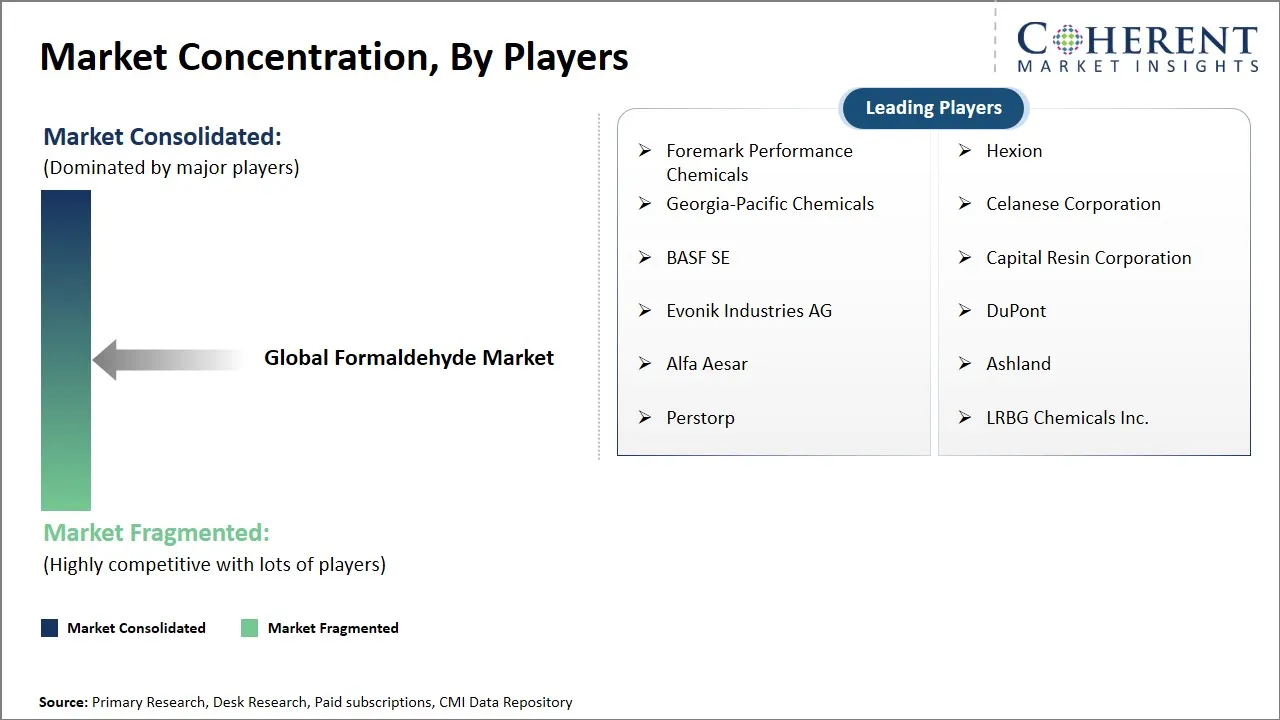
| Companies covered: | Foremark Performance Chemicals, Hexion, Georgia-Pacific Chemicals, Celanese Corporation, BASF SE, Capital Resin Corporation, Evonik Industries AG, DuPont, Alfa Aesar, Ashland, Perstorp, and LRBG Chemicals Inc. | ||
| Growth Drivers: |
| ||
| Restraints & Challenges: |
| ||
Formaldehyde Market
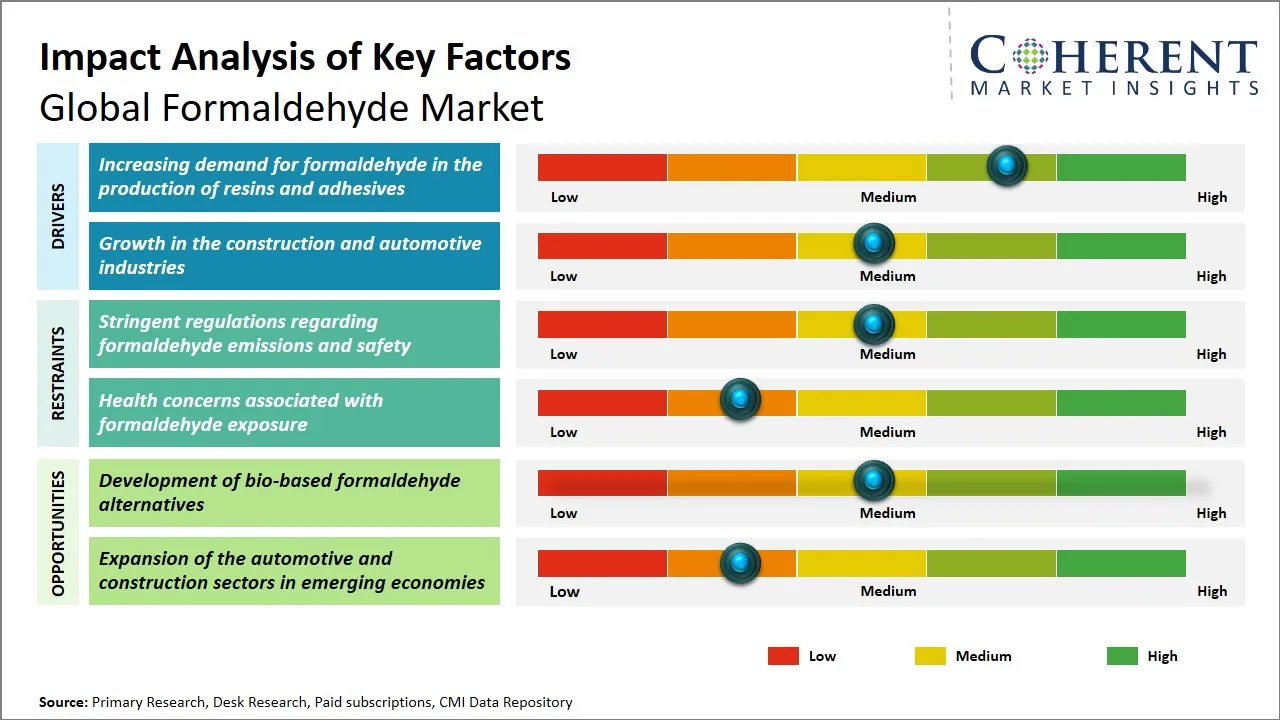
Formaldehyde Market Driver - Increasing Demand for Formaldehyde in the Production of Resins and Adhesives
The main factor behind the rising demand for formaldehyde is its imperative necessity in the manufacture of resins and adhesives, which are part of many industries, including construction, automotive, and furniture industries. Resins made of formaldehyde, such as urea formaldehyde resin, phenol-formaldehyde resin, and melamine-formaldehyde resin are valued in their great bonding ability, durability as well as economy.
These resins find wide application in the manufacture of wood products such as plywood, particleboard and MDF that are critical elements in the contemporary construction and furnishing industry. Also, formaldehyde-based adhesives provide better chemical resistance and thermal stability to improve the performance of a product.
An example of industrial adoption includes Hexion Inc., which supplies UF and PF resins to global panel manufacturers, while BASF SE produces formaldehyde-based adhesives used in automotive interiors for enhanced chemical and thermal stability. Moreover, the Asia Pacific construction boom, particularly in China and India, has driven significant demand for engineered wood products, directly boosting the need for formaldehyde-derived resins.
Formaldehyde Market Opportunity - Development of Bio-Based Formaldehyde Alternatives
The emerging environmental issues, aggressive regulatory systems on the emissions of formaldehyde offer a great opportunity in developing and commercializing bio-based alternatives of formaldehyde in the world market of formaldehyde. The conventional formaldehyde, which is mainly obtained using fossil fuels, is under more scrutiny now that it is classified as a carcinogen and it has adverse effects on the environment. This has spurred the research and innovation processes that have led to the development of sustainable and bio-based alternatives based on renewable resources, including lignocellulosic biomass, agricultural residues, and algae.
These bio-based alternatives are not only minimizing the reliance on petrochemical raw materials, but also providing reduced carbon footprints and enhanced biodegradability which is in line with the rising demand of end-use products that require environment friendliness in various sectors of the industry such as construction, automotive as well as custom furniture manufacturing.
For instance, Stora Enso’s NeoLigno is a formaldehyde-free, lignin-based binder launched in 2023 as a sustainable alternative for wood-based panels, achieving bonding performance comparable to PF resins. Similarly, Henkel AG has invested in developing bio-based adhesive systems using renewable raw materials for furniture and packaging applications.
Analyst Opinion (Expert Opinion)
- Formaldehyde margins will be pegged on compliance-based resin upgrades and methanol volatility and therefore, those that tie captive methanol or paraformaldehyde with low-emission UF/MUF/PF portfolios and in-line emissions analytics will be winners.
- This can be seen through the retrofit of panel mills with continuous UF reactors, and scavenger dosing in order to achieve a premium offtake with flooring/cabinetry OEMs, and the commodity bulk sellers are compelled. Foresee mix shift to higher value MUF/PF in exterior MDF/plywood and foundry binders, as well as paraformaldehyde pull away agro-actives and MTO derivatives. The procurement should lock contracts indexed by methanol with floor/ceiling bands; a P&L leak is spot exposure.
- Panel OEM case studies at Interzum and LIGNA indicate a 5-8 percent saving following adhesive reformulations and press cycle optimization; the European Wood-Based Panel Symposium and Formacares technical meetings are moving towards agreeable chamber processes and ultra-low-emission grades, which foment spec churn.
- Watch initial lignin-phenol replacement/glyoxal co-reactant pilots: not scale ready with mass interior boards, but already LEED/BREEAM bids already. Net sell certified low-emission systems, integrate feedstocks, bundle testing services and you grow GDP and de-risk regulation.
Speak to the analyst
Want personalized insights?
Take the findings above to one of our principal consultants, or have the report rebuilt around the segments, geographies and competitors you actually track.
Market Segmentation
- Derivatives Insights (Revenue, USD Mn, 2021 - 2033)
- Urea Formaldehyde (UF)
- Phenol Formaldehyde (PF)
- Polyacetal Resins
- Melamine formaldehyde (MF)
- Pentaerythritol
- Methylenebis(4-phenyl isocyanate) (MDI)
- 1,4-butanediol
- Other Derivatives
- End-use Insights (Revenue, USD Mn, 2021 - 2033)
- Building & Construction
- Furniture
- Automotive
- Agriculture
- Healthcare
- Oil & Gas
- Textile
- Water Treatment
- Cleaning Products
- Other End-Uses
- Regional Insights (Revenue, USD Mn, 2021 - 2033)
- North America
- U.S.
- Canada
- Latin America
- Brazil
- Argentina
- Mexico
- Rest of Latin America
- Europe
- Germany
- U.K.
- Spain
- France
- Italy
- Russia
- Rest of Europe
- Asia Pacific
- China
- India
- Japan
- Australia
- South Korea
- ASEAN
- Rest of Asia Pacific
- Middle East
- GCC Countries
- Israel
- Rest of Middle East
- Africa
- South Africa
- North Africa
- Central Africa
- North America
- Key Players Insights
- Foremark Performance Chemicals
- Hexion
- Georgia-Pacific Chemicals
- Celanese Corporation
- BASF SE
- Capital Resin Corporation
- Evonik Industries AG
- DuPont
- Alfa Aesar
- Ashland
- Perstorp
- LRBG Chemicals Inc.
Sources
Primary Research Interviews
- R&D Director – Leading Formaldehyde Manufacturing Company
- Procurement Manager – Major Industrial Chemical Retailer
- Product Development Head – Well-Known Formaldehyde Resin Brand
- Sustainability Manager – Chemical Safety and Certification Body
Stakeholders
- Manufacturers of Formaldehyde and Related Resins
- End-use Sectors
- Construction (Resins for adhesives, laminates)
- Textile and Furniture (Binders and finishes)
- Automotive and Electronics (Components and coatings)
- Industrial Chemicals (Intermediate for various chemicals)
- Regulatory & Certification Bodies
- Chemical Distributors and Retailers
- Technology Integration Players: Process automation and safety technology providers
Databases
- UN Comtrade Database
- India Import Export (EXIM) Database
Magazines
- Chemical Weekly – Market trends and production updates in formaldehyde
- Industrial Chemicals Monitor – Innovations and applications of formaldehyde
- Global Chemical Insights – Industry health and safety trends for formaldehyde
- Resins and Adhesives Journal – Formulation advancements involving formaldehyde resins
Journals
- Journal of Industrial Chemistry – Advances in formaldehyde chemistry and applications
- Chemical Safety Journal – Health and environmental impact studies of formaldehyde
- Journal of Applied Polymer Science – Use of formaldehyde in resin and polymer technologies
- Environmental Science & Technology – Formaldehyde emissions and control technologies
Newspapers
- The Financial Times – Economic impact and market growth of formaldehyde products
- The Guardian – Regulatory developments affecting industrial chemical markets including formaldehyde
- Asia Chemical Journal – Growth patterns of formaldehyde production in Asia-Pacific
- European Chemical News – Formaldehyde regulation and safety policy updates
Associations
- American Chemical Society (ACS)
- European Chemicals Agency (ECHA)
- International Formaldehyde Producers Association (IFPA)
- Chemical Safety Board (CSB)
- Occupational Safety and Health Administration (OSHA)
Public Domain Sources
- U.S. Environmental Protection Agency (EPA) – Guidelines and regulations on formaldehyde emissions
- European Commission – REACH regulations relevant to formaldehyde
- World Health Organization (WHO) – Health standards and risk assessments for formaldehyde exposure
- Organization for Economic Co-operation and Development (OECD) – Safety and environmental impact assessments for formaldehyde
Proprietary Elements
- CMI Data Analytics Tool, Proprietary CMI Existing Repository of information for last 8 years.
Get access to 250+ pages report
Every segment, forecast, competitor profile and data table behind the analysis above — available for instant download.
- ESOMAR Member
- ISO 9001:2015 Certified
- D-U-N-S Registered
- GDPR & CCPA Compliant
Missing comfort of reading report in your local language? Find your preferred language:
Transform your Strategy with Exclusive Trending Reports
Frequently Asked Questions
The global formaldehyde market is estimated to be valued at USD 9,953.8 Mn in 2026 and is expected to reach USD 15,552.79 Mn by 2033.
The CAGR of global formaldehyde market is projected to be 8.0% from 2026 to 2033.
Increasing demand for formaldehyde in the production of resins and adhesives and growth in the construction and automotive industries are the major factors driving the growth of the global formaldehyde market.
Stringent regulations regarding formaldehyde emissions and safety and health concerns associated with formaldehyde exposure are the major factors hampering the growth of the global formaldehyde market.
In terms of derivatives, Urea Formaldehyde (UF) is estimated to dominate the market revenue share in 2026.
Foremark Performance Chemicals, Hexion, Georgia-Pacific Chemicals, Celanese Corporation, BASF SE, Capital Resin Corporation, Evonik Industries AG, DuPont, Alfa Aesar, Ashland, Perstorp, and LRBG Chemicals Inc. are the major players.
Asia Pacific is expected to lead the global formaldehyde market in 2026.