Schedule a meeting with report Author
GENE EDITING MARKET SIZE AND SHARE ANALYSIS - GROWTH TRENDS AND FORECASTS (2025-2032)
Gene Editing Market, By Product (Kits, Reagents, and Software), By Technology (Clustered Regularly Interspaced Short Palindromic Repeats (CRISPR), Transcription Activator-Like Effector Nuclease (TALEN), ZFN (Zinc Finger Nucleases), Meganucleases, Prime Editing, and Others (PiggyBac, etc.)), By Application (Cell Line Engineering, Genetic Engineering, Drug Discovery, Clinical Diagnostics, Xenotransplantation, and Agriculture), By End User (Pharmaceutical and Biotechnology Companies, Academic and Research Institutes, Contract Research Organizations (CROs), Diagnostic Companies, and Others), By Geography (North America, Latin America, Europe, Asia Pacific, Middle East & Africa)
- Published In : 22 Dec, 2025
- Code : CMI7741
- Page number : 151
- Formats :
Excel and PDF
- Industry : Biotechnology
- Historical Range : 2020 - 2024
- Base Year : 2025
- Estimated Year : 2026
- Forecast Period : 2025-2032
Gene Editing Market Size and Trends – 2025 to 2032
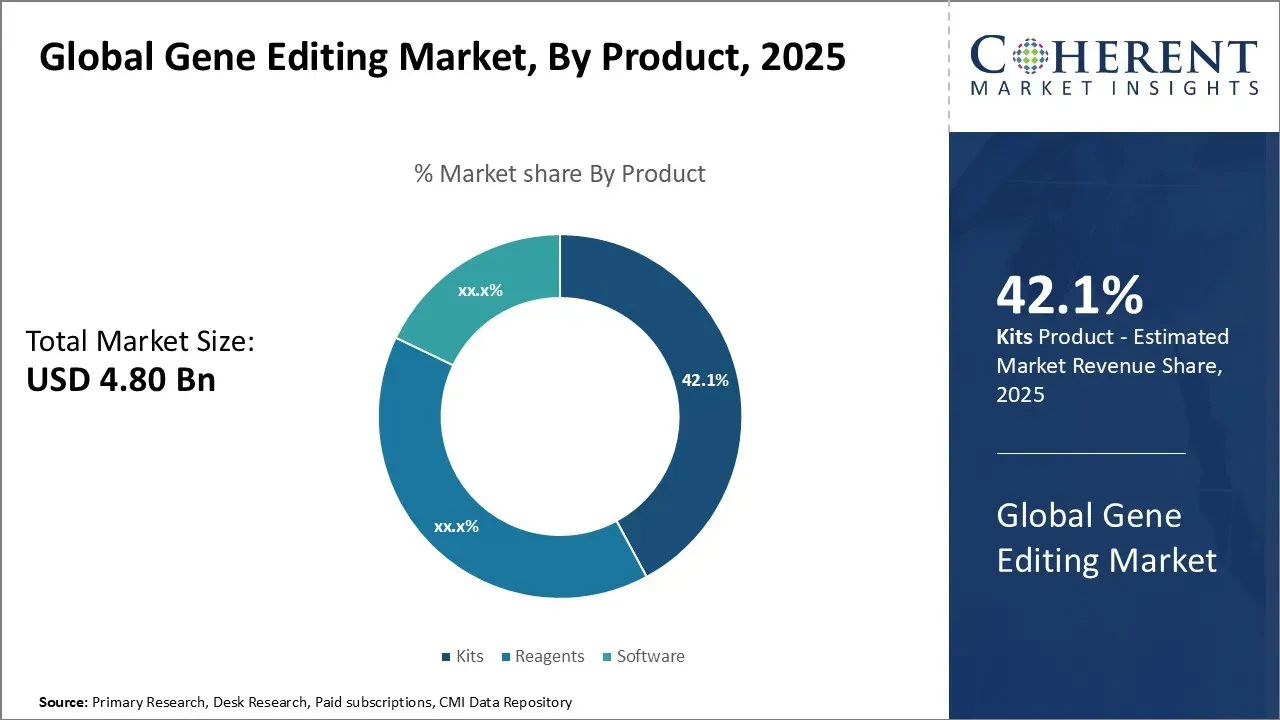
The Global Gene Editing Market is estimated to be valued at USD 4.80 Bn in 2025 and is expected to reach USD 9.51 Bn by 2032, exhibiting a compound annual growth rate (CAGR) of 10.2% from 2025 to 2032.
Key Takeaways of the Gene Editing Market
- By product, the kits segment is expected to contribute the highest share of the market with 42.1% in 2025.
- By technology, the Clustered Regularly Interspaced Short Palindromic Repeats (CRISPR) segment is expected to contribute the highest share of the market with 34.2% in 2025.
- By application, the cell line engineering segment is expected to contribute the highest share of the market with 41.2% in 2025.
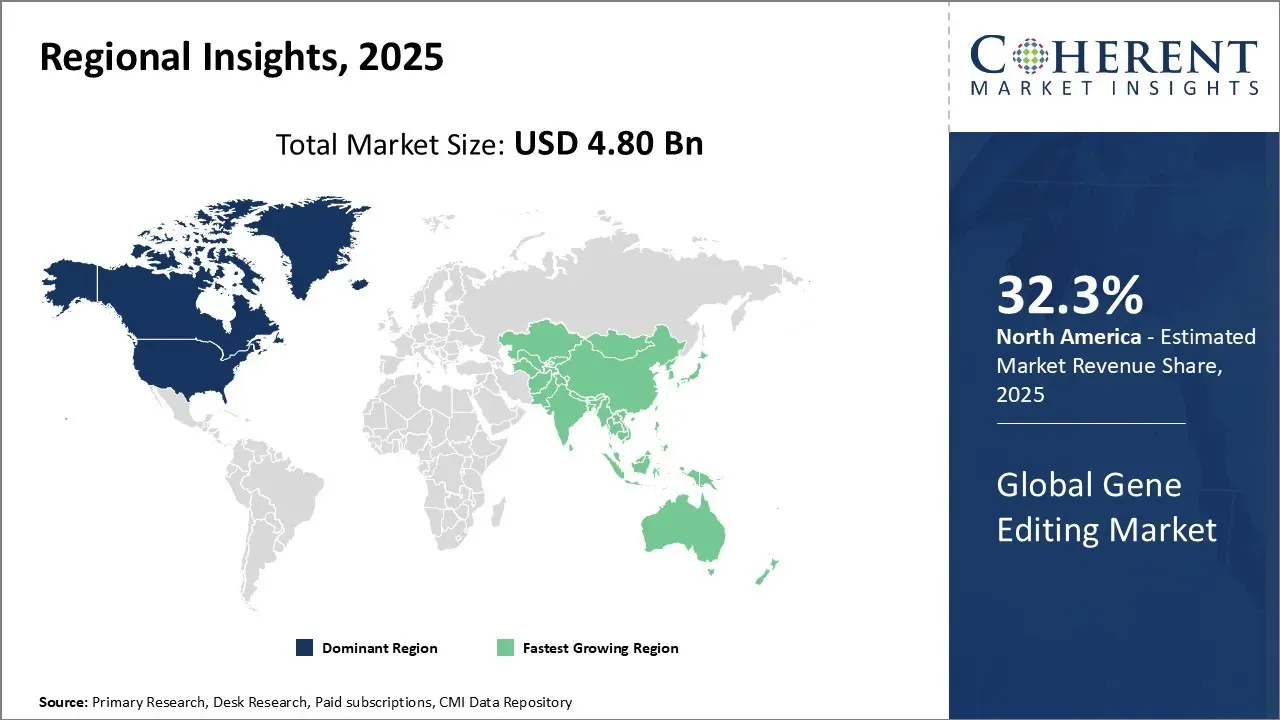
- North America is projected to top the global market with 32.3% share in 2025, followed by Asia Pacific with 26.6% share in 2025.
Market Overview
The gene editing market is expected to witness high growth due to increasing investments from both private and public sectors. There is a rising focus on developing therapies for various genetic diseases along with their commercial applications in the biotechnology and agriculture industries worldwide. Advanced technologies, such as CRISPR/Cas9, have provided opportunities to manipulate DNA with high precision. Growing application areas such as genetic engineering in crops is another factor supporting the use of gene editing. However, strict regulations for their clinical usage could pose a challenge for market growth to some extent.
Current Events and its Impacts on the Gene Editing Market
|
Current Event |
Description and its Impact |
|
CRISPR Patent Disputes and Intellectual Property Wars |
|
|
Regulatory Framework Evolution and Clinical Trial Developments |
|
Uncover macros and micros vetted on 75+ parameters: Get instant access to report
Top Investors & Companies in Gene Editing
|
Company / Startup |
Country |
Funding Raised |
Focus Area |
|
Intellia Therapeutics |
USA |
$1.5B |
CRISPR-Cas9 therapies for rare diseases and in vivo editing |
|
Beam Therapeutics |
USA |
$1.2B |
Base editing technology for precision DNA changes |
|
CRISPR Therapeutics |
Switzerland/USA |
~$1B+ |
Developer of Casgevy, the first approved CRISPR therapy |
|
Editas Medicine |
USA |
~$900M |
Gene editing for ocular and blood disorders |
|
Caribou Biosciences |
USA |
~$500M |
Oncology-focused CRISPR therapies |
|
Mammoth Biosciences |
USA |
~$300M |
CRISPR diagnostics and therapeutics |
|
AAVantgarde Bio |
Italy |
$206M |
Gene therapy for retinal diseases |
Uncover macros and micros vetted on 75+ parameters: Get instant access to report
Gene Editing Market Insights, By Product: Being Versatile Tools for Targeted Genome Manipulation, Kits Drive Adoption
In terms of product, the kits segment is expected to contribute the highest share of the market with 42.1% in 2025 owing to their ease of use and versatility. Gene editing kits provide researchers with all the necessary components and optimized protocols for performing genome edits in a wide range of cell and model organism types. The modular nature of kits allows them to be tailored for specific editing techniques like Clustered Regularly Interspaced Short Palindromic Repeat (CRISPR), Transcription Activator-Like Effector Nucleases TALENs, or Zinc Finger Nucleases (ZFNs).
This helps lower the barrier to entry for labs seeking to introduce genome editing capabilities without extensive protocol optimization. Certain "all-in-one" kits have streamlined the process further by integrating nuclease expression vectors, repair templates, and selection markers. The availability of pre-designed and validated CRISPR guide RNA libraries targeting model organisms is another driver of kit adoption. Kits are attractive for their consistency and reproducibility relative to assembling components separately.
For instance, in November 2025, India launched with its own gene-editing tools, like a small TnpB-based tool for farming and BIRSA 101, a CRISPR treatment for sickle cell disease. These improvements make it less necessary to rely on foreign patents, lower costs, and make Atmanirbhar Bharat stronger in biotechnology. This guarantees that healthcare and crop improvement solutions are affordable and independent.
Gene Editing Market Insights, By Technology: A Revolution in Precision, CRISPR Leads Technology Uptake
In terms of technology, the Clustered Regularly Interspaced Short Palindromic Repeats (CRISPR) segment is expected to contribute the highest share of the market with 34.2% in 2025 owing to its unparalleled ease of use and versatility. Since the discovery that CRISPR elements could be repurposed for genome editing, it has revolutionized the field due to the simplicity of its editing mechanism. Researchers can create custom nucleases by fusing a CRISPR-associated protein to a short guide RNA strand designed to target a site of interest. This has advantages over older technologies like ZFNs and TALENs which require more complex engineering of DNA-binding domains. CRISPR also supports more flexible multiplexing through the use of several guides, enabling applications like knocking out whole gene families.
For instance, in May 2025, the Children's Hospital of Philadelphia was the first place in the world to use personalized CRISPR gene-editing therapy on a patient. This breakthrough focuses on certain genetic mutations, making it possible to treat rare diseases with precision medicine. It is a historic step in using CRISPR outside of research, showing that it could change how patients are treated by correcting their genes in a way that is unique to them.
Gene Editing Market Insights, By Application: Cell Line Engineering Evolved as a Booming Field for Target Discovery and Validation
In terms of application, the cell line engineering segment is expected to contribute the highest share of the market with 41.2% in 2025 driven by the demand for tailored cellular platforms. As biotech enters an era focused on modality translation like cell and gene therapy, engineered cell lines play a central role across drug discovery and manufacturing platforms. Genome editing has transformed cell line development by enabling targeted modifications to accelerate the isolation of high-producing clones previously achievable only through serial random mutagenesis. It supports rational modification of cellular phenotypes including enhanced growth, productivity, protein folding, and secretion. Knock-in of fluorescent or selectable reporters is streamlining clone screening. CRISPR in particular has accelerated the development of isogenic cell panel models for validatory assays.
For instance, in November 2025, using cutting-edge gene editing technology, ReproCELL created StemEdit Hypoimmune hiPSC lines. These stem cells have been modified so that the immune system does not reject them. This makes transplantation safer and moves regenerative medicine forward. The innovation helps with finding new drugs, modeling diseases, and therapeutic uses. It suggests that gene editing can change healthcare and biotechnology in ways other than CRISPR.
Regional Insights
To learn more about this report, Download Free Sample
North America Gene Editing Market Trends
North America’s dominance in the gene editing market with an estimated share of 32.3% in 2025 can be attributed to robust research infrastructure and the presence of major market players in the region. Countries like the U.S. have consistently increased funding for genomics research over the years, establishing the region as a global leader in developing advanced gene editing techniques.
Asia Pacific Gene Editing Market Trends
The Asia Pacific region is expected to exhibit the fastest growth with an estimated share of 26.6% in 2025, led by China, Japan, and India. Significant government investments to strengthen indigenous R&D capabilities and a large patient population are driving clinical applications of gene editing technologies. Countries like China have emerged as global innovation hubs, with companies developing novel solutions tailored for the local market.
For instance, in November 2025, GenEditBio and ToolGen made a strategic cross-license agreement to speed up the development of genome editing therapies. The partnership's main goal is to move CRISPR-based innovations and other editing platforms forward by combining their knowledge and intellectual property. Their goal is to work together to create safe and effective treatments for genetic diseases, which can enhance therapeutic uses across Asia-Pacific and beyond.
Gene Editing Market Outlook for Key Countries
U.S. Gene Editing Market Trends
The U.S. leads the gene editing market, driven by robust growth in the pharmaceutical and biotechnology sectors. Key factors such as technological advancements in genome editing, increasing product approvals, and heightened research and development activities contribute to the region's market dominance.
For instance, in November 2025, the first-ever CRISPR gene editing trial on humans safely lowered cholesterol and triglycerides by turning off the ANGPTL3 gene. The therapy was done in the United States and showed big drops in lipids without any major safety issues. This breakthrough shows how CRISPR could change the ability to treat heart disease by making precise, permanent genetic changes to metabolic pathways.
Canada Gene Editing Market Trends
Canada plays a significant role in driving the global gene editing market due to its advanced research infrastructure, government support, and focus on addressing rare genetic disorders. For instance, according to the April 2024 updated data of McGill University, the increasing prevalence of conditions such as Huntington's disease, which affects approximately 1 in 7,000 people in Canada, underscores the need for advanced therapeutic solutions.
For instance, in September 2024, Health Canada approved for Casgevy, the first CRISPR-Cas9 gene-edited therapy, to treat sickle cell disease and beta thalassemia that needs blood transfusions. Casgevy fixes genetic problems by editing patients' stem cells. This is a one-time treatment option. This is an important milestone for Canada into CRISPR-based medicine, which gives hope to people with serious inherited blood disorders.
U.K. Gene Editing Market Trends
The U.K. is a key driver of the global gene editing market due to its strong focus on genetic research and innovation, supported by government and institutional initiatives. For instance, in December 2025, UCL was the first in the world to use base-edited gene therapy to treat blood cancer that had never been able to be cured before. This advanced method makes precise changes to single letters in DNA without cutting strands, and it also makes immune cells that can fight disease. It was performed in the UK and is an important advancement forward in using next-generation gene editing on people.
Germany Gene Editing Market Trends
The Germany gene editing market achieved substantial revenue in Europe, driven by the presence of leading global companies like Merck KGaA and QIAGEN, which provide genome editing products and services. Collaborative partnerships and strategic alliances among key players have bolstered their market presence both nationally and internationally, contributing to the country's revenue growth.
For instance, in December 2025, Researchers at the Max Planck Institute found that common drugs can change the results of CRISPR gene editing. This discovery indicates that drug interactions could affect the accuracy and safety of precision cancer treatments. To make sure that CRISPR-based therapies work and that patients get the results they expect, it is important to understand these effects.
Market Players, Key Development, and Competitive Intelligence
To learn more about this report, Download Free Sample
Key Developments
- In December 2025, ICAR has started editing the genomes of 24 field crops and 17 horticultural crops to make them more resistant to disease, climate change, and higher yields. The program's goal is to create better crop varieties using CRISPR-Cas9 and other tools. This is a big step forward for India's agricultural biotechnology and for gene editing around the world.
- In December 2024, Editas Medicine, a gene editing company, announced a strategic shift to focus entirely on in vivo gene editing, optimizing its cost structure and extending its cash runway into Q2 2027. The company aims to achieve in vivo human proof of concept within two years.
- In January 2024, Danaher Corporation, a global leader in life sciences and diagnostics, partnered with the Innovative Genomics Institute (IGI) to advance CRISPR-based therapies for rare genetic disorders by combining Danaher’s technological capabilities with IGI’s academic expertise.
- In November 2023, Cellectis, a pioneer in gene-editing solutions, and AstraZeneca, a global biopharmaceutical company, announced a collaboration to accelerate therapeutic advancements in oncology and immunology
- In July 2023, Sangamo Therapeutics, a leader in genomic medicines, joined forces with Chroma Medicine, a biotechnology company, to develop epigenetic therapies using Sangamo's Zinc Finger Proteins (ZFPs). Chroma will explore ZFPs for targets beyond the central nervous system with potential licensing opportunities.
Market Report Scope
Gene Editing Market Report Coverage
| Report Coverage | Details | ||
|---|---|---|---|
| Base Year: | 2024 | Market Size in 2025: | USD 4.80 Bn |
| Historical Data for: | 2020 To 2024 | Forecast Period: | 2025 To 2032 |
| Forecast Period 2025 to 2032 CAGR: | 10.2% | 2032 Value Projection: | USD 9.51 Bn |
| Geographies covered: |
|
||
| Segments covered: |
|
||
| Companies covered: |
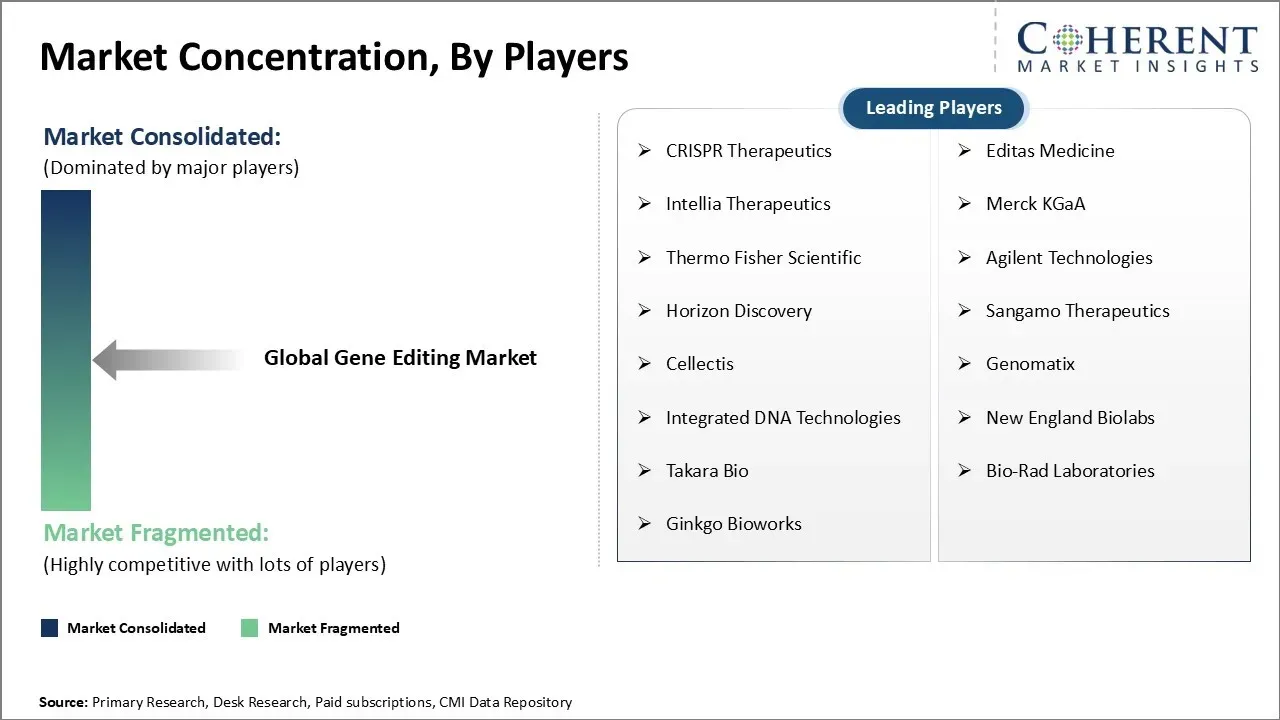
CRISPR Therapeutics, Editas Medicine, Intellia Therapeutics, Merck KGaA, Thermo Fisher Scientific, Agilent Technologies, Horizon Discovery, Sangamo Therapeutics, Cellectis, Genomatix, Integrated DNA Technologies, New England Biolabs, Takara Bio, Bio-Rad Laboratories, and Ginkgo Bioworks |
||
| Growth Drivers: |
|
||
| Restraints & Challenges: |
|
||
Uncover macros and micros vetted on 75+ parameters: Get instant access to report
Market Dynamics
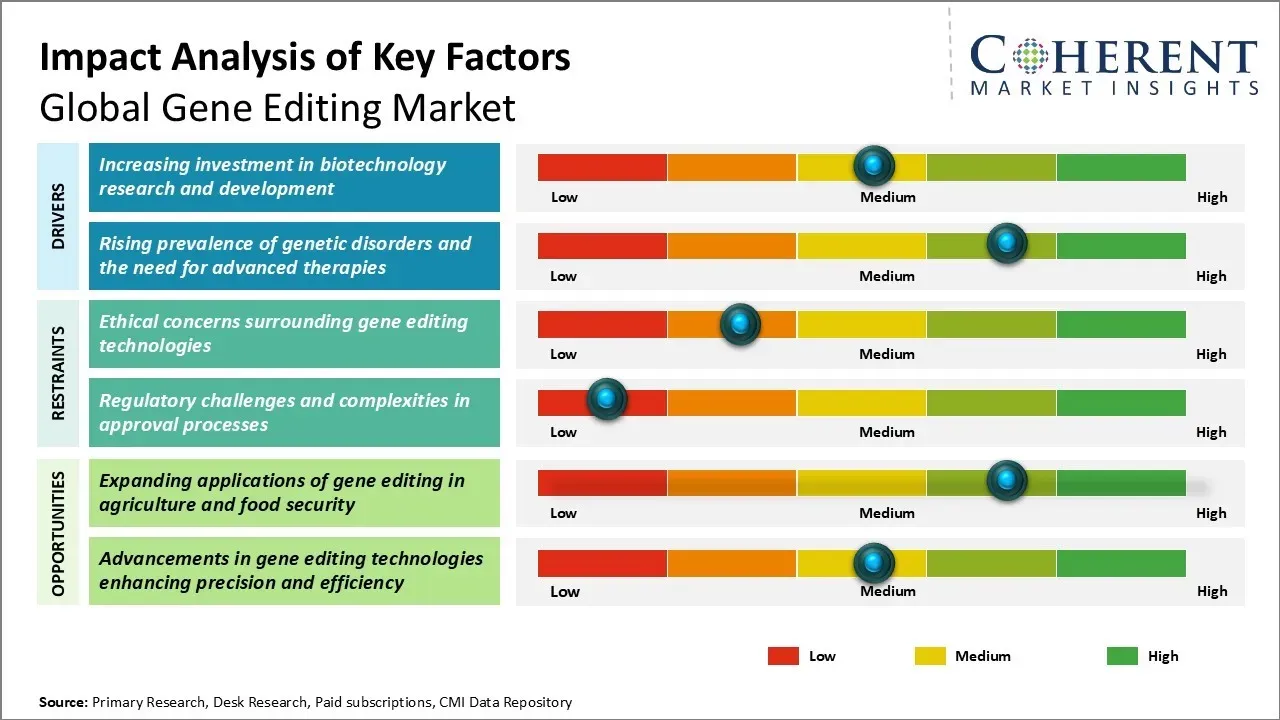
To learn more about this report, Download Free Sample
Gene Editing Market Driver
Rising prevalence of genetic disorders and the need for advanced therapies
A key market driver has been the growing burden of genetic diseases worldwide. Some of the common genetic conditions include cystic fibrosis, sickle cell disease, Duchenne muscular dystrophy, and several types of cancer. Their prevalence has been steadily increasing with the changing demographics as well as rising awareness levels among people. Conventional forms of treatment available are limited and do not effectively address the root cause of such inherited diseases. Gene editing holds promise for developing potential cures by directly modifying the defective genes responsible.
|
Disorders |
Prevalence / Impact (2025) |
|
Sickle Cell Disease |
~100,000 Americans affected |
|
Sickle Cell Trait |
1 in 12 African Americans |
|
Tay-Sachs Disease |
1 in 25 Ashkenazi Jews are carriers |
|
Cystic Fibrosis |
1 in 29 Caucasians are carriers |
|
Huntington’s Disease |
3–7 per 100,000 globally |
|
Mitochondrial Disorders |
1 in 5,000–8,000 individuals worldwide |
|
Inborn Errors of Metabolism |
~9,000 newborns diagnosed annually in U.S. |
|
Infant Mortality |
Genetic disorders account for ~20% in developed countries |
|
Intellectual Disability |
>50% of severe cases due to de novo mutations |
|
Rare Genetic Diseases |
Identified conditions increased tenfold in 30 years |
Uncover macros and micros vetted on 75+ parameters: Get instant access to report
Gene Editing Market Opportunity
How will gene editing expand in agriculture and food security?
One of the major opportunities for the global gene editing market lies in the expanding applications of gene editing in the agriculture and food security sectors. Gene editing technologies allow more precise modifications of plant genomes compared to traditional methods and can help address many challenges relating to crop yields, resilience to climate change, and disease resistance. This can play a key role in sustainably meeting the growing demands for food of the rising global population. By modifying crops to be more nutritious, beneficial traits can also be imparted which can help address issues relating to malnutrition. Furthermore, gene editing also enables more efficient breeding of livestock with improved productivity and disease resistance. As more commercialized applications emerge in coming years, it has the potential to significantly boost farm incomes and enhance global food security, creating extensive growth opportunities for players in the gene editing market.
Analyst Opinion (Expert Opinion)
- The global gene editing market has significant growth potential over the next decade driven by increasing R&D investments from biotech and pharmaceutical companies. North America currently dominates the market due to the presence of major players and growing funding for genetic disorder research. However, Asia Pacific is expected to emerge as the fastest growing region with improving healthcare infrastructure and supportive government policies from countries like China and India. Some key opportunities in the market include the development of advanced gene editing tools like CRISPR for treating various genetic conditions. Successful clinical trials and approval of gene therapies will further spur market revenues.
- Regulatory hurdles and ethical concerns regarding human germline modifications remain major challenges especially in developed markets of Europe and North America. High product development costs and requirement of lengthy approval timelines may restrain initial commercialization of advanced therapies. Overall, gene editing technology promises to revolutionize disease treatment and offer life-changing benefits if commercial adoption challenges are systematically addressed.
Market Segmentation
- Product Insights (Revenue, USD Bn, 2025 - 2032)
- Kits
- Reagents
- Software
- Technology Insights (Revenue, USD Bn, 2025 - 2032)
- Clustered Regularly Interspaced Short Palindromic Repeats (CRISPR)
- Transcription Activator-Like Effector Nuclease (TALEN)
- ZFN (Zinc Finger Nucleases)
- Meganucleases
- Prime Editing
- Others (PiggyBac, etc.)
- Application Insights (Revenue, USD Bn, 2025 - 2032)
- Cell Line Engineering
- Genetic Engineering
- Drug Discovery
- Clinical Diagnostics
- Xenotransplantation
- Agriculture
- End User Insights (Revenue, USD Bn, 2025 - 2032)
- Pharmaceutical and Biotechnology Companies
- Academic and Research Institutes
- Contract Research Organizations (CROs)
- Diagnostic Companies
- Others
- Regional Insights (Revenue, USD Bn, 2025 - 2032)
- North America
- U.S.
- Canada
- Latin America
- Brazil
- Argentina
- Mexico
- Rest of Latin America
- Europe
- Germany
- U.K.
- Spain
- France
- Italy
- Russia
- Rest of Europe
- Asia Pacific
- China
- India
- Japan
- Australia
- South Korea
- ASEAN
- Rest of Asia Pacific
- Middle East
- GCC Countries
- Israel
- Rest of Middle East
- Africa
- South Africa
- North Africa
- Central Africa
- Key Players Insights
- CRISPR Therapeutics
- Editas Medicine
- Intellia Therapeutics
- Merck KGaA
- Thermo Fisher Scientific
- Agilent Technologies
- Horizon Discovery
- Sangamo Therapeutics
- Cellectis
- Genomatix
- Integrated DNA Technologies
- New England Biolabs
- Takara Bio
- Bio-Rad Laboratories
- Ginkgo Bioworks
Sources
Primary Research Interviews
- Gene Editing Technology Developers (CRISPR, TALEN, ZFN)
- Biotechnology & Genomics Companies
- Cell & Gene Therapy Manufacturers
- Academic Researchers & Molecular Biologists
- Clinical Research Organizations (CROs)
- Regulatory & Bioethics Experts
- Others
Databases
- Bloomberg Terminal
- Thomson Reuters Eikon
- IHS Markit
- PitchBook
- Crunchbase
- S&P Global Market Intelligence
- Others
Magazines
- Nature Biotechnology
- Genetic Engineering & Biotechnology News (GEN)
- BioWorld
- The Scientist
- Pharmaceutical Technology
- Others
Journals
- Nature
- Science
- Nature Genetics
- Cell
- CRISPR Journal
- Trends in Biotechnology
- Others
Newspapers
- Financial Times
- The Wall Street Journal
- Reuters
- Bloomberg News
- The New York Times
- Others
Associations
- American Society of Gene & Cell Therapy (ASGCT)
- International Society for Stem Cell Research (ISSCR)
- Biotechnology Innovation Organization (BIO)
- European Society of Gene & Cell Therapy (ESGCT)
- Human Genome Organisation (HUGO)
- Others
Public Domain Sources
- U.S. Food and Drug Administration (FDA)
- National Institutes of Health (NIH)
- World Health Organization (WHO)
- European Medicines Agency (EMA)
- National Center for Biotechnology Information (NCBI)
- gov
- Others
Proprietary Elements
- CMI Data Analytics Tool
- Proprietary CMI Existing Repository of Information for the Last 8 Years
Share
Share
About Author
Abhijeet Kale is a results-driven management consultant with five years of specialized experience in the biotech and clinical diagnostics sectors. With a strong background in scientific research and business strategy, Abhijeet helps organizations identify potential revenue pockets, and in turn helping clients with market entry strategies. He assists clients in developing robust strategies for navigating FDA and EMA requirements.
Missing comfort of reading report in your local language? Find your preferred language :
Transform your Strategy with Exclusive Trending Reports :
Frequently Asked Questions
EXISTING CLIENTELE
Joining thousands of companies around the world committed to making the Excellent Business Solutions.
View All Our Clients