

Global Gene Silencing Market Size and Forecast – 2026 to 2033
The global gene silencing market is estimated to be valued at USD 12.79 Bn in 2026 and is expected to reach USD 32.20 Bn by 2033, exhibiting a compound annual growth rate (CAGR) of 14.1% from 2026 to 2033. This significant growth is driven by advancements in genetic research, increasing prevalence of genetic disorders, and expanding applications of gene silencing technologies in therapeutics and agriculture.
Key Takeaways of the Global Gene Silencing Market
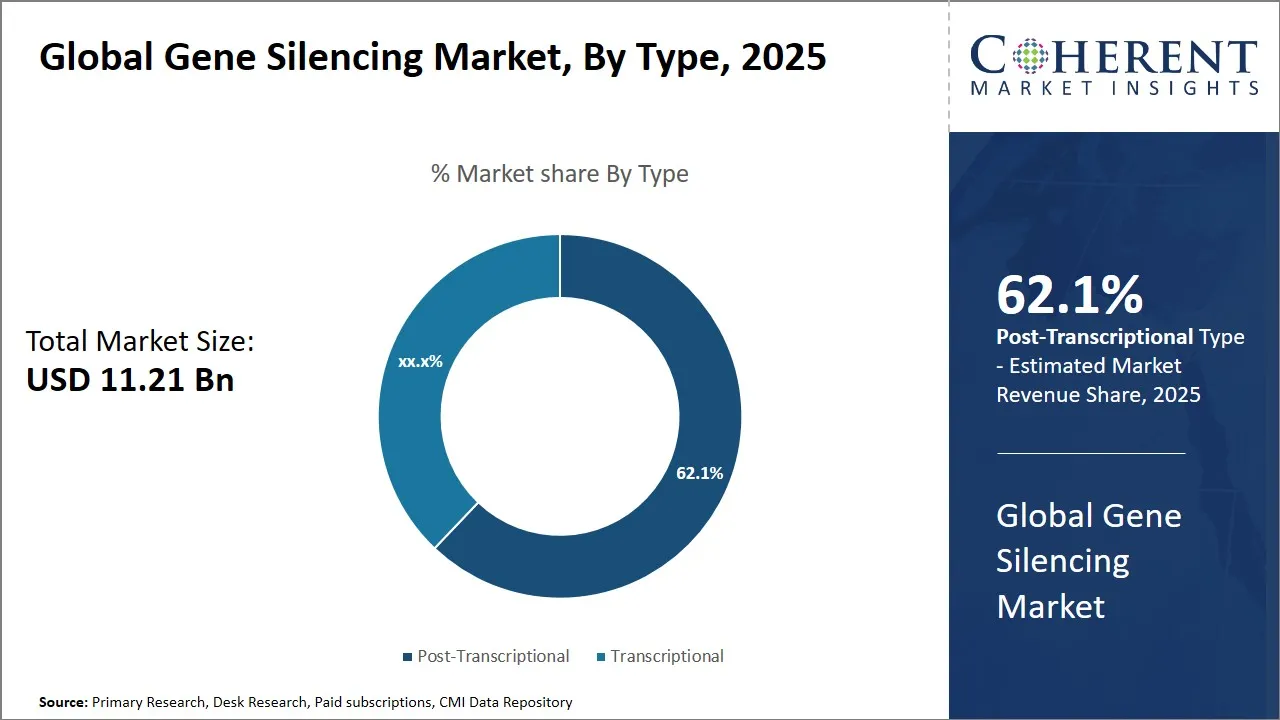
- Post-transcriptional segment is expected to capture 63.1 % of the gene silencing market share in 2026.
- The product (reagents, kits, instruments) segment is projected to hold the dominant position with 66.6 % of the market share in 2026.
- By application, functional genomics segment is projected to hold 36.9 % of the global gene silencing market share in 2026.
- North America is expected to lead the market, holding a share of 39.3 % in 2026. Asia Pacific is anticipated to be the fastest-growing region, with an estimated market share of 24.5% in 2026.
Market Overview
A key market trend is the integration of RNA interference (RNAi) and CRISPR-Cas9 technologies, enhancing the precision and efficiency of gene silencing methods. Additionally, growing investments in personalized medicine and biopharmaceutical research are fueling innovation and expanding the market scope. Increasing demand for targeted therapies in oncology and rare diseases further propels the market growth, positioning gene silencing as a pivotal tool in modern molecular medicine.
Current Events and Its Impact
Current Events | Description and its Impact |
Growth in Asia Pacific Biotechnology Investments and Collaborations |
|
Advancements in Delivery Technologies and RNAi Therapeutics |
|
Segmental Insights
- Current Industry Events of 2026
- Market Size Estimation
- Regional Breakdown
- Competitive Landscape
- Customer Intelligence
- Segmental Analysis
- Pricing Analysis
- Key Market Drivers, Challenges & Future Trends
- Customized Insights Section
Gene Silencing Market Insights, By Type - Post-Transcriptional Segment Dominates Driven by Versatility and Precision
The segmentation of the global gene silencing market by type shows that the post-transcriptional segment is going to be the largest segment in 2026 with an estimated share of 63.1%. This supremacy is mainly because of the factors that PTGS methods like RNA interference (RNAi) and small interfering RNA (siRNA) possess in regulating gene expression after the transcription phase very selectively.
For instance, Alnylam Pharmaceuticals is at the front of the commercial RNAi therapeutics market with siRNA drugs like ONPATTRO and GIVLAARI already on the market. Ionis Pharmaceuticals is working on that modification through its unique antisense oligonucleotide gene silencing platforms which are being applied in multiple rare disease programs. Sirnaomics is using nanoparticle delivery of its RNAi-based cancer and fibrosis drugs.
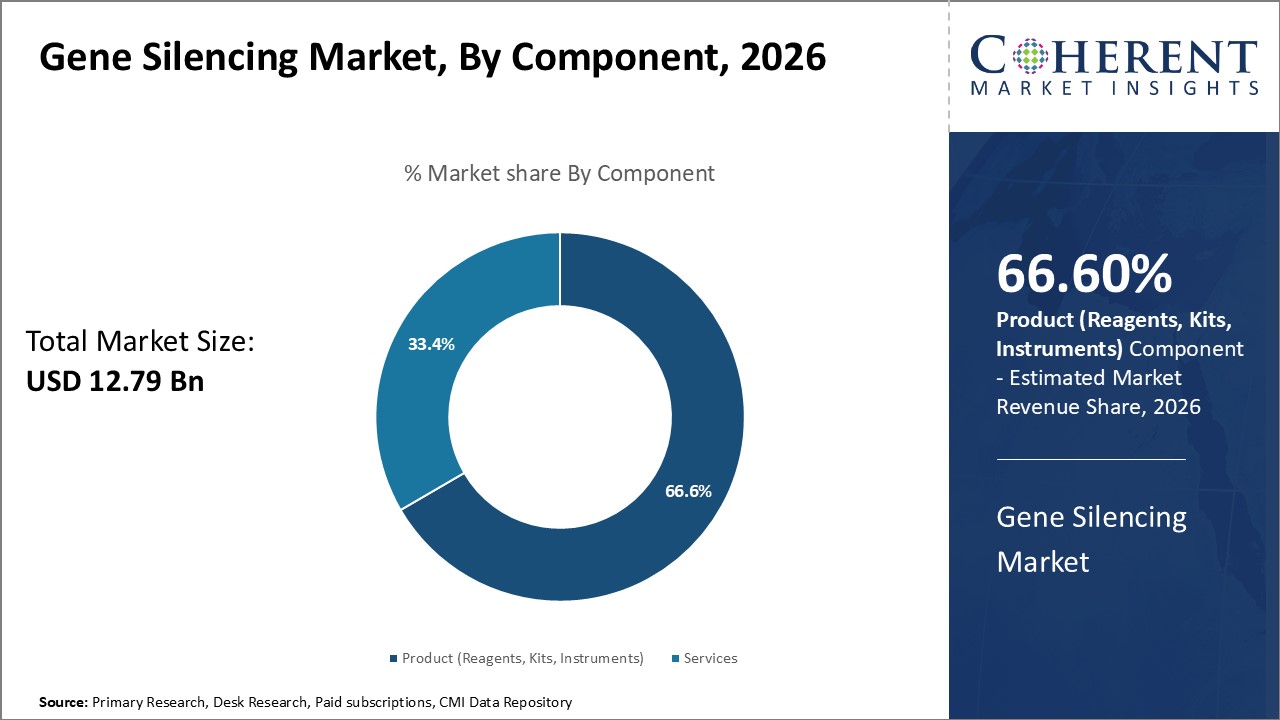
Gene Silencing Market Insights, By Component - Product (Reagents, Kits, Instruments) Segment Led by Growing Demand for Reagents and Kits in Research and Clinical Applications
The product (reagents, kits, instruments) segment is projected to account for 66.6% of the market share in 2026. This is the segment that is getting the most benefit from the overall increasing acceptance of gene silencing techniques in research labs worldwide, as well as the need for standardized, user-friendly, and reliable tools.
In effect, the reagents consist of siRNAs, shRNAs, and CRISPR-related components that are strongly demanded in molecular biology workflows, thus, having to constant supply and quality assurance. The rising acceptance of commercial kits encourages even laboratory technicians with limited experience to adopt the method as it simplifies the complicated experimental protocols.
Gene Silencing Market Insights, By Application - Functional Genomics Leads Applications Owing to Fundamental Role in Gene Function Elucidation
The functional genomics segment within the global gene silencing market is expected to capture 36.9% share in 2026. The leading position of gene silencing technique in the scientific field is mainly due to the fact that this process is the first step in the whole gene function study, making it possible for the scientists to discover and interpret the biological roles and interactions of certain genes in the system of cells and organisms.
Functional genomics is to a large extent based on gene knockdown methods to bring about the desired phenotypic outcome that the silencing of a gene suggests, which then automatically leads to the mapping of pathways, regulatory networks of genes, and mechanisms of diseases. The versatility of the method for both temporary and permanent suppression has made it appropriate for the use in a variety of model organisms including cell lines, mice, and zebrafish, thus, making it a useful tool in both basic and translational research.
Comparative Overview of Gene Silencing Techniques
Parameter | RNA Interference (RNAi) | CRISPR-Cas9 | CRISPR Interference (CRISPRi) |
Mechanism | Utilizes small interfering RNAs (siRNAs) to degrade target mRNA, preventing translation. | Employs a guide RNA to direct Cas9 nuclease to specific DNA sequences, enabling targeted gene editing. | Catalytically dead Cas9 (dCas9) is guided to gene promoters to inhibit transcription without inducing DNA breaks. |
Applications | Functional genomics, therapeutic gene silencing. | Gene knockout, functional genomics, potential therapeutic applications. | Reversible gene silencing, regulation of gene expression. |
Advantages | High specificity, reversible effects. | Permanent gene disruption, highly versatile applications. | Does not rely on double-stranded DNA breaks; tunable expression control. |
Limitations | Delivery challenges, potential off-target effects. | Ethical concerns, risk of off-target edits in the genome. | Requires careful guide design to avoid off-target binding and variable repression efficiency. |
Cost | Moderate | High (driven by research and development expenses). | High (due to development, construct optimization, and validation efforts). |
Regional Insights
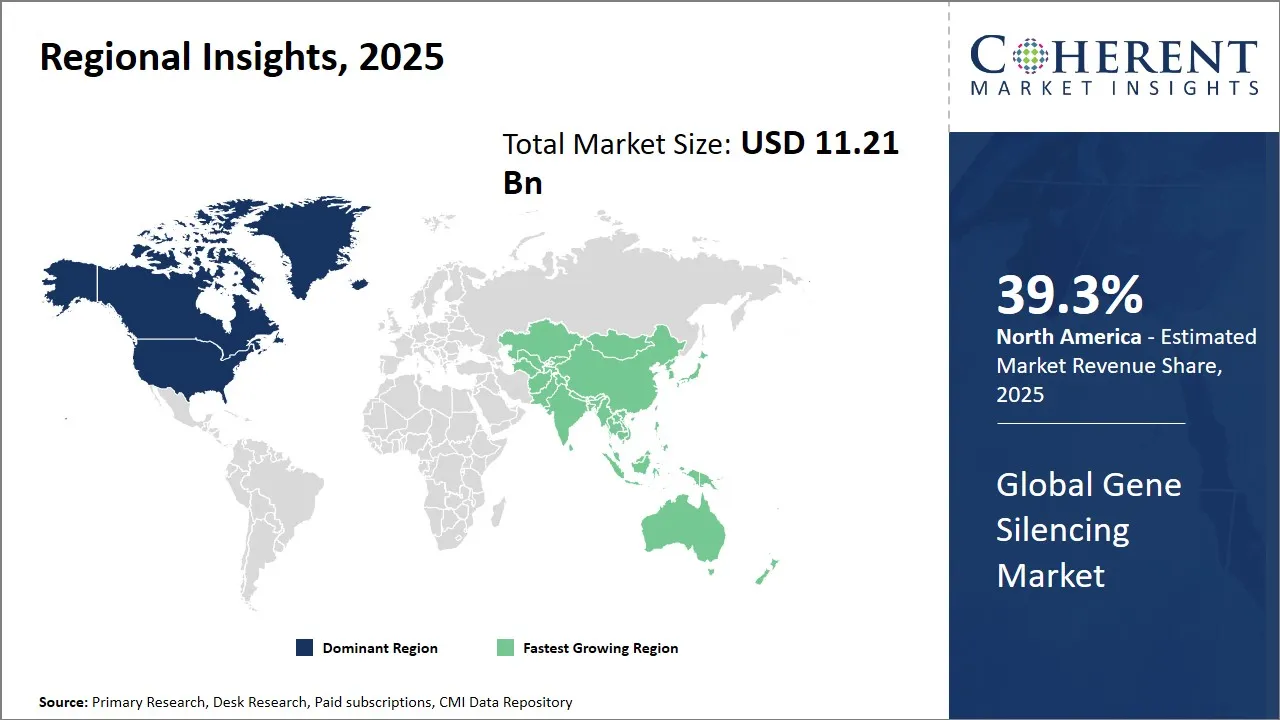
North America Gene Silencing Market Analysis and Trends
In North America, the dominance in the global gene silencing market stems from a robust market ecosystem encompassing advanced research infrastructure with an estimated share of 39.3% in 2026, a well-established biotechnology and pharmaceutical industry, and significant investments in genomic research. Government policies in the U.S. and Canada actively support innovation through funding initiatives such as the NIH’s focus on RNA interference (RNAi) and gene editing therapies.
The presence of leading biotech hubs, particularly in the U.S., facilitates collaboration between academia, healthcare, and industry, accelerating the development and commercialization of gene silencing therapeutics. Key companies such as Alnylam Pharmaceuticals, Ionis Pharmaceuticals, and Moderna have been pivotal in advancing RNAi therapeutics and gene silencing technologies.
Asia Pacific Gene Silencing Market Analysis and Trends
The Asia Pacific region is the fastest-growing region due to the development of healthcare infrastructure with an estimated market share of 24.5% in 2026, and the governments' encouragement of biotechnology through various initiatives, and finally, the rising investment in research and development. The countries like China, Japan, South Korea, and India are very much able to grow their biotech industries thanks to the regulations that are biotechnology and precision medicine friendly. This trend is further strengthened by the rise of CROs and plants, thereby making the market more attractive to investors.
In fact, the market is mainly driven by the big companies based in the area such as Takeda Pharmaceutical (Japan), Shanghai GenePharma (China), and Biocon (India), as they provide the market with gene silencing therapies specifically designed for the health issues of that region and also hold up large clinical trials.
Global Gene Silencing Market Outlook for Key Countries
U.S. Gene Silencing Market Trends
The U.S. gene silencing market is regarded as the center of innovation and is characterized by substantial venture capital investments and government support that is all encompassing. It is companies like Alnylam Pharmaceuticals that have taken the lead in the market by producing U.S. FDA-approved RNAi drugs for rare genetic disorders, thus forming the industry standard. The same goes for Ionis Pharmaceuticals whose antisense technology has resulted in a considerable therapeutic pipeline. The U.S. has a mature biotechnology industry with hospitals and clinics that are involved in clinical research and have advanced manufacturing technologies, which means it will always be the place where the new gene silencing drugs are developed and marketed.
In February 2026, Arrowhead Pharmaceuticals a U.S. RNAi drug developer launched new patient resources for Familial Chylomicronemia Syndrome on Rare Disease Day. The company expanded its We’ll Get There Soon campaign with an educational website and a white paper sharing patient experiences. The platform supports people with extremely high triglycerides and aims to improve diagnosis and community engagement.
Japan Gene Silencing Market Trends
Japan has been at the forefront of applying gene silencing technologies to medicine precision and rare diseases relieving patients' suffering. The well-established pharmaceutical company Takeda has invested a lot of money in RNA-based treatments, often in partnership with international biotech firms, and engaging in joint research aimed at enhancing therapeutic efficiency. The Japanese government further backs these activities through creating a more friendly regulatory environment that speeds up the approval process for new drugs and grants tax breaks for orphan drug development thus, keeping the country competitive in the Asia Pacific region.
For example, Alnylam Pharmaceuticals a global RNAi drug developer received Japanese approval for ONPATTRO the first RNAi therapy in Japan for hereditary ATTR amyloidosis with polyneuropathy. The drug will be directly marketed by Alnylam and is supported by APOLLO Phase 3 data and orphan designation granting priority review and long exclusivity.
India Gene Silencing Market Trends
India gene silencing market is progressing at a steady pace, which is marked by a growing number of biotech startups and CROs focused on genetic research. One of the Indian companies, Biocon, is systematically pushing the boundaries of RNA interference platforms to treat diseases that are geographically confined considering the country’s scientific and cost advantages. The market growth is also being driven by the government’s innovation-attracting policies and the increasing health care budgets. At the same time, the regulatory authorities are making the rules more compliant with the global standards thus creating a more favorable environment for the market players both domestic and international.
In October 2026, India reported two major biotech breakthroughs strengthening antibiotic and gene therapy leadership. The Department of Biotechnology a national biotech funding agency co-developed Nafithromycin with Wockhardt an Indian pharmaceutical manufacturer. The drug is India’s first fully indigenous antibiotic and targets resistant respiratory infections.
Germany Gene Silencing Market Trends
Germany is the leader in the European market for gene silencing mainly because of its academic research centers and the well-established pharmaceutical industry. The company BioNTech among others has included gene silencing technologies in its mRNA research as a part of its wider portfolio. The country contains all the factors needed for the market to develop like good intellectual property laws, solid healthcare infrastructure, and government subsidies that promote biotech startups.
In April 2026, Helmholtz Munich a leading German research center announced a new CRISPR method enabling gene activation without DNA or viruses. The team created dRNPs a protein-based system that avoids mutation risks and supports gene silencing research. The approach rapidly activates multiple genes in stem and primary cells and generates neurons from other cells.
Delivery Platform Adoption in the Gene Silencing Landscape
Dimension | Lipid Nanoparticles (LNPs) | Viral Vectors (AAV, Lentiviral, etc.) | Exosomes |
Primary Use in Gene Silencing | siRNA, miRNA, CRISPR–Cas RNP/mRNA delivery | shRNA, CRISPR constructs, stable expression cassettes | Experimental RNA/oligo and CRISPR cargo delivery |
Typical Stage of Use | Preclinical, early–mid clinical; some commercial RNAi drugs | Preclinical and clinical; several approved gene therapies | Mostly discovery and early preclinical |
Best-Suited Indications | Systemic liver and metabolic targets; some oncology | Monogenic diseases, ocular, neuromuscular, CNS indications | High-precision, targeted and regenerative therapies |
Strengths | Scalable, non-viral, flexible formulation, transient effect | High transduction efficiency, long-term expression possible | Native biocompatibility, low intrinsic immunogenicity (potential) |
Key Constraints | Liver bias, infusion reactions, payload size limits | Immunogenicity, manufacturing cost, vector capacity, tropism | Low yields, manufacturing standardization issues |
Adoption Outlook in Gene Silencing | Becoming default for systemic RNAi/CRISPR payloads | Remains core for complex or durable editing/silencing needs | High interest; real commercial uptake is longer term |
Market Players, Key Developments, and Competitive Intelligence
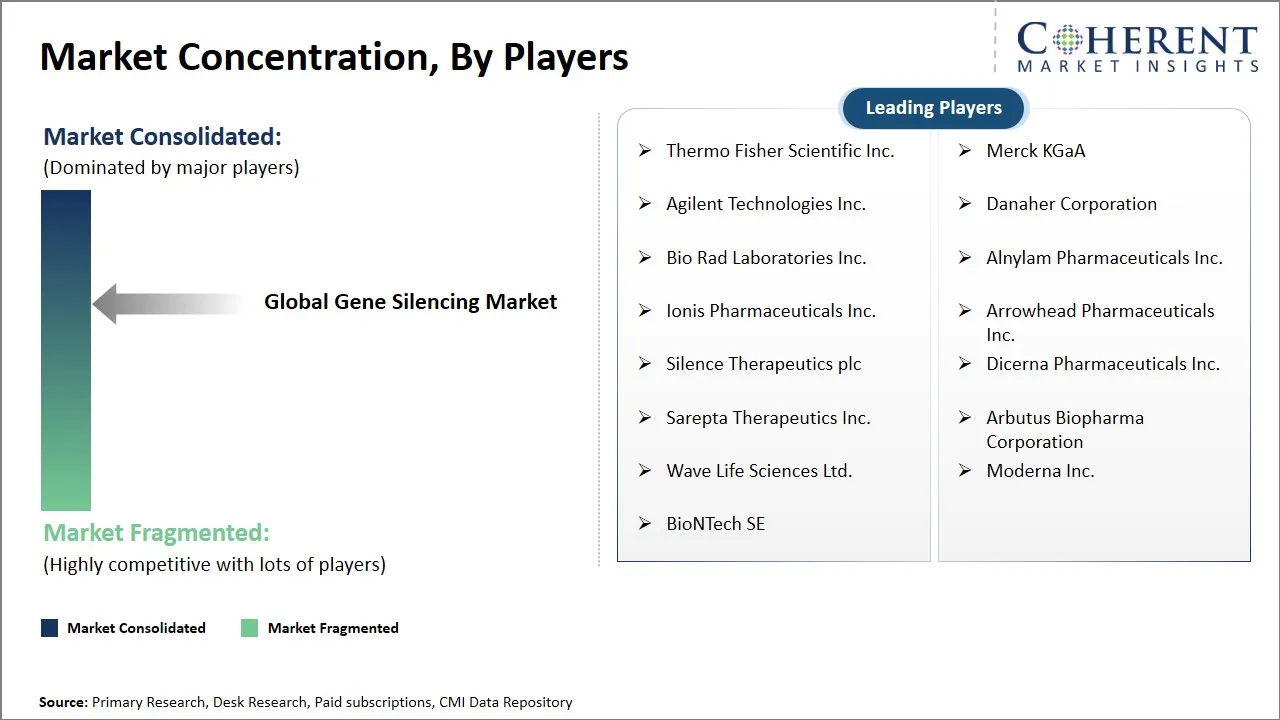
Key Developments
- On November 17, 2025, Race Oncology, an Australian clinical-stage cancer drug developer, launched new Gene Silencing-linked clinical programs using its lead drug RC220 for AML and EGFR-mutated lung cancer. Race Oncology said RC220, built on bisantrene, binds DNA and RNA G-quadruplexes and may block MYC-driven oncogenic pathways. The company has begun a Phase 1a/1b NSCLC trial in major Australian cancer hospitals to delay EGFR-TKI resistance, a USD 10 billion market.
- In October 2025, Aerska, a Dublin-based biotech developing brain-shuttle RNAi Gene Silencing medicines, launched with USD 21 million seed funding. Aerska aims to deliver antibody-oligonucleotide conjugates across the blood-brain barrier for Alzheimer’s and Parkinson’s disease. CEO Jack O’Meara, former Ochre Biotech head, said the goal is precise and durable CNS gene silencing.
- In August 2025, UNSW Sydney researchers and St. Jude Children’s Research Hospital revealed a new CRISPR epigenetic editing method that silences or activates genes by removing DNA methyl tags without cutting DNA. UNSW Sydney, a leading Australian research university, showed that removing these tags reactivates fetal globin genes, offering a safer Gene Silencing approach for Sickle Cell disease. St. Jude Children’s Research Hospital, a U.S. pediatric research leader, validated the method, confirming methyl groups directly control gene suppression.
- In May 2025, AbbVie Inc., a global immunology and oncology leader, partnered with ADARx Pharmaceuticals, a U.S. RNA-platform biotech, to co-develop next-generation siRNA Gene Silencing therapies. The deal focuses on neuroscience, immunology, and cancer and includes US$ 335 million upfront and future milestone payments. siRNA blocks disease-driving proteins by silencing mRNA, offering new options for autoimmune skin disorders and skin cancers.
Top Strategies Followed by Global Gene Silencing Market Players
- The main characteristic of the market leaders who have been in the game for a long time and have considerable financial and technological resources at their disposal is that they do heavy R&D investments to produce high-performance gene silencing products. One of the main areas of focus for these companies is the development of next-generation RNA interference (RNAi) therapeutics, siRNA delivery systems and other related technologies that surpass in efficacy and safety the current products. Besides, they actively collaborate with OEMs and biotech firms to consolidate their market share further.
- Alnylam Pharmaceuticals, Ionis Pharmaceuticals, and Moderna are among the leading firms in the gene silencing market possessing extensive R&D pipelines and U.S. FDA-approved RNAi therapeutics. Alnylam’s ONPATTRO and GIVLAARI validate commercial success in RNAi drugs, while Ionis continues advancing antisense oligonucleotide therapies.
- The mid-tier gene silencing market players are utilizing a finely tuned method by merging the innovation and the cost-effectiveness and thus, reaching the customers that are price-sensitive but at the same time demanding quality that is within their budget. They are basically the ones who have come up with cheap but rich in performance gene silencing tools and reagents and thus, the academic research, small biotech firms, and developing healthcare sectors are becoming very attractive for them.
- Among the companies occupying this segment are Horizon Discovery (now part of Revvity), Dharmacon (Horizon brand), and GeneCopoeia, who stand out by providing the siRNA libraries, CRISPR tools, and knockdown reagents at a low cost, which are already extensively taking the usage in the field of education by the universities and small biotech labs.
- The tiny players in the gene silencing marketplace are using their creativity and offering their specialized features or innovated goods that are needed in particular application areas to attract customers. They are not similar to big rivals as they very often take the lead in applying the latest technologies like the use of new delivery systems, gene-specific knockdown techniques, and even proprietary siRNA.
- Companies like Silence Therapeutics, Sirnaomics, OriCiro Genomics, and Synthego (in the early phase of development) are engaged in using very particular RNAi delivery setups, proprietary siRNA constructs, or custom knockdown solutions aimed at cancer, rare diseases, or functional genomics.
Market Report Scope
Gene Silencing Market Report Coverage
| Report Coverage | Details | ||
|---|---|---|---|
| Base Year: | 2025 | Market Size in 2026: | USD 12.79 Bn |
| Historical Data for: | 2020 To 2024 | Forecast Period: | 2026 To 2033 |
| Forecast Period 2026 to 2033 CAGR: | 14.1% | 2033 Value Projection: | USD 32.20 Bn |
| Geographies covered: |
| ||
| Segments covered: |
| ||
| Companies covered: | Thermo Fisher Scientific Inc., Merck KGaA, Agilent Technologies Inc., Danaher Corporation, Bio Rad Laboratories Inc., Alnylam Pharmaceuticals Inc., Ionis Pharmaceuticals Inc., Arrowhead Pharmaceuticals Inc., Silence Therapeutics plc, Dicerna Pharmaceuticals Inc., Sarepta Therapeutics Inc., Arbutus Biopharma Corporation, Wave Life Sciences Ltd., Moderna Inc., and BioNTech SE | ||
| Growth Drivers: |
| ||
| Restraints & Challenges: |
| ||
Gene Silencing Market Dynamics
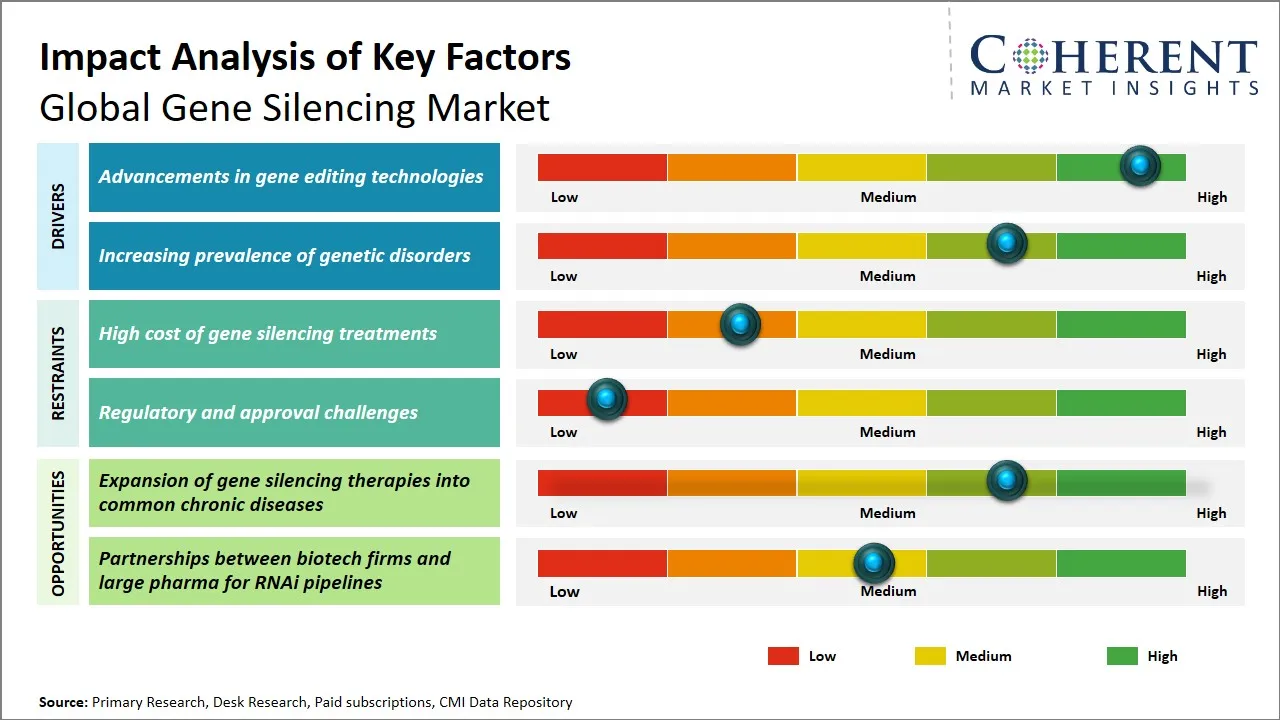
Gene Silencing Market Driver - Advancements in Gene Editing Technologies
In the recent past, the gene editing technologies have witnessed such rapid advancements that they have significantly pushed forward the development and the utilization of the gene silencing techniques. CRISPR-Cas9 and other highly precise genetic editing tools have been the main contributors to the efficiency and accuracy of gene silencing processes by allowing the targeted and modified genetic sequences at a molecular level. The aforementioned techniques are so powerful that they are now used in the silencing and editing of genes associated with various diseases, thus leading to the opening of entirely new fields of therapeutic interventions, especially in the treatment of genetic disorders, cancers, and even viral infections.
In July 2025, CD Bioparticles a global supplier of delivery technologies announced new AAV vector design services supporting gene therapy and gene silencing research. The company offers custom AAV design construction and packaging with expert support. Its platform improves capsid selection genome design and in vivo targeting for researchers.
Gene Silencing Market Opportunity - Expansion of Gene Silencing Therapies into Common Chronic Diseases
On the global gene silencing market in the near future, the expansion of gene silencing therapies into the treatment of common chronic diseases like cardiovascular disorders, diabetes, and neurodegenerative conditions will provide a huge opportunity. For a long time, gene silencing technologies such as RNA interference (RNAi) and antisense oligonucleotides (ASOs) have primarily been confined to rare genetic disorders and oncology. However, the continuous improvement in the delivery mechanisms and the precision of the targeting is opening up new areas for wider use. The chronic diseases, which represent a major part of the global disease load, often have very intricate gene expression patterns that can be altered using gene silencing techniques to tackle the root pathological processes instead of just alleviating the symptoms.
In January 2025, Tune Therapeutics a U.S. epigenome editing company raised over USD 175 Mn to advance its gene silencing and regenerative therapy pipeline. The funding supports Tune-401 its clinical epigenetic silencer for chronic Hepatitis B and expands platform programs. New Enterprise Associates a major venture investor led the round.
Analyst Opinion (Expert Opinion)
- The gene silencing market is advancing quickly as RNAi, CRISPR-based suppression, and antisense platforms gain clinical traction. Growth is driven by better delivery systems, rising demand for precision therapies, and strong industry funding. Opportunities are emerging in next-generation delivery technologies, though challenges remain around off-target risks, regulatory scrutiny, and high development costs. Key scientific gatherings over the past few years including the ASGCT Annual Meeting, the CRISPR Genome Engineering Conference, and the RNA Therapeutics Symposium have shaped the landscape by enabling data exchange, policy discussions, and early collaboration between biotech developers.
- Real-world activity is also accelerating market maturity. Major biotech firms are expanding pipelines in rare diseases and oncology, while national biotech missions and academic-industry partnerships are supporting pilot projects in RNA-based therapeutics. These initiatives, combined with increasing government and private investment, are validating clinical feasibility and positioning gene silencing technologies for broader commercial adoption.
Speak to the analyst
Want personalized insights?
Take the findings above to one of our principal consultants, or have the report rebuilt around the segments, geographies and competitors you actually track.
Market Segmentation
- Type Insights (Revenue, USD Bn, 2021 - 2033)
- Post-Transcriptional
- Transcriptional
- Component Insights (Revenue, USD Bn, 2021 - 2033)
- Product (Reagents, Kits, Instruments)
- Services
- Application Insights (Revenue, USD Bn, 2021 - 2033)
- Functional Genomics
- Drug Target Validation
- Disease Modeling
- Therapeutic Development
- Bioproduction Optimization
- Therapeutic Area Insights (Revenue, USD Bn, 2021 - 2033)
- Oncology
- Genetic Disorders
- Infectious Diseases
- Cardiovascular Diseases
- Neurological Disorders
- Metabolic Disorders
- Autoimmune Disorders
- Ophthalmic Diseases
- Technology Insights (Revenue, USD Bn, 2021 - 2033)
- RNA Interference (RNAi)
- Antisense Oligonucleotides (ASOs)
- CRISPR-based Gene Silencing
- siRNA
- shRNA
- miRNA
- DNA Methylation-based Silencing
- Histone Modification-based Silencing
- Delivery Method Insights (Revenue, USD Bn, 2021 - 2033)
- Viral Vector Delivery
- Non-Viral Vector Delivery
- Lipid Nanoparticles
- Electroporation
- Physical Methods (Microinjection, Gene Gun, Ultrasound)
- End User Insights (Revenue, USD Bn, 2021 - 2033)
- Pharmaceutical and Biotech Companies
- Academic and Research Institutes
- Contract Research Organizations (CROs)
- Diagnostic Laboratories
- Government and Non-Profit Research Bodies
- Regional Insights (Revenue, USD Bn, 2021 - 2033)
- North America
- U.S.
- Canada
- Latin America
- Brazil
- Argentina
- Mexico
- Rest of Latin America
- Europe
- Germany
- U.K.
- Spain
- France
- Italy
- Russia
- Rest of Europe
- Asia Pacific
- China
- India
- Japan
- Australia
- South Korea
- ASEAN
- Rest of Asia Pacific
- Middle East
- GCC Countries
- Israel
- Rest of Middle East
- Africa
- South Africa
- North Africa
- Central Africa
- North America
- Key Players Insights
- Thermo Fisher Scientific Inc.
- Merck KGaA
- Agilent Technologies Inc.
- Danaher Corporation
- Bio Rad Laboratories Inc.
- Alnylam Pharmaceuticals Inc.
- Ionis Pharmaceuticals Inc.
- Arrowhead Pharmaceuticals Inc.
- Silence Therapeutics plc
- Dicerna Pharmaceuticals Inc.
- Sarepta Therapeutics Inc.
- Arbutus Biopharma Corporation
- Wave Life Sciences Ltd.
- Moderna Inc.
- BioNTech SE
Sources
Primary Research Interviews
Industry Stakeholders list
- Gene therapy CDMO executives
- Viral vector manufacturing heads
- Cell therapy commercialization leads
- Regulatory affairs specialists
- Venture capital biotech investors
- Bioprocess technology vendors
End Users list
- Clinical geneticists
- Neurologists involved in gene trials
- Rare disease foundations
- Hospital oncology departments
- Academic translational researchers
- Gene therapy patient advocacy groups
Government and International Databases
- FDA CBER
- EMA Clinical Trials Register
- WHO Global Health Observatory
- PMDA Japan
- European Medicines Agency EudraGMDP
Trade Publications
- Genetic Engineering & Biotechnology News (GEN)
- Fierce Biotech
- Endpoints News
- BioProcess International
- Labiotech.eu
- PharmaVoice
Academic Journals
- Molecular Therapy
- Nature Gene Therapy
- Human Gene Therapy
- Journal of Virology
- Cell Reports Medicine
- Nature Biotechnology
Reputable Newspapers
- Financial Times
- The Wall Street Journal
- The New York Times
- The Guardian
- Reuters Science Desk
- Bloomberg Health
Industry Associations
- ASGCT – American Society of Gene and Cell Therapy
- ESGCT – European Society of Gene and Cell Therapy
- ARM – Alliance for Regenerative Medicine
- ISCT – International Society for Cell and Gene Therapy
- PDA – Parenteral Drug Association Biotechnology Chapter
- BIO – Biotechnology Innovation Organization
Public Domain Resources
- NIH RePORT
- PubMed
- USPTO Patent Database
- European Patent Office ESPACENET
- OECD Biotechnology Statistics
- WTO Tariff and Trade Tools
Proprietary Elements
- CMI Data Analytics Tool: Proprietary analytics tool to analyze real-time market trends, consumer behavior, and technology adoption in market
- Proprietary CMI Existing Repository of Information for Last 8 Years
Get access to 250+ pages report
Every segment, forecast, competitor profile and data table behind the analysis above — available for instant download.
- ESOMAR Member
- ISO 9001:2015 Certified
- D-U-N-S Registered
- GDPR & CCPA Compliant
Missing comfort of reading report in your local language? Find your preferred language:
Transform your Strategy with Exclusive Trending Reports
Frequently Asked Questions
The global gene silencing market is estimated to be valued at USD 12.79 Bn in 2026 and is expected to reach USD 32.20 Bn by 2033.
The CAGR of the global gene silencing market is projected to be 14.1% from 2026 to 2033.
Advancements in gene editing technologies and increasing prevalence of genetic disorders are the major factors driving the growth of the global gene silencing market.
High cost of gene silencing treatments and regulatory and approval challenges are the major factors hampering the growth of the global gene silencing market.
In terms of type, the post-transcriptional is estimated to dominate the market revenue share in 2026.
Thermo Fisher Scientific Inc., Merck KGaA, Agilent Technologies Inc., Danaher Corporation, Bio Rad Laboratories Inc., Alnylam Pharmaceuticals Inc., Ionis Pharmaceuticals Inc., Arrowhead Pharmaceuticals Inc., Silence Therapeutics plc, Dicerna Pharmaceuticals Inc., Sarepta Therapeutics Inc., Arbutus Biopharma Corporation, Wave Life Sciences Ltd., Moderna Inc., and BioNTech SE are the major players.
North America is expected to lead the global gene silencing market in 2026.