

Global Gene Vector Market Size and Forecast – 2026 to 2033
The global gene vector market is estimated to be valued at USD 10.56 Bn in 2026 and is expected to reach USD 24.68 Bn by 2033, exhibiting a compound annual growth rate (CAGR) of 12.9% from 2026 to 2033. This significant growth is driven by increasing advancements in cell and gene therapy, rising prevalence of genetic disorders, and expanding applications of gene vectors in personalized medicine and biotechnology sectors.
Key Takeaways of the Global Gene Vector Market
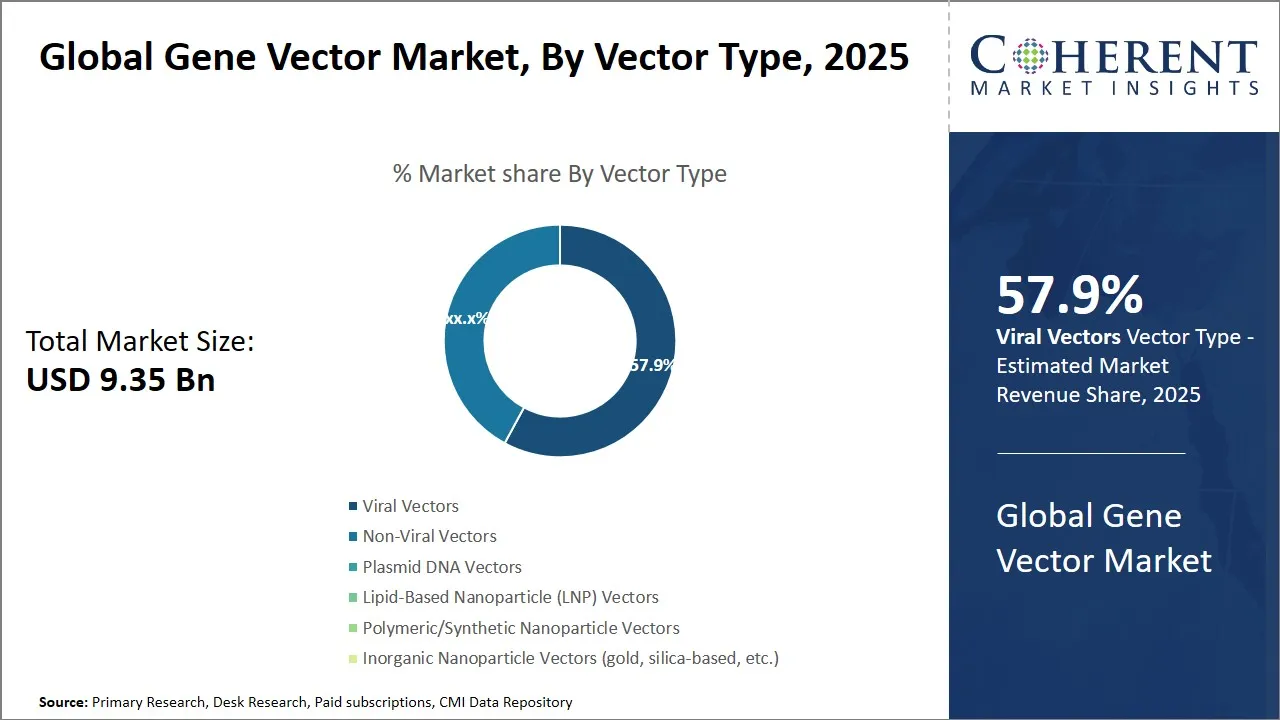
- Viral vectors segment is expected to capture 58.9 % of the global gene vector market share in 2026.
- While DNA vectors segment is projected to represent 35.7 % of the gene vector market share in 2026.
- Gene replacement therapy segment is expected to hold 25.5 % of the market share in 2026.
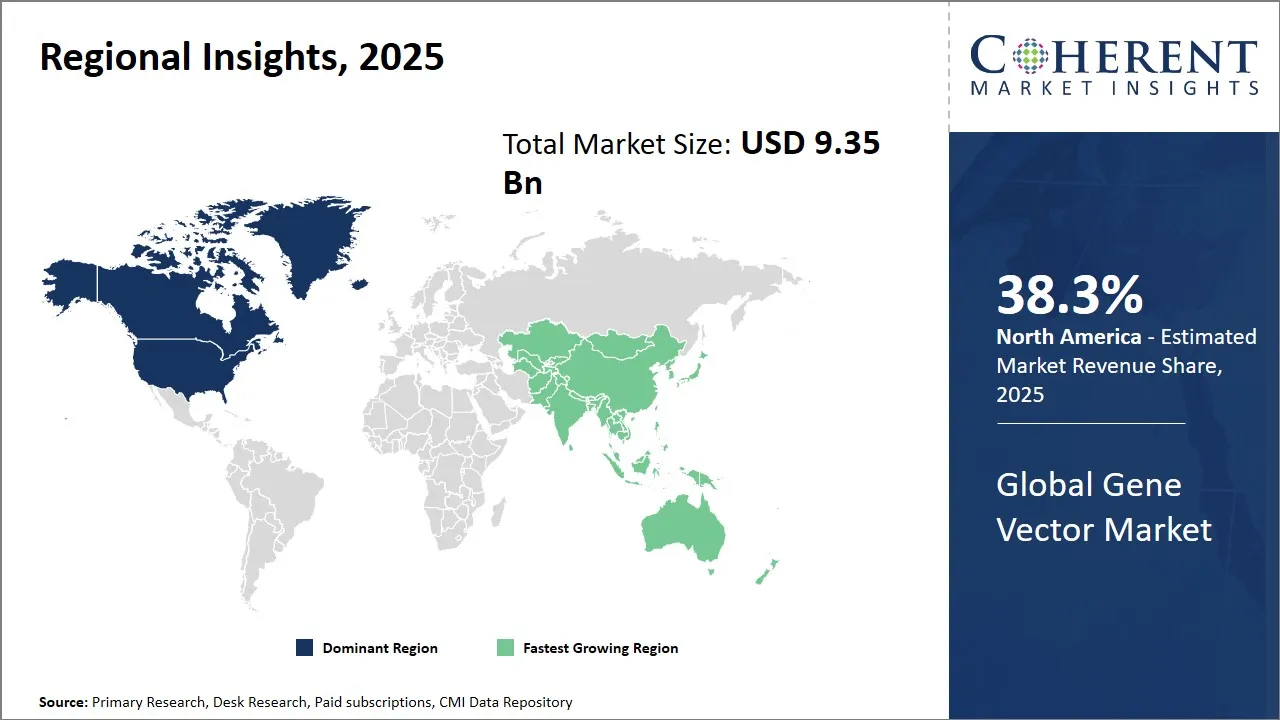
- North America is anticipated to lead the market, holding a share of 38.3 % in 2026. Asia Pacific is projected to be the fastest-growing region, with a market share of 23.8% in 2026.
Market Overview
Current market trends highlight the growing adoption of viral and non-viral vectors for targeted gene delivery, improved vector design enhancing safety and efficiency, and increased investment in research and development. Additionally, strategic collaborations among pharmaceutical companies and research institutions are accelerating innovation, while regulatory bodies are streamlining approval processes, collectively fostering robust the market expansion and technological breakthroughs in gene-based therapeutics.
Current Events and Its Impact
Current Events | Description and its Impact |
Integration of AI in Vector Design & Manufacturing |
|
Rapid Market Expansion in the Asia Pacific Region |
|
Segmental Insights
- Current Industry Events of 2026
- Market Size Estimation
- Regional Breakdown
- Competitive Landscape
- Customer Intelligence
- Segmental Analysis
- Pricing Analysis
- Key Market Drivers, Challenges & Future Trends
- Customized Insights Section
Gene Vector Market Insights, By Vector Type - Viral Vectors Contributes the Highest Share of the Market Owing to their Superior Efficiency and Broad Therapeutic Versatility
The viral vectors segment is expected to hold 58.9% of the market share in 2026, as a result of their extremely effective transduction process and their already established ability to deliver genetic material in various ways to different host cells in both in-vitro and in-vivo environments. Various types of viral vectors which include adenoviral, adeno-associated viral (AAV), lentiviral, gamma-retroviral, and herpes simplex virus (HSV) have been very much modified while ensuring that the safety, targeting specificity, and payload capacity are increased and the immunogenicity is decreased.
In October 2025, Asimov, a synthetic biology platform developer, launched stable AAV producer cell lines for Gene Vector manufacturing. Asimov says the system replaces costly transient transfection. The company claims integrated viral genes enable high-titer, consistent vector output. Asimov reports titers reaching 6E15 vg/L before purification. The new platform reduces plasmid costs and supply risks.
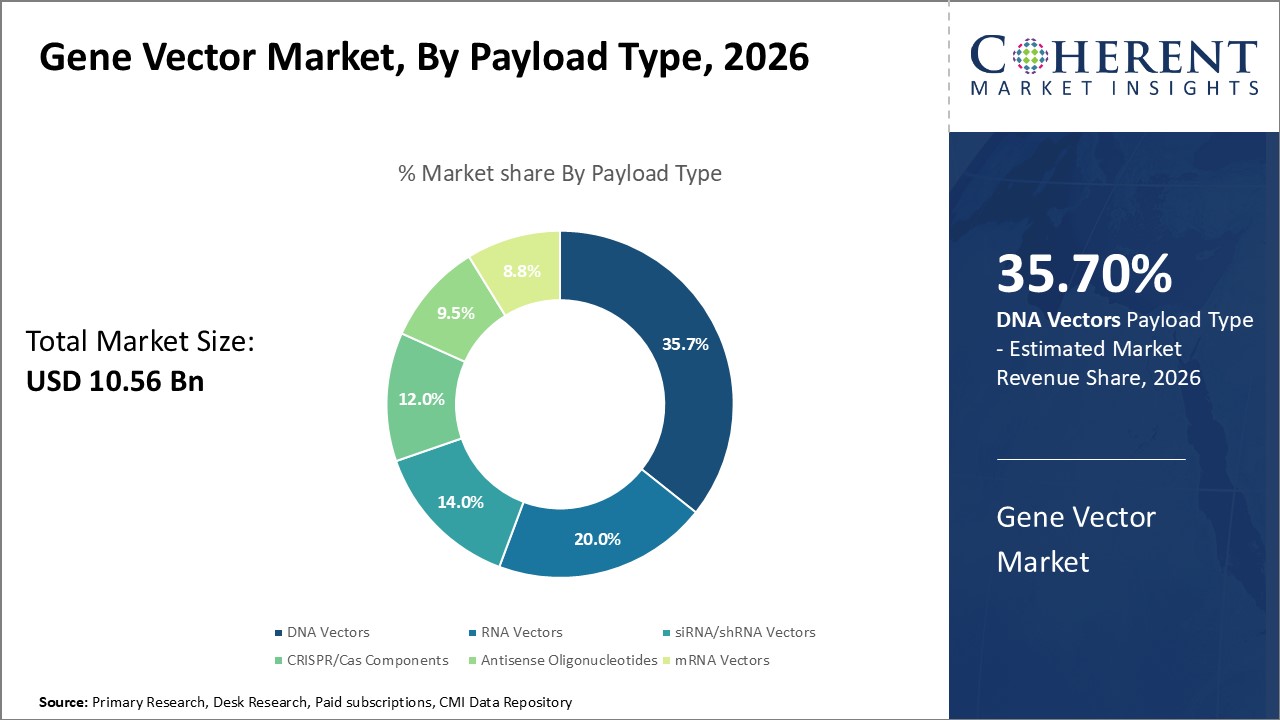
Gene Vector Market Insights, By Payload Type - DNA Vectors Contribute the Highest Share of the Market due to their Stability and Versatility in Gene Delivery Applications
DNA vectors will constitute 35.7% of the gene vector market in 2026, because of their superior stability and genetic manipulation over RNA and other nucleic acid payloads. Their capability of carrying large transgene inserts together with the regulatory elements such as promoters and enhancers introduces precise control over gene expression.
This flexibility is of utmost importance for the therapeutic interventions to be tailored to a precise disease and a particular patient that is why the high demand for DNA vectors in clinical and research settings is justified. The usage of DNA vectors permits both transient and stable gene expression, according to the vector design and delivery system used.
Gene Vector Market Insights, By Application - Gene Replacement Therapy Contributes the Highest Share of the Market Driven by Increasing Prevalence of Genetic Disorders and Advancements in Precision Medicine
Gene replacement therapy is projected to hold the largest application share of 25.5% in 2026, pointing to its major role in the therapy of inherited monogenic disorders and acquired genetic defects. The treatment involves the introduction of a functional copy of a defective gene into target cells, thus restoring normal function and this is a significant shift from symptomatic treatment to curative interventions.
The increasing knowledge of the genetic factors of diseases and the development of gene transfer technologies are the main drivers of this segment's growth. The surging prevalence of genetic disorders such as cystic fibrosis, hemophilia, muscular dystrophies, and certain inherited retinal diseases creates significant unmet medical needs, catalyzing the demand for effective gene replacement therapies.
Economics of Gene Vector Manufacturing
- Virus yield variability is the core technical and economic lever in the gene vector market: it dictates how many successful doses can be released per batch, which, in turn, drives the true cost per genome delivered. CDMOs that can consistently deliver higher and more stable yields immediately gain pricing power and are preferred for pivotal and commercial programs.
- On the commercial side, sophisticated sponsors now benchmark CDMOs on normalized cost per released vector genome and supply-chain robustness, not just list price per batch. In an environment of intermittent raw material shortages, integrated players with locked-in plasmid and resin supply, robust single-use logistics, and transparent cost pass-through structures are positioned to capture a disproportionate share of high-value, late-stage contracts.
Regional Insights
North America Gene Vector Market Analysis and Trends
The North America region is projected to lead the market with a 38.3% of the global gene vector market share in 2026, supported by a strong infrastructure comprising the latest biotechnology, scientific activities on a large scale, and huge investments from both private and public sectors. Moreover, U.S. government’s U.S. FDA’s fast-track approvals and large grants from organizations like the NIH have become indispensable drivers of the gene vector technologies race.
In October 2026, OXB, a global cell and gene therapy CDMO, expanded its U.S. presence by acquiring Resilience’s commercial-scale viral vector facility in North Carolina to strengthen its Gene Vector manufacturing capacity. The FDA-approved site adds U.S. GMP drug substance and fill-finish capability, boosts AAV production, and supports late-stage and commercial programs for clients.
Asia Pacific Gene Vector Market Analysis and Trends
The Asia Pacific region is the quickest region to achieve growth in the gene vector market, contributing 23.8% share in 2026, owing to the rising sector of gene therapies supported by infrastructure investments in healthcare and biotechnology as well as patient education. Targeting the growing markets emerging economies like China, Japan, South Korea, and India, have set up innovation hubs supported by the government and made favorable regulation reforms to advance gene therapy research.
Among initiatives, China’s “Made in China 2026” and Japan’s regenerative medicine-friendly regulations are highlighting the focus on the gene technology sector. Concurrent with this, a rapid increase in contract manufacturing organizations (CMOs) has been witnessed and a lot of local-global partnerships have been formed, driving the market growth via improved production capacity and adoption rate enhancement.
Global Gene Vector Market Outlook for Key Countries
U.S. Gene Vector Market Trends
The U.S. gene vector market benefits from a vast pool of research institutions and well-developed biotechnology sector. The country is home to innovators like Novartis which is the CAR-T therapy developer and bluebird bio heavily investing in lentiviral vectors for rare genetic diseases. The NIH of the U.S. government provides a considerable amount of funding and the government also facilitates the regulatory process which results in the quicker clinical trial approvals.
In July 2026, Sarepta Therapeutics, a genetic medicine company, paused ELEVIDYS Gene Vector therapy shipments in the U.S. Sarepta says the pause allows safety label discussions with U.S. FDA. The company calls it temporary and patient-focused. Sarepta states ELEVIDYS is an AAV Gene Vector therapy for Duchenne muscular dystrophy.
China Gene Vector Market Trends
The fast development of China gene vector market is greatly influenced by the government’s policies that are in favor of biotechnology and precision medicine. The country is making a big leap in gene editing and therapy by using the government funding and reforms that are meant to make the regulations more flexible. The contributions of WuXi AppTec and GenScript, which are the main businesses behind gene vector manufacture and R&D, are very important while foreign companies are boosting their investments and presence in the country.
In April 2023, OBiO Technology, a China-based cell and Gene Vector CDMO, opened a large GMP factory in Shanghai. OBiO says the site has 29 production lines for viral vectors and cell therapy. The company reports multiple vector systems and bioreactors up to 2000 L. OBiO also announced partnerships with ImmVira an oncology biotech, CHINAGENE THCH an AAV therapy company, and Hope for Rare Foundation to advance clinical programs.
Germany Gene Vector Market Trends
The strong pharmaceutical industry that Germany has is the main reason for the gene vector market and the advanced therapeutics development being the main focus. The support of clinical research and product approval through the regulatory structures that are well- established is a benefit to the country. Germany has major players like BioNTech, whose gene delivery technologies pipeline is being expanded in tandem with mRNA platforms. The research universities, biotech startups, and large pharmaceutical companies working together is a great source of innovations in vector design and manufacturing.
In February 2021, VectorY, a gene vector company, developed vectorized antibodies for muscular and neurodegenerative diseases, backed by Forbion a European life science investor active in Germany. VectorY says it is building GMP manufacturing in Amsterdam and advancing an AAV platform for targeted delivery.
Japan Gene Vector Market Trends
Japan is still the top country in gene vector technology development, which is the result of the government supporting regenerative medicine frameworks and the active participation of the industry. One of the schemes that the country’s Pharmaceuticals and Medical Devices Agency (PMDA) has is the fast track approval scheme for new gene therapies. The companies that are involved in gene vector production and therapy development are mostly Takeda Pharmaceutical and Takara Bio, who are using the advanced techniques such as adeno-associated virus (AAV) vectors.
In November 2023, Takara Bio, a Japan-based gene vector developer, introduced SonuAAV a new AAV vector for inner ear gene delivery. Takara Bio says SonuAAV shows over 80 percent cochlear transfer efficiency in mice. The company reports more than ten-fold improvement versus AAV2.
Gene Vector Engineering Powered by Artificial Intelligence
- AI-designed AAV vectors now use machine-learning-selected DNA “light switches” to activate therapeutic genes only in specific brain and spinal cell types excitatory, inhibitory, vascular, or motor neurons eliminating the need for transgenic models and enabling precision intervention for ALS, epilepsy, Parkinson’s, and other neurodegenerative disorders. NIH-funded platforms have released dozens of such vectors (via Addgene), validated across species and human tissue, accelerating research and next-gen clinical pipelines.
- Meanwhile, players like Latus Bio are training deep-learning models on 100M+ in-vivo delivery “ZIP codes” from NHP datasets to design vectors for any tissue on demand. AI will become the real differentiator compressing discovery timelines, reducing failure rates, and enabling patient-specific CNS gene therapies that target only malfunctioning cells while sparing everything else.
Market Players, Key Developments, and Competitive Intelligence
Key Developments
- In June 2025, Univercells Technologies, a viral and gene vector manufacturing platform company, launched its scale-X nitro controller for large-scale vector production. Univercells Technologies says the system supports AAV, lentiviral and vaccine manufacturing with faster scale-up. The company reports lower costs and compact deployment for emerging and established therapy developers.
- In May 2025, Coave Therapeutics, a France-based Gene Vector developer, launched coAAV-CSF-01, a new CNS-targeted vector. Coave says the vector showed stronger brain transduction and better safety than AAV9. The company reports major expression gains in cortex and hippocampus. Coave states the ALIGATER platform enables improved targeting for neurodegenerative therapy programs.
- In May 2025, Dyno Therapeutics, a U.S. Gene Vector company using AI for capsid design, launched three new AAV delivery vectors for eye, muscle, and CNS therapy. Dyno says the capsids outperform standard AAVs in non-human primates with higher specificity and manufacturability. The company states the vectors are available for licensing to accelerate next-generation gene therapy programs.
- In April 2025, Artis BioSolutions, a San Diego-based cell and Gene Vector CDMO, launched by acquiring Landmark Bio, a Massachusetts advanced therapy manufacturer. Artis says Landmark will operate separately while expanding viral vector and mRNA production. The company states the deal creates an end-to-end manufacturing partner for advanced therapy developers.
Top Strategies Followed by Global Gene Vector Market Players
- Research and development is a primary area of investment for the established market leaders that aim at driving the innovation of high-performance gene vector products. The research road map of these companies focuses on the vectors that are more efficient, have better safety profiles, and possess more advanced delivery methods to comply with gene therapy applications’ strict standards. They also make it a point to form strategic alliances with OEMs, biotech innovators, and big pharma players to not only strengthen their market share but also gain access to the cutting-edge technologies and broader customer networks that come along with it.
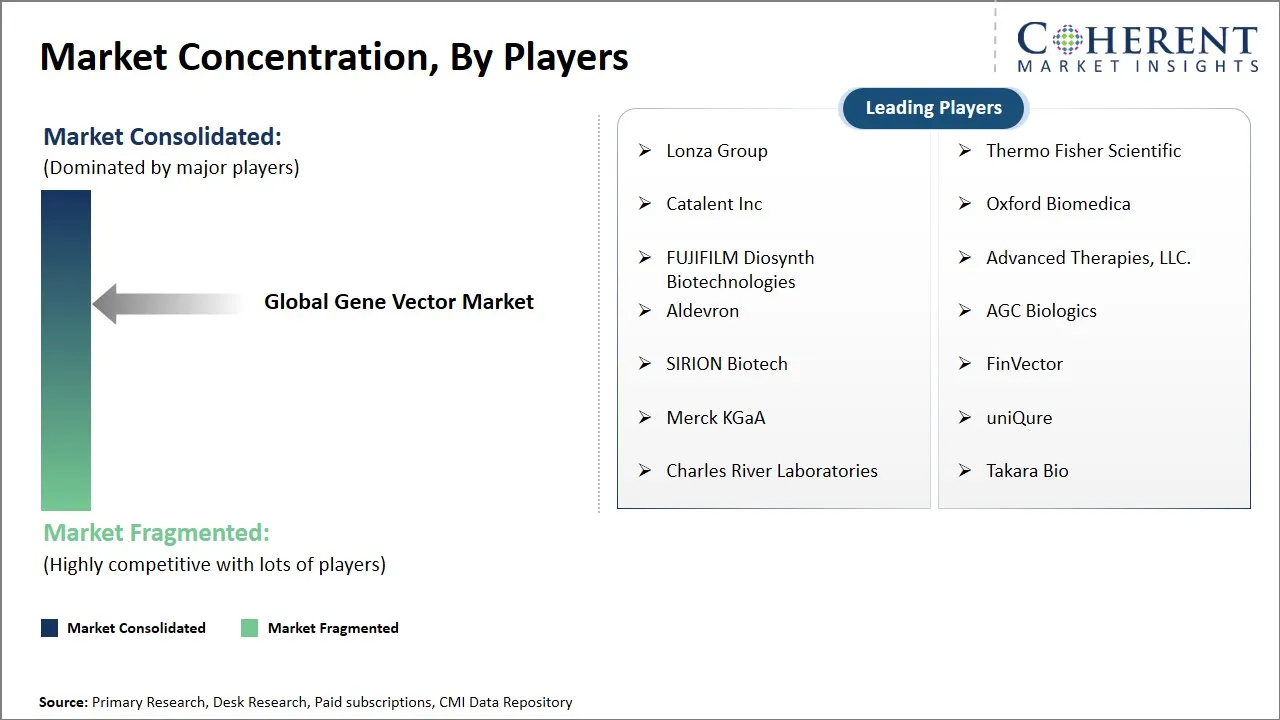
- The companies, Thermo Fisher Scientific, Merck KGaA (MilliporeSigma), Lonza, Catalent, and Charles River Laboratories, are all representatives of such a profile. The aforementioned companies vie for the leading spot in the gene vector market by making heavy investments in next-gen viral platforms, vector production in the GMP-grade, and innovative delivery systems.
- The gene vector market players that are situated in the middle are applying strategies that allow product quality to be affordable at the same time so as to mainly cater to price-sensitive sectors like academic institutions, research laboratories, and smaller biotech companies. These companies that are in the middle of the market are offering affordable solutions that cover only the main performance and thus, the gene vector technology is becoming more common in the areas that have limited resources as far as research is concerned.
- SignaGen Laboratories, VectorBuilder, Takara Bio, VIRAPUR, and ABM are some mid-tier companies that maintain a balance between price and quality. Their main market is represented by academic labs and small biotech firms with pre-made vector kits, as well as for cost-effective custom cloning and scalable packaging services thus, they differentiate themselves as high-value alternatives to premium CDMO.
- Industry giant resources are not available to small-scale players but still they are able to survive and prosper by focusing on niche segments of the gene vector market. Often intentions behind innovations are to develop standardized products for specific therapeutic applications or research, e.g., vectors optimized for the rarest genetic disorders or novel delivery methods.
- SIRION Biotech, Cell Biolabs, OriCiro Genomics, Genemedi, and Creative Biolabs are small companies that are focusing on the research area of vector engineering. These companies are providing very specific and rare solutions like vectors for specific diseases, new AAV capsids, and constructs that are targeting a specific cell type, thus enabling innovations in the field of gene therapy and advanced applications.
Market Report Scope
Gene Vector Market Report Coverage
| Report Coverage | Details | ||
|---|---|---|---|
| Base Year: | 2025 | Market Size in 2026: | USD 10.56 Bn |
| Historical Data for: | 2020 To 2024 | Forecast Period: | 2026 To 2033 |
| Forecast Period 2026 to 2033 CAGR: | 12.9% | 2033 Value Projection: | USD 24.68 Bn |
| Geographies covered: |
| ||
| Segments covered: |
| ||
| Companies covered: | Lonza Group, Thermo Fisher Scientific, Catalent Inc, Oxford Biomedica, FUJIFILM Diosynth Biotechnologies, Advanced Therapies, LLC., Aldevron, AGC Biologics, SIRION Biotech, FinVector, Merck KGaA MilliporeSigma, uniQure, Charles River Laboratories, and Takara Bio | ||
| Growth Drivers: |
| ||
| Restraints & Challenges: |
| ||
Gene Vector Market Dynamics
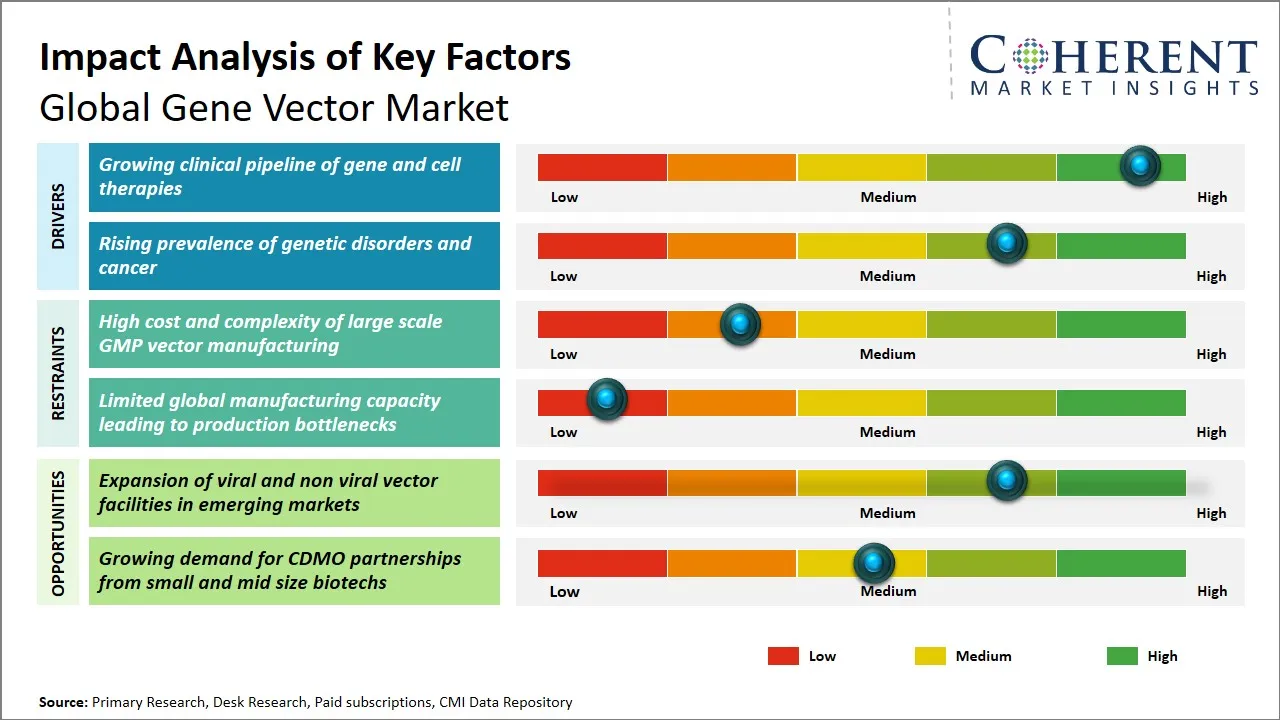
Gene Vector Market Driver - Growing Clinical Pipeline of Gene and Cell Therapies
The growing clinical pipeline of gene and cell therapies has become the most significant factor that is driving the global market for gene vector. The technological breakthroughs in the field of gene editing, along with the rising number of clinical trials, have created a demand for gene vectors that are versatile and efficient. The more candidates are moved through different stages of clinical development, the more delivery systems that are optimized for providing targeted, safe, and sustained gene expression are required.
In November 2025, Bharat Biotech, a leading Indian vaccine and biotech manufacturer, launched Nucelion Therapeutics, a new CRDMO focused on cell, gene therapy, and gene vector manufacturing in Genome Valley, Hyderabad, India. The company will develop plasmids, viral and non-viral vectors, and autologous and allogeneic cell therapies in a GMP-certified facility aligned with U.S. FDA and EMA standards.
Gene Vector Market Opportunity - Expansion of Viral and Non-Viral Vector Facilities in Emerging Markets
The global gene vector market is set to gain a lot from the manufacturing of viral and non-viral vectors in the emerging economies. The scenario of increasing global demand for gene therapy and even more advanced biotech treatment is opening the door for the emerging markets in the Asia Pacific, Latin America, and Africa regions, marked by the factors of increasing healthcare budgets, better regulatory practices, and higher patient awareness. Getting the production units located in these areas allows the companies to cut down on the expenses of logistics and import duties, thus making the gene therapies more affordable and accessible to the public.
In July 2025, ProBio, a global CDMO for cell, gene therapy and gene vector production, opened a 128,000-square-foot facility in Hopewell, New Jersey to manufacture plasmids, lentiviral, and AAV vectors. The site will create around 110 jobs and support end-to-end gene therapy development. The facility features proprietary cell lines and optimized plasmid systems for scalable viral-vector production, with AAV output starting in autumn 2025 and lentiviral vector manufacturing in early 2026.
Analyst Opinion (Expert Opinion)
- The gene vector market is on a fast-growing path as it is already moving on from the typical AAV and lentiviral technology to synthetic capsids, lipid nanoparticles, and hybrid vectors with larger payloads and less toxicity. The main source of demand is from gene editing in-vivo and ex-vivo cell therapy programs supported by the U.S., Europe, and Asia Pacific regulatory and government initiatives. The challenges of large-scale production, regulatory scrutiny of the process, and high manufacturing costs are still there, but the opportunities in oncology, rare diseases, and local vector manufacturing are leading to a quicker market-momentum-upward trend.
- Attending the global events such as ASGCT, ESGCT, and Mesa meeting are some of the main factors that provide the foundation for the realization of investments, harmonization of policies, and the showcasing of new technologies, while the activities such as Catalent's expansion of its vector plant, the Novartis-Avectas alliance, the U.S. FDA's Bespoke Gene Therapy Consortium, and the U.K. Advanced Therapies Taskforce are making the supplies and regulations clearer, thus speeding the process from the clinical stage where the product is promising to commercialization where the product has been scaled.
Speak to the analyst
Want personalized insights?
Take the findings above to one of our principal consultants, or have the report rebuilt around the segments, geographies and competitors you actually track.
Market Segmentation
- Vector Type Insights (Revenue, USD Bn, 2021 - 2033)
- Viral Vectors
- Adenoviral Vectors
- Adeno-Associated Viral (AAV) Vectors
- Lentiviral Vectors
- Gamma-Retroviral Vectors
- Herpes Simplex Viral (HSV) Vectors
- Poxviral/Vaccinia Vectors
- Other Viral Vectors (Sendai, VSV, Baculovirus, etc.)
- Non-Viral Vectors
- Plasmid DNA Vectors
- Lipid-Based Nanoparticle (LNP) Vectors
- Polymeric/Synthetic Nanoparticle Vectors
- Inorganic Nanoparticle Vectors (gold, silica-based, etc.)
- Viral Vectors
- Payload Type Insights (Revenue, USD Bn, 2021 - 2033)
- DNA Vectors
- RNA Vectors
- siRNA/shRNA Vectors
- CRISPR/Cas Components
- Antisense Oligonucleotides
- mRNA Vectors
- Application Insights (Revenue, USD Bn, 2021 - 2033)
- Gene Replacement Therapy
- Gene Addition/Augmentation Therapy
- Gene Silencing/Knockdown
- Gene Editing (CRISPR, ZFN, TALEN)
- Cell Therapy Manufacturing (CAR-T, engineered NK/T cells)
- Vaccines (prophylactic and therapeutic)
- Research Use Only (preclinical in vitro/in vivo tools)
- Disease Area Insights (Revenue, USD Bn, 2021 - 2033)
- Oncology
- Neurology
- Cardiovascular and Metabolic
- Ophthalmic
- Hematologic and Immunologic
- Infectious Diseases
- Musculoskeletal and Genetic Muscle Disorders
- Dermatology and Wound Healing
- Other Rare Genetic Disorders
- Delivery Route Insights (Revenue, USD Bn, 2021 - 2033)
- Intravenous
- Intramuscular
- Subcutaneous
- Intrathecal
- Intratumoral
- Ocular
- Inhalation
- Others
- Delivery Mode Insights (Revenue, USD Bn, 2021 - 2033)
- In Vivo Delivery
- Ex Vivo Delivery
- End User Insights (Revenue, USD Bn, 2021 - 2033)
- Biopharmaceutical and Biotechnology Companies
- CDMOs/CMOs (Contract Development and Manufacturing Organizations)
- Academic and Research Institutes
- Government and Non-Profit Research Organizations
- Hospital-Based and Specialty Gene Therapy Centers
- Regional Insights (Revenue, USD Bn, 2021 - 2033)
- North America
- U.S.
- Canada
- Latin America
- Brazil
- Argentina
- Mexico
- Rest of Latin America
- Europe
- Germany
- U.K.
- Spain
- France
- Italy
- Russia
- Rest of Europe
- Asia Pacific
- China
- India
- Japan
- Australia
- South Korea
- ASEAN
- Rest of Asia Pacific
- Middle East
- GCC Countries
- Israel
- Rest of Middle East
- Africa
- South Africa
- North Africa
- Central Africa
- North America
- Key Players Insights
- Lonza Group
- Thermo Fisher Scientific
- Catalent Inc
- Oxford Biomedica
- FUJIFILM Diosynth Biotechnologies
- Advanced Therapies, LLC.
- Aldevron
- AGC Biologics
- SIRION Biotech
- FinVector
- Merck KGaA
- uniQure
- Charles River Laboratories
- Takara Bio
Sources
Primary Research Interviews
Industry Stakeholders
- Chief Scientific Officers of Gene Therapy Developers
- Viral Vector Manufacturing Heads at GMP Facilities
End Users
- Clinical Geneticists at Academic Hospitals
- Cell Therapy Program Directors
- Regulatory Affairs Managers in Biologics Firms
- Heads of Translational Medicine Units
Government and International Databases
- FDA CBER
- EMA Clinical Trials Register
- WHO Global Health Observatory
- ClinicalTrials.gov
- Japan PMDA Database
Trade Publications
- Fierce Biotech
- Endpoints News
- Genetic Engineering & Biotechnology News (GEN)
- BioProcess International
- PharmaVoice
- Labiotech.eu
Academic Journals
- Nature Biotechnology
- Molecular Therapy
- Gene Therapy Journal
- Journal of Controlled Release
- Human Gene Therapy
- Cell Reports Medicine
Reputable Newspapers
- Financial Times
- The Economist
- The Wall Street Journal
- The New York Times
- Bloomberg
- Reuters
Industry Associations
- American Society of Gene & Cell Therapy (ASGCT)
- European Society of Gene & Cell Therapy (ESGCT)
- International Society for Cell & Gene Therapy (ISCT)
- Biotechnology Innovation Organization (BIO)
- Alliance for Regenerative Medicine (ARM)
- International Society for Stem Cell Research (ISSCR)
Public Domain Resources
- NCBI GenBank
- UNESCO Science Reports
- OECD Biotechnology Statistics
- OpenTargets Platform
- NIH National Library of Medicine
Proprietary Elements
- CMI Data Analytics Tool: Proprietary analytics tool to analyze real-time market trends, consumer behavior, and technology adoption in market
- Proprietary CMI Existing Repository of Information for Last 8 Years
Get access to 250+ pages report
Every segment, forecast, competitor profile and data table behind the analysis above — available for instant download.
- ESOMAR Member
- ISO 9001:2015 Certified
- D-U-N-S Registered
- GDPR & CCPA Compliant
Missing comfort of reading report in your local language? Find your preferred language:
Transform your Strategy with Exclusive Trending Reports
Frequently Asked Questions
The global gene vector market is estimated to be valued at USD 10.56 Bn in 2026 and is expected to reach USD 24.68 Bn by 2033.
The CAGR of the global gene vector market is projected to be 12.9% from 2026 to 2033.
Growing clinical pipeline of gene and cell therapies and rising prevalence of genetic disorders and cancer are the major factors driving the growth of the global gene vector market.
High cost and complexity of large scale GMP vector manufacturing and limited global manufacturing capacity leading to production bottlenecks are the major factors hampering the growth of the global gene vector market.
In terms of vector type, viral vectors are estimated to dominate the market revenue share in 2026.
Lonza Group, Thermo Fisher Scientific Viral Vector Services Patheon, Catalent Inc, Oxford Biomedica, FUJIFILM Diosynth Biotechnologies, WuXi Advanced Therapies WuXi AppTec, Aldevron, AGC Biologics, SIRION Biotech, FinVector, Cognate BioServices Cobra Biologics, Merck KGaA, uniQure, Charles River Laboratories Vigene viral vector operations, and Takara Bio are the major players.
North America is expected to lead the global gene vector market in 2026.