

Global Herceptin Market Size and Forecast – 2026 to 2033
The Global Herceptin Market is estimated to be valued at USD 1.63 billion in 2026 and is expected to reach USD 1.02 billion by 2033, exhibiting a compound annual growth rate (CAGR) of -5.42% from 2026 to 2033. This decline reflects shifting dynamics within the oncology therapeutics sector, influenced by emerging biosimilars and evolving treatment protocols that impact Herceptin’s market growth.
Key Takeaways of the Global Herceptin Market:
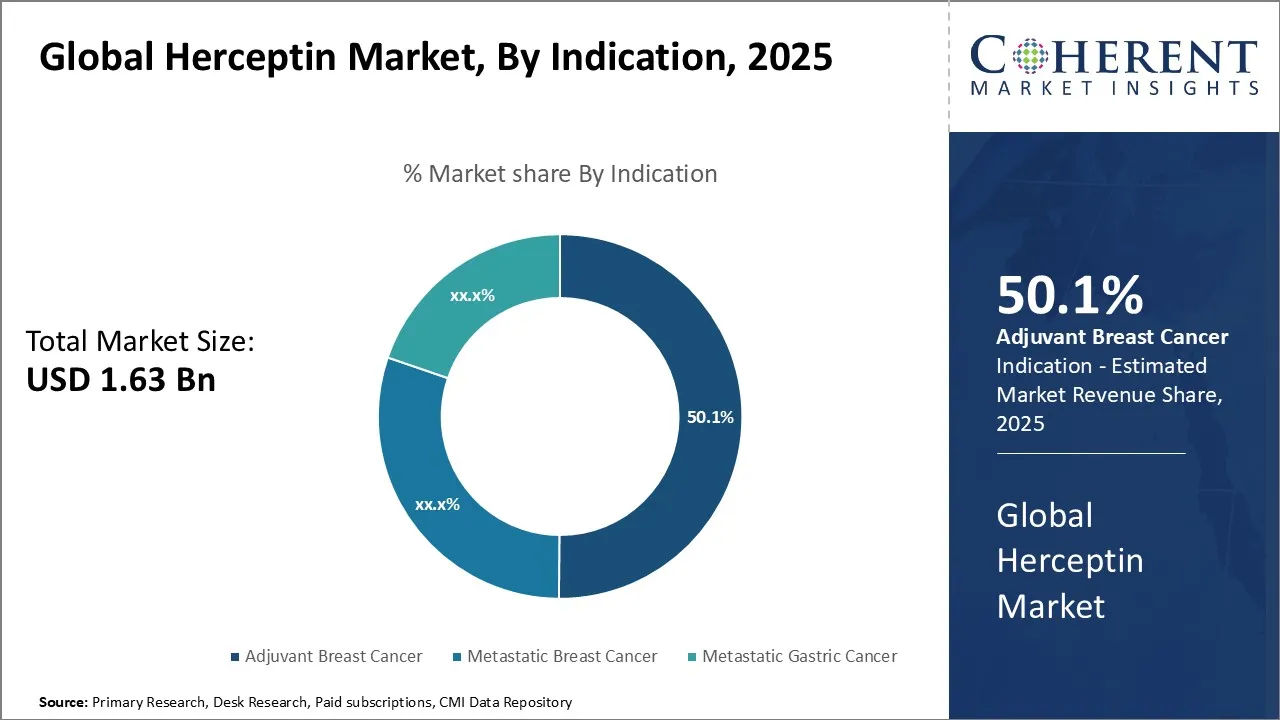
- The adjuvant breast cancer segment is expected to lead the global Herceptin market, accounting for 51.1% share in 2026, due to its critical role after primary surgery in HER2-positive cases.
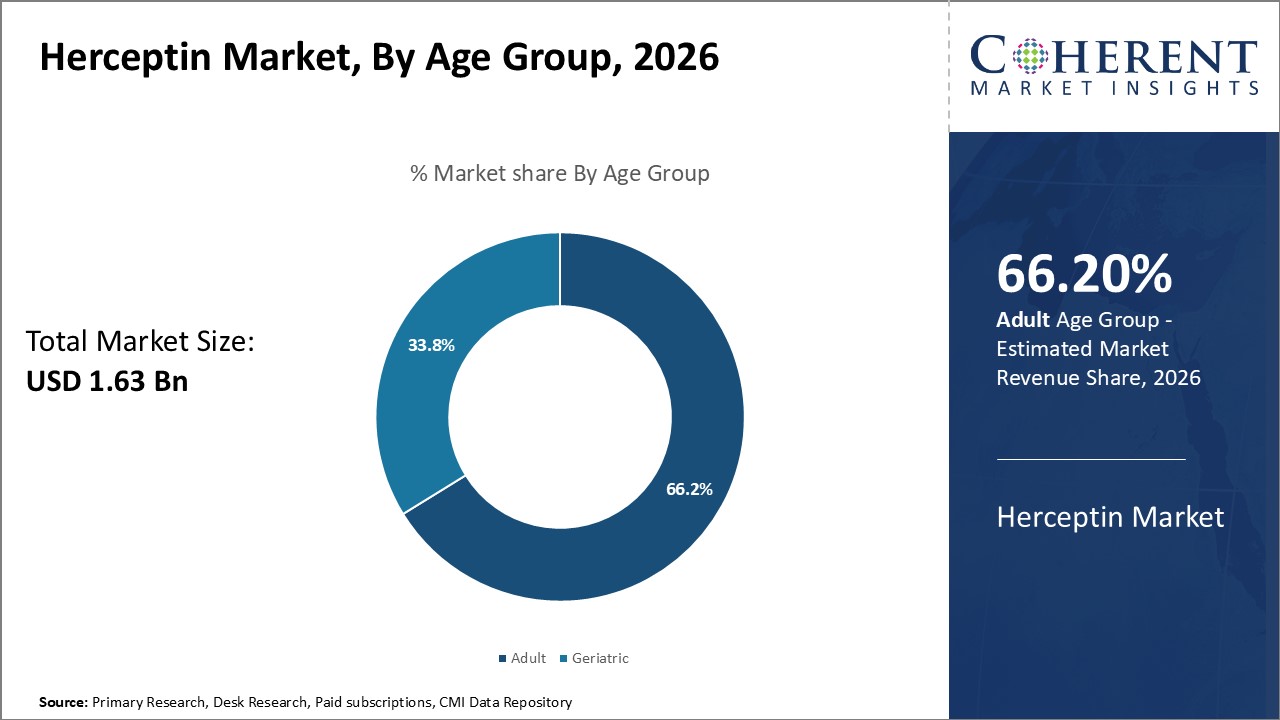
- By age group, the adult segment is expected to dominate with a 66.2% share in 2026, driven by higher diagnosis rates and treatment adoption among the adult population.
- Hospital pharmacies remain the main distribution channel, holding an estimated to 26.2% share in 2026, as Herceptin requires specialized handling and close clinical monitoring.
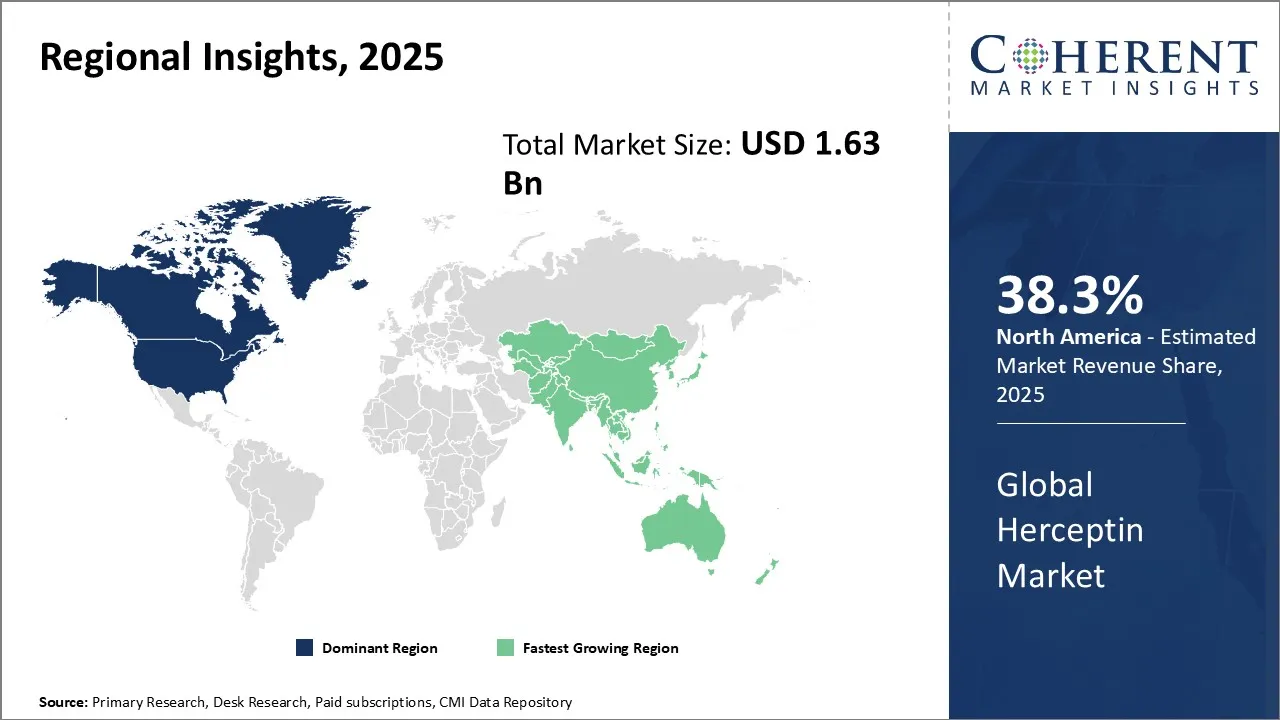
- North America is expected to lead the market, holding a share of 38. 3% in 2026. Asia Pacific is anticipated to be the fastest-growing region, with a market share of 23.3% in 2026.
Market Overview:
A prominent trend in the Herceptin market is the increasing adoption of biosimilars, which offer more cost-effective alternatives to the original biologic drug. This has intensified competition and contributed to the market’s contraction. Additionally, advancements in personalized medicine and the development of novel targeted therapies are reshaping treatment landscapes, leading to reduced reliance on Herceptin. These factors collectively drive the downward trend observed in the market valuation during the forecast period.
Currents Events and their Impact
Current Events | Description and its impact |
Technological Advancements in Drug Delivery |
|
Launch of Multiple Herceptin Biosimilars in Key Markets |
|
Segmental Analysis
- Current Industry Events of 2026
- Market Size Estimation
- Regional Breakdown
- Competitive Landscape
- Customer Intelligence
- Segmental Analysis
- Pricing Analysis
- Key Market Drivers, Challenges & Future Trends
- Customized Insights Section
Herceptin Market Insights, By Indication – Adjuvant breast cancer contributes the highest share of the market owing to its critical role in improving patient outcomes and widespread clinical adoption
The dominance of the adjuvant breast cancer segment in the global Herceptin market is primarily driven by its pivotal role in the treatment protocol following primary surgery for breast cancer patients with an estimated share of 51.1% in 2026. Adjuvant therapy with Herceptin (trastuzumab) is well-established as a standard of care for HER2-positive patients, significantly reducing the risk of cancer recurrence and improving overall survival rates. This clinical efficacy has fueled high adoption rates among oncologists worldwide, solidifying the demand within this indication.
Herceptin’s targeted mechanism, which inhibits the HER2/neu receptor, renders it highly effective in adjuvant settings where the goal is to eradicate microscopic disease that may remain after surgery. Early intervention through adjuvant therapy allows for better prognosis and extended disease-free intervals, intensifying the drug’s usage in this segment. Furthermore, international guidelines and treatment recommendations from leading oncology societies endorse Herceptin as a frontline adjuvant treatment, reinforcing confidence in its use and thereby boosting market share.
Herceptin Market Insights, by Age Group – Adult population leads the market due to higher incidence of HER2-positive cancers and tailored treatment accessibility
The adult segment commands the largest share in the global Herceptin market by age group, driven predominantly by the demographic and clinical patterns associated with HER2-positive malignancies with an estimated share of 66.2% in 2026. Breast cancer and gastric cancer, which are primary indications for Herceptin, occur most frequently in the adult population, typically ranging from early adulthood through middle age. This age group often represents the working-age population, contributing to more active healthcare seeking behavior and compliance with treatment protocols.
One of the main growth factors in the adult segment is the relatively higher prevalence of HER2-positive breast cancer among women aged 30 to 60 years. Since Herceptin therapy is specifically designed to target HER2 receptors, adults with confirmed HER2-positive diagnosis stand as the principal recipients of this biologic treatment. Moreover, adults generally have fewer concomitant health concerns compared to geriatric patients, enabling a wider therapeutic window for Herceptin administration and more aggressive treatment regimens.
Herceptin Market Insights, By Distribution Channel – Hospital pharmacy dominates the market due to structured administration requirements and integrated patient care services
The hospital pharmacy segment holds the largest share in the distribution channel segment of the global Herceptin market with an estimated share of 26.2% in 2026, primarily attributed to the specialized nature of Herceptin therapy which necessitates controlled administration and close medical supervision. As an intravenous biologic, Herceptin requires precise dosing, preparation under sterile conditions, and monitoring for infusion-related reactions, conditions that hospital settings are uniquely equipped to manage.
The administration of Herceptin within hospital environments allows healthcare professionals to provide comprehensive patient care, including pre-treatment assessments, cardiac monitoring, and management of side effects. Given the risk profile of trastuzumab, especially relating to cardiotoxicity, patients benefit from integrated multidisciplinary oversight that hospital pharmacy services facilitate, making this channel the most preferred for oncologists and patients alike.
Reimbursement Scenario for Herceptin Market
- The reimbursement scenario for Herceptin in the market is shaped by the eligibility criteria of various financial assistance programs. For patients in the U.S. with commercial (private or non-governmental) insurance, the Genentech Oncology Co-pay Assistance Program offers substantial support, potentially covering up to USD 25,000 annually. This assistance can significantly reduce the cost burden for patients with private insurance, provided they meet specific conditions, such as being 18 years or older and using Herceptin for U.S. FDA-approved indications. Notably, this program is not available for patients using state or federally funded insurance, such as Medicare or Medicaid, and patients who are receiving assistance from other charitable organizations or government-funded plans are excluded.
- Globally, the reimbursement process for Herceptin may vary by region, but many countries follow similar principles to those seen in the U.S., where access to financial assistance is often tied to specific health insurance coverage and treatment approval. In some countries, government health programs may subsidize the cost of Herceptin, while in others, patients with commercial insurance may be able to benefit from co-pay programs like those offered by Genentech. However, it is crucial for patients to verify eligibility through the available tools and programs tailored to their specific region and insurance situation, as regulations and available assistance can differ globally.
Pricing Analysis of Herceptin Market:
- The pricing of Herceptin (trastuzumab) demonstrates significant variability across global markets, with 2024 average prices per vial ranging from approximately USD 909 in Brazil to over USD 3,300 in the U.K. This disparity reflects differences in healthcare infrastructure, government price controls, reimbursement policies, and purchasing power. Countries like the U.S., the U.K., and parts of Western Europe maintain the highest price points due to historically limited biosimilar penetration and less aggressive price regulation compared to markets in Latin America and Asia Pacific. In contrast, India and Brazil offer substantially lower pricing driven by strong government intervention and rapid uptake of biosimilar alternatives. The diversity of prices underscores how geography, patent expiries, and regulatory frameworks combine to shape the commercial landscape for high-cost biologics such as Herceptin.
- Looking ahead, forecasts indicate that Herceptin’s pricing is expected to decline by up to 50% by 2032, primarily due to the widespread availability of biosimilars and evolving competition from next-generation HER2-targeted therapies. Countries with aggressive biosimilar adoption, including India, Malaysia, and Brazil, will likely see the steepest reductions. In parallel, production costs remain high because of complex biologic manufacturing, but pricing pressures are intensifying as payers impose stricter cost-effectiveness requirements. In major markets like the U.S. and Europe, estimated price reductions of 20–30% over the next eight years highlight a structural shift toward affordability, driven by policy reforms, insurance negotiations, and a broader movement to reduce oncology treatment costs.
Regional Insights:
North America Herceptin Market Analysis and Trends
In North America, which accounts for an estimated 38.3% share of the global Herceptin market in 2026, the segment is experiencing gradual decline and negative growth despite historically strong performance. A robust healthcare infrastructure, high awareness of breast cancer therapies, and significant biopharmaceutical R&D investment have long supported Herceptin’s widespread use. However, patent expirations and the rapid uptake of biosimilars have led to substantial price erosion and shrinking market share for the originator product. While supportive government policies, accelerated the U.S. FDA approval pathways, and well-established reimbursement frameworks continue to enable patient access, clinical guidelines increasingly favor next-generation HER2-targeted treatments and subcutaneous formulations, contributing to the ongoing contraction of Herceptin sales volumes in the region.
Asia Pacific Herceptin Market Analysis and Trends
The Asia Pacific region, which represents an estimated 23.3% of global share in 2026, has transitioned from high-growth expansion to slowing momentum as biosimilars reshape the competitive landscape. Rising breast cancer incidence, greater awareness about targeted therapies, and government investments in cancer care infrastructure have fueled historical growth. However, widespread adoption of cost-effective biosimilars from regional manufacturers such as Zhejiang Medicine in China and Samsung Bioepis in South Korea has accelerated pricing pressure and market maturity. Although regulatory reforms and international collaborations continue to improve biologics availability, the market is increasingly defined by competition and lower-cost alternatives, resulting in negative CAGR projections over the forecast period.
Herceptin Market Outlook for Key Countries
U.S. Herceptin Market Trends
The U.S. remains a major market for Herceptin, but it is now experiencing declining growth and negative CAGR due to widespread biosimilar uptake and the shift toward next-generation HER2-targeted therapies. While Roche continues to maintain significant brand recognition, biosimilars introduced by Amgen, Mylan, and other competitors have steadily eroded market share and exerted pricing pressure. Insurance coverage and patient assistance programs still support baseline demand; however, maturing treatment protocols and the preference for newer agents are gradually reducing Herceptin utilization despite the country’s advanced diagnostic capabilities. For instance, in March 2024, the U.S. FDA granted full approval to Merck & Co., Inc., a leading U.S.-based pharmaceutical firm, for Herceptin (pembrolizumab) in combination with trastuzumab and chemotherapy for treating HER2-positive, PD-L1-expressing advanced or metastatic gastric/GEJ adenocarcinoma. This followed its accelerated approval in May 2021, demonstrating notable survival benefits.
Germany Herceptin Market Trends
Germany Herceptin market is likewise facing market contraction, driven by strong biosimilar adoption and stringent reimbursement measures favoring cost-effective alternatives. Although the country’s commitment to precision medicine and cancer screening ensures consistent patient identification, the combined impact of patent expirations and negotiated pricing has compressed margins and slowed growth. Global companies, including Roche, Novartis, and Pfizer, continue to operate robust local subsidiaries, but competition from biosimilars has reshaped the landscape, leading to steady volume declines.
China Herceptin Market Trends
China Herceptin market, once a dynamic growth engine, has begun to moderate, reflecting increasing biosimilar competition and expanding access to alternative HER2-targeted treatments. While rising breast cancer incidence and improving healthcare infrastructure continue to underpin demand, the government’s emphasis on affordable biologics and inclusion of biosimilars in national reimbursement lists are contributing to price erosion and a slower growth outlook. Domestic manufacturers, such as Zhejiang Medicine and Innovent Biologics, are further intensifying competition, driving a gradual decline in branded Herceptin sales.
For instance, in July 2024, Prestige Biopharma, a global biopharmaceutical company, announced that the CHMP of the European Medicines Agency had recommended Tuznue, its biosimilar to Herceptin (Trastuzumab), for marketing authorization. Tuznue, which successfully completed Phase 1 and Phase 3 trials, demonstrated bio-similarity in effectiveness, safety, and immunogenicity.
Japan Herceptin Market Trends
Japan maintains a sophisticated oncology care ecosystem, but the Herceptin market is now maturing with subdued growth prospects. The widespread integration of subcutaneous formulations and newer targeted therapies has reduced dependence on intravenous Herceptin. Regulatory frameworks and reimbursement support continue to ensure patient access, but ongoing adoption of biosimilars and evolving treatment preferences are constraining market expansion. Roche’s collaborations and local partnerships remain active, yet the overall market trajectory is negative.
India Herceptin Market Trends
India Herceptin market, which previously benefited from rising awareness and government initiatives to improve cancer care access, is beginning to plateau. The rapid development and acceptance of cost-effective biosimilars from companies like Biocon have transformed pricing dynamics, resulting in shrinking revenues for originator products. Although healthcare infrastructure improvements and expanded insurance coverage support treatment uptake, intense competition and the push for affordable alternatives are driving negative growth trends in the branded segment.
Market Players, Key Developments, and Competitive Intelligence:
Company Insights
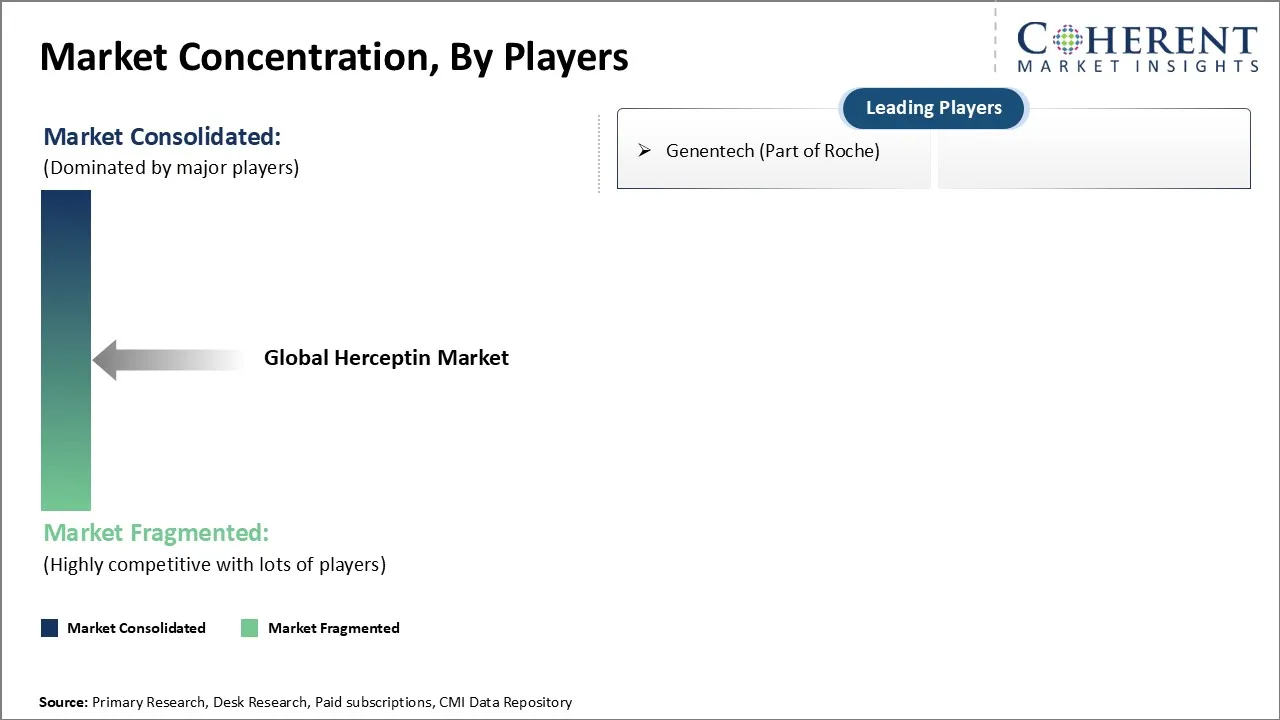
- Genentech, part of the Roche Group, is a leading biotechnology company headquartered in South San Francisco, California, known for developing innovative cancer therapies. Among its most impactful products are Herceptin (trastuzumab) and Herceptin Hylecta, targeted treatments for HER2-positive breast and gastric cancers.
- Herceptin has long been a standard of care in oncology, improving survival rates by specifically blocking the HER2 receptor involved in aggressive tumor growth. To enhance patient convenience, Genentech introduced Herceptin Hylecta, a subcutaneous version that delivers the same benefits in a faster injection. These therapies have transformed cancer care worldwide while requiring close monitoring for heart function and other serious risks.
Market Report Scope
Herceptin Market Report Coverage
| Report Coverage | Details | ||
|---|---|---|---|
| Base Year: | 2025 | Market Size in 2026: | USD 1.63 Bn |
| Historical Data for: | 2020 To 2024 | Forecast Period: | 2026 To 2033 |
| Forecast Period 2026 to 2033 CAGR: | -5.42% | 2033 Value Projection: | USD 1.02 Bn |
| Geographies covered: |
| ||
| Segments covered: |
| ||
| Companies covered: | Genentech (Part of Roche) | ||
| Growth Drivers: |
| ||
| Restraints & Challenges: |
| ||
Herceptin Market Dynamics
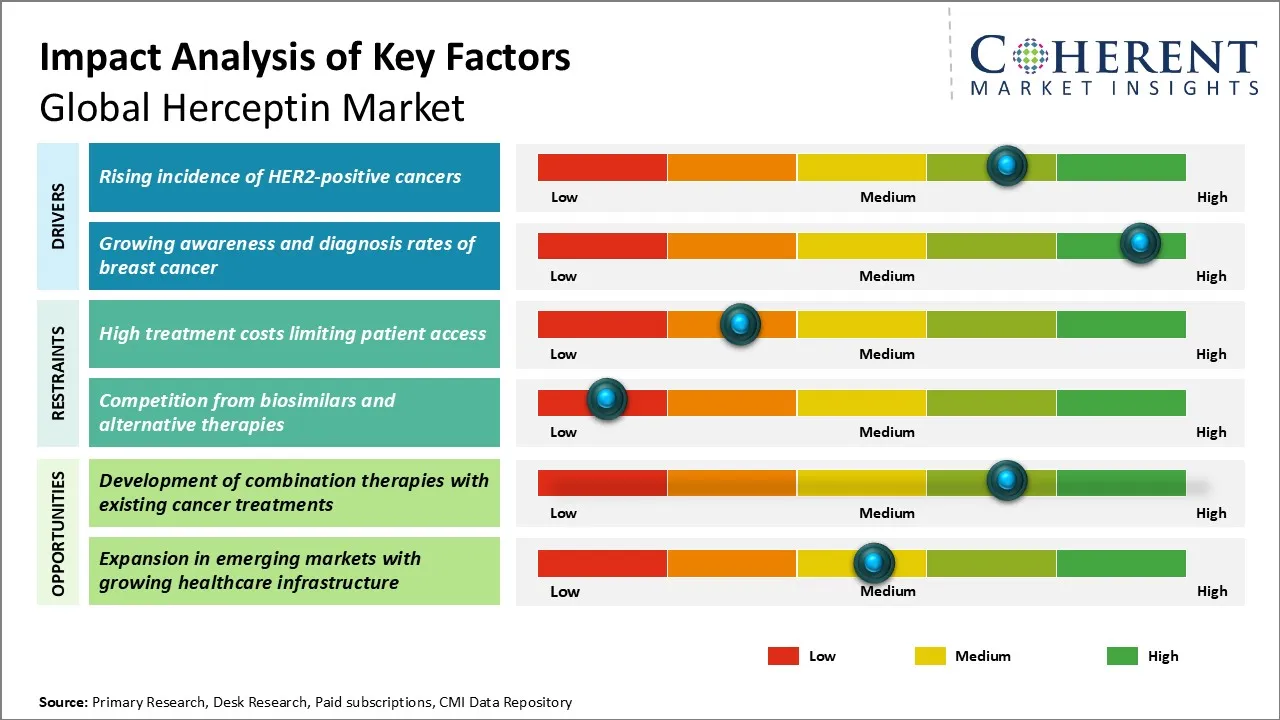
Herceptin Market Driver - Rising Incidence of HER2 ‑positive Cancers
While the prevalence of HER2-positive cancers, especially breast cancer, continues to rise globally, this trend has not been sufficient to offset the overall decline in the Herceptin market, which is experiencing slow growth and a negative CAGR. HER2-positive tumors, known for their aggressive nature and poorer prognosis, remain an important target for therapy. However, the growing incidence is increasingly addressed through biosimilars and next-generation HER2-targeted treatments, which have steadily displaced branded Herceptin in many markets. Improved diagnostic capabilities, heightened awareness, and broader screening efforts have expanded early detection, but these same factors have accelerated the shift to newer or more cost-effective alternatives. As a result, even as more patients are diagnosed, Herceptin’s share of treatment regimens continues to decline amid evolving clinical guidelines and competitive pressures.
For instance, according to the World Health Organization (WHO), in March 2024, breast cancer is the most common cancer in women worldwide, with 2.3 million new cases and about 670,000 deaths globally in 2022. It occurs in every country, and about half of all cases happen in women with no specific risk factors beyond being female and older age. Roughly 0.5–1% of cases occur in men. Moreover, in January 2025, the American Cancer Society reported that approximately 20-25% of breast cancers are HER2-positive, highlighting the substantial patient population that can benefit from targeted therapies like Herceptin.
Herceptin Market Opportunity - Development of Combination Therapies with Existing Cancer Treatments
The global Herceptin market presents a significant opportunity through the development of combination therapies that integrate Herceptin with existing cancer treatments. As breast cancer and other HER2-positive cancers continue to pose treatment challenges due to resistance and suboptimal responses to monotherapy, combining Herceptin with chemotherapy, targeted agents, or immunotherapies offers enhanced efficacy and improved patient outcomes. Recent advancements in oncology have demonstrated that synergistic effects achieved through combination regimens can overcome drug resistance mechanisms and reduce tumor progression more effectively than Herceptin alone.
Additionally, combination therapies can be tailored to target multiple signaling pathways involved in tumor growth and metastasis, thereby expanding the therapeutic scope of Herceptin. Market players investing in research and clinical trials to develop and validate these combinations stand to benefit from accelerated regulatory approvals and expanded indications.
In December 2020, Roche, a global leader in biotechnology based in Basel, Switzerland, announced that the European Commission approved Phesgo, a fixed-dose combination of Perjeta (pertuzumab) and Herceptin (trastuzumab) with hyaluronidase for subcutaneous injection in people with early and metastatic HER2-positive breast cancer.
Analyst Opinion (Expert Opinion):
- The global Herceptin market has entered a phase of slow decline, with a negative CAGR driven largely by widespread biosimilar competition, patent expiries, and the growing adoption of next-generation HER2-targeted therapies such as Phesgo and Kadcyla. While Herceptin set a high standard as a cornerstone biologic in HER2-positive breast cancer treatment, the market is now under pressure as payers and health systems prioritize cost-effectiveness. Regulatory efforts to accelerate biosimilar approvals and policies promoting price transparency have further intensified pricing erosion across mature markets. Despite these headwinds, emerging economies still present opportunities to expand access through biosimilar uptake and public health initiatives aimed at reducing cancer care disparities. However, challenges remain, including reimbursement variability, clinician education gaps around biosimilars, and logistical hurdles in transitioning patients to newer formulations.
- Relevant forums such as the European Society for Medical Oncology (ESMO) Congress, American Society of Clinical Oncology (ASCO) Annual Meeting, and San Antonio Breast Cancer Symposium (SABCS) have played a pivotal role in disseminating long-term efficacy data, including ten-year APHINITY study results supporting the sustained benefit of Perjeta-based regimens over standalone Herceptin. Additionally, Roche’s launch of Phesgo, a fixed-dose subcutaneous combination approved by the European Commission, has reshaped treatment delivery by significantly reducing infusion time and healthcare resource utilization. Collectively, these developments signal a continued shift away from conventional Herceptin usage toward innovative combinations and more patient-centric delivery models, underscoring the market’s transition toward gradual contraction over the forecast period.
Speak to the analyst
Want personalized insights?
Take the findings above to one of our principal consultants, or have the report rebuilt around the segments, geographies and competitors you actually track.
Market Segmentation
- Indication Insights (Revenue, USD Bn, 2021 - 2033)
- Adjuvant Breast Cancer
- Metastatic Breast Cancer
- Metastatic Gastric Cancer
- Age Group Insights (Revenue, USD Bn, 2021 - 2033)
- Adult
- Geriatric
- Distribution Channel Insights (Revenue, USD Bn, 2021 - 2033)
- Hospital Pharmacy
- Retail Pharmacy
- Online Pharmacy
- End User Insights (Revenue, USD Bn, 2021 - 2033)
- Hospitals
- Oncology Centers
- Infusion Centers
- Ambulatory Surgical Centers (ASCs)
- Specialty Clinics, etc.
- Others (Academic & Research Institutes.)
- Regional Insights (Revenue, USD Bn, 2021 - 2033)
- North America
- U.S.
- Canada
- Latin America
- Brazil
- Argentina
- Mexico
- Rest of Latin America
- Europe
- Germany
- U.K.
- Spain
- France
- Italy
- Russia
- Rest of Europe
- Asia Pacific
- China
- India
- Japan
- Australia
- South Korea
- ASEAN
- Rest of Asia Pacific
- Middle East
- GCC Countries
- Israel
- Rest of Middle East
- Africa
- South Africa
- North Africa
- Central Africa
- North America
- Key Players Insights
- Genentech (Part of Roche)
Sources
Primary Research Interviews:
- Medical professionals (oncologists, researchers)
- Hospital administrators and healthcare providers
- Pharmaceutical industry experts
- Regulatory bodies (U.S. FDA, EMA, etc.)
Databases:
- World Health Organization (WHO)
- U.S. Food and Drug Administration (FDA)
- European Medicines Agency (EMA)
- Centers for Disease Control and Prevention (CDC)
- National Institutes of Health (NIH)
- National Cancer Institute (NCI)
- Global Health Data Exchange (GHDx)
Magazines:
- The New England Journal of Medicine
- Journal of Clinical Oncology
- Cancer Research
- Pharmaceutical Technology
- The Lancet Oncology
Journals:
- Journal of the National Cancer Institute
- Oncology Reports
- Cancer Chemotherapy and Pharmacology
- Nature Reviews Clinical Oncology
Newspapers:
- The New York Times
- The Guardian
- The Wall Street Journal
Associations:
- American Society of Clinical Oncology (ASCO)
- American Cancer Society (ACS)
- European Society for Medical Oncology (ESMO)
- International Agency for Research on Cancer (IARC)
- Breast Cancer Research Foundation (BCRF)
Public Domain Sources:
- National Library of Medicine (NLM)
- SEER (Surveillance, Epidemiology, and End Results) Program
- Medicare and Medicaid Drug Spending Dashboards
- WHO Cancer Country Profiles
- National Institutes of Health (NIH) Reports
Proprietary Elements:
- CMI Data Analytics Tool: Proprietary analytics tool to analyze real-time market trends, consumer behavior, and technology adoption in market
- Proprietary CMI Existing Repository of Information for Last 8 Years
Get access to 250+ pages report
Every segment, forecast, competitor profile and data table behind the analysis above — available for instant download.
- ESOMAR Member
- ISO 9001:2015 Certified
- D-U-N-S Registered
- GDPR & CCPA Compliant
Missing comfort of reading report in your local language? Find your preferred language:
Transform your Strategy with Exclusive Trending Reports
Frequently Asked Questions
The global Herceptin market is estimated to be valued at USD 1.63 Bn in 2026 and is expected to reach USD 1.02 Bn by 2033.
The CAGR of the global Herceptin market is projected to be -5.42% from 2026 to 2033.
Rising incidence of HER2‑positive cancers and growing awareness and diagnosis rates of breast cancer are the major factors driving the growth of the global Herceptin market.
High treatment costs limiting patient access and competition from biosimilars and alternative therapies are the major factors hampering the growth of the global Herceptin market.
In terms of indication, adjuvant breast cancer is estimated to dominate the market revenue share in 2026.
Genentech (Part of Roche) is a major player in the market.
North America is expected to lead the global Herceptin market in 2026.