

Hummus Market Size and Forecast – 2026 To 2033
The global hummus market is expected to grow from USD 5.87 Bn in 2026 to USD 12.11 Bn by 2033, registering a compound annual growth rate (CAGR) of 10.9%. Measurable change in consumer behavior, specifically the swift growth of the global consumption of plant-based and health-focused diets, has been fueling the market growth.
The use of products like hummus, which are plant-based protein sources, is growing in major markets like the U.S. and Europe, as tens of millions of consumers in these regions are actively cutting back on animal products in their diet. Moreover, vegan and flexitarian diets have gained on the global stage in recent years, with surveys indicating that more than 25–30% of consumers are reducing meat intake.
Key Takeaways of the Global Hummus Market
- Classic Hummus is expected to account for 33.6 % of the global hummus market, thanks to consumers' preference for traditional Mediterranean flavors, clean-label ingredients, and plain chickpea-based recipes. Classic hummus is sold as a healthy alternative to dairy dips and processed spread in North America, particularly in the U.S. Brands such as Sabra and Hope Foods have historically sold most of their hummus in the main stream retailers, like Walmart and Costco, where new hummus buyers begin with the classic/plain variants before moving onto other variants.
- Tub & caps are projected to account for 47.6 % of the global hummus market in 2026, due to great convenience, ease of being resealed, and portion control characteristics, which are well suited for home use and cold pack retail distribution. It is also consistent with supermarket merchandising and bulk purchasing habits in developed markets. For instance, retailers such as Kroger and Tesco have increased the number of hummus tubs in their stores, which are 200-500g resealable, favored by city dwellers for snacking and lunch box purchases, driving repeat sales.
- Supermarkets and hypermarkets are projected to hold 43.6 % share of the hummus market in 2026, where hummus is highly visible, has a high private label presence, and is offered with a discount by the stores, providing one-stop convenience for consumers. They are favored over other outlets by consumers with refrigerated dips such as hummus, which allows them to compare different brands and freshness in a single location. In the U.S., for instance, supermarkets have end cap refrigerated aisles for hummus, and store brands and Sabra are in direct competition, encouraging impulse buying.
- North America is expected to account for 41.6 % share of the hummus market in 2026 as the region has a high number of health-conscious consumers, an advanced plant-based food market, and developed retail infrastructure. The commotion of urban living has led to a greater need for quick and easy protein packed snacks such as hummus. Examples include Mediterranean dips, particularly hummus, have become a widely consumed food category in both the United States and Canada. Once mainly available in specialty or ethnic food stores, hummus is now a mainstream product found in everyday retail environments such as supermarkets and convenience stores.
- The hummus market is expected to grow at the highest rate in Asia Pacific, accounting for 21.6 % of the market by 2026, as the region is undergoing fast urbanization, higher disposable income, and exposure to western and Middle Eastern cuisines. According to the Food and Agriculture Organization (FAO), rapid urbanization in Asia is significantly increasing food demand, with total food requirements in Asian cities projected to rise sharply over the coming decades due to population concentration and lifestyle shifts toward processed and convenience foods (Source: FAO). The urban growth is especially pronounced as consumers turn to health and try out international food trends as snacks. In emerging markets like India, UAE, and Singapore, hummus is now being sold in modern retail stores like Reliance Fresh and Carrefour, and is increasingly referred to as “a healthy international dip” which is driving trial and repeat consumption.
- Urbanization-Driven Demand Expansion: Rapid urbanization and changing dietary patterns are increasing demand for convenient, ready-to-eat foods such as hummus, particularly in metropolitan areas. The expansion of modern retail formats and convenience-driven lifestyles is supporting wider consumption beyond specialty stores into mainstream supermarkets and convenience outlets.
- Income Growth and Dietary Diversification: Rising disposable incomes are enabling consumers to adopt more diverse and protein-rich diets or functional protein including plant-based spreads like hummus. Higher-income and urban populations show greater inclination toward international and health-oriented foods, accelerating category penetration across emerging markets.
Segmental Insights
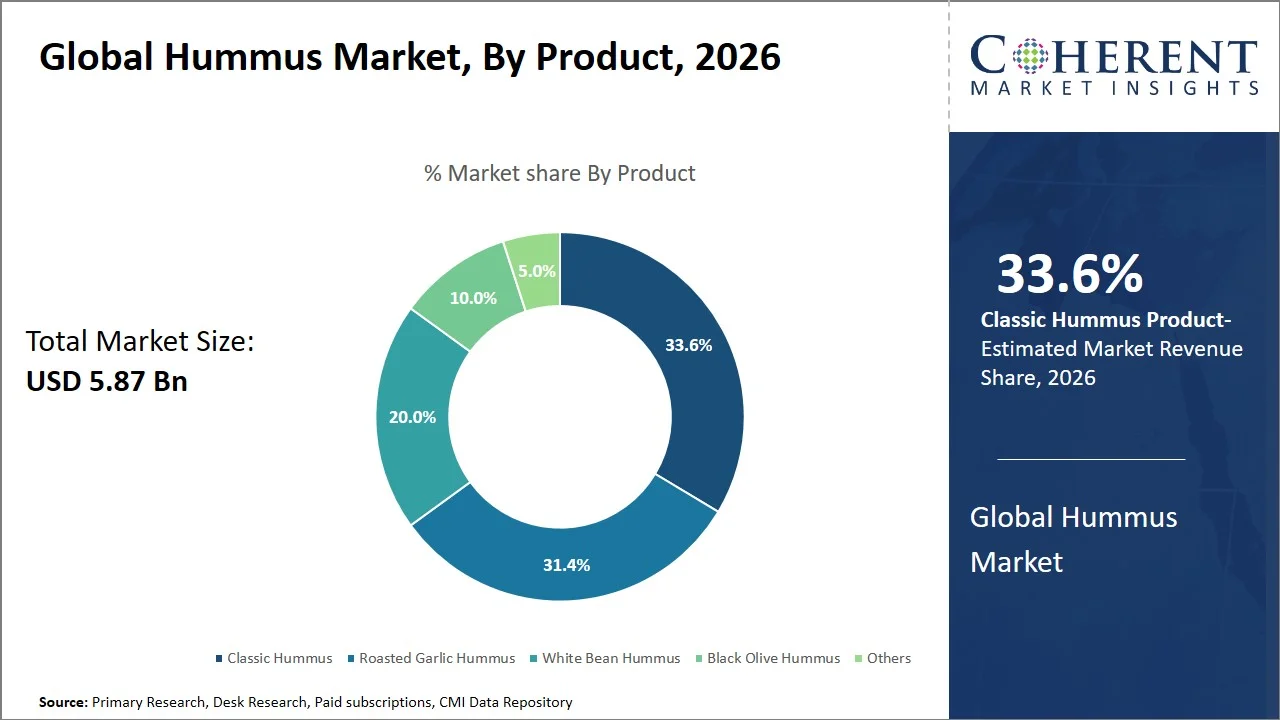
Why Does Classic Hummus Dominate the Global Hummus Market?
The Classic Hummus segment dominates the global hummus market with an estimated 33.6% share in 2026, as it caters to the broadest consumer base, across cultures, retail channels, and usage occasions. Hummus is a traditional dish in Middle Eastern and Mediterranean cuisine and the classic hummus is the most known one. Hummus is most commonly known to consumers worldwide as the chickpea–tahini version of the recipe – the gold standard for consumers.
As with Brands like Sabra and Cedar's Foods, there is a focus on classic hummus as the main product, along with a larger portion of shelf space given to this variety because of its consistent demand.
- Current Industry Events of 2026
- Market Size Estimation
- Regional Breakdown
- Competitive Landscape
- Customer Intelligence
- Segmental Analysis
- Pricing Analysis
- Key Market Drivers, Challenges & Future Trends
- Customized Insights Section
Why are Tubs & Cups the Most Preferred Packaging in the Hummus Market ?
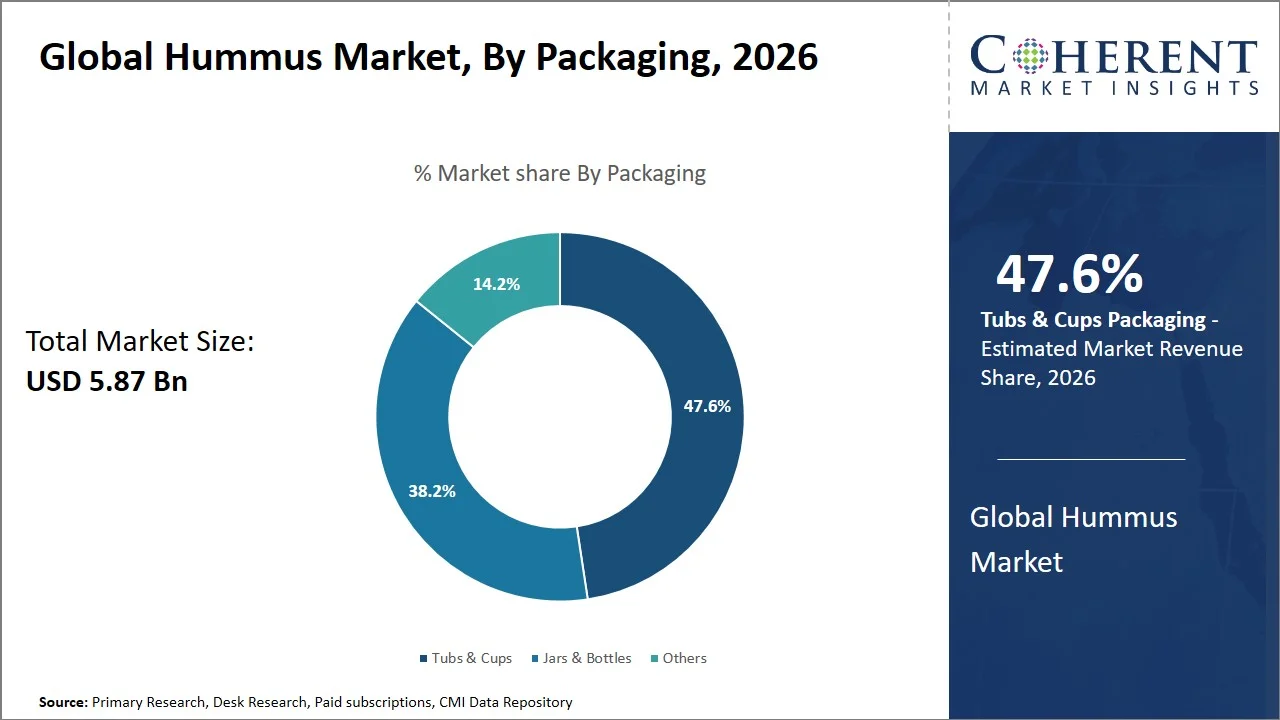
Tubs & cups are expected to capture 47.6% of the hummus market in 2026 as they are an effective solution for modern consumer's preferences for convenience, portability, freshness, and ease of storage. Hummus is enjoyed as a ready-to-eat food or an accompaniment to meals, so consumers like products that are packaged in such a way that they can be consumed directly from the package. Small, single-serve cups and medium size tubs are particularly popular with the busy office worker, students, and consumers looking for fast, healthy snack choices.
For instance, Fresh Cravings has rolled out a family-size 17-ounce hummus container for Walmart and other select retailers. The four flavors available in the family size are Roasted Red Pepper, Honey Jalapeño, Classic, and Roasted Garlic. (Source: Fresh Cravings)
Supermarkets & Hypermarkets Segment Dominates the Global Hummus Market
Supermarkets and hypermarkets are projected to hold 43.6% share of the global hummus market because they offer consumers convenience, product variety, strong refrigeration infrastructure, and extensive product visibility under a single retail environment. Most consumers like buying hummus as they buy their regular groceries, and not from specialty stores. Hummus is frequently eaten with bread, vegetables, chips or deli food, so supermarkets are the perfect place for their customers to easily buy complementary food items at once.
For instance, Rojo's Hummus & Tortilla Chips Snack Packs were launched as refrigerated single-serve kits combining hummus with portioned chips, designed specifically for supermarket deli and convenience store shelves. These packs are placed in ready-to-eat refrigerated sections so consumers can quickly add them to lunch baskets or snack purchases without preparation.
Currents Events and their Impact
Current Events | Description and its Impact |
Rising Global Demand for Plant-Based Protein Diets |
|
Expansion of E-Commerce and Offline Retail in Emerging Economies |
|
Hummus Market Dynamics
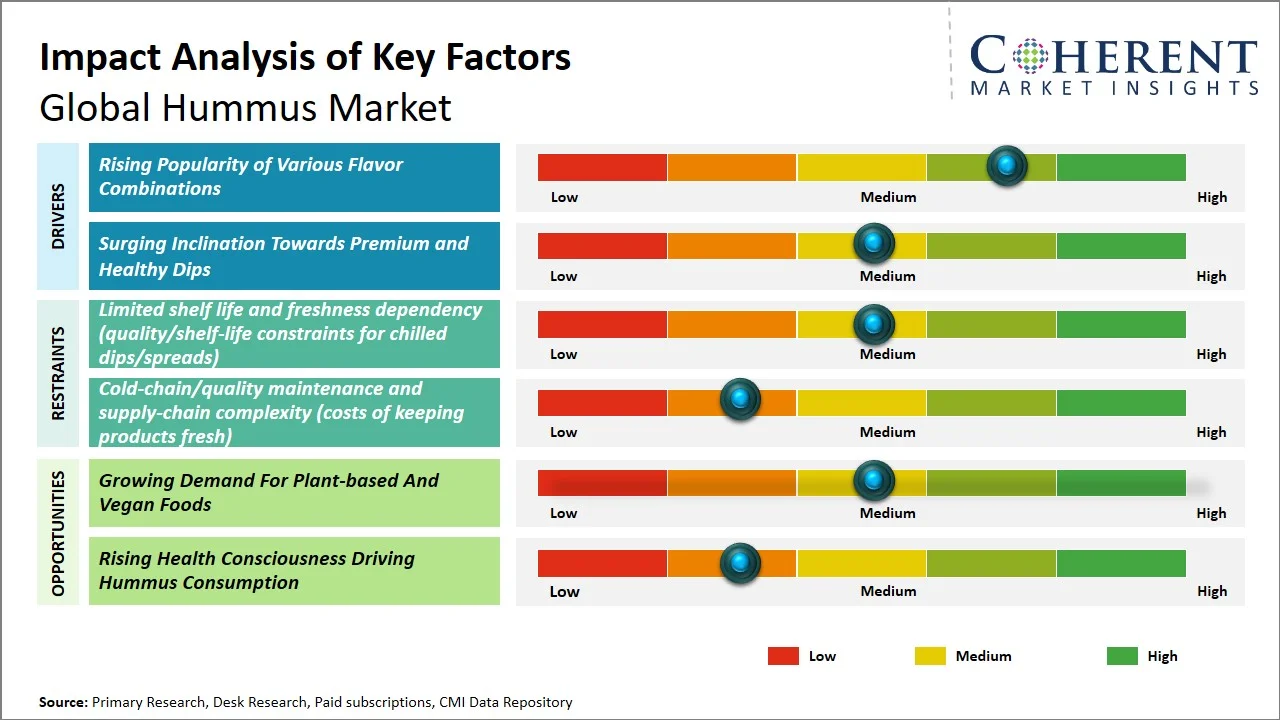
Market Drivers
- Rising Popularity of Various Flavor Combinations: The growing popularity of various unique and novel flavors in dips across the consumer base worldwide has played a crucial role in propelling the market growth. Manufacturers are always carrying out product innovation to satisfy the customer's preference and tastes. Fresh Craving's introduction of two new innovative hummus flavors in November 2023, Tajín Chili Lime Hummus and Dill Pickle, are among the new items available. These new products were developed in partnership with Tajin Seasoning, a Mexican brand. As consumers shift focus to immunity in the face of the pandemic, functional ingredients featuring immunity properties are leading the way. The rising health focus is making functional flavors with herbs and spices popular, such as turmeric, lavender, lime, and blueberry. In addition, the relatively long product shelf-life and the low cost have enhanced the market growth.
- Surging Inclination Towards Premium and Healthy Dips: The potential health-beneficial attributes of hummus due to the presence of various proteins, fiber, antioxidants, vitamins, and other nutritional constituents have significantly driven its demand. The demand for healthy snacks is growing – between the meals, as well as on the go, with health indulgence playing a crucial role. Moreover, the product has become even more popular among the millennials, which are one of the health-conscious consumers. Moreover, hummus is popular for its distinct flavor, ease of use and as a plant-based dip, which makes it a standout in the mind of consumers to make it a fridge staple. Besides, consumers' busy and fast-paced lifestyles have created an even greater demand for healthy bite-sized snacks that has helped drive its sales success.
Emerging Trends
- Premiumization and Functional Innovation: Hummus is transforming from a classic dip to a premium, health-conscious food segment with artisanal flavors, organic ingredients, and even superfoods, high protein, and probiotics. Staff member taste-testing, along with limited edition regional flavors and gourmet options, is helping brands boost consumer engagement and pricing power.
- Consumer preference for minimally processed and plant-based foods is pushing demand for hummus products which are preservative-free, low fat, organic, gluten-free, and free from GMOs. Consumers are more health-conscious and increasingly looking for clean-label ingredient transparency, making it increasingly a priority for brands.
- Innovation in Single-Serve Cups, Snack Kits and Crackers/Vegetable Packaging: The rise of on-the-go snacking has heightened innovation in the area of single-serve snack cups, snack kits combined with crackers/vegetables, and resealable packaging that appeals to the convenience-conscious urban consumer.
Regional Insights
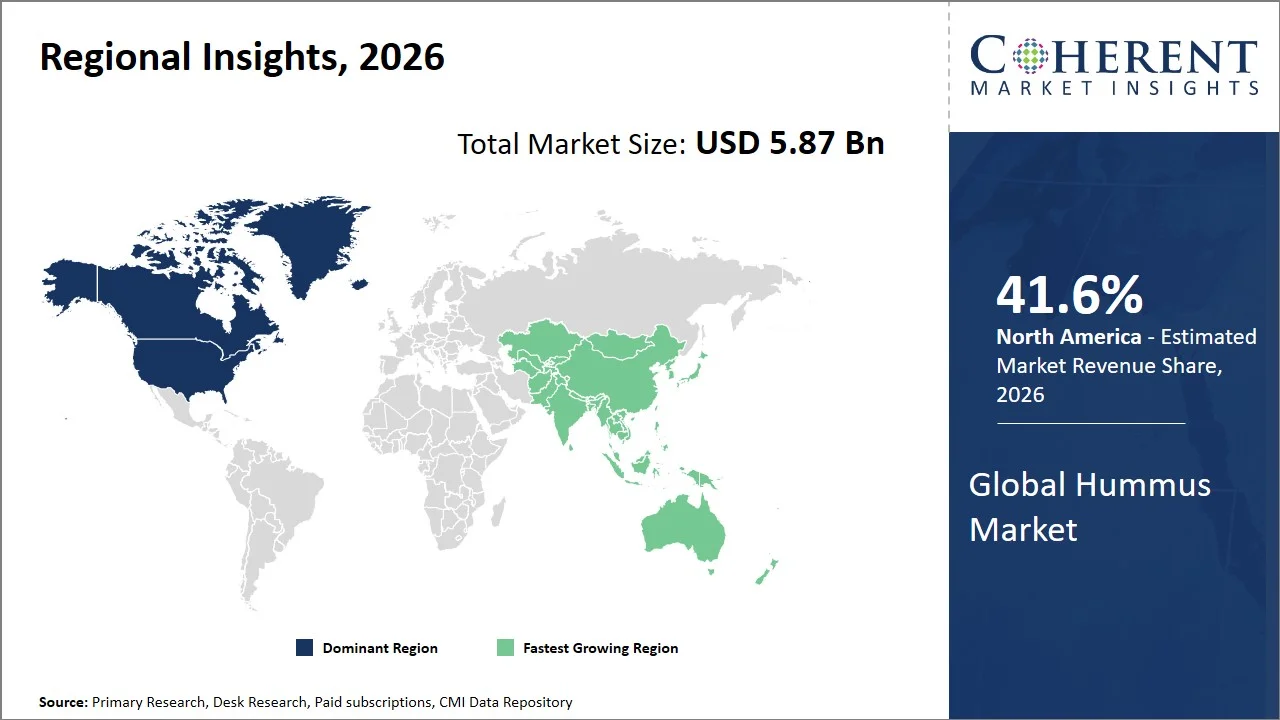
Why is North America a Strong Market for Hummus ?
North America is expected to hold 41.6% share of the hummus market in 2026, driven by health-conscious eating habits, growing popularity of plant-based diets, the growth in Mediterranean food consumption, and the well-developed retail market. According to studies, an estimated 25% of Americans now store hummus in their fridge. In addition, the growing trend in favor of veganism in the region is a factor that is impacting consumers' demand for these plant-based dips.
Why Does Asia Pacific Hummus Market Exhibit the Fastest Growth?
Asia Pacific hummus market is projected to be the fastest-growing regional market globally with 21.6% share in 2026. The rapid growth of health consciousness among urban consumers is the strongest market growth driver in the region. Countries like India, China, Japan, South Korea, and Australia are experiencing obesity, diabetes, and cardiovascular disease epidemics, which are driving consumers to look for healthier food options. As a low-fat, high-protein food that is also packed with fiber and healthy fat, hummus has become more popular than ever with health-conscious millennials and urban middle-class individuals.
Global Hummus Market Outlook for Key Countries
Why is the U.S. Leading Innovation and Adoption in the Hummus Market ?
The U.S. hummus market is the largest in the world and is growing due to a growing preference for plant-based snacks and refrigerated dips. In November 2024, PepsiCo announced the acquisition of 100% of Sabra and Obela to take the refrigerated dips portfolio to the next level. Sabra's Virginia plant is said to churn out almost 10,000 tons of hummus a month, which shows the magnitude of hummus demand and penetration in the U.S. (source: PepsiCo)
Is U.K. a Favorable Market for Hummus Market ?
The U.K. hummus market is expanding rapidly due to increasing consumer preference for healthy Mediterranean-style snacks and vegan food products. Hummus was mainstreamed with The Guadian reporting that Britons spent almost USD 216 million (£170 million) per year on hummus and that 41% of households in the U.K. keep a supply of hummus at home in February 2025 (Source: The Guardian). Hummus has also been added to the U.K. inflation basket by the Office for National Statistics, another indicator of its significance in consumers' diet.
Is Canada Emerging as a Key Growth Hub for the Hummus Market ?
Canada is emerging as a strong hummus consumption market due to growing multicultural food habits and increasing preference for healthy snacking. The North American distribution chains and brands like Sabra and Cedars are strong assets to the country. The demand for hummus has also been fueled by greater immigration from Middle Eastern and Mediterranean communities, which has boosted sales from retail chains across Canada.
Why Does Germany Top the European Hummus Market ?
Germany’s hummus market is benefiting from the country’s rapidly growing vegan and organic food sector. Retailers and brands are expanding flavored and plant-based hummus offerings to meet consumer demand for clean-label convenience foods. Germany also has strong demand for organic hummus products, with brands such as Alnatura expanding the distribution of organic vegan hummus products in mainstream retail and online grocery channels.
Is Hummus Market Developing in India?
The hummus market is actively developing in India and is in a strong growth phase, driven by rising health awareness, urban lifestyle changes, and increasing demand for plant-based foods. The market is still relatively new compared to Western countries, but it is expanding quickly and showing one of the highest growth rates globally. For example, urban grocery chains like Nature’s Basket, Foodhall, and Reliance Smart Bazaar now regularly stock multiple hummus variants such as classic hummus, roasted garlic hummus, and beetroot hummus. Online grocery platforms like Blinkit, Swiggy Instamart, and BigBasket also list several domestic and imported hummus brands, showing that demand is strong enough for quick-commerce distribution.
Chickpea Supply Chain Volatility Data
Year | Country | Chickpea Production (Metric Tons) | Yield (kg/ha) | Wholesale Price (USD/ton) | Import Dependency (%) |
2022 | India | 12,000,000 | 980 | 680 | 4 |
2023 | India | 9,800,000 | 820 | 760 | 9 |
2024 | India | 11,500,000 | 940 | 700 | 6 |
How does the growing demand for plant-based and vegan foods create new growth opportunities in the hummus market?
The rising popularity of plant-based and vegan diets is creating additional growth opportunities in the hummus market, as hummus is a natural choice for consumers looking to cut back on or forgo animal products. Hummus is already a plant-based, nutrient-dense, and protein-rich food, and it is an excellent alternative to dairy and meat spreads and their processed protein counterparts. With the growing popularity of vegan, vegetarian, and flexitarian diets worldwide, consumers are looking for easy-to-consume, ready-to-eat plant protein sources that hummus delivers.
In some western countries, for instance, hummus has become a regular, ordinary food that is available at the supermarket, and there are several varieties of hummus, including roasted garlic, spicy chilli, and beetroot hummus, to suit different tastes. In the U.K., hummus is so popular that it is part of the national inflation basket, thereby demonstrating its high level of incorporation into the regular dietary life.
Market Players, Key Development, and Competitive Intelligence
Key Developments
- In September 2023, Sabra, a hummus brand, launched Buffalo Hummus made with Frank’s redhot, BBQ hummus. This new Mediterranean Roasted garlic and Spicy Harissa targeted consumers across the U.S.
- In July 2022, Trader Joe, a U.S.-based grocery chain, launched its new chocolate hummus with 50 calories per serving. The new hummus would be suitable with sliced apples, freeze dried strawberries, banana chips, and other snacks.
Competitive Landscape
The hummus market is highly competitive, driven by increasing consumer demand for healthy snacking, plant-based nutrition, and convenient ready-to-eat food products. Large food manufacturers compete through brand recognition, distribution scale, and product innovation, while regional and emerging brands differentiate through clean-label positioning, authentic flavors, and premium ingredient offerings. Key focus areas include:
- Clean-label, preservative-free, and high-protein product development
- Flavor innovation and expansion into functional and premium hummus variants
- Expansion across retail, foodservice, convenience stores, and online grocery channels
Market Report Scope
Hummus Market Report Coverage
| Report Coverage | Details | ||
|---|---|---|---|
| Base Year: | 2025 | Market Size in 2026: | USD 5.87 Bn |
| Historical Data for: | 2020 To 2024 | Forecast Period: | 2026 To 2033 |
| Forecast Period 2026 to 2033 CAGR: | 10.9% | 2033 Value Projection: | USD 12.11 Bn |
| Geographies covered: |
| ||
| Segments covered: |
| ||
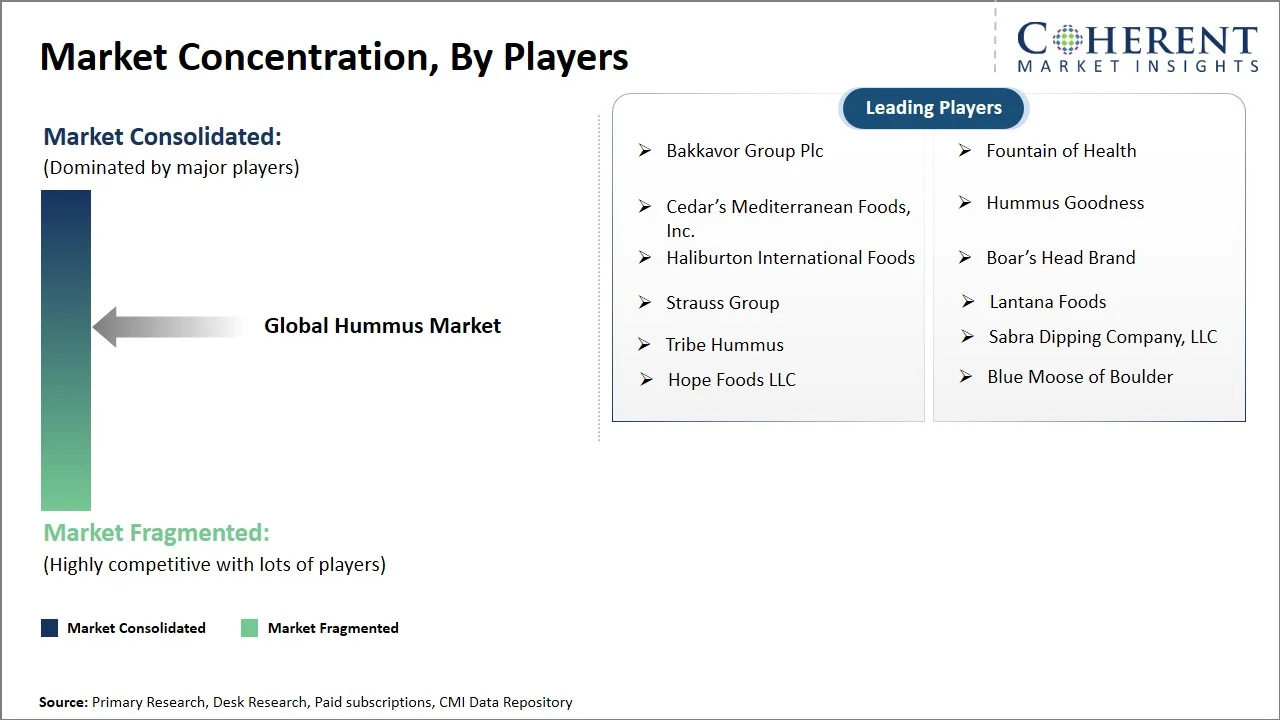
| Companies covered: | Bakkavor Group Plc, Cedar’s Mediterranean Foods, Inc., Haliburton International Foods, Strauss Group, Tribe Hummus, Hope Foods LLC, Fountain of Health, Hummus Goodness, Boar’s Head Brand, Lantana Foods, Sabra Dipping Company, LLC, and Blue Moose of Boulder | ||
| Growth Drivers: |
| ||
| Restraints & Challenges: |
| ||
Analyst Opinion (Expert Opinion)
- Hummus is becoming a more typical and high frequency functional food, rather than a niche ethnic dip market. Hummus will continue to move beyond its niche and become a part of daily snacking, complementary food to healthy meals, as a protein source in convenient foods, and as an ingredient and part of nutrition portfolios based on plant products over the next decade. Nowadays, clean-label eating, increase in protein consumption, awareness of gut health, and the demand for minimally processed foods are all having a significant influence on consumer behaviour. Hummus is a food naturally suited to all the four trends.
- Premiumisation and format innovation are likely to drive the category's future growth rather than just volume growth. In addition to the traditional classic hummus, added-value products are forecast to be introduced in the form of high-protein hummus, functional hummus (probiotics, seeds, adaptogens), dessert hummus, regional varieties, and portable snack-pack hummus. There will be more integration of refrigerated convenience and ready-to-eat meals than as a standalone product.
Speak to the analyst
Want personalized insights?
Take the findings above to one of our principal consultants, or have the report rebuilt around the segments, geographies and competitors you actually track.
Market Segmentation
- Product Insights (Revenue, USD Bn, 2021 - 2033)
- Classic Hummus
- Roasted Garlic Hummus
- White Bean Hummus
- Black Olive Hummus
- Others
- Packaging Insights (Revenue, USD Bn, 2021 - 2033)
- Tubs & Cups
- Jars & Bottles
- Others
- Distribution Channel Insights (Revenue, USD Bn, 2021 - 2033)
- Supermarkets & Hypermarkets
- Convenience Stores
- Grocery Stores
- Online Retailers
- Regional Insights (Revenue, USD Bn, 2021 - 2033)
- North America
- U.S.
- Canada
- Latin America
- Brazil
- Argentina
- Mexico
- Rest of Latin America
- Europe
- Germany
- U.K.
- Spain
- France
- Italy
- Russia
- Rest of Europe
- Asia Pacific
- China
- India
- Japan
- Australia
- South Korea
- ASEAN
- Rest of Asia Pacific
- Middle East
- GCC Countries
- Israel
- Rest of Middle East
- Africa
- South Africa
- North Africa
- Central Africa
- North America
- Key Players Insights
- Bakkavor Group Plc
- Cedar’s Mediterranean Foods, Inc.
- Haliburton International Foods
- Strauss Group
- Tribe Hummus
- Hope Foods, LLC
- Fountain of Health
- Hummus Goodness
- Boar’s Head Brand
- Lantana Foods
- Sabra Dipping Company, LLC
- Blue Moose of Boulder
Sources
Primary Research Interviews
- Hummus producer
- Supply Chain Director of food ingredients supplier
- Sabra (leading hummus brand specialist)
- Sustainability Officer of food certification authority
Stakeholders
- Manufacturers of hummus and dips (e.g., Sabra, Cedar's, Tribe, Hope Foods)
- End-use Sectors
- Retail Grocery Chains (e.g., Walmart, Kroger, Whole Foods)
- Foodservice Providers (e.g., Sysco, US Foods)
- Health Food Stores and Delis (e.g., Trader Joe's, Fresh Market)
- Regulatory & Certification Bodies: FDA (food safety), USDA Organic (certification), Kosher Certification (OU, OK), International Food Standards (IFS).
- E-commerce Platforms and Retailers: Amazon Fresh, Instacart, Walmart.com, Specialty suppliers like iHerb.
- Technology Integration Players: Innovators in plant-based dips and flavor tech (e.g., Beyond Meat alternatives, Givaudan for flavors)
Databases
- UN Comtrade Database (HS Code 2106.90 for food preparations, relevant to hummus)
- India Import Export (EXIM) Database
- USDA Foreign Agricultural Service Reports (pulses and spreads)
- Eurostat Trade Statistics for Food Products
- USITC DataWeb for prepared food imports
Magazines
- Food Processing Magazine – Trends in dips and spreads
- Progressive Grocer – Hummus category growth
- Prepared Foods – Plant-based snack innovations
- Snack Food & Wholesale Bakery – Dips market dynamics
- Natural Products Insider – Clean-label hummus
Journals
- Journal of Food Science – Shelf-life of chickpea dips
- Food Chemistry – Nutritional profiles of hummus variants
- Trends in Food Science & Technology – Fermentation in spreads
- International Journal of Food Microbiology – Safety in tahini-based products
- Journal of Agricultural and Food Chemistry – Antioxidant properties in hummus
Newspapers
- The Wall Street Journal – Consumer trends in healthy snacks
- Business Standard (India) – Growth in imported dips
- Food Dive – Supply chain for plant-based foods
- Supermarket News – Hummus category sales
Associations
- International Hummus Alliance
- Specialty Food Association (SFA)
- National Grocers Association (NGA)
- Institute of Food Technologists (IFT)
- American Pulse Association (for chickpeas)
- Natural Products Association (NPA)
Public Domain Sources
- FDA – Guidelines for dips and spreads safety
- USDA – Nutritional data on legumes and tahini
- WHO – Reports on plant-based protein consumption
- FAO – Global pulse production statistics
Proprietary Elements
- CMI Data Analytics Tool, Proprietary CMI Existing Repository of information for last 10 years.
Get access to 250+ pages report
Every segment, forecast, competitor profile and data table behind the analysis above — available for instant download.
- ESOMAR Member
- ISO 9001:2015 Certified
- D-U-N-S Registered
- GDPR & CCPA Compliant
Missing comfort of reading report in your local language? Find your preferred language:
Transform your Strategy with Exclusive Trending Reports
Frequently Asked Questions
The global hummus market is estimated to be valued at USD 5.87 Bn in 2026 and is expected to reach USD 12.11 Bn by 2033.
Hummus is a plant-based spread or dip traditionally made from chickpeas, tahini, olive oil, lemon juice, and garlic. It is widely consumed as a snack, side dish, sandwich spread, or ingredient in ready-to-eat meals.
Hummus is widely used in retail packaged foods, foodservice, cafés, restaurants, quick-service chains, catering, meal kits, and ready-to-eat snack applications.
The CAGR of global hummus market is projected to be 10.9% from 2026 to 2033.
Rising popularity of various flavor combinations and surging inclination towards premium and healthy dips are the major factors driving the growth of the global hummus market.
Limited shelf life and freshness dependency (quality/shelf-life constraints for chilled dips/spreads), and cold-chain/quality maintenance and supply-chain complexity (costs of keeping products fresh) are the major factors hampering the growth of the global hummus market.
In terms of product, classic hummus is estimated to dominate the market revenue share in 2026.