

Global Iced Coffee Market Size and Forecast: 2026-2033
The Global Iced Coffee Market is estimated to be valued at USD 6.59 Bn in 2026 and is expected to reach USD 11.00 Bn by 2033, exhibiting a compound annual growth rate (CAGR) of 7.6% from 2026 to 2033.
Key Takeaways of the Iced Coffee Market
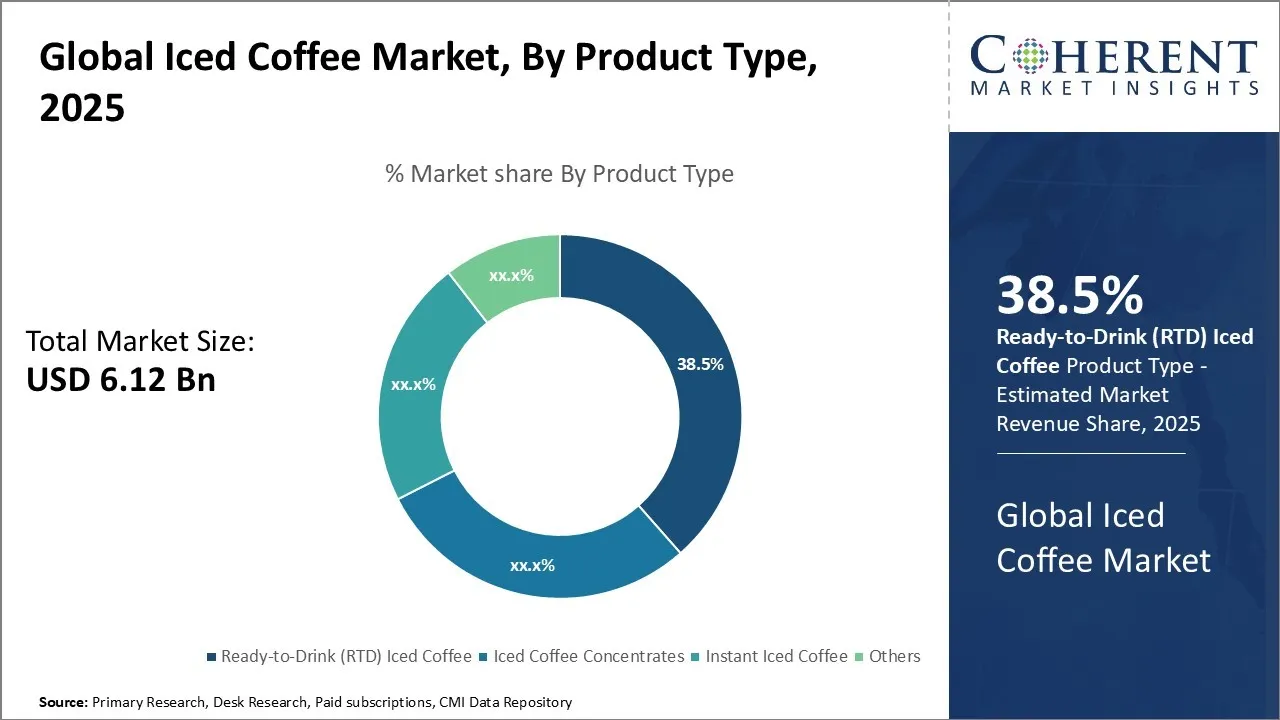
- The Ready-to-Drink (RTD) Iced Coffee segment is projected to account for 39.5% of the global iced coffee market in 2026.
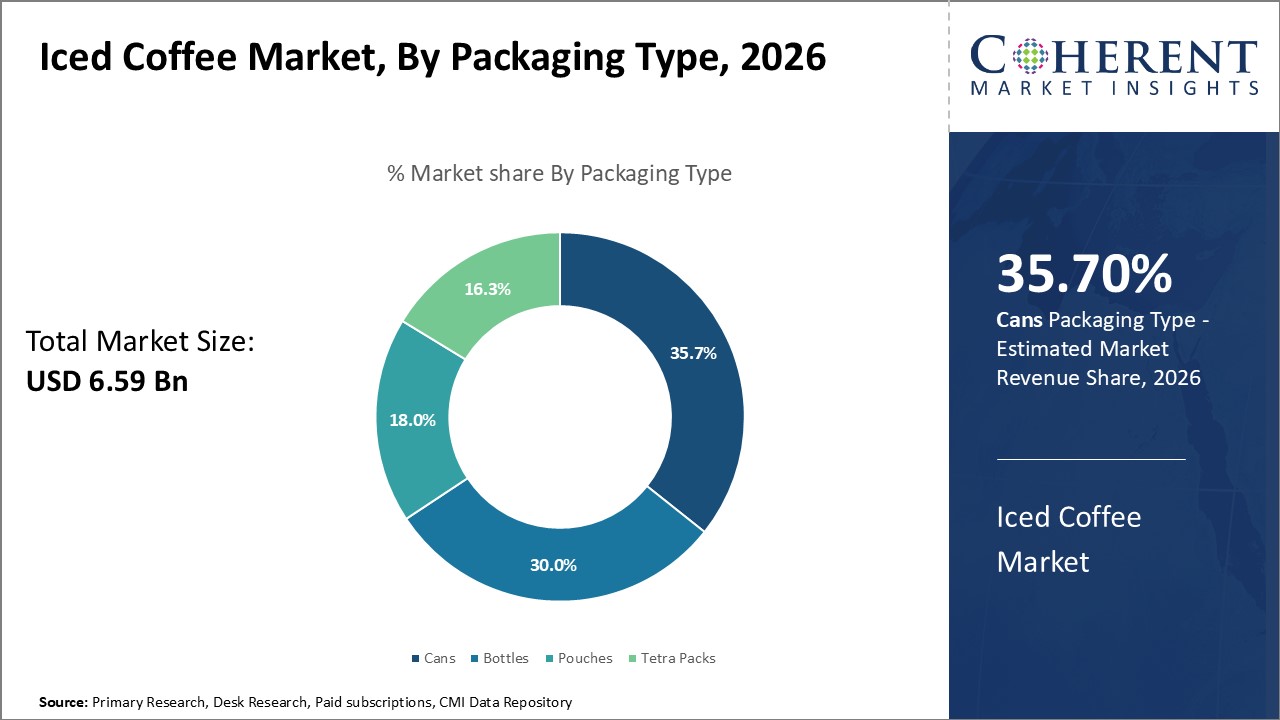
- The Cans segment is expected to remain the highly preferred packaging type for iced coffee, holding a 35.7% share of the global iced coffee market in 2026.
- The Online Retail segment is projected to dominate the global iced coffee market in 2026, capturing a 55.6% share.
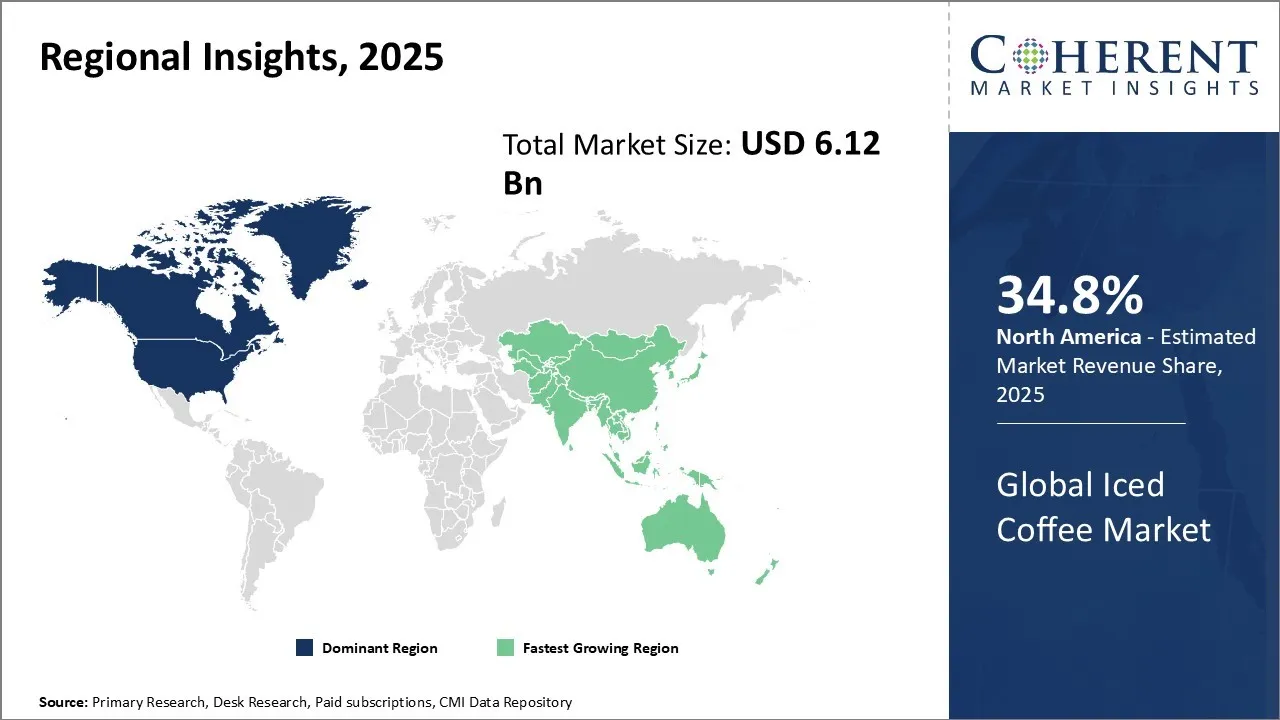
- North America is set to lead the global iced coffee market in 2026 with a 34. 8% share. Asia Pacific, with a 21.5% share, will be the fastest-growing region.
Market Overview
Current iced coffee market trends highlight a surge in health-conscious and premium product offerings, including organic, low-calorie, and plant-based variants. Innovations in packaging and distribution channels, such as grab-and-go convenience and e-commerce, are enhancing product accessibility. Additionally, flavored and specialty iced coffees cater to diverse consumer preferences, while sustainability initiatives by key players improve brand loyalty, collectively propelling market expansion through evolving consumption patterns and lifestyle changes globally.
Currents Events and their Impact
Current Events | Description and its impact |
Surge in Cold Brew and Iced Coffee Innovation |
|
Price Volatility and Coffee Supply Challenges |
|
Segmental Insights
- Current Industry Events of 2026
- Market Size Estimation
- Regional Breakdown
- Competitive Landscape
- Customer Intelligence
- Segmental Analysis
- Pricing Analysis
- Key Market Drivers, Challenges & Future Trends
- Customized Insights Section
Iced Coffee Market Insights, By Product: Ready-to-Drink (RTD) Iced Coffee Segment Dominates Driven by Convenience and Lifestyle Trends
Ready-to-Drink (RTD) Iced Coffee segment is expected to hold 39.5% share of the global iced coffee market in 2026, owing to several critical factors centered around consumer convenience and evolving lifestyle preferences. The RTD segment benefits from its inherent appeal as a grab-and-go beverage option that fits seamlessly into busy, modern routines. With an increasing number of consumers seeking quick refreshment solutions that require no preparation, RTD iced coffee offers an easy-to-consume alternative to traditional brewed coffee, catering especially to young professionals, students, and urban dwellers.
Another key driver for the RTD segment is the constant innovation in product varieties that appeal to diverse palates and dietary needs. Manufacturers such as Starbucks’ Nitro Cold Brew have extensively developed RTD iced coffee with a wide range of flavors, formulations (e.g., dairy, non-dairy milk variants), and functional enhancements such as added protein, vitamins, or low-calorie options. These innovations enable RTD brands to target health-conscious consumers and those looking for indulgence without compromising convenience, thus broadening their customer base substantially.
Iced Coffee Market Insights, By Packaging Type: Cans Segment Lead Packaging Trends Fueled by Portability and Sustainability
Cans segment is projected to account for 35.7% share of the global iced coffee market in 2026, due to their unmatched convenience, portability, and expanding sustainability credentials. Aluminum cans offer an ideal packaging solution that appeals directly to consumers’ on-the-go lifestyles, making them a preferred choice over bulkier or less durable alternatives. Their lightweight nature, durability, and resealable lids allow consumers to carry iced coffee easily during commutes, outdoor activities, and work environments, ensuring freshness and spill-resistance.
An increasing number of consumers are also attracted to canned iced coffee for their ability to maintain beverage quality and temperature longer than alternate packaging like bottles or pouches. The opaque surface prevents light exposure that can deteriorate taste and aroma, while the efficient sealing preserves carbonation and freshness, enhancing the overall sensory experience. These functional benefits support repeat purchases as consumers associate canned products with better taste retention.
Iced Coffee Market Insights, By Distribution Channel: Online Retail Segment Leads Due to Greater Accessibility and Personalized Experience
Online Retail segment is set to command 55.6% share in the global iced coffee market in 2026, driven largely by the increasing adoption of e-commerce platforms and digital consumer engagement. The online channel offers unparalleled convenience for consumers, enabling them to browse an expansive range of iced coffee products, including niche and premium variants, all from the comfort of their homes or on mobile devices. This extensive selection is unmatched by traditional offline retailers, allowing consumers to discover new brands, flavors, and formats tailored to their specific preferences.
The rise in online retail is also supported by seamless, user-friendly purchasing processes such as subscription models, one-click ordering, and detailed product information, including nutritional data and customer reviews. This transparency empowers consumers to make informed choices, enhancing trust and satisfaction. Subscription services, in particular, foster repeat purchase behavior by offering regular deliveries of favorite iced coffee products, ensuring continuous availability and convenience without the need for repeated shopping trips.
Regional Insights
North America Iced Coffee Market Analysis and Trends
The North America region is projected to lead the market with a 34.8% share in 2026, driven by a mature and highly developed market ecosystem characterized by widespread consumer acceptance of ready-to-drink (RTD) beverages and a growing culture of convenience. The region benefits from well-established coffee retail chains, specialty coffee shops, and extensive distribution networks involving supermarkets, convenience stores, and online platforms. Government policies support food safety and quality standards that foster consumer confidence, while existing trade agreements facilitate the import of premium coffee beans essential for iced coffee production.
Major players such as The Coca-Cola Company (with its Georgia and Gold Peak brands), Nestlé (Nescafé), and Starbucks have entrenched their presence by offering innovative iced coffee variants and leveraging strong brand loyalty. Their continuous product innovations, marketing campaigns, and extensive retail footprint solidify North America's commanding position in this market.
Asia Pacific Iced Coffee Market Analysis and Trends
The Asia Pacific region is expected to exhibit the fastest growth in the market contributing 21.5% share in 2026, fueled by rapidly increasing urbanization, rising disposable incomes, and shifting consumer preferences towards Western-style beverages. The growing young population in countries such as China, India, South Korea, and Japan is embracing iced coffee as a trendy lifestyle drink. Complementing this consumer trend is the expanding café culture and proliferation of convenience stores and modern retail chains. Government initiatives to support agricultural modernization and trade liberalization have improved coffee bean supply chains, lowered costs and boosting product availability.
Additionally, multinational coffee giants like Starbucks, Nestlé, and regional players such as UCC Ueshima Coffee (Japan) are actively expanding their product portfolios tailored to local tastes, emphasizing ready-to-drink and bottled iced coffee options. This dynamic market environment, combined with enhanced cold chain infrastructure, facilitates rapid market penetration and innovation.
Global Iced Coffee Market Outlook for Key Countries
U.S. Iced Coffee Market Trends
The U.S. iced coffee market is characterized by well-established consumer demand for iced coffee, supported by a strong culture of on-the-go consumption. Starbucks remains a dominant force, innovating with seasonal flavors and premium cold brew options. Meanwhile, The Coca-Cola Company and Nestlé compete aggressively through extensive retail channels, especially in RTD iced coffee beverages. The competitive landscape pushes continuous product innovation and customization, which sustains consumer engagement. U.S. consumers show increasing interest in organic, fair-trade, and health-conscious iced coffee offerings, prompting companies to diversify their portfolios accordingly.
Japan Iced Coffee Market Trends
Japan continues to lead the iced coffee market in Asia with its long-standing affinity for canned and bottled coffee beverages, pioneered by companies like Suntory and Kirin Holdings. The entrenched convenience store culture enables quick access to a wide variety of iced coffee products. The Japanese market is characterized by innovative packaging, premiumization, and flavor variety, appealing strongly to consumers seeking quality and convenience. Collaborations between local and international brands, such as Starbucks Japan, further enhance product diversity and market penetration. Government support for sustainable farming practices also influences the supply chain for coffee beans, ensuring steady growth.
South Korea Iced Coffee Market Trends
South Korea’s iced coffee market has witnessed rapid expansion propelled by a vibrant café culture and tech-savvy consumers who embrace both café and RTD iced coffee products. Domestic brands such as Maxim and exports by multinational companies like Nestlé emphasize health-conscious and functional iced coffee drinks infused with vitamins or low sugar content.
The South Korean government promotes food innovation and startup ecosystems, enabling numerous local players to enter the iced coffee segment with unique products alongside global giants like Starbucks. Enhanced e-commerce capabilities further aid quick consumer access to new product launches.
China Iced Coffee Market Trends
China’s iced coffee market is evolving rapidly, transitioning from traditional hot tea dominance to greater acceptance of coffee beverages, especially among millennials and urban dwellers. Major players including Nestlé, Starbucks, and Luckin Coffee are aggressively expanding their iced coffee offerings in stores and via e-commerce platforms.
Government policies aiming at urban development and consumer lifestyle upgrades support the establishment of new retail formats and premium coffee experiences. The enhancement of cold storage logistics and café infrastructure is critical to meeting rising demand. Localization strategies by global brands and the rise of homegrown companies cater to diverse taste preferences, fueling market expansion.
Brazil Iced Coffee Market Trends
Brazil, as one of the world’s largest coffee producers, plays a strategic role in the global iced coffee landscape, not only as a supplier but also as an emerging market for iced coffee consumption. Brazilian companies like Café Pilao and 3 Corações lead the local market, while international brands expand their presence. Growing urbanization and modernization of retail chains are increasing consumer access to iced coffee.
The government’s focus on supporting the coffee industry with favorable export policies and agricultural innovation helps maintain a stable supply of quality coffee beans. Brazil’s unique coffee culture encourages innovation in brewing and ready-to-drink segments, allowing the market to develop alongside global trends.
Consumer Behavior Analysis: Iced Coffee Market (2025)
Key Consumer Motivations
- Indulgence and Enjoyment: Many consumers choose iced coffee as a treat or indulgence, seeking both enjoyment and relaxation.
- Energy and Refreshment: Keeping awake and gaining energy are strong drivers. The refreshing, caffeinated nature of iced coffee makes it appealing, especially in warmer months and as a midday pick-me-up.
Demographics and Segmentation
- Youth Appeal: Consumption is highest among Gen Z and Millennials. In the U.S., 38% of 18-24-year-olds drink iced coffee compared to just 20% of all adults. Older age groups show significantly lower adoption, indicating a generational shift in preferences.
- Gender and Geography: There is no strong evidence of gender bias; however, urban populations adopt iced coffee faster, correlating with café culture and Western lifestyle influences—especially in North America, Europe, and increasingly in Asia.
- Growth in Emerging Markets: Traditionally tea-drinking countries like India and China now show fast-growing iced coffee adoption, primarily among young, urban consumers.
Purchase Drivers
- Natural and Premium Ingredients: Claims of real, natural, or premium ingredients increase purchase intent. Many seek iced coffees with plant-based milks (oat and almond), lower sugar, or specialty blends.
- Convenience: Ready-to-drink (RTD) formats, single-serve pods, and digital or app-based ordering enhance the on-the-go aspect, essential for modern lifestyles.
Market Players, Key Development, and Competitive Intelligence
Key Developments
- On July 30, 2025, Pret launched the Labubu equivalent for coffee, and it's already creating a buzz. Known for their trend-setting innovations, Pret continues to prove why they are the ultimate destination for fun and exciting coffee launches. This latest offering has generated significant excitement, sparking anticipation among coffee lovers who are eager to try the new creation.
Top Strategies Followed by Global Iced Coffee Market Players
- Established companies dominate the industry by heavily investing in research and development (R&D) to innovate high-performance iced coffee products that meet evolving consumer preferences for flavor, convenience, and health benefits. These corporations often focus on developing premium blends, functional variants such as added vitamins or antioxidants, and sustainable packaging to differentiate their offerings.
- For instance, Starbucks, a global leader in the iced coffee segment, invests heavily in research and development (R&D) to create new, high-performance iced coffee blends that cater to evolving consumer tastes.
- Mid-level competitors in the iced coffee market adopt a different yet effective approach by focusing on cost-effective solutions that strike a balance between quality and affordability. Recognizing the importance of catering to price-sensitive consumers in both developed and developing regions, these players design products that maintain acceptable taste and quality standards without commanding premium prices. This strategic positioning allows them to capture a significant customer base that seeks everyday moments of indulgence without breaking the bank.
- For example, McCafé has capitalized on McDonald's extensive network of drive-thru restaurants, offering affordable iced coffee options that appeal to customers seeking convenient, high-quality drinks on the go. The company also emphasizes promotions and deals, such as its popular campaigns, which make it accessible to a wider customer base, particularly in regions like North America and parts of Europe.
- Small-scale players face unique challenges in an intensely competitive iced coffee market, but many leverage their agility and innovation to establish strong footholds in specific niches. These companies differentiate themselves by focusing on specialized product features, such as organic or single-origin coffee, unique flavor infusions, or customization options that appeal to discerning consumers seeking personalized experiences.
- For example, Califia Farms, focuses on plant-based iced coffees that appeal to the growing vegan and health-conscious demographic. The company uses environmentally friendly packaging and offers cold brew drinks infused with functional ingredients like adaptogens and probiotics.
Market Report Scope
Iced Coffee Market Report Coverage
| Report Coverage | Details | ||
|---|---|---|---|
| Base Year: | 2025 | Market Size in 2026: | USD 6.59 Bn |
| Historical Data for: | 2020 To 2024 | Forecast Period: | 2026 To 2033 |
| Forecast Period 2026 to 2033 CAGR: | 7.6% | 2033 Value Projection: | USD 11.00 Bn |
| Geographies covered: |
| ||
| Segments covered: |
| ||
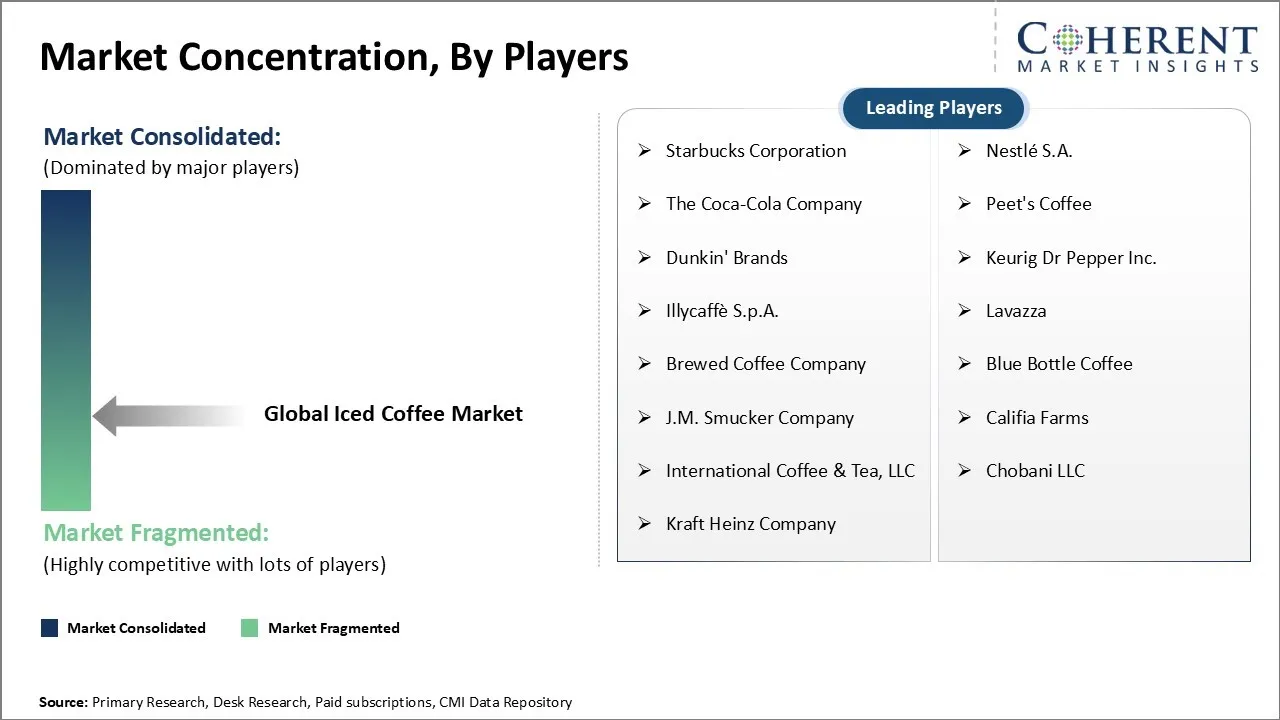
| Companies covered: | Starbucks Corporation, Nestlé S.A., The Coca-Cola Company, Peet's Coffee, Dunkin' Brands, Keurig Dr Pepper Inc., Illycaffè S.p.A., Lavazza, Brewed Coffee Company, Blue Bottle Coffee, J.M. Smucker Company, Califia Farms, International Coffee & Tea, LLC, Chobani LLC, and Kraft Heinz Company | ||
| Growth Drivers: |
| ||
| Restraints & Challenges: |
| ||
Iced Coffee Market Dynamics
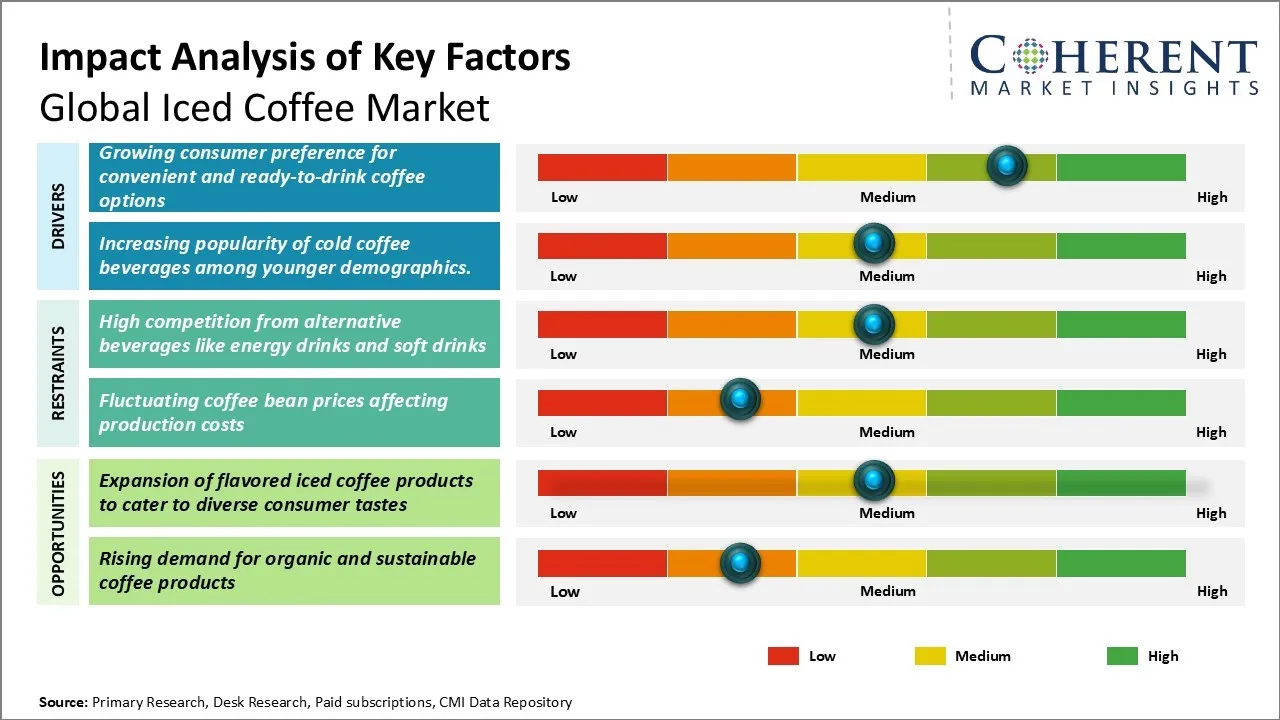
Iced Coffee Market Driver - Growing Consumer Preference for Convenient and Ready-To-Drink Coffee Options
The increasing pace of modern lifestyles has significantly influenced consumer behavior, leading to a stronger preference for convenient and ready-to-drink (RTD) coffee products, including iced coffee. Busy schedules and on-the-go consumption habits are driving consumers to seek quick, hassle-free alternatives to traditional coffee brewing methods. Ready-to-drink iced coffee offers the perfect solution by combining the refreshment of cold beverages, functional beverage with the energizing effects of coffee, all packaged in portable formats such as bottles, cans, and cartons. This convenience appeals particularly to younger demographics and urban professionals who prioritize efficiency without compromising on taste or quality.
For example, Coca-Cola has entered the RTD iced coffee market with its "Illy Ready-to-Drink" coffee range, demonstrating the huge consumer shift toward iced coffee as an accessible and convenient product. This product is a response to the increasing demand for convenient coffee options, allowing consumers to enjoy a premium coffee experience without needing to brew it themselves.
Iced Coffee Market Opportunity - Expansion of Flavored Iced Coffee Products to Cater to Diverse Consumer Tastes
The global iced coffee market presents a significant opportunity through the expansion of flavored iced coffee products, aimed at addressing the increasingly diverse and sophisticated preferences of consumers. As consumers grow more adventurous and seek personalized beverage experiences, the demand for innovative and unique flavor profiles has surged. Introducing a wide array of flavored options—ranging from classic vanilla and caramel to exotic blends like matcha, pumpkin spice, and seasonal fruit infusions—enables brands to differentiate themselves and capture niche segments. This trend is particularly prominent among younger demographics and urban populations who emphasize variety, novelty, and premium quality in their beverage choices.
For example, PepsiCo capitalized on the trend of flavored iced coffee by introducing the Mountain Dew Rise Energy drink, which combines iced coffee with various fruit infusions. This product offers unique, innovative flavors, such as Tropical Sunrise and Citrus Burst, giving it a competitive edge in the iced coffee market and appealing to younger consumers looking for energy-packed, flavor-rich beverages.
Analyst Opinion (Expert Opinion)
- The global iced coffee market is experiencing a remarkable surge, driven by shifting consumer preferences towards convenient and premium beverages. Companies like Starbucks and Nestlé are capitalizing on this trend, as evidenced by insights shared at the International Coffee Expo (2023) and the Specialty Coffee Association Conference (2022). Presentations highlighted the increasing demand for ready-to-drink iced coffee options, with Starbucks introducing innovative flavors and formulations that cater to diverse palates.
- For example, their limited-edition seasonal offerings have resonated strongly with consumers, showcasing the potential for brand loyalty in a competitive landscape. Additionally, the rise of artisanal brands focusing on cold brew methods was a key topic, with industry leaders emphasizing quality and craft.
- Nestlé's recent investment in cold brew technology illustrates how major players are adapting to consumer desires for authenticity and premium experiences. As health-conscious choices gain traction, the incorporation of functional ingredients, such as adaptogens or plant-based milks, is likely to shape future product development. Companies that prioritize innovation and consumer engagement will not only thrive but also redefine market dynamics in this fast-evolving sector.
Speak to the analyst
Want personalized insights?
Take the findings above to one of our principal consultants, or have the report rebuilt around the segments, geographies and competitors you actually track.
Market Segmentation
- Product Type Insights (Revenue, USD Bn, 2021 - 2033)
- Ready-to-Drink (RTD) Iced Coffee
- Iced Coffee Concentrates
- Instant Iced Coffee
- Others
- Packaging Type Insights (Revenue, USD Bn, 2021 - 2033)
- Cans
- Bottles
- Pouches
- Tetra Packs
- Distribution Channel Insights (Revenue, USD Bn, 2021 - 2033)
- Online Retail
- Offline Retail
- Supermarkets/Hypermarkets
- Convenience Stores
- Specialty Coffee Shops
- Regional Insights (Revenue, USD Bn, 2021 - 2033)
- North America
- U.S.
- Canada
- Latin America
- Brazil
- Argentina
- Mexico
- Rest of Latin America
- Europe
- Germany
- U.K.
- Spain
- France
- Italy
- Russia
- Rest of Europe
- Asia Pacific
- China
- India
- Japan
- Australia
- South Korea
- ASEAN
- Rest of Asia Pacific
- Middle East
- GCC Countries
- Israel
- Rest of Middle East
- Africa
- South Africa
- North Africa
- Central Africa
- North America
- Key Players Insights
- Starbucks Corporation
- Nestlé S.A.
- The Coca-Cola Company
- Peet's Coffee
- Dunkin' Brands
- Keurig Dr Pepper Inc.
- Illycaffè S.p.A.
- Lavazza
- Brewed Coffee Company
- Blue Bottle Coffee
- M. Smucker Company
- Califia Farms
- International Coffee & Tea, LLC
- Chobani LLC
- Kraft Heinz Company
Sources
Primary Research Interviews
- Market Analyst – Leading Coffee Chain
- Product Development Head – Global Coffee Roaster
- Marketing Manager – Major Coffeehouse Brand
- Consumer Insights Manager – Beverage Trends Firm
Stakeholders
- Coffee Manufacturers
- End-use Sectors
- Retail Coffee Chains
- Supermarket Chains offering ready-to-drink iced coffee
- Independent Coffee Shops focusing on iced beverages
- E-commerce Platforms and Online Retailers
- Coffee Equipment and Cold Brewing Technology Providers
Databases
- Euromonitor International – Coffee and Iced Coffee Market Trends
Magazines
- Coffee & Espresso Magazine – Innovations in Iced Coffee
- Beverage Industry Magazine – Market Growth and Trends in Iced Coffee
- Coffee Talk Magazine – Consumer Preferences for Iced Coffee
- Global Coffee Review – Emerging Trends in Cold Brew Coffee
- Specialty Coffee Retailer – Iced Coffee Sales Insights
Journals
- Journal of Food Science & Technology – Coffee Formulation and Cold Brew Methods
- International Journal of Food Science and Nutrition – Nutritional Aspects of Iced Coffee
- Journal of Beverage Science – Consumer Behavior in Coffee Consumption
- Food Quality & Preference Journal – Taste and Flavor Preferences in Iced Coffee
Newspapers
- The Financial Times – Coffee Industry Growth and Iced Coffee Segment
- The Wall Street Journal – Trends in the Global Iced Coffee Market
- Beverage News – Iced Coffee Consumption in Emerging Markets
- The New York Times – Changing Consumer Preferences in Iced Coffee
Associations
- Specialty Coffee Association (SCA)
- International Coffee Organization (ICO)
- National Coffee Association (NCA)
- Coffee Quality Institute (CQI)
Public Domain Sources
- U.S. Food and Drug Administration (FDA) – Regulations for Coffee and Beverage Products
- European Commission – Regulations for Cold Beverages and Coffee Drinks
- World Health Organization (WHO) – Health Guidelines for Beverage Consumption
- International Coffee Organization (ICO) – Coffee Market Reports and Sustainability Guidelines
Proprietary Elements
- CMI Data Analytics Tool, Proprietary CMI Existing Repository of information for last 8 years
Get access to 250+ pages report
Every segment, forecast, competitor profile and data table behind the analysis above — available for instant download.
- ESOMAR Member
- ISO 9001:2015 Certified
- D-U-N-S Registered
- GDPR & CCPA Compliant
Missing comfort of reading report in your local language? Find your preferred language:
Transform your Strategy with Exclusive Trending Reports
Frequently Asked Questions
The global iced coffee market is estimated to be valued at USD 6.59 Bn in 2026 and is expected to reach USD 11.00 Bn by 2033.
The CAGR of global iced coffee market is projected to be 7.6% from 2026 to 2033.
Growing consumer preference for convenient and ready-to-drink coffee options and increasing popularity of cold coffee beverages among younger demographics. are the major factors driving the growth of the global iced coffee market.
High competition from alternative beverages like energy drinks and soft drinks and fluctuating coffee bean prices affecting production costs are the major factors hampering the growth of the global iced coffee market.
In terms of Product Type, Ready-to-Drink (RTD) Iced Coffee is estimated to dominate the market revenue share in 2026.
Starbucks Corporation, Nestlé S.A., The Coca-Cola Company, Peet's Coffee, Dunkin' Brands, Keurig Dr Pepper Inc., Illycaffè S.p.A., Lavazza, Brewed Coffee Company, Blue Bottle Coffee, J.M. Smucker Company, Califia Farms, International Coffee & Tea, LLC, Chobani LLC, and Kraft Heinz Company are the major players.
North America is expected to lead the global iced coffee market in 2026.