

Global Industrial Sugar Market Size and Forecast – 2026-2033
The Global Industrial Sugar Market is estimated to be valued at USD 32.19 Bn in 2026 and is expected to reach USD 50.15 Bn by 2033, exhibiting a compound annual growth rate (CAGR) of 6.5% from 2026 to 2033.
Key Takeaways of the Industrial Sugar Market
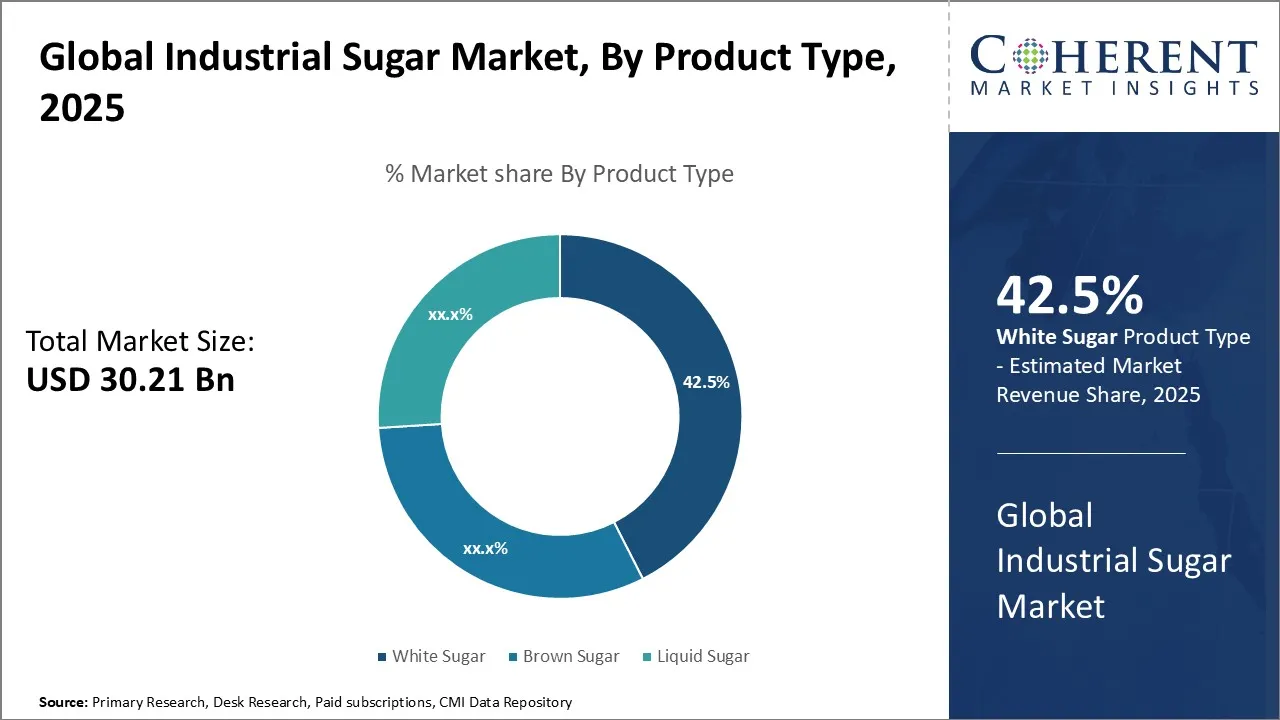
- The white sugar segment is expected to account for 43.5 % of the global industrial sugar market in 2026.
- The granulated sugar segment is projected to hold a 40.3 % share of the market in 2026.
- The sugarcane segment is expected to capture 59.9 % of the global industrial sugar market in 2026.
- Asia Pacific is set to lead the market in 2026 with a 47.8 % share. Europe, with a 22.5% share, will be the fastest-growing region.
Market Overview
A significant market trend is the shift towards sustainable and cleaner production methods, with manufacturers adopting eco-friendly processes to meet regulatory standards and consumer preferences. Additionally, innovations in sugar derivatives and the expansion of end-use sectors like confectionery and personal care products are propelling market growth. The rising focus on health-conscious products is prompting the industry to explore alternative sweeteners alongside traditional industrial sugar, fostering diversification and market resilience.
Current Events and Its Impact
Current Events | Description and its impact |
Surge in Global Sugar Production |
|
Advancements in Sugar Reduction Technologies |
|
Segmental Insights
- Current Industry Events of 2026
- Market Size Estimation
- Regional Breakdown
- Competitive Landscape
- Customer Intelligence
- Segmental Analysis
- Pricing Analysis
- Key Market Drivers, Challenges & Future Trends
- Customized Insights Section
Industrial Sugar Market Insights, By Product Type - White Sugar Segment Dominates Due to its Versatility and Industrial Demand
White sugar segment is projected to hold 43.5% share of the global industrial sugar market in 2026, owing to its extensive application across various industrial sectors and its purity standards. White sugar’s refined nature makes it the preferred choice for food and beverage manufacturers who demand consistency and quality in end products such as confectionery, baked goods, beverages, and dairy products. Its neutral flavor profile and high solubility facilitate seamless integration into diverse formulations, enhancing texture and taste without interfering with other ingredients.
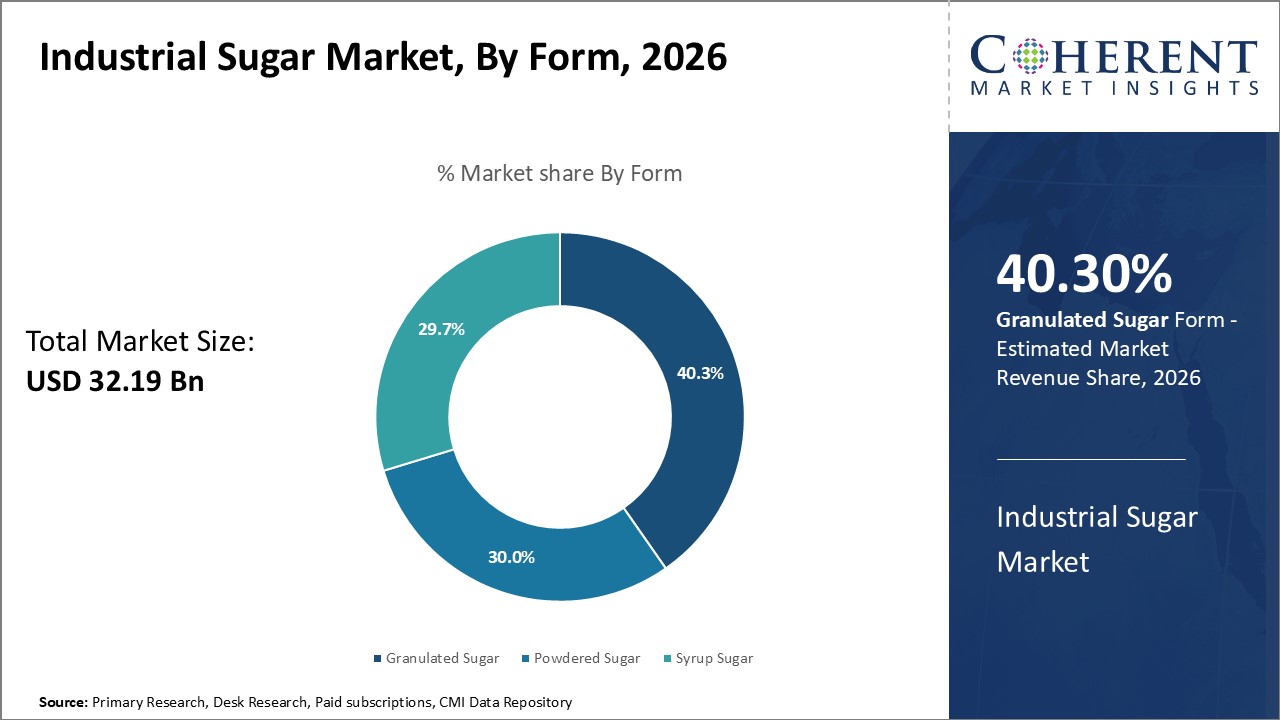
Industrial Sugar Market Insights, By Form - Granulated Sugar Segment Leads Due to Its Functional Versatility and Stability
Granulated sugar segment is projected to hold 40.3% market share in 2026, primarily driven by its functional advantages and ease of handling in industrial applications. Granulated sugar, characterized by its crystalline texture and medium particle size, offers optimal flow properties, making it suitable for automated processing and large-scale manufacturing setups. This physical form ensures uniform mixing and consistent sweetness distribution, attributes crucial for maintaining product consistency across batches.
The stability of granulated sugar under various storage conditions is another crucial factor contributing to its widespread use. Its lower moisture content compared to powdered sugar reduces clumping and microbial growth, enhancing shelf life and reducing waste—a significant consideration for industrial users managing large inventories. Granulated sugar also dissolves efficiently in both cold and hot preparations, offering industrial processors enhanced flexibility in formulation design, whether for beverages, baked goods, or dairy products.
Industrial Sugar Market Insights, By Source – The Sugarcane Segment Leads Driven by Scalability and Easy Access to Raw Materials
The Sugarcane segment is set to hold 59.9% share in the global industrial sugar market in 2026, due to the plant’s high yield potential and the established global infrastructure supporting its cultivation and processing. Sugarcane is a perennial crop with a rapid growth cycle compared to sugar beet, allowing multiple harvests in several regions, particularly in tropical and subtropical climates. This continuous production cycle ensures reliable raw material availability for sugar refiners serving industrial demands.
Another significant factor propelling sugarcane-based sugar is the cost-effectiveness of its processing on a large scale. Sugarcane mills benefit from economies of scale, allowing for efficient extraction of sucrose, bagasse utilization for energy generation, and integrated processing plants, which collectively optimize operational costs. This makes sugar from sugarcane a competitive option for industrial buyers aiming to balance price and quality.
Regional Insights
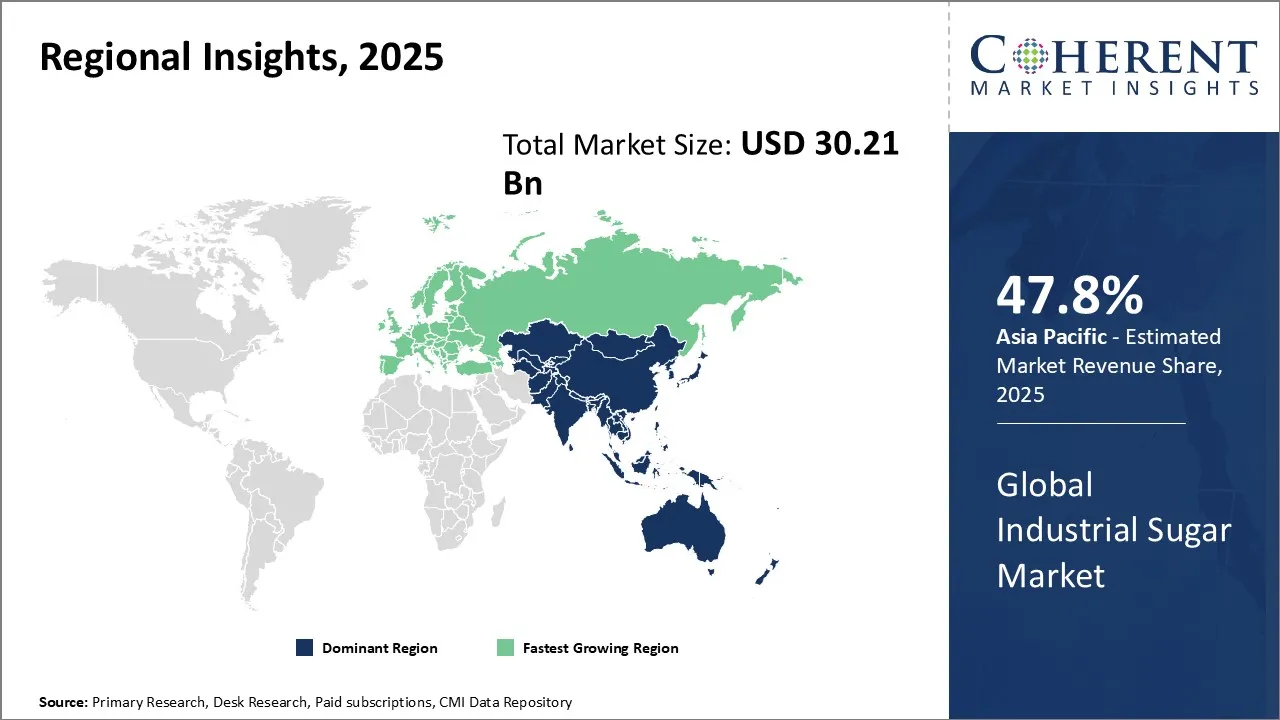
Asia Pacific Industrial Sugar Market Analysis and Trends
The Asia Pacific region is projected to lead the market with a 47.8% share in 2026, stemming from the region's robust agricultural base, favorable climatic conditions for sugarcane cultivation, and a well-established sugar manufacturing ecosystem. Countries like India, Thailand, and China have long been global leaders in sugar production and processing. Government policies supporting sugarcane farming, including subsidies and investment in irrigation infrastructure, further strengthen the market's position.
The presence of major sugar mills and integrated sugar processing companies ensures high production capacity. Trade dynamics also favor this region due to extensive export activities to neighboring regions and globally. Key industry players such as Indian Sugar Mills Association members, Thai Roong Ruang Sugar Group, and China’s COFCO Corporation contribute significantly to the region’s dominance by focusing on technological advancement and expansion in industrial applications of sugar products.
Europe Industrial Sugar Market Analysis and Trends
The Europe region is expected to exhibit the fastest growth in the market contributing 22.5% share in 2026, driven by key players such as France, Germany, and the U.K., which are leveraging advanced agricultural practices and technological innovations in sugar production. The region’s favorable climate and well-established infrastructure for beet cultivation contribute significantly to the market's stability and growth potential. The growing demand for bioethanol, coupled with government incentives promoting sustainable farming practices and renewable energy production, is also fueling the market.
The European Union's strong focus on environmental sustainability and regulatory measures aimed at reducing sugar consumption have led to an increasing shift towards low-calorie sweeteners and sugar substitutes. However, the market remains bolstered by the demand for high-quality, locally produced sugar for food and beverage industries. Additionally, the expansion of bioethanol production, driven by countries like France and Germany, is enhancing the market's growth as industrial sugar plays a key role in supporting renewable energy targets.
Global Industrial Sugar Market Outlook for Key Countries
India Industrial Sugar Market Trends
India’s industrial sugar market remains one of the most active due to its status as one of the world’s largest producers and consumers of sugar. Government initiatives aimed at supporting sugarcane farmers and sugar production, including minimum support prices and export benefits, sustain industry vitality. Major players like Balrampur Chini Mills and Shree Renuka Sugars have invested in expanding manufacturing capacities and diversifying into specialty sugars and ethanol. The domestic industrial demand continues to grow, fueled by ongoing developments in food processing, pharmaceuticals, and bio-based chemicals sectors.
Brazil Industrial Sugar Market Trends
Brazil’s industrial sugar market leverages vast sugarcane plantations and advanced extraction and refining technologies. The country leads the integration of sugar production with bioethanol, providing an economical dual-stream production advantage that strengthens its competitive edge. Companies such as Cosan and Copersucar dominate this landscape, with their substantial investments in sustainability practices and export infrastructure. Government policies favor renewable fuels, further propelling the sugarcane industry's expansion. Brazil’s strong export pipeline to international markets makes it a critical hub for global sugar supply chains.
Thailand Industrial Sugar Market Trends
Thailand’s industrial sugar market benefits from favorable tropical conditions and government policies that promote the sugar industry through investment in research and subsidies. Thai Roong Ruang Group and Mitr Phol Sugar Corporation are notable contributors not only for their large processing capacities but also for technological innovations improving yield and product quality. The country has established itself as a major exporter of both raw and refined sugar, actively engaging with global trade partners to expand market reach. Growing industrial demand within Southeast Asia also supports ongoing industrial sugar consumption.
U.S. Industrial Sugar Market Trends
The U.S. industrial sugar market is characterized by a combination of domestic production concentrated in states like Florida and Louisiana, alongside strong import reliance to meet industrial sugar demand. The presence of multinational corporations such as Domino Sugar and American Sugar Refining Company shapes the competitive landscape with significant investments in technology and product diversification. Policy frameworks including tariffs and trade agreements influence supply chain dynamics, while the industrial demand is largely driven by confectionery, beverage, and pharmaceutical manufacturing. The U.S. market continues to emphasize sustainable sourcing and cold-chain logistics to enhance product quality.
Mexico Industrial Sugar Market Trends
Mexico’s industrial sugar market benefits from proximity to the large North American consumer base and numerous free trade agreements facilitating cross-border commerce. The government supports sugarcane farmers through subsidies and infrastructure development. Key companies such as Grupo Bimbo and Grupo La Constancia contribute by utilizing refined sugar in processed foods and beverages. The market also witnesses growing industrial utilization driven by the expansion of both domestic food industries and exports to the U.S. and Canada, positioning Mexico as a strategic player in the regional sugar value chain.
Macro and Micro Economic Factors Impacting Industrial Sugar Market Growth
Macro-Economic Factors
- Global Economic Growth: Industrial sugar demand is strongly driven by the state of the global economy. As emerging economies (like India and China) grow, so does their consumption of processed foods and beverages, boosting sugar demand.
- Trade Policies & Tariffs: International trade agreements, tariffs, and subsidies affect global sugar prices, export-import balance, and market accessibility. For example, government support for sugarcane and beet agriculture helps stabilize supply.
- Population Growth & Urbanization: Increasing populations, especially in Asia-Pacific and Africa, and the migration toward urban centers, drive increased consumption of processed foods and soft drinks that use industrial sugar.
- Technological Advancements: Innovations in sugar production, processing, and supply chain management contribute to improved efficiency, higher production, and reduced costs, helping market growth.
- Raw Material Availability & Price Volatility: The larger trends in global sugarcane and beet production directly impact the availability and price of industrial sugar, which can disrupt supply chains and impact profitability.
Micro Economic Factors
- Consumer Preferences: Shift in dietary patterns, rise in processed and convenience food consumption, especially among younger demographics, creates more demand for industrial sugar. Conversely, rising awareness about health risks of excessive sugar intake spurs demand for reduced-sugar alternatives.
- Expansion of the Food & Beverage Sector: Growth in confectionery, bakery, beverage, dairy, and ready-to-eat meal segments directly raises the industrial sugar requirement.
- Price Sensitivity: Industrial buyers, such as food processors, are price-sensitive. Volatility in raw sugar prices can affect ingredient choices, procurement contracts, and even push manufacturers to seek alternatives.
- Technological Diversification: Companies investing in R&D for better-yielding crops, improved refining, or new sugar-based products (for applications in biofuels, pharmaceuticals, cosmetics, etc.) get a competitive edge, influencing market dynamics.
Market Players, Key Development, and Competitive Intelligence
Key Developments
- In April 2025, SINOMACH, a China-based conglomerate, committed to investing over USD1 Bn in Nigeria's sugar industry. This significant investment was formalized through a Memorandum of Understanding (MoU) signed with the National Sugar Development Council (NSDC) in Abuja. During the event, the Executive Secretary/CEO of NSDC, Mr. Kamar Bakrin, emphasized the importance of enhancing Nigeria's economic self-sufficiency and food security, underlining the strategic role this investment will play in the country’s sugar sector.
- In May 2025, Nigeria-based industrial giant Dangote unveiled plans for a major sugar refinery in Ghana's Bono Region. The project, which aims to reduce Ghana's USD162 million annual sugar import bill, will process 12,000 tons of sugarcane daily across 25,000 hectares of irrigated land. Supported by Ghana’s One District, One Factory (1D1F) initiative, the refinery will also produce molasses and ethanol, creating thousands of jobs and strengthening regional food security. Dangote highlighted the project as a key driver for economic independence and industrial growth in Africa.
- In August 2023, Sugar Refinery Sdn Bhd (CSR) unveiled its new product, Better White Clear White Sugar, to strengthen its position as Malaysia's leading sugar specialist. This launch follows the success of CSR's Better Brown variant, introduced in 2018 to encourage healthier sugar consumption, which now commands 78% of the brown sugar market share in Malaysia. Better White is designed to meet growing consumer demands by providing high-quality sugar products at competitive prices.
- In September 2023, British Sugar, a subsidiary of Associated British Foods plc, partnered with Sidel to introduce an innovative end-of-line solution. British Sugar, a major player in the Irish and British food and beverage sectors, processes about 8 million tonnes of sugar beet annually, producing up to 1.2 million tonnes of sugar. The partnership aims to replace the company's 38-year-old end-of-line system with a state-of-the-art solution, designed to manage higher levels of complexity and automation, ensuring efficient handling of multiple SKUs.
- In August 2023, UPL Sustainable Agriculture Solutions (UPL SAS), based in Mumbai, and Hyderabad's NSL Sugars, signed a Memorandum of Understanding (MoU) to promote sustainable sugarcane production practices. This collaboration aims to enhance market penetration for UPL SAS, while NSL Sugars stands to gain from more sustainable farming methods. The partnership seeks to increase sugarcane yields by 15% per acre, which is equivalent to an additional 5 metric tonnes per acre.
Top Strategies Followed by Global Industrial Sugar Market Players
- Established market leaders prioritize heavy investments in research and development (R&D) to innovate high-performance sugar products that cater to the evolving demands of diverse industries, including food and beverage, pharmaceuticals, and biofuels. This innovation typically focuses on enhancing product purity, customization according to industrial applications, and developing eco-friendly alternatives that meet stringent regulatory standards.
- For example, Tate & Lyle has developed a range of sugar alternatives, including its Stevia-based sweeteners, designed for the food and beverage industry. This product innovation caters to the growing demand for healthier, lower-calorie options while maintaining high product quality.
- Mid-level players in the industrial sugar market adopt a somewhat different approach, concentrating on delivering cost-effective solutions that strike a balance between quality and affordability. These companies primarily target price-sensitive consumers such as small to medium-sized manufacturers and regional processors who require reliable sugar sources without premium pricing. To enhance their competitive edge, mid-tier companies often engage in collaborations and joint ventures with other suppliers or technology providers. These partnerships help them improve production efficiency, integrate advanced processing technologies, and expand their product portfolios, thereby boosting their market presence.
- For example, Südzucker AG is Europe’s largest sugar producer and a significant player in the global industrial sugar market. The company offers a broad range of sugar products for various industrial applications, focusing on quality, innovation, and sustainability. Südzucker's product portfolio includes crystalline sugars, such as white sugar, extra white sugar, icing sugar, and brown sugar. These sugars are widely used in industries like confectionery, baked goods, dairy products, beverages, and pharmaceuticals.
- Small-scale operators in the industrial sugar market carve out niche positions by developing specialized or innovative products tailored to unique industrial applications. These players leverage cutting-edge technologies such as enzyme modification, bioengineering, or advanced crystallization techniques to differentiate their offerings in a competitive environment. Unlike larger firms, small-scale companies often focus on regional or niche market segments where customization and close customer relationships are paramount. To gain market entry and increase visibility within these segments, they actively build local alliances, partnering with startups, agricultural cooperatives, or local manufacturers.
- For example, Sweet Innovations Ltd., a small-scale sugar manufacturer, specializes in producing enzyme-modified sugars tailored for pharmaceutical and specialty food industries. They utilize advanced bioengineering techniques to develop low-glycemic index sugar variants, catering to diabetic food manufacturers—a niche segment underserved by large multinational sugar producers.
Market Report Scope
Industrial Sugar Market Report Coverage
| Report Coverage | Details | ||
|---|---|---|---|
| Base Year: | 2025 | Market Size in 2026: | USD 32.19 Bn |
| Historical Data for: | 2020 To 2024 | Forecast Period: | 2026 To 2033 |
| Forecast Period 2026 to 2033 CAGR: | 6.5% | 2033 Value Projection: | USD 50.15 Bn |
| Geographies covered: |
| ||
| Segments covered: |
| ||
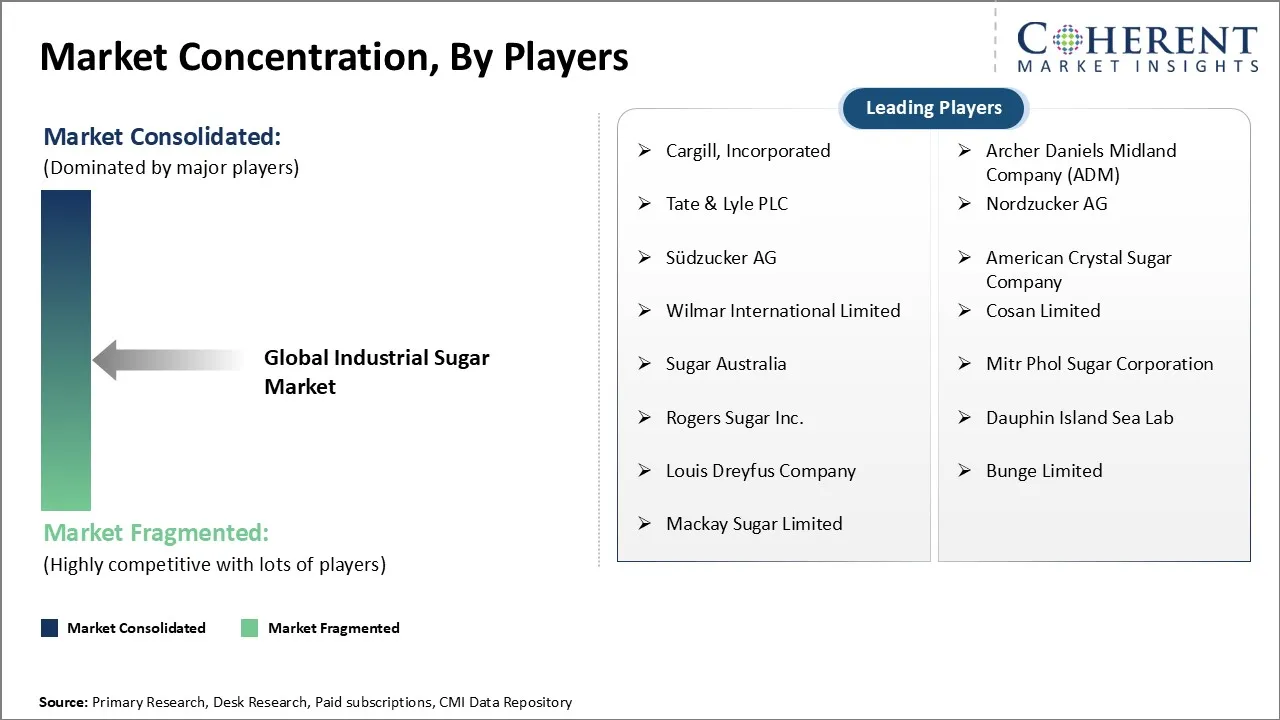
| Companies covered: | Cargill, Incorporated, Archer Daniels Midland Company (ADM), Tate & Lyle PLC, Nordzucker AG, Südzucker AG, American Crystal Sugar Company, Wilmar International Limited, Cosan Limited, Sugar Australia, Mitr Phol Sugar Corporation, Rogers Sugar Inc., Dauphin Island Sea Lab, Louis Dreyfus Company, Bunge Limited, and Mackay Sugar Limited | ||
| Growth Drivers: |
| ||
| Restraints & Challenges: |
| ||
Industrial Sugar Market Dynamics
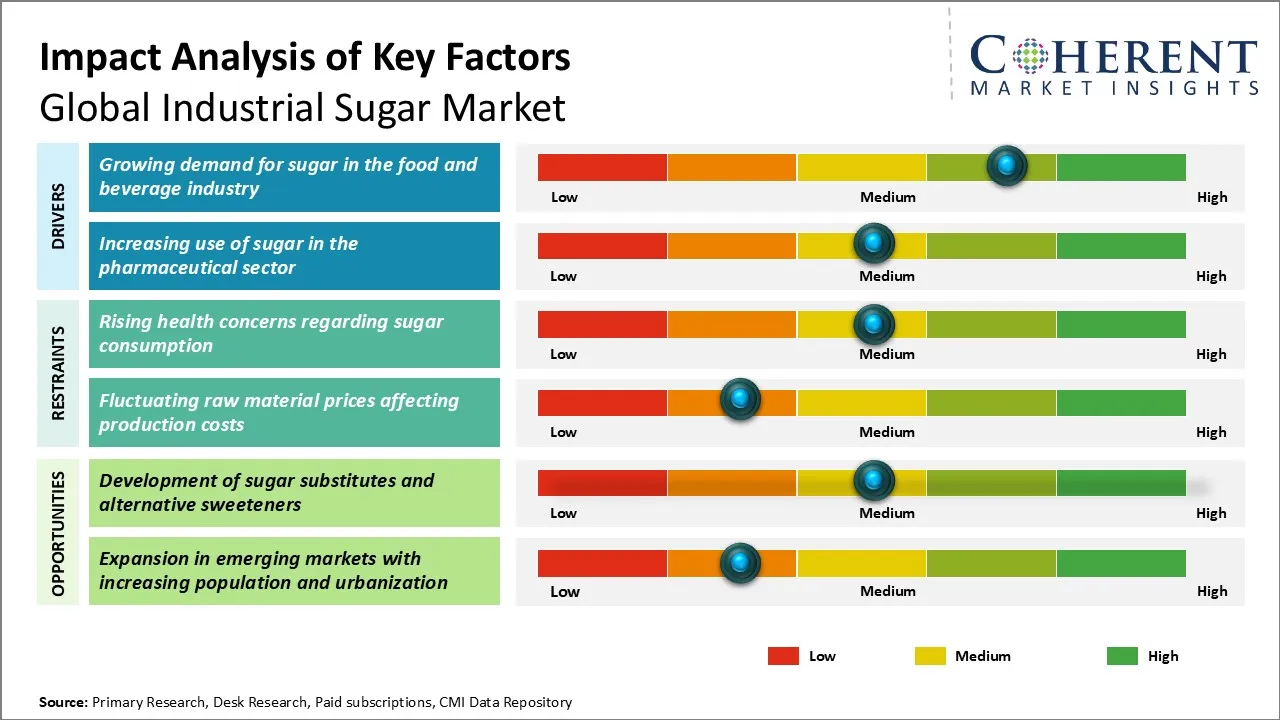
Industrial Sugar Market Driver - Growing Demand for Sugar in the Food and Beverage Industry
The escalating demand for sugar within the food and beverage sector remains a key driver propelling the growth of the global industrial sugar market. Sugar is a fundamental ingredient in numerous products, including bakery items, confectionery, dairy products, beverages, sauces, and processed food, making it indispensable for flavor enhancement, texture, and preservation.
The beverage sector, encompassing soft drinks, energy drinks, flavored waters, and specialty coffee products, demonstrates particularly robust sugar consumption patterns, while the confectionery, bakery, and dairy industries continue to drive substantial demand for industrial sugar varieties. According to the Food and Agriculture Organization (FAO), global sugar consumption reached approximately 176 million metric tons in 2022, reflecting sustained growth driven primarily by increased consumption in developing countries and the expansion of food processing industries worldwide.
Industrial Sugar Market Opportunity - Development of Sugar Substitutes and Alternative Sweeteners
The global industrial sugar market is witnessing a significant opportunity through the development and integration of sugar substitutes and alternative sweeteners. Rising health consciousness among consumers, coupled with increasing incidences of lifestyle-related diseases such as diabetes and obesity, is driving demand for healthier, low-calorie, and natural sweetening options. Manufacturers are investing heavily in research and innovation to develop sugar substitutes, including stevia, erythritol, monk fruit extract, and allulose, which offer comparable sweetness with reduced caloric intake. These alternatives not only cater to health-focused consumer segments but also align with regulatory pressures in various regions to limit sugar content in food and beverages.
Stevia, a plant-derived sweetener, has witnessed widespread adoption across the food and beverage industry as a sugar substitute. Companies like Cargill and PureCircle have significantly expanded their stevia offerings in recent years. Stevia is considered a healthier alternative due to its zero-calorie content, and it is gaining momentum as consumers become more health-conscious about the harmful effects of excessive sugar consumption.
Analyst Opinion (Expert Opinion)
- The global industrial sugar market is poised for significant transformation, driven by shifting consumer preferences and increasing demand for alternative sweeteners. Companies like Cargill and Sudzucker are adapting to these changes, as showcased at the International Sugar Conference (2023) and the Global Sweeteners Symposium (2022).
- Presentations highlighted successful case studies where manufacturers incorporated innovative processing techniques to enhance product quality while reducing costs. For instance, Cargill's initiative to develop high-purity sugar solutions has positioned them favorably in the food and beverage sectors, catering to health-conscious consumers. Furthermore, the rise of natural sweeteners has sparked discussions on regulatory challenges and market dynamics, especially as consumers gravitate toward organic options.
- The impact of climate change on sugar production was also a focal point, underscoring the need for sustainable practices within the industry. As the market adapts to these pressures, companies that invest in research and development, focusing on sustainability and product innovation, will likely emerge as leaders, capturing new market opportunities while meeting the evolving demands of consumers and regulatory bodies alike.
Speak to the analyst
Want personalized insights?
Take the findings above to one of our principal consultants, or have the report rebuilt around the segments, geographies and competitors you actually track.
Market Segmentation
- Product Type Insights (Revenue, USD Bn, 2021 - 2033)
- White Sugar
- Brown Sugar
- Liquid Sugar
- Form Insights (Revenue, USD Bn, 2021 - 2033)
- Granulated Sugar
- Powdered Sugar
- Syrup Sugar
- Source Insights (Revenue, USD Bn, 2021 - 2033)
- Sugarcane
- Sugar Beet
- Application Insights (Revenue, USD Bn, 2021 - 2033)
- Food & Beverages
- Pharmaceuticals
- Cosmetics
- Animal Feed
- Biofuels
- Regional Insights (Revenue, USD, 2021 - 2033)
- North America
- U.S.
- Canada
- Latin America
- Brazil
- Argentina
- Mexico
- Rest of Latin America
- Europe
- Germany
- U.K.
- Spain
- France
- Italy
- Russia
- Rest of Europe
- Asia Pacific
- China
- India
- Japan
- Australia
- South Korea
- ASEAN
- Rest of Asia Pacific
- Middle East
- GCC Countries
- Israel
- Rest of Middle East
- Africa
- South Africa
- North Africa
- Central Africa
- North America
- Key Players Insights
- Cargill, Incorporated
- Archer Daniels Midland Company (ADM)
- Tate & Lyle PLC
- Nordzucker AG
- Südzucker AG
- American Crystal Sugar Company
- Wilmar International Limited
- Cosan Limited
- Sugar Australia
- Mitr Phol Sugar Corporation
- Rogers Sugar Inc.
- Dauphin Island Sea Lab
- Louis Dreyfus Company
- Bunge Limited
- Mackay Sugar Limited
Sources
Primary Research Interviews
- Production/Operations Director – Leading Sugar Mill
- Procurement Head – Major Confectionery Manufacturer
- R&D Manager – Global Food & Beverage Company
- Sustainability Lead – Sugar Industry Certification Body
Stakeholders
- Manufacturers (Sugar Mills, Refineries, Specialty Sugar Producers)
- End-use Sectors:
- Food & Beverage (Bakery, Confectionery, Dairy, Beverage, Canned & Processed Foods)
- Pharmaceutical and Biofuel Companies
- Regulatory & Certification Bodies
- Commodity Traders & Brokers
- E-commerce Platforms & Retailers
- Technology Providers: Digital traceability/production management systems
Databases
- UN Comtrade Database (global trade data)
- India EXIM (Import Export) Database
- USDA Foreign Agricultural Service Production, Supply and Distribution (PSD) Data
- OECD-FAO Agricultural Outlook
- International Sugar Organization (ISO) Statistics
Magazines
- Sugar Industry Magazine (global trends & technology)
- International Sugar Journal
- Sugar Producer Magazine
- Food & Beverage Industry News
- Confectionery Production Magazine
- Sugar Asia Magazine
Journals
- Sugar Industry–Zuckerindustrie (science & engineering)
- International Sugar Journal
- Journal of the Science of Food and Agriculture (sugar research)
- Food Research International (sugar processing studies)
- Journal of Agricultural and Food Chemistry (applied research on sugar)
Newspapers
- The Financial Times (commodity & trade news)
- The Hindu Business Line (Asia-Pacific sugar policies)
- Reuters Commodities (market updates, price alerts)
- Economic Times
Associations:
- Indian Sugar Mills Association (ISMA)
- International Sugar Organization (ISO)
- American Sugar Alliance
- Brazilian Sugarcane Industry Association (UNICA)
- All India Sugar Trade Association (AISTA)
- European Association of Sugar Manufacturers (CEFS)
Public Domain Sources
- USDA Foreign Agricultural Service
- European Commission (DG Agriculture and Rural Development)
- World Health Organization (sugar intake guidelines)
Proprietary Elements
- CMI Data Analytics Tool, Proprietary CMI Existing Repository of information for last 8 years.
Get access to 250+ pages report
Every segment, forecast, competitor profile and data table behind the analysis above — available for instant download.
- ESOMAR Member
- ISO 9001:2015 Certified
- D-U-N-S Registered
- GDPR & CCPA Compliant
Missing comfort of reading report in your local language? Find your preferred language:
Transform your Strategy with Exclusive Trending Reports
Frequently Asked Questions
The global industrial sugar market is estimated to be valued at USD 32.19 Bn in 2026 and is expected to reach USD 50.15 Bn by 2033.
The CAGR of global industrial sugar market is projected to be 6.5% from 2026 to 2033.
Growing demand for sugar in the food and beverage industry and increasing use of sugar in the pharmaceutical sector are the major factors driving the growth of the global industrial sugar market.
Rising health concerns regarding sugar consumption and fluctuating raw material prices affecting production costs are the major factors hampering the growth of the global industrial sugar market.
In terms of Product Type, White Sugar is estimated to dominate the market revenue share in 2026.
Cargill, Incorporated, Archer Daniels Midland Company (ADM), Tate & Lyle PLC, Nordzucker AG, Südzucker AG, American Crystal Sugar Company, Wilmar International Limited, Cosan Limited, Sugar Australia, Mitr Phol Sugar Corporation, Rogers Sugar Inc., Dauphin Island Sea Lab, Louis Dreyfus Company, Bunge Limited, and Mackay Sugar Limited are the major players in the global industrial sugar market
Asia Pacific is expected to lead the global industrial sugar market in 2026.