

EPA and DHA Market Size and Forecast — 2026-2033
Global EPA and DHA market is estimated to be valued at USD 2.22 Bn in 2026 and is expected to reach USD 3.61 Bn by 2033, exhibiting a compound annual growth rate (CAGR) of 7.2% from 2026 to 2033.
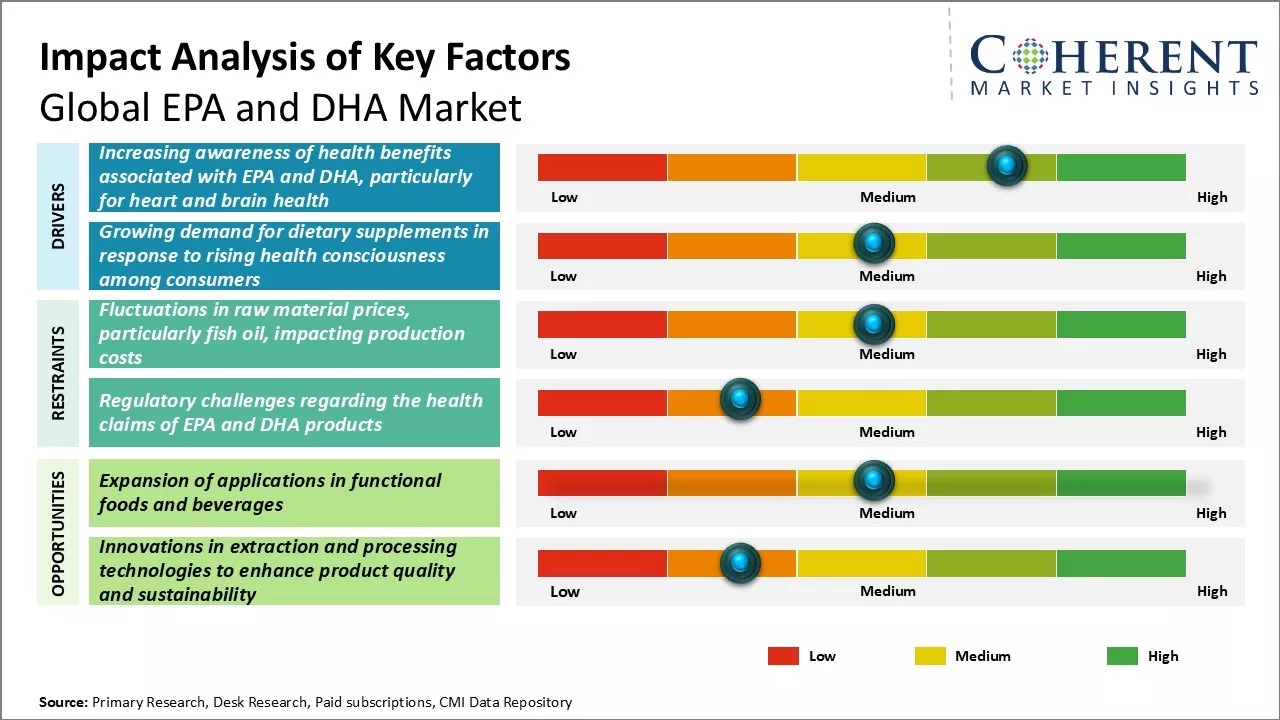
Rising health-consciousness among consumers and growing awareness about the health benefits of EPA and DHA in preventing various diseases such as cardiovascular diseases, cancer, diabetes, and others can boost demand for EPA and DHA ingredients. Moreover, the increasing usage of EPA and DHA in infant formulas, pharmaceuticals and clinical nutrition drives the market growth of EPA and DHA globally.
Insights By Source
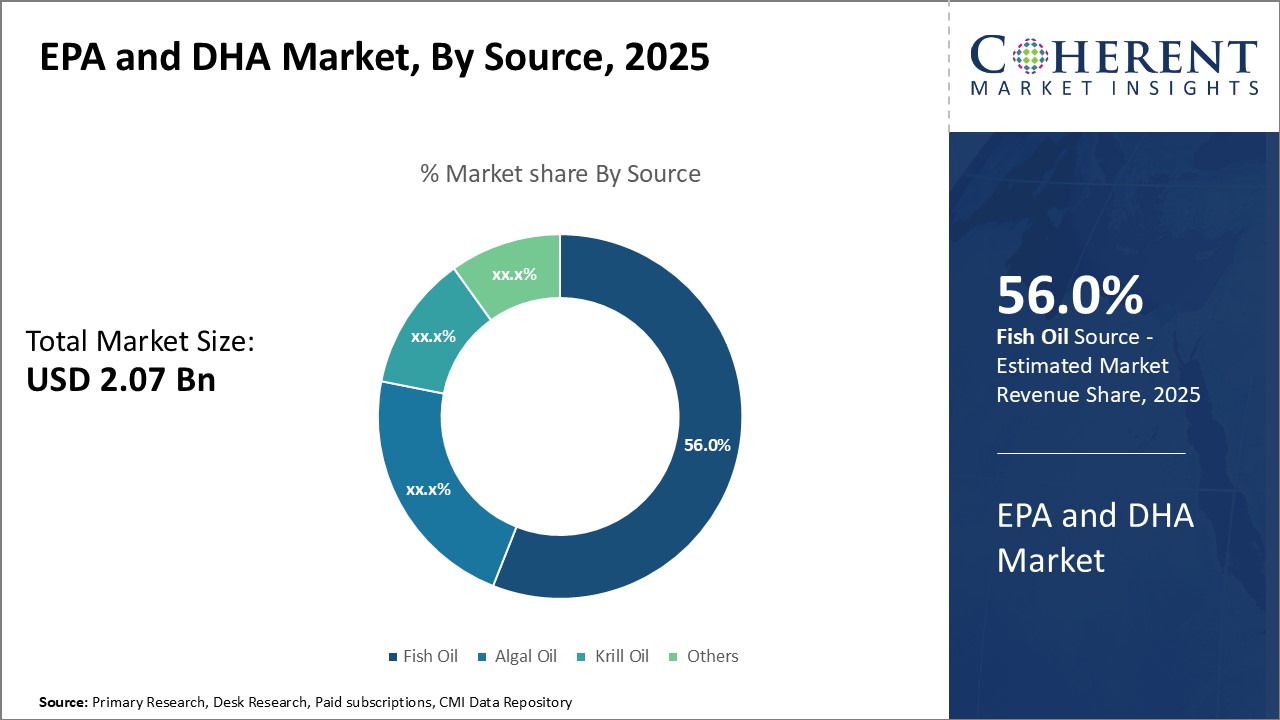
Insights By Source - Fish Oil Remains the Source of Choice Owing to its Benefits in Heart Health, Brain Function, Inflammation Reduction, and Mood Management
In terms of source, fish oil segment is estimated to contribute the highest market share of 57.0% in 2026, due to its rich content of EPA and DHA fatty acids, which provide numerous health benefits. Regular fish oil consumption is linked to reduced heart disease risk, improved brain and eye health, lower inflammation, and better management of mood disorders. Its status as a natural and traditional source further reinforces its popularity over newer alternatives like algal and krill oils.
Insights By Form
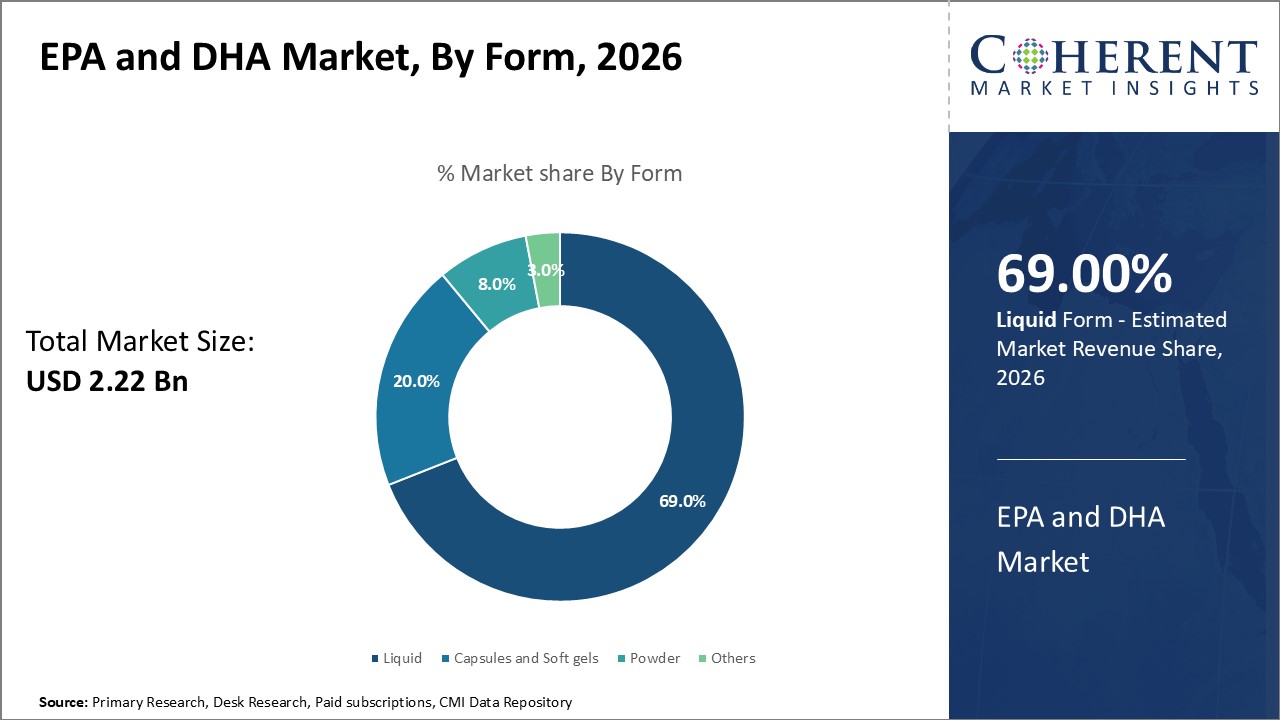
Insights By Form – Liquid Segment Dominates as a Convenient and Easy Alternative to Capsules for Daily Omega-3 Intake
In terms of form, liquid segment is estimated to contribute the highest market share of 69% in 2026, primarily due to its convenience for consumers. Liquid fish oil is simpler to consume compared to capsules, which require swallowing. Many individuals prefer adding a few drops of liquid fish oil to their meals or drinks instead of managing the routine of taking multiple capsules each day.
Insights By Application
Insights By Application - Dietary Supplements Segment Dominates with Rising Consumer Awareness and Aging Population
In terms of application, dietary supplements segment is estimated to contribute the highest market share of 47.1% in 2026, owing to growing consumer awareness about the vital role of long-chain omega-3 fatty acids in maintaining overall wellness and preventing lifestyle-induced diseases. Population aging is also translating to higher nutritional and supplement needs, as immune function and organ health declines with age. Stressful urban lifestyles leave little time for traditional whole food sources of omega-3.
Regional Insights
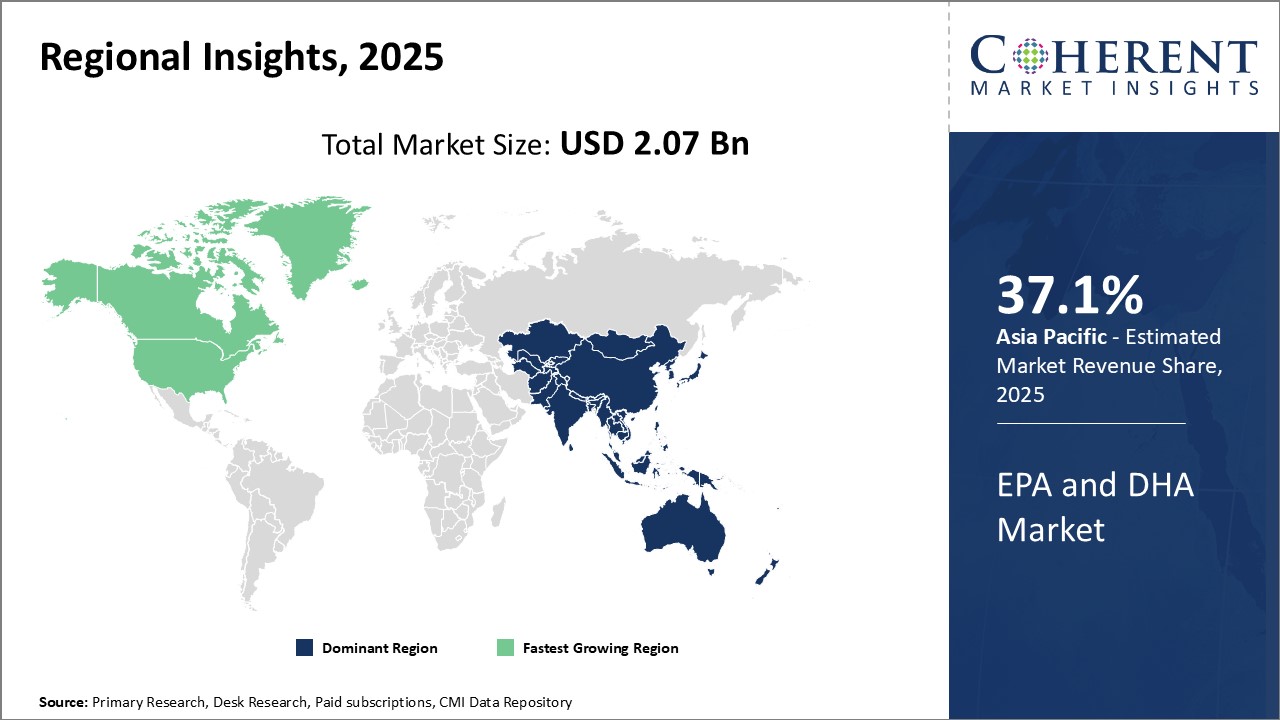
Dominating Region - Asia Pacific
Asia Pacific region is expected to account for the largest market share of 37.1% in 2026. Asia Pacific region dominates the market due to increasing health awareness, rising disposable incomes, and growing aging population. Countries like China, Japan, South Korea, and India are key contributors to the market's expansion in this region.
Fastest-Growing Region - North America
North America is the fastest-growing region in the market due to increasing consumer awareness, advancements in product innovation, and strong demand across various application sectors. The U.S. and Canada are the primary contributors, with growing emphasis on health and wellness, particularly in preventive healthcare.
EPA and DHA Market Outlook for Key Countries
U.S.- Innovation and Consumer Awareness Driving EPA and DHA Market Growth
The U.S. is a leading market for EPA and DHA, driven by increasing consumer awareness of health benefits associated with omega-3 fatty acids. The demand for dietary supplements is particularly strong, with companies like Omega Protein Corporation focusing on R&D for pharmaceutical-grade products to meet this need. In March 2026, DSM-Firmenich partnered with SCN BestCo to launch omega-3 gummies, highlighting innovation in product offerings.
China- Infant Nutrition Demand Fueling Rapid Growth in EPA and DHA Market
China EPA and DHA market is expanding rapidly, primarily due to high demand for infant nutrition products. The country holds nearly 50.5% of the global infant formula market share, emphasizing the importance of DHA for brain development. China Briefing Reports in 2022 indicated that over 50.5% of Chinese consumers recognize the health benefits of DHA and EPA, particularly in preventing chronic diseases.
Japan- Cultural Preference for Omega-3s Driving EPA and DHA Market Growth
Japan leads in the consumption of omega-3s, with a significant portion of the population sourcing EPA and DHA from fish-rich diets. As per the survey by the Japan Fisheries Association in 2022, 51.7% of respondents consume seafood for its omega-3 content, reflecting a strong cultural preference for these nutrients. This trend supports the growth of this market in the region.
India- Rising Health Awareness and Infant Nutrition Demand Fueling EPA and DHA Market Growth
India EPA and DHA market growth is driven by increasing awareness about health benefits among consumers. The demand for infant nutrition products is particularly notable, as more parents recognize the importance of DHA for cognitive development. Growing middle-class population and rising disposable incomes can drive the market growth.
Market Players, Key Development, and Competitive Intelligence

Top Strategies Followed by Global EPA and DHA Market Players
- Established players in this market have primarily focused on research and development to drive innovation. Leading companies like BASF, DSM, and Croda continually invest extensively in R&D activities to introduce high-performance and value-added products. These conduct extensive clinical trials and research to expand the application areas of EPA and DHA.
- Mid-size players in the market have adopted cost-effective strategies to cater to price-sensitive consumers. These focus on optimizing production processes and utilizing economical resources to develop affordable EPA and DHA ingredients and supplements.
- Small-scale companies operating in this market have specialized in specific industry segments or regional markets. These introduce innovative products meeting the custom needs of niche consumer groups. Some cater to vegan consumers by sourcing algal-derived DHA and EPA. Others have localized their production and marketing to better serve regional health trends.
Emerging Startups in the Global EPA and DHA Market
Innovative Technologies- Startups are applying technologies like bioengineering and AI to develop advanced solutions. OmegaVia employs precision fermentation to produce customized algal oils clinically-proven to raise DHA and EPA levels. These innovations could reshape the market by enabling personalized supplementation based on lifestyle and genetics.
Sustainable Solutions- Other startups focus on sustainability. Kaleido Biosciences produces DHA and EPA through the fermentation of non-GMO corn, avoiding stress on fish stocks. Good Ocean invests in kelp aquaculture as an eco-friendly DHA source. These startups help address concerns around sourcing and expand the market potential of plant- and algae-based omega-3s.
Market Contribution- Startups like Terravia are meeting specific market demands by producing algal DHA and EPA for food applications such as baked goods and plant-based meats. By offering unique fortification options, these companies are creating new segments and applications that complement the offerings of traditional, large-scale producers.
- Current Industry Events of 2026
- Market Size Estimation
- Regional Breakdown
- Competitive Landscape
- Customer Intelligence
- Segmental Analysis
- Pricing Analysis
- Key Market Drivers, Challenges & Future Trends
- Customized Insights Section
Market Report Scope
EPA and DHA Market Report Coverage
| Report Coverage | Details | ||
|---|---|---|---|
| Base Year: | 2025 | Market Size in 2026: | USD 2.22 Bn |
| Historical Data for: | 2020 To 2024 | Forecast Period: | 2026 To 2033 |
| Forecast Period 2026 to 2033 CAGR: | 7.2% | 2033 Value Projection: | USD 3.61 Bn |
| Geographies covered: |
| ||
| Segments covered: |
| ||
| Companies covered: | Koninklijke DSM NV, KD Pharma Group, The Archer Daniels Midland Company, Corbion NV, Novasep Holding SAS, Neptune Wellness Solutions, BASF SE, Omega Protein Corporation, Croda International PLC, Novotech Nutraceuticals, Herbalife Nutrition Ltd., and Fonterra Co-operative Group Limited | ||
| Growth Drivers: |
| ||
| Restraints & Challenges: |
| ||
Market Dynamics
Market Driver- Increasing awareness of health benefits associated with EPA and DHA, particularly for heart and brain health
Global awareness of the health benefits of EPA and DHA is driving the Omega-3 market, particularly for heart and brain health. Large-scale studies have linked increased EPA and DHA intake to a lower risk of heart disease, strokes, and heart attacks, while research also shows DHA's role in improving cognitive function and reducing the risk of neurodegenerative diseases like Alzheimer's. Health organizations such as the American Heart Association and the Alzheimer's Association advocate for Omega-3 intake, further boosting consumer demand for supplements to support cardiovascular and brain health.
Market Challenge- Fluctuations in raw material prices, particularly fish oil, impacting production costs
The market faces challenges like fluctuating prices of raw materials, especially fish oil. Fish oil is one of the most important raw materials used in the production of EPA and DHA. However, fish oil prices have exhibited significant volatility in recent years, owing to various factors such as changes in fish stocks, weather conditions affecting fish harvesting, and global demand-supply dynamics. When fish oil prices increase sharply, it leads to a rise in production costs for EPA and DHA manufacturers. Managing higher input costs is difficult as manufacturers have limited scope to pass on the entire cost increase to customers.
Market Opportunity- Expansion of applications in functional foods and beverages
Growth potential of this market is strongly tied to the expansion of its applications. One of the biggest opportunities comes from functional foods and beverages segment. There is growing consumer awareness about the health benefits of omega-3 fatty acids like EPA and DHA. This drives many food & beverage companies to enrich existing products or launch new products with added EPA and DHA. The functional food and beverages category covers a wide spectrum including dairy products, baked goods, juices and Nutraceuticals. As lifestyle diseases rise, there will be demand for EPA and DHA-fortified offerings in these categories.
Analyst Opinion (Expert Opinion)
Key Takeaways from Analyst
Rising health consciousness among consumers and increasing recognition of the cognitive and cardiovascular benefits of EPA and DHA can drive the market growth. Asia Pacific currently dominates the EPA and DHA market due to high supplement consumption in the region. However, North America region is expected to emerge as the fastest growing market.
The sustainability and supply of EPA and DHA from fish oils remains a major challenge. Perception of high price points of supplements compared to other vitamins and minerals also impedes faster growth. However, expanding R&D in algal DHA and EPA production can improve supply security over the forecast period and drive the market growth. Formulators are also exploring more cost-effective and innovative delivery formats like gummies and beverages to appeal to a broader consumer base.
Speak to the analyst
Want personalized insights?
Take the findings above to one of our principal consultants, or have the report rebuilt around the segments, geographies and competitors you actually track.
Market Segmentation
- By Source Insights (Revenue, USD Bn, 2021 - 2033)
- Fish Oil
- Algal Oil
- Krill Oil
- Others
- By Form Insights (Revenue, USD Bn, 2021 - 2033)
- Liquid
- Capsules and Soft gels
- Powder
- Others
- By Application Insights (Revenue, USD Bn, 2021 - 2033)
- Dietary Supplements
- Food and Beverages
- Pharmaceuticals
- Others
- Regional Insights (Revenue, USD Bn, 2021 - 2033)
- North America
- U.S.
- Canada
- Latin America
- Brazil
- Argentina
- Mexico
- Rest of Latin America
- Europe
- Germany
- U.K.
- Spain
- France
- Italy
- Russia
- Rest of Europe
- Asia Pacific
- China
- India
- Japan
- Australia
- South Korea
- ASEAN
- Rest of Asia Pacific
- Middle East
- GCC Countries
- Israel
- Rest of Middle East
- Africa
- South Africa
- North Africa
- Central Africa
- North America
- Key Players Insights
- Koninklijke DSM NV
- KD Pharma Group
- The Archer Daniels Midland Company
- Corbion NV
- Novasep Holding SAS
- Neptune Wellness Solutions
- BASF SE
- Omega Protein Corporation
- Croda International PLC
- Novotech Nutraceuticals
- Herbalife Nutrition Ltd.
- Fonterra Co-operative Group Limited
Get access to 250+ pages report
Every segment, forecast, competitor profile and data table behind the analysis above — available for instant download.
- ESOMAR Member
- ISO 9001:2015 Certified
- D-U-N-S Registered
- GDPR & CCPA Compliant
Missing comfort of reading report in your local language? Find your preferred language:
Transform your Strategy with Exclusive Trending Reports
Frequently Asked Questions
The EPA and DHA Market is estimated to be valued at USD 2.22 Bn in 2026, and is expected to reach USD 3.61 Bn by 2033.
The CAGR of the EPA and DHA Market is projected to be 7.2% from 2026 to 2033.
Increasing awareness of health benefits associated with EPA and DHA, particularly for heart and brain health and growing demand for dietary supplements in response to rising health consciousness among consumers are the major factors driving the market growth of global EPA and DHA.
Fluctuations in raw material prices, particularly fish oil, impacting production costs and regulatory challenges regarding the health claims of EPA and DHA products are the major factors hampering the market growth of global EPA and DHA.
In terms of source, fish oil segment is estimated to dominate the market in 2026.
Koninklijke DSM NV, KD Pharma Group, The Archer Daniels Midland Company, Corbion NV, Novasep Holding SAS, Neptune Wellness Solutions, BASF SE, Omega Protein Corporation, Croda International PLC, Novotech Nutraceuticals, Herbalife Nutrition Ltd., and Fonterra Co-operative Group Limited are the major players.
Asia Pacific is expected to lead the global EPA and DHA market in 2026.