

Global Lab on Chip Market Size and Forecast – 2026 to 2033
The global lab on chip market is estimated to be valued at USD 7.93 Bn in 2026 and is expected to reach USD 15.46 Bn by 2033, exhibiting a compound annual growth rate (CAGR) of 10.0% from 2026 to 2033. This robust growth reflects increasing demand for miniaturized diagnostic devices and advancements in microfluidics technology, enabling faster and more efficient biochemical analysis in healthcare, environmental monitoring, and biotechnology sectors worldwide.
Key Takeaways of the Global Lab on Chip Market
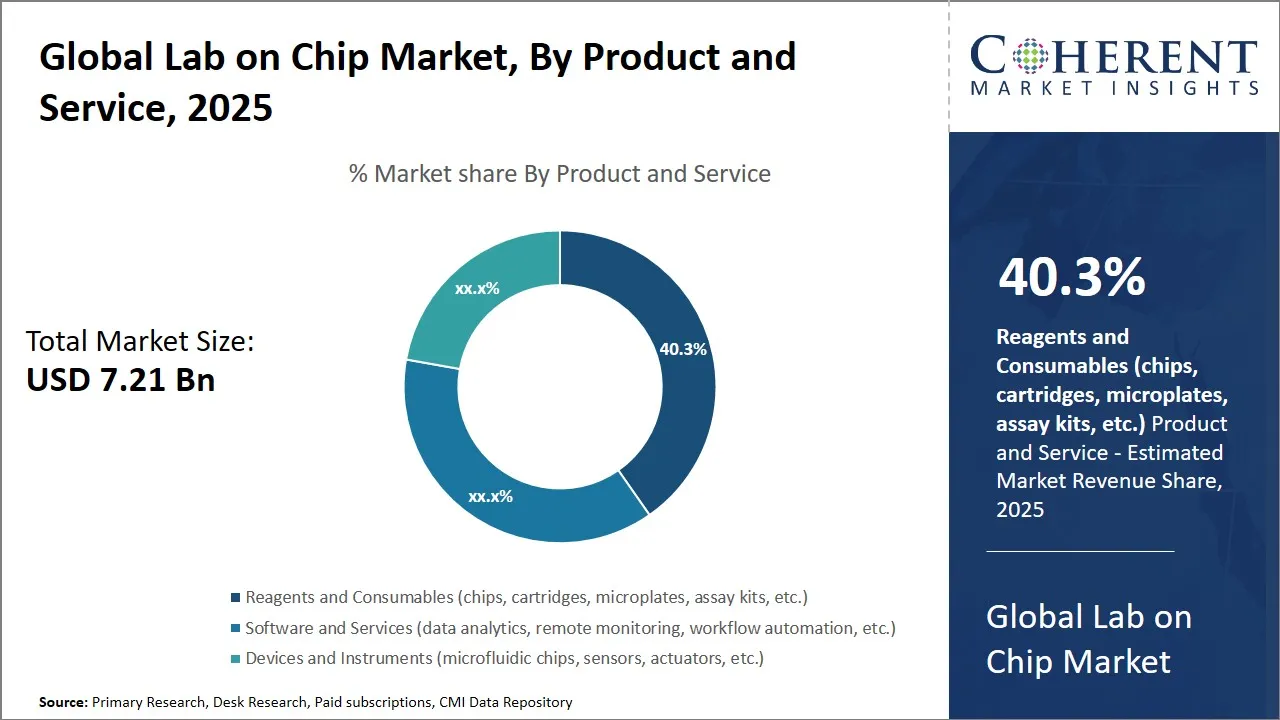
- By product and service, reagents and consumables (chips, cartridges, microplates, assay kits, etc.) account for the largest share of the global lab on chip market at an estimated 41.3 % of the market share in 2026.
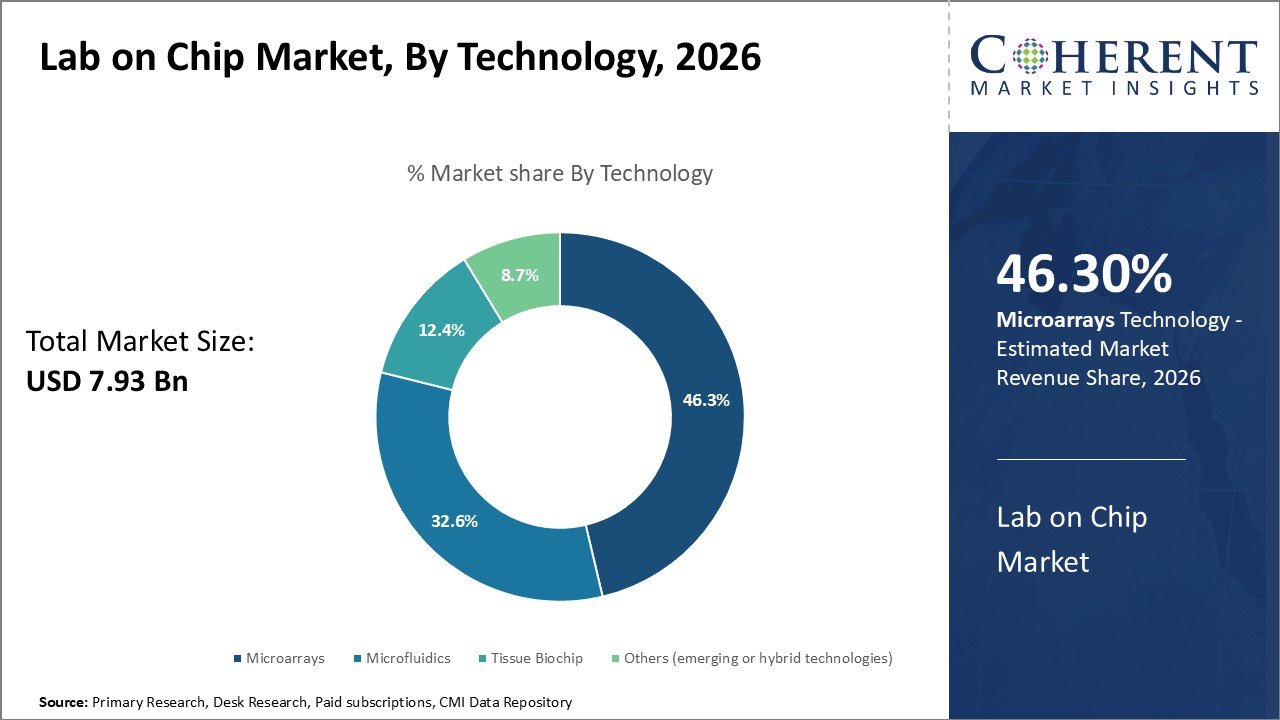
- Based on technology, microarrays are projected to dominate with a 46.3 % share in 2026.
- Genomics segment is expected to lead the market with a 35.5 % share in 2026.
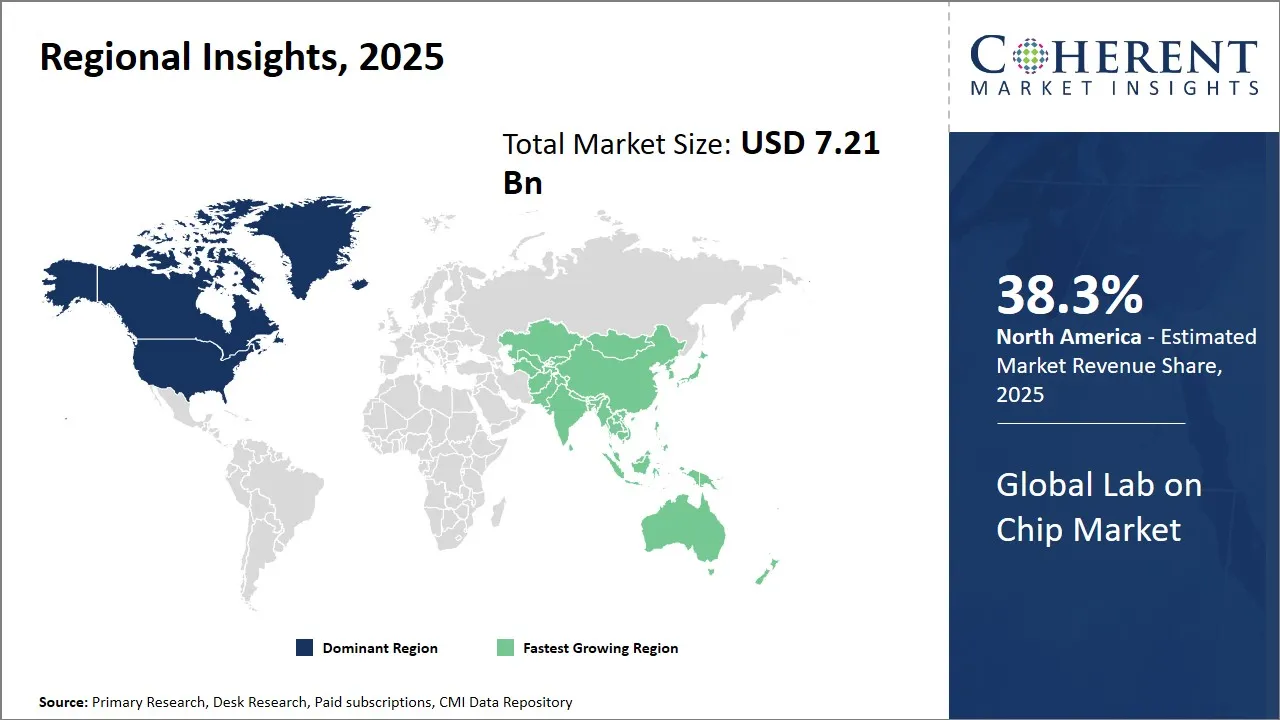
- North America is expected to lead the market, holding a share of 38.3 % in 2026. Asia Pacific is anticipated to be the fastest-growing region, with a market share of 23.4% in 2026.
Market Overview
Current market trends highlight the rising adoption of lab on chip devices in point-of-care diagnostics, driven by the need for rapid diagnostics and personalized medicine. Innovations such as integration with AI and IoT, as well as enhanced sensitivity and portability, are accelerating market expansion. Additionally, growing investments in research and development and increased applications in drug discovery and genetic analysis further propel the lab on chip market's evolution, creating significant opportunities for new entrants and established players alike.
Current Events and Its Impact
Current Events | Description and its Impact |
AI Integration in Lab-on-Chip Systems |
|
Technological Advancements in Microfluidics and Nanobiosensing |
|
Segmental Insights
- Current Industry Events of 2026
- Market Size Estimation
- Regional Breakdown
- Competitive Landscape
- Customer Intelligence
- Segmental Analysis
- Pricing Analysis
- Key Market Drivers, Challenges & Future Trends
- Customized Insights Section
Lab on Chip Market Insights, By Product and Service – Dominance of Reagents and Consumables (chips, cartridges, microplates, assay kits, etc.) Segment is Driven by High Usage Frequency and Technological Advancements
By product and service, reagents and consumables (chips, cartridges, microplates, assay kits, etc.) are expected to remain the largest contributors to the global lab on chip market with a share of 41.3% in 2026 because of their vital function in the accuracy, reproducibility, and efficiency of lab-on-chip assays. They are the basic components of lab-on-chip operation and their direct influence can be noticed over various applications like genomics, proteomics, diagnostics, and drug discovery that include experimental outcomes of diverse applications.
The consecutive replacement cycle of the consumables due to the fact that they are single-use or have limited reuse capacity is the major factor for their steady demand growth. Other consumables such as microplates and assay kits are usually tailored for high-throughput screening and multiplexing which additionally increase their use in automated workflows and large-scale research studies.
Lab on Chip Market Insights, By Technology – Microarrays are Leading through Multifaceted Applications and Precision Innovation
The largest market share among various technologies is occupied by microarrays with an estimated share of 46.3% in 2026. The major reason for this growth is their wide usage in genomic and proteomic analyses. Microarrays have the capability of detecting and quantifying thousands of biomolecules (genes, proteins, antibodies) on a single chip at the same time, thereby making them indispensable in high-throughput screening environments.
For instance, Agilent Technologies, a U.S.-based life sciences company, has broadened its genomic microarray and Lab-on-Chip platform through the purchase of Computational Biology Corp. based in Cambridge, which also includes acquiring exclusive rights to MIT's ChIP-on-Chip technology. This not only fortifies Agilent's standing in the area of cancer and genomic research but also involves the establishment of a new computational biology research center in Cambridge.
Lab on Chip Market Insights, By Application – Genomics is Leading Applications through Personalized Medicine and Accelerated Research
The prevalence of the genomics application is the major reason behind the growth of the global lab on chip market, as it holds the biggest part of the market with an estimated share of 35.5% in 2026. The use of personalized medicine and the demand for fast and accurate genomic profiling are the primary reasons for this situation. Genomics has a special edge over other areas by using lab-on-chip platforms since they carry out difficult nucleic acid analyses, such as DNA sequencing, gene expression profiling, and mutation detection, in a small and automated manner.
In August 2025, Bionano Genomics, a U.S.-based company that specializes in providing genome analysis solutions, announced a major upgrade to its VIA 7.2 and Solve 3.8.3 software and its Stratys Compute platform. These updates included the transition to AI-enabled data analysis for various genetic research methods, such as Lab-on-Chip, microarray, and next-generation sequencing, which resulted in increased precision, speed, and automation.
Role of Artificial Intelligence (AI) in the Global Lab on Chip Market
- The global lab on chip market is undergoing a transformation due to the application of Artificial Intelligence (AI), as they have now made it possible to enhance workflows in diagnostics, research, and manufacturing with automation, precision, and data-driven decision-making. The use of algorithms in AI has allowed for the adoption of predictive analytics, which contributes to faster detection of diseases, creation of microfluidic chip designs, and automation of imaging and data interpretation in testing done at the point of care.
- AI-powered image recognition and pattern analysis are being incorporated into LoC devices by companies like Fluidigm, Bio-Rad Laboratories, and Thermo Fisher Scientific to provide better assay accuracy and throughput. Besides, AI-driven design tools are being employed to forecast fluid dynamics and to fine-tune chip layouts prior to fabrication, thus drastically reducing R&D duration and material costs.
- AI-enabled LoC ecosystems embody the emerging opportunities for the integration of biosensing, real-time analytics, and cloud-based diagnostics for remote, personalized health care. The adaptability of the testing platforms, which alter their parameters according to the patient or sample profiles, is one of the major factors that lead to the innovation in the areas of infectious disease and genomic testing.
Regional Insights
North America Lab on Chip Market Analysis and Trends
The market for lab-on-chip in North America is projected to occupy 38.3% of the total market share by 2026, and this will be attributed to the acceptance of technology, strong government backing, and the existence of the main industry players. The region is enjoying the fruits of its investments in R&D and innovation, which are largely made possible by partnerships between leading academic research centers and private companies.
In June 2026, Nano Labs Ltd, a leading Web 3.0 and Lab-on-Chip technology provider from China, announced a USD 500 million private placement of convertible notes to strengthen its BNB Treasury Strategy. The notes, convertible into Class A ordinary shares at USD 20 each, will mature in 360 days with no interest. Nano Labs also plans to acquire USD 1 billion worth of BNB through convertible notes and private placements, aiming to hold 5–10% of BNB’s total circulating supply.
Asia Pacific Lab on Chip Market Analysis and Trends
The Asia Pacific region will be the leading area of growth for the lab on chip market with a 23.4% share in 2026. The main reasons for the rapid growth are the quickly developing healthcare infrastructure in the region, investments in life sciences from both public and private sources are increasing, and there is a growing need for point-of-care diagnostics. Microfluidics and biotechnology in China, India, and Japan are improving incredibly fast and this is supported by government policies and funding initiatives that are favorable and aimed at innovation and technology transfer.
The existence of companies such as Samsung Biologics, Canon Medical Systems, and BGI Group has been a critical factor in the expansion of lab-on-chip applications in the region. In addition, the large patient population in the region and the increasing awareness of the importance of early disease detection are factors that have contributed positively to the growth trajectory of the market.
Lab on Chip Market Outlook for Key Countries
U.S. Lab on Chip Market Analysis and Trends
Due to its strong basis in biotechnology and medical device innovation, the U.S. lab on chip market continues to be the frontrunner. The U.S. with its various research institutions and commercial entities concentrating on the advancement of lab-on-chip has been able to produce state-of-the-art products that are employed in diagnostics, drug development, and genomics.
In July 2026, Idaho National Laboratory, a U.S. Department of Energy research center specializing in advanced digital engineering and Lab-on-Chip technologies, was selected to serve as the chief digital officer for the Semiconductor Manufacturing and Advanced Research with Twins USA Institute (SMART USA).
China Lab on Chip Market Analysis and Trends
The China lab on chip market has the likes of Digifluidic Bio-tech Co., Ltd. Among Them, this company offers digital microfluidics for automatic nucleic acid analysis systems that are used in diagnostics and food safety. MGI Tech Co., Ltd. is working on integrated sequencing and lab-on-chip systems to facilitate biomedical research, while Watmind Medical is coming up with portable diagnostic analyzers that utilize microfluidic chips for rapid testing.
China’s lab-on-chip sector features companies like Digifluidic Bio-tech Co., Ltd., which specializes in digital microfluidics for automatic nucleic acid analysis systems used in diagnostics and food safety. MGI Tech Co., Ltd. focuses on integrated sequencing and lab-on-chip systems to accelerate biomedical research, while Watmind Medical develops portable diagnostic analyzers using microfluidic chips for rapid testing.
Germany Lab on Chip Market Analysis and Trends
Germany is a key player in the lab-on-chip sector largely due to its top-notch manufacturing capabilities and its well-developed medical technology industry. The likes of Roche Diagnostics, Qiagen, and Bosch Healthcare Solutions are taking advantage of the high quality of Germany's engineering and its research networks to manufacture more advanced lab-on-chip systems. Moreover, the policies of the European Union and national incentives for health tech innovation together provide a stable environment for development.
Among the companies located in Germany that contribute to the research of lab-on-chip are microfluidic ChipShop GmbH, which is famous for producing custom polymer-based microfluidic chips for analytical and life science applications. Recognized thinXXS Microtechnology AG is also involved in the manufacture of precision micro-pumps and mixers for lab-on-chip integration, thus enabling smaller-sized diagnostic and analytical devices.
India Lab on Chip Market Analysis and Trends
The India lab on chip market is undergoing a swift change and the main reason of it is the rising needs for low-price and portable diagnostic technologies in the healthcare sectors both urban and rural. The government schemes meant for enlarging the healthcare access and digital health advocacy are in line with the development of lab-on-chip applications. Some of the important companies like Strand Life Sciences and Elveflow are very much involved in the innovation of such low-cost, scalable platform where care could be delivered at the point.
India's lab-on-chip ecosystem features Achira Labs Pvt. Ltd, which innovates affordable diagnostic cartridges for diseases such as diabetes and HIV through integrated microfluidic platforms. Ariken Labs Pvt. Ltd. is engaged in the detection of rare cells and plasma separation, and their technology is directed towards providing cost-effective healthcare solutions.
Market Players, Key Developments, and Competitive Intelligence
Key Developments
- In August 2025, Rocket Lab Corporation, a U.S.-based leader in aerospace and satellite systems, announced new investments to expand semiconductor manufacturing and strengthen national security space programs. Backed by a USD 23.9 million grant from the U.S. Department of Commerce under the CHIPS and Science Act, the company plans to double production of space-grade solar cells and electro-optical sensors to support satellite and defense missions
- In March 2025, Ayar Labs, a U.S.-based leader in optical interconnect solutions, introduced the world’s first UCIe optical chiplet called TeraPHY to enhance AI system efficiency and performance. Ayar Labs showcased this innovation at the Optical Fiber Communication Conference in San Francisco, marking a major step in optical computing that parallels the precision and integration seen in emerging Lab-on-Chip technologies.
- In July 2023, Opteev Technologies Inc., a U.S.-based developer of rapid diagnostic solutions, filed a patent for a polymer-based multiplex biochip capable of identifying respiratory pathogens within one minute, marking a breakthrough in fast, point-of-care infection testing.
- In January 2022, Onera Health, a Dutch medical technology firm specializing in sleep diagnostics and wearable health solutions, launched the Onera Biomedical Lab-on-Chip, a compact device that processes multiple biosignals to enhance the performance of wearable monitoring systems.
Top Strategies Followed by Global Lab on Chip Market Players
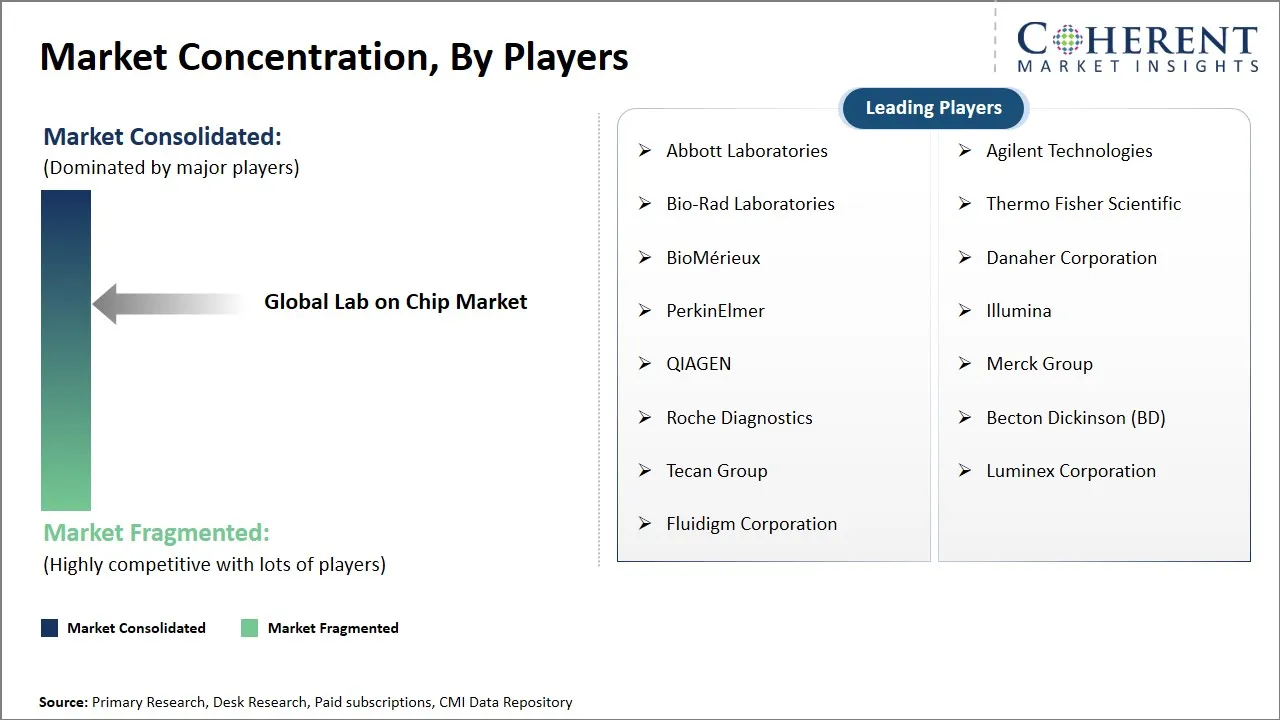
- To a great extent, the leading firms comprise the market, who through the huge sum of money invested in research and development (R&D) continue to produce high-performance lab-on-chip products and innovations. The giants of the industry are constantly developing sophisticated solutions to conquer the toughest areas including medical diagnostics, environmental monitoring, and pharmaceutical applications.
- Largerer players like Agilent and Thermo Fisher lead through heavy R&D investment and advanced microfluidic innovation. Agilent’s Seahorse XF and Thermo Fisher’s Ion Torrent Genexus deliver high-performance diagnostics, while Bio-Rad’s ddPCR system enables precise molecular testing. Strategic collaborations with hospitals and pharma firms reinforce their global dominance.
- The mid-level players in the lab on chip market are developing a different strategic approach and focusing mainly on customer satisfaction through careful pricing that is good for both parties. Knowing very well that some consumer groups are quite sensitive to prices, especially in the case of the emerging economies, the manufacturers are very pleased to operate under the conditions that meet the demand and the performance top of the league without going through the process of pricing that is given to the industry leaders.
- Fluidigm, a U.S. biotech firm, offers cost-efficient Integrated Fluidic Circuits for Lab-on-Chip research. Micralyne, a Canadian MEMS maker, provides affordable microchips for diagnostics, while U.K.-based Dolomite Microfluidics designs modular, budget-friendly Lab-on-Chip systems. All three deliver scalable, high-quality solutions widely used in academic and diagnostic labs.
- The small-scale players, although their resources are limited compared to their larger rivals, still manage to exist and have market power by focusing on specific features or the production of innovative products that are very well suited for particular applications within the lab-on-chip domain. Their flexibility enables them to adopt the latest technologies very quickly, including the new microfluidic designs and material innovations, which can give them a competitive edge in the targeted market segments of point-of-care diagnostics or personalized medicine.
- uFluidix, a Canada-based microfluidics manufacturer, and Spain’s microLIQUID focus on rapid, customized chip fabrication for startups and niche diagnostics. U.S.-based Miroculus offers the “Miro Canvas,” a digital microfluidic platform enabling personalized molecular testing. Their agility and specialization are driving innovation and growth in emerging lab on chip market segments.
Market Report Scope
Lab on Chip Market Report Coverage
| Report Coverage | Details | ||
|---|---|---|---|
| Base Year: | 2025 | Market Size in 2026: | USD 7.93 Bn |
| Historical Data for: | 2020 To 2024 | Forecast Period: | 2026 To 2033 |
| Forecast Period 2026 to 2033 CAGR: | 10.0% | 2033 Value Projection: | USD 15.46 Bn |
| Geographies covered: |
| ||
| Segments covered: |
| ||
| Companies covered: | Abbott Laboratories, Agilent Technologies, Bio-Rad Laboratories, Thermo Fisher Scientific, BioMérieux, Danaher Corporation, PerkinElmer, Illumina, QIAGEN, Merck Group, Roche Diagnostics, Becton Dickinson (BD), Tecan Group, Luminex Corporation, and Fluidigm Corporation | ||
| Growth Drivers: |
| ||
| Restraints & Challenges: |
| ||
Lab on Chip Market Dynamics
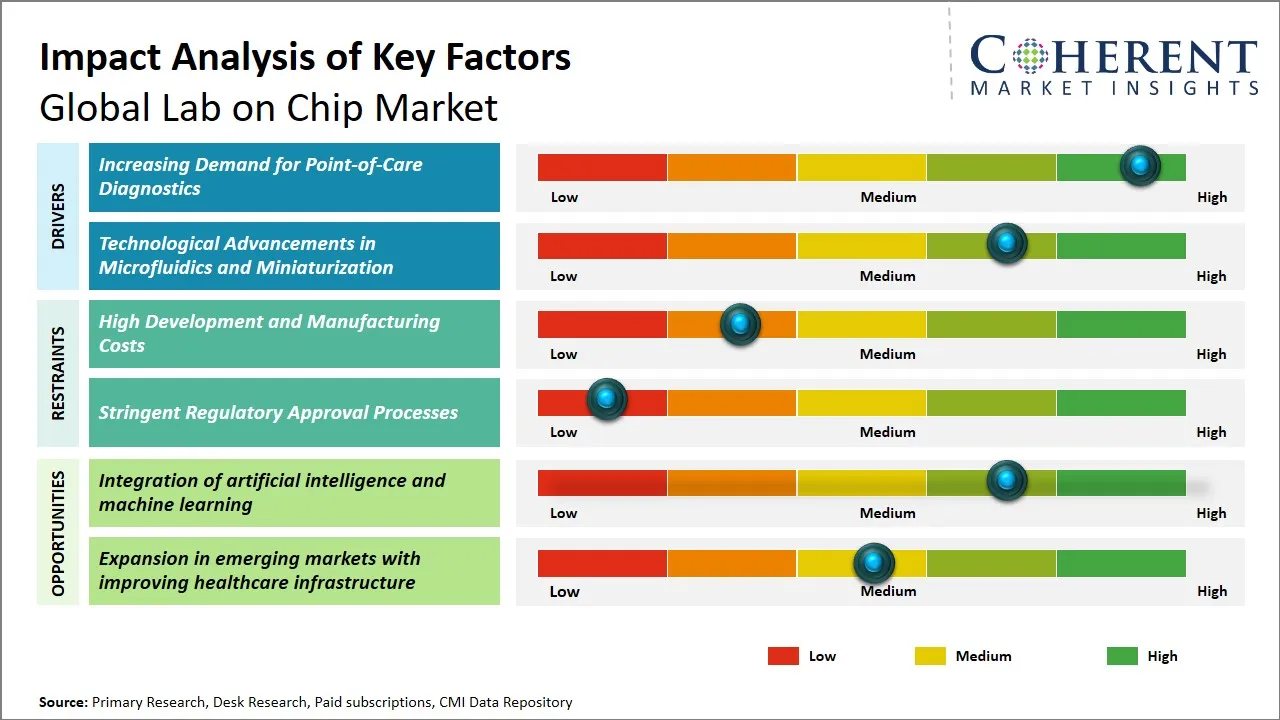
Lab on Chip Market Driver - Increasing Demand for Point-of-Care Diagnostics
The global lab on chip market, which is primarily driven by the growing demand for POC diagnostics, has been significantly impacted by the increasing focus on fast and accurate diagnostic testing. These small machines provide the benefit of quickly diagnosing a patient on the spot or at least very close to the site of patient care, which effectively diminishes the reliance on centralized laboratories and thus speeds up the whole diagnostic process. The rising demand is supported by a host of reasons, which include the increasing incidence of chronic diseases, the incidence of infectious diseases, and the requirement of instant decision-making in emergency situations. Moreover, microfluidics and biotechnology have made lab-on-chip platforms even more sensitive and versatile so that they can cater to a wide array of applications like blood analysis, pathogen detection, and genetic testing.
In October 2025, Co-Diagnostics Inc., a U.S.-based molecular diagnostics company known for its patented PCR technology, announced the development of a proprietary sample preparation instrument designed to simplify and lower the cost of point-of-care (PoC) tuberculosis testing in India. The new device supports both sputum and tongue swab samples, offering single-button operation and built-in safety features for handling live organisms. By enabling decentralized PCR testing across nearly 30,000 primary health centers, this innovation aims to make life-saving TB diagnostics more accessible while strengthening local manufacturing partnerships.
Lab on Chip Market Opportunity - Integration of Artificial Intelligence and Machine Learning
The incorporation of AI (artificial intelligence) and ML (machine learning) technologies in the lab-on-chip (LOC) market is a game-changing chance for global LOC market, giving the ability to optimize the performance of the devices, to conduct better diagnostics, and to perform data analysis faster. Through the introduction of AI and ML algorithms on the LOC platforms, manufacturers can enhance precision and speed of data interpretation which in turn supports real-time decision-making and personalized healthcare solutions. This brings about the capability of dealing with complex biological data produced by the LOC systems, for instance genomic sequences, biomarker profiles, and cell behaviors, with higher accuracy and less human involvement.
In October 2025, Solidigm, a U.S.-based leader in enterprise data storage solutions, announced the launch of its AI Central Lab in Rancho Cordova, California, featuring the world’s most advanced and dense storage test clusters for artificial intelligence workloads. The lab, equipped with NVIDIA B200 and H200 GPUs, allows Solidigm and its partners to study real-world AI applications and optimize storage performance for large-scale data centers.
Analyst Opinion (Expert Opinion)
- The lab on chip market is growing at a rapid pace with the help of new methods such as diagnostics and research being performed using microfluidic devices that are very small in size. The main factors driving the growth are the increase in demand for point-of-care testing, governmental financial support for infectious disease detection, and the progress made in combining biosensor and semiconductor technology. Even though the market is characterized by strong innovation, it still has to deal with the issues of mass production, standardizing, and getting regulatory approvals. The coming phase of growth shall be triggered by the AI-enabled, connected lab-on-chip devices that are capable of providing fast, real-time insights in both clinical and research settings.
- Events that take place on a global scale like the MicroTAS Conference, lab-on-a-chip and Microfluidics World Congress, and IEEE MEMS Symposium have led to better interaction between the academia and the industry, revealing the cutting-edge technologies in diagnostics. Bio-Rad and Fluidigm are among the companies that are introducing new microfluidic tools that can handle a lot of samples at once and, meanwhile, the U.S. government and some Asian countries are investing in the development of portable molecular testing projects. It is believed that these advancements will make lab-on-chip technologies a pillar of personalized healthcare and global diagnostics that are not dependent on the location of the patients.
Speak to the analyst
Want personalized insights?
Take the findings above to one of our principal consultants, or have the report rebuilt around the segments, geographies and competitors you actually track.
Market Segmentation
- Product and Service Insights (Revenue, USD Bn, 2021 - 2033)
- Reagents and Consumables (chips, cartridges, microplates, assay kits, etc.)
- Software and Services (data analytics, remote monitoring, workflow automation, etc.)
- Devices and Instruments (microfluidic chips, sensors, actuators, etc.)
- Technology Insights (Revenue, USD Bn, 2021 - 2033)
- Microarrays
- DNA Microarrays (Gene Chips)
- Protein Microarrays
- Antibody Microarrays
- Microfluidics
- Continuous-flow Microfluidics
- Droplet-based Microfluidics (Digital Microfluidics)
- Optofluidics
- Acoustofluidics
- Tissue Biochip
- 2D Cell Culture Chips
- 3D Cell Culture and Organ-on-a-Chip
- Others (emerging or hybrid technologies)
- Microarrays
- Application Insights (Revenue, USD Bn, 2021 - 2033)
- Genomics
- Proteomics
- Diagnostics
- Drug Discovery
- Point-of-Care Testing
- Others
- End User Insights (Revenue, USD Bn, 2021 - 2033)
- Hospitals and Clinics
- Biotechnology and Pharmaceutical Companies
- Diagnostic Centers
- Contract Research Organizations (CROs)
- Forensic Laboratories
- Home Care Settings
- Others (Academic and Research Institutes)
- Regional Insights (Revenue, USD Bn, 2021 - 2033)
- North America
- U.S.
- Canada
- Latin America
- Brazil
- Argentina
- Mexico
- Rest of Latin America
- Europe
- Germany
- U.K.
- Spain
- France
- Italy
- Russia
- Rest of Europe
- Asia Pacific
- China
- India
- Japan
- Australia
- South Korea
- ASEAN
- Rest of Asia Pacific
- Middle East
- GCC Countries
- Israel
- Rest of Middle East
- Africa
- South Africa
- North Africa
- Central Africa
- North America
- Key Players Insights
- Abbott Laboratories
- Agilent Technologies
- Bio-Rad Laboratories
- Thermo Fisher Scientific
- BioMérieux
- Danaher Corporation
- PerkinElmer
- Illumina
- QIAGEN
- Merck Group
- Roche Diagnostics
- Becton Dickinson (BD)
- Tecan Group
- Luminex Corporation
- Fluidigm Corporation
Sources
Primary Research Interviews
- Industry Stakeholders
- Interviews with R&D heads of microfluidics companies
- Discussions with OEM partners and manufacturing heads involved in lab-on-chip production
- End Users
- Interviews with diagnostic laboratory managers using lab-on-chip systems
- Discussions with hospital point-of-care testing coordinators
- Interviews with biotechnology research center directors
- Feedback from environmental monitoring agencies using portable analytical devices
Government and International Databases
- National Institute of Standards and Technology (NIST)
- World Health Organization (WHO)
- European Commission Health Technology Database
- U.S. Food and Drug Administration (FDA) Device Classification Database
- World Bank Health Infrastructure Data
- Patent Databases (USPTO, EPO, WIPO)
Trade Publications
- Medical Device and Diagnostic Industry (MD+DI)
- BioProcess International
- The Scientist – Technology Feature Section
- GEN – Genetic Engineering & Biotechnology News
- Clinical Laboratory International
- IEEE Spectrum – Biomedical Engineering Section
Academic Journals
- Lab on a Chip
- Analytical Chemistry
- Biosensors and Bioelectronics
- Microfluidics and Nanofluidics
- Nature Biomedical Engineering
- Sensors and Actuators B: Chemical
Reputable Newspapers
- The New York Times – Science Section
- Financial Times – Health Technology Reports
- The Wall Street Journal – Health & Science
- The Guardian – Global Health Coverage
- Reuters – Healthcare Innovation News
- Bloomberg – Medical Technology Updates
Industry Associations
- Microfluidics Association
- Institute of Electrical and Electronics Engineers (IEEE)
- American Society for Clinical Pathology (ASCP)
- Society for Laboratory Automation and Screening (SLAS)
- Biomedical Engineering Society (BMES)
- European Society for Biomedical Research on Microfluidics (μTAS Community)
Public Domain Resources
- National Institutes of Health (NIH) Reports
- Open Government Data Portals
- University Research Repositories
- Regulatory Filings under Health Device Approvals
- Conference Proceedings from International Microfluidics Congress
Proprietary Elements
- CMI Data Analytics Tool: Proprietary analytics tool to analyze real-time market trends, consumer behavior, and technology adoption in market
- Proprietary CMI Existing Repository of Information for Last 8 Years
Get access to 250+ pages report
Every segment, forecast, competitor profile and data table behind the analysis above — available for instant download.
- ESOMAR Member
- ISO 9001:2015 Certified
- D-U-N-S Registered
- GDPR & CCPA Compliant
Missing comfort of reading report in your local language? Find your preferred language:
Transform your Strategy with Exclusive Trending Reports
Frequently Asked Questions
The global lab on chip market is estimated to be valued at USD 7.93 Bn in 2026 and is expected to reach USD 15.46 Bn by 2033.
The CAGR of the global lab on chip market is projected to be 10.0% from 2026 to 2033.
Increasing demand for point-of-care diagnostics and technological advancements in microfluidics and miniaturization are the major factors driving the growth of the global lab on chip market.
High development and manufacturing costs and stringent regulatory approval processes are the major factors hampering the growth of the global lab on chip market.
In terms of product and service, the reagents and consumables (chips, cartridges, microplates, assay kits, etc.) is estimated to dominate the market revenue share in 2026.
Diagnostics, drug discovery, genomics, environmental monitoring, and food safety testing.
It enables real-time analysis of individual biomarkers for targeted therapies.