

Global Luxury Eyewear Market Size and Forecast – 2026 - 2033
The Global Luxury Eyewear Market is estimated to be valued at USD 35.75 Bn in 2026 and is expected to reach USD 48.65 Bn by 2033, exhibiting a compound annual growth rate (CAGR) of 4.5% from 2026 to 2033.
Key Takeaways of the Luxury Eyewear Market
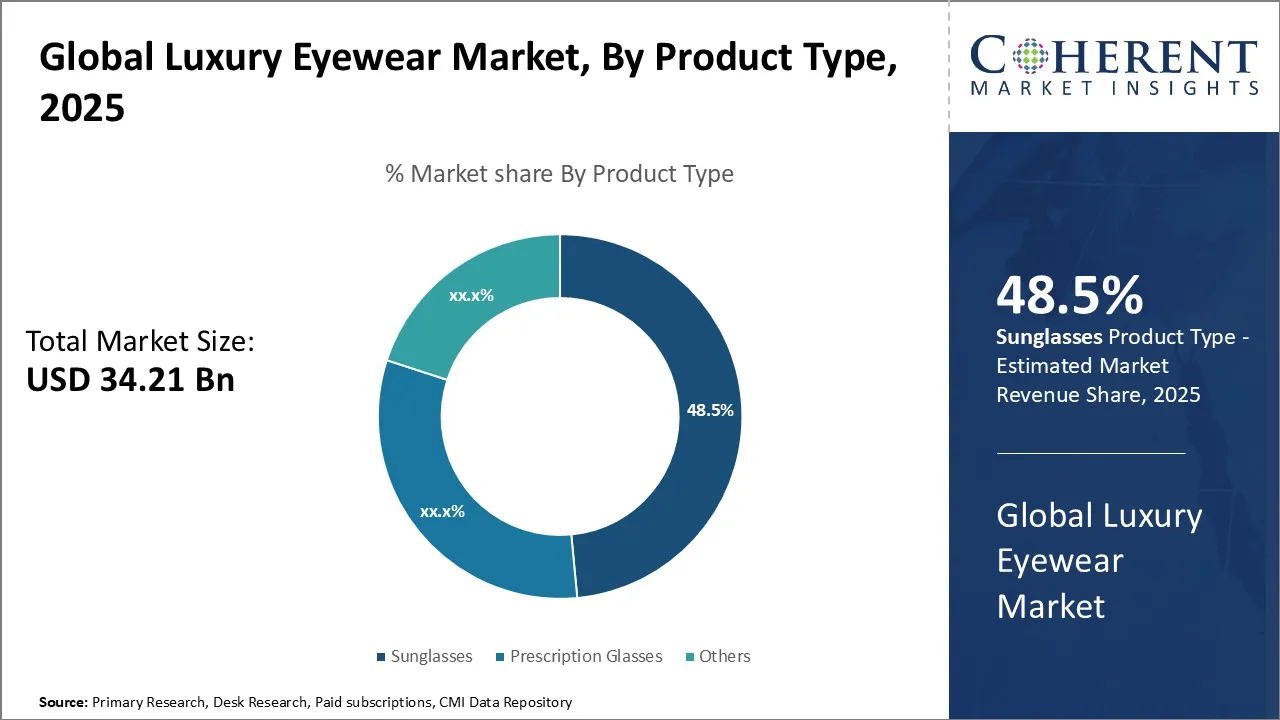
- The sunglasses segment is projected to account for 49.5 % of the global luxury eyewear market in 2026, driven by a blend of evolving fashion trends and functional advantages that resonate with high-income consumers globally.
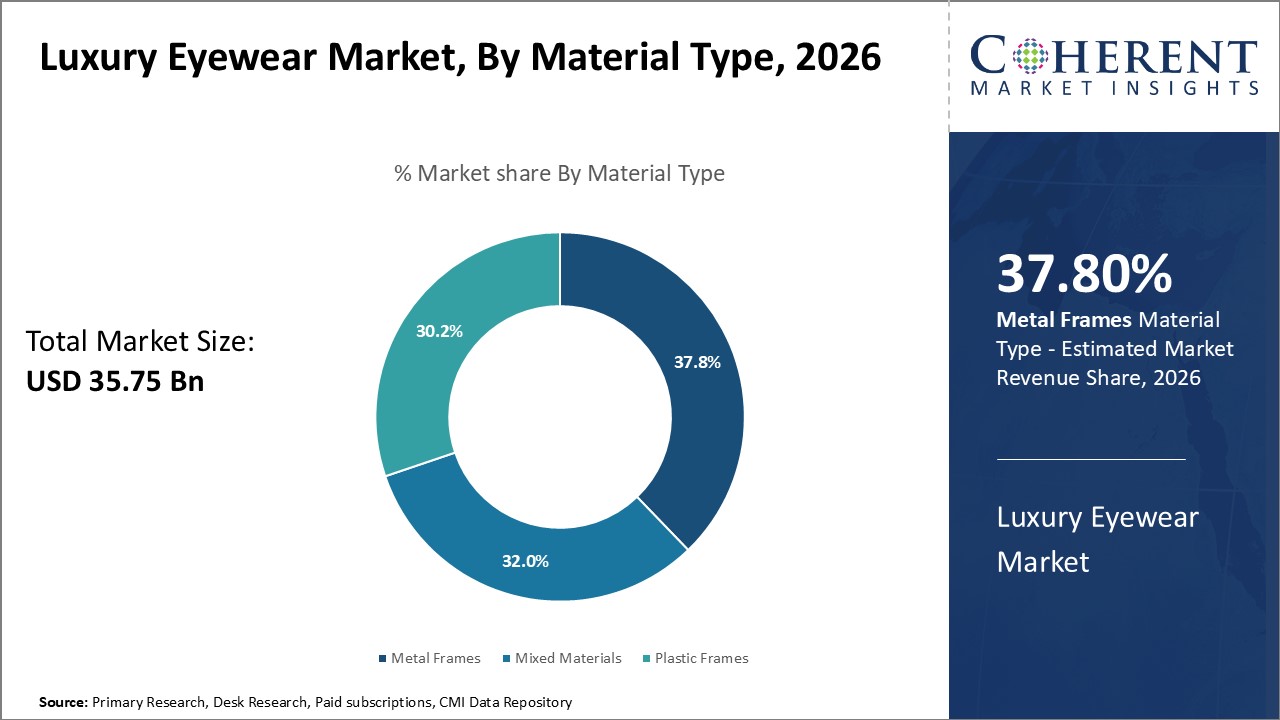
- The metal frames segment is expected to account for 37.8 % of the global luxury eyewear market in 2026, driven by their durability, lightweight comfort, and enduring elegance.
- The anti-reflective coatings segment is expected to lead the global luxury eyewear market in 2026, holding a 35.6 % share, due to their notable improvements in wearer comfort, visual clarity, and aesthetic appeal.
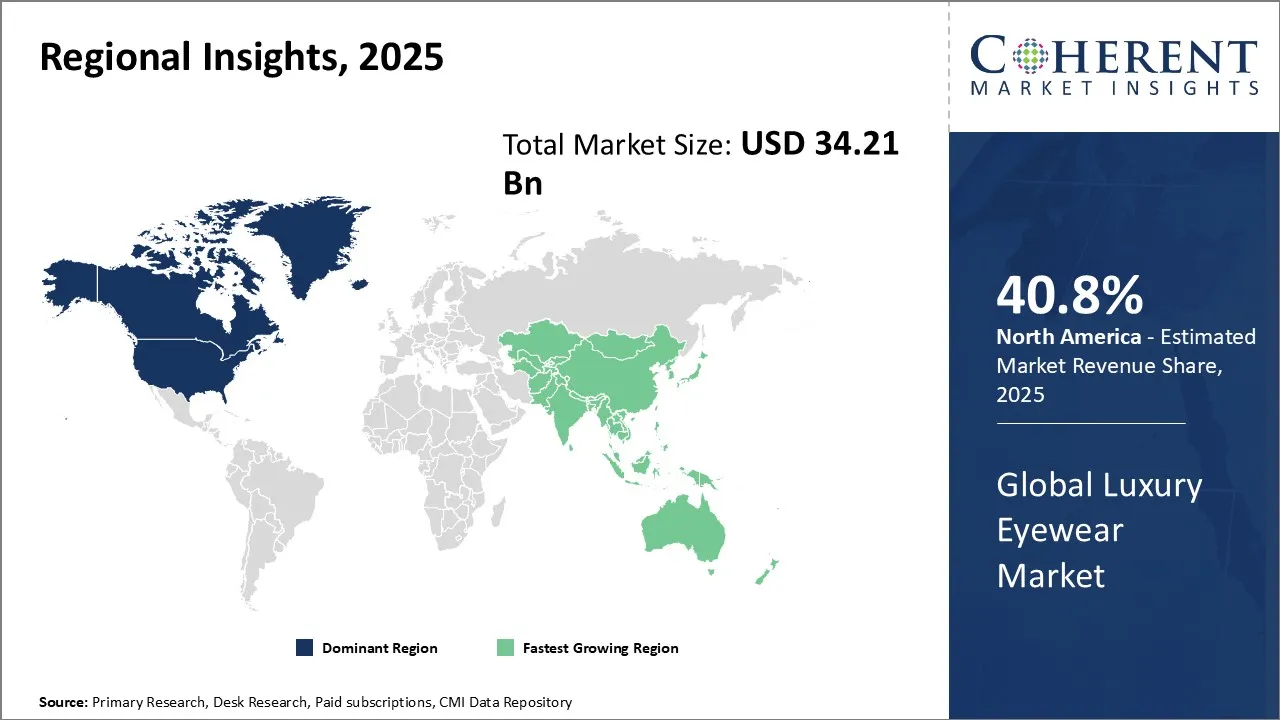
- North America is projected to lead the global luxury eyewear market in 2026 with a 40.8 % share, driven by strong consumer demand for premium eyewear and the presence of major luxury eyewear brands. Asia Pacific, with an estimated 19.5% share in 2026, will be the fastest-growing region, fueled by increasing fashion consciousness, rising disposable incomes, and a growing affinity for luxury brands among consumers.
Market Overview
Current market trends indicate a strong shift towards innovative designs and advanced technology integration in luxury eyewear, such as smart glasses, protective eyewear, and sustainable materials. Additionally, collaborations between luxury brands and renowned designers are gaining traction, enhancing product exclusivity and appeal. The rise of e-commerce platforms and personalized shopping experiences further fuels market expansion, catering to the evolving preferences of tech-savvy consumers seeking both style and functionality in premium eyewear.
Current Events and Its Impact
Current Events | Description and its impact |
Expansion of Omnichannel Retail & E-commerce |
|
Influence of Celebrity Endorsements and Fashion Collaborations |
|
Segmental Insights
- Current Industry Events of 2026
- Market Size Estimation
- Regional Breakdown
- Competitive Landscape
- Customer Intelligence
- Segmental Analysis
- Pricing Analysis
- Key Market Drivers, Challenges & Future Trends
- Customized Insights Section
Luxury Eyewear Market Insights, By Product Type - Sunglasses Segment has Driven the Market by Fashion and Functional Appeal
The sunglasses segment is expected to command 49.5% share of the global luxury eyewear market in 2026, primarily fueled by a combination of fashion trends and functional benefits that appeal to affluent consumers worldwide. Sunglasses have evolved beyond mere protective gear to become essential style statements, and this dual role significantly propels their market dominance.
A key driver underlying the growth of luxury sunglasses is the increasing consumer inclination toward personal style and self-expression. High-net-worth individuals seek eyewear that complements their overall appearance, projecting exclusivity and sophistication. Luxury brands continuously introduce innovative designs, limited editions, and collaborations with fashion icons, which elevate the appeal of sunglasses as must-have accessories. This cycle of trendsetting and aspirational value encourages consumers to invest in premium sunglasses as integral fashion components.
Luxury Eyewear Market Insights, By Material Type - Metal Frames Lead Material Innovation and Enduring Luxury Appeal
Metal frames segment is expected to hold 37.8% share of the market in 2026, in the global luxury eyewear space due to their blend of durability, lightweight comfort, and timeless elegance. The enduring preference for metal frames is supported by their versatility in design and the association with robustness and premium craftsmanship that luxury consumers seek.
Metal as a material offers a unique combination of strength and malleability, allowing designers to create intricate, sleek frames that are both functional and visually appealing. In luxury eyewear, this translates into frames that maintain precise shapes while offering a comfortable fit, which is critical for consumers investing in high-end products. The material’s resistance to wear and corrosion enhances the longevity of eyewear, making metal frames a favored choice for consumers who view their luxury purchases as long-term investments.
Luxury Eyewear Market Insights, By Coating Type - Anti-Reflective Coatings Segment Dominates, due to Luxury Eyewear through Enhanced Visual Experience
Anti-reflective coatings segment is expected to dominate the global luxury eyewear market with 35.6% share in 2026, driven by their significant enhancements to wearer comfort, visual clarity, and aesthetic appeal. This functional innovation creates a substantial differentiation in luxury eyewear by addressing critical optical performance needs, elevating the overall consumer experience.
Anti-reflective coatings reduce glare by minimizing light reflections on the surfaces of lenses, which directly improves clarity and contrast for wearers. This is particularly important for consumers who rely on eyewear in diverse lighting conditions, from bright sunlight to low-light urban environments. Luxury eyewear users often seek premium visual performance alongside style, making AR coatings a highly valuable feature that enhances eye comfort and reduces strain during prolonged use.
Regional Insights
North America Luxury Eyewear Market Analysis and Trends
The North America region is projected to lead the market with a 40.8% share in 2026, driven by a high demand for luxury products, a strong consumer base, and increasing disposable incomes. The United States, in particular, has a robust luxury market with key players like Luxottica (through brands such as Ray-Ban and Oakley) and Safilo (which manages brands like Gucci Eyewear and Carrera). The region benefits from a well-established retail environment, including both physical stores in major cities and a rapidly growing e-commerce presence. North America also boasts advanced marketing strategies and distribution networks that cater to affluent consumers seeking premium eyewear.
Additionally, the presence of top-tier fashion designers and an increasing trend toward personalized and high-fashion eyewear further fuels growth in the market. Moreover, supportive trade agreements like the United States-Mexico-Canada Agreement (USMCA) facilitate seamless trade, while strong brand recognition and loyalty continue to reinforce the region’s position in the global luxury eyewear industry.
Asia Pacific Luxury Eyewear Market Analysis and Trends
The Asia Pacific region is expected to exhibit the fastest growth in the market contributing 19.5% share in 2026, propelled by rising disposable incomes, increasing urbanization, and shifting consumer preferences toward premium lifestyle products. Countries like China, Japan, and South Korea are witnessing growing middle and upper-middle-class segments with an appetite for luxury goods, including eyewear. The expanding retail infrastructure with an influx of both standalone luxury stores and e-commerce platforms has enhanced product accessibility.
Additionally, rising awareness around eye health and fashion trends fueled by social media and celebrity endorsements further boost regional demand. Government initiatives supporting foreign investments, easing import duties, and intellectual property protections are encouraging international luxury eyewear brands like Cartier, Chanel, and Prada to expand their footprint. The dynamic manufacturing sector in countries like China also enables cost efficiencies and faster time-to-market, making the region a hub for both consumption and production.
Global Luxury Eyewear Market Outlook for Key Countries
Italy Luxury Eyewear Market Trends
Italy’s luxury eyewear market continues to lead with its deep-rooted tradition in luxury eyewear manufacturing. The country is home to Luxottica, arguably the global market leader, which pioneers innovation, design, and marketing in eyewear. Italian craftsmanship, combined with cutting-edge technology, ensures high product quality and strong brand loyalty. Italy’s government supports this sector through export incentives and trade facilitation. The nation’s global trade connections also position it as a key exporter of luxury eyewear worldwide, reinforcing its commanding influence in the luxury segment.
France Luxury Eyewear Market Trends
France’s luxury eyewear market thrives on the presence of iconic fashion houses such as Chanel, Dior, and Louis Vuitton that integrate eyewear as a core part of their luxury assortment. Paris, as a fashion capital, plays a critical role in trend-setting and brand prestige in the eyewear space. French companies have leveraged their strong brand heritage, coupled with innovative marketing, to capture affluent consumer segments globally. The government’s cultural promotion and intellectual property laws protect and encourage the luxury fashion sector, creating a robust environment for luxury eyewear brands to flourish.
China Luxury Eyewear Market Trends
China represents the fastest-growing luxury eyewear market fueled by rising consumer purchasing power and a shift toward branded, high-quality products. Increasing digital adoption and e-commerce penetration have allowed brands such as Cartier and Prada to reach a wider audience efficiently. The government’s emphasis on protecting foreign trademarks and improving retail infrastructure has attracted premium eyewear brands to establish stronger distribution networks. Local players and joint ventures are also emerging, contributing to market dynamism and localized innovation.
U.S. Luxury Eyewear Market Trends
The U.S. luxury eyewear market is characterized by a mature consumer base valuing both functionality and fashion. Key players like Luxottica, EssilorLuxottica, and independent designer brands dominate retail channels, including premium department stores and online platforms. Government regulations ensure product safety and quality standards that boost consumer confidence. High disposable income levels and culture-driven fashion trends continually support product diversification and market expansion. The U.S. market also drives innovations in eyewear technology, such as smart and augmented reality glasses, blending luxury with functionality.
Japan Luxury Eyewear Market Trends
Japan’s luxury eyewear market balances traditional precision craftsmanship with contemporary fashion trends. Japanese consumers favor high-quality, meticulously designed products, supporting brands like JINS and Masunaga Optical alongside international luxury labels. The country’s efficient retail infrastructure, a strong culture of brand loyalty, and consumers’ appreciation for aesthetics and technology underpin steady market growth. Health-conscious trends in eyewear along with government support for intellectual property rights further enhance the premium eyewear segment’s appeal in Japan.
End User Feedback and Unmet Needs in the Luxury Eyewear Market
- Customized Comfort and Aesthetic Appeal: One of the most frequently cited positive aspects of luxury eyewear from end-users is the blend of functionality, comfort, and style offered by high-end brands. A notable example comes from a user’s experience with a specific luxury brand that specializes in customized eyewear. The ability to choose frame material, lens color, and finish to match personal taste was highly appreciated.
- This level of personalization not only catered to individual style preferences but also ensured a comfortable fit, particularly with lightweight frames made from advanced materials like titanium. End-users in the fashion and lifestyle segment reported that these features significantly enhanced their overall satisfaction with their eyewear, as they could express their personality while benefiting from premium comfort and durability. Such positive feedback highlights the demand for customization options in luxury eyewear, where style meets precision engineering.
- Technological Gaps: Many users have expressed a desire for eyewear that integrates more advanced technological features, such as augmented reality (AR) lenses or smart capabilities, which could enhance the user experience. While some brands have started to experiment with incorporating technology into eyewear, the adoption of such innovations remains limited. Users seeking a blend of luxury and technology find that available products often lack the sophistication or seamless integration they expect from a high-end brand.
Market Players, Key Development, and Competitive Intelligence
Key Developments
- In May 2025, Synsam Group unveiled NK Eyewear & Optics, establishing a new luxury destination in the optical retail sector. This launch marks a strategic move to blend clinical excellence with high-end fashion by offering an exclusive range of luxury eyewear brands. Positioned within the iconic NK department store, the concept redefines premium vision care by integrating world-class optical expertise with trendsetting style, reinforcing Synsam’s leadership in the Nordic luxury retail landscape.
- In February 2025, U.S.-based luxury eyewear brand, Ahlem, secured its first external investment from Luxembourg-based private equity firm 1686 Partners. Known for backing purpose-driven lifestyle companies, 1686 Partners will support Ahlem’s global expansion by strengthening its retail presence, enhancing client services, scaling wholesale operations, boosting marketing efforts, and increasing production capacity—marking a pivotal step in Ahlem’s international growth strategy.
- In September 2024, Asurion Europe launched a new luxury eyewear protection product in collaboration with EssilorLuxottica through the SunLove Protection Plan. This strategic partnership introduces comprehensive global insurance coverage for luxury sunglasses, safeguarding against accidental damage, chipped or broken frames, scratched or cracked lenses, and wear and tear. EssilorLuxottica, renowned for its iconic brands such as Ray-Ban, Persol, and Oakley, along with retail banners like Sunglass Hut and David Clulow, strengthens its customer value proposition with this enhanced after-sales offering.
Top Strategies Followed by Global Luxury Eyewear Market Players
- Established market leaders invest heavily in research and development (R&D) to consistently innovate and deliver high-performance products that meet the sophisticated demands of luxury consumers. These investments drive advancements in lens technology, frame materials, and design aesthetics, ensuring differentiation in a saturated market.
- For instance, on July 22 2025, Luxottica recently introduced "Ray-Ban Meta" eyewear in collaboration with Facebook (Meta), combining smart features with high-end fashion, positioning itself as a leader in both luxury and technological innovation.
- Mid-level players in the luxury eyewear sector occupy a unique space where balancing cost and quality is paramount. Unlike top-tier brands that often emphasize exclusivity and cutting-edge innovation, mid-level companies focus on offering cost-effective luxury alternatives that deliver reasonable quality and design sophistication at more accessible price points. This approach targets a growing base of price-sensitive consumers who aspire to own luxury eyewear without the hefty premium. To enhance their competitive positioning, mid-level players actively pursue collaborations with technology providers, OEMs, and regional distributors.
- For example, Warby Parker, which uses a direct-to-consumer model with strong digital tools like virtual try-ons and home try-on kits. Warby Parker balances quality, design, and affordability while leveraging omnichannel retailing and strong brand loyalty among younger consumers.
- Small-scale players in the global luxury eyewear market adopt differentiated strategies centered on niche specialization and innovation to carve out distinct market positions. These companies often concentrate on specialized features such as eco-friendly materials, handcrafted embellishments, or customizable eyewear that appeal to discerning consumers seeking uniqueness and personalized experiences. To stay competitive against larger rivals, small-scale players embrace cutting-edge technologies like 3D printing, augmented reality for virtual try-ons, and advanced manufacturing techniques that enable rapid prototyping and customization.
- For example, Shwood specializes in eyewear made from sustainable wood, offering a unique blend of eco-consciousness and fashion. Its innovation lies in its commitment to using natural materials, appealing to environmentally-conscious consumers who prefer artisanal designs.
Market Report Scope
Luxury Eyewear Market Report Coverage
| Report Coverage | Details | ||
|---|---|---|---|
| Base Year: | 2025 | Market Size in 2026: | USD 35.75 Bn |
| Historical Data for: | 2020 To 2024 | Forecast Period: | 2026 To 2033 |
| Forecast Period 2026 to 2033 CAGR: | 4.5% | 2033 Value Projection: | USD 48.65 Bn |
| Geographies covered: |
| ||
| Segments covered: |
| ||
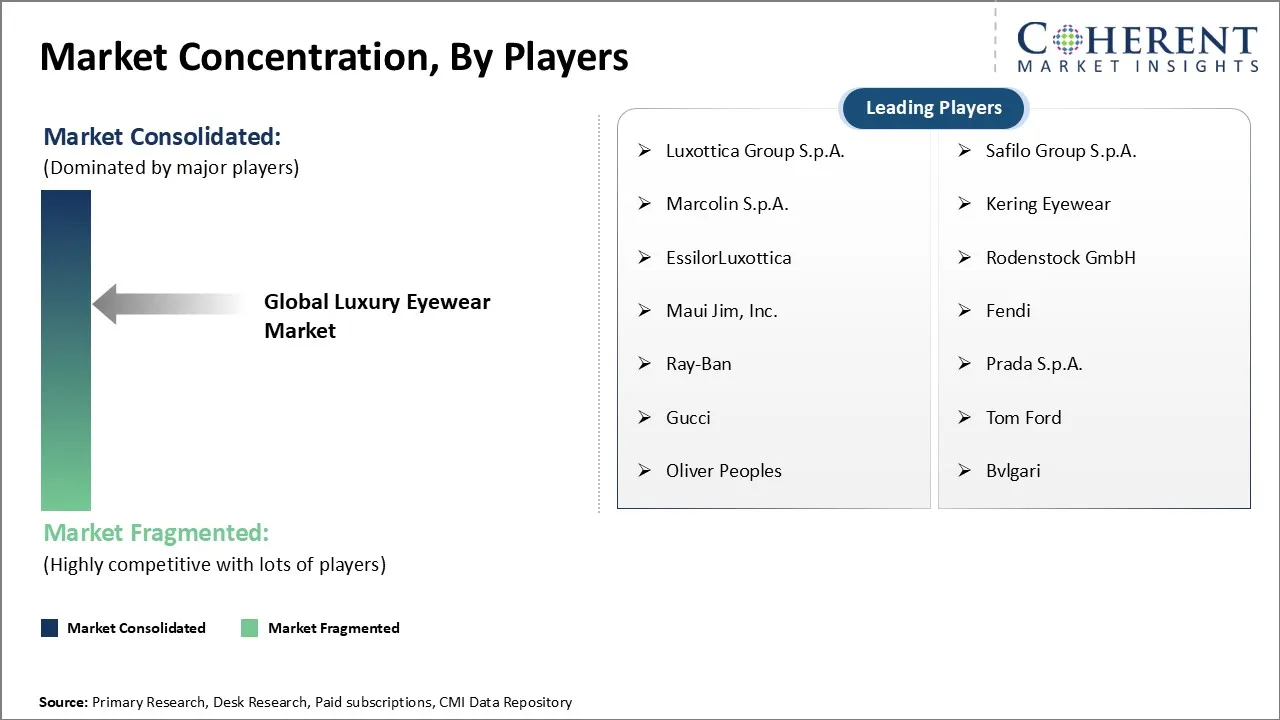
| Companies covered: | Luxottica Group S.p.A., Safilo Group S.p.A., Marcolin S.p.A., Kering Eyewear, EssilorLuxottica, Rodenstock GmbH, Maui Jim, Inc., Fendi, Ray-Ban, Prada S.p.A., Gucci, Tom Ford, Oliver Peoples, and Bvlgari | ||
| Growth Drivers: |
| ||
| Restraints & Challenges: |
| ||
Luxury Eyewear Market Dynamics
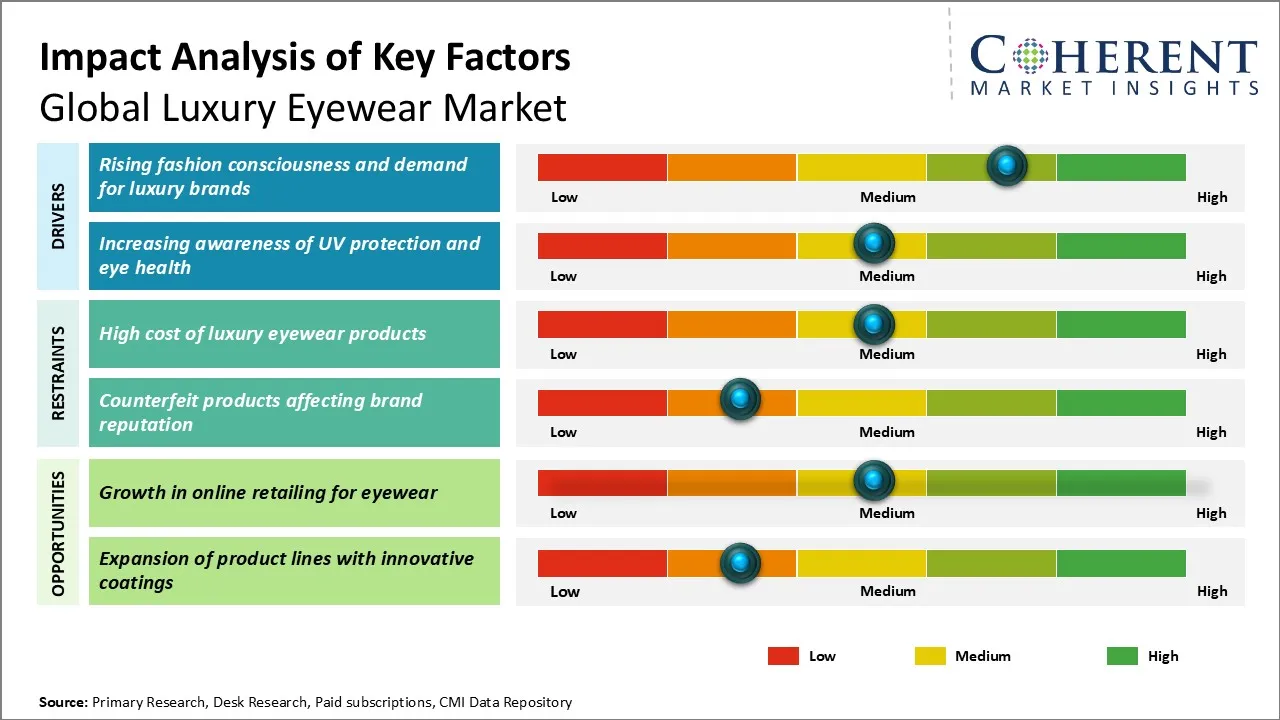
Luxury Eyewear Market Driver - Rising Fashion Consciousness and Demand for Luxury Brands
The luxury eyewear market is experiencing unprecedented momentum as fashion consciousness reaches new heights among consumers worldwide, transforming eyewear from a purely functional accessory into a critical fashion statement. This shift reflects broader societal changes where personal style and brand affiliation have become integral to individual identity expression. Consumers increasingly view luxury eyewear brands like Gucci, Prada, Tom Ford, and Ray-Ban as essential components of their fashion portfolio, similar to designer handbags or premium footwear. The democratization of fashion through social media platforms has intensified this trend, as consumers seek distinctive, high-quality eyewear that photographs well and conveys sophistication.
Current trends indicate a strong preference for oversized frames, vintage-inspired designs, and technologically advanced materials that combine aesthetics with functionality. Looking ahead, the integration of smart technology into luxury frames, sustainable luxury materials, and customizable designs are expected to dominate future product development, catering to environmentally conscious consumers who refuse to compromise on style or quality.
Luxury Eyewear Market Opportunity - Expansion of Online Retailing in the Global Luxury Eyewear Market
The rapid growth of online retailing presents a significant opportunity for the global luxury eyewear market, fundamentally transforming how consumers discover and purchase premium eyewear products. Increasing internet penetration and the widespread adoption of smartphones have made online platforms a vital channel for luxury brands to reach a broader, tech-savvy audience seeking convenience and diverse product offerings. E-commerce enables luxury eyewear brands to showcase extensive collections without geographic limitations, allowing consumers from emerging and mature markets alike to access exclusive designs and limited-edition products that may not be readily available in physical stores.
For example, Luxottica, the world’s largest eyewear manufacturer, has embraced the e-commerce boom by expanding its online retail presence through direct-to-consumer platforms like Ray-Ban's official website and collaborations with major e-commerce players like Amazon and Farfetch. This shift allows Luxottica to tap into regions where physical retail presence is limited, such as in emerging markets like India and China.
Analyst Opinion (Expert Opinion)
- The global luxury eyewear market is experiencing dynamic growth, fueled by a confluence of fashion trends and increasing consumer spending on premium accessories. Brands like Ray-Ban and Gucci are at the forefront, showcasing innovative designs and collaborations, which were prominently featured at the Luxury Eyewear Forum (2023) and the International Vision Expo (2022).
- Presentations highlighted successful marketing strategies that leverage social media influencers to engage younger demographics, illustrating how luxury eyewear is becoming a status symbol among millennials and Gen Z. For instance, Gucci's recent capsule collection, which merges vintage aesthetics with modern flair, received significant acclaim and drove substantial sales growth.
- The emphasis on sustainability is reshaping product offerings, with brands increasingly adopting eco-friendly materials, a trend discussed extensively at recent conferences. As the market evolves, companies that effectively blend heritage with innovation while addressing sustainability will likely dominate. This unique positioning allows them to resonate with consumers seeking both luxury and ethical considerations, thereby enhancing their competitive edge in this vibrant and rapidly changing market landscape.
Speak to the analyst
Want personalized insights?
Take the findings above to one of our principal consultants, or have the report rebuilt around the segments, geographies and competitors you actually track.
Market Segmentation
- Product Type Insights (Revenue, USD Bn, 2021 - 2033)
- Sunglasses
- Prescription Glasses
- Others
- Material Type Insights (Revenue, USD Bn, 2021 - 2033)
- Metal Frames
- Stainless Steel
- Titanium
- Mixed Materials
- Acetate and Metal
- Wood and Metal
- Plastic Frames
- Acrylic
- Polycarbonate
- Coating Type Insights (Revenue, USD Bn, 2021 - 2033)
- Anti-Reflective Coatings
- UV Protection Coatings
- Scratch-Resistant Coatings
- Hydrophobic Coatings
- End User Insights (Revenue, USD Bn, 2021 - 2033)
- Men
- Women
- Other
- Distribution Channel (Revenue, USD Bn, 2021 - 2033)
- Online Retail
- Offline Retail
- Regional Insights (Revenue, USD Bn, 2021 - 2033)
- North America
- U.S.
- Canada
- Latin America
- Brazil
- Argentina
- Mexico
- Rest of Latin America
- Europe
- Germany
- U.K.
- Spain
- France
- Italy
- Russia
- Rest of Europe
- Asia Pacific
- China
- India
- Japan
- Australia
- South Korea
- ASEAN
- Rest of Asia Pacific
- Middle East
- GCC Countries
- Israel
- Rest of Middle East
- Africa
- South Africa
- North Africa
- Central Africa
- North America
- Key Players Insights
- Luxottica Group S.p.A.
- Safilo Group S.p.A.
- Marcolin S.p.A.
- Kering Eyewear
- EssilorLuxottica
- Rodenstock GmbH
- Maui Jim, Inc.
- Fendi
- Ray-Ban
- Prada S.p.A.
- Gucci
- Tom Ford
- Oliver Peoples
- Bvlgari
Sources
Primary Research Interviews
- R&D Director – Leading Liquid Vitamin Manufacturer
- Procurement Manager – Major Dietary Supplement Retailer
- Product Development Head – Well-Known Vitamin Brand
- Sustainability Manager – Health Supplement Certification Body
Stakeholders
- Manufacturers
- End-use Sectors:
- Dietary Supplements (Vitamins, Minerals, Nutritional Drinks)
- Fitness & Wellness Brands focusing on liquid supplementation
- Regulatory & Certification Bodies
- E-commerce Platforms and Retailers
- Technology Integration Players: AI-based personalization providers for nutritional products
Databases
- UN Comtrade Database
- India Import Export (EXIM) Database
Magazines
- Nutrition & Wellness Magazine – Trends in dietary supplements and liquid vitamins
- Health & Nutrition Business – Innovations in liquid nutrition and supplements
- Global Health Insights – Consumer health trends in vitamin consumption
- Vitamin Business Journal – Market updates and growth opportunities in liquid vitamins
- The Supplement Guide – Industry updates for dietary supplements and liquid formulations
Journals
- International Journal of Nutrition – Nutritional benefits and absorption of liquid vitamins
- Journal of Food Science & Technology – Formulation trends in vitamin products
- Journal of Dietary Supplements – Effects of liquid supplementation on health
- Journal of Applied Nutrition – Benefits of liquid vitamins in nutrition
- Food Research International – Nutrient bioavailability in liquid supplements
Newspapers
- The Financial Times – Market growth of liquid vitamins and nutritional products
- The Guardian – Consumer trends in health and wellness supplements
- Asia Health Journal – Growth of liquid vitamin consumption in the Asia-Pacific region
- European Nutrition News – Liquid vitamins regulation and health policies
- The New York Times – Consumer preference shift to liquid supplementation
Associations
- Council for Responsible Nutrition (CRN)
- International Society of Nutraceuticals and Functional Foods (ISNFF)
- American Herbal Products Association (AHPA)
- Natural Products Association
- European Food Safety Authority (EFSA)
- Clean Label Project
Public Domain Sources
- U.S. FDA – Guidelines for dietary supplements, including liquid vitamins
- European Commission – Food Supplements Regulation and Vitamin Guidelines
- World Health Organization – Safety standards and health impact studies on vitamins
- OECD – Nutritional and safety assessments for food supplements
Proprietary Elements
- CMI Data Analytics Tool, Proprietary CMI Existing Repository of information for the last 8 years.
Get access to 250+ pages report
Every segment, forecast, competitor profile and data table behind the analysis above — available for instant download.
- ESOMAR Member
- ISO 9001:2015 Certified
- D-U-N-S Registered
- GDPR & CCPA Compliant
Missing comfort of reading report in your local language? Find your preferred language:
Transform your Strategy with Exclusive Trending Reports
Frequently Asked Questions
The global luxury eyewear market is estimated to be valued at USD 35.75 Bn in 2026 and is expected to reach USD 48.65 Bn by 2033.
The CAGR of the global luxury eyewear market is projected to be 4.5% from 2026 to 2033.
Rising fashion consciousness and demand for luxury brands and increasing awareness of UV protection and eye health are the major factors driving the growth of the global luxury eyewear market.
High cost of luxury eyewear products and counterfeit products affecting brand reputation are the major factors hampering the growth of the global luxury eyewear market.
In terms of product type, sunglasses are estimated to dominate the market revenue share in 2026.
Luxottica owns approximately 80% of the global eyewear market.
North America is expected to lead the global luxury eyewear market in 2026.