

Global Music Therapy Market Size and Forecast – 2026-2033
The global music therapy market is estimated to be valued at USD 3.22 Bn in 2026 and is expected to reach USD 6.03 Bn by 2033, exhibiting a compound annual growth rate (CAGR) of 9.4% from 2026 to 2033.
Key Takeaways of the Global Music Therapy Market
- The mental health segment leads the market holding an estimated share of 31.4 % in 2026.
- North America is estimated to lead the market with a share of 38.7 % in 2026.
- Asia Pacific, holding an estimated share of 20.5 % in 2026, is projected to be the fastest growing region.
Market Overview
A prominent trend in the music therapy market is the integration of advanced digital technologies, such as AI and virtual reality, enhancing personalized therapy experiences. Moreover, rising investments in research and development are leading to innovative treatment methodologies and broader application areas, including neurological disorders and chronic illnesses. The growing acceptance among healthcare professionals, combined with supportive policies and increased funding, is accelerating the incorporation of music therapy into mainstream healthcare, positioning the market for sustained growth in the coming years.
Segmental Insights
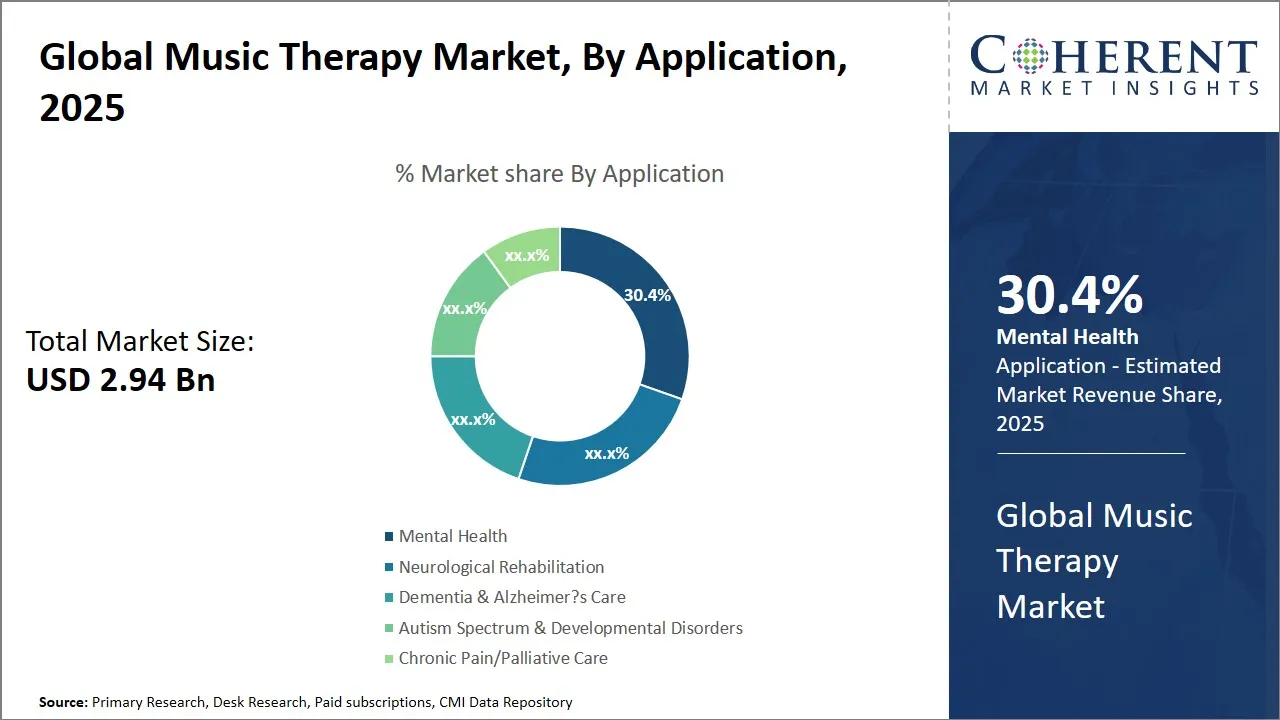
Global Music Therapy Market Insights, by Application – Mental Health Segment Dominates the Market Due to Rising Awareness and Increasing Prevalence of Mental Health Disorders
The mental health segment is projected to account for 31.4% share in 2026. The mounting societal and occupational pressures, especially amplified by urbanization and the fast-paced lifestyle, have heightened the demand for alternative and complementary therapeutic approaches like music therapy. Healthcare professionals increasingly recognize music therapy as a valuable adjunct to conventional psychological and psychiatric treatments, due to its ability to reduce symptoms, alleviate stress, and improve patients’ overall mood and cognitive function.
Moreover, advancements in evidence-based research have substantiated the effectiveness of music therapy in reducing anxiety, enhancing emotional expression, and promoting relaxation, further encouraging its integration into mental health care plans. For instance, in May 2025, Universal Music Group (UMG) partnered with Apple Music to launch “Sound Therapy,” a curated wellness collection designed to support relaxation and stress relief.
Demographic shifts also contribute to segmental growth, as mental health issues are being diagnosed in a wider range of age groups, from children facing developmental challenges to elderly populations confronting isolation and emotional distress. Tailored music therapy interventions addressing the unique needs of diverse populations reinforce the segment’s expansion. Additionally, increasing government initiatives and healthcare policies focusing on mental health screening and the destigmatization of psychological disorders have played a pivotal role in facilitating access to music therapy services. Furthermore, digital innovations such as mobile applications and virtual therapy sessions have expanded the reach of music therapy, making it more accessible and convenient for individuals seeking help for mental health issues.
- Current Industry Events of 2026
- Market Size Estimation
- Regional Breakdown
- Competitive Landscape
- Customer Intelligence
- Segmental Analysis
- Pricing Analysis
- Key Market Drivers, Challenges & Future Trends
- Customized Insights Section
End User Feedback & Unmet Needs in the Music Therapy Market
- Patients and caregivers often highlight that music therapy is not widely available outside urban hospitals and specialized centers. Many report long waitlists or lack of certified therapists in their region. Expansion of affordable, community-based programs is needed and wider insurance/reimbursement coverage to make therapy more accessible.
- Healthcare professionals appreciate the positive outcomes in stress reduction, dementia care, and rehabilitation, but often express concerns about the variability of results and lack of standardized protocols. The market needs more large-scale clinical trials and evidence-based guidelines, along with digital tools that can personalize therapy by condition, age, and cultural background.
- Hospitals and rehab centers report that while music therapy is beneficial, it is still considered “complementary,” and not fully integrated into treatment pathways like occupational therapy or physiotherapy services. Better alignment with mainstream healthcare systems and multidisciplinary teams to ensure patients consistently receive music therapy as part of holistic care.
- MedRhythms’ Movive, a digital therapeutic cleared by the U.S. FDA for Parkinson’s gait rehabilitation (2025), received positive feedback from patients for improving walking and reducing freezing episodes. However, therapists noted challenges in integrating it smoothly with existing neurorehabilitation routines, showing the need for better clinical workflow integration.
Regional Insights
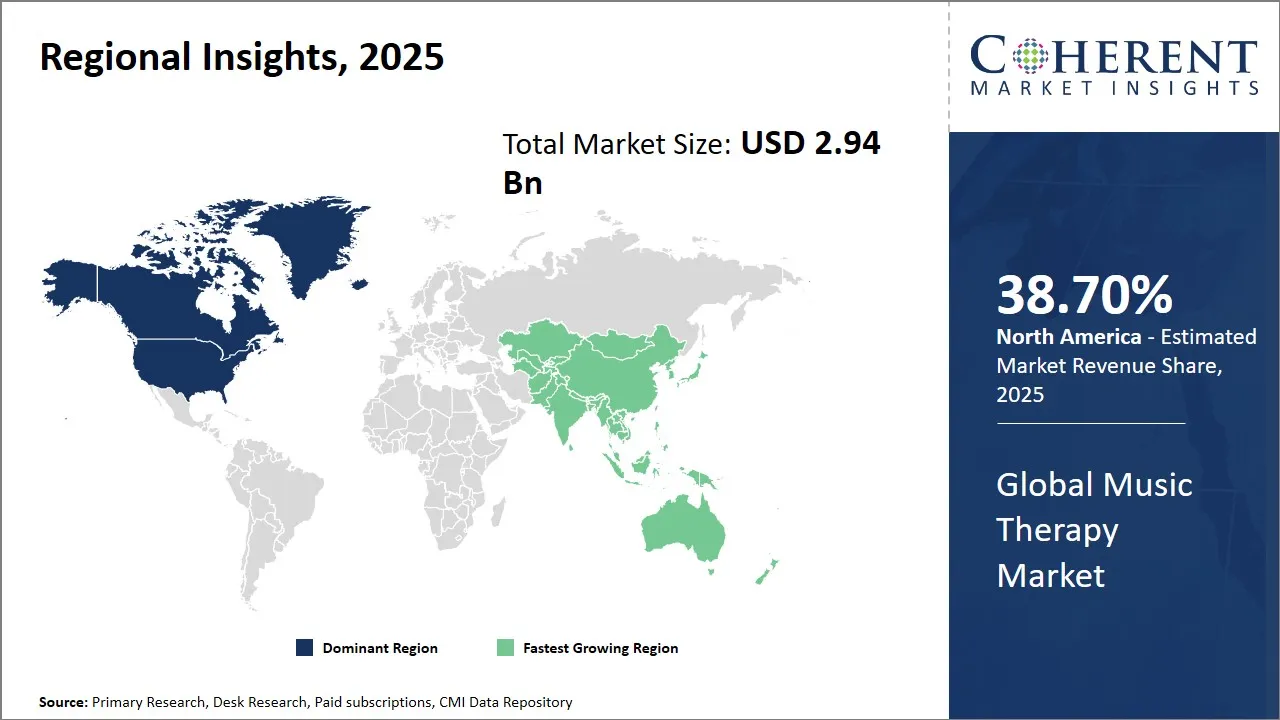
North America Music Therapy Market Analysis and Trends
The North America region is projected to lead the market with a 38.7% share in 2026, driven by a mature healthcare infrastructure combined with strong governmental support and awareness initiatives. A well-established ecosystem comprises leading healthcare providers, educational institutions, and professional associations that actively promote music therapy as a complementary treatment for mental health, neurological disorders, and rehabilitation. Government policies, including insurance reimbursements and mental health programs, have further facilitated the integration of music therapy into standard care protocols. The presence of notable companies such as Musica Therapy Associates and Hal Leonard Corporation bolsters the market with innovative therapeutic solutions and comprehensive training programs. The region’s high acceptance rate among clinicians and patients alike underpins its continued leadership.
Asia Pacific Music Therapy Market Analysis and Trends
The Asia Pacific region holding an estimated share of 20.5% in 2026, exhibits the fastest growth due to increasing awareness about alternative therapies, expanding healthcare expenditure, and cultural receptivity to holistic healing practices. Emerging economies like India, China, and Australia are witnessing rising adoption rates, supported by government initiatives to modernize mental health services and promote wellness. The market ecosystem here is evolving rapidly with educational institutions introducing music therapy courses and local startups entering to provide affordable and tailored solutions. Trade dynamics involving cross-border collaboration and technology transfers from Western companies also enrich the industry. Companies such as Mind Music Therapy (India) and Music in Mind (Australia) play pivotal roles in expanding accessibility and awareness throughout the region.
Global Music Therapy Market Outlook for Key Countries
U.S. Music Therapy Market Analysis and Trends
The U.S. remains highly advanced, with music therapy integrated across hospitals, rehabilitation centers, and nursing homes. Key players including Nordoff-Robbins Music Therapy Foundation and Remo Inc. have made significant contributions by developing evidence-backed therapeutic tools and promoting professional certification programs. Government support via mental health funding and insurance coverage for therapy sessions further enhances market penetration. The U.S. also leads in research activities, offering a robust pipeline of innovation that continually drives growth and clinical adoption.
Germany Music Therapy Market Analysis and Trends
Germany benefits from a strong healthcare system and progressive reimbursement policies that recognize music therapy as a complementary treatment. Organizations like the German Music Therapy Association provide professional standards and certifications, ensuring high-quality service delivery. Companies such as KLANGKUNST Stuttgart have pushed the industry forward through collaborations with medical institutions. The government’s emphasis on mental health and rehabilitation propels demand, positioning Germany as a key player within Europe.
China Music Therapy Market Analysis and Trends
China stands at the forefront of the Asia Pacific music therapy growth story. Increasing government investments in mental health infrastructure, coupled with efforts to blend traditional healing with modern practices, create fertile ground for market expansion. The establishment of music therapy education programs in leading universities fuels a growing professional community. Local companies like Shanghai Harmony Music Therapy have introduced culturally adapted treatment models, contributing to rising acceptance among both healthcare providers and patients.
Australia Music Therapy Market Analysis and Trends
Australia reflects progressive healthcare policies and widespread recognition of music therapy’s benefits across mental health, aged care, and special education sectors. Australian Music Therapy Association drives standards and advocacy efforts, while companies such as Music in Mind provide specialized services and training programs. The government’s focus on holistic wellbeing, complemented by active community engagement, facilitates substantial market growth and innovation.
India Music Therapy Market Analysis and Trends
India is characterized by growing awareness and incorporation of music therapy into alternative medicine and wellness frameworks. Government initiatives aimed at mental health awareness and education reforms supporting therapeutic vocations fuel rapid adoption. Companies like Mind Music Therapy have pioneered affordable, community-focused services that cater to diverse socioeconomic groups. The interplay of cultural acceptance of music as healing and an expanding healthcare infrastructure underpins India’s accelerating market development.
Market Players, Key Development, and Competitive Intelligence
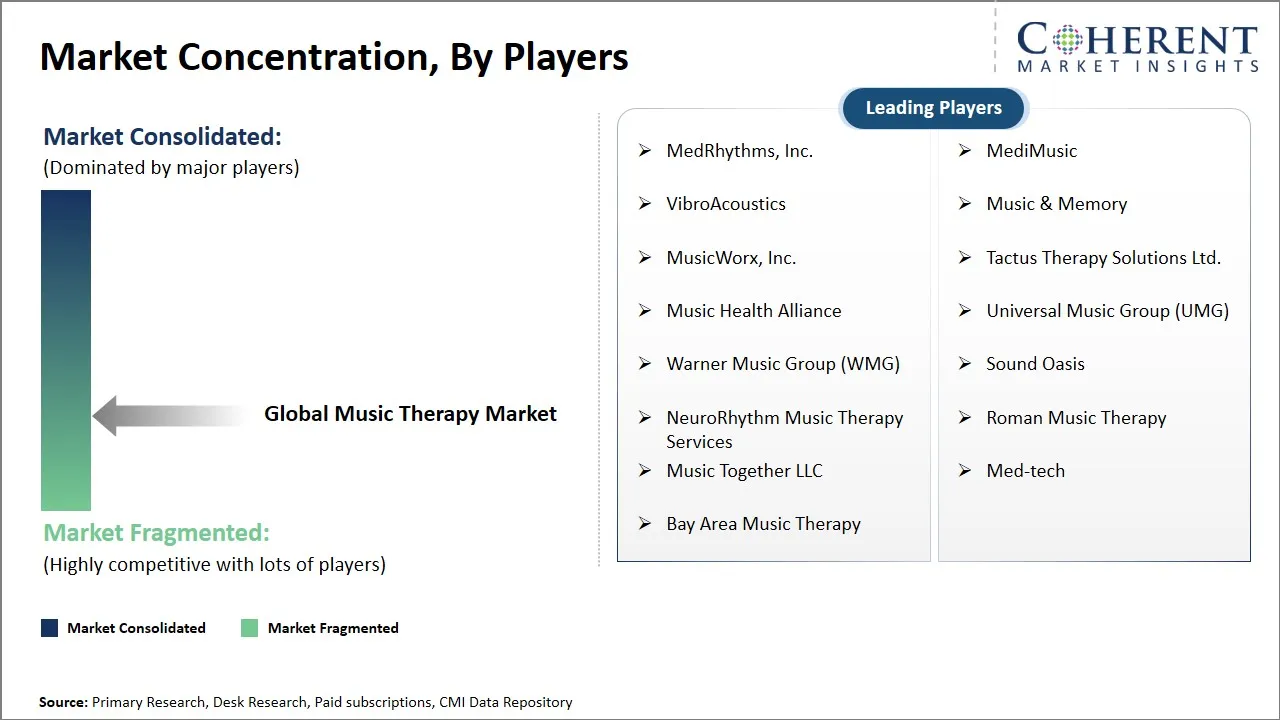
Key Developments
- In May 2025, Apple Music joined forces with Universal Music Group (UMG) to introduce Sound Therapy, an innovative audio wellness collection designed to help listeners attain clearer focus, deeper relaxation, and better sleep.
- In March 2025, MedRhythms announced that MR-005, the company's neurorehabilitation system to support gait rehabilitation and motor function in adults with Parkinson's disease (PD), has been listed as a Class II, Rx-only medical device with the U.S. Food and Drug Administration (FDA). The company unveiled the system's brand name: Movive.
- In February 2025, Universal Music Group (UMG), the world’s leading music-based entertainment company, and Music Health Alliance (MHA), a non-profit organization that provides advocacy and access to healthcare, health insurance and mental health resources for the music community, announced that they have expanded their relationship to launch the Music Industry Mental Health Fund to provide comprehensive, high-quality outpatient mental health resources for music industry professionals nationwide.
- In December 2023, Warner Music Group partnered with British health tech start-up, MediMusic, to conduct the trial of “music as medicine” to help relieve pain, anxiety and stress. MediMusic will conduct research testing in several closed randomized controlled trials in both the U.S. and the U.K. that will deliver playlists from the Warner Music catalog to patients and sample groups to observe how they respond to the music in real-time.
Top Strategies Followed by Music Therapy Market Players
- Established market leaders invest heavily in research and development (R&D) to drive innovation, aiming to develop high-performance, clinically validated music therapy devices and software solutions that meet evolving customer needs.
- MedRhythms, Inc. invested in clinical trials for its Movive digital therapeutic, which secured U.S. FDA Class II listing in March 2025 for Parkinson’s gait rehabilitation.
- Mid-level players in the music therapy market adopt more cost-conscious strategies aimed at balancing product quality with affordability to attract price-sensitive segments, including individual consumers, clinics, and small healthcare institutions.
- MusicWorx, Inc., a U.S.-based therapy provider, emphasizes scalable and cost-effective group programs for schools and rehabilitation centers, enabling broader reach without expensive infrastructure.
- Small-scale players in the global music therapy market differentiate themselves by concentrating on niche segments and introducing specialized or innovative products that address unique therapeutic requirements or emerging trends.
- Music & Memory, a non-profit program, specializes in personalized playlists for dementia and Alzheimer’s patients, carving out a recognized niche that larger players often overlook.
Market Report Scope
Music Therapy Market Report Coverage
| Report Coverage | Details | ||
|---|---|---|---|
| Base Year: | 2025 | Market Size in 2026: | USD 3.22 Bn |
| Historical Data for: | 2020 To 2024 | Forecast Period: | 2026 To 2033 |
| Forecast Period 2026 to 2033 CAGR: | 9.4% | 2033 Value Projection: | USD 6.03 Bn |
| Geographies covered: |
| ||
| Segments covered: |
| ||
| Companies covered: | MedRhythms, Inc., MediMusic, VibroAcoustics, Music & Memory, MusicWorx, Inc., Tactus Therapy Solutions Ltd., Music Health Alliance, Universal Music Group (UMG), Warner Music Group (WMG), Sound Oasis, NeuroRhythm Music Therapy Services, Roman Music Therapy, Music Together LLC, Med-tech, and Bay Area Music Therapy | ||
| Growth Drivers: |
| ||
| Restraints & Challenges: |
| ||
Market Dynamics
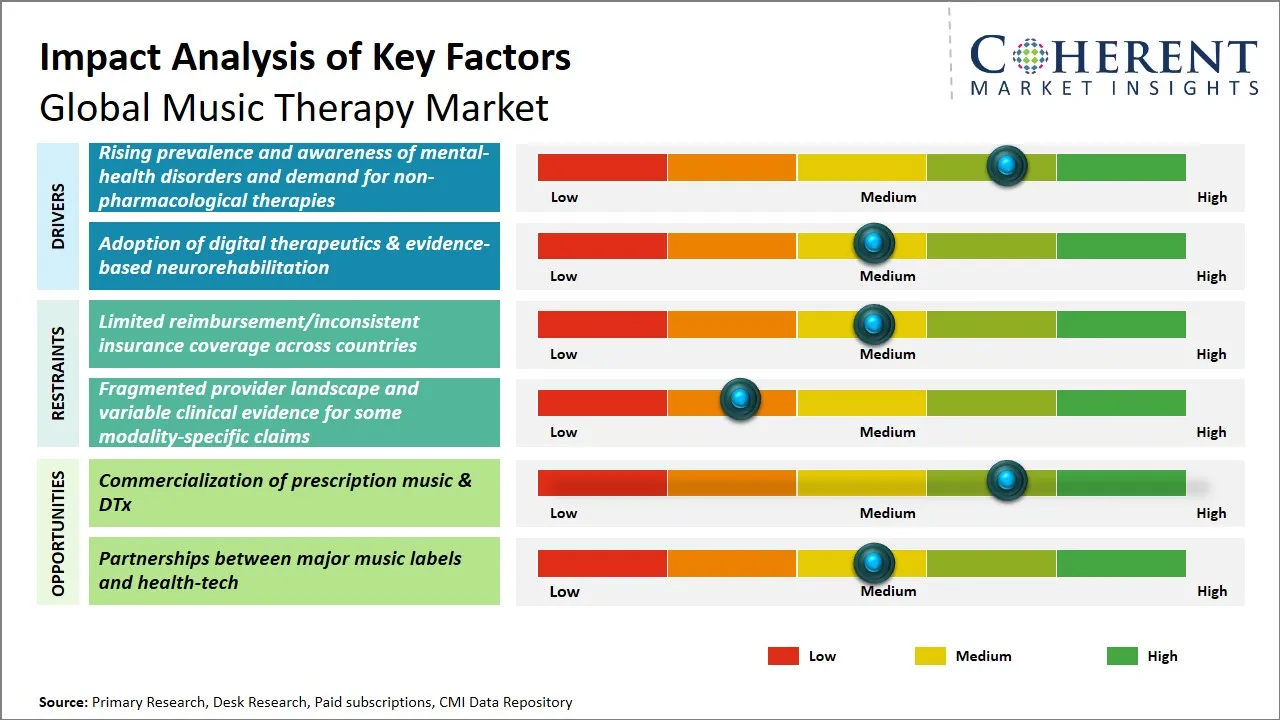
Global Music Therapy Market Driver – Rising Prevalence and Awareness of Mental-Health Disorders and Demand for Non-Pharmacological Therapies
The growing incidence of mental health disorders such as anxiety, depression, PTSD, and autism spectrum disorders globally is significantly driving the demand for alternative therapeutic approaches, with music therapy emerging as a preferred non-pharmacological intervention. As awareness around mental health continues to expand, both patients and healthcare providers are seeking holistic treatment options that complement or reduce reliance on conventional medication, which may carry adverse side effects.
Music therapy offers a unique, evidence-backed modality that helps in emotional regulation, cognitive stimulation, and social engagement, making it particularly attractive in clinical and community settings. Moreover, the increasing stigma reduction around discussing mental health encourages individuals to pursue therapies that promote well-being without the risks often associated with pharmaceuticals.
Global Music Therapy Market Opportunity – Commercialization of Prescription Music and DTx
Advancements in technology and increased recognition of music as a valid therapeutic intervention have catalyzed the development of digital platforms that deliver personalized music therapy programs. Prescription music, which involves medically curated tracks tailored to individual health conditions, supported by regulatory approvals, is gaining traction among healthcare providers. Coupled with digital therapeutics—evidence-based therapeutic interventions driven by software—these solutions offer scalable, accessible, and cost-effective alternatives to traditional music therapy.
The increasing prevalence of chronic diseases, mental health disorders, and neurological conditions creates a growing patient base that can benefit from such innovations. Furthermore, the integration of artificial intelligence and machine learning algorithms allows for real-time adaptation of music therapy protocols, enhancing treatment efficacy. Pharmaceutical companies and startups are collaborating to develop prescription music products that can be reimbursed by insurance providers, facilitating wider adoption in clinical settings.
Analyst Opinion (Expert Opinion)
- Rising cases of anxiety, depression, and stress disorders are driving the largest share of demand. Hospitals, corporate wellness programs, and digital platforms increasingly embed music therapy as a non-pharmacological intervention, making mental health the dominant application segment.
- Demand is accelerating in stroke, Parkinson’s, and gait rehabilitation, supported by clinical validation and U.S. FDA-recognized digital therapeutics (e.g., MedRhythms’ Movive). Neurology-focused applications are expected to become the fastest-growing segment as healthcare providers integrate music therapy alongside physiotherapy and occupational therapy.
- With aging populations in North America, Europe, and Asia Pacific, demand for music therapy in dementia and Alzheimer’s care is surging. Programs like Music & Memory have demonstrated tangible patient benefits, making this a key area for community-based and institutional adoption.
Speak to the analyst
Want personalized insights?
Take the findings above to one of our principal consultants, or have the report rebuilt around the segments, geographies and competitors you actually track.
Market Segmentation
- Application Insights (Revenue, USD Bn, 2021 - 2033)
- Mental Health
- Neurological Rehabilitation
- Dementia & Alzheimer’s Care
- Autism Spectrum & Developmental Disorders
- Chronic Pain/Palliative Care
- Regional Insights (Revenue, USD Bn, 2021 - 2033)
- North America
- U.S.
- Canada
- Latin America
- Brazil
- Argentina
- Mexico
- Rest of Latin America
- Europe
- Germany
- U.K.
- Spain
- France
- Italy
- Russia
- Rest of Europe
- Asia Pacific
- China
- India
- Japan
- Australia
- South Korea
- ASEAN
- Rest of Asia Pacific
- Middle East
- GCC Countries
- Israel
- Rest of Middle East
- Africa
- South Africa
- North Africa
- Central Africa
- North America
- Key Players Insights
- MedRhythms, Inc.
- MediMusic
- VibroAcoustics
- Music & Memory
- MusicWorx, Inc.
- Tactus Therapy Solutions Ltd.
- Music Health Alliance
- Universal Music Group (UMG)
- Warner Music Group (WMG)
- Sound Oasis
- NeuroRhythm Music Therapy Services
- Roman Music Therapy
- Music Together LLC
- Med-tech
- Bay Area Music Therapy
Sources
Primary Research Interviews
Stakeholders
- Certified Music Therapists
- Hospitals and Rehabilitation Centers
- Music Therapy Equipment Manufacturers
- Digital Health & DTx Companies
- Non-profit Organizations & Community Programs
- Academic Institutions offering Music Therapy degrees
- Patient Advocacy Groups and Caregiver Associations (especially in mental health and eldercare)
Databases
- WHO Global Health Observatory
- U.S. National Institute of Mental Health (NIMH) Data Repository
- NHS Digital (UK) – Mental Health Services Data
- OECD Health Statistics
- UNESCO Culture and Health Database
Magazines
- Music Therapy Today
- HealthTech World
- Psychology Today (Health Innovation Section)
- NeuroRehab Times
- Mind & Music Magazine
Journals
- Journal of Music Therapy
- Nordic Journal of Music Therapy
- Frontiers in Psychology (Music & Health section)
- Arts in Psychotherapy Journal
- Journal of Neurologic Music Therapy
Newspapers
- The New York Times (Health Section)
- The Guardian (UK, Science & Health Section)
- The Hindu (India, Health & Education Section)
- Los Angeles Times (Wellness & Lifestyle Section)
- Sydney Morning Herald (Australia, Health & Science Section)
Associations
- American Music Therapy Association (AMTA)
- World Federation of Music Therapy (WFMT)
- European Music Therapy Confederation (EMTC)
- British Association for Music Therapy (BAMT)
- Canadian Association of Music Therapists (CAMT)
Public Domain Sources
- World Health Organization (WHO)
- U.S. Census Bureau (Demographic & Health Data)
- EUROSTAT (Health & Education Data)
- World Bank (Global Health Expenditure Database)
- ResearchGate (scholarly publications)
Proprietary Elements
- CMI Data Analytics Tool
- Proprietary CMI Existing Repository of information for last 8 years
Get access to 250+ pages report
Every segment, forecast, competitor profile and data table behind the analysis above — available for instant download.
- ESOMAR Member
- ISO 9001:2015 Certified
- D-U-N-S Registered
- GDPR & CCPA Compliant
Missing comfort of reading report in your local language? Find your preferred language:
Transform your Strategy with Exclusive Trending Reports
Frequently Asked Questions
The global music therapy market is estimated to be valued at USD 3.22 billion in 2026 and is expected to reach USD 6.03 billion by 2033.
The CAGR of the global music therapy market is projected to be 9.4% from 2026 to 2033.
Rising prevalence and awareness of mental-health disorders and demand for non-pharmacological therapies and adoption of digital therapeutics & evidence-based neurorehabilitation are the major factors driving the growth of the global music therapy market.
Limited reimbursement/inconsistent insurance coverage across countries and fragmented provider landscape and variable clinical evidence for some modality-specific claims are the major factors hampering the growth of the global music therapy market.
In terms of application, the mental health segment is estimated to dominate the market revenue share in 2026.
A clinical, evidence-based use of music interventions to achieve individualized health goals.
Hospitals, rehabilitation centers, schools, and community/home-based users are the primary end users.