

Global Orthotics Market Size and Forecast – 2026 to 2033
The Global Orthotics Market is estimated to be valued at USD 5.77 Bn in 2026 and is expected to reach USD 9.96 Bn by 2033, exhibiting a compound annual growth rate (CAGR) of 8.1% from 2026 to 2033. This steady growth reflects increasing demand driven by rising incidences of musculoskeletal disorders, advancements in orthotic technologies, and an aging global population seeking improved mobility and pain management solutions.
Key Takeaways of the Global Orthotics Market
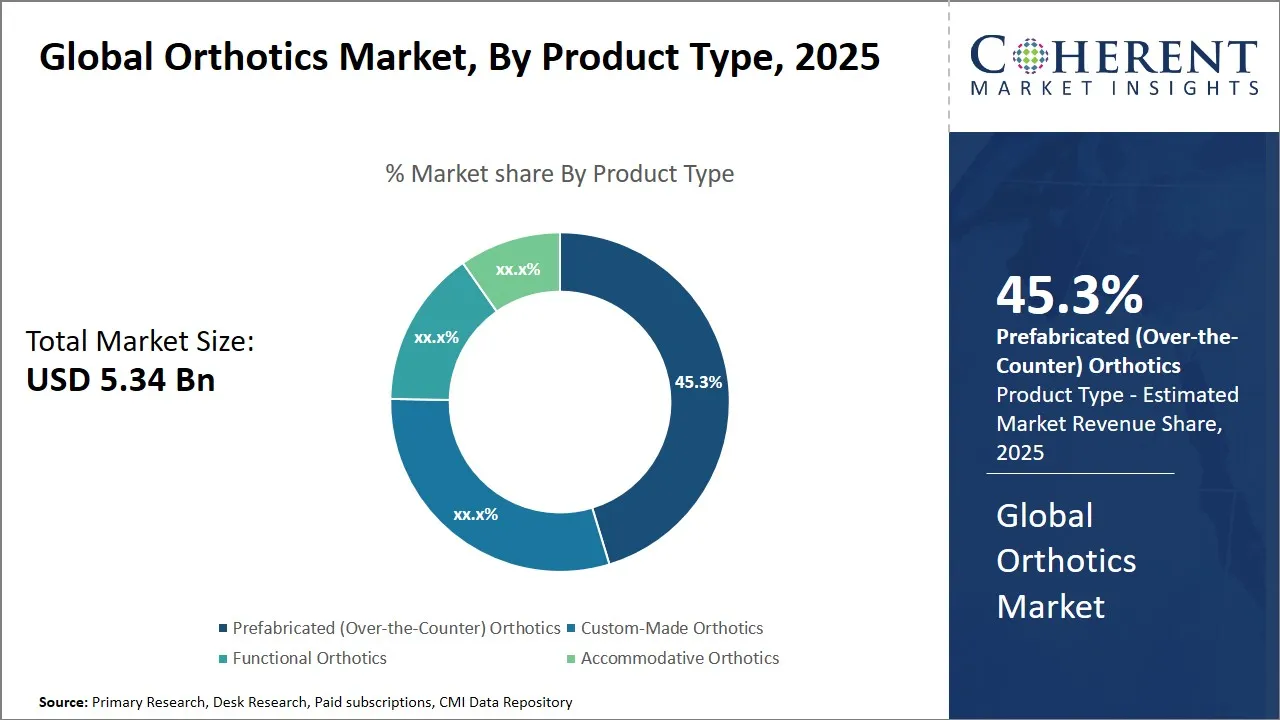
- By product type, the prefabricated (over-the-counter) orthotics segment is expected to lead the global orthotics market in 2026 with a 46.3 % share.
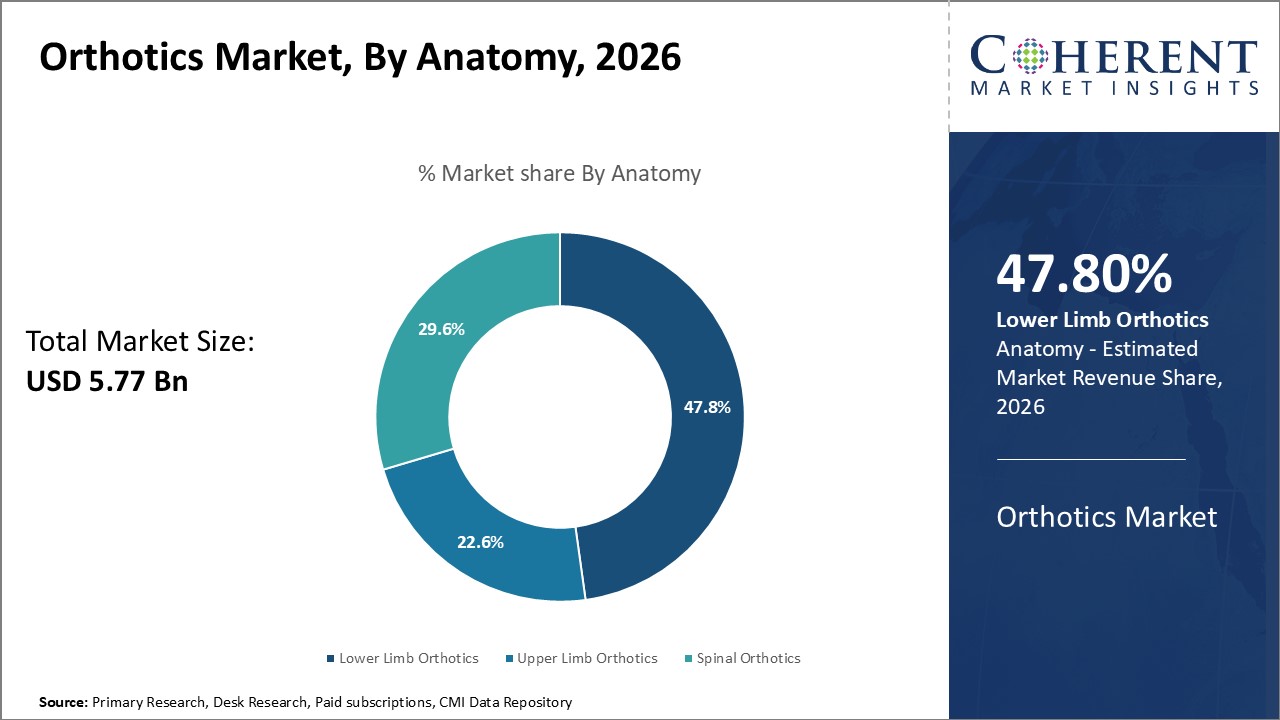
- Within the anatomy segmentation, lower limb orthotics hold the largest share at an estimated value of 47.8 % in 2026, reflecting their critical role in mobility support.
- From a medical condition perspective, musculoskeletal disorders such as arthritis and osteoporosis are expected to account for the most significant share at 33.3 % in 2026, driving overall market growth.
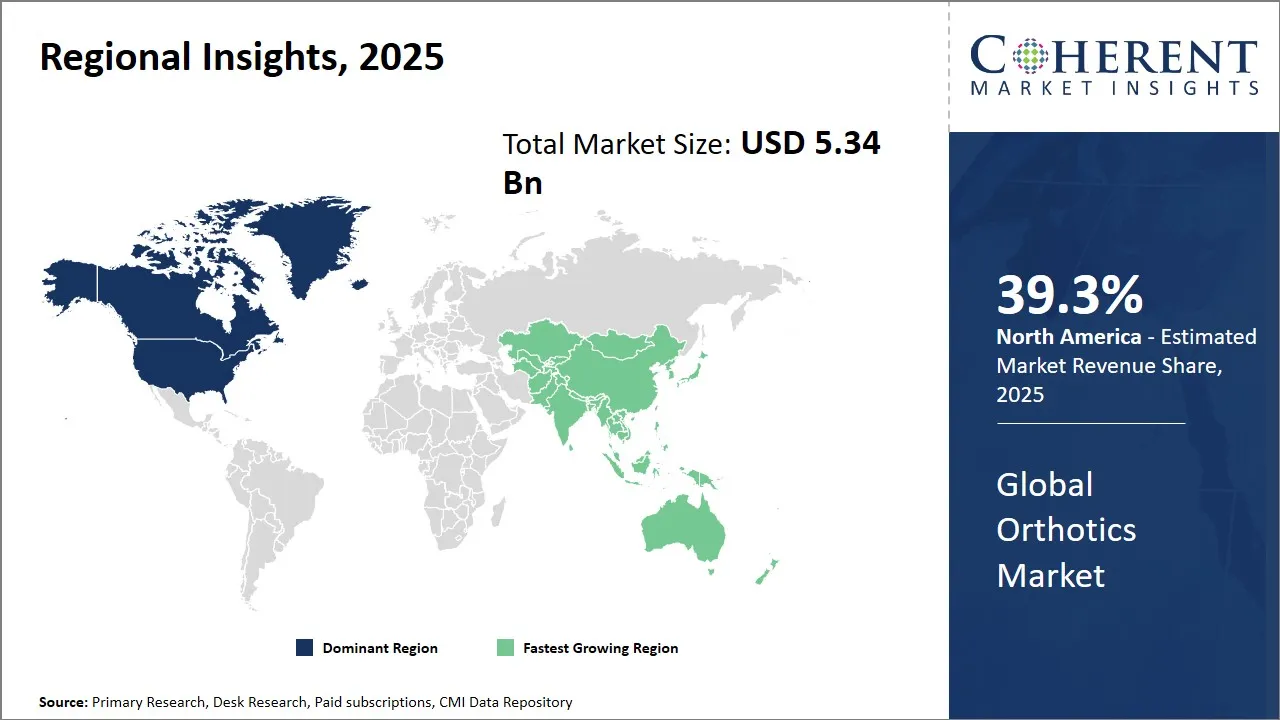
- North America is expected to lead the market, holding a share of 39.3 % in 2026. Asia Pacific is anticipated to be the fastest-growing region, with a market share of 24.5% in 2026.
Market Overview
Market trends indicate a significant shift towards customized and 3D-printed orthotic devices, enhancing patient comfort and fit while reducing production time and costs. Additionally, integration of smart technologies and wearable sensors in orthotics is gaining momentum, enabling real-time monitoring and more effective rehabilitation. Growing awareness about non-invasive treatment options and expanding applications in sports injury prevention further fuel market expansion.
Current Events and Its Impact
Current Events | Description and its Impact |
Advancements in 3D Printing and CAD/CAM Technology |
|
Expansion of Orthotics Awareness and Education in Emerging Regions |
|
Segmental Insights
- Current Industry Events of 2026
- Market Size Estimation
- Regional Breakdown
- Competitive Landscape
- Customer Intelligence
- Segmental Analysis
- Pricing Analysis
- Key Market Drivers, Challenges & Future Trends
- Customized Insights Section
Orthotics Market Insights, By Product Type - Prefabricated (over-the-counter) orthotics is dominant due to its accessibility and convenience
Based on product type, the prefabricated (over-the-counter) orthotics segment is expected to hold the largest share of 46.3% in the global orthotics market in 2026 because of their inherent accessibility and cost-effectiveness. The major forces that have helped to popularize this segment are the increased consumer awareness about preventive and corrective foot care coupled with availability that is easily accessible at local drug stores, online companies, and mass specialty stores.
For example, the Orthotics Direct, a U.S.-based foot health company, published its new advice on prefabricated orthotics, with some of the best suggestions on what to wear according to various requirements, such as athletic shoes or the need to relieve plantar fasciitis. The list includes FootChair, a brand known for its adjustable arch orthotics, which are suitable for sports and for treating plantar fasciitis. PowerStep offers wide-fit orthotics designed specifically for narrow feet. EasyFeet provides orthotics with reinforced supports, ideal for heavier users. Cadence features cushioned insoles that cater to individuals with atrophying fat pads. Finally, Vionic offers orthotic shoes in the form of sandals and slippers.
Orthotics Market Insights, By Anatomy - Lower limb orthotics is dominant due to high demand for mobility and functional support
In terms of the anatomy segment of the global orthotics market, lower limb orthotics is expected to have the highest percentage of 47.8% in 2026, mainly because of the extreme need of support and rehabilitation of the lower extremities. These orthotics support a wide range of disorders that can affect the foot, ankle, knee, and hip that are important in terms of stability, weight carrying, and movement.
The growing number of lower limb musculoskeletal conditions, arthritis, neurological and trauma have increased the demand for specialized orthotic devices based on the anatomy of the areas. The orthotics of lower limbs play a significant role in enhancing gait, decreasing pain, and preventing falls in the elderly to promote their level of independence and quality of life.
Orthotics Market Insights, By Condition - Musculoskeletal disorders are dominant due to their rising prevalence and impact on mobility
Based on medical condition, musculoskeletal disorders (e.g., arthritis, osteoporosis) are the highest growing segment with an estimated market share of 33.3% in the global orthotics market in 2026. The prevalence of all these chronic disorders in the whole world presents a long-term need for orthotic devices that relieve pain, enhance the functions of the joints, and delay the onset of the disease.
The geriatric population of the world is one of the reasons why the segment is growing, with the rates of musculoskeletal disorders increasing dramatically as age advances. Individuals with diseases such as osteoarthritis also experience instability of the joints, inflammation and deformities, and these have been effectively treated using various kinds of orthotics to offer offloading, restoration of alignment, and pain relief.
Role of Artificial Intelligence (AI) in the Global Orthotics Market
- The global orthotics market being reinvented by Artificial Intelligence (AI) is simplifying the operation, cutting expenses, and enhancing patient outcomes through data-driven decision-making. Predictive analytics backed by AI can assist clinicians to more accurately interpret gait patterns, pressure points, and musculoskeletal conditions and make more accurate orthotic prescriptions. This customization is further improved by AI-based CAD/CAM systems and 3D printing, which is used to automate the production process and make the devices with each patient in mind, minimizing material waste and errors in production. Materialise and other companies are using AI-built design tools to speed up the design of custom orthotics and HP 3D Printing uses AI in quality control and optimization of designs to increase efficiency. Furthermore, AI-powered orthotics that have smart sensors can capture real-time usage and performance-related statistics to enable clinicians to track patient progress remotely and dynamically adjust their treatment plans an innovation that does not only enhance patient experience but also clinical efficiency.
- The introduction of AI also provides opportunities of new business model, innovation and competitive advantage. Orthotics and AI-based diagnostics or digital monitoring subscription-based services are also becoming scalable models, as they provide recurring revenue streams and enhanced patient engagement. The operational functions are also assisted to improve operational processes through AI in automation of workflows, supply chain optimization, and predicting demand to enable companies to stay nimble in an otherwise competitive environment. Nonetheless, things like initial investment, issues in interoperability, and the privacy of data suggest that the implementation of AI should be approached with due caution.
- In October 2024, Iceland-based prosthetics and orthotics firm, Össur started EmpowerX in the U.S., the first AI-based workflow management system of durable medical equipment, orthotics, and prosthetics. The platform automates and simplifies procurement, inventory, and dispensing operations, along with automating insurance checks and compliance checks, and assists orthopedic practices and hospital systems to minimize errors and enhance the efficiency of care delivery to patients.
Regional Insights
North America Orthotics Market Analysis and Trends
The pre-eminence of the global orthotics market in North America is informed by a fairly established healthcare infrastructure with an estimated share of 39.3% in 2026. This is driven by high penetration of advanced medical technologies and a huge investment in research and development. The area has good government policy, such as good regulatory systems that provide product safety and efficacy, which motivate innovation and product introduction. An effective eco-system incorporating the hospital, specialized clinics and orthotic producing firms will help in smooth integration of orthotic solutions.
In May 2024, Orthotics Direct, a U.S.-based ecommerce company in the foot health industry, launched its new online platform to provide affordable custom medical-grade orthotics delivered directly to customers. The company aims to disrupt traditional distribution channels by cutting out high markups, making orthotic devices more accessible for North Americans, where foot pain affects the majority of the population.
Asia Pacific Orthotics Market Analysis and Trends
The Asia Pacific region has the highest rate of growth in the international orthotics market with an estimated share of 24.5% in 2026 following the growing healthcare spending, greater awareness about patients, and better medical infrastructure in emerging economies. State models to increase healthcare accessibility and reinforce reimbursement models in China, India, and Japan have accelerated the use of orthotics. The demand is also fueled by rapid urbanization and increased cases of lifestyle-related disorders.
The area is also experiencing the entry of international and local actors into the manufacturing and research and development of cost-sensitive markets with innovative and cost-effective orthotic items. There are companies like Stryker, Otto Bock and the local companies like Zhejiang Longtai industrial Co. that are taking advantage of enormous opportunities.
Global Orthotics Market Outlook for Key Countries:
U.S. Orthotics Market Trends
The orthotics market of the U.S. is marked with a high level of technology implementation, well-developed reimbursement policy, and the presence of the major orthotic producers such as Hanger, Inc. and DJO Global. Their constant inventions of custom orthotic equipment and MRP scanning solutions have driven personalized solutions to patients. The emphasis of the government on the enhancement of aging population and long-term care promotes long-term demand. Moreover, the private healthcare providers and insurance companies promote the orthotic treatment actively adding to the penetration of the market even more.
In September 2024, MediScan Custom Orthotics, a U.S.-based technology company, launched its MediScan mobile app that allows users to create medical-grade custom shoe inserts without visiting a podiatrist. The app uses 3D LiDAR scans taken from a phone or tablet, which are reviewed by MediScan podiatrists to design inserts for conditions such as plantar fasciitis, flat feet, tendonitis, and bunion prevention.
U.K. Orthotics Market Trends
The orthotics market in the U.K. is experiencing a high growth rate on account of the increasing demand for custom-made and innovatively designed solutions with specific references to the 3D-printed and AI-powered orthotics that improve the accuracy and pain-free wearing of the orthotics. Growing instances of musculoskeletal related conditions, diabetic foot complications, and age related mobility problems are driving clinical and consumer adoption whereas the rising knowledge of preventive foot care and sports injuries treatment is further encouraging market growth. Meanwhile, changes in direct-to-consumer channels, e-commerce, and home-based healthcare are facing orthotics with increased accessibility and affordability.
In October 2023, Blatchford, a U.K.-based prosthetics and orthotics manufacturer, launched Tectus, an intelligent microprocessor-controlled orthotic device designed for people with partial lower limb paralysis. Weighing just 660g, the slim and modular KAFO uses proprietary Performance Response Technology with advanced sensors, hydraulics, and spring assist to replicate a natural gait cycle, giving users greater comfort, safety, and mobility.
China Orthotics Market Trends
The orthotics market of China is on the run and is being driven by the continuous development of better healthcare infrastructure and increased government programs on the support of orthotic care. The local firms, such as Zhejiang Longtai Industrial Co., are gaining momentum in competing well with others and in most cases they collaborate with international companies in order to improve in product offering. An increase in musculoskeletal health awareness among a huge population base, as well as changes in reimbursement policy, drives market growth. The emphasis of China on scalability and cost efficiency in the manufacturing business is an attractive factor in investment, making it a major participant in the Asia Pacific.
In August 2024, Piocreat, a China-based 3D printing technology company, showcased its latest dental and orthodontic 3D printing innovations at Formnext SOUTH CHINA in Shenzhen. The company introduced the DJ89 PLUS resin 3D printer with 8K precision for high-quality dental models, the D158 compact DLP 3D printer tailored for orthodontics and dental labs, and the UV02 post-processing tool for rapid resin curing.
Japan Orthotics Market Trends
The orthotics market in Japan is characterized by aging population and high healthcare system with the aim of enhancing living standards of the aged patients. The innovations which are being made by companies like Stryker Japan and Ottobock Japan dominate the market with products which are more custom made in the geriatric orthotic requirements, such as the lower-limb and spinal support products. High standards have been ensured by strong government regulations which encourage the use of technology. Moreover, the focus on rehabilitation and chronic illness in Japan helps ensure the constant supply of orthotic solutions that are specialized.
In July 2024, ASICS, a Japan-based sportswear company, teamed up with Dassault Systèmes, a France-based software leader, to open a personalization studio near Paris that uses 3D printing to create custom insoles and orthotics based on individual foot shape and movement data.
Market Players, Key Developments, and Competitive Intelligence
Key Developments
- In June 2025, Tynor Orthotics, India’s largest maker of orthopedic and orthotics aids, launched Ortech Textiles, a new manufacturing unit in Mohali under the Make in India initiative. The facility will produce advanced technical textiles for orthotics and orthopedic products, reducing import dependence and improving production efficiency. CMD Dr. PJ Singh said the project will create new jobs and expand the company’s global presence, while Executive Director A J Singh added the move will help double the workforce and strengthen Tynor’s position among leading orthopedic and orthotics aid manufacturers worldwide.
- In February 2025, WIMBA a Kraków, Poland-based provider of custom-fit 3D-printed pet orthotics and prosthetics, opened a new in-house 3D printing facility at its headquarters. The investment allows the company to speed up production, maintain strict quality control, and deliver most standard orthotics within 10 working days.
- In May 2025, IfeanHealth, a Nigerian healthcare company focused on innovative rehabilitative solutions, opened new prosthetics and orthotics centers in Kano, Kano State and Ughelli, Delta State. Founder and CEO Ejike Anih said the facilities aim to remove geographic and economic barriers to mobility by bringing world-class care closer to patients.
- In June 2025, Dimension Ortho, a global leader in 3D-printed orthotics, announced a strategic partnership with Rothman Orthopaedics, a leading U.S. orthopedic practice known for musculoskeletal care, to advance personalized bracing and fracture management. Through this collaboration, Rothman will adopt Dimension Ortho’s modular 3D printing platform across its clinics, offering patients more comfortable and tailored alternatives to traditional casts and braces.
Top Strategies Followed by Global Orthotics Market Players
- Established market leaders dominate through significant investments in research and development (R&D), aiming to innovate and launch high-performance orthotic products that address a wide range of medical needs. These companies focus on advanced materials, enhanced customization, and integration of smart technologies to improve patient outcomes and user comfort. Alongside innovation, these leading players forge strategic partnerships and alliances with original equipment manufacturers (OEMs), healthcare providers, and technology firms to expand their product portfolios and solidify their market presence.
- For instance, in April 2025, Sutter Health, a U.S.-based not-for-profit healthcare network, announced plans to build a 120,000-square-foot Advanced Orthopedics & Sports Medicine Care Complex in Downtown Sacramento, California. Scheduled to open in late 2027, the new facility will expand specialized care in orthopedics and sports medicine, strengthening Sutter’s presence in the region and offering comprehensive services for patients and athletes.
- Mid-level players in the orthotics market adopt a differentiated strategy by focusing primarily on offering cost-effective solutions that strike a balance between quality and affordability. Catering predominantly to price-sensitive consumers, these companies develop products that meet essential functionality and reliability criteria without the premium pricing associated with highly sophisticated devices.
- For instance, in October 2024, Össur, an Iceland-based orthotics leader, launched EmpowerX in the U.S., showcasing how top players drive innovation with AI-driven efficiency, while mid-level orthotics companies focus on cost-effective solutions that balance quality and affordability.
- Small-scale players carve out their market niches by concentrating on specialized orthotic products and innovative features tailored for specific conditions or patient groups. These companies leverage cutting-edge technologies such as 3D printing, biomaterials, and digital scanning techniques to develop highly customized and adaptive devices that larger players may overlook.
- For instance, Formus Labs, a New Zealand-based healthtech company, uses AI and biomechanics to deliver interactive 3D surgical and orthotic planning tools that personalize treatment for each patient, while WIMBA a Poland-based startup focuses on 3D-printed custom orthotics and prosthetics for pets, setting new benchmarks in veterinary mobility care.
Market Report Scope
Orthotics Market Report Coverage
| Report Coverage | Details | ||
|---|---|---|---|
| Base Year: | 2025 | Market Size in 2026: | USD 5.77 Bn |
| Historical Data for: | 2020 To 2024 | Forecast Period: | 2026 To 2033 |
| Forecast Period 2026 to 2033 CAGR: | 8.1% | 2033 Value Projection: | USD 9.96 Bn |
| Geographies covered: |
| ||
| Segments covered: |
| ||
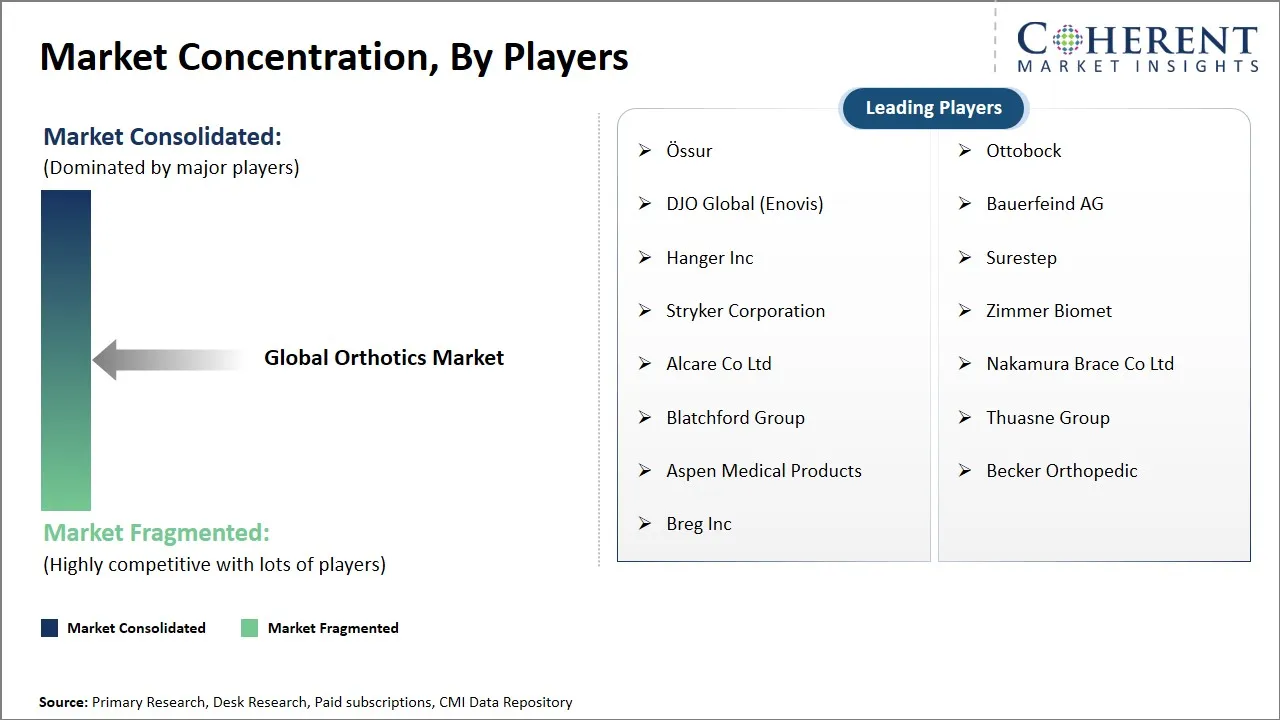
| Companies covered: | Össur, Ottobock, DJO Global (Enovis), Bauerfeind AG, Hanger Inc, Surestep, Stryker Corporation, Zimmer Biomet, Alcare Co Ltd, Nakamura Brace Co Ltd, Blatchford Group, Thuasne Group, Aspen Medical Products, Becker Orthopedic, and Breg Inc | ||
| Growth Drivers: |
| ||
| Restraints & Challenges: |
| ||
Orthotics Market Dynamics
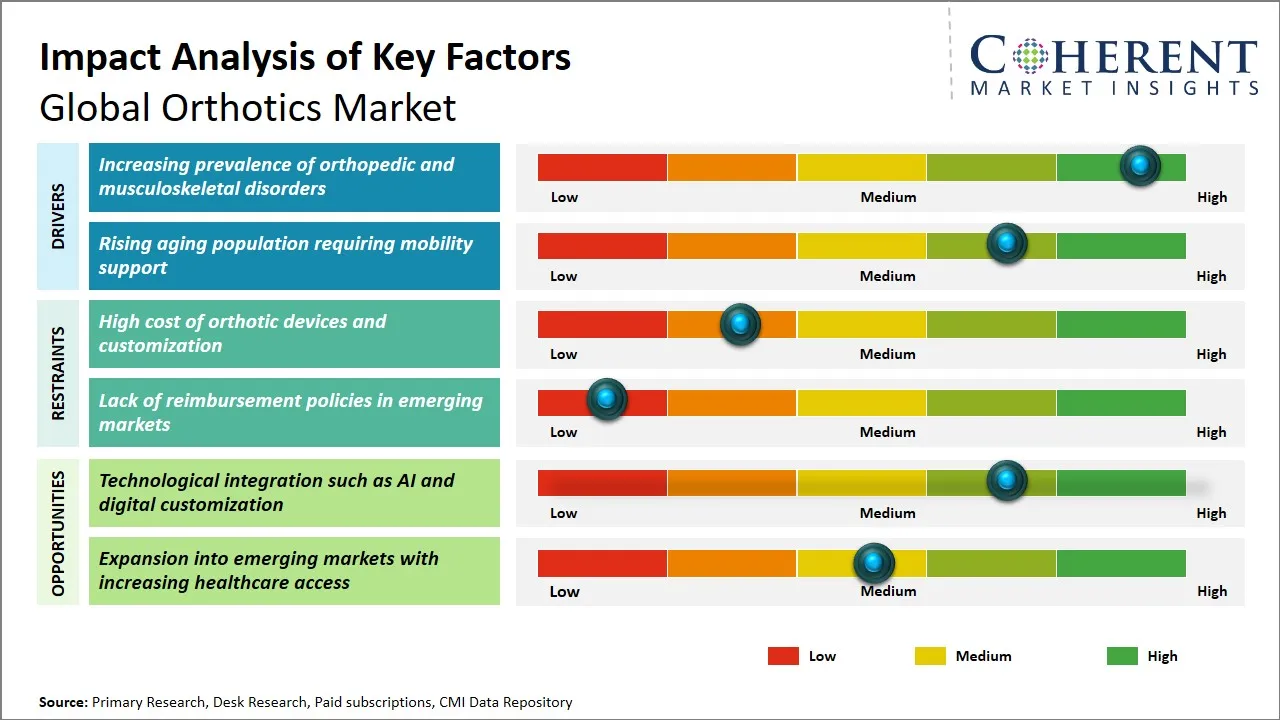
Orthotics Market Driver - Increasing Prevalence of Orthopedic and Musculoskeletal Disorders
The rising rate of orthopedic and musculoskeletal conditions is a critical element contributing to the need of orthotic equipment in the world. Diseases like arthritis, osteoporosis, ligament rupture, and persistent back pain have been increasing with the aging population, sedentary living, and an increase in cases of obesity. These diseases usually cause poor mobility, instability in the joints and pain, thus making supportive and remedial measures that are offered by orthotics a necessity. Additionally, the medical advances in diagnostics and increased awareness of patients and medical practitioners have eased the process of diagnosing and managing musculoskeletal disorders earlier, which has led to a further increase in the use of orthotic devices.
In July 2022, the World Health Organization, a United Nations organization dealing with world-wide public health, announced that an estimated 1.71 billion people globally live with musculoskeletal disorders, thus making it the top cause of disability in 160 countries. The agency pointed out that the conditions such as osteoarthritis, osteoporosis, rheumatoid arthritis, sarcopenia and chronic back pain are major limiting factors to mobility, lower quality of life and causes many to retire earlier. WHO observed that determined burden is rising rapidly with population growth and ageing and highlighted its current initiatives to control the burden through prevention, management and better care of the musculoskeletal health in all age groups.
Orthotics Market Opportunity - Technological Integration through AI and Digital Customization in the Global Orthotics Market
The use of sophisticated technologies, especially artificial intelligence (AI) and digital customization, will be an impressive expansion potential in the international orthotics market. AI-based designing and manufacturing allows creating orthotic devices that are very personal and can fit the anatomical and biomechanical individual requirements of a patient. By applying 3D scanning and printing technologies, with the help of machine learning algorithms, manufacturers are able to optimize fit, comfort and functionality, leading to better patient outcomes and an increase in the levels of satisfaction. The digital customization brings the prototyping and production cycle to a faster pace, as well as minimizes the material waste and production costs, which makes orthotic solutions more available and affordable.
In May 2023, Formus Labs, a New Zealand-based developer of AI-based 3D orthopedic and orthotics surgery planning technology, cleared U.S. FDA 510(k) approval on its Formus Hip, the first automated radiological image processing software to plan hip replacement pre-op. The interface integrates AI and biomechanical computing to automatically produce completely interactive 3D surgical and orthotic rackets plans in less than an hour, so that it assists the surgeon with custom implant placement and patient-specific orthotic options.
Analyst Opinion (Expert Opinion)
- The orthotics market is in a period of gradual change due to the increase in demand, both clinical and consumer. With the advent of 3D printing and digital scanning, custom orthotics are more accessible than ever before with the addition of a new level of precision and customization. Meanwhile, the elderly population and increased prevalence of musculoskeletal conditions continue to widen the patient group and sports and fitness culture contribute to the prevention and performance-based demand. Pediatric and diabetic care is another area where opportunities can be displayed as specialized orthotics are more frequently prescribed, although the cost issues, reimbursement barriers in some areas and insufficient awareness in newer markets are continuing to make this slower to adopt. Conferences like the OTWorld in Germany, the International Society of Prosthetics and Orthotics World Congress, and regional conferences including the National Assembly of the American Orthotic and Prosthetic Association have played a critical role in knowledge sharing, harmonization on best practices, and lobbying of regulatory and technological harmonization in all market regions of the world.
- Real-life initiatives are also influencing the perspective in a significant manner. Firms like AI based and lightweight material-based orthotics are being introduced by companies like Össur and Ottobock to ensure better patient outcomes and comfort, and healthcare systems in Europe and North America are testing reimbursement programs on custom devices. In Asia, there are increasing collaborative project of hospitals and manufactures in increasing awareness and access particularly in diabetic foot care programs. A combination of these examples, as well as the current government-sponsored rehabilitation efforts, indicates that we are moving toward a market where not only do the innovations drive the market but also attempts to establish orthotics as an inherent component of preventive and therapeutic care.
Speak to the analyst
Want personalized insights?
Take the findings above to one of our principal consultants, or have the report rebuilt around the segments, geographies and competitors you actually track.
Market Segmentation
- Product Type Insights (Revenue, USD Bn, 2021 - 2033)
- Prefabricated (Over-the-Counter) Orthotics
- Custom-Made Orthotics
- Functional Orthotics
- Accommodative Orthotics
- Anatomy Insights (Revenue, USD Bn, 2021 - 2033)
- Lower Limb Orthotics
- Upper Limb Orthotics
- Spinal Orthotics
- Condition Insights (Revenue, USD Bn, 2021 - 2033)
- Musculoskeletal Disorders (e.g., Arthritis, Osteoporosis)
- Sports Injuries
- Diabetic Foot and Neuropathy
- Post-Surgical Recovery
- Pediatric Orthopedic Conditions (e.g., flat feet, cerebral palsy support)
- Geriatric Support and Mobility Disorders
- Trauma and Accident Rehabilitation
- Age Group Insights (Revenue, USD Bn, 2021 - 2033)
- Pediatric
- Adult
- Geriatric
- Design Insights (Revenue, USD Bn, 2021 - 2033)
- Insoles and Footbeds
- Braces and Supports
- Splints
- Calipers
- Others (e.g., Functional Footwear Adaptations)
- Functionality Insights (Revenue, USD Bn, 2021 - 2033)
- Rigid Orthotics
- Semi-Rigid Orthotics
- Soft/Flexible Orthotics
- Material Insights (Revenue, USD Bn, 2021 - 2033)
- Thermoplastics (e.g., Polypropylene, Polyethylene)
- Carbon Fiber Composites
- Ethylene Vinyl Acetate (EVA)
- Foams and Gel-based Materials
- Leather and Natural Materials
- Others (Hybrid, 3D-Printed Materials)
- End User Insights (Revenue, USD Bn, 2021 - 2033)
- Hospitals and Clinics
- Orthotics and Prosthetics (OandP) Clinics
- Rehabilitation Centers
- Home Care Settings
- Others (Military, Occupational Health Providers)
- Distribution Channel Insights (Revenue, USD Bn, 2021 - 2033)
- Offline
- Online
- Regional Insights (Revenue, USD Bn, 2021 - 2033)
- North America
- U.S.
- Canada
- Latin America
- Brazil
- Argentina
- Mexico
- Rest of Latin America
- Europe
- Germany
- U.K.
- Spain
- France
- Italy
- Russia
- Rest of Europe
- Asia Pacific
- China
- India
- Japan
- Australia
- South Korea
- ASEAN
- Rest of Asia Pacific
- Middle East
- GCC Countries
- Israel
- Rest of Middle East
- Africa
- South Africa
- North Africa
- Central Africa
- North America
- Key Players Insights
- Ossur
- Ottobock
- DJO Global (Enovis)
- Bauerfeind AG
- Hanger Inc
- Surestep
- Stryker Corporation
- Zimmer Biomet
- Alcare Co Ltd
- Nakamura Brace Co Ltd
- Blatchford Group
- Thuasne Group
- Aspen Medical Products
- Becker Orthopedic
- Breg Inc
Sources
Primary Research Interviews
- Industry Stakeholders
- Orthopedic device manufacturers
- Healthcare professionals specializing in orthotics
- End users
- Hospitals and rehabilitation centers
- Sports medicine clinics
Government and International Databases
- World Health Organization (WHO)
- U.S. Food and Drug Administration (FDA)
- National Institutes of Health (NIH)
- Centers for Medicare & Medicaid Services (CMS)
- European Medicines Agency (EMA)
- Organisation for Economic Co-operation and Development (OECD)
Trade Publications
- Orthopedic Design & Technology Magazine
- O&P Edge
- Medical Device Network
- MedTech Insight
- Clinician Reviews
- BioMed Device News
Academic Journals
- Journal of Prosthetics and Orthotics
- Prosthetics and Orthotics International
- Journal of Rehabilitation Research and Development
- Clinical Biomechanics
- Journal of Foot and Ankle Research
- BMC Musculoskeletal Disorders
Reputable Newspapers
- The New York Times – Health Section
- The Guardian – Healthcare & Society
- The Washington Post – Health & Science
- Financial Times – Health Industry Coverage
- The Hindu – Health and Medicine
- Japan Times – Healthcare Innovations
Industry Associations
- American Orthotic & Prosthetic Association (AOPA)
- International Society for Prosthetics and Orthotics (ISPO)
- British Association of Prosthetists and Orthotists (BAPO)
- European Society of Physical and Rehabilitation Medicine (ESPRM)
- Canadian Association for Prosthetics and Orthotics (CAPO)
- Indian Association of Prosthetics and Orthotics (IAPO)
Public Domain Resources
- National Health Service (NHS) Publications
- CORDIS – EU Research Results
- OpenGrey Repository
Proprietary Elements
- CMI Data Analytics Tool: Proprietary analytics tool to analyze real-time market trends, consumer behavior, and technology adoption in market
- Proprietary CMI Existing Repository of Information for Last 8 Years
Get access to 250+ pages report
Every segment, forecast, competitor profile and data table behind the analysis above — available for instant download.
- ESOMAR Member
- ISO 9001:2015 Certified
- D-U-N-S Registered
- GDPR & CCPA Compliant
Missing comfort of reading report in your local language? Find your preferred language:
Transform your Strategy with Exclusive Trending Reports
Frequently Asked Questions
The global orthotics market is estimated to be valued at USD 5.77 Bn in 2026 and is expected to reach USD 9.96 Bn by 2033.
The CAGR of the global orthotics market is projected to be 8.1% from 2026 to 2033.
Increasing prevalence of orthopedic and musculoskeletal disorders and rising aging population requiring mobility support are the major factors driving the growth of the global orthotics market .
High cost of orthotic devices and customization and lack of reimbursement policies in emerging markets are the major factors hampering the growth of the global orthotics market.
In terms of product type, prefabricated (over-the-counter) orthotics is estimated to dominate the market revenue share in 2026.
Össur, Ottobock, DJO Global (Enovis), Bauerfeind AG, Hanger Inc, Surestep, Stryker Corporation, Zimmer Biomet, Alcare Co Ltd, Nakamura Brace Co Ltd, Blatchford Group, Thuasne Group, Aspen Medical Products, Becker Orthopedic, and Breg Inc are the major players.
North America is expected to lead the global orthotics market in 2026.