

Global Oyster Sauces Market Size and Forecast: 2026-2033
The global oyster sauces market is estimated to be valued at USD 11.45 Bn in 2026 and is expected to reach USD 16.22 Bn by 2033, exhibiting a compound annual growth rate (CAGR) of 5.1% from 2026 to 2033. The market growth is primarily driven by the rising global consumption of Asian cuisines and the expanding foodservice industry.
According to the National Restaurant Association, Asian cuisines continue to rank among the fastest-growing menu categories globally, while online food delivery platforms have reported double-digit growth in Asian food orders in recent years. Additionally, increasing urbanization and changing dietary preferences are accelerating the demand for convenient flavor-enhancing condiments such as oyster sauces. (Source: ScienceDirect)
Key Takeaways of the Global Oyster Sauces Market
- Standard oyster sauce segment is expected to hold 49.6 % of the global oyster sauces market share in 2026, making it the dominant product type segment. The segment is still preferred in the Asia Pacific region with high preference in countries like China, Thailand, and Vietnam where oyster sauce is used in traditional cooking. The standard oyster sauce is preferred by consumers because it has the characteristics of an authentic flavor, cheap ingredients, and is used in household and restaurant cooking.
- The commercial segment is projected to hold 65.7 % of the global oyster sauces market share in 2026. This segment's dominance is largely due to the robust demand of restaurants, hotels, catering services and quick-service restaurant chains, particularly across Asia Pacific. Asian cuisines are becoming more popular in the world and the rapid growth of the foodservice sector is encouraging high volume use of oyster sauces in commercial kitchens.
- The offline segment is expected to capture 56.5 % of the global oyster sauces market share in 2026. For instance, in markets such as China and Southeast Asia, traditional retail channels—including supermarkets, hypermarkets, and local grocery stores—still account for a dominant share of packaged food purchases, estimated at over 70% of total retail sales in several countries, reflecting consumers’ continued preference for in-person product inspection and immediate availability before purchase.
- Asia Pacific is expected to hold 34.5 % the global oyster sauces market in 2026, due to the region's long-standing habit of using sauces and condiments, growing population, and the growth in foodservice sales. Some countries like China alone contributed nearly 36% of the region’s sauces and seasonings demand because oyster sauce is also commonly used in their local dishes. The region is further driving the market growth with its rising urbanization and growing disposable incomes along with its rising demand for packaged food products.
- North America is projected to emerge as the fastest-growing region with, holding 23.6 % share in the global oyster sauces market in 2026. Growth can be attributed to the growing popularity of Asian cuisine, a multicultural population, and the wider availability of international sauces in the main stream store. Furthermore, Asian restaurants are rapidly gaining popularity and Asian consumers show their curiosity to try foreign cuisine, which is fueling the market for oyster sauces in the U.S. and Canada.
- Health and Clean-Label Alignment: Manufacturers are increasingly introducing low-sodium, organic, and preservative-free oyster sweet sauces to align with rising consumer preference for healthier and clean-label food products.
- Market Expansion Catalysts: Growing demand for Asian cuisine worldwide, expansion of foodservice chains, and innovations in convenient packaging formats such as squeeze bottles and single-use sachets are accelerating market growth. In addition, rising urbanization and increasing consumption of ready-to-cook and private label packaged food are further supporting oyster sauces market expansion.
Segmental Insights
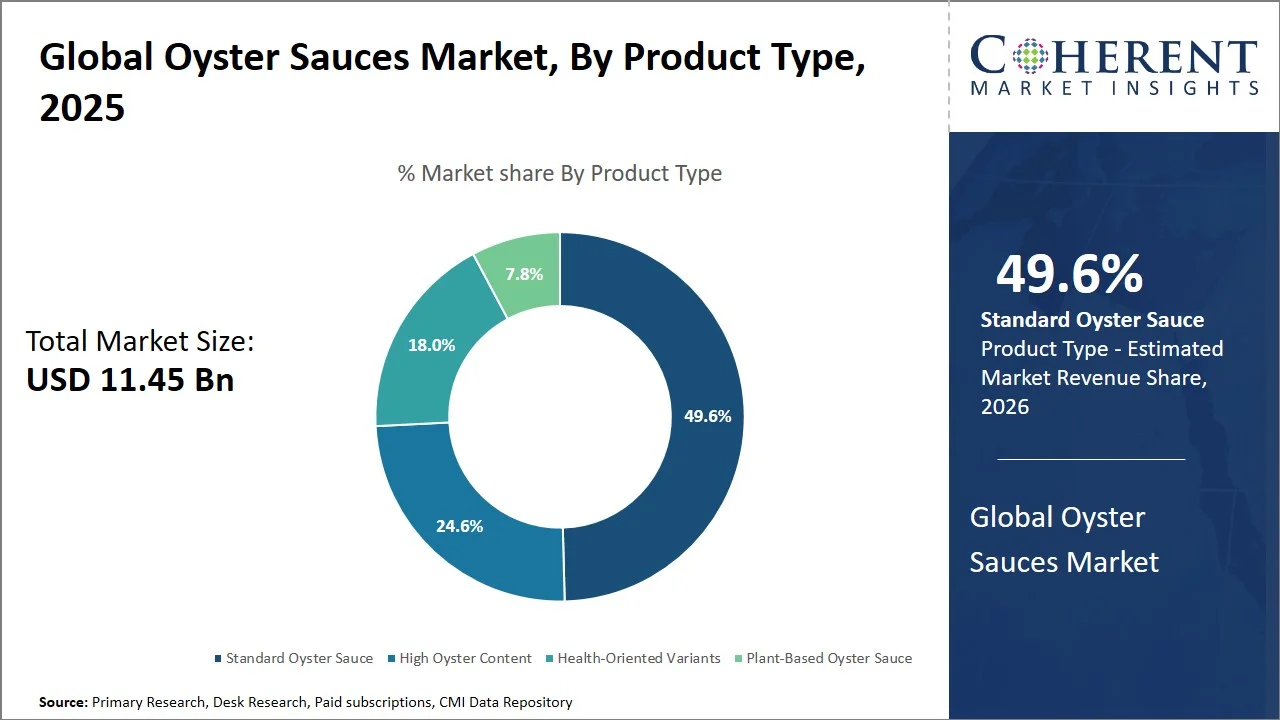
Why Does the Standard Oyster Sauce Segment Dominate the Global Oyster Sauces Market?
Standard oyster sauce segment is expected to hold 49.6% of the market share in 2026, primarily driven by its established presence in traditional Asian cuisines and beyond. It is a successful product because it is well-balanced and pairs well with a wide range of cuisines from stir-fries, marinades, and dipping sauces. It is widely used in culinary circles for its umami-rich flavor, which adds depth to dishes while complementing other flavors.
It is also a popular ingredient among chefs, due to its rich umami flavors, which lend a savory depth to culinary work while harmonizing with other flavors. It is more economical, tastes great and is widely available–these are the reasons why oyster sauce is a practical option for both casual use and commercial applications, unlike high oyster content sauce or oyster variants.
Some dishes use standard oyster sauce as a basic seasoning, such as vegetable stir-fry, chicken noodles and fried rice, because of its consistency of taste.
- Current Industry Events of 2026
- Market Size Estimation
- Regional Breakdown
- Competitive Landscape
- Customer Intelligence
- Segmental Analysis
- Pricing Analysis
- Key Market Drivers, Challenges & Future Trends
- Customized Insights Section
Why is Commercial the Most Preferred Application in the Global Oyster Sauces Market?
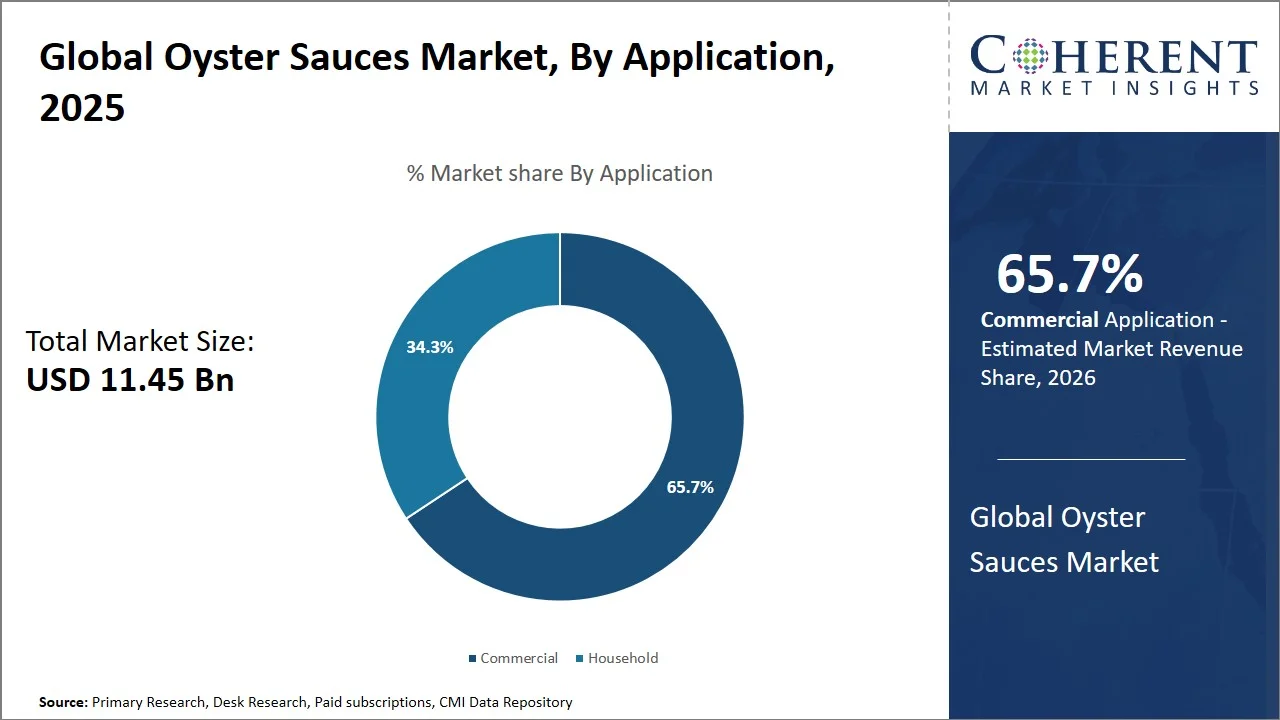
The commercial segment is expected to hold 65.7% of the global oyster sauces market share in 2026. The spread of Asian cuisine around the world has driven the demand from restaurants, hotels, catering companies and institutional kitchens. Commercial buyers look for products that assure a consistent flavor and quality, which are important factors in keeping menu standards consistent and customers satisfied. For many signature dishes, oyster sauce is a key ingredient and it can make a difference in elevating tastes and making them irresistibly delicious in culinary professional settings.
Offline Dominates the Global Oyster Sauces Market
Offline segment is expected to capture 56.5% of the market share in 2026, with specialty food shops leading the distribution of oyster sauce worldwide. The channels are well established with deep penetration especially in areas where oyster sauce is a popular ingredient. Offline stores offer a tactile experience, such as reading labels, checking package sizes and expiry dates, which is preferred by consumers more than online stores.
For example, in cities such as Guangzhou and Shenzhen, small independent retailers and traditional wet markets continue to stock multiple SKUs of oyster sauce (ranging from 255 g household bottles to 2–5 kg foodservice packs), catering to both household consumers and small restaurant operators who rely on frequent, low-volume purchases.
Currents Events and their Impact
Current Events | Description and its Impact |
Expansion of Asian Fast-Food Chains Globally |
|
Regulatory Push for Low-Sodium and Clean-Label Foods |
|
(Source: Food and Drug Administration)
Global Oyster Sauces Market Dynamics
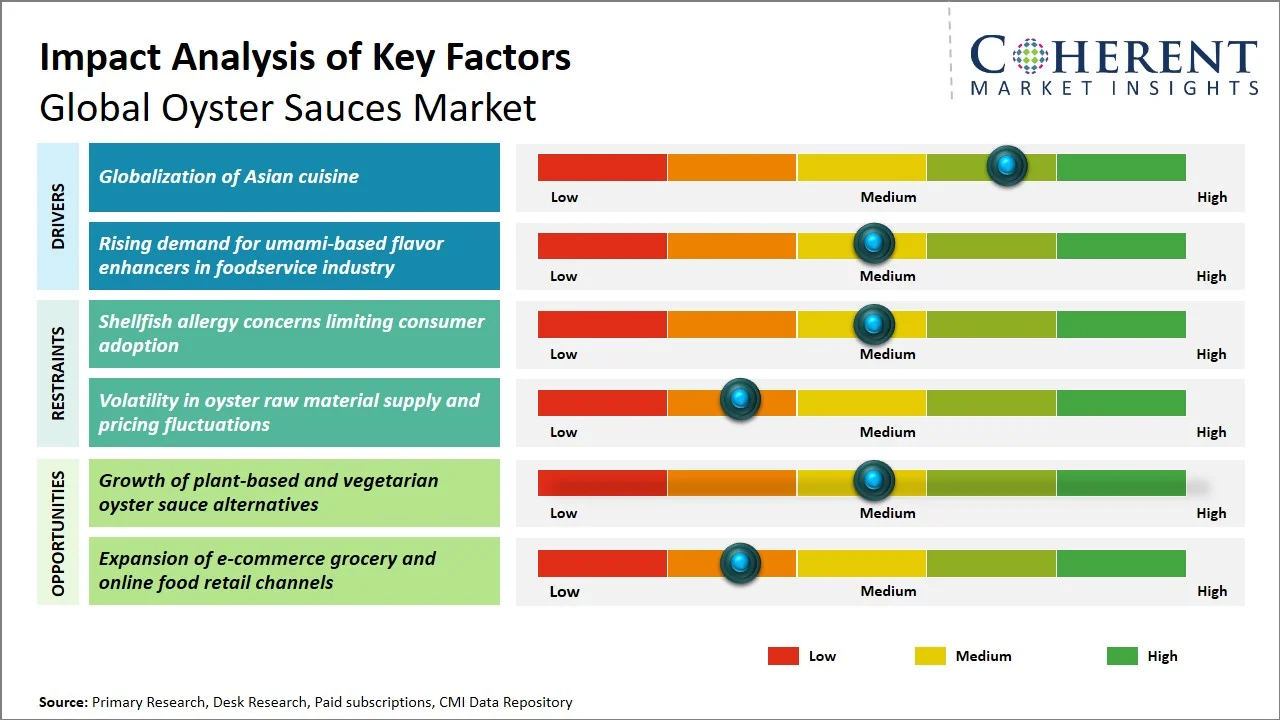
Market Drivers
- Globalization of Asian Cuisine: The widespread globalization and growing popularity of Asian cuisine have significantly bolstered the demand for oyster sauce across various regions. With the growing curiosity of consumers all around the world in their food preferences, they are keen to try real and tasty ingredients that would give them a better taste of traditional Asian cuisine. Oyster sauce, a condiment used extensively in Chinese and Thai cuisine and other Southeast Asian dishes, is also known for the fact that it has been used in the kitchen by people around the world who want to make their dishes taste like those that their favorite restaurants use.
With the growing popularity of Asian restaurants and the emergence of food delivery services that cater to a wide range of Asian dishes, there's never been a better time to stock up on this all-purpose sauce. The rising popularity of Asian taste is an important driver of increased global production, distribution and consumption of oyster sauce.
- Rising demand for umami-based flavor enhancers in foodservice industry: Rising demand for umami-based flavor enhancers in the foodservice industry is a key driver for the oyster sauces market because chefs and commercial kitchens increasingly rely on concentrated savory condiments to deliver depth of flavor, consistency, and cost efficiency in large-scale cooking.
Oyster sauce is naturally rich in umami compounds (glutamates and nucleotides), which enhance savory taste without requiring long simmering or expensive protein bases. This makes it especially valuable in foodservice environments such as Chinese, Thai, and Pan-Asian restaurants, where dishes must be prepared quickly while maintaining strong, restaurant-style flavor profiles. For example, Megachef, which is widely used in professional kitchens across Thailand and Southeast Asia. Megachef oyster sauce is positioned as a high-umami, premium extract-based sauce with a stronger natural oyster flavor and higher concentration of savory compounds, making it popular among chefs for stir-fries, marinades, and wok-based cooking where rapid flavor building is essential. (Source: Megachef)
Emerging Trends
- Premiumization and Culinary Innovation: Oyster sauces are evolving from traditional condiments to premium culinary ingredients with rich umami profiles, authentic recipes, and high-quality seafood extracts. Brands are introducing gourmet variants, region-specific flavors, and chef-inspired formulations to attract food enthusiasts and elevate consumer dining experiences.
- Growing Demand for Health-Conscious and Clean-Label Products: Rising consumer awareness regarding health and ingredient transparency is driving demand for low-sodium, MSG-free, organic, vegan, and preservative-free oyster sauce alternatives. Manufacturers are innovating with plant-based oyster sauces and clean-label formulations to cater to health-focused and dietary-sensitive consumers.
Regional Insights
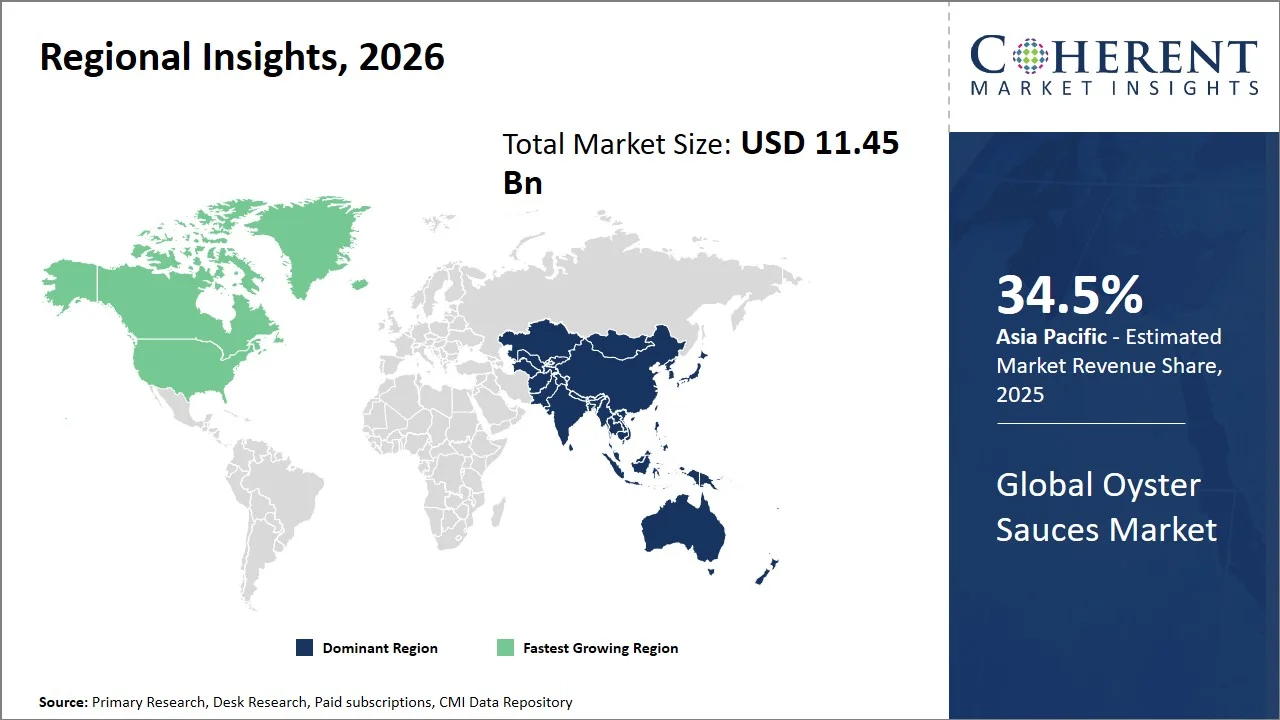
Why is Asia Pacific a Strong Market for Oyster Sauces?
Asia Pacific leads the global oyster sauces market, accounting for an estimated 34.5% share in 2026, due to the traditional consumption in the sub-markets of China, Thailand, and Vietnam as well as the efforts of the major food companies to develop strategies for their deepening penetration in the high-growth sub-markets of China (premiumization and scale expansion) and India (emerging adoption and cuisine fusion growth). For instance, large food service operators and street food vendors are big customers and with them, large companies provide bulk packages of 2-5 kg in jars for restaurants and catering kitchens.
For example, bulk consumption in the Asia Pacific oyster sauces market is the use of 2.2 kg–5 kg foodservice packaging formats in China and Southeast Asia, particularly for restaurant kitchens, catering services, and street food vendors. For instance, Earthling its oyster sauce in commercial 2.2 kg tubs and 5 lb (~2.27 kg) cans, widely used in foodservice operations for stir-fries, noodles, and marinades due to their cost efficiency and consistency in large-volume cooking. (Source: Earthling)
Why Does the North America Oyster Sauces Market Exhibit High Growth?
North America exhibits the fastest growth in the global oyster sauces market with an estimated 23.6% regional share in 2026, supported by consistently rising demand for Asian condiments across retail and foodservice channels. For instance, NielsenIQ-based syndicated category reporting for the U.S. “Cooking Sauces & Marinades” and “Dips & Sauces” segments shows consistent category expansion driven by innovation and ethnic flavor adoption over recent years. These reports track retail sales across 52-week periods and are commonly used to measure growth trends in sauces. (Source: Nielsen Consumer LLC)
Market penetration has also increased as the foodservice industry has evolved and home cooking adoption has risen, especially post-pandemic, alongside the growth of online grocery and food delivery ecosystems. In addition, consumer confidence in value-added and premium products has been reinforced by stronger regulatory frameworks, including the U.S. Food Safety Modernization Act (FSMA), USDA Organic Regulations, and Canada’s Safe Food for Canadians Regulations (SFCR), which together improve traceability, labeling transparency, and food safety compliance for imported sauces.
Global Oyster Sauces Market Outlook for Key Countries:
Why is China Leading Innovation and Adoption in the Oyster Sauces Market?
China is the mainstay of the global oyster sauces market, as the country is extensively integrated into the local food manufacturing value chain and consumes about 40–45% of Asia Pacific volume. Innovation and scale have driven some key companies, including Lee Kum Kee, based in Guangdong, and with advanced production facilities and investments in automation and smart manufacturing systems, to make a significant impact on the market.
For example, Lee Kum Kee has developed an oyster sauce with reduced sodium content and an organic oyster sauce, which are both popular ingredients in home and gourmet cooking. Oyster sauce is heavily used in China's foodservice industry, particularly in Cantonese dishes like stir-fried beef, and for dim sum preparations.
Is the U.S. a Favorable Market for Oyster Sauces?
The U.S. is one of the key markets in North America because of its unique food culture and growing appetites for Asian food and beverage goods. Established players such as Lee Kum Kee and Kikkoman have gained market presence with involvement in food service chains and their retail presence. Product diversification is stimulated by consumer preferences for convenience and clean-label products. The attention to food safety measures, in addition to USDA regulations, helps to build consumer confidence in the product quality.
Furthermore, e-commerce growth can help expand the availability of high-quality brands of oyster sauce. With more than 60,000 Asian restaurants nationwide, consumption has been further boosted, as oyster sauce can be found in many of these dishes, including stir-fried noodles, Chinese-American vegetables, and Thai basil chicken.
Is Japan Emerging as a Key Growth Hub for the Oyster Sauces Market?
Traditional and modern food consumption patterns are dominant in the Asia Pacific market with Japan maintaining a dominant position in the market. International brands such as Kikkoman (Japanese) have brought innovation and quality to oyster sauce manufacturing. Enhancements to products, have been made through good supply chain integration and government encouragement of research and development in food technology.
Ethnic focus on harmonious taste ensures demand for domestic and export markets alike. Kikkoman, the nation's leading food company, is a major force in the exportation of sauces to more than 100 countries and is continually developing new low-sodium and health-oriented forms of soy-based, umami-rich sauces. The health claims highlighted in new sauce releases (e.g., reduced sodium, organic ingredients, additive free) account for over 50% of such product launches in Japan, demonstrating an overall preference for health-focused products. (Source: Springer Nature)
Is Oyster Sauces Market Developing in Brazil?
Brazil is one of the most important emerging markets in Latin America, where foodies and a growing interest in foreign cuisine, including Asian dishes, has been growing. Government policies to facilitate food industry development and liberalization of trade have made it easier to get ingredients and import them more efficiently. The quick-service restaurant and retail sectors are witnessing growing adoption of oyster sauce in fusion recipes, influencing consumer adoption patterns.
The role of multinational companies, like AB World Foods, in market entry is especially significant, as they collaborate with local distributors and importing partners to ensure greater visibility on supermarket shelves, such as those of Carrefour and Pão de Açúcar. AB World Foods For instance, oyster sauce has become common in creations like stir-fried vegetables with rice, noodle street food ideas, and sauces for sushi-bar chains, which have grown significantly in the last 10 years, driven by the global expansion of Asian cuisine and foodservice adoption of oyster-based condiments. (Source: AB World Foods)
Macro & Micro Economic Factors Affecting Oyster Sauces Market
Factor Type | Factor Category | Impact on Oyster Sauces Market |
Macro-Economic Factors | GDP Growth & Disposable Income | Boosts demand for premium and branded oyster sauces globally |
Macro-Economic Factors | Urbanization | Higher consumption in fast-paced urban households and foodservice outlets |
Micro Economic Factors | Consumer Preferences | Directly increases product consumption in households and restaurants |
Micro Economic Factors | Competition Among Brands | Drives pricing strategies, innovation, and product differentiation |
How is the growth of plant-based and vegetarian oyster sauce alternatives creating opportunities in the global oyster sauces market?
Increased vegetarianism, flexitarians, and health oriented eating. While traditional oyster sauce is known for its savory, umami-rich flavor, many consumers are still seeking this taste without relying on animal products like oyster extracts. This void has inspired manufacturers to create substitutes with mushroom extracts, soy protein, fermented soybeans and seaweed-based compounds that provide naturally occurring glutamates that provide the umami taste.
For instance, Kikkoman Corporation has expanded its product offerings to include vegetarian oyster-flavoured sauces in markets such as India, targeting not only vegetarian consumers but also flexitarian users who are reducing meat intake while still wanting to enjoy traditional Asian dishes. (Source: Kikkoman Corporation)
Market Players, Key Development, and Competitive Intelligence
Key Developments
- In June 2024, Lee Kum Kee, a Hong Kong-based food enterprise, announced the investment of USD 288 million to construct a new production facility across Georgia, U.S. This plant would focus on innovation of products, including the development of oyster sauces.
- In April 2022, Kikkoman Corporation, a Japanese food manufacturer, introduced its first-ever 100% vegetarian oyster-flavored sauce for both non-vegetarians and vegetarian individuals across the Indian markets.
- In June 2023, Nestle Thailand announced the launch of 2 low sodium cooking sauces to help reduce consumers’ sodium intake in Thailand. Consumers can opt for lower sodium alternatives such as Maggi Oyster Sauce 60% less sodium and Maggi Cooking Sauce 40% less sodium.
Competitive Landscape
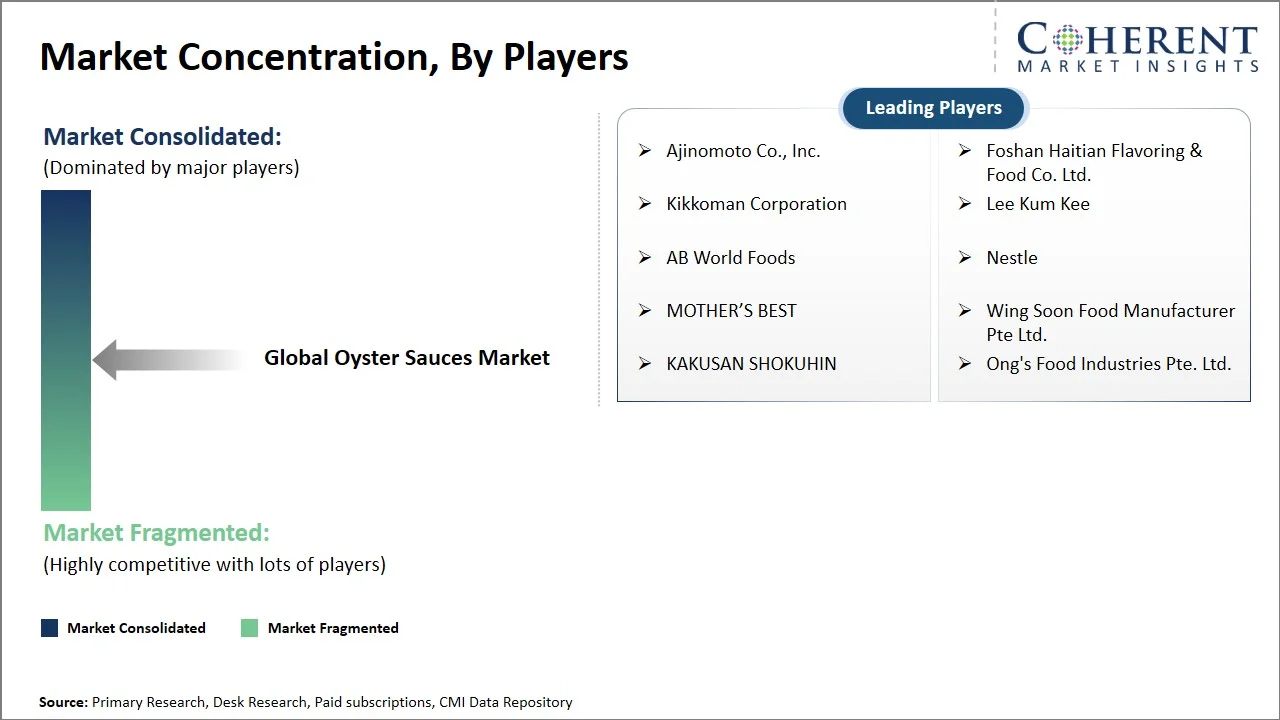
The global oyster sauces market is highly competitive, moderately consolidated, and is dominated by a combination of global food conglomerates and good regional condiment manufacturing companies. Brands remain strong and have established a leadership position with their brand equity, extensive distribution and ongoing product development, while smaller brands and regional brands are competing based on their price advantage, local tastes, and specialist product variations like organic or vegan oyster sauce options. There are key focus areas:
- Big concentration of multinational condiment firms and Asian markets leaders
- Are easy to use, of good quality and offer a range of flavor.
- Product diversification and variants of health products
Market Report Scope
Oyster Sauces Market Report Coverage
| Report Coverage | Details | ||
|---|---|---|---|
| Base Year: | 2025 | Market Size in 2026: | USD 11.45 Bn |
| Historical Data for: | 2020 To 2024 | Forecast Period: | 2026 To 2033 |
| Forecast Period 2026 to 2033 CAGR: | 5.1% | 2033 Value Projection: | USD 16.22 Bn |
| Geographies covered: |
| ||
| Segments covered: |
| ||
| Companies covered: | Ajinomoto Co., Inc., Foshan Haitian Flavoring & Food Co. Ltd., Kikkoman Corporation, Lee Kum Kee, AB World Foods, Nestle, MOTHER’S BEST, Wing Soon Food Manufacturer Pte Ltd., KAKUSAN SHOKUHIN, and Ong's Food Industries Pte. Ltd. | ||
| Growth Drivers: |
| ||
| Restraints & Challenges: |
| ||
Analyst Opinion (Expert Opinion)
- The oyster sauces market is poised to grow out of being a traditional home-condiment category and become a more industrialized and application-driven market, influenced by foodservice growth, packaged food growth, and globalization of regional cuisines, respectively. The category remains dominated by Asia pacific with a majority share of consumption, but is slowly growing in North America, the Middle East as well as the urban European markets via Asian restaurants and fusion cuisine. In Asia Pacific, China is the biggest producer and consumer country, and countries in Southeast Asia like Vietnam, Thailand and Indonesia have been experiencing higher per-capita growth rate related to the increasing urbanization and penetration of packaged foods.
- India is a comparatively untapped but high-growth market, where umami taste is currently used only in particular instances, such as in Asian food restaurants, and in urban households, but expected to grow meaningfully as umami sauces are used by quick service restaurant (QSR) chains, cloud kitchens, and frozen food manufacturers as standard recipes. Demand structure-wise, household retail is still the most dominant part in most developing Asian markets while the fastest growing part is foodservice and industrial applications – central kitchens, ready-to-eat food, marinades, etc in organized restaurant chains.
- Compared with table-side uses, in these applications oyster sauce is not so much a condiment and more a basic ingredient in formulation-driven applications, where oyster sauce takes on greater significance. This has also encouraged the makers to create differentiated flavor and performance grade low-sodium, high-viscosity cooking grades, and heat-stable products for industrial cooking equipment. Meanwhile, urban consumers are gradually turning to premium products, favoring clean labels, consistent taste and trusted brands, particularly in export products, as is the case in retail demand.
Speak to the analyst
Want personalized insights?
Take the findings above to one of our principal consultants, or have the report rebuilt around the segments, geographies and competitors you actually track.
Market Segmentation
- Product Type Insights (Revenue, USD Bn, 2021 - 2033)
- Standard Oyster Sauce
- High Oyster Content
- Health-Oriented Variants
- Plant-Based Oyster Sauce
- Application Insights (Revenue, USD Bn, 2021 - 2033)
- Commercial
- Household
- Distribution Channel Insights (Revenue, USD Bn, 2021 - 2033)
- Offline
- Online
- Regional Insights (Revenue, USD Bn, 2021 - 2033)
- North America
- U.S.
- Canada
- Latin America
- Brazil
- Argentina
- Mexico
- Rest of Latin America
- Europe
- Germany
- U.K.
- Spain
- France
- Italy
- Russia
- Rest of Europe
- Asia Pacific
- China
- India
- Japan
- Australia
- South Korea
- ASEAN
- Rest of Asia Pacific
- Middle East
- GCC Countries
- Israel
- Rest of Middle East
- Africa
- South Africa
- North Africa
- Central Africa
- North America
- Key Players Insights
- Ajinomoto Co., Inc.
- Foshan Haitian Flavoring & Food Co. Ltd.
- Kikkoman Corporation
- Lee Kum Kee
- AB World Foods
- Nestle
- MOTHER’S BEST
- Wing Soon Food Manufacturer Pte Ltd.
- KAKUSAN SHOKUHIN
- Ong's Food Industries Pte. Ltd.
Sources
Primary Research Interviews
- Manufacturers and R&D: Lee Kum Kee (product development manager), Kikkoman (sauce business unit), Amoy Food (R&D director)
- Supply-chain and Trade: Purchasing/Supply Chain Director at a global condiment/seasonings distributor (e.g., Olam, Kerry Group)
- Co-packers and Private Labelers: Contract manufacturing operations at regional food co-packers in Southeast Asia (Thailand, Vietnam, China)
- Foodservice Buyers: Procurement lead for a global quick-service restaurant chain (e.g., Yum! Brands, McDonald’s regional procurement)
- Food Safety & Quality: Quality and compliance officer at a major condiment manufacturer (HACCP, BRC contacts)
Stakeholders
- Leading manufacturers: Lee Kum Kee, Kikkoman, Amoy, Amoy Food, Dynasty (Panda Brand), Pearl River Bridge (CB), Huang Fei Hong (brand owners)
- End-use Sectors:
- Retail packaged food (supermarkets, hypermarkets, e-commerce)
- Foodservice and industrial kitchens (restaurants, institutional catering)
- Food processors and ready-meal manufacturers (marinades, prepared foods)
- Regulatory & Certification Bodies: Codex Alimentarius (international food standards), Food and Drug Administration (U.S. FDA food labeling and import rules).
Databases
- UN Comtrade (HS codes for sauces and preparations; relevant HS: 2103 and 2103.90 subcodes)
- ITC Trademap (trade flows and partner-country analysis for sauces)
- Eurostat trade statistics (EU imports/exports of condiments)
- India EXIM Trade Data (condiment imports/exports)
- USITC DataWeb (U.S. import data for sauces and preparations)
Magazines
- FoodNavigator-Asia – Asia food ingredient and condiment trends
- The Grocer – packaged food retail trends and brand moves (UK)
- Food Business News – sauces, condiments and manufacturing trends
- Asian Food Journal / Thai Food Industry publications – regional processing news
Journals
- Journal of Food Science – formulation and preservative effects in condiments
- Food Chemistry – composition and sensory studies of soy-based sauces
- Journal of Food Processing and Preservation – shelf-life and processing methods
Newspapers
- The Wall Street Journal – global food M&A and supply-chain coverage
- Financial Times – trade and commodity impacts on food ingredients (soy, sugar)
- Business Standard / Economic Times (India) – imports, domestic brands, retail distribution
Associations
- International Food & Beverage Alliance (IFBA)
- ASEAN Food & Beverage Associations and national food processing associations (China, Thailand)
- Specialty Food Association (for North American retail insights)
Public Domain Source
- FAO – soy supply, production, and commodity reports (affects soy sauce/oyster sauce raw material markets)
- OECD agricultural outlook (soybean, sugar, salt trends)
- WHO/FAO Codex standards for fermented soy products and sauces
- National statistics portals (China NBS, Thailand Ministry of Commerce, India Ministry of Commerce) for production and trade data
Proprietary Elements
- CMI Data Analytics Tool
- Proprietary CMI Existing Repository of information for last 10 years.
Get access to 250+ pages report
Every segment, forecast, competitor profile and data table behind the analysis above — available for instant download.
- ESOMAR Member
- ISO 9001:2015 Certified
- D-U-N-S Registered
- GDPR & CCPA Compliant
Missing comfort of reading report in your local language? Find your preferred language:
Transform your Strategy with Exclusive Trending Reports
Frequently Asked Questions
The global oyster sauces market is estimated to be valued at USD 11.45 Bn in 2026 and is expected to reach USD 16.22 Bn by 2033.
The CAGR of global oyster sauces market is projected to be 5.1% from 2026 to 2033.
Globalization of Asian cuisine and rising demand for umami-based flavor enhancers in foodservice industry are the major factors driving the growth of the global oyster sauces market.
Shellfish allergy concerns limiting consumer adoption and volatility in oyster raw material supply and pricing fluctuations are the major factors hampering the growth of the global oyster sauces market.
In terms of product type, standard oyster sauce is estimated to dominate the market revenue share in 2026.
Ajinomoto Co., Inc., Foshan Haitian Flavoring & Food Co. Ltd., Kikkoman Corporation, Lee Kum Kee, AB World Foods, Nestle, MOTHER’S BEST, Wing Soon Food Manufacturer Pte Ltd., KAKUSAN SHOKUHIN, and Ong's Food Industries Pte. Ltd. are the major players.
Asia Pacific is expected to lead the global oyster sauces market in 2026.