

Global Probiotic Drinks Market Size and Forecast: 2026-2033
The global probiotic drinks market is expected to grow from USD 18.45 Bn in 2026 to USD 31.21 Bn by 2033, registering a compound annual growth rate (CAGR) of 7.8%. The global probiotic drinks market growth is strongly supported by structural public health and dietary transitions highlighted by the WHO and the FAO.
The IDF data indicates a sustained global shift toward processed and convenience-based diets due to urbanization along with rising global dairy consumption. The dairy sector plays a vital role in nourishing the global population, producing 782 million tons of milk in 2023, with cow’s milk accounting for 81.1% of this total. More than 80% of the world’s population, approximately 6.5 billion people, regularly consume milk or dairy products, underscoring dairy’s universal appeal and nutritional value.
(Source: idf.org)
Key Takeaways of the Global Probiotic Drinks Market
- Dairy-based segment is expected to hold 68.8 % of the global probiotic drinks market share in 2026, owing to its high popularity among consumers. Growing preference stems from consumers' faith in fermented dairy drinks, such as yogurt drinks and kefir for improving digestive health. For example, in some Asian culture, it is a tradition to consume probiotic drinks made from fermented milk products like Yakult. As per estimates provided by Yakult Honsha Co., Ltd., more than 40 million portions of Yakult beverages are consumed globally every day. Besides, fermented dairy products are among the most extensively consumed types of functional foods due to their beneficial impact on digestion and immune system.
- The bottles segment is expected to hold 39.6 % share of the market in 2026. PET bottles and small-sized probiotic drinks in shot forms are widely consumed by modern-day consumers having busy lifestyles in big cities. For example, Danone S.A. offers a wide array of probiotic drinks in bottles, like Actimel. (Source: Danone)
- Offline segment is expected to dominate the probiotic drinks market with 62.7 % share in 2026, because customers favor buying such beverages from supermarkets, pharmacies, and health stores to authenticate their quality and storage requirements. The major retail companies, such as Walmart Inc. and Tesco PLC, allocate additional shelf space in stores due to increasing demand for probiotic drinks. In accordance with the findings of the International Food Information Council, over 70% of the population prefers purchasing functional foods through offline distribution channels to validate labels, ingredients, and shelf life.
- The Asia Pacific region leads in the global probiotic drinks market and is projected to hold 41.2 % share in 2026, due to the significant consumption of fermented foods, large populations, and health consciousness in the region. Furthermore, the Chinese probiotic drinks market demonstrates double-digit growth due to government efforts to improve nutrition standards.
- The North America market for the probiotic drinks is set to witness the fastest growth and account for 19.3 % share in 2026, owing to growing awareness about gut health, functional beverages, and innovative products related to the plant-based segment. As stated by the National Institutes of Health, there has been increasing interest in gut microbiome among customers, thereby impacting their consumption decisions. Moreover, initiatives from firms like PepsiCo Inc. through its functional beverages line such as KeVita are major factors responsible for this growth.
- Gut Health & Preventive Wellness Alignment: Probiotic drinks are strongly positioned within the preventive healthcare shift, where consumers actively seek functional beverage for digestive health, immunity support, and microbiome balance. This is accelerating their integration into daily routines as “wellness-first” substitutes for conventional still drinks and sugary beverages.
- Market Expansion Catalysts: Market growth is being driven by rapid functional beverage adoption, product innovation (plant-based, dairy-free, juice-based formats), and the expansion of retail + e-commerce channels. Rising health awareness, urbanization, and demand for clean-label formulations are further amplifying penetration across both developed and emerging economies.
Segmental Insights
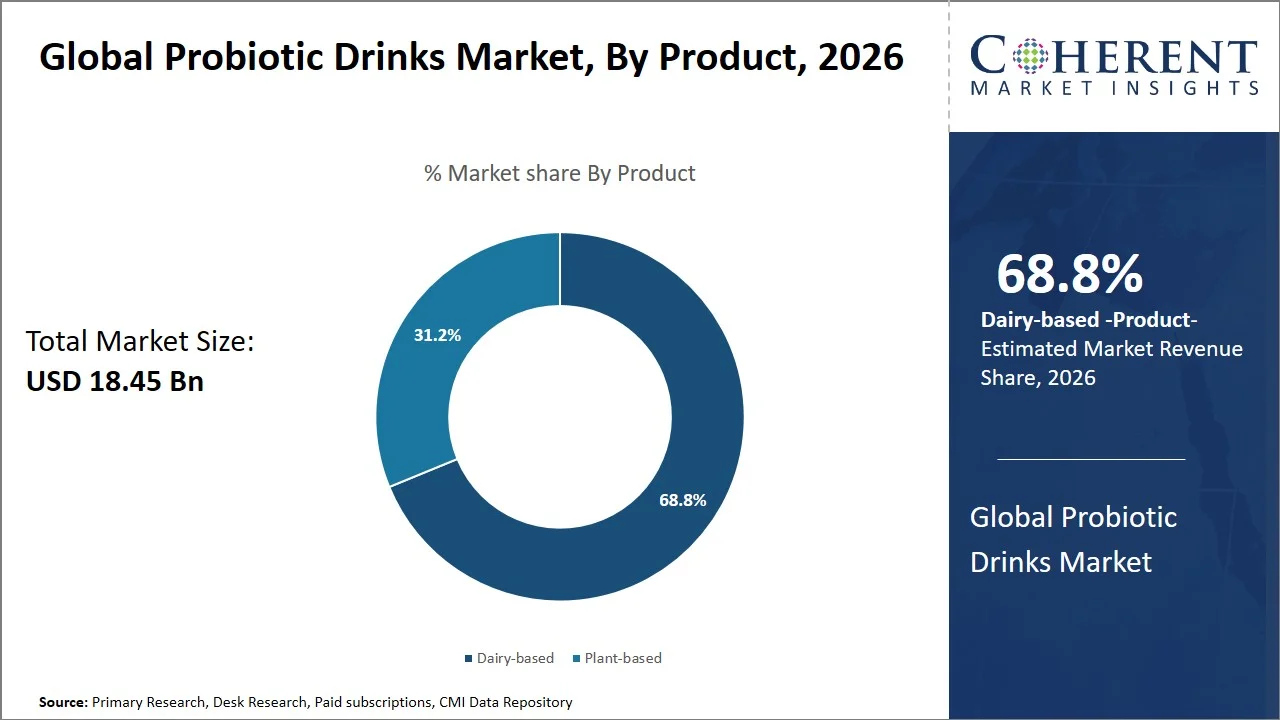
Why Does Diary-based Segment Dominate the Global Probiotic Drinks Market?
Dairy-based probiotic is expected to hold 68.8% of the market share in 2026, due to high consumption levels in Europe where companies such as Danone's Actimel and Yakult have longstanding distribution channels, consumer awareness, and regulatory support. In 2024, Danone introduced Actimel+ Triple Action, containing vitamin D and zinc for immune support. They are consumed in France, Germany, Japan and South Korea, benefiting from decades of advertising. In North America, kefir is emerging due to its varied microbial strains.(Source: nlm) From a product standpoint, dairy is an excellent naturally fortified vehicle for probiotics, as the matrix of protein, fat and lactose helps protect the bacterial cultures and improve their survival rate during digestion, making dairy products like yogurt drinks and kefir more functional than their plant-based counterparts, which can be artificially fortified.
- Current Industry Events of 2026
- Market Size Estimation
- Regional Breakdown
- Competitive Landscape
- Customer Intelligence
- Segmental Analysis
- Pricing Analysis
- Key Market Drivers, Challenges & Future Trends
- Customized Insights Section
Why are Bottles the Most Preferred Packaging?
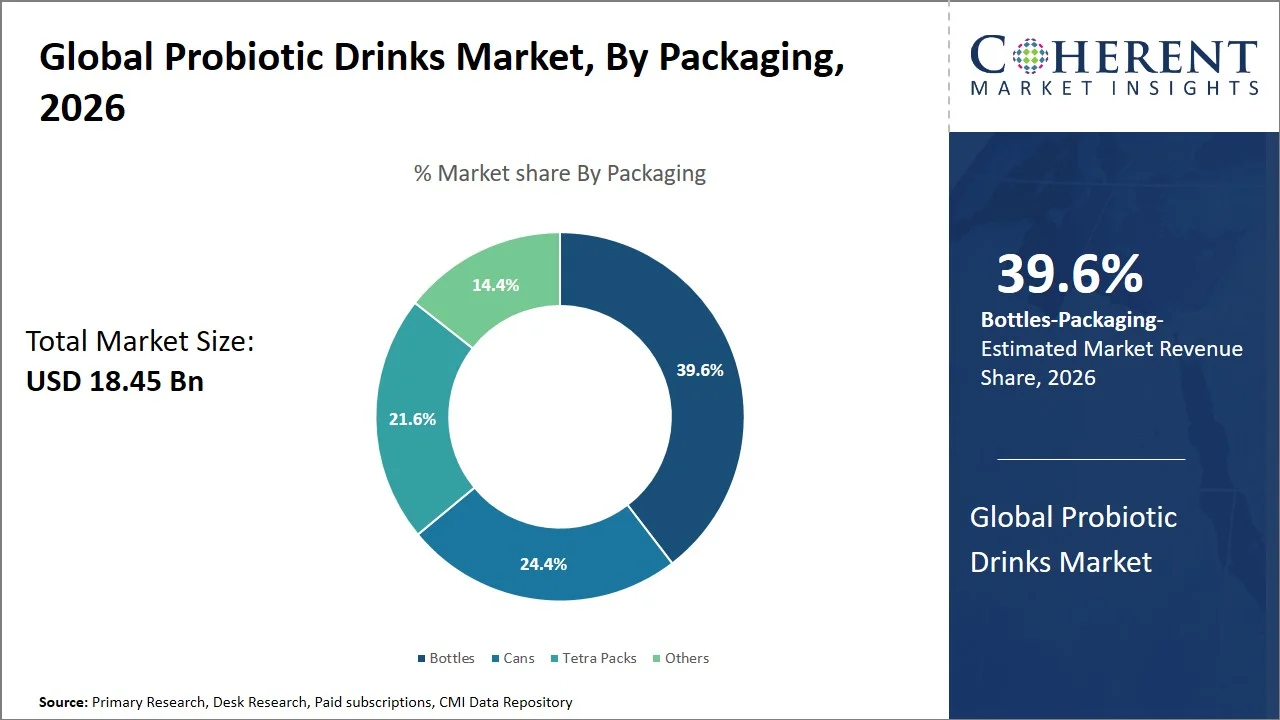
Bottles segment is expected to hold 39.6% of the market share in 2026, due to established filling lines, consumer familiarity, and the ability to display product color and texture through transparent PET or glass. While glass bottles are preferred by organic and clean-label manufacturers due to their premium positioning and recyclability, they increase overall logistics and retail costs by approximately 10%–15% because of higher weight, breakage risk, and transportation inefficiencies. PET bottles are widely used for mass-market yogurt drinks and kefir (lightweight, easy to open, re-sealable), including brands like Danone and Yakult, which hold packaging costs below USD 0.10 per unit, thanks to efficient supply chains.
Offline Segment Dominates the Probiotic Drinks Market
The offline is expected to hold 62.7% of the global probiotic drinks market share in 2026, primarily because these products are highly dependent on refrigeration, visibility, and impulse-driven purchasing, all of which are better supported by physical retail infrastructure. Probiotic drinks—especially dairy-based variants—require a reliable cold chain to maintain bacterial viability, and offline channels such as supermarkets, hypermarkets, and convenience stores are structurally equipped for this.
Large players like Danone and Yakult have built extensive refrigerated distribution networks, ensuring consistent product quality and daily availability, something online channels still struggle to guarantee at scale, particularly in emerging markets.
Currents Events and their Impact
Current Events | Description and its Impact |
Rising Functional Beverage Trend (Macro Consumer Shift) |
|
Regulatory Scrutiny on Health Claims (Regulatory Shift) |
|
Global Probiotic Drinks Market Dynamics
Market Drivers
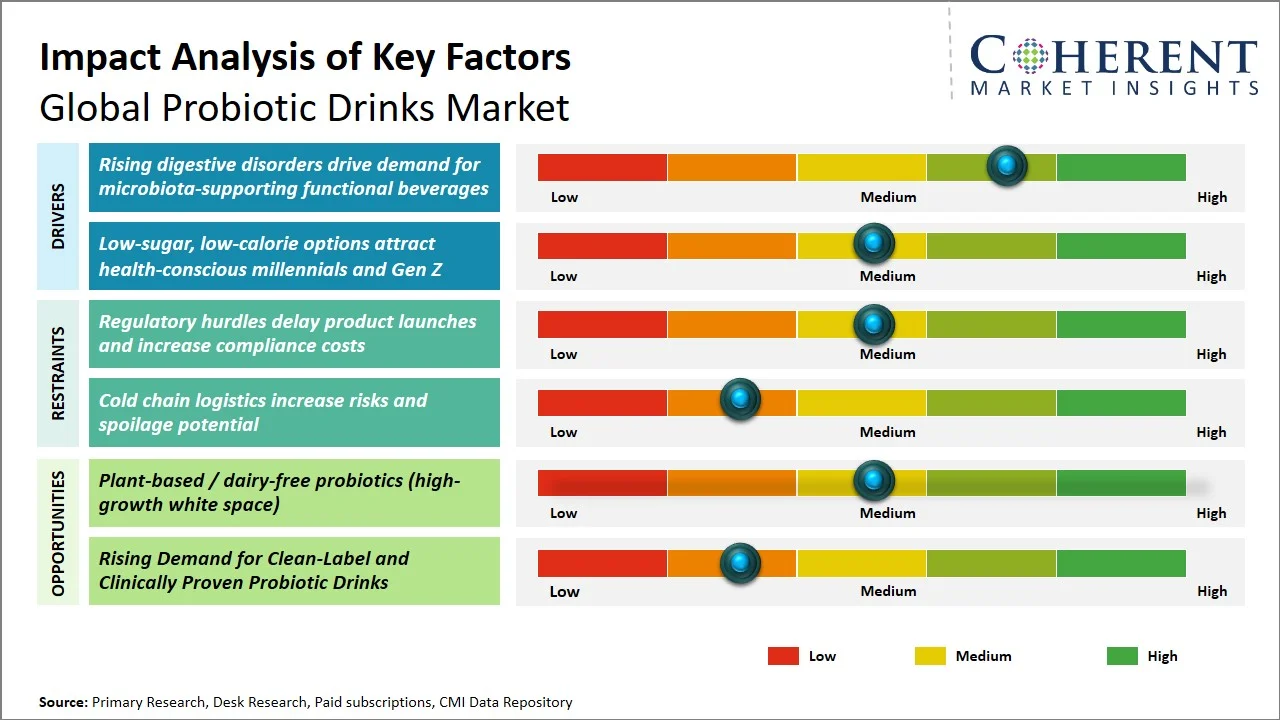
- Rising digestive disorders drive demand for microbiota-supporting functional beverages: People prefer preventive approaches to medical interventions when coping with gastrointestinal conditions including irritable bowel syndrome and dysbiosis caused by antibiotics. According to the U.S. National Institutes of Health, 35% to 40% of all adults in the world suffer from functional gastrointestinal disorders, thus promoting products which include live microorganisms. Functional drinks are easier to take than pills; one can easily integrate gut health support in their daily schedule. In 2024, Lifeway Foods launched Muscle Mates, which is a combination of probiotics kefir and creatine, to promote muscle recovery after workout and help with digestion. (Source: Lifeway)
- Low-sugar, low-calorie options attract health-conscious millennials and Gen Z: The younger generations are turning away from sugary sodas and toward functional beverages that align with their clean-eating habits and macro-tracking goals. Traditional yogurt drinks can contain more than 15 grams of sugar per serving, which is more than the American Heart Association’s recommended amount of 25 grams per day for women and 36 grams for men. As a result, manufacturers are reformulating products to include natural sweeteners such as stevia and monk fruit, or removing sweeteners altogether. Lifeway’s Probiotic Smoothie + Collagen is a zero-added-sugar product that will answer the demand for beverages that help with skin elasticity and gut health. In North America, Western Europe, and Australia, high nutrition-label literacy and social media influencers are driving the low-sugar movement. It is also migrating to urban centers in the Asia Pacific region, especially among wealthy millennials in China and India, who increasingly view sugar reduction as a social status symbol. (Source: Lifeway Foods, Inc.)
Emerging Trends
- Shift Toward Functional and Condition-Specific Nutrition: Probiotic drinks are moving beyond general digestive health to focus on benefits such as immunity support, gut-brain health, women’s health and metabolic wellness. This enables brands to command premium positioning and drive repeat consumption.
- The rise of plant-based and clean-label formulations: The growing incidence of lactose intolerance, veganism and consumer demand for natural ingredients are encouraging the development of dairy-free, low-sugar and preservative-free probiotic drinks, especially in emerging markets.
Regional Insights
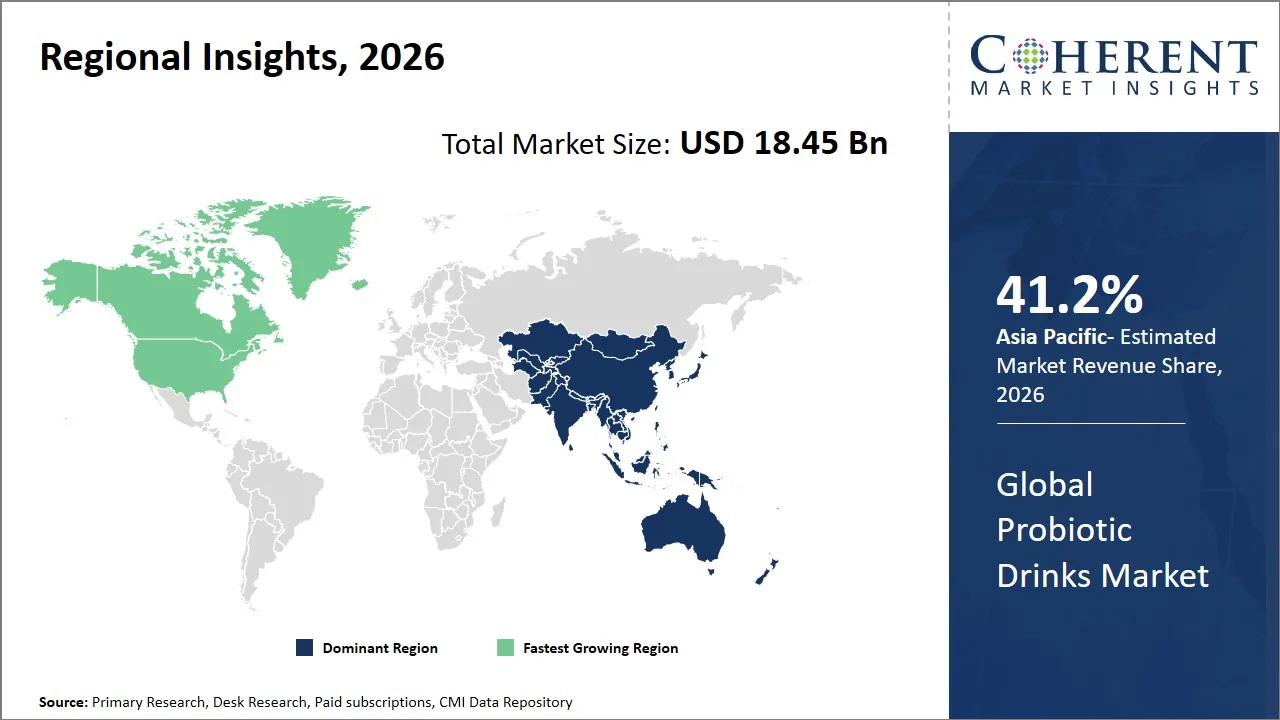
Why is Asia Pacific Leading Innovation and Adoption in the Probiotic Drinks Market?
Asia Pacific leads the global probiotic drinks market, accounting for an estimated 41.2% share in 2026, driven by its large population base, strong cultural alignment with fermented foods, and rapid innovation in functional beverages. Traditional dietary patterns across countries such as Japan, China, and South Korea already include fermented products (e.g., yogurt, kefir-like drinks, kimchi-based fermentation culture), which reduces consumer resistance and accelerates probiotic adoption in everyday nutrition.
A region-specific example is Japan’s Yakult consumption culture, where probiotic drinks are deeply embedded in daily routines, supported by strong retail penetration and long-standing consumer trust in gut-health-focused beverages. Yakult has achieved widespread household-level adoption in Japan for decades, effectively normalizing probiotics as a daily preventive health product rather than a niche supplement. (Source: nlm)
Why Does North America Probiotic Drinks Market Exhibit High Growth?
North America is expected to exhibit the fastest growth with 19.3% share to the global probiotic drinks market in 2026, driven by science, premiumization, and preventive healthcare behavior, not tradition. The region is heavily reliant on institutional research, in particular, the U.S. National Institutes of Health’s Human Microbiome Project, which has invested approx. USD 200 million in gut microbiome research, directly influencing consumer awareness and product development. Consumers in the U.S. and Canada are actively seeking functional beverages for immunity, digestion, even mental health, and the demand for kombucha, plant-based probiotic drinks and fortified beverages, remains strong. (Source: nlm)
Global Probiotic Drinks Outlook for Key Countries
Is Canada a Favorable Market for Probiotic Drinks?
The limited population size (~40 million) constrains mass-scale expansion, but this is offset by strong purchasing power and a consumer base that actively spends on functional and premium health products. More importantly, Canada offers clear and structured regulation for probiotics and functional beverages under Health Canada’s Natural and Non-prescription Health Products Directorate (NNHPD), which reduces regulatory ambiguity and supports product commercialization pathways for probiotic formulations. (Source: Health Canada)
Is China Emerging as a Key Growth Hub for the Probiotic Drinks Market?
China is a key growth driver for the probiotic drinks market, driven by rapid urbanization, a burgeoning middle class and a rising health consciousness. One of the biggest changes in behavior is the rise of the “fourth meal” phenomenon, where consumers add supplements and probiotic beverages to their daily routine for preventative health. Government focus on food safety standards and stricter regulation of health claims has also strengthened consumer trust in probiotic products, improving market acceptance and supporting premiumization in the category (Food and Agriculture Organization (FAO), Food Safety and Quality in China; China State Administration for Market Regulation (SAMR), Food Safety Regulatory Framework).
Why Does U.K. Top the Europe Probiotic Drinks Market?
The U.K. is still the leader in the Europe market for probiotic drinks with high levels of consumer awareness, rapid adoption of functional foods and solid retail infrastructure. U.K. consumers are very aware of gut health and seeking functional drinks as part of preventative healthcare. Major global players and the availability of probiotic drinks in supermarkets such as Tesco and Sainsbury’s ensure strong market penetration.
Broader European support for functional food innovation, including funding through programs such as Horizon Europe, has strengthened the research ecosystem. The U.K. is also benefiting from increasing demand for vegan and plant-based probiotic drinks that are in keeping with sustainability trends. All these factors combined make the U.K. the most dynamic and mature probiotic drinks market in Europe.
Is Probiotic Drinks Market Developing in Germany?
Germany probiotic drinks market is expanding at a steady, not aggressive, pace, with scientific validation and cautious consumer behavior behind the growth. The country has a strong functional food and nutraceutical ecosystem. Strict regulations on health claims in the European Union ensure high product quality and credibility. German consumers prefer evidence-based products, which impairs fast adoption, but results in a stable and trustworthy market environment.
How is Rising Gut Health and Preventive Nutrition Driving Growth in the Global Probiotic Drinks Market?
An increasing global focus on wellness, gut microbiome health, and preventive healthcare is accelerating the shift of probiotic drinks from niche functional products to mainstream daily beverages, thereby unlocking significant market expansion opportunities.
The World Health Organization (WHO) estimates that non-communicable diseases (NCDs) account for approximately 74% of global deaths, reinforcing strong consumer and policy-level emphasis on preventive nutrition and dietary health management (WHO, Noncommunicable diseases factsheet). At the same time, obesity has nearly tripled since 1975, increasing the need for metabolic balance and digestive health support through functional food and beverage solutions (WHO, Obesity and overweight factsheet).
(Source: WHO)
Market Players, Key Development, and Competitive Intelligence
Key Developments
- In August 2025, Danone launched a drinkable yogurt product under its Oikos brand in the U.S., targeted at users of Ozempic and other GLP-1 weight-loss drugs. The product, called Oikos Fusion, is designed to help consumers build and retain muscle mass during weight loss, according to the company.
- In May 2025, Meiji expanded its portfolio with the launch of a new product, Bulgaria Drinkable Yogurt Salt Lemon. According to the company, Bulgaria Drinkable Yogurt is designed to offer a unique combination of flavor and functionality. It features yogurt that is particularly effective at absorbing moisture, outperforming typical dairy drinks like milk.
- In March 2025, Danone-owned yogurt brand Activia has expanded its kefir and fiber ranges to support consumers' gut health, with the launch of three new products. The new line includes a larger format of Activia Kefir Natural, Activia Kefir Peach Passion Fruit, and Activia Kefir Natural and Strawberry drinks.
Competitive Landscape
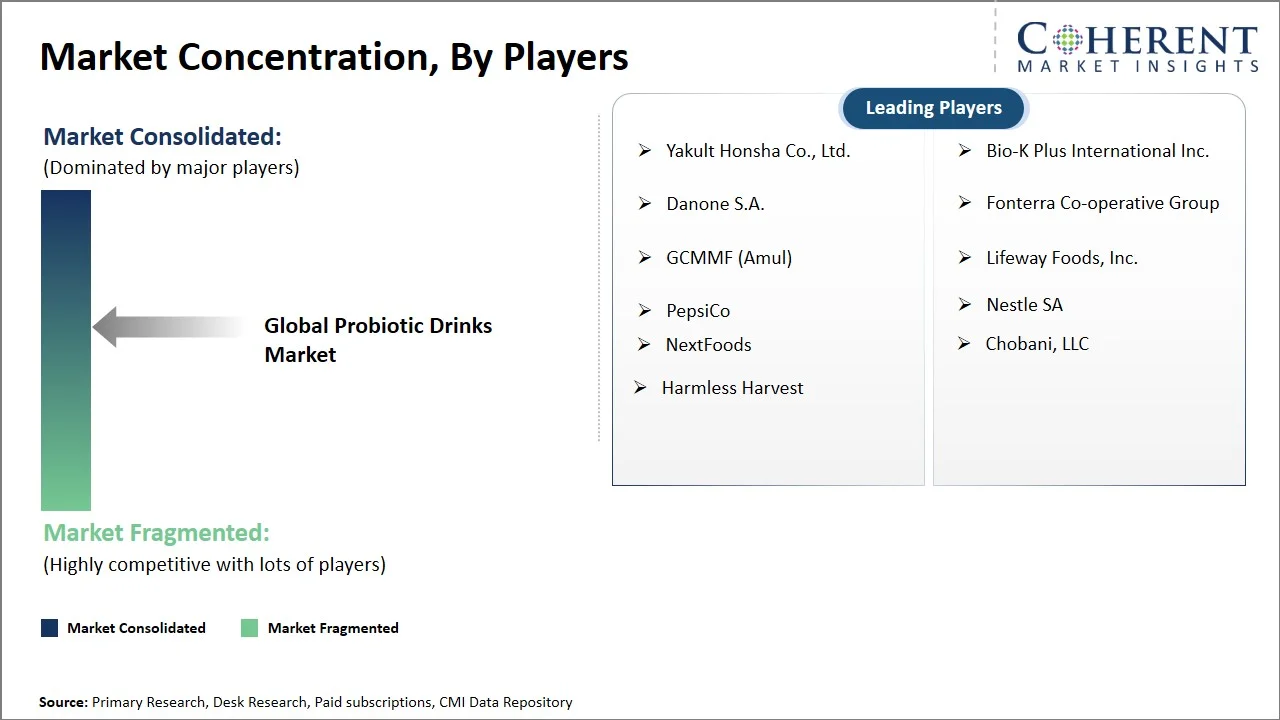
The global probiotic drinks market is fiercely competitive due to growing consumer interest in preventive health, functional nutrition and gut health. Multinational and regional players have significant brand presence, R&D capabilities and distribution channels, and new brands focus on niche segments, innovation, and clean labels. Key focus areas include:
- Scientifically backed, strain-specific formulations for credibility and differentiation
- Differentiation with plant-based, low-sugar, and functional variants with a focus on immunity, digestion and general well-being
- Growth via partnerships, M&A and omnichannel retailing (modern retail, e-commerce, quick commerce)
Market Report Scope
Probiotic Drinks Market Report Coverage
| Report Coverage | Details | ||
|---|---|---|---|
| Base Year: | 2025 | Market Size in 2026: | USD 18.45 Bn |
| Historical Data for: | 2020 To 2024 | Forecast Period: | 2026 To 2033 |
| Forecast Period 2026 to 2033 CAGR: | 7.8% | 2033 Value Projection: | USD 31.21 Bn |
| Geographies covered: |
| ||
| Segments covered: |
| ||
| Companies covered: | Yakult Honsha Co., Ltd., Danone S.A., GCMMF (Amul), PepsiCo, NextFoods, Harmless Harvest, Bio-K Plus International Inc., Fonterra Co-operative Group, Lifeway Foods, Inc., Nestle SA, and Chobani, LLC | ||
| Growth Drivers: | Rising digestive disorders drive demand for microbiota-supporting functional beverages Low-sugar, low-calorie options attract health-conscious millennials and Gen Z | ||
| Restraints & Challenges: | Regulatory hurdles delay product launches and increase compliance costs Cold chain logistics increase risks and spoilage potential | ||
Analyst Opinion (Expert Opinion)
- The probiotic drinks market is transitioning from a niche "digestive health" category to mainstream preventive health and nutrition market. The future growth will be fueled not only by dairy-based variants, but functional diversification of plant-based probiotics, low-sugar probiotics and clinically-tested strains for immunity, psychological well-being (gut-brain axis), and metabolic health.
- The category will increasingly overlap with nutraceuticals, blurring the line between food and therapeutic products. Expect consolidation around science-backed brands, while commoditized products will struggle to retain pricing power. Long term, products with clinically substantiated benefits and personalized nutrition positioning will dominate shelf space.
- The strongest opportunity is in plant-based probiotic drinks in India and Southeast Asia (Indonesia, Vietnam). These markets combine three structural advantages: low current penetration, rising health awareness, and a large lactose-intolerant population. Within applications, daily wellness beverages for immunity and digestion (mass premium segment) will scale fastest, followed by condition-specific functional drinks (e.g., gut health, women’s health) in urban markets. In developed regions like the U.S. and Western Europe, growth will be incremental and innovation-led, but in India and Southeast Asia, the opportunity is volume-driven market creation.
Speak to the analyst
Want personalized insights?
Take the findings above to one of our principal consultants, or have the report rebuilt around the segments, geographies and competitors you actually track.
Market Segmentation
- Product Insights (Revenue, USD Bn, 2021 - 2033)
- Dairy-based
- Plant-based
- Packaging Insights (Revenue, USD Bn, 2021 - 2033)
- Bottles
- Cans
- Tetra packs
- Others
- Distribution Channel Insights (Revenue, USD Bn, 2021 - 2033)
- Offline
- Online
- Regional Insights (Revenue, USD Bn, 2021 - 2033)
- North America
- U.S.
- Canada
- Latin America
- Brazil
- Argentina
- Mexico
- Rest of Latin America
- Europe
- Germany
- U.K.
- Spain
- France
- Italy
- Russia
- Rest of Europe
- Asia Pacific
- China
- India
- Japan
- Australia
- South Korea
- ASEAN
- Rest of Asia Pacific
- Middle East
- GCC Countries
- Israel
- Rest of Middle East
- Africa
- South Africa
- North Africa
- Central Africa
- North America
- Key Players Insights
- Yakult Honsha Co., Ltd.
- Danone S.A.
- GCMMF (Amul)
- PepsiCo
- NextFoods
- Harmless Harvest
- Bio-K Plus International Inc.
- Fonterra Co-operative Group
- Lifeway Foods, Inc.
- Nestle SA
- Chobani, LLC
Sources
Primary Research Interviews
- Probiotic drink manufacturers (dairy and plant-based)
- R&D Heads of functional beverage companies
- Supply Chain Managers in cold-chain beverage logistics
- Nutritionists and microbiome research experts
- Retail category managers (modern trade and e-commerce platforms)
Stakeholders
- Manufacturers of probiotic drinks
- End-use Sectors:
- Retail Consumers (health-conscious, digestive health segment)
- Hospitals & Clinical Nutrition Providers
- Fitness & Wellness Centers
- Regulatory & Certification Bodies: o Food Safety and Standards Authority of India (India) and European Food Safety Authority
- Technology Integration Players: Probiotic strain developers (e.g., Chr. Hansen, DuPont) and Packaging & cold-chain solution providers
Databases
- UN Comtrade (HS Code 2202 – non-alcoholic beverages including probiotic drinks)
- FAOSTAT (dairy consumption and fermented products data)
- Eurostat (functional beverage consumption trends)
- USITC DataWeb (import/export of functional beverages)
- India EXIM Trade Data (Ministry of Commerce)
Magazines
- Beverage Industry Magazine – Functional beverage trends
- Food Business News – Probiotic innovation tracking
- Dairy Foods Magazine – Fermented dairy beverages
- Nutraceuticals World – Gut health product trends
- FoodNavigator – Probiotic R&D and launches
Journals
- Journal of Functional Foods – Probiotic efficacy studies
- Food Microbiology – Bacterial strains and fermentation
- International Journal of Food Sciences and Nutrition – Health impact analysis
- Frontiers in Nutrition – Microbiome research
- Journal of Dairy Science – Fermented drink development
Newspapers
- The Economic Times – FMCG and health drink demand trends
- Business Standard – Functional beverage market growth
- The Wall Street Journal – Global beverage industry shifts
- Financial Times – Health and wellness investments
Associations
- International Probiotics Association
- Global Prebiotics Association
- Institute of Food Technologists
- IDF
- Confederation of Indian Industry (FMCG & food processing)
Public Domain Sources
- World Health Organization – Guidelines on probiotics and gut health
- Food and Agriculture Organization – Fermented food frameworks
- Ministry of Food Processing Industries – Beverage industry reports
- U.S. Department of Agriculture – Dairy and beverage consumption insights
Proprietary Elements
- CMI Data Analytics Tool
- Proprietary CMI Existing Repository of information for last 10 years.
Get access to 250+ pages report
Every segment, forecast, competitor profile and data table behind the analysis above — available for instant download.
- ESOMAR Member
- ISO 9001:2015 Certified
- D-U-N-S Registered
- GDPR & CCPA Compliant
Missing comfort of reading report in your local language? Find your preferred language:
Transform your Strategy with Exclusive Trending Reports
Frequently Asked Questions
The global probiotic drinks market is estimated to be valued at USD 18.45 Bn in 2026 and is expected to reach USD 31.21 Bn by 2033.
The CAGR of global probiotic drinks market is projected to be 7.8% from 2026 to 2033.
Rising digestive disorders driving demand for microbiota-supporting functional beverages and low-sugar, low-calorie options attracting health-conscious millennials and Gen Z are the major factors driving the growth of the global probiotic drinks market.
Regulatory hurdles delay product launches and increase compliance costs and cold chain logistics increase risks and spoilage potential are the major factors hampering the growth of the global probiotic drinks market.
In terms of product, dairy-based is estimated to dominate the market revenue share in 2026.
Yakult Honsha Co., Ltd., Danone S.A., GCMMF (Amul), PepsiCo, NextFoods, Harmless Harvest, Bio-K Plus International Inc., Fonterra Co-operative Group, Lifeway Foods, Inc., Nestle SA, and Chobani, LLC are the major players.
Asia Pacific is expected to lead the global probiotic drinks market in 2026.