

Global Pseudouridine Market Size and Forecast – 2026-2033
According to Coherent Market Insights, the global pseudouridine market is estimated to be valued at USD 39.9 Mn in 2026 and is expected to reach USD 54.7 Mn by 2033, exhibiting a compound annual growth rate (CAGR) of 4.6% from 2026 to 2033. This steady growth reflects increasing applications of pseudouridine in pharmaceutical and biotechnological sectors, driven by advancements in RNA-based therapeutics and diagnostics. The market's expansion is supported by rising investments in research and development activities targeting novel treatments.
Key Takeaways of the Global Pseudouridine Market
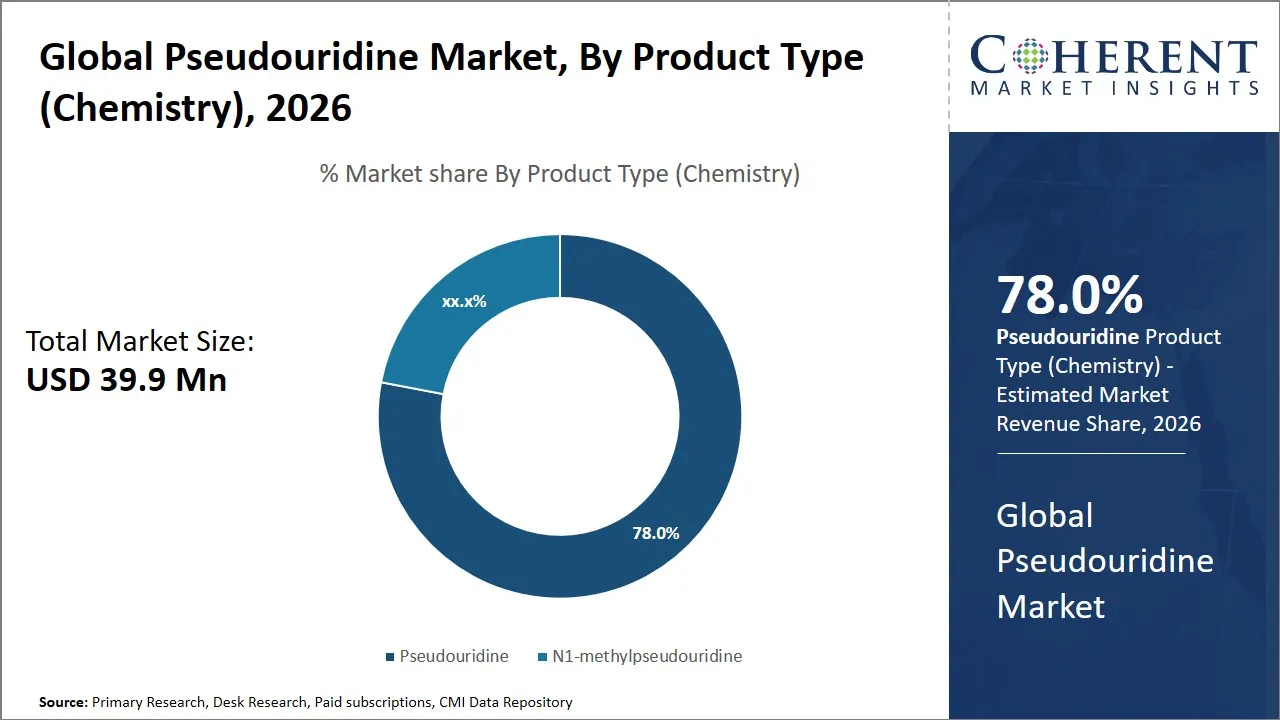
- Pseudouridine segment is expected to lead the pseudouridine market, capturing 78% share in 2026.
- Research Grade (RUO) segment is estimated to represent 62% of the pseudouridine market share in 2026.
- Powder (lyophilized / crystalline) segment is projected to dominate with 68% of the global pseudouridine market share in 2026.
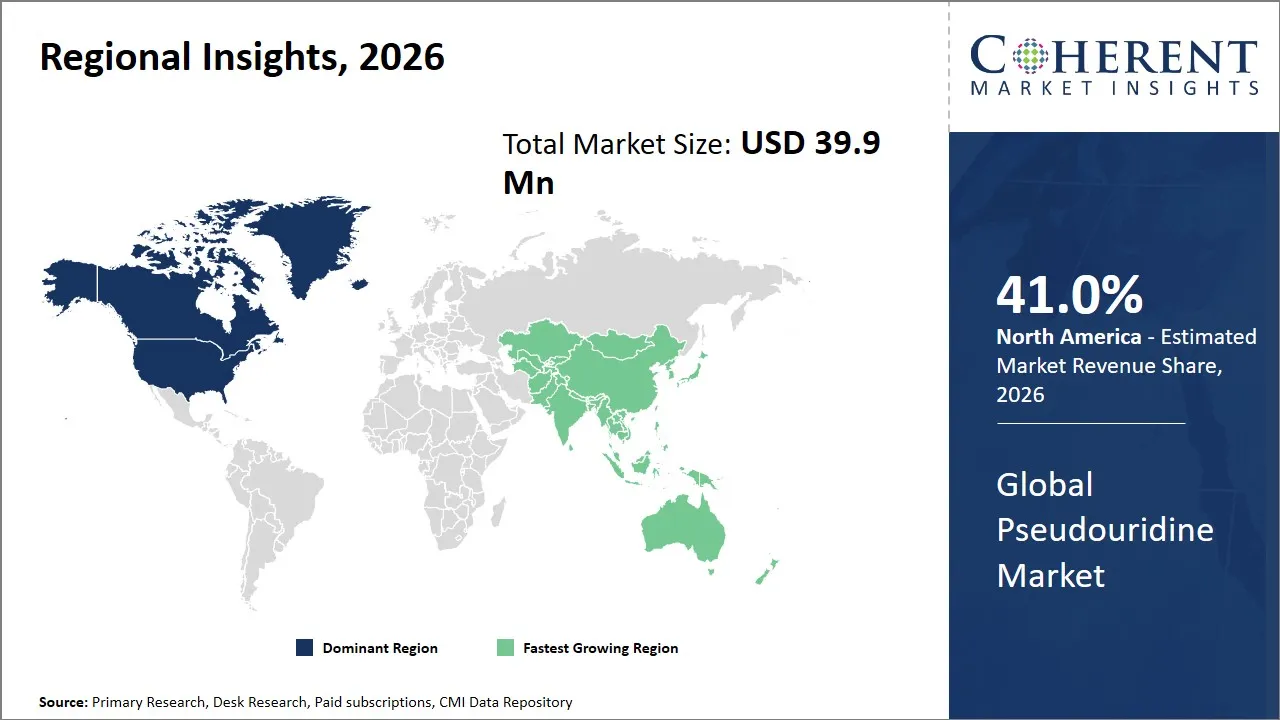
- North America is expected to lead the market, holding a share of 41% in 2026. Asia Pacific is anticipated to be the fastest-growing region, with 27% share in 2026.
Market Overview
- The increasing adoption of mRNA vaccines and therapeutics, particularly in infectious diseases and oncology, is driving the demand for key raw materials like pseudouridine.
- Innovations in mRNA synthesis, including enzymatic production and high-throughput methods, are reducing costs and improving the efficiency of pseudouridine production.
- Governments worldwide, particularly in the U.S. and Europe, are introducing policies to streamline the approval process for mRNA-based drugs, boosting market growth.
- The COVID-19 pandemic highlighted the need for localized production of mRNA raw materials. Companies are investing in regional manufacturing hubs to de-risk supply chains, especially for critical components like pseudouridine.
Currents Events and their Impact
Current Events | Description and its Impact |
Global mRNA Vaccine Production Expansion |
|
Technological Advancements in RNA Synthesis |
|
Segmental Insights
- Current Industry Events of 2026
- Market Size Estimation
- Regional Breakdown
- Competitive Landscape
- Customer Intelligence
- Segmental Analysis
- Pricing Analysis
- Key Market Drivers, Challenges & Future Trends
- Customized Insights Section
Why Does the Pseudouridine Segment Dominate the Global Pseudouridine Market in 2026?
The pseudouridine segment is expected to hold the largest share of 78% in 2026, owing to its extensive applications and established biochemical significance. A primary driver behind this dominance is the integral role pseudouridine plays as a naturally occurring nucleoside found in various RNA molecules. Its biological ubiquity has propelled widespread interest in both fundamental and applied research, especially in the fields of molecular biology, genetics, and RNA therapeutics. The unique structural and functional properties of pseudouridine — such as enhanced stability and improved base-pairing capabilities make it indispensable for studying RNA function and stability, which supports its growing demand.
For instance, in September 2025, Recent studies from Ludwig Maximilian University of Munich (LMU), a major German university, have identified the mechanisms by which pseudouridine (Ψ) modifications in synthetic RNA allow it to bypass immune system recognition. Researchers, led by Veit Hornung, discovered that pseudouridine-modified RNA avoids detection by preventing endolysosomal nucleases (such as RNase T2) from breaking it down into small, recognizable fragments.
The Research Grade (RUO) Segment Dominates the Global Pseudouridine Market
The Research Grade (RUO) segment is projected to capture 62% share in 2026, due to its widespread applicability in early-stage research and developmental activities. This has majorly been brought about by the significance of research-grade pseudouridine in the field of exploratory scientific studies, preclinical research, and assay development. As RUO products are typically used in laboratory research, they are often cheaper and more available than higher-grade versions making them the default choice of academic institutions, biotechnology startups and pharmaceutical research units.
Powder (lyophilized/crystalline) Segment Dominates the Pseudouridine Market
The powder (lyophilized/crystalline) segment is expected to capture the highest share of 62% in 2026, driven by superior stability, ease of handling, and storage advantages. Powdered pseudouridine is more chemically and thermally stable, and the nucleoside will not be destroyed during transportation and long-term storage. Such stability is especially important since nucleosides are sensitive to hydrolysis and other chemical decay in solution.
Practically, because of its powdered state, one can dose it accurately and even in a consistent way when required to be reconstituted into solutions. The ability to customize solutions of different concentrations, depending on the exact needs of the experiment is also valued by the users, and this is not always possible with ready-prepared solutions. Also, powder form can be easily lyophilized or crystallized, thus microbial contamination is avoided, and the chances of the formation of hydrolytic impurities are minimized, which increases the shelf life.
Market Structure & Compliance Landscape in the Global Pseudouridine Industry
- Supplier Concentration - The pseudouridine market is average concentrated and there are a few specialized and highly focused GMP certified manufacturers dominating a large portion of high-purity modified nucleoside supply which generates entry barriers and dependency on established players.
- Regulatory Compliance Footprint - Manufacturers are required to work under severe GMP, ICH, and regional regulatory systems with approved impurity profiles, traceability systems and audit preparedness which adds high compliance expenses and restricts involvement to technically advanced plants.
Regional Insights
North America Pseudouridine Market Analysis and Trends
The North America region is projected to lead the market with a 41% share in 2026, driven by a highly advanced biotechnology ecosystem, robust R&D infrastructure, and supportive government initiatives. Significant public and private investment supporting state-of-the-art research in synthetic nucleotides, such as pseudouridine, is available to use in mRNA therapeutics and vaccines, among other applications. The U.S. Food and Drug Administration (FDA) regulation structure enhances the entry of new pseudouridine-based products in the market by speeding up the process of review and breakthrough designations. The market is further driven by the presence of industry giants including Moderna, Pfizer, and Thermo Fisher Scientific that make heavy investments in nucleic acid-based technologies. Also, there are significant academic partnerships and clinical trials, which are located in North America and support innovation and market growth.
For instance, TriLink BioTechnologies expanded its U.S. GMP manufacturing capacity for modified nucleosides, including N1-methylpseudouridine, to support large-scale mRNA vaccine and therapeutic production. This strengthened domestic raw material security and reinforced North America’s leadership in high-purity mRNA building blocks.
(Sources- https://www.trilinkbiotech.com/press-releases/trilink-expand-its-mrna-raw-material-offering)
Asia Pacific Pseudouridine Analysis and Trends
The Asia Pacific region is expected to exhibit the fastest growth in the pseudouridine market contributing 27% share in 2026, due to increasing biopharmaceutical investments, expanding healthcare infrastructure, and rising government support for biotechnology and genetic research. Countries like China, Japan, South Korea, and India are enhancing their R&D capabilities and regulatory environments to better accommodate novel therapeutics development. Made in China 2025 and Biotechnology Industry Research Assistance Council (BIRAC) in China and India are the initiatives that facilitate local innovations and market penetration. The area has got access to a rich source of talent, increased cooperation between education and business, and increased clinical trial works.
For instance, a major biotechnology company in China established a GMP-certified mRNA raw material production facility to locally manufacture modified nucleosides such as N1-methylpseudouridine, reducing reliance on imports and supporting the region’s growing pipeline of mRNA vaccines and therapeutics. This moves expanded Asia Pacific’s share in the pseudouridine supply ecosystem and reinforced local capacity for high-purity RNA raw materials.
Global Pseudouridine Market Outlook for Key Countries
How is the U.S. Helping in the Growth of the Pseudouridine Market?
The U.S. is a pseudounidine market leader as it is a leader in mRNA technology that heavily relies on pseudouridine modifications. Other major drug-producing firms such as Moderna and Pfizer have ground-breaking approaches to producing vaccines with the use of pseudouridine to stabilize mRNA and decrease immunogenicity. Also, there are contract manufacturers like Catalent and Thermo Fisher Scientific, which offer large-scale synthesis and purification, which strengthens the supply chain. The effective intellectual property policy and substantial governmental investments in biomedical research stimulate further innovation and commercialization of pseudouridine-containing products.
How is China Helping in the Growth of the Pseudouridine Market?
The pseudouridine market in China is constantly developing because of the significant government programs that promote the introduction of biotechnology and independence in the pharmaceutical raw material. Other companies such as Wuxi AppTec provide end-to-end services in terms of research, development and production of pseudouridine analogs to serve both local and global markets. The implementation of pseudouridine in next-generation vaccines and therapeutics is being pushed by China focusing on the increase of its clinical research and global collaborations. In addition, the regulatory changes are making rapid approvals easier thereby inviting international biopharmaceutical companies to invest and cooperate in the country.
Key Drivers for the Growth of the Japan Pseudouridine Market
Innovative biotechnology and nucleic acid chemistry also continue to be on the frontline in Japan with firms like Takara Bio and Nitto Denko Corporation playing key roles in development and commercialization of pseudouridine technologies. Pharmaceutical infrastructure is well developed and the government aids the pharmaceutical sector in the country with the help of agencies such as Japan Agency for Medical Research and Development (AMED) which encourages innovation in RNA therapeutics. Japanese emphasis on a high standard of manufacturing techniques and intellectual property rights enhances its competitiveness in the pseudouridine world at the global scale.
India Pseudouridine Market Trends
The pseudouridine market in India is growing at a very high pace and it is driven by the strong generic pharmaceutical industry that is shifting towards innovative biologics and nucleotide-based therapies. Small enterprises and medium-sized companies, with the help of governmental organizations such as BIRAC, are becoming increasingly active in terms of investing in the research and development of pseudouridine and its processes. The increasing healthcare needs and advancements in biotech infrastructures and cost benefits in contract manufacturing are some of the factors that place India at the heart of the world supply chain of pseudouridine and other related nucleotide products. Further cooperation with multinational corporations makes India more of an emerging center of high-tech nucleotide production.
API Integration vs Upstream Raw Material Positioning in the Pseudouridine Market
- API Segment - Pseudouridine and analogs are finding increased applications as active APIs in finished mRNA drug substances, which have a direct connection to clinical and commercial efficacy and increased regulatory oversight and margin design.
- Raw Material Supply Segment - Pseudouridine primarily functions as a critical upstream raw material in mRNA synthesis workflows, supplied in bulk GMP or research grade formats to CDMOs and biopharma manufacturers for incorporation into RNA constructs.
Market Players, Key Developments, and Competitive Intelligence
Key Developments
- In November 2025, Primrose Bio introduced an RNA polymerase product designed to improve the production efficiency of self-amplifying and conventional mRNA vaccines, advancing raw material inputs for RNA synthesis workflows.
- In September 2025, Elegen commercially launched ENFINIA IVT Ready DNA, a cell-free, ready-to-use linear DNA product designed to accelerate the development of mRNA-based therapies. This product significantly shortens development timelines by providing high-complexity, NGS-verified DNA templates (up to 5.5 kb) with encoded poly(A) tails (70–130 nt) in as few as 10 business days, eliminating the need for traditional plasmid cloning, linearization, and purification.
- In February 2025, Maravai LifeSciences, the parent company of TriLink BioTechnologies, announced the completion of its acquisition of Officinae Bio’s DNA and RNA business. The strategic move is aimed at expanding Maravai’s integrated capabilities across mRNA sequence design, optimization, and advanced manufacturing solutions.
Top Strategies Followed by Global Pseudouridine Market Players
Player Type | Strategic Focus | Examples |
Established Market Leaders | Established market players heavily invest in R&D to develop high-performance pseudouridine products that meet strict regulatory standards and evolving industry needs. They utilize their financial strength to enhance synthesis efficiency, purity, and scalability. Strategic partnerships with industry leaders and OEMs further expand their technological reach and market presence. | TriLink BioTechnologies (part of Maravai LifeSciences) has invested in expanding its GMP manufacturing capacity and formed key collaborations to ensure global distribution of high-quality pseudouridine for mRNA vaccines. |
Mid-Level Players | Mid-level players in the pseudouridine market focus on offering cost-effective solutions that balance quality and affordability. They cater to price-sensitive customers, like smaller biotech firms and academic institutions, by optimizing production processes. Collaborations through joint ventures, contract manufacturing, and technology-sharing enhance their capacity and capabilities. | A mid-tier company like Yeasen Biotechnology specializes in offering research-grade pseudouridine at competitive prices, collaborating with academic institutions and smaller biopharma firms to meet their specific needs while expanding its market presence. |
Small-Scale Players | Small-scale players in the pseudouridine market focus on specialized product features and innovative solutions to meet unique scientific needs. They adopt cutting-edge technologies, such as enzymatic synthesis and bioengineering, to stay agile and responsive to trends. To overcome resource limitations, they form local partnerships with startups, research institutions, and regional manufacturers to enhance market visibility and entry. | Glycogene, a small-scale player, focuses on developing novel pseudouridine variants for specialized RNA research applications, forming partnerships with academic labs to improve its market reach in specific scientific communities. |
Market Report Scope
Pseudouridine Market Report Coverage
| Report Coverage | Details | ||
|---|---|---|---|
| Base Year: | 2025 | Market Size in 2026: | USD 39.9 Mn |
| Historical Data for: | 2020 To 2024 | Forecast Period: | 2026 To 2033 |
| Forecast Period 2026 to 2033 CAGR: | 4.6% | 2033 Value Projection: | USD 54.7 Mn |
| Geographies covered: |
| ||
| Segments covered: |
| ||
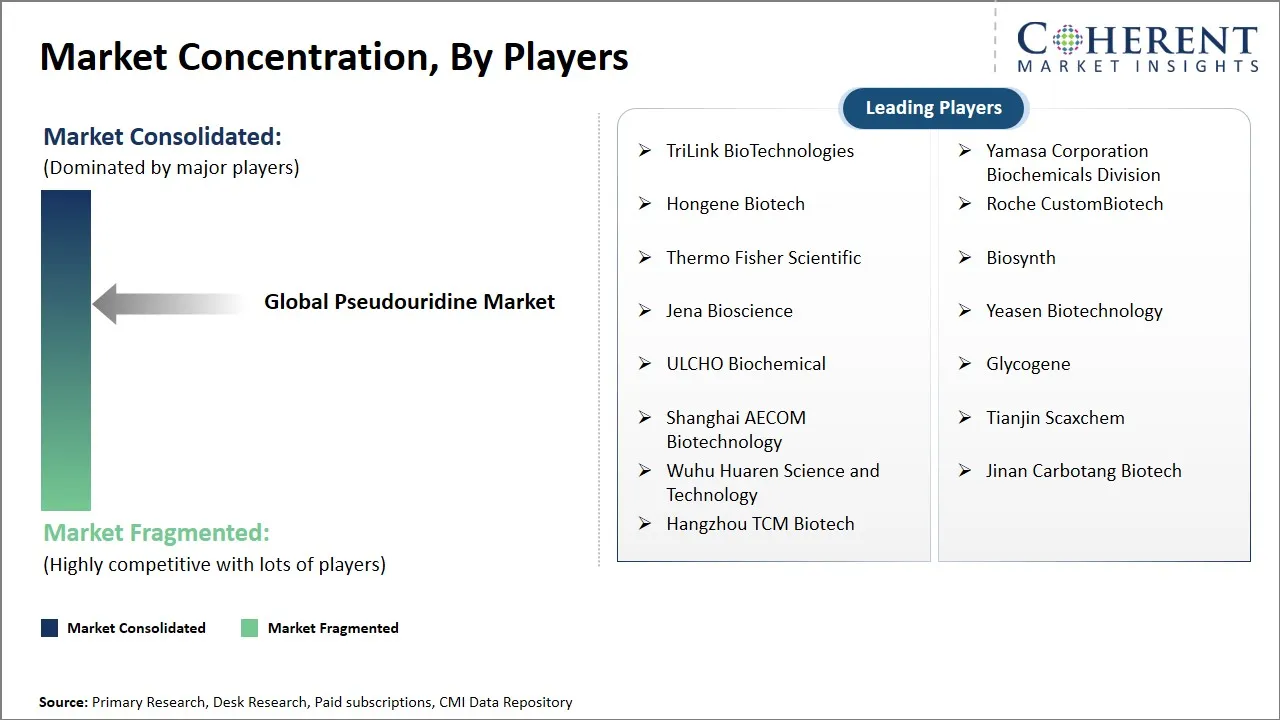
| Companies covered: | TriLink BioTechnologies, Yamasa Corporation Biochemicals Division, Hongene Biotech, Roche CustomBiotech, Thermo Fisher Scientific, Biosynth, Jena Bioscience, Yeasen Biotechnology, ULCHO Biochemical, Glycogene, Shanghai AECOM Biotechnology, Tianjin Scaxchem, Wuhu Huaren Science and Technology, Jinan Carbotang Biotech, and Hangzhou TCM Biotech | ||
| Growth Drivers: |
| ||
| Restraints & Challenges: |
| ||
Global Pseudouridine Market Dynamics
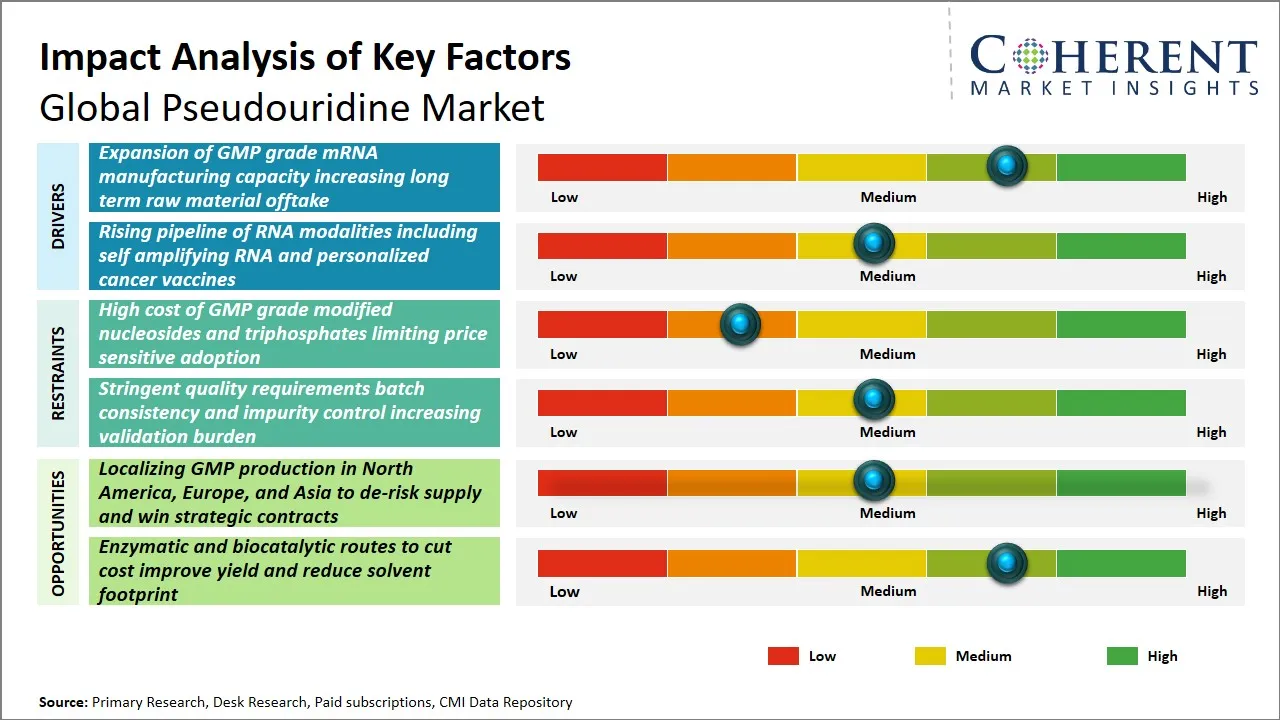
Global Pseudouridine Market Driver - Expansion of GMP Grade mRNA Manufacturing Capacity Increasing Long Term Raw Material Offtake
The high growth rate of Good Manufacturing Practice (GMP) grade mRNA manufacturing plants is a major contributor to the increased demand of high-quality pseudouridine as a critical raw material. With the emergence of mRNA therapeutics and vaccines, manufacturers are investing heavily to expand their GMP-conformable manufacturing capacities to satisfy the high regulatory requirements and product consistency. This growth is bound to result into a long-term escalation in the purchasing of the necessary nucleoside elements, such as pseudouridine, which is crucial in modifying mRNA stability, and diminishing immunogenicity.
For instance, in November 2025, Moderna announced a USD 140 million expansion of its Norwood Technology Center to strengthen its U.S. mRNA manufacturing footprint. The investment is aimed at scaling both clinical and commercial-grade GMP production capabilities to support the company’s expanding mRNA pipeline.
Global Pseudouridine Market Opportunity - Localizing GMP Production in North America, Europe, and Asia to De-risk Supply and Secure Strategic Contracts
The strategic localization of Good Manufacturing Practice (GMP) manufacturing plants in major areas like the North America, Europe, and Asia Pacific is a move that the global pseudouridine market can gain a lot. The strategy will solve the essential supply chain weaknesses that have become more visible because of geopolitical strains, trade bans, and disruptions related to the pandemic. By setting up localized manufacturing centers that comply with GMP, companies can guarantee the same quality of products, regulatory clearance and even shorter turnaround rates which are essential in the pharmaceutical and biotechnology practice involving pseudouridine. Also, local manufacturing plants enable companies to be more responsive to the regulatory systems and patient needs of these large markets and create greater partnerships with local pharmaceutical firms and contract manufacturers. Other benefits associated with this localization strategy are the reduction of the risk because the supply is reduced on a source or region thereby stabilizing supply and lowering lead times.
For instance, BioNTech strengthened its presence in the Asia Pacific region by acquiring a GMP-certified manufacturing facility in Singapore from Novartis Singapore Pharmaceutical Manufacturing, with plans for the site to be fully operational in late 2023. This facility, located in Tuas Biomedical Park, functions as BioNTech's regional headquarters and first mRNA manufacturing site in the region, serving as a hub for both clinical and commercial products.
Analyst Opinion (Expert Opinion)
- The global pseudouridine market is booming along with the fast development of mRNA therapeutic and vaccines, especially those in oncology, rare diseases, and next-generation RNA platforms. The use of N1-methylpseudouridine has already become an essential aspect of enhancing the stability of mRNA and increasing its translation rates, which promotes the continuous demand of GMP-level production. The presence of regulatory help in the U.S and Europe coupled with massive expansions in manufacturing have reinforced long-term procurement contracts. Nonetheless, compliance costs are high, supplier concentration is high and complexities of intellectual property are structural barriers to new entrants and set prices comparatively solid.
- The last stage of discussions in the industry held at the World Vaccine Congress, RNA Leaders Europe Congress, and BIO International Convention has focused on supply chain localization and GMO capacity increase. Firms such as Moderna and BioNTech are also engaging in setting up regional manufacturing regions in order to de-risk the sourcing of modified nucleosides. Such efforts are strengthening North America and Europe as the main centers of consumption and Asia Pacific is gradually expanding production capacity, as long-term expansion in the pseudouridine ecosystem.
Speak to the analyst
Want personalized insights?
Take the findings above to one of our principal consultants, or have the report rebuilt around the segments, geographies and competitors you actually track.
Market Segmentation
- Product Type (chemistry) Insights (Revenue, USD Mn, 2021 - 2033)
- Pseudouridine
- N1-methylpseudouridine
- Purity Insights (Revenue, USD Mn, 2021 - 2033)
- Research Grade (RUO)
- GMP / Clinical Grade
- Commercial / API Grade
- Form Insights (Revenue, USD Mn, 2021 - 2033)
- Powder (lyophilized / crystalline)
- Solution (aqueous / buffered)
- Application Insights (Revenue, USD Mn, 2021 - 2033)
- mRNA Therapeutics (human)
- mRNA Vaccines (human)
- mRNA Veterinary (vaccines / therapeutics)
- Oligonucleotide / RNA Tools (controls, standards, probes)
- Cell & Gene Therapy Research (RNA engineering workflows)
- Diagnostics & Assays (RNA-based kits, calibration materials)
- End User Insights (Revenue, USD Mn, 2021 - 2033)
- Pharma & Biopharma Companies
- CDMOs / CMOs (RNA synthesis, LNP formulation, fill-finish)
- CROs (preclinical/clinical support labs)
- Academic & Research Institutes
- Government / Public Health Labs
- Diagnostic Companies
- Pack Size Insights (Revenue, USD Mn, 2021 - 2033)
- Micro (≤100 mg)
- Small (100 mg–1 g)
- Medium (1–25 g)
- Bulk (25 g)
- Distribution Channel Insights (Revenue, USD Mn, 2021 - 2033)
- Online
- Offline
- Regional Insights (Revenue, USD Mn, 2021 - 2033)
- North America
- U.S.
- Canada
- Latin America
- Brazil
- Argentina
- Mexico
- Rest of Latin America
- Europe
- Germany
- U.K.
- Spain
- France
- Italy
- Russia
- Rest of Europe
- Asia Pacific
- China
- India
- Japan
- Australia
- South Korea
- ASEAN
- Rest of Asia Pacific
- Middle East
- GCC Countries
- Israel
- Rest of Middle East
- Africa
- South Africa
- North Africa
- Central Africa
- North America
- Key Players Insights
- TriLink BioTechnologies
- Yamasa Corporation Biochemicals Division
- Hongene Biotech
- Roche CustomBiotech
- Thermo Fisher Scientific
- Biosynth
- Jena Bioscience
- Yeasen Biotechnology
- ULCHO Biochemical
- Glycogene
- Shanghai AECOM Biotechnology
- Tianjin Scaxchem
- Wuhu Huaren Science and Technology
- Jinan Carbotang Biotech
- Hangzhou TCM Biotech
Sources
Primary Research Interviews
Industry Stakeholders List
- Chief Manufacturing Officers – mRNA biopharma companies
- GMP Facility Directors – nucleoside manufacturing plants
- Head of Process Development – RNA CDMOs
- Regulatory Affairs Directors – RNA therapeutics firms
- Quality Assurance Heads – GMP raw material suppliers
- Supply Chain Managers – modified nucleotide manufacturers
End Users List
- R&D Scientists – mRNA therapeutic developers
- Principal Investigators – RNA biology research labs
- Procurement Heads – vaccine manufacturers
- Clinical Program Managers – biotech firms
- Laboratory Directors – academic RNA centers
- Technology Transfer Managers – biopharma organizations
Government and International Databases
- U.S. Food and Drug Administration FDA
- European Medicines Agency EMA
- National Institutes of Health NIH
- ClinicalTrials.gov
- World Health Organization WHO
- OECD Health Statistics
Trade Publications
- BioProcess International
- Pharmaceutical Technology
- GEN Genetic Engineering and Biotechnology News
- Fierce Biotech
- Endpoints News
- Chemical and Engineering News
Academic Journals
- Nature Biotechnology
- Nature Medicine
- Cell
- Science Translational Medicine
- Molecular Therapy
- Nucleic Acids Research
Reputable Newspapers
- The Wall Street Journal
- Financial Times
- The New York Times
- The Economist
Industry Associations
- Biotechnology Innovation Organization BIO
- International Society for Vaccines
- RNA Society
- International Federation of Pharmaceutical Manufacturers and Associations IFPMA
- American Association of Pharmaceutical Scientists AAPS
- Alliance for mRNA Medicines
Public Domain Resources
- U.S. Patent and Trademark Office USPTO
- European Patent Office EPO
- Google Scholar
- SEC EDGAR Filings Database
- U.S. Department of Health and Human Services HHS
Proprietary Elements
- CMI Data Analytics Tool: Proprietary analytics tool to analyze real-time market trends, consumer behavior, and technology adoption in market
- Proprietary CMI Existing Repository of Information for Last 8 Years
Get access to 250+ pages report
Every segment, forecast, competitor profile and data table behind the analysis above — available for instant download.
- ESOMAR Member
- ISO 9001:2015 Certified
- D-U-N-S Registered
- GDPR & CCPA Compliant
Missing comfort of reading report in your local language? Find your preferred language:
Transform your Strategy with Exclusive Trending Reports
Frequently Asked Questions
The global pseudouridine market is estimated to be valued at USD 39.9 million in 2026 and is expected to reach USD 54.7 million by 2033.
The CAGR of global pseudouridine market is projected to be 4.6% from 2026 to 2033.
Expansion of GMP grade mRNA manufacturing capacity increasing long term raw material offtake and rising pipeline of RNA modalities including self-amplifying RNA and personalized cancer vaccines are the major factors driving the growth of the global pseudouridine market.
High cost of GMP grade modified nucleosides and triphosphates limiting price sensitive adoption and stringent quality requirements batch consistency and impurity control increasing validation burden are the major factors hampering the growth of the global pseudouridine market.
Regional expansions in North America, Europe, and Asia Pacific improve supply chain resilience by reducing dependence on imports, enhancing local GMP production of high purity modified nucleosides, and enabling faster procurement for biopharma and research institutions across regions.
In terms of product type (chemistry), pseudouridine is estimated to dominate the market revenue share in 2026.
Beyond infectious disease vaccines, future demand is expected from oncology mRNA therapies, rare disease treatments, self amplifying RNA platforms, and advanced RNA research applications, where pseudouridine enhances stability, translation efficiency, and overall therapeutic performance.