

Global Resistant Starch Market Size and Forecast – 2026-2033
The global resistant starch market is estimated to be valued at USD 8.84 Bn in 2026 and is expected to reach USD 14.66 Bn by 2033, exhibiting a compound annual growth rate (CAGR) of 7.5% from 2026 to 2033.
Key Takeaways of the Resistant Starch Market
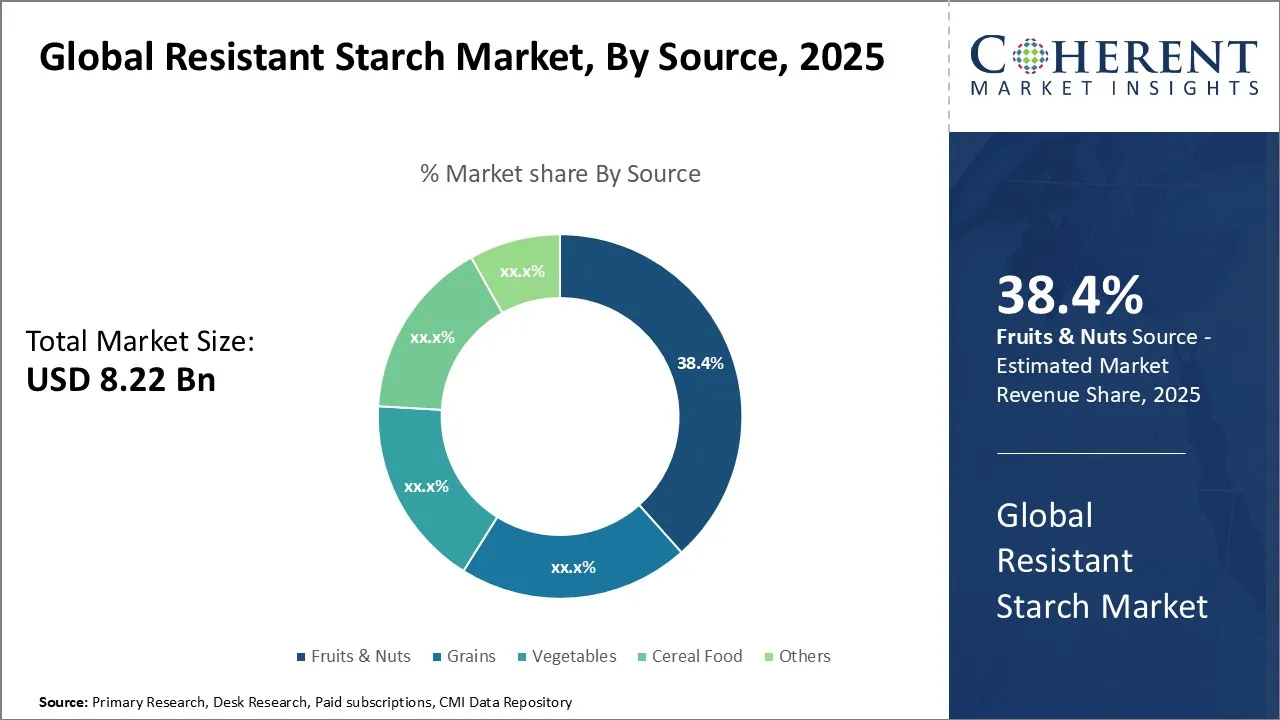
- The fruits & nuts segment is expected to hold a 39.4 % of the global resistant starch market share in 2026.
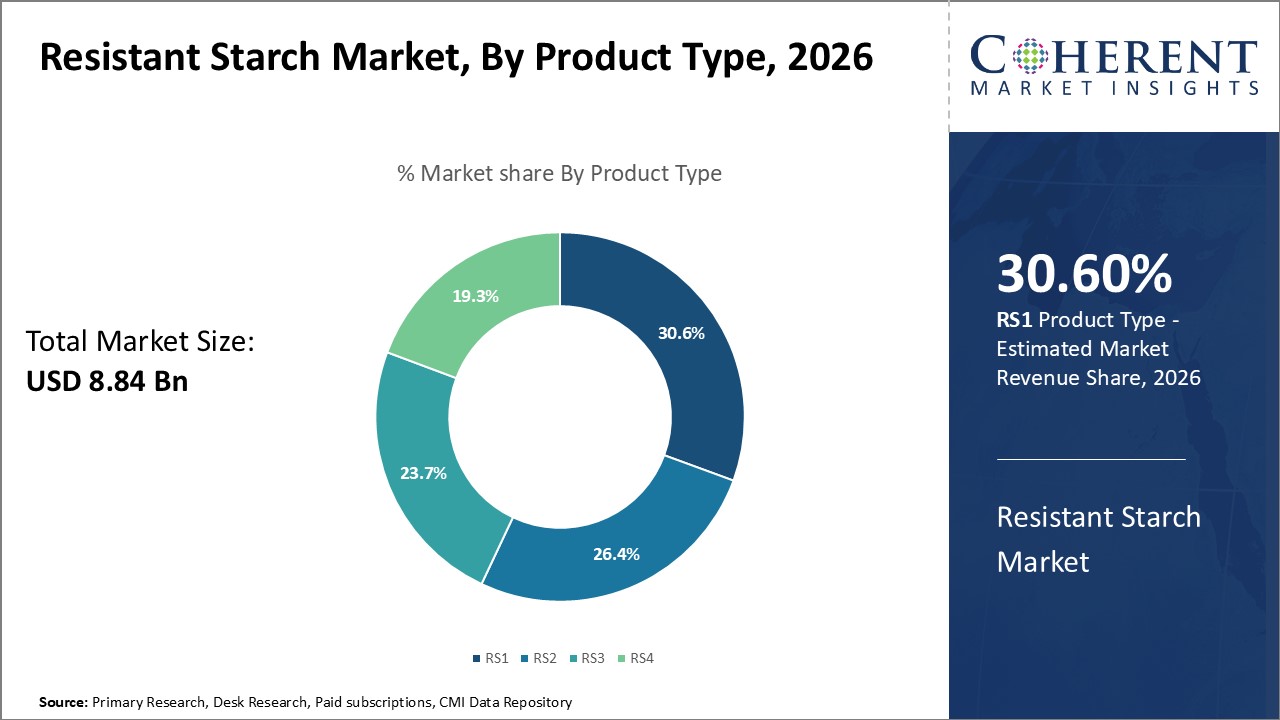
- The RS1 segment is projected to hold a 30.6 % share in 2026.
- The bakery products segment is expected to account for 22.7 % of the global resistant starch market share in 2026.
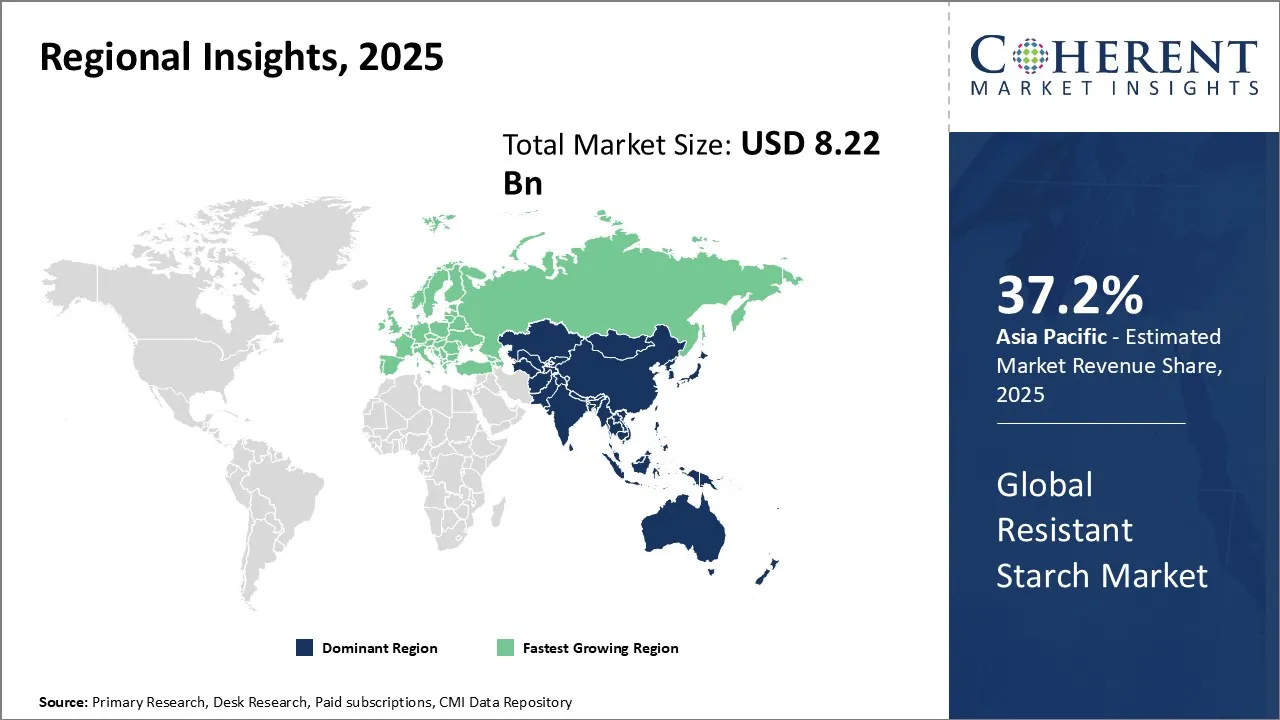
- Asia Pacific is set to lead the global resistant starch market in 2026 with a 37.2 % share. Europe, with a 27.8% share, will be the fastest-growing region.
Market Overview
A significant market trend in the resistant starch sector is the growing emphasis on clean-label and natural ingredients, which has fueled the adoption of resistant starch in functional foods and beverages. Innovations in processing technologies have enhanced its functionality and application scope, making it a preferred ingredient for manufacturers aiming to produce low-calorie, high-fiber products. Additionally, increasing research on gut health and its link to overall wellness is encouraging product development focused on digestive health benefits, further propelling the market expansion.
Current Events and Its Impact
Current Events | Description and its Impact |
Global Tariff Adjustments Under New U.S. Administration |
|
Accelerating Health & Functional Food Trends |
|
Segmental Insights
- Current Industry Events of 2026
- Market Size Estimation
- Regional Breakdown
- Competitive Landscape
- Customer Intelligence
- Segmental Analysis
- Pricing Analysis
- Key Market Drivers, Challenges & Future Trends
- Customized Insights Section
Resistant Starch Market Insights, by Source - Fruits & Nuts Segment Dominates Due to their Natural Abundance of Resistant Starch and Consumer Preference for Clean-Label, Plant-Based Ingredients
The fruits & nuts segment is projected to account for 39.4% of the global resistant starch market share in 2026, because of intrinsic nutritional characteristics of fruits and nuts and because of the growth in consumer demand of natural food ingredients and minimally processed foods. Naturally resistant starch appears in many fruits like unripe bananas, plantains, nuts like chestnuts, which are also good sources of this diet fiber. The fruits and nuts segment is a favorite of manufacturers who aim to add health-promoting elements to foods without heavy processing with chemicals, due to this natural abundance.
A company like Chiquita Brands International may incorporate unripe bananas, a natural source of resistant starch, into its new line of functional foods, such as prebiotic snacks or energy bars, targeting health-conscious consumers looking for clean-label and minimally processed options.
Resistant Starch Market Insights, by Product Type - RS1 Segment Dominates Due to its Natural Integrity and Unique Health Benefits Linked to its Physical Inaccessibility and Minimal Processing
The RS1 segment is projected to hold 30.6% share in 2026, due to its unique characteristics and growing recognition for health benefits tied to its natural form. RS1 is physically unreachable starch, which is normally present in whole or partially milled grains, seeds and legumes, in which the starch granules are still encased by intact cell walls, preventing digestion in the small intestine. The resistant starch in this form is very attractive to both the manufacturers and the health-conscious consumers as it is barely processed and thus a large percentage of the natural structure of the starch is retained.
Resistant Starch Market Insights, by Application – Bakery Products Segment Leads Driven by Demand for Fiber-enriched Foods and Innovations in Texture Optimization
The bakery products segment is expected to capture 22.7% of the market share in 2026, due to the increasing consumer desire to have fiber-enriched foods, which are both beneficial to health and convenient and tasting foods. Resistant starch is being added to breads, biscuits, cookies, crackers and other bakery products to improve their nutritional value without affecting sensory attributes. Such a balance is essential, as the consumers of the bakery usually tend to focus on texture and flavor, which results in growing demand of fiber-based products that can contribute to healthiness and at the same time maintain product attractiveness.
Among the most influential reasons that lead to the implementation of resistant starch in bakery products is that it enhances digestive well-being due to increment in dietary fiber. Consumers are keen on the functional bakery products that are not only fulfilling but also beneficial to the gastrointestinal health, blood sugar, and satiety. The beneficial effect of resistant starch on all three areas makes it a perfect ingredient to manufacturers who want to reinvent the conventional bakery products into nutritious ones.
Macro and Micro Economic Factors Impacting on Resistant Starch Market Growth
Macroeconomic Factors
- Economic conditions such as rising disposable incomes and improving living standards, especially in emerging economies like India, China, and countries in Asia Pacific, support market expansion by increasing consumer spending on health and functional foods.
- Urbanization and changing lifestyles lead to higher demand for convenient, processed, and functional foods incorporating resistant starch.
- Government policies and regulatory frameworks that promote dietary fiber intake and support clean-label, natural ingredients stimulate market growth.
- Technological advancements in starch extraction and modification improve production efficiency and product diversity, fostering broader application in food, pharmaceuticals, and animal feed.
- Global economic trends impacting food industry investments and research development also play substantial roles.
Microeconomic Factors
- Increasing consumer health consciousness, diabetes and obesity prevalence, and demand for gut health, weight management, and low-glycemic index foods drive product demand.
- Growth in functional, plant-based, and clean-label foods encourages resistant starch incorporation for texture, taste, and nutritional enhancement.
- Competition and innovation in product development by leading starch producers (e.g., Ingredion, Cargill) with robust R&D and supply chains expand market offerings and optimize formulations.
- Shifts in consumer preferences toward sustainable, plant-derived ingredients for flexitarian and vegan diets open new growth avenues.
Regional Insights
Asia Pacific Resistant Starch Market Analysis and Trends
The Asia Pacific region is projected to lead the market with a 37.2% share in 2026, propelled by rising consumer health consciousness, increasing urbanization, and expanding food and beverage sectors. Changing diets and rising disposable income are driving demand in functional ingredients in emerging economies like China, India and Southeast Asian countries.
The ecosystem has a positive effect on the market as many more food manufacturers are adding resistant starch to their food products to improve their nutritional content. The policies promoting agricultural innovation and food safety levels by the government help in the growth of the market. There are also global competitors such as Tate and Lyle and ADM who have put up local production facilities or joint ventures to serve the regional market successfully and trade liberalization eases the acquisition of raw materials and their delivery.
Europe Resistant Starch Market Analysis and Trends
The Europe region is expected to experience significant growth in the resistant starch market, with a forecasted market share of 27.8% in 2026. In Europe, the food processing sector is also well developed and the manufacturers are looking towards clean-label, high-fiber products to maintain health-conscious customers. The most important ingredient suppliers, such as Roquette and Tate and Lyle, are in the frontline with innovative resistant starch products that will be utilized in several food products, such as bakery products, snacks, and dairy substitutes.
Recent research reported in Cell Metabolism notes the possible advantages of resistant starch in lowering liver fat. The study determined that the fatty liver disease patients who included resistant starch which is present in foods like legumes and cooled down potatoes into their diet reduced their liver fat levels by almost half in a span of four months.
Resistant Starch Market Outlook for Key Countries
U.S. Resistant Starch Market Analysis and Trends
The U.S. resistant starch market is characterized by early adoption of functional food ingredients and a preference for health-promoting diets, fostering strong demand for resistant starch. Major companies such as Ingredion Incorporated focus heavily on product innovation and strategic partnerships to expand application in bakery, snack, and dairy products. Supportive regulation from the FDA around dietary fibers and labeling also boosts consumer confidence. The well-developed supply chain and advanced processing technologies contribute to the U.S. resistant starch market’s steady advancement.
China Resistant Starch Market Analysis and Trends
China resistant starch market is rapidly evolving due to increasing urban consumer demand for healthier food options and government initiatives to promote nutrition improvement. Local companies are increasingly integrating resistant starch within staple foods and snack segments. Multinational corporations such as Tate & Lyle have made significant investments in manufacturing facilities to serve the growing domestic market. Trade policies encouraging agricultural modernization and foreign direct investment further underpin the market growth.
Germany Resistant Starch Market Analysis and Trends
Germany continues to lead the resistant starch market in Europe, leveraging its advanced food industry and health-conscious consumer base. Key players like Roquette Frères, a major starch manufacturer, play a pivotal role by introducing specialty resistant starch products tailored to European regulations and consumer preferences. Germany’s strong research infrastructure and proactive governmental policies promoting dietary fiber consumption support ongoing innovation and market penetration.
India Resistant Starch Market Analysis and Trends
India resistant starch market is driven by expanding urban populations and rising awareness about digestive health, with growing integration of resistant starch in traditional food products. The local industry is increasingly collaborating with global players such as ADM and Cargill to enhance product availability and innovation tailored to regional tastes. Government efforts to improve nutrition and food security encourage ingredient adoption, while improvements in supply chain logistics enhance market reach.
Market Players, Key Development, and Competitive Intelligence
Key Development
- A recent study published in Cell Metabolism highlights the potential benefits of resistant starch in reducing liver fat. The research found that participants with fatty liver disease who incorporated resistant starch, found in foods such as legumes and cooled potatoes, into their diet experienced nearly a 50% reduction in liver fat over a four-month period.
Top Strategies Followed by Global Resistant Starch Market Players
- Established players: The current market is dominated by established players who invest significantly in research and development (R&D), and concentrate on the development of high-performance resistant starch product that suits the changing consumer needs in health and nutrition. These companies usually use the advanced technologies to promote the effectiveness, functionality, and sustainability of products. The expansion of their distribution channels and penetration of new economies is relying on the market leaders the increasing bases of health-conscious consumers, thus reinforcing their presence in various geographies.
- For an example, Tate & Lyle have released the Claria Functional Clean-Label Starch that is explicitly created to fulfill the needs of the consumers who want clean-label, sustainable, and non-GMO ingredients. Such companies also use innovative technologies to make products more effective.
- Mid-level market participants also use a slightly opposite strategy by focusing on cost-effective solutions that make a compromise between quality and cost. With the understanding that price is a sensitive factor among a large number of consumers, these firms wish to gain market share through provision of trusted resistant starch products at reasonable prices. This also enables them to market to price sensitive consumers especially in developing markets where price is a key buying factor. In search of increased production capacity and technological capability, mid-level players are likely to enter into a joint venture, collaborative venture, or to form a licensing agreement with other companies.
- For example, Ingredion, come up with STAR-FLO, a resistant starch that is economical and has been developed with a growing need of healthier substitutes at a cheaper price. Also, mid-level players enter into a collaboration venture, joint venture or a licensing agreement in order to enhance their technological competence and increase production.
- Small market participants in the resistant starch industry are likely to focus on niche markets by providing tailored or novel products that satisfy niche market segments, e.g. organic or functionally enriched starches. To be competitive, such firms are aggressively embracing the latest technologies, which help them to differentiate products and perform better. The innovation can be in terms of special formulations, sustainable sourcing, or improved nutritional profiles that are attractive to the intended consumer segments.
- For an example, NutraBio, invented a new, non-GMO resistant starch that has added prebiotic advantages to it, which is targeting a larger market of consumers who are conscious of functional foods. The niche strategy enables the smaller companies to be competitive because they are providing highly specialized solutions that are likely to attract specific consumer groups.
Market Report Scope
Resistant Starch Market Report Coverage
| Report Coverage | Details | ||
|---|---|---|---|
| Base Year: | 2025 | Market Size in 2026: | USD 8.84 Bn |
| Historical Data for: | 2020 To 2024 | Forecast Period: | 2026 To 2033 |
| Forecast Period 2026 to 2033 CAGR: | 7.5% | 2033 Value Projection: | USD 14.66 Bn |
| Geographies covered: |
| ||
| Segments covered: |
| ||
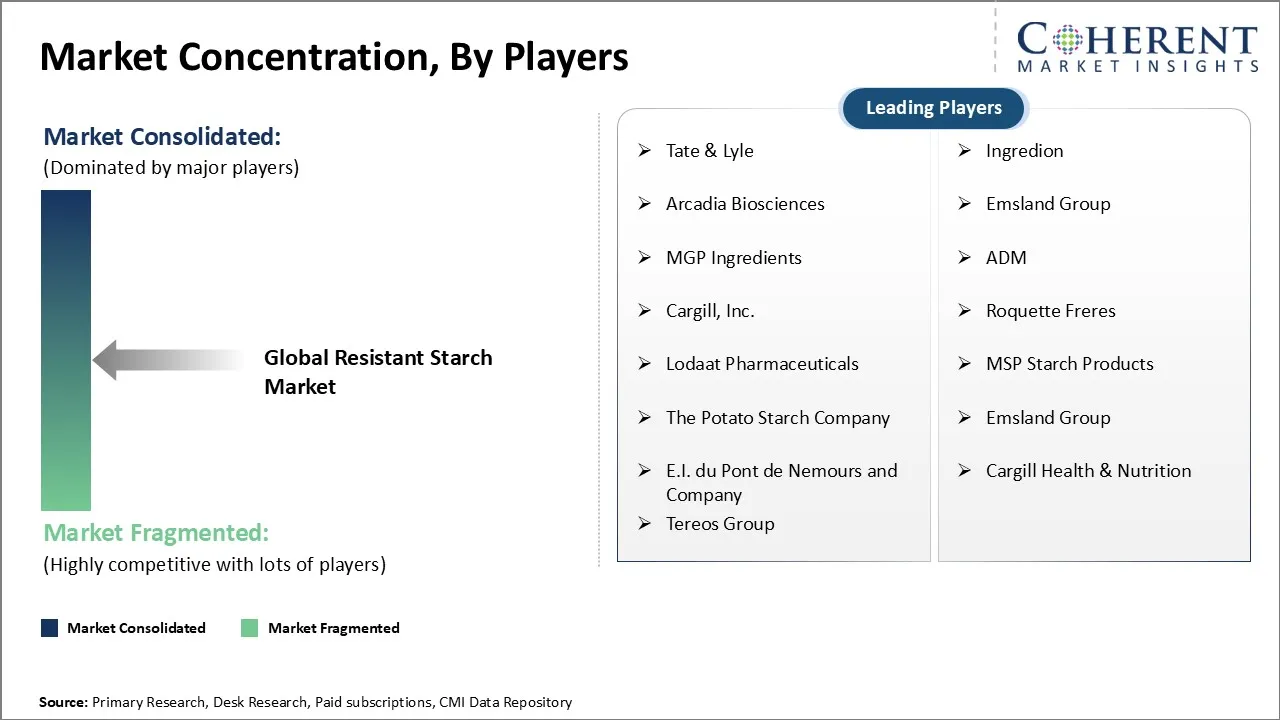
| Companies covered: | Tate & Lyle, Ingredion, Arcadia Biosciences, Emsland Group, MGP Ingredients, ADM, Cargill, Inc., Roquette Freres, Lodaat Pharmaceuticals, MSP Starch Products, The Potato Starch Company, Emsland Group, E.I. du Pont de Nemours and Company, Cargill Health & Nutrition, and Tereos Group | ||
| Growth Drivers: |
| ||
| Restraints & Challenges: |
| ||
Resistant Starch Market Dynamics
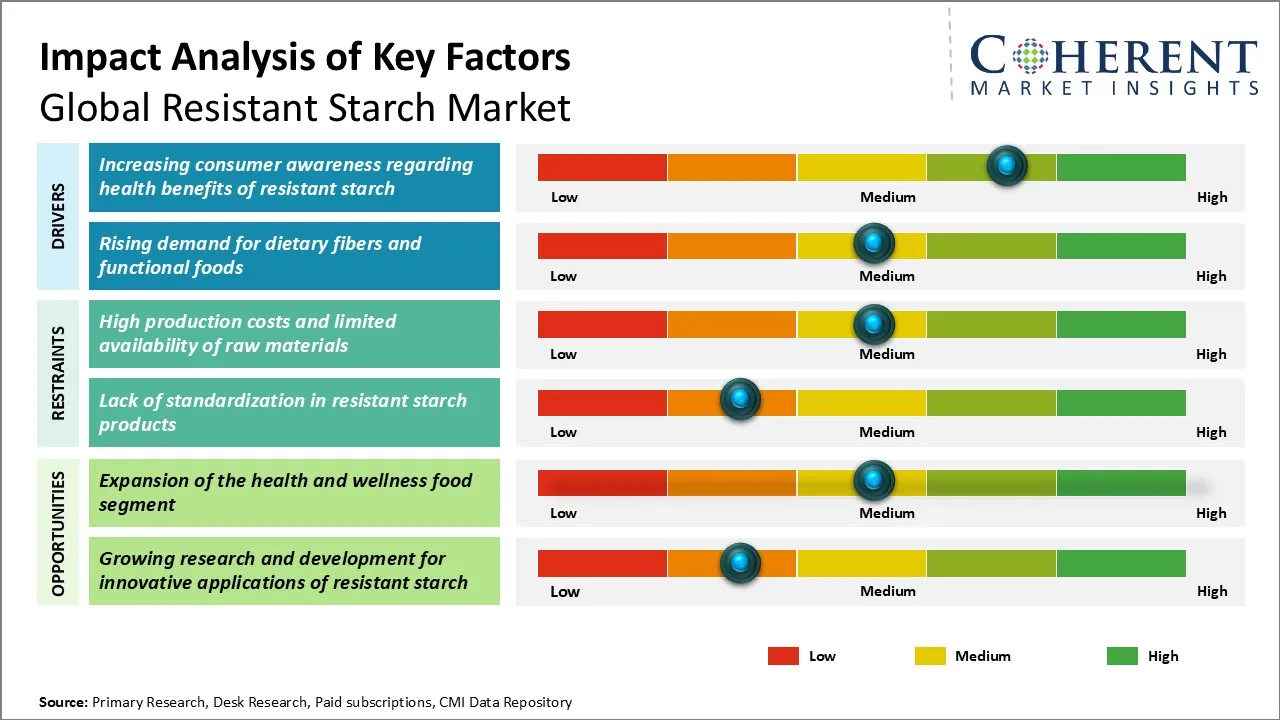
Resistant Starch Market Driver - Increasing Consumer Awareness Regarding Health Benefits of Resistant Starch
One of the most powerful drivers of the resistant starch demand is increasing awareness of consumers about their multiple health advantages of this product. With health-conscious lifestyles being embraced by a larger number of people, the emphasis put on functional ingredients that help in digestive health, blood sugar regulation and weight management is on the rise. The resistant starch is becoming a more understood prebiotic fiber, fiber supplements that is not digested in the small intestine and thus encourages the proliferation of good gut bacteria and improves the health of the entire gut. Also, its capacity to enhance insulin sensitivity and decrease the glycemic response raises its popularity among customers who want to control diabetes and mitigate the risk of metabolic dysfunction.
As a case in point, resistant starch is being added to the product lines of Brands such as Bobs Red Mill and King Arthur Flour, which highlight its prebiotic values and contribution to establishing digestive well-being. In addition, low-GI diets and diabetes management programs are also emerging, which is another reason why consumers are interested in resistant starch since it enhances insulin sensitivity and reduces glycemic response.
Resistant Starch Market Opportunity - Expansion of the Health and Wellness Food Segment
This trend in consumer interest toward health and wellness is opening up a huge market in the global resistant starch industry, with the thriving of health-focused food products being the biggest contributor. Resistant starch, which has been found to have positive effects on digestive health, glycemic regulation and the modulation of gut microbiota, is now being added to functional foods and dietary supplements, as well as fortified products. With increased understanding among the consumers of the relationship between diet and long-term health, there is a booming demand in food products that support digestion, and blood sugar levels. This is also in line with the increasing prevalence of lifestyle diseases like diabetes, obesity, and cardiovascular diseases and the food manufacturing industry is responding by developing resistant starch into bakery, snacks, cereals, and dairy substitutes.
An example of this is General Mills introduction of a series of cereals with resistant starch, it is promoted as helpful in digestive health and in blood sugar regulation.
Analyst Opinion (Expert Opinion)
- There is a dynamic growth of the resistant starch market brought about by the increasing consumer awareness on gut health and dietary fiber. The report of the International Conference on Dietary Fibers (2023) and the Global Nutrition Summit (2022) showed that companies, such as Tate & Lyle and Ingredion, are on the brink of implementing new products with resistant starch.
- The recent introduction of a new resistant starch blend by Tate & Lyles that was designed to meet the needs of gluten-free products is an example of a strategic measure to meet the growing demand of health-conscious consumers. The conferences discussed the importance of education in enhancing the health benefits of resistant starch, especially in the control of blood sugar and the health of the digestive system. Nevertheless, the difficulty in consumer education and regulation caused by the lack of clarity in the regulations of health claims were often observed to be impediments to market growth.
- It is probable that companies which can properly communicate the advantages of their products using targeted marketing plans will gain competitive advantage. Finally, the resistant starch market will depend on its capability to innovate and fulfill the demands of consumers as well as negotiating regulatory environments to maximize market opportunities.
Speak to the analyst
Want personalized insights?
Take the findings above to one of our principal consultants, or have the report rebuilt around the segments, geographies and competitors you actually track.
Market Segmentation
- Source Insights (Revenue, USD Bn, 2021 - 2033)
- Fruits & Nuts
- Grains
- Vegetables
- Cereal Food
- Others
- Product Type Insights (Revenue, USD Bn, 2021 - 2033)
- RS1
- RS2
- RS3
- RS4
- Application Insights (Revenue, USD Bn, 2021 - 2033)
- Bakery Products
- Bread
- Biscuits & Cookies
- Crackers
- Other Bakery Products
- Confectionery
- Beverages
- Breakfast Cereals
- Dairy Products
- Nutrition Bars
- Meat & Processed Food
- Others (Soups, Dressings, & Condiments, etc.)
- Regional Insights (Revenue, USD Bn, 2021 - 2033)
- North America
- U.S.
- Canada
- Latin America
- Brazil
- Argentina
- Mexico
- Rest of Latin America
- Europe
- Germany
- U.K.
- Spain
- France
- Italy
- Russia
- Rest of Europe
- Asia Pacific
- China
- India
- Japan
- Australia
- South Korea
- ASEAN
- Rest of Asia Pacific
- Middle East
- GCC Countries
- Israel
- Rest of Middle East
- Africa
- South Africa
- North Africa
- Central Africa
- North America
- Key Players Insights
- Tate & Lyle
- Ingredion
- Arcadia Biosciences
- Emsland Group
- MGP Ingredients
- ADM
- Cargill, Inc.
- Roquette Freres
- Lodaat Pharmaceuticals
- MSP Starch Products
- The Potato Starch Company
- Emsland Group
- E.I. du Pont de Nemours and Company
- Cargill Health & Nutrition
- Tereos Group
Sources
Primary Research Interviews
- R&D Director – Leading Resistant Starch Ingredient Manufacturer
- Sourcing Manager – Major Food & Beverage Company
- Head of Product Innovation – Snack Foods Brand
- Regulatory Affairs Specialist – Major Health and Nutrition Certifying Body
Stakeholders
- Manufacturers of Resistant Starch
- End Use Sectors:
- Food & Beverage (Bakery, Snacks, Cereal, Dairy, Ready-to-Eat Meals)
- Health & Wellness/Biofunctional Food Companies
- Animal Feed and Pet Food Producers
- Regulatory & Certification Bodies
- Distribution Channels: Food Service, Retail, E-commerce
- Technology Integration Players: Processing Technology Innovators, Ingredient Functionality Experts
Databases
- UN Comtrade Database
- India Import Export (EXIM) Database
Magazines
- Food Ingredients First – Trends and news in food ingredients including resistant starch
- Nutrition & Wellness Magazine – Trends in functional carbs and fibers
- Bakery and Snacks Magazine – Innovation in starch and flour products
- Global Food Industry News – Ingredient innovations, global launches
Journals
- International Journal of Biological Macromolecules – Research on resistant starch structures and benefits
- Food Chemistry – Studies on resistant starch application and health effects
- Journal of Functional Foods – Nutritional value and processing of resistant starch
Newspapers
- The Financial Times – Functional ingredients market and healthy snacking trends
- The Guardian – Consumer perception of dietary fibers and health foods
- Asia Food Journal – Asia-Pacific growth in functional carbohydrates
- European Nutrition News – Food policies, fiber labeling regulations
Associations
- Global Organization for EPA and DHA Omega-3s (GOED) – Functional ingredient advocacy
- European Food Information Council (EUFIC)
- International Food Information Council (IFIC)
- Resistant Starch Research Association
Public Domain Sources
- FDA – Dietary fiber labeling and health claims, regulatory standards on resistant starch
- European Commission – Food labelling, functional food, and fiber ingredient guidelines
- U.S. Department of Agriculture (USDA) – Carbohydrate and fiber composition guidance
- World Health Organization – Dietary guidance and assessment of functional fibers
Proprietary Elements
- CMI Data Analytics Tool, Proprietary CMI Existing Repository of information for last 8 years.
Get access to 250+ pages report
Every segment, forecast, competitor profile and data table behind the analysis above — available for instant download.
- ESOMAR Member
- ISO 9001:2015 Certified
- D-U-N-S Registered
- GDPR & CCPA Compliant
Missing comfort of reading report in your local language? Find your preferred language:
Transform your Strategy with Exclusive Trending Reports
Frequently Asked Questions
The global resistant starch market is estimated to be valued at USD 8.84 Bn in 2026 and is expected to reach USD 14.66 Bn by 2033.
The CAGR of the global resistant starch market is projected to be 7.5% from 2026 to 2033.
Increasing consumer awareness regarding health benefits of resistant starch and rising demand for dietary fibers and functional foods are the major factors driving the growth of the global resistant starch market.
High production costs and limited availability of raw materials and lack of standardization in resistant starch products are the major factors hampering the growth of the global resistant starch market.
In terms of source, the fruits & nuts segment is estimated to dominate the market revenue share in 2026.
Tate & Lyle, Ingredion, Arcadia Biosciences, Emsland Group, MGP Ingredients, ADM, Cargill, Inc., Roquette Freres, Lodaat Pharmaceuticals, MSP Starch Products, The Potato Starch Company, Emsland Group, E.I. du Pont de Nemours and Company, Cargill Health & Nutrition, and Tereos Group are the major players.
Asia Pacific is expected to lead the global resistant starch market in 2026.