

Global Robotic Dentistry Market Size and Forecast – 2026 to 2033
The global robotic dentistry market is estimated to be valued at USD 600 Mn in 2026 and is expected to reach USD 1,400 Mn by 2033, exhibiting a compound annual growth rate (CAGR) of 12.9% from 2026 to 2033. The significant growth can be attributed to the increasing adoption of advanced robotics technology in dental procedures, driven by a need for precision and minimally invasive surgeries with better outcomes in the global healthcare industry.
Key Takeaways of the Global Robotic Dentistry Market
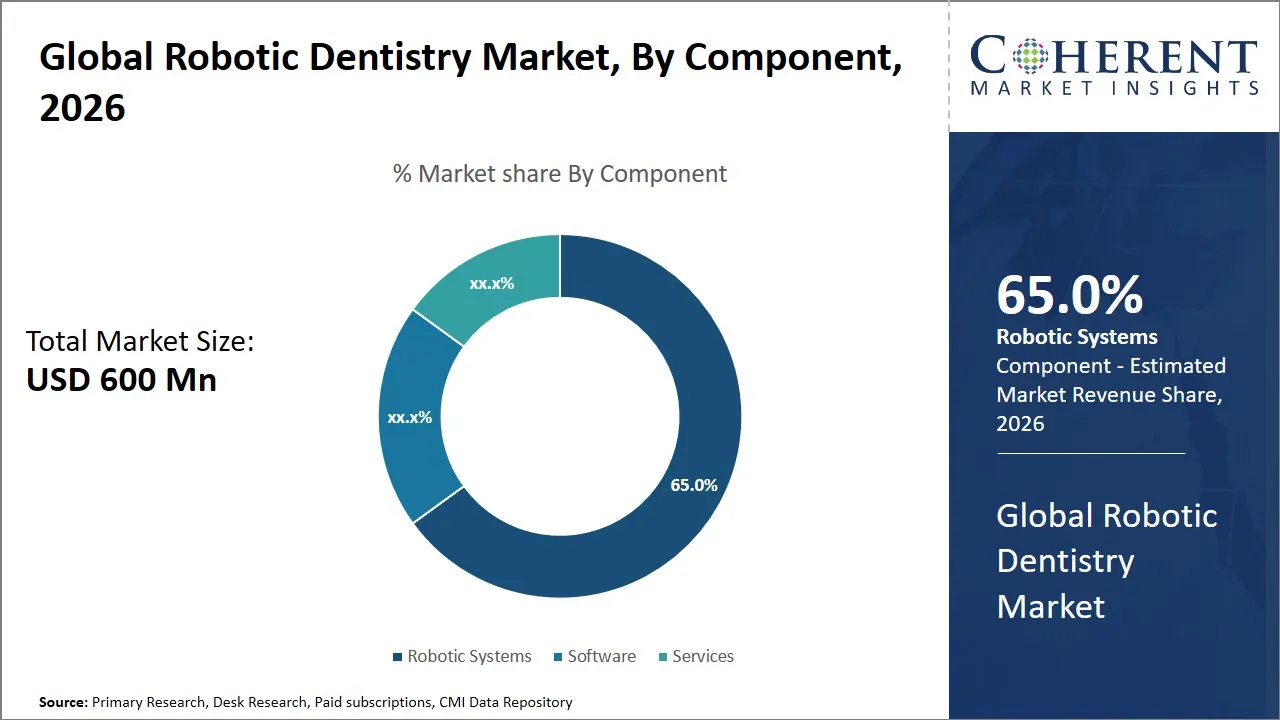
- The robotic systems segment is expected to dominate the global robotic dentistry market by component, accounting for approximately 65.0% of the total market share in 2026.
- The implantology segment is expected to dominate the global robotic dentistry market by application, accounting for approximately 68.0% of the total market share in 2026.
- The dental hospitals and dental clinics segment is expected to dominate the global robotic dentistry market by end user, accounting for approximately 88.0% of the total market share in 2026.
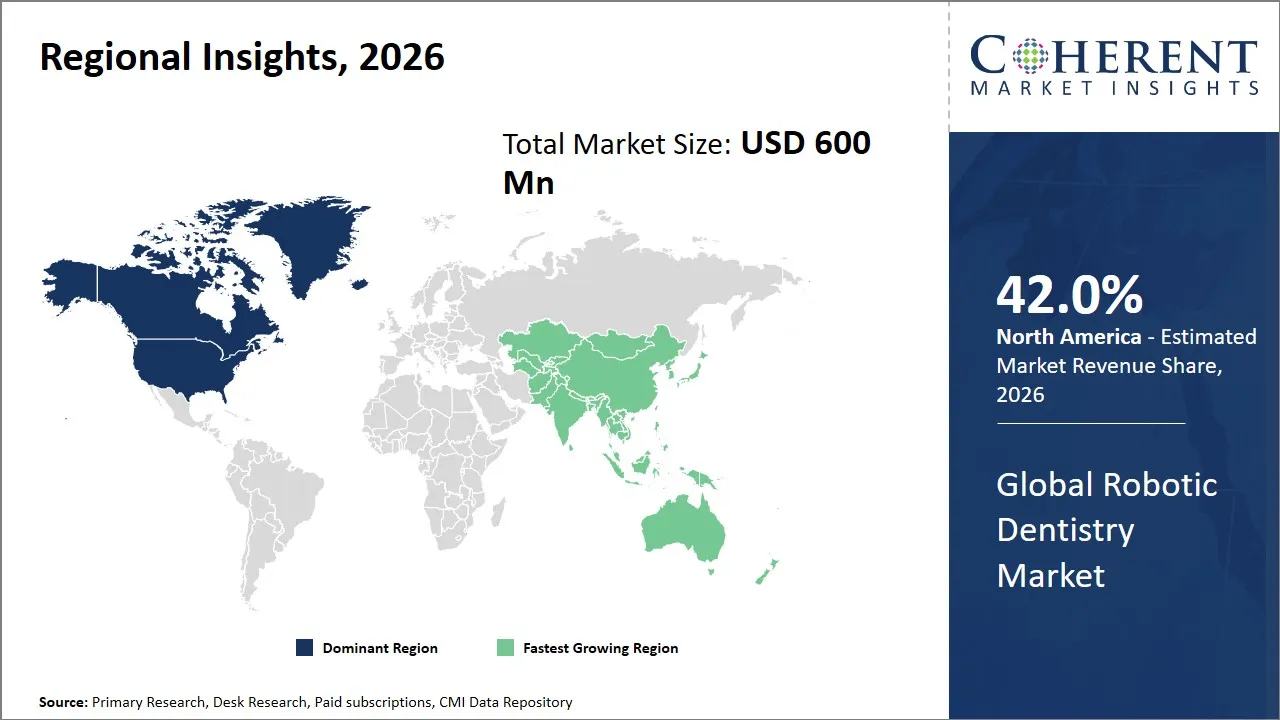
- North America is expected to dominate the global robotic dentistry market in 2026, accounting for approximately 42.0% of the total market share.
- Asia Pacific is anticipated to witness the fastest growth holding a market share of 20.0% in 2026.
Market Overview
- Robotic dentistry refers to the use of advanced robotic systems that are integrated with AI, 3D imaging, and navigation systems to improve the accuracy and efficiency of dental procedures. These systems are generally used in dental implant surgeries, as these are critical for the success of the procedure.
- The robotic dentistry market is growing steadily, and this is because of the increasing adoption of digital dentistry solutions and the increasing demand for minimally invasive procedures. The growing prevalence of dental disorders, along with the increasing awareness of cosmetic dentistry, is also contributing to the growth of the robotic dentistry market.
- Furthermore, the increasing advancements in AI, real-time navigation systems, and robotic surgery systems are also contributing to the growth of the robotic dentistry market. The increasing investments in healthcare technology, along with the development of advanced dental infrastructure, particularly in emerging countries, are also contributing to the growth of the robotic dentistry market.
Currents Events and their Impact
Current Events | Description and its Impact |
Advancements in AI and Robotic-Assisted Dental Systems |
|
Strategic Investments and Commercial Launches in Robotic Dentistry |
|
Segmental Insights
- Current Industry Events of 2026
- Market Size Estimation
- Regional Breakdown
- Competitive Landscape
- Customer Intelligence
- Segmental Analysis
- Pricing Analysis
- Key Market Drivers, Challenges & Future Trends
- Customized Insights Section
Why Does the Robotic Systems Segment Dominate the Global Robotic Dentistry Market in 2026?
The robotic systems segment is anticipated to hold a market share of 65.0% in 2026, primarily due to the various advantages offered by these robotic systems in dental care. Robotic systems offer unparalleled accuracy in performing dental procedures. This is particularly true for dental implantology, where accuracy is an important factor for the success of dental procedures. Additionally, real-time imaging and navigation systems assist in gaining a better understanding of the area of operation, thereby reducing complications. The use of AI and machine learning also improves the performance of these systems, thereby improving the success rate of dental procedures.
Furthermore, the increased need for minimally invasive dental procedures is also a factor for the use of robotic systems in dental procedures. This is due to the fact that patients today are demanding dental procedures with minimal pain and damage to tissues. This is where these systems score high in performing dental procedures. Additionally, increased investments in research and development activities are also resulting in upgrades to these systems.
For instance, in October 2025, a peer-reviewed study published in Cureus (Part of Springer Nature) emphasized the increased use of robotics and artificial intelligence in dental procedures, which enhances precision, efficiency, and results in dental care. The study focuses on the use of advanced imaging modalities and robotic systems in providing minimally invasive and customized dental care, which can help in the progression of robotic dentistry from experimental use to clinical practice.
(Source: Cureus)
Why Does the Implantology Segment Dominate the Global Robotic Dentistry Market in 2026?
The implantology segment is projected to account for the highest market share of 68.0% in the global robotic dentistry market in 2026, owing to the increased need for implants as a reliable solution for tooth loss. Implant procedures need precision in planning and performing the surgery to ensure proper osseointegration and stability, which is being effectively offered by robots. This has reduced the risks of nerve damage and implant failure, thereby enhancing the accuracy of the procedure. In addition, the increased incidence of tooth loss, age factors, and periodontal diseases is also fueling the market for implantology, as this procedure is becoming increasingly complex with the inclusion of grafting and immediate loading techniques.
Moreover, the market for robotic dentistry is also being driven by the increased need for minimally invasive and digital dentistry. Robotic systems are providing simulation, real-time, and digital solutions that are enhancing functional and aesthetic outcomes in dentistry. This is being done through the inclusion of CAD/CAM systems, which is also providing a boost for the market for implantology, as this segment is becoming increasingly complex. As the procedure is becoming increasingly complex, the precision offered by robots is enhancing the market for implantology, which is the leading segment, by application in the robotic dentistry market.
The Dental Hospitals and Dental Clinics Segment Dominates the Global Robotic Dentistry Market
The dental hospitals and dental clinics segment is expected to dominate the global robotic dentistry market by end user, accounting for approximately 88.0% of the total market share in 2026, based on infrastructural setup, technological preparedness, and inflow of patients.
The services provided at dental hospitals and clinics range from simple tooth cleaning and polishing to complex procedures like implantology. This has resulted in a greater need for precise and advanced robotic dentistry, which is being fulfilled through the presence of a strong market for dental hospitals and clinics. The awareness of patients and their need for minimally invasive procedures also contribute to the popularity of robotic dentistry, which is being fulfilled through precision and accuracy.
Another factor that contributes to the popularity of this segment is the presence of skilled professionals, which is a result of continuous investments in training and upgrading technologies. The presence of several technology providers, who operate in association with dental hospitals and clinics, also contributes to the popularity of robotic dentistry, as it helps them in upgrading their technologies. This segment is also responsible for normalizing the use of robotic dentistry, which is a critical factor for the overall growth of the robotic dentistry market.
Regulatory and Clinical Compliance Standards Shaping Robotic Dentistry Adoption
Regulatory Aspect | Description | Impact on Robotic Dentistry Market |
Medical Device Regulations (FDA, EU MDR) | Regulatory authorities such as U.S. Food and Drug Administration and EU MDR classify robotic dental systems as medical devices requiring rigorous approvals (e.g., 510(k), CE marking) to ensure safety and efficacy. | Builds trust and credibility, accelerating adoption of certified robotic systems across dental clinics and hospitals. |
Clinical Practice Guidelines & Standardization | Professional bodies such as American Dental Association promote standardized, evidence-based approaches including computer-guided implantology and minimally invasive procedures. | Drives demand for robotic systems that enhance precision, reproducibility, and standardized clinical outcomes. |
Software Validation & AI Compliance | Robotic systems integrating AI must comply with software validation, algorithm transparency, and cybersecurity requirements to ensure reliable performance. | Encourages development of advanced, compliant robotic platforms, improving clinical efficiency and decision-making accuracy. |
Data Privacy & Patient Safety Regulations | Regulations such as HIPAA and GDPR mandate secure handling of patient imaging data, treatment planning records, and digital workflows. | Increases demand for secure and interoperable robotic systems, supporting wider adoption in digitally enabled dental practices. |
Training & Certification Requirements | Regulatory and professional organizations emphasize clinician training and certification for safe operation of robotic-assisted systems. | Enhances practitioner confidence and ensures effective system utilization, facilitating smoother market penetration. |
Quality Assurance & Risk Management Standards (ISO 13485) | Compliance with international standards such as ISO 13485 ensures quality management, risk control, and lifecycle monitoring of medical devices. | Strengthens product reliability and regulatory acceptance, enabling broader commercialization and global expansion. |
Regional Insights
North America Robotic Dentistry Market Analysis and Trends
The North America region is projected to lead the market with a 42.0% share in 2026, attributed to the strong healthcare infrastructure, high investment in dentistry, and a high rate of acceptance of advanced robotics in medical procedures. Also, the favorable government initiatives for innovation and digitalization in the healthcare industry, along with high R&D activity in the industry by top dentistry and robotics firms, also favor the market.
The presence of key players in the market also favors the market, along with the association with top-class dental research centers. Moreover, the awareness of robotic dentistry is also a factor that favors the market positively, considering the consistent demand for the procedure. The trade factors also favor the market positively, considering the strong trade network in the region for intellectual property rights.
For instance, in January 2025, American National Standards Institute, in association with the American Dental Association, approved the first U.S. standard for AI in dentistry, namely ANSI/ADA 1110-1:2025, which established the guidelines for AI-based image analysis systems, thereby promoting the integration of advanced technologies, including robotic dentistry, in the U.S. and North America as a whole.
(Source: American Dental Association)
Asia Pacific Robotic Dentistry Market Analysis and Trends
Asia Pacific is anticipated to witness the fastest growth holding a market share of 20.0% in 2026, attributed to several factors, including increased healthcare spending, growth of the middle-class population, and awareness of dental care among people in emerging countries like China, India, and South Korea. The government is modernizing healthcare facilities and investing in modern medical technologies.
The low penetration of robotic technology in dental care also provides growth opportunities, making it an attractive market for both domestic and international investors. In addition, the growth of the manufacturing industry in this region is also contributing to the growth of robotic dentistry market, making it easier for people to adopt this technology at a lower cost. Furthermore, renowned companies like Siemens Healthineers and Terumo Corporation are partnering with regional companies to produce region-specific products.
Robotic Dentistry Market Outlook for Key Countries
How is the U.S. Helping in the Growth of the Robotic Dentistry Market?
The U.S. is a leader in the field of robotic dentistry on a global scale. This can be attributed to the high R&D expenses incurred by the nation and the early adoption of new technologies by the nation in the field of dentistry and surgery. Companies like Intuitive Surgical and Dentsply Sirona have a strong foothold in the nation through the constant launch of new products and their collaboration with various dental schools for the training of practitioners in the field of robotic dentistry.
For instance, in January 2026, VideaHealth and Dental Entrepreneur Organization (DEO) entered into collaboration with an aim to incorporate AI clinical insights in dental practices. This collaboration underscores the growing presence of AI in the U.S., a force reshaping the dental landscape, even extending to robotic assistance in procedures.
(Source: VideaHealth)
How is Germany Helping in the Growth of the Robotic Dentistry Market?
The robotic dentistry market in Germany has an added advantage due to its reputation for good engineering and medical facilities. It serves as a focal point for European advancements in robotic dentistry. The country hosts top dental manufacturers like Straumann Group and Dentsply Sirona. The country’s concentration on digitization and precision medicine by the government is an added advantage for market development. Additionally, Germany is strategically positioned to act as a gateway to the European market.
Key Drivers for the Growth of the China Robotic Dentistry Market
The robotic dentistry market in China is growing rapidly owing to the increased investments by the government in the healthcare sector for modernization and the widespread infrastructure development for the accessibility of dental care for both urban and rural residents. The growing middle-class population and the increasing need for dental care are fueling the need for minimally invasive treatments through robotic dentistry. Companies such as Siemens Healthineers and other emerging players are increasing the adoption of technologies through partnerships and local product designs for the unique needs of the market.
India Robotic Dentistry Market Trends
Currently, the robotic dentistry market in India is growing rapidly due to an increase in healthcare infrastructure and a rise in disposable income levels, which are fueling the need for high-tech dental care. Although the market for robotic dentistry is still in the nascent stage, various government initiatives and investments by various players to improve the quality of dental clinics and hospitals are helping the market grow. Moreover, the rise in dental tourism in the country is likely to boost the market for high-tech treatments like robotic dentistry.
For instance, in October 2025, India experienced a boom in robotic-assisted dentistry. Dental clinics started integrating AI-driven robotic systems, deploying them for tasks such as implant placements and endodontic procedures. The goal of this transition was to enhance accuracy and reduce errors. EasyClinic, among others, has been facilitating this move by merging AI-driven workflows with robotic tools, thereby improving both treatment accuracy and the efficiency of operations.
(Source: EasyClinic)
Impact of Procedure Standardization on Robotic Dentistry Adoption
Aspect | Description | Impact on Robotic Dentistry Market |
Procedure Standardization | Robotic systems enable consistent execution of dental procedures through guided workflows, ensuring uniform implant positioning, depth, and angulation. | Improves treatment predictability and reduces variability across different clinicians and clinical settings. |
Reduction in Operator Variability | Minimizes dependence on individual clinician skill levels by providing real-time guidance and controlled execution. | Expands usability among general practitioners, not just specialists, increasing adoption across a wider user base. |
Clinical Outcome Consistency | Ensures repeatable and accurate results across multiple procedures and locations. | Enhances patient trust and satisfaction, supporting premium pricing and higher procedure volumes. |
Scalability Across DSOs | Enables standardized protocols across multi-location dental service organizations (DSOs). | Facilitates large-scale deployment and faster integration of robotic systems in organized dental networks. |
Market Players, Key Developments, and Competitive Intelligence
Key Developments
- In November 2025, Neocis, Inc. launched its next-generation Yomi S, a robotic system that utilizes AI planning software and has increased precision for surgical procedures. This innovation has received U.S. FDA clearance, which has allowed for a more efficient process in minimally invasive dental implants.
- In November 2025, Lupin Dental revealed its initial commercial deployment of Lup robotic dental system within India. The event represents a notable advancement in the real-world use of robotic dental systems. Furthermore, it highlights the increasing commercialization of dental technologies in these areas.
- In January 2025, the Dental Innovation Alliance announced a strategic investment in Perceptive. This company is transforming dental care by employing advanced imaging, artificial intelligence, and robotics. The goal is to enable dentists to provide better and faster service to a greater number of patients. This investment is intended to accelerate the development of robotic dentistry.
Top Strategies Followed by Global Robotic Dentistry Market Players
Player Type | Strategic Focus | Examples |
Established Market Leaders | Established market leaders emphasize significant investments in research and development to drive the development of high-precision robotic systems. They also engage in strategic alliances with technology companies and dental organizations to enhance innovation capabilities. Additionally, these players focus on expanding their global footprint through robust distribution networks and regulatory approvals, ensuring widespread adoption of advanced dental technologies. | In May 2023, Straumann Group expanded its digital dentistry ecosystem through investments in integrated workflows, implant systems, and global training centers, strengthening the adoption of advanced and precision-driven dental technologies. |
Mid-Level Players | Mid-level players primarily focus on offering cost-effective and scalable solutions within the digital dentistry ecosystem. They actively form strategic partnerships with technology providers to enhance their product offerings and improve operational efficiency. Furthermore, these companies target mid-sized clinics and dental service organizations (DSOs), enabling broader market penetration and competitive positioning. | In March 2023, Planmeca enhanced its digital dentistry platform by integrating advanced CAD/CAM and imaging solutions to improve clinical workflow efficiency |
Small-Scale Players | Small-scale players concentrate on niche innovation, particularly through the development of AI-based tools and specialized applications. They prioritize rapid product development cycles to remain competitive and responsive to market needs. Moreover, these players often establish regional partnerships and alliances to strengthen their presence in localized markets and expand their customer base. | In April 2024, Overjet expanded collaborations with dental service organizations to deploy AI-powered diagnostic tools, supporting automated and precision-driven dental care |
Market Report Scope
Robotic Dentistry Market Report Coverage
| Report Coverage | Details | ||
|---|---|---|---|
| Base Year: | 2025 | Market Size in 2026: | USD 600 Mn |
| Historical Data for: | 2020 To 2024 | Forecast Period: | 2026 To 2033 |
| Forecast Period 2026 to 2033 CAGR: | 12.9% | 2033 Value Projection: | USD 1,400 Mn |
| Geographies covered: |
| ||
| Segments covered: |
| ||
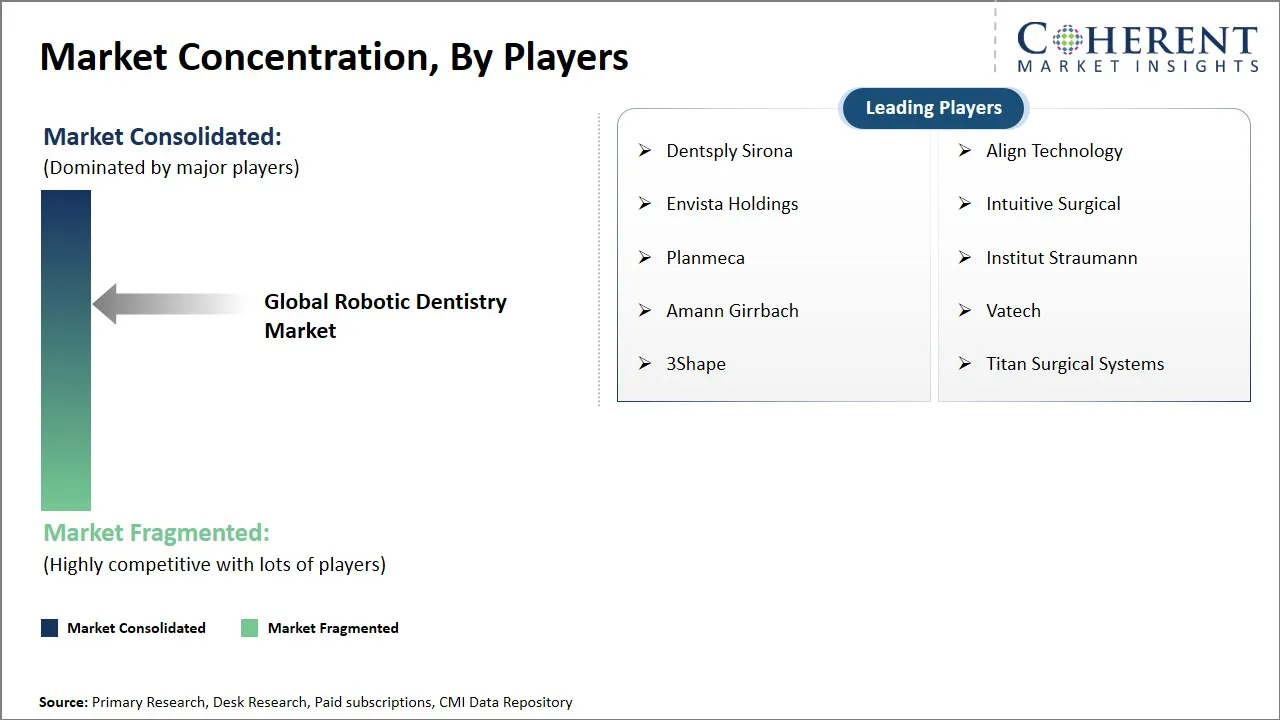
| Companies covered: | Dentsply Sirona, Align Technology, Envista Holdings, Intuitive Surgical, Planmeca, Institut Straumann, Amann Girrbach, Vatech, 3Shape, and Titan Surgical Systems | ||
| Growth Drivers: |
| ||
| Restraints & Challenges: |
| ||
Global Robotic Dentistry Market Dynamics
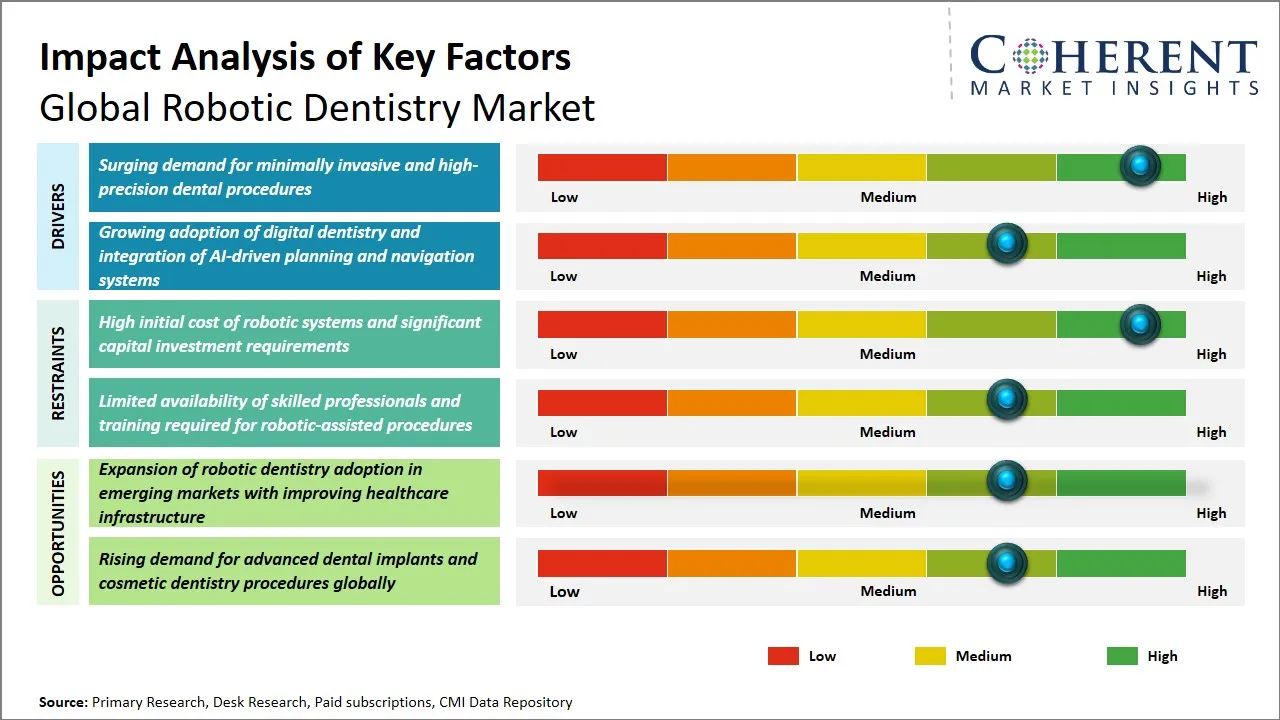
Global Robotic Dentistry Market Driver – Surging Demand for Minimally Invasive and High-Precision Dental Procedures
The surging demand for minimally invasive dental procedures is a major driver for the increased rate of adoption of robotic dentistry. In recent times, patients have been demanding dental procedures that are less painful, cause minimal damage, and promote quick recovery. This is an area where conventional dental procedures have not performed so well, and this can be addressed by the use of robotic dentistry to ensure increased accuracy, stability, and control in dental procedures, especially dental implantology.
In addition to this, with the help of advanced technologies like three-dimensional images and computer-aided designs, there is a very personalized approach in terms of the treatment provided to the patients, and this is based on the anatomy of the patients. This ensures that dental professionals are able to provide their patients with treatments that are efficient and minimally invasive. As the need to provide precise and quality dental care is on the rise, dental practitioners are opting for robotic technologies, thereby contributing to the robotic dentistry market.
For instance, a study published in April 2024 by the National Library of Medicine, states that robotic dental implant procedures help in improving the accuracy of the surgeries, eliminating human error, which can be a hindrance in the process. This, in turn, promotes safer surgeries, which can be conducted with minimal invasion, thereby improving the outcome of dental surgeries
(Source: National Library of Medicine)
Global Robotic Dentistry Market Opportunity - Expansion of Robotic Dentistry Adoption in Emerging Markets with Improving Healthcare Infrastructure
The growing trend of robotic dentistry in emerging nations is expected to result in a new opportunity for the global robotic dentistry market. Asia Pacific, Latin America, and Middle Eastern and African nations are witnessing an improvement in their health infrastructure. This improvement is due to increased spending by governments and private players on health infrastructure and awareness about modern dental care services.
The opening of modern dental clinics, specialty clinics, and technologically advanced hospitals is resulting in a new opportunity for robotic dentistry owing to their accuracy, efficiency, and increased comfort, among other benefits. The growing middle class in these nations is expected to result in increased spending on modern dental care services. This would be beneficial for companies operating in the global robotic dentistry market. The lack of qualified dental professionals and increased demand for precise dental care services would result in new opportunities for companies operating in this market. The positive business scenario in these nations would result in an easier market penetration for companies operating in the global robotic dentistry market.
For instance, in January 2024, Neocis, Inc. secured US$ 20 million funding to advance its dental surgery robot technologies. This investment underscores the market's faith in the company's potential and opens up significant avenues for the expansion of dental surgery robots.
(Source: Neocis, Inc.)
Analyst Opinion (Expert Opinion)
- The robotic dentistry market is expected to grow continuously in the coming days as the demand for precision-driven dental treatments is on the rise and is becoming increasingly invasive.
- From a clinical point of view, the need to ensure accuracy and standardization of treatments while maintaining patient safety is a major contributing factor to the growth of robotic dentistry market.
- Technological advancements are changing the dynamics of competition in the industry as companies are trying to leverage the benefits of real-time navigation, artificial intelligence, and automation. The incorporation of digital dentistry and robotics is also expected to bring a competitive advantage to companies operating in the market.
- Besides this, the rise of investments and partnerships and the overall acceptance of the market in developed and emerging countries is also expected to boost the market. However, it could have a moderate impact on the market.
Speak to the analyst
Want personalized insights?
Take the findings above to one of our principal consultants, or have the report rebuilt around the segments, geographies and competitors you actually track.
Market Segmentation
- Component Insights (Revenue, USD Mn, 2021 - 2033)
- Robotic Systems
- Software
- Services
- Application Insights (Revenue, USD Mn, 2021 - 2033)
- Implantology
- Endodontics
- Others
- End User Insights (Revenue, USD Mn, 2021 - 2033)
- Dental Hospitals and Dental Clinics
- Academic and Research Institutes
- Regional Insights (Revenue, USD Mn, 2021 - 2033)
- North America
- U.S.
- Canada
- Latin America
- Brazil
- Argentina
- Mexico
- Rest of Latin America
- Europe
- Germany
- U.K.
- Spain
- France
- Italy
- Russia
- Rest of Europe
- Asia Pacific
- China
- India
- Japan
- Australia
- South Korea
- ASEAN
- Rest of Asia Pacific
- Middle East
- GCC Countries
- Israel
- Rest of Middle East
- Africa
- South Africa
- North Africa
- Central Africa
- North America
- Key Players Insights
- Dentsply Sirona
- Align Technology
- Envista Holdings
- Intuitive Surgical
- Planmeca
- Institut Straumann
- Amann Girrbach
- Vatech
- 3Shape
- Titan Surgical Systems
Sources
Primary Research Interviews
Industry Stakeholders
- Robotic Dentistry System Manufacturers
- Dental Equipment & Digital Dentistry Solution Providers
- AI & Imaging Technology Providers (Dental CAD/CAM, CBCT)
- Dental Implant Manufacturers
- Contract Manufacturing Organizations (CMOs)
- Regulatory & Clinical Experts in Dental Robotics
End Users
- Dental Hospitals and Clinics
- Dental Service Organizations (DSOs)
- Academic & Research Institutes (Dental Schools)
- Specialty Dental Centers (Implantology & Oral Surgery)
Government and International Databases
- U.S. Food and Drug Administration – Medical device approvals and robotic system clearances
- European Medicines Agency – Medical device and clinical regulations
- World Health Organization – Oral health and healthcare infrastructure data
- National Institutes of Health – Clinical research on robotic-assisted procedures
Trade Publications
- Dental Tribune
- Dentistry Today
- Inside Dentistry
- Becker’s Dental + DSO Review
- Medical Design & Outsourcing
Academic Journals
- Journal of Dental Research
- Clinical Oral Implants Research
- International Journal of Oral & Maxillofacial Implants
- Journal of Prosthetic Dentistry
- Journal of Clinical Dentistry
Reputable Newspapers
- Financial Times – Global healthcare technology trends
- The Wall Street Journal – Medical technology investments and innovations
Industry Associations
- American Dental Association
- FDI World Dental Federation
- American Academy of Implant Dentistry
- International Association for Dental Research
Public Domain Resources
- WHO Oral Health Reports
- NIH Research Publications
- Government healthcare and digital health reports
- Open-access dental and medical research databases
Proprietary Elements
- CMI Data Analytics Tool: Proprietary analytics tool to analyze real-time market trends, consumer behavior, and technology adoption in market
- Proprietary CMI Existing Repository of Information for Last 10 Years
Get access to 250+ pages report
Every segment, forecast, competitor profile and data table behind the analysis above — available for instant download.
- ESOMAR Member
- ISO 9001:2015 Certified
- D-U-N-S Registered
- GDPR & CCPA Compliant
Missing comfort of reading report in your local language? Find your preferred language:
Transform your Strategy with Exclusive Trending Reports
Frequently Asked Questions
The global robotic dentistry market is estimated to be valued at USD 600 million in 2026 and is expected to reach USD 1,400 million by 2033.
The CAGR of the global robotic dentistry market is projected to be 12.9% from 2026 to 2033.
Surging demand for minimally invasive and high-precision dental procedures and growing adoption of digital dentistry and integration of AI-driven planning and navigation systems are the major factors driving the growth of the global robotic dentistry market.
The accuracy of robotic dentistry is improved with real-time navigation and haptic feedback. It also combines with other 3D imaging modalities such as CBCT scans. This enables precise planning before surgery and also guides the dentist during the procedure for optimal placement of the implants with minimal human error.
Robotic dentistry systems encompass a range of sophisticated technologies such as artificial intelligence for treatment planning, computer-aided design/computer-aided manufacturing (CAD/CAM), three-dimensional imaging (CBCT), and motion tracking systems. The integration of these technologies enables real-time assistance for consistent treatment processes and minimally invasive dental care.
High initial cost of robotic systems and significant capital investment requirements and limited availability of skilled professionals and training required for robotic-assisted procedures are the major factors hampering the growth of the global robotic dentistry market.
In terms of component, the robotic systems segment is estimated to dominate the market revenue share in 2026.