

Global Scleral Lens Market Size and Forecast – 2026 to 2033
The Global Scleral Lens Market is estimated to be valued at USD 403.1 Mn in 2026 and is expected to reach USD 885.5 Mn by 2033, exhibiting a compound annual growth rate (CAGR) of 11.9% from 2026 to 2033. The market is experiencing significant growth due to the increasing prevalence of ocular surface disorders, the rising geriatric population, and the growing awareness about scleral lenses as an effective treatment option for various eye conditions.
Key Takeaways of the Global Scleral Lens Market
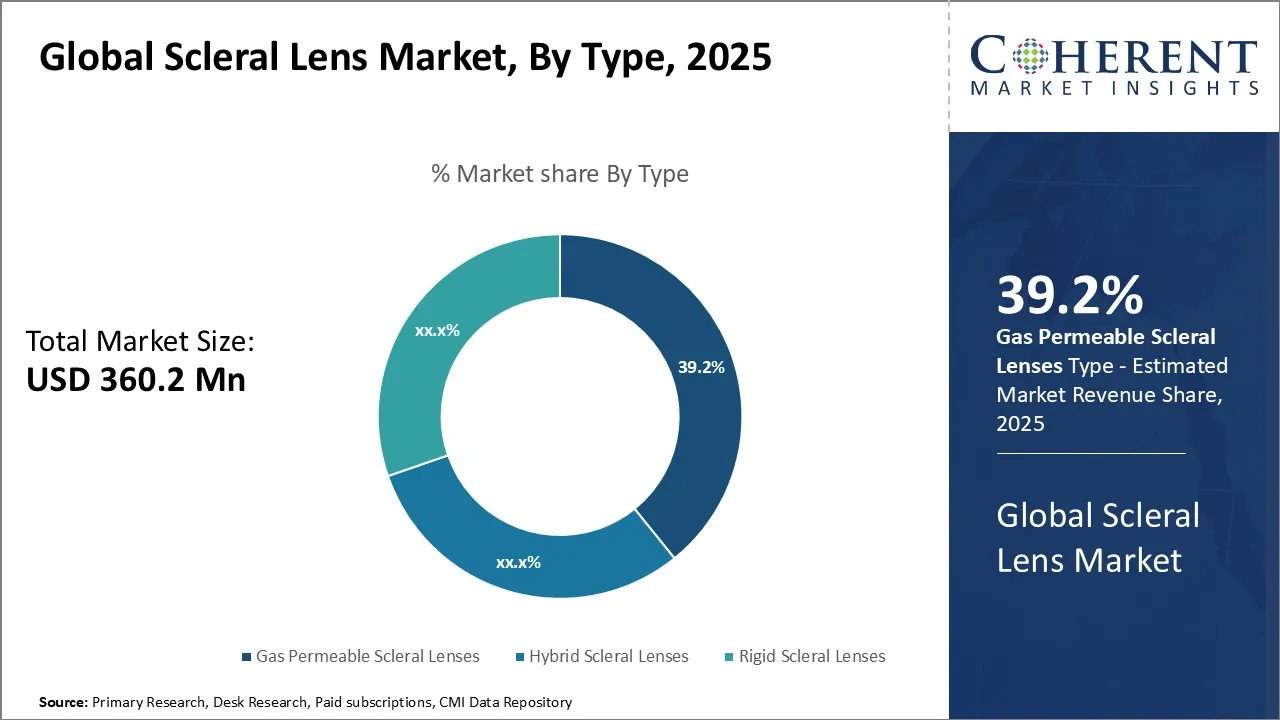
- Gas permeable scleral lenses are expected to account for the largest market share, estimated at 40.2 % in 2026, driven by their superior oxygen permeability and enhanced comfort.
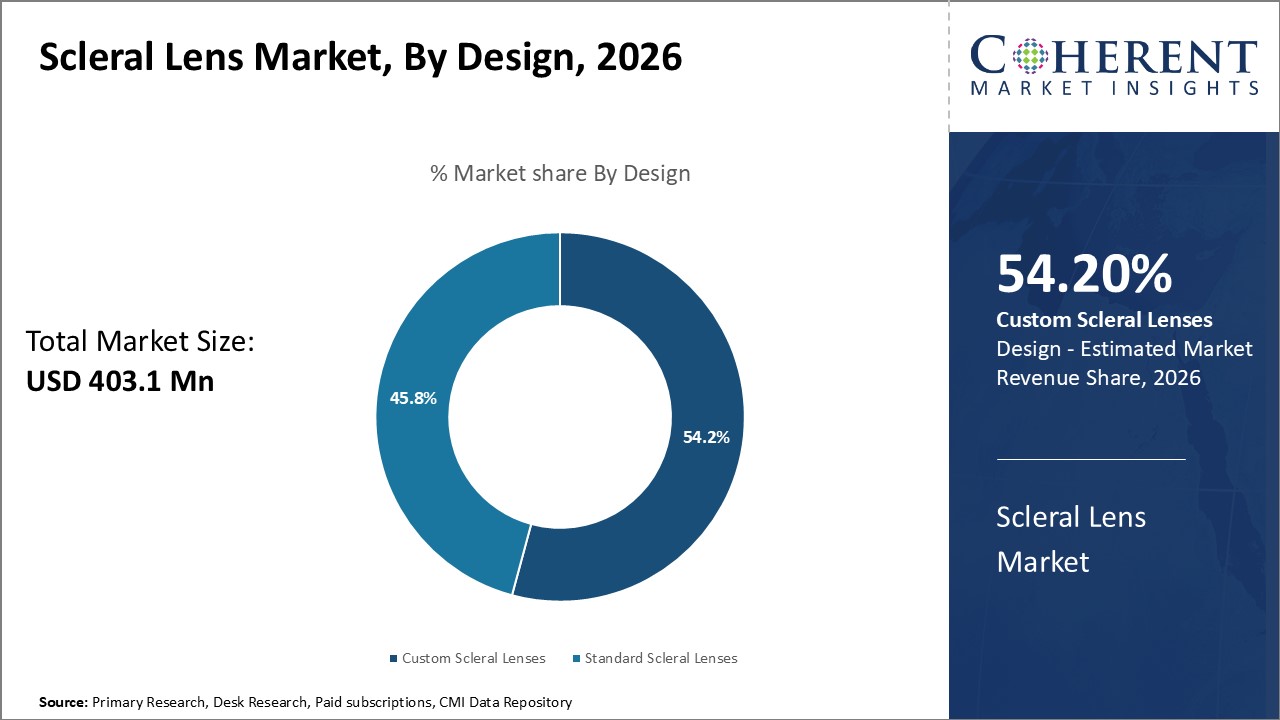
- By design, custom scleral lenses lead with an estimated share of 54.2 % in 2026, due to growing demand for personalized fits.
- By application, therapeutic use is expected to account for 44.1 % of the market share in 2026, driven by increasing cases of ocular diseases.
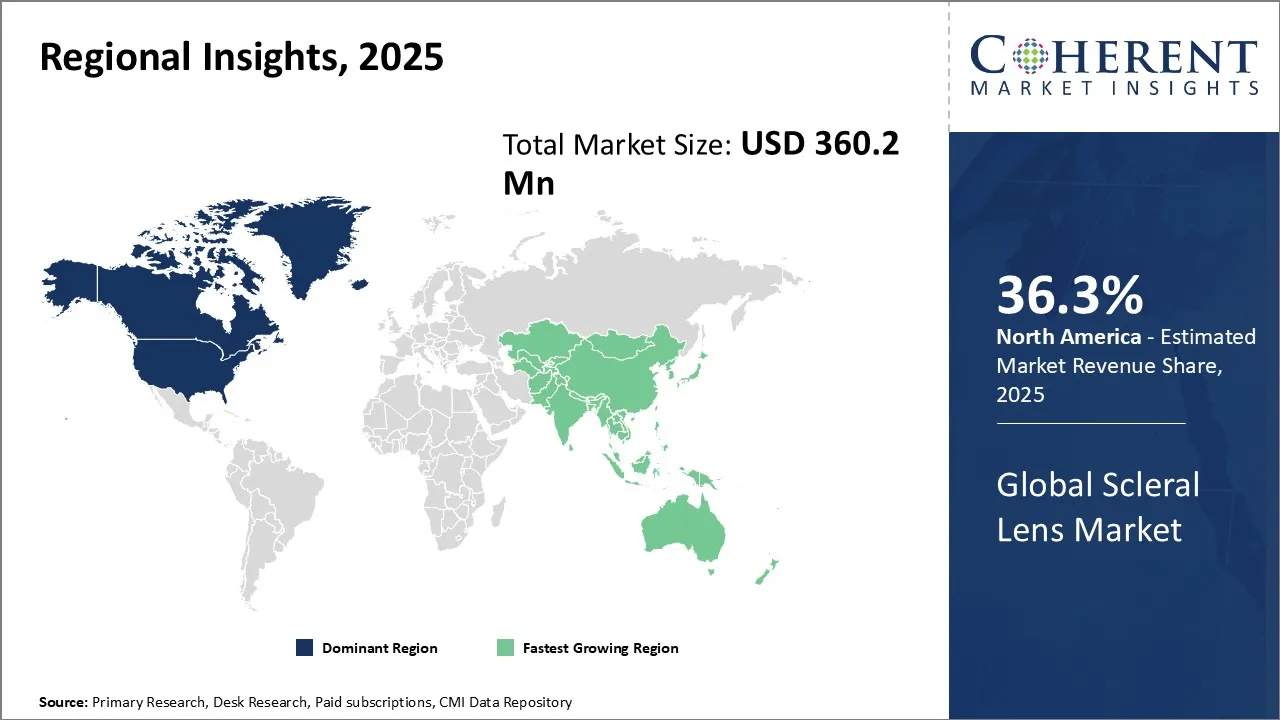
- North America is expected to lead the market, holding a share of 36.3 % in. Asia Pacific is anticipated to be the fastest-growing region, with a market share of 25.7% in 2026.
Market Overview
The scleral lens market is witnessing several trends, including the development of advanced lens materials and designs that improve patient comfort and visual acuity. Manufacturers are focusing on creating customizable scleral lenses to cater to individual patient needs, while also investing in research and development to enhance the oxygen permeability and wettability of lens materials. Additionally, the adoption of scleral lenses is expanding beyond traditional indications, such as keratoconus and dry eye syndrome, to include post-surgical visual rehabilitation and the management of ocular surface irregularities resulting from various corneal disorders.
Current Events and Its Impact
Current Events | Description and its impact |
Technological Innovations in Lens Materials |
|
Environmental Sustainability Push in Eyecare |
|
Segmental Insights
- Current Industry Events of 2026
- Market Size Estimation
- Regional Breakdown
- Competitive Landscape
- Customer Intelligence
- Segmental Analysis
- Pricing Analysis
- Key Market Drivers, Challenges & Future Trends
- Customized Insights Section
Scleral Lens Market Insights, By Type - Gas Permeable Scleral Lenses Dominate the Market due to Superior Oxygen Permeability and Comfort
In terms of type, gas permeable scleral lenses contribute the highest share of the market with an estimated share of 40.2% in 2026 owing to their superior oxygen permeability and comfort. Gas permeable scleral lenses are made from materials that allow oxygen to pass through the lens and reach the cornea, which is essential for maintaining corneal health. This is particularly important for patients who require extended wear times or have conditions that compromise corneal oxygen supply, such as corneal irregularities or ocular surface disorders.
Moreover, gas permeable scleral lenses offer a high level of comfort for patients. The lenses are designed to vault over the cornea and rest on the sclera, which is less sensitive than the cornea. This design minimizes lens-to-cornea contact and reduces the risk of corneal abrasions or discomfort.
Scleral Lens Market Insights, By Design - Custom Scleral Lenses Lead the Market due to Personalized Fit and Improved Visual Outcomes
In terms of design, custom scleral lenses contribute the highest share of the market with an estimated share of 54.2% in 2026. The primary driving factor behind this segment's growth is the personalized fit and improved visual outcomes offered by custom scleral lenses. Unlike standard scleral lenses, which come in pre-determined parameters, custom scleral lenses are designed and manufactured based on the individual patient's unique ocular anatomy and visual requirements.
The customization process involves advanced imaging techniques, such as corneal topography and optical coherence tomography, to capture detailed measurements of the patient's cornea, sclera, and other ocular structures. These measurements are then used to create a lens design that precisely matches the patient's eye, ensuring optimal fit and alignment.
Scleral Lens Market Insights, By Application - Therapeutic Use Drives the Market Growth due to Increasing Prevalence of Ocular Surface Disorders
In terms of application, therapeutic use contributes the highest share of the market with an estimated share of 44.1% in 2026. The increasing prevalence of ocular surface disorders is the primary factor driving the growth of this segment. Scleral lenses have emerged as a valuable therapeutic option for managing a wide range of ocular surface disorders, such as severe dry eye syndrome, Stevens-Johnson syndrome, graft-versus-host disease, and neurotrophic keratopathy.
These disorders often result in significant discomfort, visual impairment, and reduced quality of life for patients. Scleral lenses provide a protective environment for the compromised ocular surface by creating a fluid reservoir between the lens and the cornea. This reservoir continuously bathes the cornea in preservative-free saline, providing constant hydration and nourishment to the ocular surface.
Role of Artificial Intelligence (AI) in the Global Scleral Lens Market
- Artificial Intelligence (AI) is rapidly reshaping the global scleral lens market by enabling greater efficiency, precision, and personalization. AI algorithms analyze complex ocular data—such as corneal topography, tear film metrics, and visual aberrations—allowing for highly customized lens designs that fit individual eye structures with remarkable accuracy. This reduces the trial-and-error cycle of lens fittings, cuts costs, and enhances patient satisfaction. AI also streamlines manufacturing processes through automation and predictive modelling, enabling faster production with minimal errors. Furthermore, AI-powered tele-optometry platforms facilitate remote consultations and virtual fittings, improving accessibility for patients in underserved regions.
- A standout example of AI integration in the scleral lens market is Bausch + Lomb, a global leader in eye health. The company has developed the Zenlens CHROMA HOA scleral lens, which utilizes AI-driven aberrometry data to correct higher-order aberrations in patients with irregular corneas. Artificial intelligence is set to revolutionize the scleral lens market by enhancing design, manufacturing, and fitting processes, resulting in improved patient outcomes through a personalized approach to managing ocular surface diseases and vision correction. AI algorithms analyze extensive patient data to optimize lens designs, ensuring superior vision correction and optimal fit. For instance, in July 2024, GlassesUSA.com, a leading U.S.-based eyewear retailer, launched its innovative "Pairfect Match AI" technology, transforming online eyewear shopping by accurately matching customers with their ideal glasses.
Regional Insights
North America Scleral Lens Market Analysis and Trends
In North America, the dominance in the global scleral lens market with an estimated share of 36.3% in 2026 can be attributed to several factors. The region has a well-established healthcare infrastructure, with advanced technology and a strong emphasis on research and development. The presence of leading scleral lens manufacturers, such as Bausch + Lomb and SynergEyes, has further solidified North America's position in the market. These companies have made significant investments in product innovation, expanding their product portfolios to cater to diverse patient needs.
The market's growth in the U.S. is primarily driven by the rising prevalence of eye diseases and injuries. According to the National Eye Institute, approximately 12 million people in the U.S. had low vision in 2022—a figure expected to rise to nearly 50 million by 2030. Moreover, data from the Centers for Disease Control and Prevention (CDC) shows that in 2019, around 54 million adults (22.1% of the population aged 18 and above) in the U.S. wore scleral lenses. This growing demand is likely to continue driving market growth in the coming years.
Asia Pacific Scleral Lens Market Analysis and Trends
The Asia Pacific region is expected to exhibit the fastest growth in the global scleral lens market with a share of 25.7% in 2026. This growth can be attributed to several factors, including the rising prevalence of corneal disorders, increasing awareness about advanced contact lens options, and the growing disposable income of the population. Countries like China and India, with their large patient pools and improving healthcare infrastructure, present significant growth opportunities for scleral lens manufacturers.
The region has also witnessed the entry of several international players, who are collaborating with local distributors and setting up manufacturing facilities to cater to the growing demand. Additionally, government initiatives to improve healthcare access and the rising number of optometry clinics and eye hospitals in the region have further fueled the adoption of scleral lenses. The increasing focus on medical tourism in countries like Singapore and Thailand has also contributed to the market's growth, as patients from other regions seek advanced eye care treatments in these countries.
Global Scleral Lens Market Outlook for Key Countries
U.S. Scleral Lens Market Trends
The U.S. market for scleral lenses is highly advanced, with a strong presence of key players and a well-established distribution network. The country's robust healthcare infrastructure, coupled with the high prevalence of corneal disorders, has driven the adoption of scleral lenses. The favorable reimbursement policies and insurance coverage for scleral lenses have further supported market growth. Additionally, the presence of numerous eye care professionals trained in fitting scleral lenses has enhanced patient access to these devices.
For instance, in February 2023, Visionary Optics, a leading developer of specialty contact lenses in the U.S., introduced the Europa Tangent scleral lens—a new design aimed at simplifying the fitting process for practitioners. The lens features a three-zone system that allows for independent adjustment of the central, limbal, and landing zones, based on profilometry data from over 10,000 fittings.
Germany Scleral Lens Market Trends
Germany's market for scleral lenses is characterized by a strong emphasis on quality and innovation. The country's advanced healthcare system and the presence of skilled eye care professionals have contributed to the adoption of scleral lenses. German companies, such as Hecht Contactlinsen and Galifa Contactlinsen, have made notable contributions to the market through their high-quality scleral lens offerings. For instance, in November 2021, CooperVision Specialty EyeCare, a leading global contact lens manufacturer, introduced Optimized Pupil Optics (OPO) technology for its Onefit MED and Onefit MED+ scleral lenses to eye care providers in the U.S. and Canada.
Japan Scleral Lens Market Trends
Japan continues to be a significant market for scleral lenses, driven by the country's advanced healthcare infrastructure and the high prevalence of corneal disorders. Japanese companies, such as Menicon and Nippon Contact Lens, have played a crucial role in the market's growth through their innovative product offerings and strong distribution networks. The increasing awareness about the benefits of scleral lenses and the growing number of eye care professionals trained in fitting these lenses have further contributed to market growth.
For instance, in April 2021, Johnson & Johnson Vision Care, a global leader in eye health and part of Johnson & Johnson, launched the Acuvue Theravision with Ketotifen, the first-ever drug-eluting contact lens approved in Japan. This lens corrects vision and delivers allergy relief through the antihistamine Ketotifen, marking a breakthrough in combining vision correction and therapeutic benefits.
China Scleral Lens Market Trends
China's market for scleral lenses is experiencing rapid growth, driven by the country's large population, increasing disposable income, and improving healthcare infrastructure. The rising prevalence of corneal disorders and the growing awareness about advanced contact lens options have fueled the demand for scleral lenses in the country. International players are collaborating with local distributors and setting up manufacturing facilities to cater to the growing demand. For example, Beijing Keyi Optical Co., Ltd., a Chinese manufacturer known for developing specialty contact lenses, including scleral designs, with a focus on the domestic market.
Market Players, Key Developments, and Competitive Intelligence
Key Developments
- On May 21, 2025, Bausch + Lomb, a top eye care company, launched Zenlens Chroma HOA scleral lenses in the U.S. to reduce halos, glare, and correct higher-order aberrations with a custom fit. The technology can improve vision from 20/30 to 20/20 for patients with irregular corneas.
- In January 2025, Dr. Nathan Schramm, an experienced optometrist, and Dr. Xifeng Xiao from Wavefront Dynamics, shared a case where they successfully improved vision in a patient with complex eye issues after radial keratotomy (a type of eye surgery) by using advanced wavefront-guided scleral lenses. This approach helped correct irregularities in the eye, leading to much clearer vision for the patient.
- In March 2021, BostonSight, a non-profit eye healthcare and research organization, expanded its BostonSight SCLERAL lens portfolio by adding 16mm, 16.5mm, and 17mm diameter options alongside existing sizes. The lenses come in a FitKit diagnostic set with multiple diameters and anatomical designs for customized fits.
Top Strategies Followed by Global Scleral Lens Market Players
- Established players in the global scleral lens market are focusing on extensive research and development to innovate high-performance products. These companies are investing heavily in advanced technologies and materials to create scleral lenses that offer superior comfort, vision correction, and oxygen permeability.
- For instance, in February 2025, ABB Optical Group, a leading provider of optical products, launched the Delta Scleral—the next generation of scleral contact lenses—at GSLS 2025. The company also introduced HydroPure MPS and HydroPure Lubricating Eye Drops, designed for both soft and gas-permeable lenses, available exclusively to eye care professionals through ABB Optical Group.
- Mid-level players in the global scleral lens market are focusing on delivering cost-effective solutions to target price-sensitive consumers. These companies are developing quality scleral lenses that are more affordable than premium offerings, without compromising on essential features and benefits. The growing wave of technological innovations has boosted consumer demand for advanced solutions to manage eye conditions.
- For instance, in January 2022, SynergEyes, a specialist in advanced specialty contact lenses, launched the SynergEyes VS Multifocal scleral lens along with Aberration Control and Limbal Clearance Factor (LCF) options. The Multifocal lens features a progressive center-distance design with customizable adds, while Aberration Control ensures consistent optical power.
- Small-scale players in the global scleral lens market are targeting niche markets with unique features or innovative products. These companies are focusing on specific patient populations or specialized applications, such as those with irregular corneas or severe dry eye conditions. For example, EyePrintPRO, a U.S.-based company, offers a unique approach by creating scleral lenses from a mold of the patient's eye.
Market Report Scope
Scleral Lens Market Report Coverage
| Report Coverage | Details | ||
|---|---|---|---|
| Base Year: | 2025 | Market Size in 2026: | USD 403.1 Mn |
| Historical Data for: | 2020 To 2024 | Forecast Period: | 2026 To 2033 |
| Forecast Period 2026 to 2033 CAGR: | 11.9% | 2033 Value Projection: | USD 885.5 Mn |
| Geographies covered: |
| ||
| Segments covered: |
| ||
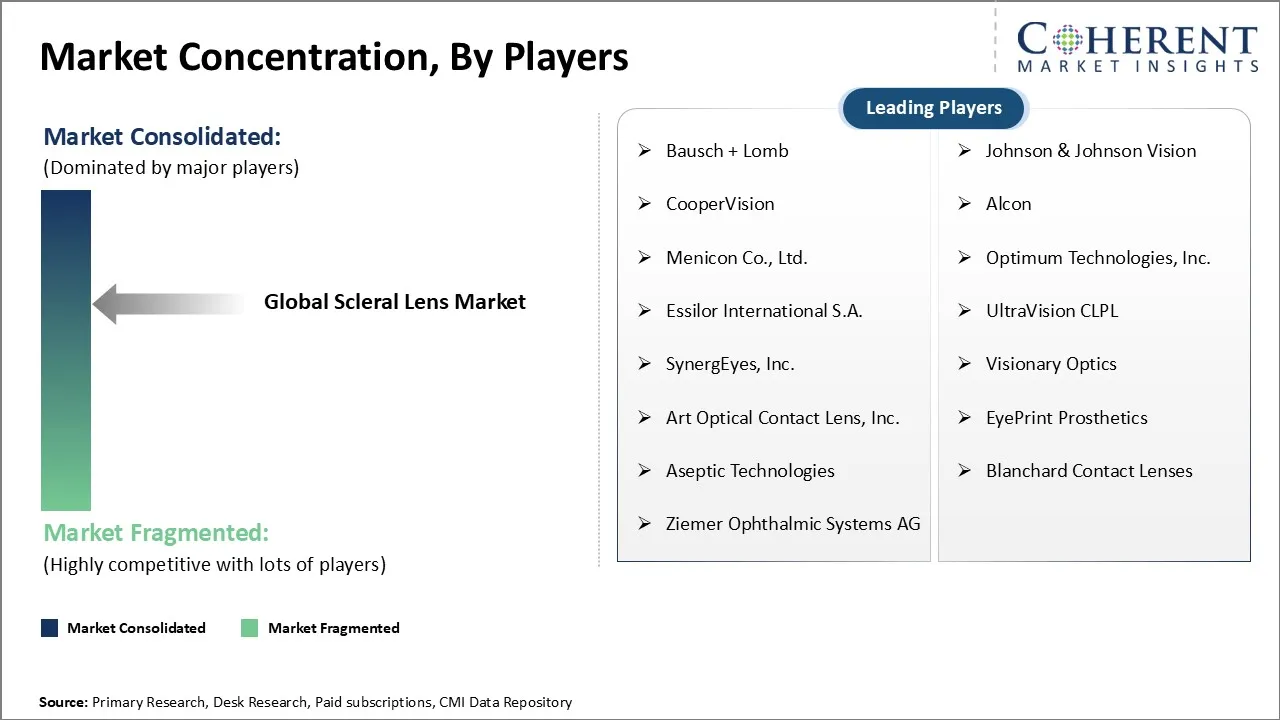
| Companies covered: | Bausch + Lomb, Johnson & Johnson Vision, CooperVision, Alcon, Menicon Co., Ltd., Optimum Technologies, Inc., Essilor International S.A., UltraVision CLPL, SynergEyes, Inc., Visionary Optics, Art Optical Contact Lens, Inc., EyePrint Prosthetics, Aseptic Technologies, Blanchard Contact Lenses, and Ziemer Ophthalmic Systems AG | ||
| Growth Drivers: |
| ||
| Restraints & Challenges: |
| ||
Scleral Lens Market Dynamics
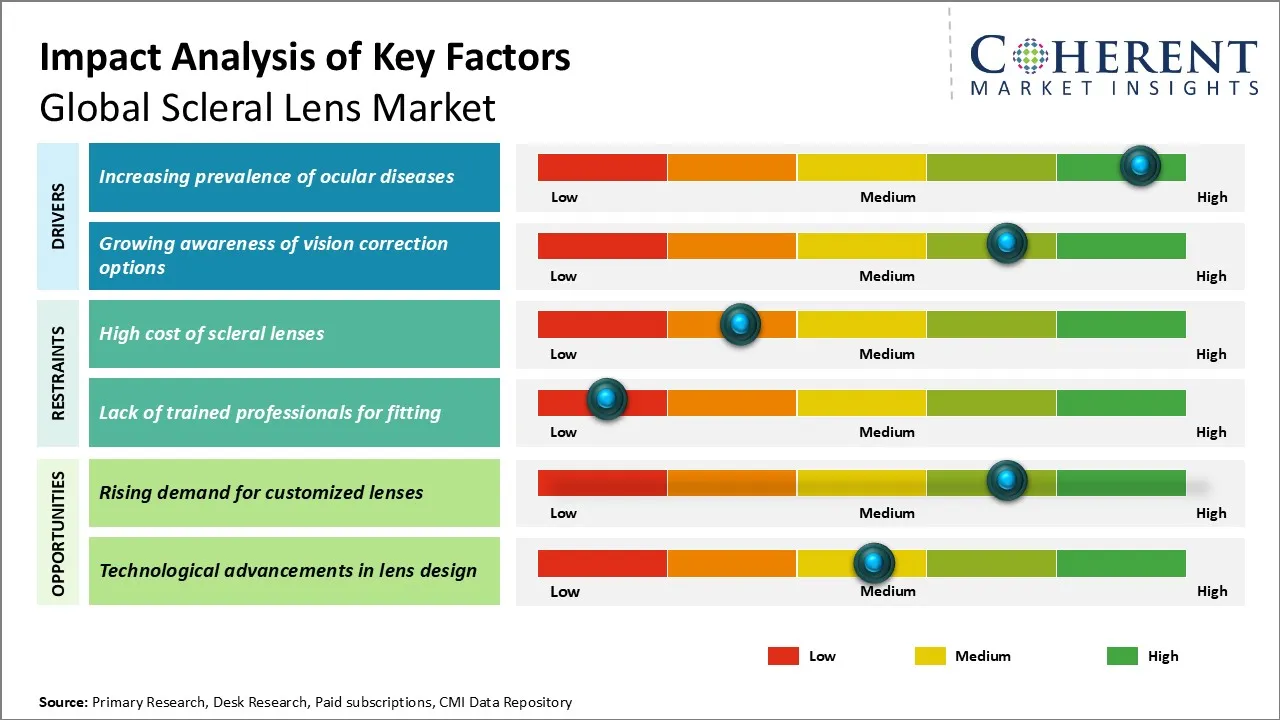
Scleral Lens Market Driver - Increasing prevalence of ocular diseases
The global scleral lens market is experiencing significant growth, largely driven by the increasing prevalence of various ocular diseases worldwide. Scleral lenses have emerged as an effective solution for managing a wide range of eye disorders, including keratoconus, irregular astigmatism, and severe dry eye syndrome. As the incidence of these conditions continues to rise, the demand for scleral lenses is expected to grow accordingly. Scleral lenses offer unique advantages over traditional contact lenses, such as improved comfort, enhanced vision, and better protection for the ocular surface. They are particularly beneficial for patients with irregular corneas or those who have undergone corneal transplants. As awareness about the benefits of scleral lenses grows, coupled with the rising prevalence of ocular diseases, the global scleral lens market is poised for substantial growth in the coming years.
For instance, in October 2024, a new study published by the National Opinion Research Center (NORC) at the University of Chicago, in partnership with the Centers for Disease Control and Prevention (CDC) Vision Health Initiative, found that approximately 4.22 million U.S. adults (1.62%) have glaucoma. The prevalence is notably higher among Black individuals and older adults, with Mississippi reporting the highest state-level rate (1.95%) and Utah the lowest (1.11%).
Scleral Lens Market Opportunity - Rising demand for customized lenses
The global scleral lens market is poised for significant growth due to the rising demand for customized lenses. As awareness about the benefits of scleral lenses spreads among patients and eye care professionals, there is a growing recognition of the importance of personalized lens solutions. Scleral lenses offer a unique opportunity to address a wide range of eye conditions, such as keratoconus, irregular astigmatism, and ocular surface disorders, which require tailored treatment approaches. The ability of scleral lenses to vault over the cornea and rest on the sclera allows for a customized fit that provides improved vision, comfort, and ocular health. As more patients seek out these specialized lenses, the market is expected to experience substantial growth.
Furthermore, advancements in imaging technology and lens design software have enabled eye care professionals to capture precise measurements of the eye and create highly customized scleral lenses with greater efficiency. This technological progress has the potential to streamline the fitting process, reduce costs, and enhance patient outcomes, further driving the demand for customized scleral lenses in the market. For instance, in April 2025, Bruno Vision Care, a developer of innovative eye care solutions, received U.S. FDA approval for its Deseyne daily disposable contact lens. These lenses gradually release bioactive substances to enhance hydration and comfort and will be available for myopia, hyperopia, and astigmatism.
Analyst Opinion (Expert Opinion)
- The global scleral lens market is experiencing steady growth, driven by advancements in lens design, materials (such as gas-permeable polymers), and fitting technologies that enhance comfort and expand applications for complex ocular conditions. Increasing prevalence of ocular surface diseases, keratoconus, and post-surgical complications, coupled with rising awareness among optometrists, is accelerating market adoption. Notable opportunities include expanding tele-optometry services and leveraging AI for precision fitting. However, challenges such as high costs, limited accessibility in low-income regions, and a shortage of trained practitioners hinder widespread market penetration.
- Key industry events like the Global Specialty Lens Symposium (GSLS), the European Academy of Optometry and Optics (EAOO) Annual Conference, and the Global Optometry Conference (GOC) have facilitated critical knowledge exchange, showcased innovations, and influenced policy direction on specialty lenses, including scleral lenses. Companies like Bausch + Lomb, BostonSight, and Visionary Optics have launched programs supporting practitioner training and patient access, while regulatory support in regions like North America and Europe for advanced contact lenses further bolsters market outlook.
Speak to the analyst
Want personalized insights?
Take the findings above to one of our principal consultants, or have the report rebuilt around the segments, geographies and competitors you actually track.
Market Segmentation
- Type Insights (Revenue, USD Mn, 2021 - 2033)
- Gas Permeable Scleral Lenses
- Hybrid Scleral Lenses
- Rigid Scleral Lenses
- Design Insights (Revenue, USD Mn, 2021 - 2033)
- Custom Scleral Lenses
- Standard Scleral Lenses
- Application Insights (Revenue, USD Mn, 2021 - 2033)
- Therapeutic Use
- Cosmetic Use
- Vision Correction
- End User Insights (Revenue, USD Mn, 2021 - 2033)
- Hospitals
- Eye Care Clinics
- Home Care Settings
- Distribution Channel Insights (Revenue, USD Mn, 2021 - 2033)
- Online
- Offline
- Regional Insights (Revenue, USD Mn, 2021 - 2033)
- North America
- U.S.
- Canada
- Latin America
- Brazil
- Argentina
- Mexico
- Rest of Latin America
- Europe
- Germany
- U.K.
- Spain
- France
- Italy
- Russia
- Rest of Europe
- Asia Pacific
- China
- India
- Japan
- Australia
- South Korea
- ASEAN
- Rest of Asia Pacific
- Middle East
- GCC Countries
- Israel
- Rest of Middle East
- Africa
- South Africa
- North Africa
- Central Africa
- North America
- Key Players Insights
- Bausch + Lomb
- Johnson & Johnson Vision
- CooperVision
- Alcon
- Menicon Co., Ltd.
- Optimum Technologies, Inc.
- Essilor International S.A.
- UltraVision CLPL
- SynergEyes, Inc.
- Visionary Optics
- Art Optical Contact Lens, Inc.
- EyePrint Prosthetics
- Aseptic Technologies
- Blanchard Contact Lenses
- Ziemer Ophthalmic Systems AG
Sources
Primary Research Interviews
- Ophthalmologists and Optometrists
- Corneal and Contact Lens Specialists (e.g., fellows of specialty contact lens societies)
- Hospital Procurement Teams (e.g., ophthalmology departments)
- Lens Manufacturers (technical staff, R&D teams)
- Regulatory Authorities (device evaluation officers)
Databases
- U.S. Food and Drug Administration (FDA) – Medical Device Approvals and Recalls Database
- European Medicines Agency (EMA) – Medical Devices and Regulatory Framework
- National Institutes of Health (NIH) – Clinical Trials Database
- gov – Ongoing and completed scleral lens studies
- World Health Organization (WHO) – Reports on global vision impairment
Magazines
- Contact Lens Spectrum – Clinical insights and trends
- Review of Cornea & Contact Lenses – Practitioner-focused insights
- Contact Lens and Anterior Eye (Elsevier) – Peer-reviewed trade publication
- Optometry Times – News and insights for eye care professionals
- The Optician – UK-based contact lens updates
Journals
- Ophthalmology (American Academy of Ophthalmology)
- The Ocular Surface Journal
- Eye & Contact Lens Journal (Contact Lens Association of Ophthalmologists)
- Cornea Journal
- Journal of Cataract & Refractive Surgery
Newspapers
- The New York Times – Health Section
- The Guardian – Global Health
- The Washington Post – Health & Science
- The Times (UK) – Health
- The Financial Times – Healthcare
Associations
- Scleral Lens Education Society (SLS)
- British Contact Lens Association (BCLA)
- American Academy of Optometry (AAO)
- European Council of Optometry and Optics (ECOO)
- Contact Lens Society of America (CLSA)
- International Association of Contact Lens Educators (IACLE)
Public Domain Sources
- World Bank – Global Health Statistics
- Global Burden of Disease (GBD) – Vision Loss Data
- UNICEF – Child Vision and Disability Reports
- World Vision Report (WHO)
Proprietary Elements
- CMI Data Analytics Tool: Proprietary analytics tool to analyze real-time market trends, consumer behavior, and technology adoption in market
- Proprietary CMI Existing Repository of Information for Last 8 Years
Get access to 250+ pages report
Every segment, forecast, competitor profile and data table behind the analysis above — available for instant download.
- ESOMAR Member
- ISO 9001:2015 Certified
- D-U-N-S Registered
- GDPR & CCPA Compliant
Missing comfort of reading report in your local language? Find your preferred language:
Transform your Strategy with Exclusive Trending Reports
Frequently Asked Questions
The global scleral lens market is estimated to be valued at USD 360.2 Mn in 2025 and is expected to reach USD 781.5 Mn by 2032.
The CAGR of the global scleral lens market is projected to be 11.7% from 2025 to 2032.
Increasing prevalence of ocular diseases and growing awareness about vision correction options are the major factors driving the growth of the global scleral lens market.
High cost of scleral lenses and lack of trained professionals for fitting are the major factors hampering the growth of the global scleral lens market.
In terms of type, gas permeable scleral lenses segment is estimated to dominate the market revenue share in 2025.
Bausch + Lomb, Johnson & Johnson Vision, CooperVision, Alcon, Menicon Co., Ltd., Optimum Technologies, Inc., Essilor International S.A., UltraVision CLPL, SynergEyes, Inc., Visionary Optics, Art Optical Contact Lens, Inc., EyePrint Prosthetics, Aseptic Technologies, Blanchard Contact Lenses, and Ziemer Ophthalmic Systems AG are the major players.
North America is expected to lead the global scleral lens market in 2025.