

Global Semiconductor Market Size and Forecast – 2026 - 2033
The Global Semiconductor Market is estimated to be valued at USD 637.35 Bn in 2026 and is expected to reach USD 1,150.22 Bn by 2033, exhibiting a compound annual growth rate (CAGR) of 8.8% from 2026 to 2033.
Key Takeaways of the Semiconductor Market
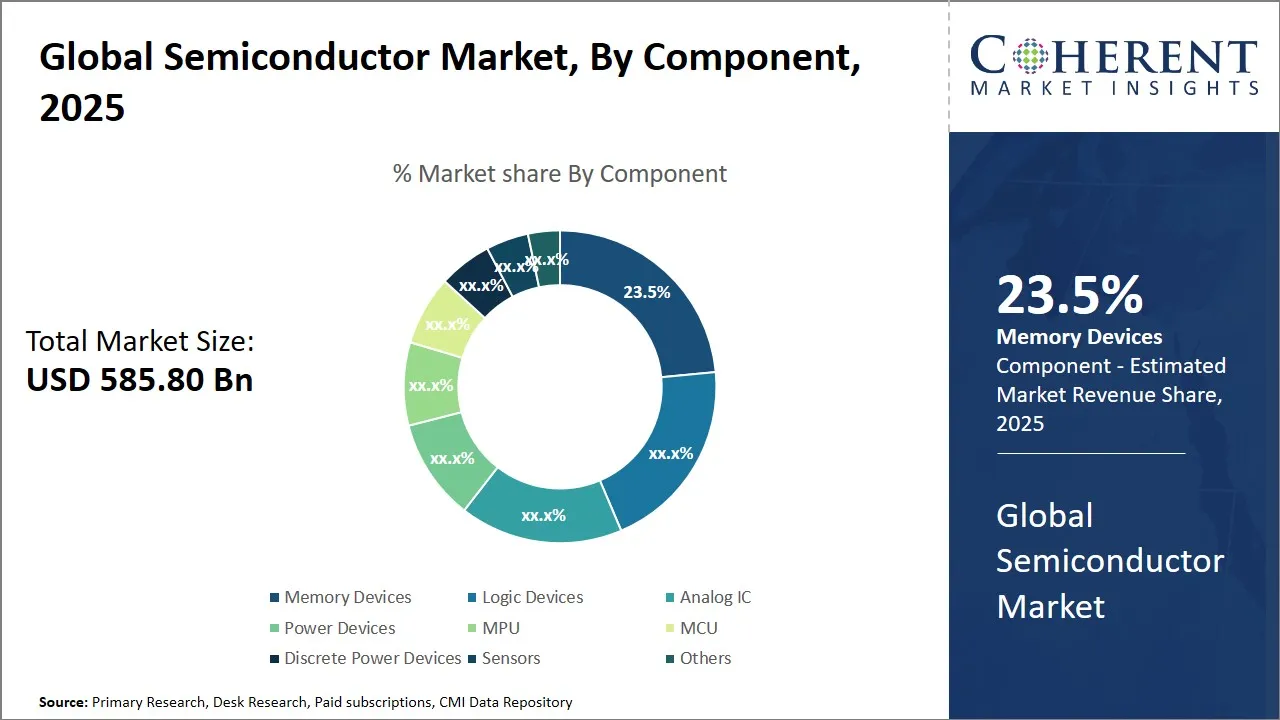
- The memory devices segment leads the market holding an estimated share of 24.5 % in 2026.
- The networking and communication segment leads the market holding an estimated share of 31.4 % in 2026.
- Asia Pacific is estimated to lead the market with a share of 53.0 % in 2026.
- North America, holding a share of 22.9 % in 2026, is projected to be the fastest growing region.
Market Overview
The market is seeing a fast shift towards miniaturization and improved chip performance, supported by innovations in semiconductor materials and manufacturing processes. Also, the push for energy-efficient and high-speed computing solutions is pushing investments in advanced semiconductor design, while geopolitical factors are supporting regional supply chain diversification to mitigate risks and maintain stability in semiconductor production.
Current Events and Its Impact
Current Events | Description and its impact |
Geopolitical and Trade Developments |
|
Economic and Infrastructure Trends |
|
Segmental Insights
- Current Industry Events of 2026
- Market Size Estimation
- Regional Breakdown
- Competitive Landscape
- Customer Intelligence
- Segmental Analysis
- Pricing Analysis
- Key Market Drivers, Challenges & Future Trends
- Customized Insights Section
Global Semiconductor Market Insights, by Component – Memory Devices Leads, Owing to Increasing Demand for Data Storage and Processing Efficiency
Memory devices, holding a share of 24.5% in 2026, are expected to dominate the semiconductor market. The fast adoption of cloud computing, big data analytics, artificial intelligence (AI), and Internet of Things (IoT) applications has created a lot of need for advanced memory solutions. The evolution of cloud infrastructure, where data centers highly depend on high-capacity and high-speed memory modules to support virtualized environments and edge computing, has added to segment growth. Also, the rise of AI and machine learning models has created a lot of demand for extensive data handling capabilities, which memory devices efficiently provide.
Technological innovations in memory components, such as the development of 3D NAND flash and high-bandwidth memory (HBM), add to the adoption by offering improved speed, energy efficiency, and miniaturization. Also, the growing adoption of consumer electronics, including smartphones, tablets, and wearable devices, created a lot of demand for memory with higher capacities and better durability.
To add, the diversification of memory types, including volatile memories like DRAM and non-volatile memories such as NAND flash, which cater to different application needs, add to segment growth. For instance, the automobile and industrial sectors use sophisticated electronic control units (ECUs) and autonomous systems that need reliable memory solutions for functionality and safety.
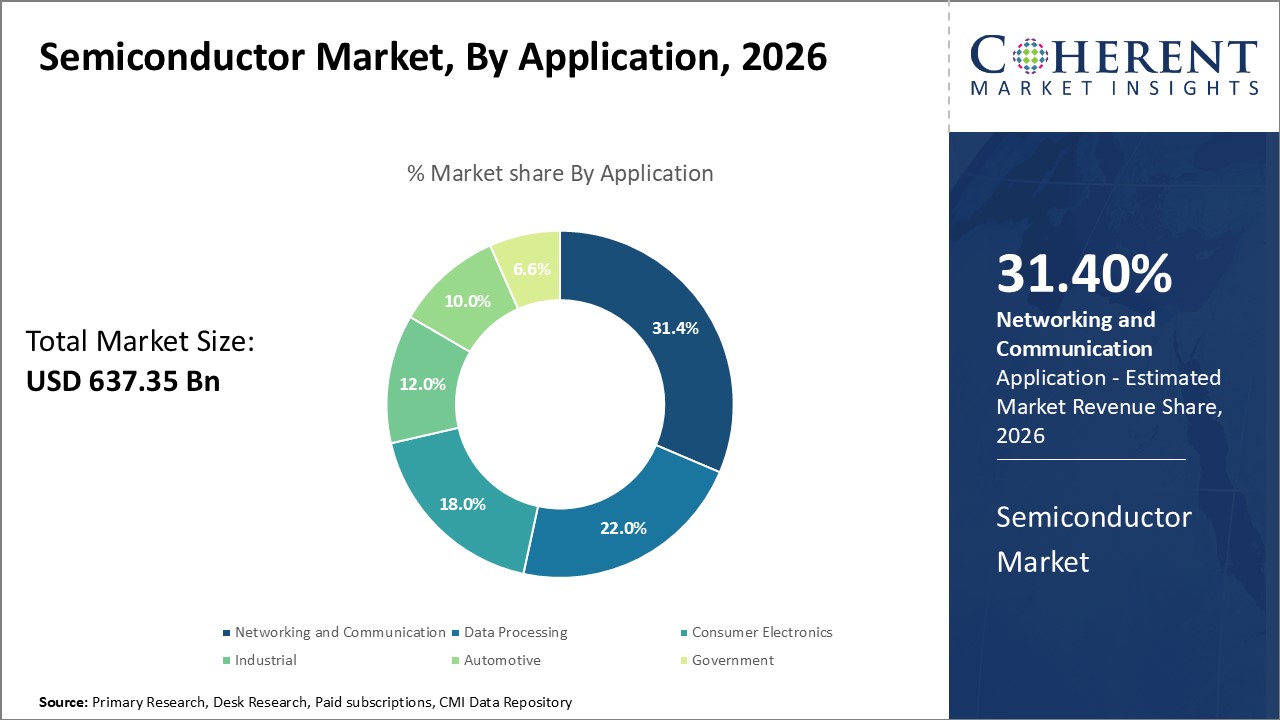
Global Semiconductor Market Insights, by Application – Networking and Communication Leads the Market Driven By Rapid Digital Transformation and Increasing Connectivity Demands
The networking and communication segment is expected to hold the largest share of 31.4% in the semiconductor market in 2026. The huge growth in data traffic because of the widespread internet adoption, rising smartphone penetration, and demand for high-speed data transfer, creates the need for advanced semiconductor solutions to enable robust and efficient networks.
5G networks demand sophisticated semiconductor components capable of supporting high-frequency transmissions, ultra-low latency, and enhanced bandwidth. This necessity stimulates the development and integration of semiconductors designed specifically for network equipment, base stations, and communication devices. Furthermore, the evolution toward software-defined networking (SDN) and network function virtualization (NFV) requires semiconductors that can provide agile, programmable, and scalable designs to accommodate variable communication loads.
The growth of Internet of Things (IoT) connectivity add to the demand within this segment. The popularity of interconnected devices in smart homes, cities, and industries adds to the need for reliable networking semiconductors that make possible seamless communication between endpoints.
Impact of AI on the Semiconductor Market
The fast adoption of AI in industries, particularly in data centers, autonomous vehicles, and edge computing, is creating demand for high-performance chips such as GPUs, TPUs, and custom ASICs. These chips require cutting-edge semiconductor technologies, including advanced node fabrication, 3D stacking, and high-bandwidth memory.
A real-world example is NVIDIA’s H100 and B100 AI GPUs, which power training and inference tasks for large language models and other generative AI applications. These GPUs are built using TSMC’s advanced 4nm and 3nm nodes and require highly specialized semiconductor components and packaging techniques.
Regional Insights
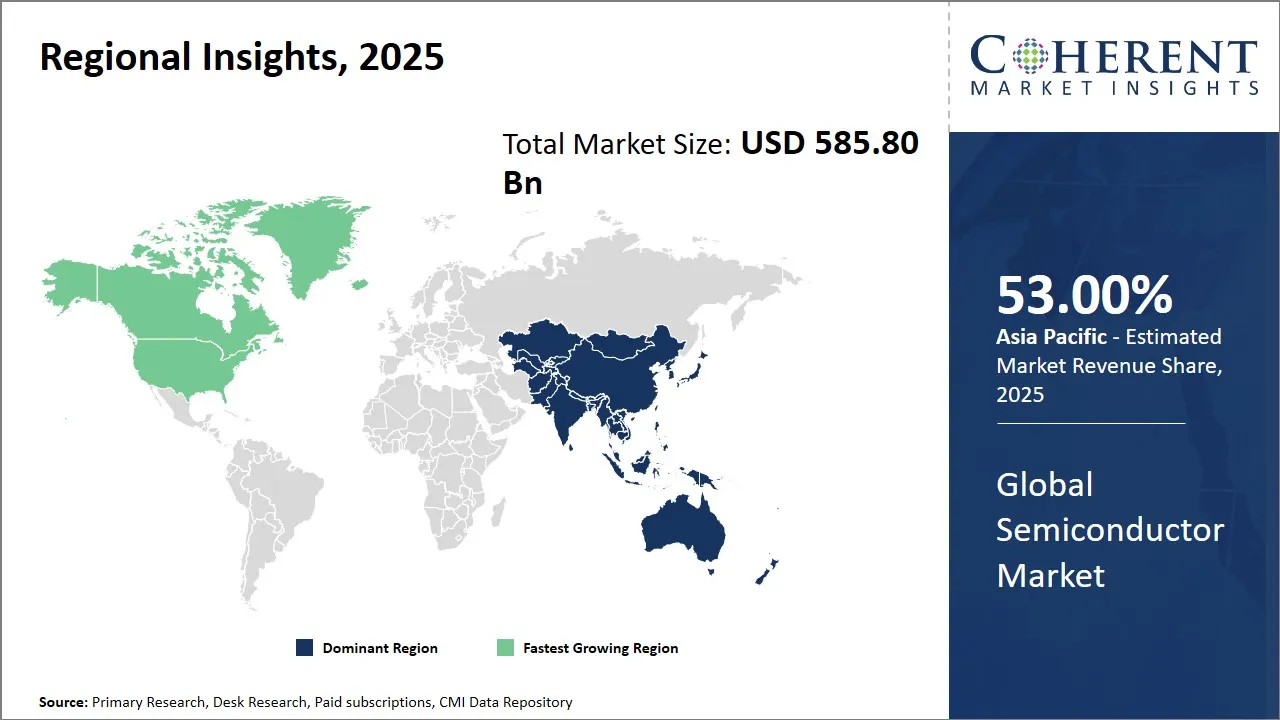
Asia Pacific Semiconductor Market Analysis and Trends
Asia Pacific, holding a share of 53.0% in 2026, is expected to dominate the global semiconductor market, primarily driven by its comprehensive manufacturing ecosystem, skilled labor force, and strong government support. Countries like South Korea, Taiwan, Japan, and China lead the semiconductor supply chain from chip design to wafer fabrication and assembly. The presence of industry giants such as Taiwan Semiconductor Manufacturing Company (TSMC), Samsung Electronics, and SK Hynix underpins the region’s supremacy by driving innovation and high-volume production capabilities. Furthermore, favorable trade policies, extensive R&D investments, and an integrated supply chain network contribute to Asia Pacific’s persistent leadership in the semiconductor industry.
North America Semiconductor Market Analysis and Trends
North America, holding a share of 22.9% in 2026, is projected to exhibit the fastest growth in the semiconductor market, fueled by robust technological innovation, significant government initiatives, and the presence of globally renowned fabless semiconductor firms. The U.S. benefits from strong intellectual property protection, venture capital, and an innovation-led ecosystem emphasizing AI, 5G, and automotive electronics. Companies like Intel, Qualcomm, Broadcom, and NVIDIA play vital roles by pioneering advanced chip designs and fabrication technologies. Additionally, government policies like incentive programs for semiconductor manufacturing and research strengthen the growth trajectory of this region, encouraging domestic production and reducing dependency on imports.
Global Semiconductor Market Outlook for Key Countries
U.S. Semiconductor Market Analysis and Trends
The U.S. semiconductor market thrives on a rich ecosystem of fabless design firms, foundries, and equipment suppliers. Leading companies such as Intel, AMD, NVIDIA, and Qualcomm dominate R&D in microprocessors, GPUs, and wireless communications chips. Government incentives, including the CHIPS Act, aim to boost domestic manufacturing capacity and foster innovation. The country continues to focus on cutting-edge technologies like AI accelerators, IoT, and automotive semiconductors, securing its position as a technological powerhouse influencing global semiconductor trends.
China Semiconductor Market Analysis and Trends
China semiconductor market is marked by aggressive governmental policies aimed at attaining self-sufficiency and reducing reliance on foreign technology. The Made in China 2026 initiative and various subsidies encourage large-scale investments in chip fabrication, design, and testing enterprises. Companies like Semiconductor Manufacturing International Corporation (SMIC) and Huawei’s HiSilicon propel the market forward despite trade restrictions. China’s expanding consumer electronics and automotive sectors further stimulate demand, establishing it as a critical market with substantial internal growth potential.
South Korea Semiconductor Market Analysis and Trends
South Korea continues to lead semiconductor manufacturing with strong capabilities in memory chips, logic circuits, and display ICs. Samsung Electronics and SK Hynix are globally recognized for their cutting-edge DRAM, NAND flash, and system LSI products. Government policies ensure continued investment in next-generation semiconductor technologies including advanced lithography and packaging solutions. The country benefits from a cohesive industrial cluster combining research institutes, semiconductor fabs, and material suppliers, making it a vital node in the global semiconductor supply chain.
Taiwan Semiconductor Market Analysis and Trends
Taiwan semiconductor market holds a pivotal role in global chip manufacturing, primarily due to the dominance of TSMC, the world’s largest dedicated semiconductor foundry. TSMC’s innovation in advanced process nodes and chip fabrication techniques attracts a global clientele spanning diverse sectors such as consumer electronics, automotive, and telecommunications. The Taiwanese government supports the semiconductor industry through innovation grants and infrastructure development. Coupled with a skilled workforce and a well-established supply chain, Taiwan remains indispensable to the semiconductor industry worldwide.
Germany Semiconductor Market Analysis and Trends
Germany semiconductor market reflects its position as Europe’s technological and automotive hub. Firms like Infineon Technologies and Bosch Semiconductors specialize in power electronics, sensors, and automotive-grade chips, supporting the continent’s transition towards electric and autonomous vehicles. Strong collaboration between industry players, research institutions, and government initiatives foster innovation in areas including smart manufacturing and Industry 4.0. While Germany faces competition from Asia and North America, it remains influential in niche semiconductor applications tailored to Europe’s industrial ecosystem.
Market Players, Key Development, and Competitive Intelligence
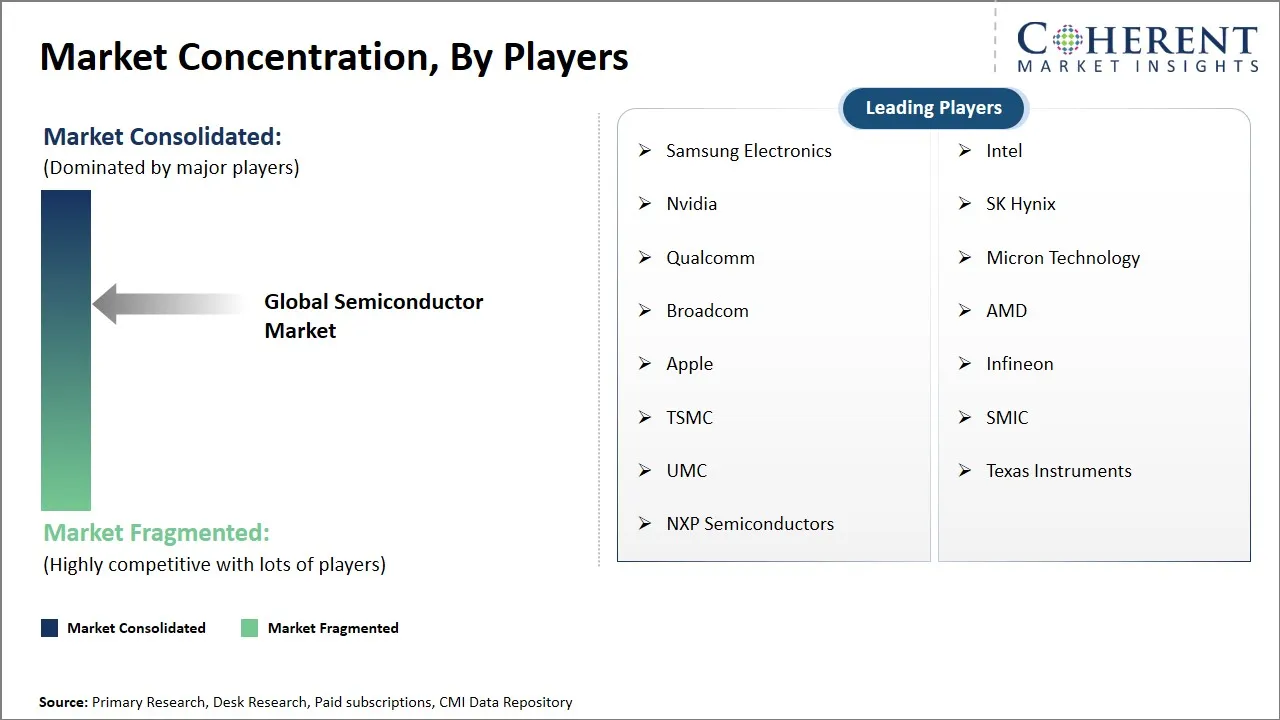
Key Developments
- On July 29, 2025, Rebellions Inc., a leading AI semiconductor company based in South Korea, announced a collaboration with Marvell Technology, Inc. to offer high-performance, energy-efficient AI systems tailored for regionally driven and sovereign-backed AI initiatives across APAC and the Middle East. This collaboration will enable Rebellions to design customer-specific AI accelerators utilizing Marvell custom platforms—leveraging advanced packaging, high-speed SerDes and die-to-die interconnects.
- On July 17, 2025, Synopsys announced the completion of its acquisition of Ansys. The transaction, which was announced on January 16, 2024, combines leaders in silicon design, IP and simulation and analysis to enable customers to rapidly innovate AI-powered products.
- In June 2025, Rapidus Corporation, a manufacturer of advanced logic semiconductors, announced a strategic collaboration with Siemens Digital Industries Software for semiconductor design and manufacturing processes for the 2nm generation. Rapidus will collaborate with Siemens to jointly develop a process design kit based on the Calibre platform, the industry-standard verification solution that enables highly accurate and efficient physical verification, manufacturing optimization, and reliability assessment from semiconductor design through to fabrication
- In April 2025, IBM and Tokyo Electron announced an extension of their agreement for the joint research and development of advanced semiconductor technologies. The new 5-year agreement will focus on the continued advancement of technology for next-generation semiconductor nodes and architectures to power the age of generative AI.
Top Strategies Followed by Semiconductor Market Players
- Established semiconductor giants invest heavily in research and development (R&D) to push the boundaries of innovation, producing high-performance products that cater to increasingly sophisticated technological demands.
- Intel is investing over USD 20 billion into its R&D and fab expansion initiatives, including the development of Intel 18A and 20A nodes featuring RibbonFET and PowerVia technologies.
- Mid-level semiconductor manufacturers adopt a different approach, focusing primarily on offering cost-effective solutions that strike a balance between quality and affordability.
- MediaTek focuses on developing affordable yet powerful chipsets for smartphones, IoT, and automotive markets. Its Dimensity series balances performance with cost, targeting OEMs in emerging markets.
- Small-scale players in the semiconductor arena distinguish themselves by focusing on specialized features or highly innovative product lines that cater to niche applications, such as custom integrated circuits for specific industrial or IoT applications.
- SiFive specializes in RISC-V–based processor IP and custom silicon design for edge computing, aerospace, and industrial AI applications.
Market Report Scope
Semiconductor Market Report Coverage
| Report Coverage | Details | ||
|---|---|---|---|
| Base Year: | 2025 | Market Size in 2026: | USD 637.35 Bn |
| Historical Data for: | 2020 To 2024 | Forecast Period: | 2026 To 2033 |
| Forecast Period 2026 to 2033 CAGR: | 8.8% | 2033 Value Projection: | USD 1,150.22 Bn |
| Geographies covered: |
| ||
| Segments covered: |
| ||
| Companies covered: | Samsung Electronics, Intel, Nvidia, SK Hynix, Qualcomm, Micron Technology, Broadcom, AMD, Apple, Infineon, TSMC, SMIC, UMC, Texas Instruments, and NXP Semiconductors | ||
| Growth Drivers: |
| ||
| Restraints & Challenges: |
| ||
Market Dynamics
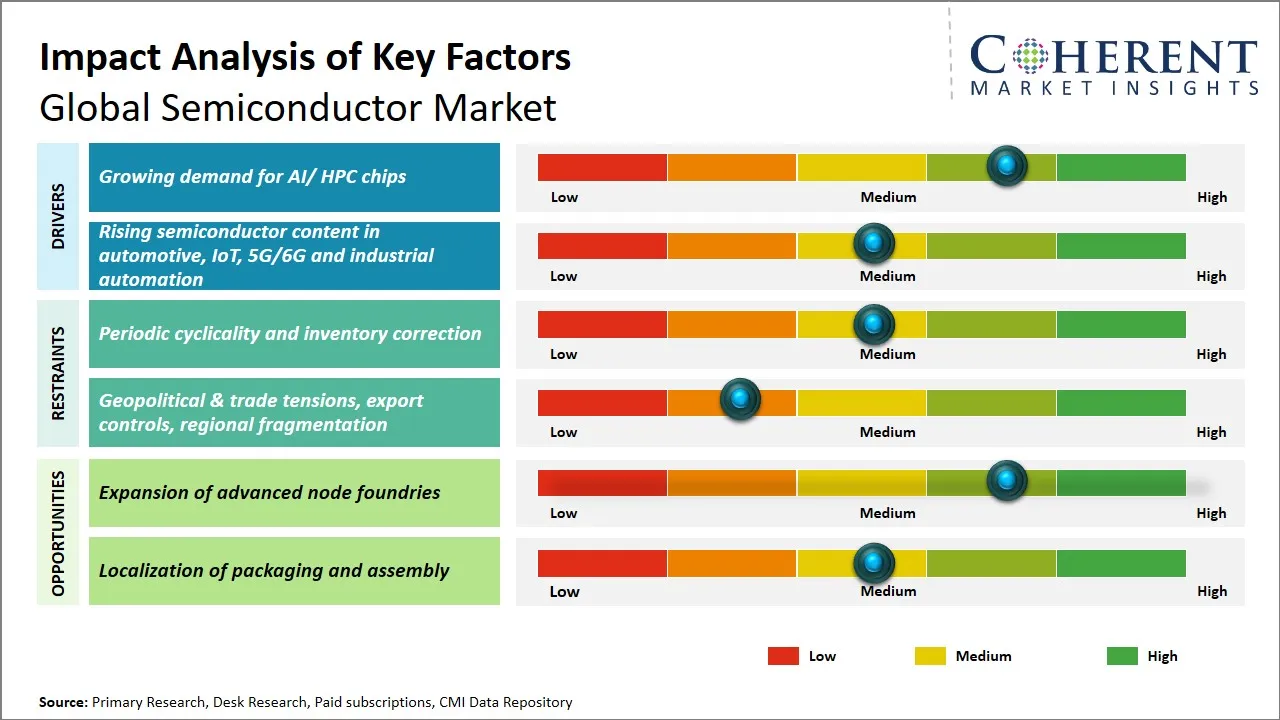
Global Semiconductor Market Driver – Growing Demand for AI/ HPC Chips
The accelerating adoption of artificial intelligence (AI) and high-performance computing (HPC) technologies is a significant driver propelling the semiconductor market forward. AI applications, ranging from machine learning algorithms to deep neural networks, require advanced semiconductor components capable of processing vast amounts of data at unprecedented speeds and efficiencies. Similarly, HPC systems used in scientific research, weather modeling, and big data analytics demand powerful chips designed to handle complex computations with minimal latency.
This surge in computational requirements is pushing semiconductor manufacturers to develop specialized AI accelerators, graphic processing units (GPUs), and multi-core processors that offer enhanced performance and energy efficiency. Additionally, the integration of AI capabilities into various consumer electronics, automotive systems, and data centers is further intensifying pressure on chipmakers to innovate and scale production. The rise of generative AI has triggered explosive demand for NVIDIA's H100 and B100 GPUs, which are central to training large AI models in data centers worldwide.
Global Semiconductor Opportunity – Expansion of Advanced Node Foundries
As demand for smaller, faster, and more power-efficient chips continues to escalate—driven by applications in artificial intelligence, 5G communications, autonomous vehicles, and Internet of Things (IoT) devices—foundries capable of producing at sub-7nm and emerging 3nm process nodes are becoming essential. These advanced nodes enable higher transistor density and improved performance, meeting the evolving specifications of leading-edge electronics manufacturers. Investments in upgrading existing fabrication facilities or building new advanced node foundries are consequently gaining momentum, particularly in regions such as Taiwan, South Korea, and the U.S. To meet rising global demand, TSMC is expanding its advanced-node capacity with major investments in 2nm GAA fabs in Taiwan and Japan, and 3nm fabs in Arizona, USA.
This expansion not only addresses the capacity constraints faced by current leading foundry operators like TSMC and Samsung but also helps mitigate geopolitical risks by diversifying the production footprint. Furthermore, government initiatives and subsidies aimed at strengthening domestic semiconductor manufacturing capabilities have intensified, lowering barriers to entry and accelerating the deployment of cutting-edge fabrication technologies.
Analyst Opinion (Expert Opinion)
- As FinFET technology nears its physical limits, the semiconductor industry is shifting to GAA nanosheet transistors, which offer superior electrostatic control and power efficiency. Companies like Samsung (SF3) and TSMC (N2) are leading this charge, enabling higher transistor densities vital for AI and HPC workloads. This transition marks a paradigm shift not just in transistor architecture but also in design workflows and toolchains, requiring ecosystem-wide adaptation.
- The move toward chiplet-based architectures, championed by AMD, Intel, and TSMC, is changing how performance, yield, and cost are optimized. Advanced packaging technologies such as CoWoS, Foveros, and EMIB enable mixing and matching of IP blocks across different nodes, making it possible to integrate logic, memory, and analog functions more efficiently. This modular approach not only accelerates innovation cycles but also mitigates the yield challenges associated with monolithic chips at sub-5nm nodes.
- With AI and edge computing driving diverse workload requirements, there’s a surge in domain-specific architectures (DSAs)—from custom AI accelerators to neuromorphic and quantum processors. Startups and incumbents alike are developing AI-optimized silicon tailored for inference, training, or real-time decision-making. These specialized chips demand advanced node performance, robust interconnects, and fine-grained power management—ushering in a new era of application-specific innovation that’s transforming the traditional boundaries of semiconductor design.
Speak to the analyst
Want personalized insights?
Take the findings above to one of our principal consultants, or have the report rebuilt around the segments, geographies and competitors you actually track.
Market Segmentation
- Component Insights (Revenue, USD Bn, 2021 - 2033)
- Memory Devices
- Logic Devices
- Analog IC
- Power Devices
- MPU
- MCU
- Discrete Power Devices
- Sensors
- Others
- Application Insights (Revenue, USD Bn, 2021 - 2033)
- Networking and Communication
- Data Processing
- Consumer Electronics
- Industrial
- Automotive
- Government
- Regional Insights (Revenue, USD Bn, 2021 - 2033)
- North America
- U.S.
- Canada
- Latin America
- Brazil
- Argentina
- Mexico
- Rest of Latin America
- Europe
- Germany
- U.K.
- Spain
- France
- Italy
- Russia
- Rest of Europe
- Asia Pacific
- China
- India
- Japan
- Australia
- South Korea
- ASEAN
- Rest of Asia Pacific
- Middle East
- GCC Countries
- Israel
- Rest of Middle East
- Africa
- South Africa
- North Africa
- Central Africa
- North America
- Key Players Insights
- Samsung Electronics
- Intel
- Nvidia
- SK Hynix
- Qualcomm
- Micron Technology
- Broadcom
- AMD
- Apple
- Infineon
- TSMC
- SMIC
- UMC
- Texas Instruments
- NXP Semiconductors
Sources
Primary Research Interviews
Stakeholders
- Semiconductor Foundry Engineers and Process Integration Managers
- Chip Design Houses and Fabless Companies (e.g., Product Architects, IP Licensing Managers)
- Electronics OEMs and System Integrators (e.g., Automotive, Industrial, Consumer Electronics)
- EDA Tool Vendors and Packaging Specialists
- Advanced Material and Equipment Suppliers (EUV, lithography, deposition)
- AI Hardware Startups and Domain-Specific Architecture Designers
Databases
- Eurostat
- U.S. Census
- SemiconWorld Database
- OECD
- GlobalTech Manufacturing Index
Magazines
- Semiconductor Engineering
- Power Electronics News
- Chip Fabrication Monthly
- Advanced Packaging Digest
Journals
- IEEE Journal of Solid-State Circuits
- Microelectronics Reliability Journal
- IEEE Transactions on Semiconductor Manufacturing
- Materials Science in Semiconductor Processing
Newspapers
- Electronics Newsline (U.S.)
- The Silicon Republic (Ireland)
- AsiaTech Times
- The Economic Times (India)
Associations
- Semiconductor Equipment and Materials International (SEMI)
- Global Semiconductor Alliance (GSA)
- Institute of Electrical and Electronics Engineers (IEEE)
- American Semiconductor Innovation Coalition (ASIC)
- Taiwan Semiconductor Industry Association (TSIA)
Public Domain Sources
- U.S. Census Bureau
- EUROSTAT
- United Nations Economic Commission for Europe (UNECE)
- World Bank
- ResearchGate
Proprietary Elements
- CMI Data Analytics Tool, Proprietary CMI Existing Repository of information for last 8 years
Get access to 250+ pages report
Every segment, forecast, competitor profile and data table behind the analysis above — available for instant download.
- ESOMAR Member
- ISO 9001:2015 Certified
- D-U-N-S Registered
- GDPR & CCPA Compliant
Missing comfort of reading report in your local language? Find your preferred language:
Transform your Strategy with Exclusive Trending Reports
Frequently Asked Questions
The global semiconductor market is estimated to be valued at USD 637.35 billion in 2026 and is expected to reach USD 1,150.22 billion by 2033.
The CAGR of global semiconductor market is projected to be 8.8% from 2026 to 2033.
Growing demand for AI/ HPC chips and rising semiconductor content in automotive, IoT, 5G/6G and industrial automation are the major factors driving the growth of the global semiconductor market.
Periodic cyclicality and inventory correction and geopolitical & trade tensions, export controls, regional fragmentation are the major factors hampering the growth of the global semiconductor market.
In terms of component, memory devices are estimated to dominate the market revenue share in 2026.
Emerging technologies like Gate-All-Around (GAA) transistors, chiplet architecture, and advanced packaging are major growth drivers.
On a scale of 0–5, the semiconductor market stands at 4, indicating a high level of consolidation among top players like TSMC, Samsung, and Intel.