

Global Spinach Market Size and Forecast: 2026-2033
The Global Spinach Market is estimated to be valued at USD 752.4 Mn in 2026 and is expected to reach USD 1,208.2 Mn by 2033, exhibiting a compound annual growth rate (CAGR) of 7.0% from 2026 to 2033.
Key Takeaways of the Spinach Market
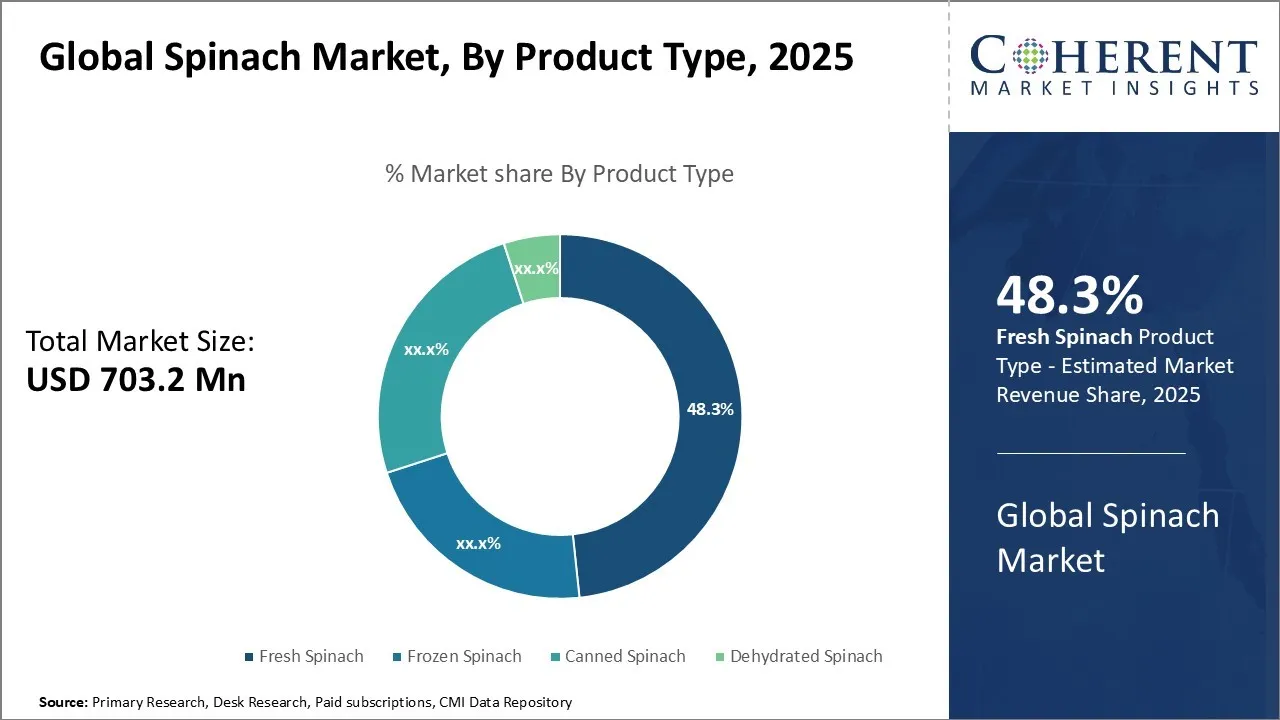
- Fresh spinach is expected to account for 49.3% of the global spinach market in 2026.
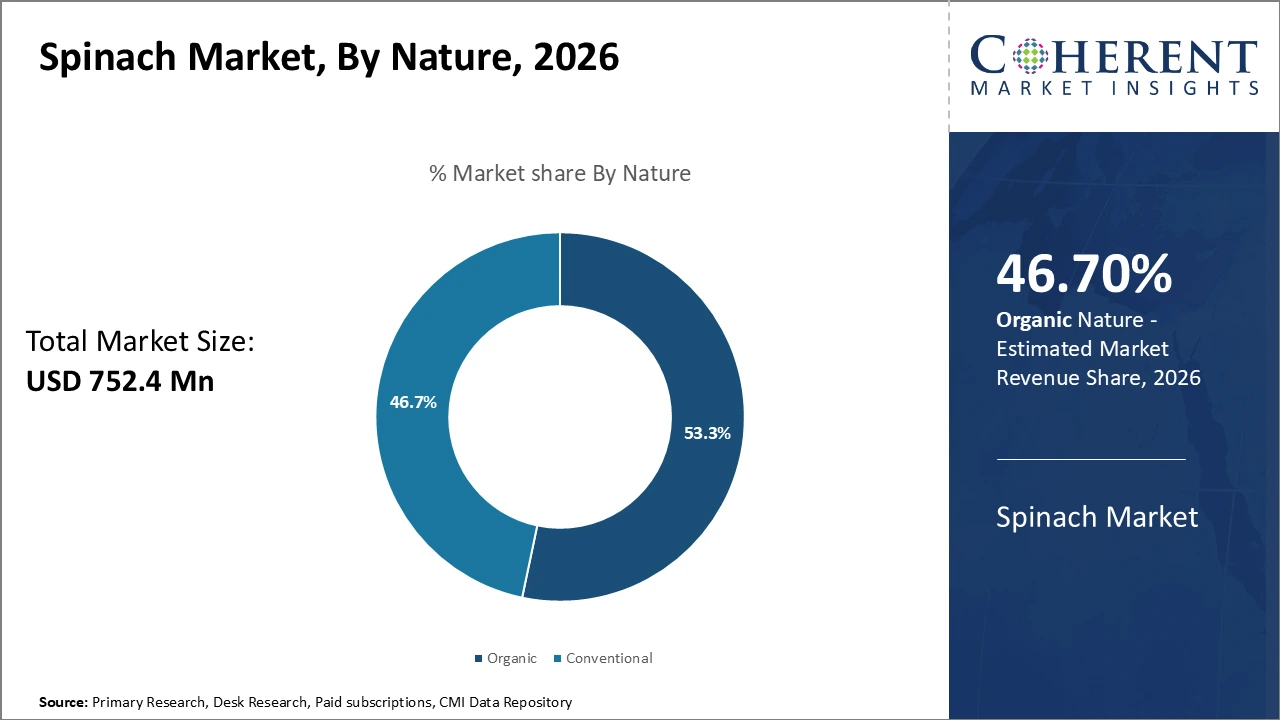
- Organic segment is projected to hold a 46.7% share of the market in 2026.
- The food processing segment is anticipated to capture 33.7% of the global spinach market in 2026.
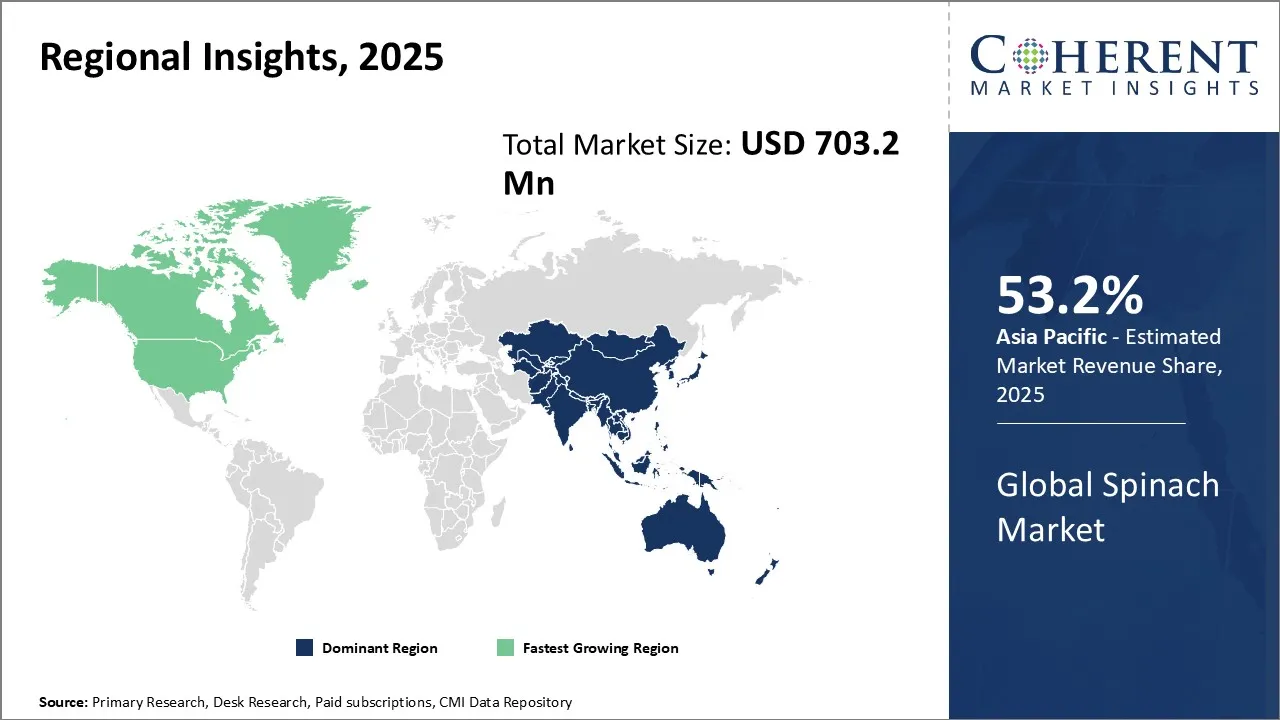
- Asia Pacific is projected to lead the global spinach market in 2026 with a 53. 2% share. North America, with a 23.5% share, is expected to be the fastest-growing region.
Market Overview
Current market trends indicate a strong shift towards organic and sustainably farmed spinach, driven by health-conscious consumers and stricter food safety regulations. Innovation in packaging to extend shelf life and the rising popularity of ready-to-eat spinach products are also key factors boosting market penetration. Additionally, the surge in vegan and plant-based diets is propelling spinach consumption as a vital source of essential vitamins and minerals, solidifying its position in the global health food market.
Currents Events and their Impact
Current Events | Description and its impact |
Expansion of Hybrid and Disease-Resistant Spinach Varieties |
|
Rise of E-commerce and Direct-to-Consumer Channels |
|
Segmental Insights
- Current Industry Events of 2026
- Market Size Estimation
- Regional Breakdown
- Competitive Landscape
- Customer Intelligence
- Segmental Analysis
- Pricing Analysis
- Key Market Drivers, Challenges & Future Trends
- Customized Insights Section
Spinach Market Insights, By Product Type - Fresh Spinach Segment Dominates the Market Driven by Consumer Preference for Nutritional Freshness and Versatility
Fresh Spinach segment is expected to hold 49.3% share in the global spinach market in 2026, primarily due to growing consumer demand for fresh, minimally processed, and nutrient-rich vegetables. Fresh spinach is widely recognized for its superior taste, texture, and nutritional value compared to other processed forms like frozen or canned spinach. Consumers are increasingly leaning towards fresh produce as part of a balanced and health-conscious diet, which naturally boosts the consumption of fresh spinach. Its high content of vitamins A, C, K, and folate, alongside antioxidants and iron, makes it a preferred choice for people seeking natural health benefits from their food.
For example, Dole Food Company has significantly expanded its fresh spinach offerings in North America through retail partnerships with major supermarket chains like Walmart and Kroger, focusing on organic and pre-washed ready-to-eat formats to cater to health-conscious consumers.
Spinach Market Insights, By Nature - Organic Spinach Gains Traction Amid Rising Health and Sustainability Awareness
Organic segment is projected to command 46.7% share of the market in 2026, reflecting a significant shift in consumer behavior towards healthy and environmentally sustainable food options. The organic segment’s prominence is propelled by growing awareness about the benefits of pesticide-free, chemical-free farming methods and a clear preference among consumers for food products perceived as safer and more natural.
Consumers are increasingly concerned about the long-term health implications of synthetic agrochemicals and their residual effects in conventionally grown leafy greens, making organic spinach an attractive alternative. Organic spinach is often associated with higher nutritional value and better taste, factors that motivate health-conscious buyers to choose it over conventional varieties. Moreover, organic farming practices focus on soil health and biodiversity conservation, which appeal to environmentally aware buyers and those who advocate for sustainable agriculture.
Spinach Market Insights, By End User - Food Processing Segment Fuels Demand through Innovation and Convenience-Driven Consumption
Food Processing segment is estimated to hold 33.7% share in the global spinach market in 2026, fueled by innovation and the increasing demand for convenient, nutritious food products. Spinach as an ingredient plays a vital role in several processed food categories, including ready-to-eat meals, frozen foods, bakery products, snacks, and sauces. The food processing industry’s constant drive toward product diversification and fortification with nutrient-dense vegetables like spinach has contributed significantly to this segment’s expansion.
The shift in consumer lifestyles towards on-the-go eating and quick meal solutions has led to high demand for processed foods enriched with vegetables to improve their health profile. Spinach’s natural properties—rich in vitamins and antioxidants—make it an ideal ingredient for food processors aiming to meet this demand. Innovative products such as spinach-infused pastas, vegetable chips, and fortified bakery goods have entered the market, supported by consumer interest in functional foods that deliver both convenience and health benefits.
Regional Insights
Asia Pacific Spinach Market Analysis and Trends
The Asia Pacific region is projected to lead the market with a 53.2% share in 2026, due to rapid urbanization, rising disposable incomes, and increasing awareness about nutritious diets. Nations like China, India, and Japan show accelerated consumption supported by evolving consumer preferences toward fresh produce and organic vegetables. Government initiatives promoting agricultural modernization and export development in countries such as China and India contribute significantly to the sector’s expansion.
The market ecosystem here benefits from the presence of numerous small to medium-scale producers alongside large agribusiness players like Olam International and Japfa Ltd., who are actively investing in processing and supply chain enhancements.
North America Spinach Market Analysis and Trends
The North America region is expected to exhibit the fastest growth in the market contributing 23.5% share in 2026, driven by an advanced agricultural ecosystem, strong government support for organic and sustainable farming, and high consumer demand for health-conscious food choices. The U.S. and Canada, in particular, benefit from well-established supply chains and extensive investments in agricultural technology that optimize spinach cultivation and distribution.
Regulatory frameworks ensuring food safety and quality standards further boost consumer confidence. Leading companies such as Taylor Farms and Dole Food Company have made significant contributions through their focus on fresh, pre-packaged spinach products, driving innovation and expanding availability across retail and foodservice sectors. The region’s robust cold chain infrastructure also facilitates year-round supply, making North America the largest player in this market.
Global Spinach Market Outlook for Key Countries
U.S. Spinach Market Trends
The U.S. spinach market is characterized by widespread consumption of fresh and pre-packaged spinach driven by health trends and a strong focus on organic produce. Companies like Taylor Farms, Dole, and Earthbound Farm dominate the market by innovating in product packaging and offering convenience-based spinach products. Technological advances, such as hydroponics and precision farming, enable year-round production. Additionally, stringent safety regulations and sustainability standards enforced by the FDA and USDA uphold product quality, further fueling market maturity.
China Spinach Market Trends
China's spinach market continues to expand rapidly as urban consumers increasingly prefer fresh and organic vegetables. Government programs pushing for modern farming techniques and subsidies for sustainable agriculture positively impact production volumes and quality. Major players like COFCO Corporation and New Hope Group play a crucial role in organizing large-scale cultivation and supply chain efficiency, facilitating both domestic consumption and export activities. The growing cold storage infrastructure also supports longer shelf life and distribution reach.
India Spinach Market Trends
India’s spinach market is marked by its strong domestic consumption influenced by traditional dietary habits that emphasize leafy vegetables. The government’s emphasis on improving farm productivity and rural infrastructure supports smallholder farmers in scaling up production. Companies such as Godrej Agrovet and Mahindra Agri Solutions are vital in introducing better seeds, agronomy practices, and cold chain systems that enhance availability. Moreover, increasing investment in processed and packaged spinach formats is expanding the market beyond rural and urban boundaries.
Japan Spinach Market Trends
Japan continues to lead in adopting innovative agricultural methods including vertical farming and hydroponics to optimize spinach yield within limited land availability. Companies like Ajinomoto and Suntory Foods leverage advanced technologies to produce high-quality, pesticide-free spinach targeted at health-conscious consumers. The market is also shaped by stringent quality standards and a preference for premium products. Import reliance supplements domestic production to meet year-round demand, supported by efficient logistics networks.
Mexico Spinach Market Trends
Mexico's spinach market is driven by its role as a key spinach exporter, particularly to the U.S., leveraging its favorable climate for year-round cultivation. Prominent companies such as Agricola Gonzalez and Camposol focus on export-oriented production and have developed strong partnerships with U.S. retailers. The Mexican government supports agricultural exports through trade agreements and infrastructure improvements, enhancing market competitiveness. Domestic consumption is also growing, driven by increasing health awareness among urban populations and expanded retail penetration.
Macro and Micro Factors Impacting on Spinach Market Growth
Macroeconomic factors impacting the spinach market include
- Economic conditions: Inflation rates, interest rates, and exchange rates affect the cost of production, distribution, and marketing of spinach products, influencing prices and profitability.
- Government policies and regulations: Political factors such as agricultural policies, subsidies, trade regulations, and taxes can significantly impact market growth positively or negatively.
Microeconomic factors include
- Consumer preferences: Increasing health consciousness, preference for organic or natural products, and the rise of plant-based diets boost demand for spinach.
- Supply chain dynamics: Availability and cost of raw spinach, production challenges, transportation, and distribution efficiency influence market supply and prices.
- Technological advancements: Innovations in production, preservation (like freezing or powdering), and packaging improve product quality and shelf-life, enhancing market growth.
- Market competition: Competition between fresh, frozen, and processed spinach products impacts consumer choices and pricing strategies.
Market Players, Company Insights, and Competitive Intelligence
Company Insights
- Dole plc offers a diverse range of spinach products in the market, catering to both conventional and organic segments. Its core offerings include fresh, preservative-free spinach in convenient 8-ounce bags, ideal for salads, cooking, or smoothies, and thoroughly washed for immediate use. The company also provides baby spinach in 6-ounce bags or clamshell packaging, designed for ready-to-eat consumption and suitable for a variety of recipes.
- Taylor Farms brings a versatile and health-forward line of spinach products to the market, catering both to home cooks and foodservice clients. On the retail side, Taylor Farms offers fresh, pre-washed spinach that’s ready to eat straight from the bag. Retail packaging options include 5 oz, 9 oz, and 16 oz bags as well as 10 oz and 16 oz clamshells.
Top Strategies Followed by Global Spinach Market Players
- Established players, leading global spinach producers, such as Dole Food Company, Bonduelle Group, and Earthbound Farm, invest heavily in research and development to create innovative, high-performance spinach products that meet evolving consumer preferences for quality, nutrition, and convenience.
- For example, Bonduelle has expanded its organic spinach range and introduced resealable packaging to enhance freshness and reduce waste, while Earthbound Farm pioneered large-scale organic baby spinach production for retail.
- Mid-level players in the spinach market carve out their competitive positioning by focusing on cost-effective solutions that strike a balance between quality and affordability. Recognizing the price sensitivity of a significant consumer segment, these companies tailor their product portfolios to meet the needs of budget-conscious customers without compromising safety and nutritional value.
- For instance, Greenyard is a global market leader that specializes in the production and supply of fresh, frozen, and prepared fruits and vegetables, as well as flowers and plants and bulk frozen spinach to foodservice operators and schools in Europe, meeting institutional demand while keeping costs low. They also focus on product accessibility, ensuring that spinach is available through mainstream retail channels in multiple formats—fresh bunches, frozen packs, and canned options—catering to price-sensitive yet health-conscious customers.
- Small-scale players in the global spinach market differentiate themselves by carving specialized niches centered around unique product features and innovation. Many of these smaller companies invest in adopting cutting-edge agricultural technologies, such as hydroponics and vertical farming, to grow spinach varieties that appeal to specific consumer preferences for locally sourced, pesticide-free, or nutrient-enriched produce. Their agility allows them to quickly respond to regional trends and demands, positioning themselves as specialists in designated market segments.
- For example, BrightFarms uses hydroponic greenhouse farming to deliver locally grown, pesticide-free spinach to nearby urban markets within 24 hours of harvest. Similarly, Sky Greens employs vertical farming to produce nutrient-enriched spinach varieties in space-constrained urban environments.
Market Report Scope
Spinach Market Report Coverage
| Report Coverage | Details | ||
|---|---|---|---|
| Base Year: | 2025 | Market Size in 2026: | USD 752.4 Mn |
| Historical Data for: | 2020 To 2024 | Forecast Period: | 2026 To 2033 |
| Forecast Period 2026 to 2033 CAGR: | 7.0% | 2033 Value Projection: | USD 1,208.2 Mn |
| Geographies covered: |
| ||
| Segments covered: |
| ||
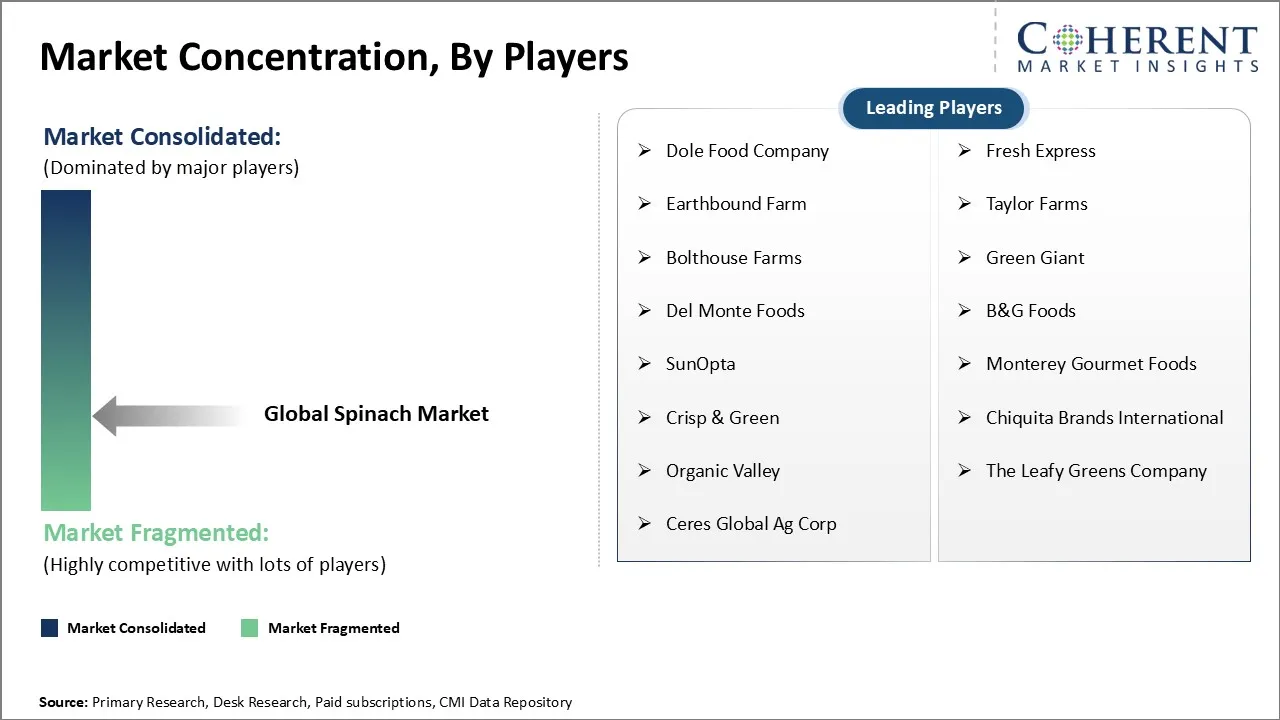
| Companies covered: | Dole Food Company, Fresh Express, Earthbound Farm, Taylor Farms, Bolthouse Farms, Green Giant, Del Monte Foods, B&G Foods, SunOpta, Monterey Gourmet Foods, Crisp & Green, Chiquita Brands International, Organic Valley, The Leafy Greens Company, and Ceres Global Ag Corp. | ||
| Growth Drivers: |
| ||
| Restraints & Challenges: |
| ||
Spinach Market Dynamics
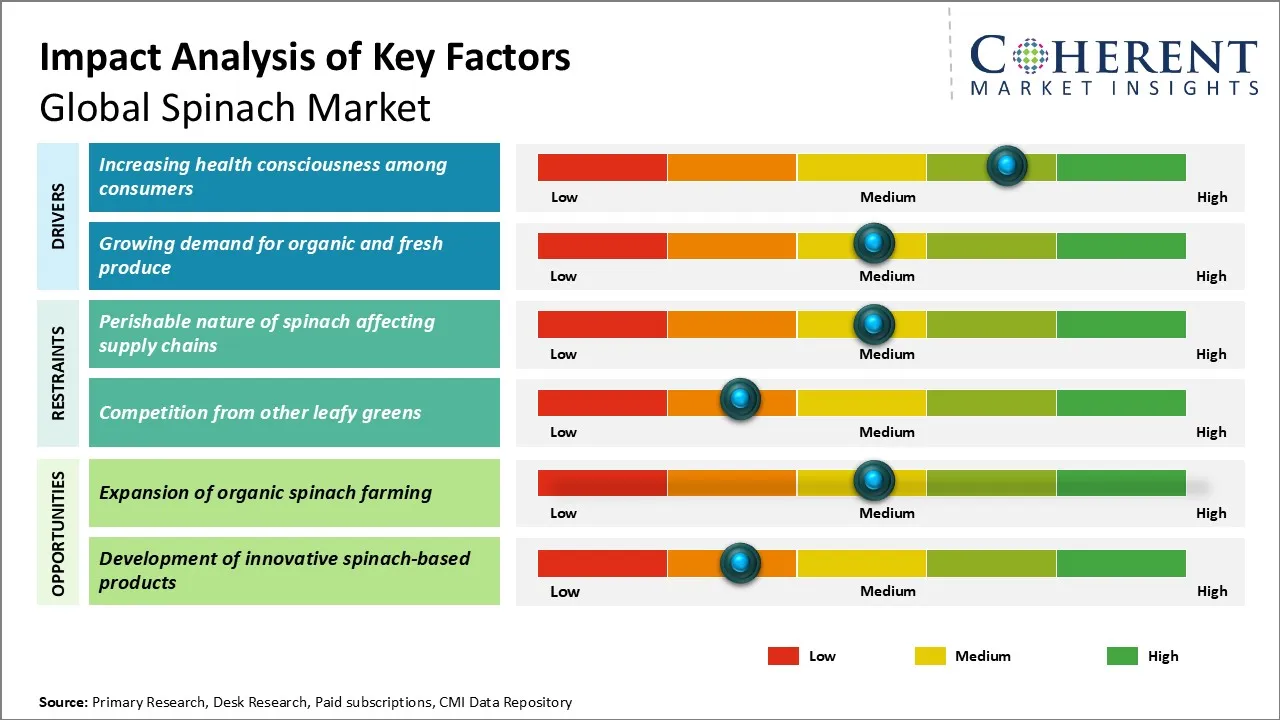
Spinach Market Driver - Increasing Health Consciousness Among Consumers
The increasing health consciousness among consumers is significantly driving the growth of the global spinach market. As more individuals become aware of the importance of a balanced diet rich in vitamins, minerals, and antioxidants, spinach emerges as a preferred leafy green due to its impressive nutritional profile. Known for being packed with iron, calcium, vitamin supplements, vitamins A, C, and K, as well as dietary fiber, spinach caters to a wide array of health goals including improved digestion, enhanced immunity, and better bone health. Moreover, the existing trend toward plant-based and clean-label diets has heightened consumer preference for natural and nutrient-dense foods like spinach. Its versatility in both raw and cooked forms makes it accessible across various culinary applications, aligning well with the demand for wholesome and quick-to-prepare meals.
For example, according to the USDA, the consumption of fresh spinach in the U.S. increased from around 0.9 kg per person in 2010 to over 1.2 kg per person in 2022, reflecting growing consumer demand for nutrient-rich vegetables.
Spinach Market Opportunity - Expansion of Organic Spinach Farming
The global spinach market is poised for significant growth through the expansion of organic spinach farming, driven by rising consumer demand for health-conscious and sustainably produced food options. As awareness of the benefits associated with organic produce continues to increase, more consumers are seeking spinach that is free from synthetic pesticides, specialty pesticides, herbicides, and genetically modified organisms (GMOs). This shift is particularly pronounced in developed regions such as North America and Europe, where organic food markets have witnessed double-digit growth rates in recent years. Moreover, the growing emphasis on clean-label products and transparency in food sourcing has encouraged retailers and foodservice providers to increase their offerings of organic leafy greens, including spinach.
Analyst Opinion (Expert Opinion)
- The global spinach market is poised for significant growth, propelled by increasing health consciousness and the rising popularity of plant-based diets. Insights from the Global Vegetable Conference (2023) and the International Produce Trade Show (2022) highlighted spinach's versatility as a superfood, rich in nutrients and antioxidants.
- Leading producers like Dole and Fresh Express are innovating with pre-washed, ready-to-eat spinach products, catering to busy consumers seeking convenience without sacrificing health. For example, Dole's introduction of packaged spinach blends that combine various greens reflects a strategic move towards enhancing nutritional value while appealing to diverse palates.
- Discussions at these conferences emphasized the importance of sustainable farming practices, with a growing focus on organic spinach cultivation to meet consumer demand for clean, pesticide-free produce. As the market continues to evolve, companies that invest in quality, sustainability, and innovative packaging will likely capture a larger share. The future of the global spinach market will depend on the ability to adapt to shifting consumer preferences and the ongoing emphasis on health and wellness in dietary choices.
Speak to the analyst
Want personalized insights?
Take the findings above to one of our principal consultants, or have the report rebuilt around the segments, geographies and competitors you actually track.
Market Segmentation
- Product Type Insights (Revenue, USD Mn, 2021 - 2033)
- Fresh Spinach
- Frozen Spinach
- Canned Spinach
- Dehydrated Spinach
- Nature Insights (Revenue, USD Mn, 2021 - 2033)
- Organic
- Conventional
- End User Insights (Revenue, USD Mn, 2021 - 2033)
- Food Processing
- Nutraceuticals
- Dietary Supplement
- Beverages
- Distribution Channel Insights (Revenue, USD Mn, 2021 - 2033)
- Store-Based Retailing
- Grocery Retailers
- Modern Grocery Retailers
- Convenience Stores
- Hypermarkets
- Supermarkets
- Regional Insights (Revenue, USD Mn, 2021 - 2033)
- North America
- U.S.
- Canada
- Latin America
- Brazil
- Argentina
- Mexico
- Rest of Latin America
- Europe
- Germany
- U.K.
- Spain
- France
- Italy
- Russia
- Rest of Europe
- Asia Pacific
- China
- India
- Japan
- Australia
- South Korea
- ASEAN
- Rest of Asia Pacific
- Middle East
- GCC Countries
- Israel
- Rest of Middle East
- Africa
- South Africa
- North Africa
- Central Africa
- North America
- Key Players Insights
- Dole Food Company
- Fresh Express
- Earthbound Farm
- Taylor Farms
- Bolthouse Farms
- Green Giant
- Del Monte Foods
- B&G Foods
- SunOpta
- Monterey Gourmet Foods
- Crisp & Green
- Chiquita Brands International
- Organic Valley
- The Leafy Greens Company
- Ceres Global Ag Corp.
Sources
Primary Research Interviews
- Agricultural Research Director – Leading Global Spinach Producer
- Procurement Manager – Major Fresh Produce Retail Chain
- Product Development Head – Frozen and Packaged Spinach Brand
- Sustainability Manager – Organic and Sustainable Farming Certification Body
Stakeholders
- Spinach Growers and Producers
- Fresh Produce Retailers and Distributors
- Frozen and Packaged Food Manufacturers
- Organic and Sustainable Agriculture Advocacy Groups
- Foodservice and Hospitality Sector (heavy users of spinach products)
Databases
- UN Comtrade Database – Global agricultural trade data including spinach
- FAOSTAT – Food and Agriculture Organization statistical data on spinach production and consumption
- India Import Export (EXIM) Database – Spinach export/import volumes and values in India
Magazines
- Fresh Produce Journal – Trends and innovations in leafy greens including spinach
- Agriculture & Food Technology Magazine – Advances in spinach cultivation and postharvest technology
- Global Food Insights – Consumer demand and market analysis for fresh vegetables including spinach
- Frozen Food Europe – Market updates and innovations in frozen spinach products
- Organic Farming Review – Insights on organic spinach production and market dynamics
Journals
- Journal of Agricultural and Food Chemistry – Nutritional studies and bioactive compounds in spinach
- Postharvest Biology and Technology – Studies on spinach storage, shelf life, and preservation methods
- International Journal of Vegetable Science – Research on spinach varieties, yield improvement, and pest management
- Journal of Food Science & Technology – Spinach processing and quality assessment
Newspapers
- The Guardian – Consumer trends and sustainability issues in fresh produce consumption, including spinach
- The Financial Times – Global trade and market growth in fresh and processed spinach
- Asia Health Journal – Demand trends and nutritional interest in spinach in Asia Pacific
- European Nutrition News – Regulatory updates and market dynamics for leafy greens including spinach
Associations
- International Leafy Greens Council
- Global Organic Trade Association
- World Vegetable Center
- Fresh Produce Association
- Sustainable Agriculture Network
Public Domain Sources
- Food and Agriculture Organization (FAO) – Spinach production, trade statistics, and nutritional data
- USDA – Guidelines and reports on fresh spinach production, safety, and consumption
- European Commission – Agricultural policies and spinach market regulations in Europe
Proprietary Elements
- CMI Data Analytics Tool
- Proprietary CMI Existing Repository of information for last 8 years
Get access to 250+ pages report
Every segment, forecast, competitor profile and data table behind the analysis above — available for instant download.
- ESOMAR Member
- ISO 9001:2015 Certified
- D-U-N-S Registered
- GDPR & CCPA Compliant
Missing comfort of reading report in your local language? Find your preferred language:
Transform your Strategy with Exclusive Trending Reports
Frequently Asked Questions
The global spinach market is estimated to be valued at USD 752.4 Mn in 2026 and is expected to reach USD 1,208.2 Mn by 2033.
The CAGR of global spinach market is projected to be 7.0% from 2026 to 2033.
Increasing health consciousness among consumers and growing demand for organic and fresh produce are the major factors driving the growth of the global spinach market.
Perishable nature of spinach affecting supply chains and competition from other leafy greens are the major factors hampering the growth of the global spinach market.
In terms of Product Type, Fresh Spinach segment is estimated to dominate the market revenue share in 2026.
Dole Food Company, Fresh Express, Earthbound Farm, Taylor Farms, Bolthouse Farms, Green Giant, Del Monte Foods, B&G Foods, SunOpta, Monterey Gourmet Foods, Crisp & Green, Chiquita Brands International, Organic Valley, The Leafy Greens Company, and Ceres Global Ag Corp are the major players.
Asia Pacific is expected to lead the global spinach market in 2026.