

Global Synthetic Data Market Size and Forecast – 2026-2033
The Global Synthetic Data Market is estimated to be valued at USD 635.6 Mn in 2026 and is expected to reach USD 4,163.0 Mn by 2033, exhibiting a compound annual growth rate (CAGR) of 30.8% from 2026 to 2033.
Key Takeaways of the Global Synthetic Data Market
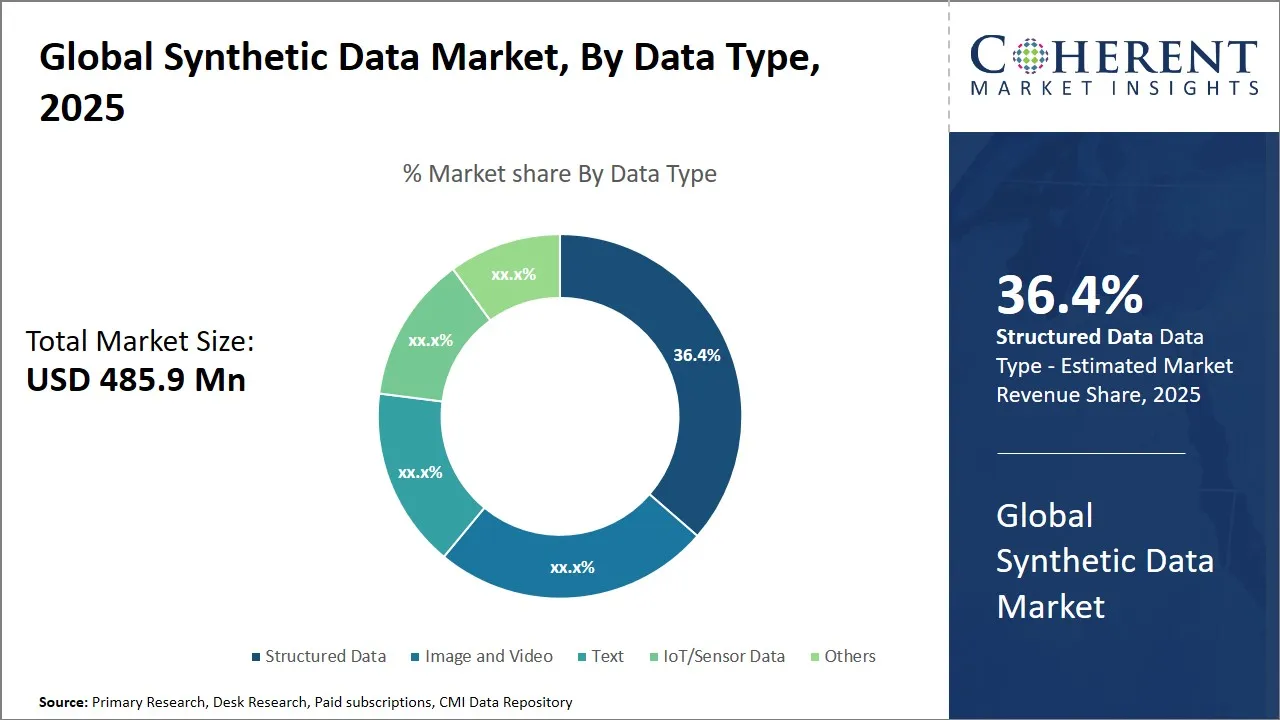
- The structured data segment leads the market holding an estimated share of 37.4% in 2026.
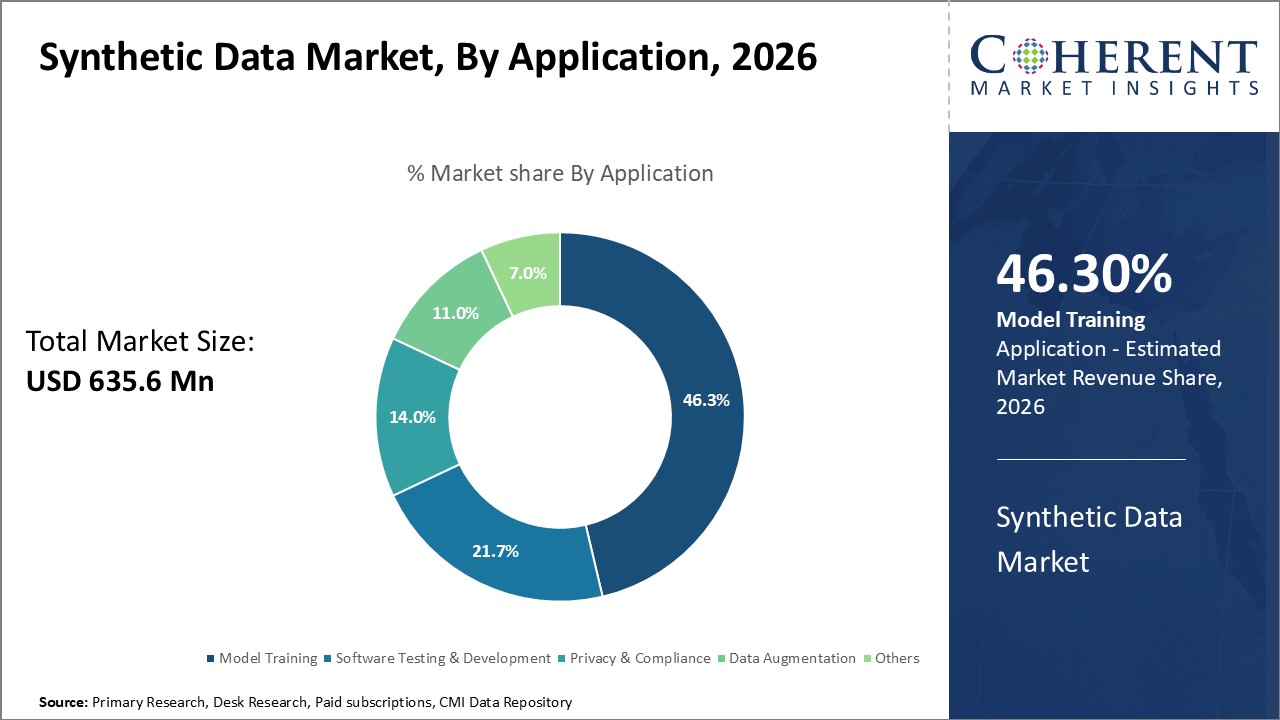
- The model training segment leads the market holding an estimated share of 46.3% in 2026.
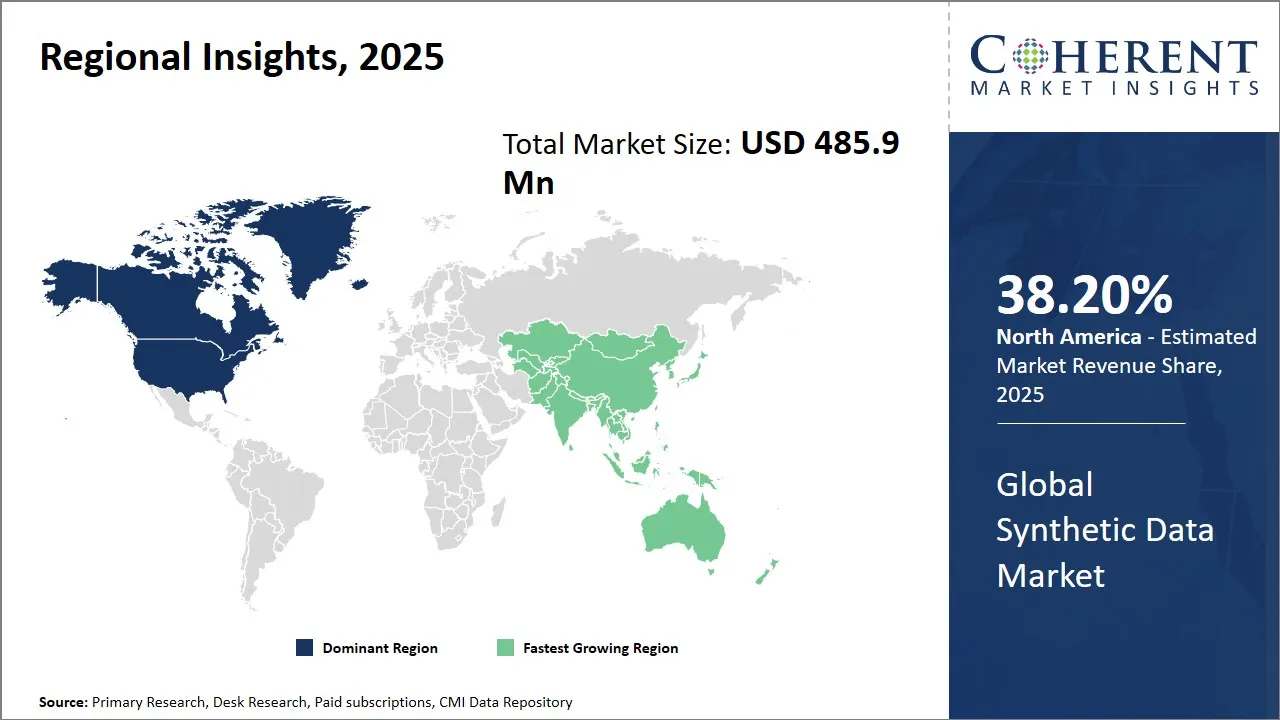
- North America is estimated to lead the market with a share of 38. 2% in 2026.
- Asia Pacific, holding a share of 23. 4% in 2026, is projected to be the fastest growing region.
Market Overview
The market is seeing a growing focus on privacy-preserving technologies, with synthetic data becoming an important element in sectors such as healthcare, finance, and autonomous vehicles. Innovations in artificial intelligence and machine learning are driving the demand for high-quality synthetic datasets to improve model accuracy without compromising sensitive information. Also, regulatory pressures and data protection laws are adding to synthetic data adoption as organizations look for compliant ways to harness big data for analytics and decision-making.
Current Events and Its Impact
Current Events | Description and its impact |
Product & Platform Developments |
|
Strategic Initiatives |
|
Segmental Insights
- Current Industry Events of 2026
- Market Size Estimation
- Regional Breakdown
- Competitive Landscape
- Customer Intelligence
- Segmental Analysis
- Pricing Analysis
- Key Market Drivers, Challenges & Future Trends
- Customized Insights Section
Global Synthetic Data Market Insights, by Data Type – Structured Data Leads Because of its Versatility and Critical Role in Data-Driven Decision Making
Structured data, holding a share of 37.4% in 2026, is expected to dominate the global synthetic data market. The demand for synthetic structured data is created by organizations looking to overcome limitations related to the availability, privacy, and cost of real-world datasets, especially in sectors like finance, healthcare, and retail, where precise and clean data is important for operational efficiency. With increasingly strict data privacy regulations worldwide, companies are pushed to minimize direct use of real personal or proprietary data. Synthetic structured data gives a practical alternative that mimics the statistical properties of real datasets, allowing organizations to develop and validate algorithms without risking exposure of confidential information.
Training predictive models on synthetic structured data allows data scientists to test different scenarios, expand limited datasets, and enhance model robustness. Synthetic datasets make these processes possible by providing scalable, customizable, and reproducible environments to simulate real-world phenomena without exposure to inaccuracies or privacy risks. Also, the maturity of tools that generate synthetic structured data is a big factor. Technologies using advanced statistical methods, combined with domain-specific expertise, are making possible the creation of highly realistic synthetic datasets.
Global Synthetic Data Market Insights, by Application – Model Training Leads Because of the Increasing Reliance on Synthetic Data for Enhancing AI and Machine Learning Capabilities
Model training represents the most prominent application segment in the global synthetic data market, holding an estimated share of 46.3% in 2026. Training models need vast and diverse datasets to make sure accuracy, reliability, and generalizability. However, using real-world data for this comes with many challenges such as privacy restrictions, data scarcity, and bias. Synthetic data provides a compelling solution by enabling the generation of tailored, large-scale datasets that effectively simulate real conditions while bypassing these constraints. The growing complexity of AI models creates the need for varied and high-volume data that is difficult to obtain from conventional sources. For example, in autonomous driving, healthcare diagnostics, and natural language processing, real data can be limited, incomplete, or ethically sensitive.
Furthermore, synthetic data supports iterative and rapid prototyping phases in model development. Instead of relying solely on real-world data, which might be costly or slow to acquire, developers can instantly generate specific datasets to test new hypotheses or validate algorithmic improvements. For instance, RBI wanted to use AI to automate repetitive tasks like documenting intelligence and more rapidly summarizing legal, regulation, and banking documents. In January 2025, RBI built the RBI ChatGPT, using Microsoft Azure OpenAI Service and Azure AI Search within Azure AI Foundry.
Training models on synthetic data mitigate the risk of exposing confidential or personal data, making it easier for organizations to adhere to regulations like GDPR and HIPAA. Additionally, advancements in generative techniques, such as Generative Adversarial Networks (GANs) and variational autoencoders, have heightened the fidelity and usefulness of synthetic data for model training.
Impact of AI on the Synthetic Data Market
Artificial intelligence is both the main catalyst and the biggest beneficiary of the synthetic data market. AI systems like large language models and computer-vision networks need vast, diverse, and precisely labeled datasets to perform well. Synthetic data lets developers overcome privacy restrictions, balance class distributions, and create rare or hazardous scenarios that are hard to capture in the real world. This accelerates model training and reduces costs while helping organizations stay compliant with regulations such as GDPR or HIPAA. As AI techniques improve, they also make higher-fidelity synthetic data, making a positive feedback loop where better AI leads to better data and vice versa.
Waymo, Alphabet’s autonomous-vehicle division, supplements millions of miles of real-world driving with billions of miles of simulated, AI-generated driving scenarios.
Regional Insights
North America Synthetic Data Market Analysis and Trends
North America, holding a share of 38.2% in 2026, is expected to dominate the global synthetic data market because of a highly mature technological ecosystem, strong investments in AI and machine learning, and supportive government policies adding to data privacy and innovation. The presence of leading technology giants like Google, IBM, Microsoft, and startups specializing in synthetic data like Gretel.ai and Tonic.ai adds to market growth.
The region sees a strong cloud infrastructure, extensive R&D facilities, and regulatory frameworks such as HIPAA and CCPA, which adds to the adoption of synthetic data to address data privacy challenges. North America's well-established financial, healthcare, and automotive sectors further fuel demand, encouraging bespoke synthetic data solutions to enhance model training and regulatory compliance. Also, strategic partnerships and collaborations between academia and industry players improve technological advancements in the market.
Asia Pacific Synthetic Data Market Analysis and Trends
The Asia Pacific region, holding an estimated share of 23.4% in 2026, exhibits the fastest growth in the global synthetic data market because of fast digital transformation initiatives, increased adoption of AI technologies, and growing manufacturing and e-commerce industries. Emerging economies such as India, China, South Korea, and Japan are investing a lot in AI capabilities, with government efforts such as China’s AI Development Plan and India’s Digital India initiative adding to innovations involving synthetic data to power AI without compromising on sensitive data privacy.
The growing presence of multinational corporations and homegrown startups focused on synthetic data generation, like DataRobot’s operations in Japan and synthetic data-focused ventures in India, also adds to growth. Also, the increasing demand from sectors like autonomous vehicles, healthcare, and finance in this region contributes significantly to market expansion.
Synthetic Data Market Outlook for Key Countries
U.S. Synthetic Data Market Analysis and Trends
The U.S. synthetic data market leads because of its advanced technology infrastructure and a strong emphasis on ethical AI development and data privacy. Industry leaders such as IBM and Microsoft use synthetic data solutions to improve AI model robustness and ensure compliance with stringent regulations. In addition, a vibrant startup ecosystem including companies like Hazy and Mostly AI drives innovation, specifically targeting sectors such as healthcare and finance that require stringent privacy safeguards.
China Synthetic Data Market Analysis and Trends
China synthetic data market is shaped by substantial government backing for AI development and big data initiatives. Major technology conglomerates like Baidu, Alibaba, and Tencent are pioneering synthetic data applications to optimize AI algorithms for e-commerce, autonomous driving, and surveillance, balancing innovation with growing data governance policies. The focus on smart cities and digital healthcare also adds to synthetic data adoption for training AI systems without risking valuable personal data.
Germany Synthetic Data Market Analysis and Trends
Germany synthetic data market is supported by its strong manufacturing and automotive industries, which use synthetic data to improve smart manufacturing processes and autonomous vehicle technologies. Companies such as Siemens and Volkswagen are investing a lot in synthetic data capabilities to accelerate digital twin developments and AI-powered automation. Government programs encouraging Industry 4.0 adoption further propel the market, coupled with Europe-wide data protection regulations (GDPR) that emphasize privacy-respecting data practices.
India Synthetic Data Market Analysis and Trends
India synthetic data market grows because of an expanding IT services industry and government initiatives aimed at digitization and innovation. Prominent players like Tata Consultancy Services (TCS) and Infosys are integrating synthetic data to improve machine learning models while safeguarding customer data privacy.
Japan Synthetic Data Market Analysis and Trends
Japan is seeing huge investments in the robotics and automotive sectors, using synthetic data to improve AI-driven automation and driver-assistance systems. Key companies such as Sony and Toyota are big players developing proprietary synthetic datasets to refine machine learning capabilities. Government support through strategic technology roadmaps focused on AI and data use adds to ongoing advancements in the synthetic data arena.
Market Players, Key Development, and Competitive Intelligence
Key Developments
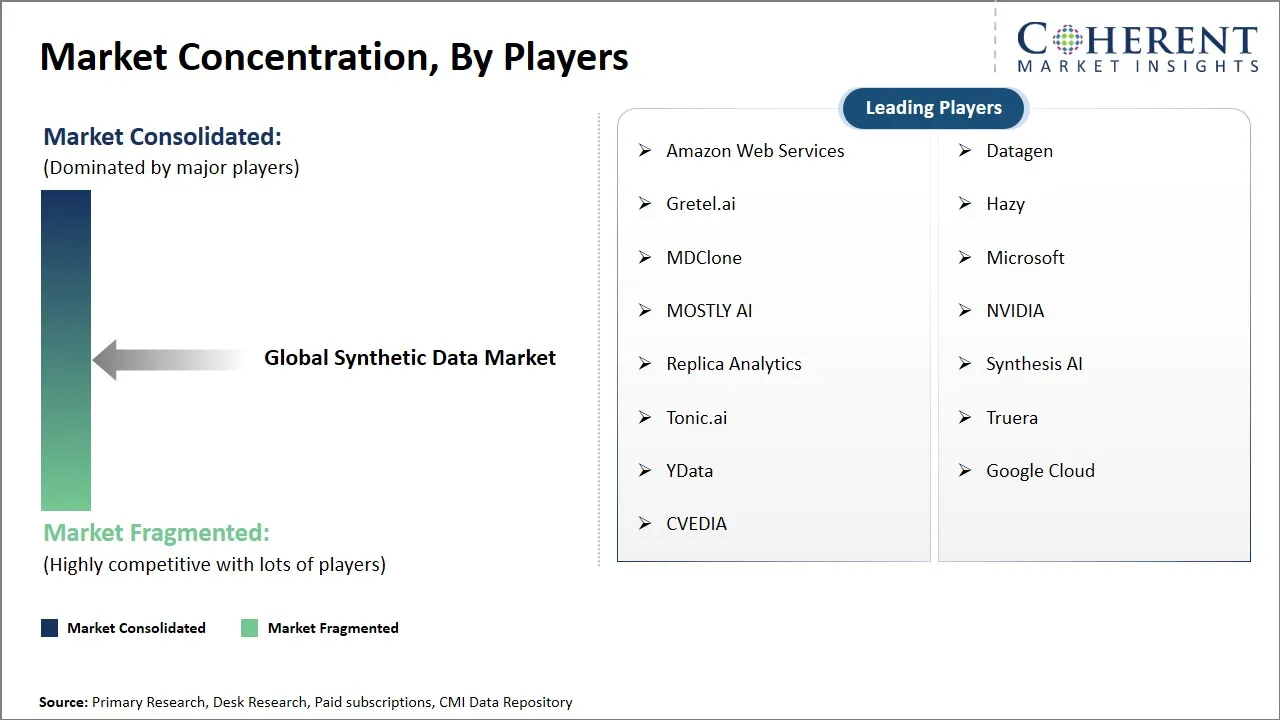
- In April 2025, ai acquired Fabricate, a synthetic data tool built by Mockaroo, to expand its platform with schema-first, AI-powered data generation.
- In March 2025, Nvidia acquired synthetic data firm, Gretel. Gretel and its team of approximately 80 employees will be folded into Nvidia, where its technology will be deployed as part of the chip giant’s growing suite of cloud-based, generative AI services for developers.
- In November 2024, SAS, a global leader in data and AI, announced the acquisition of the principal software assets of Hazy, a pioneer in synthetic data technology. This strategic acquisition aimed to enhance SAS' robust data and AI portfolio, further equipping its customers with critical and timely synthetic data generation capabilities as their use of AI rapidly expands.
- In February 2024, MDClone, a leading data analytics and synthetic data company, established a partnership with the University Hospital Basel and a leading life sciences organization to build an infrastructure that will evolve how life sciences and pharma research is performed in the region.
Top Strategies Followed by Synthetic Data Market Players
- Established companies dominate the landscape through substantial investments in research and development (R&D), striving to innovate high-performance synthetic data solutions that meet the evolving demands of industries such as automotive, healthcare, and financial services.
- NVIDIA continually expands its Omniverse and AI simulation capabilities and, in March 2025, acquired Gretel to deepen its synthetic data generation and privacy-preserving AI tools.
- Mid-level market participants adopt a different approach, primarily concentrating on offering cost-effective synthetic data solutions that strike a balance between quality and affordability.
- MOSTLY AI offers flexible, subscription-based synthetic data generation for structured/tabular datasets, allowing mid-market banks and insurers to adopt privacy-compliant data solutions without large upfront costs.
- Small-scale players in the global synthetic data market often carve out specialized niches by developing innovative products with unique features that distinguish them from larger competitors.
- MDClone, focused on healthcare, partners with hospitals such as University Hospital Basel to provide domain-specific synthetic health data. By tailoring its platform to clinical research and HIPAA/GDPR needs, it competes successfully against broad-spectrum cloud providers.
Market Report Scope
Synthetic Data Market Report Coverage
| Report Coverage | Details | ||
|---|---|---|---|
| Base Year: | 2025 | Market Size in 2026: | USD 635.6 Mn |
| Historical Data for: | 2020 To 2024 | Forecast Period: | 2026 To 2033 |
| Forecast Period 2026 to 2033 CAGR: | 30.8% | 2033 Value Projection: | USD 4,163.0 Mn |
| Geographies covered: |
| ||
| Segments covered: |
| ||
| Companies covered: | Amazon Web Services, Datagen, Gretel.ai, Hazy, MDClone, Microsoft, MOSTLY AI, NVIDIA, Replica Analytics, Synthesis AI, Tonic.ai, Truera, YData, Google Cloud, and CVEDIA | ||
| Growth Drivers: |
| ||
| Restraints & Challenges: |
| ||
Market Dynamics
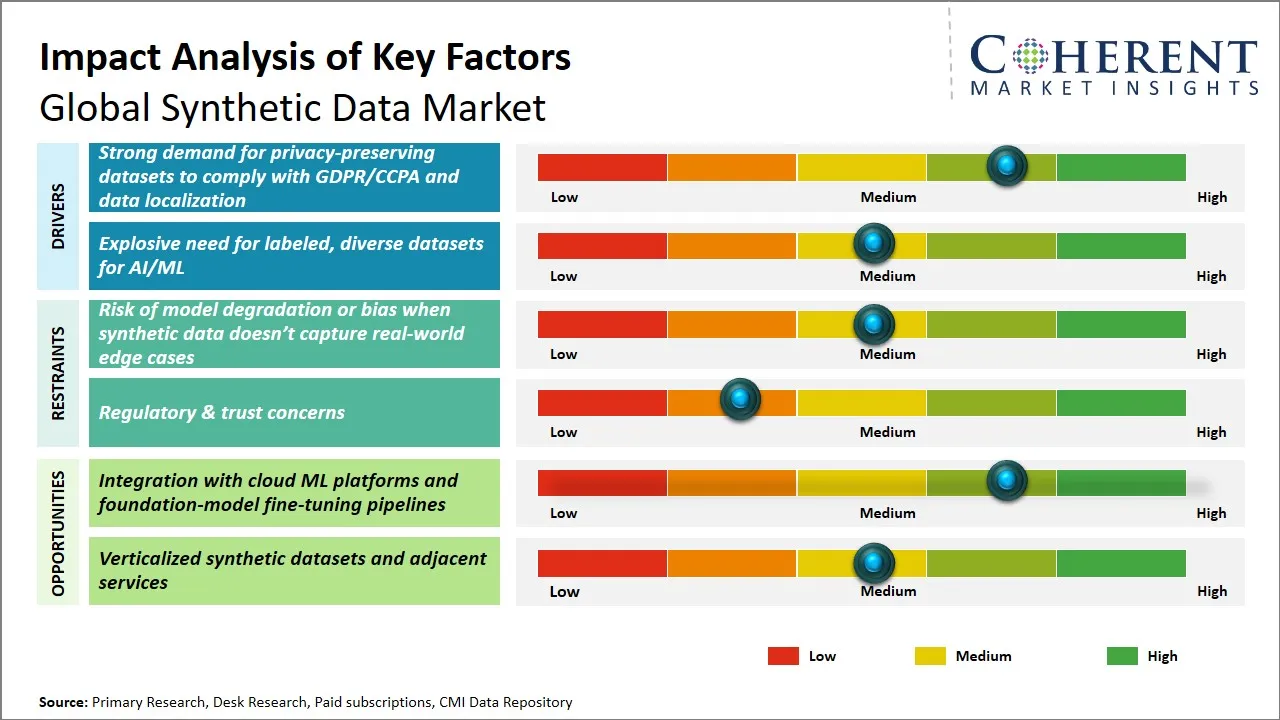
Global Synthetic Data Market Driver – Strong Demand for Privacy-Preserving Datasets to Comply With GDPR/CCPA and Data Localization
The rising enforcement of stringent data privacy regulations such as the General Data Protection Regulation (GDPR) in Europe and the California Consumer Privacy Act (CCPA) in the U.S. has significantly amplified the demand for privacy-preserving datasets within various industries. Organizations are compelled to adopt synthetic data solutions as a proactive measure to mitigate risks associated with handling sensitive personal information while ensuring compliance with these complex regulatory frameworks. An example is Gretel.ai’s collaboration with the U.K.’s National Health Service (NHS) Digital. The NHS must comply with GDPR’s strict data-protection rules when sharing patient information for research.
Traditional datasets often carry inherent risks of exposing personally identifiable information (PII), leading to potential legal and financial penalties. Synthetic data, generated to mimic real data patterns without containing actual user data, provides an effective alternative that allows enterprises to conduct analytics, testing, and model training without compromising privacy. In addition to GDPR and CCPA, growing data localization requirements across different countries restrict cross-border data flow, further propelling the adoption of synthetic data to generate compliant, local datasets that maintain data sovereignty.
Global Synthetic Data Market Opportunity – Integration with Cloud ML Platforms and Foundation-Model Fine-Tuning Pipelines
The global synthetic data market stands to gain significant momentum through its seamless integration with cloud-based machine learning (ML) platforms and foundation-model fine-tuning pipelines. As organizations increasingly adopt cloud infrastructure to accelerate AI development, the demand for scalable, high-quality synthetic data that can be directly fed into cloud ML environments is rising. Synthetic data, generated and managed within cloud platforms, enables enterprises to bypass the constraints of limited or sensitive real-world datasets, thereby enhancing model training efficiency while ensuring compliance with data privacy regulations.
In 2024, Amazon Web Services (AWS) published guidance for generating synthetic datasets directly inside Amazon Bedrock, its managed service for building and fine-tuning foundation models. Enterprises can now spin up large volumes of synthetic text, image, or tabular data in the same environment where they fine-tune their LLMs or other foundation models.
Analyst Opinion (Expert Opinion)
- Advancements in diffusion models and large language models are enabling vendors to generate high-fidelity synthetic text, image, audio, and even 3D sensor data within a single workflow. This multi-modal capability lets enterprises train complex systems—such as autonomous robots or conversational agents—on richly varied datasets that mirror real-world interactions.
- New platforms combine federated learning with differential privacy to create synthetic datasets without centralizing sensitive information. Hospitals, banks, and government agencies can contribute to collaborative AI projects while maintaining strict data-localization and compliance requirements.
- Integration of synthetic data into real-time digital twins allows continuous simulation of manufacturing lines, smart cities, and IoT networks. Edge-optimized synthetic streams improve the training of lightweight AI models deployed in autonomous vehicles, industrial sensors, and AR/VR devices, speeding deployment and reducing costly physical testing.
Speak to the analyst
Want personalized insights?
Take the findings above to one of our principal consultants, or have the report rebuilt around the segments, geographies and competitors you actually track.
Market Segmentation
- Data Type Insights (Revenue, USD Mn, 2021 - 2033)
- Structured Data
- Image and Video
- Text
- IoT/Sensor Data
- Others
- Application Insights (Revenue, USD Mn, 2021 - 2033)
- Model Training
- Software Testing & Development
- Privacy & Compliance
- Data Augmentation
- Others
- Regional Insights (Revenue, USD Mn, 2021 - 2033)
- North America
- U.S.
- Canada
- Latin America
- Brazil
- Argentina
- Mexico
- Rest of Latin America
- Europe
- Germany
- U.K.
- Spain
- France
- Italy
- Russia
- Rest of Europe
- Asia Pacific
- China
- India
- Japan
- Australia
- South Korea
- ASEAN
- Rest of Asia Pacific
- Middle East
- GCC Countries
- Israel
- Rest of Middle East
- Africa
- South Africa
- North Africa
- Central Africa
- North America
- Key Players Insights
- Amazon Web Services
- Datagen
- Gretel.ai
- Hazy
- MDClone
- Microsoft
- MOSTLY AI
- NVIDIA
- Replica Analytics
- Synthesis AI
- Tonic.ai
- Truera
- YData
- Google Cloud
- CVEDIA
Sources
Primary Research Interviews
Stakeholders
- Chief Data Officers and Data Scientists from multinational banks and insurance firms (e.g., GlobalBank, FinSure)
- AI/ML Engineers and Product Managers from synthetic-data platform providers (e.g., SynthWorks, DataForge Labs)
- Privacy & Compliance Officers from healthcare networks and government agencies
- Cloud Infrastructure Architects from leading service providers (e.g., CloudSphere, QuantumCloud)
- Automotive Simulation Specialists from autonomous-vehicle developers (e.g., DriveNext, AutoSim)
- Academic Researchers focused on differential privacy and federated learning (various universities)
Databases
- International Digital Economy Statistics (IDES) – Global Synthetic Data Usage Tracker
- U.S. National AI Research Resource (NAIRR) Data Portal
- Asia-Pacific Tech Adoption Index (APTAI)
- European Data Innovation Observatory (EDIO)
Magazines
- AI & Data Today
- Synthetic Intelligence Review
- Machine Learning World
- Data Privacy & Compliance Quarterly
Journals
- Journal of Artificial Data Generation & Simulation
- International Journal of Privacy-Preserving Computing
- Advances in Synthetic Media and Simulation
- Journal of Cloud AI Engineering
Newspapers
- The Data Times (Global)
- Tech Herald (U.S.)
- The Digital Economy Daily (EU)
- Asia AI Chronicle (Singapore)
Associations
- International Association for Synthetic Data (IASD)
- Global Privacy & Data Innovation Council (GPDIC)
- Federation of AI Modelers (FAIM)
- Cloud Machine Learning Alliance (CMLA)
Public Domain Sources
- World Bank – Digital Transformation Indicators
- United Nations Economic Commission for Europe (UNECE) – AI & Data Governance Reports
- U.S. Census Bureau – Emerging Technology Business Patterns
- EUROSTAT – ICT Usage and Privacy Statistics
- ResearchGate – Open-access studies on synthetic data generation
Proprietary Elements
- CMI Data Analytics Tool, Proprietary CMI Existing Repository of information for last 8 years
Get access to 250+ pages report
Every segment, forecast, competitor profile and data table behind the analysis above — available for instant download.
- ESOMAR Member
- ISO 9001:2015 Certified
- D-U-N-S Registered
- GDPR & CCPA Compliant
Missing comfort of reading report in your local language? Find your preferred language:
Transform your Strategy with Exclusive Trending Reports
Frequently Asked Questions
The global synthetic data market is estimated to be valued at USD 635.6 million in 2026 and is expected to reach USD 4,163.0 million by 2033.
The CAGR of global synthetic data market is projected to be 30.8% from 2026 to 2033.
Strong demand for privacy-preserving datasets to comply with GDPR/CCPA and data localization and explosive need for labeled, diverse datasets for AI/ML are the major factors driving the growth of the global synthetic data market.
Risk of model degradation or bias when synthetic data doesn’t capture real-world edge cases and regulatory & trust concerns are the major factors hampering the growth of the global synthetic data market.
In terms of data type, structured data is estimated to dominate the market revenue share in 2026.
It is artificially generated data that statistically mirrors real data, used for training, testing, and validating AI/ML models without exposing sensitive information.
It addresses privacy regulations (e.g., GDPR, CCPA), reduces data-collection costs, and creates rare or edge-case scenarios for model training.