

U.S., Europe & Asia Pacific Electrosurgical Devices Market Size and Forecast – 2026-2033
The U.S., Europe & Asia Pacific electrosurgical devices market is estimated to be valued at USD 5,880.6 Mn in 2026 and is expected to reach USD 7,941.1 Mn by 2033, exhibiting a compound annual growth rate (CAGR) of 6% from 2026 to 2033. This steady growth reflects the market’s resilience and the continuous demand for advancements in surgical technologies within these key regions, driven by rising surgical procedures and increasing adoption of minimally invasive techniques.
Key Takeaways of the U.S., Europe and Asia Pacific Electrosurgical Devices Market
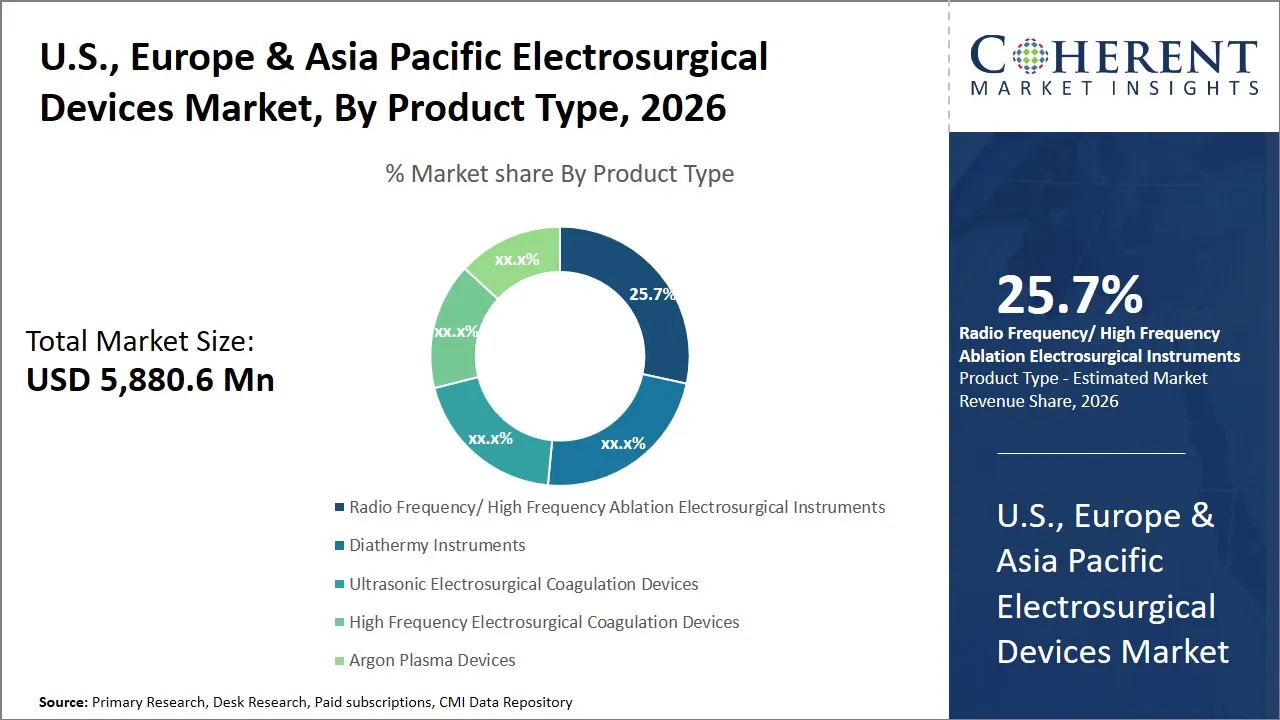
- Radio frequency/high frequency ablation electrosurgical instruments segment is expected to lead the U.S., Europe & Asia Pacific electrosurgical devices market, capturing 25.7% share in 2026.
- Electrocoagulation segment is estimated to represent 33.6% of the U.S., Europe & Asia Pacific electrosurgical devices market share in 2026.
- General surgery segment is projected to dominate with 19.9% of the U.S., Europe & Asia Pacific electrosurgical devices market share in 2026.
Market Overview
- U.S., Europe & Asia Pacific electrosurgical devices market is benefiting from the steady shift toward minimally invasive and robotic assisted procedures, which continue to increase the need for precise cutting coagulation and vessel sealing technologies.
- Rising adoption of minimally invasive surgery is the biggest demand engine, because laparoscopic and robotic procedures need precise cutting, coagulation, and vessel sealing tools and continue gaining share across major hospitals.
- Growing surgical volumes linked to aging populations and chronic disease burden are supporting steady demand for electrosurgical systems across general surgery, gynecology, gastroenterology, and urology.
- The market is moving from basic standalone generators to integrated energy platforms with multiple modalities.
Currents Events and their Impact
Current Events | Description and its Impact |
Rising shift toward minimally invasive and robotic assisted surgery |
|
Growing demand for smart energy platforms and digital operating room integration |
|
Segmental Insights
- Current Industry Events of 2026
- Market Size Estimation
- Regional Breakdown
- Competitive Landscape
- Customer Intelligence
- Segmental Analysis
- Pricing Analysis
- Key Market Drivers, Challenges & Future Trends
- Customized Insights Section
Why Does the Radio Frequency/High Frequency Ablation Electrosurgical Instruments Segment Dominate the U.S., Europe & Asia Pacific Electrosurgical Devices Market in 2026?
The radio frequency/high frequency ablation electrosurgical instruments segment is expected to hold the largest market share of 25.7% in 2026, attributed to its versatility, precision, and minimally invasive nature, which align closely with the increasing demand for safer, faster surgical procedures. Radio frequency ablation technology enables surgeons to precisely target and remove diseased tissues while preserving surrounding healthy structures, significantly reducing collateral damage compared to conventional techniques. It is particularly important in sensitive and challenging fields of surgery like oncology, cardiology, and neurosurgery and this is why RF/High Frequency devices are preferred in these areas.
The further development of the design of devices and energy delivery system has made the further adoption of the RF and High Frequency ablation instruments even faster. The fusion with real time imaging and navigation tools has made them additionally very accurate and indispensable in the procedures that need perfect tumor ablation or hemostasis. In addition to this, the low invasiveness of such devices fits the increasing trend of outpatient and day-care surgeries, as healthcare is restricted to contain costs and the patient is more convenient.
For instance, in June 2025, Creo Medical Group plc announced that it received U.S. Food and Drug Administration (FDA) clearance for SpydrBlade Flex, a flexible electrosurgical device designed for use in advanced endoscopic procedures. The device integrates electrosurgical cutting and coagulation capabilities in a flexible format, enabling physicians to perform precise tissue dissection during minimally invasive gastrointestinal interventions.
(Source- Creo Medical Group plc)
Why Does the Electrocoagulation Segment Dominate the U.S., Europe & Asia Pacific Electrosurgical Devices Market in 2026?
The electrocoagulation segment is expected to hold 33.6% of the market share in 2026, due to its critical role in achieving controlled hemostasis during surgical procedures. Massive blood loss is a significant risk of surgery that may complicate the outcome of patients and enhance the duration of hospitalization and healthcare expenses. Electrocoagulation involves applying the high frequency electrical currents to coagulate blood and tissue enabling the surgeon to quickly and accurately stop the bleeding. This instant hemorrhage control increases the safety of surgery and broadens the range of complicated procedures.
Flexibility of the technique in diverse surgery specialties, including general and cardiovascular, orthopedic surgery, among others, also adds to the dominance. The surgeons consider electrocoagulation important because it reduces the amount of blood loss during the operation without causing serious damage to the tissues surrounding the operated organs, which is crucial when ensuring the operation of organs with high vascularity. Additionally, continuous improvement of electrocoagulation equipment, such as enhanced energy control and comfortable handpieces, has enhanced the level of control over the users and minimized the postoperative complications like tissue necrosis or unwanted burns.
For instance, in June 2023, Olympus Corporation announced the launch of the ESG-410 Electrosurgical Generator in several international markets, including the U.S. and Europe. The system is designed to support a wide range of endoscopic procedures by providing stable energy delivery for tissue cutting and electrocoagulation, helping clinicians control bleeding during gastrointestinal and urological interventions.
(Source- Olympus Corporation)
The General Surgery Segment Dominates the U.S., Europe & Asia Pacific Electrosurgical Devices Market
The general surgery segment is expected to hold the largest market share of 19.9% in 2026, due to the sheer volume and diversity of surgical interventions classified under general surgery, which encompasses procedures involving the abdomen, gastrointestinal tract, soft tissues, and more. Electrosurgical devices are indispensable tools in this field, facilitating precise tissue dissection, cutting, and coagulation critical for optimizing surgical outcomes.
The sheer breadth of general surgery, along with the rising numbers of surgeries, including hernie repairs, gallbladder extraction, appendectomies, and bariatric operations contribute to the perpetual use of devices. Surgical efficiency and safety are supported by innovations in electrosurgical equipment designed with specific applications to the field of general surgery, including better monopolar and bipolar equipment, which has a better maneuverability and also limits lateral thermal spread. The increased use of laparoscopic and other generally less invasive surgery also drives the use of the device due to the use of electrosurgical tools, which are an integral part of these surgical methods, allowing the creation of a smaller incision, reduced blood loss and rapid patient recovery.
End User Feedback and Unmet Needs in the U.S., Europe & Asia Pacific Electrosurgical Devices Market
- The reliability, precision, and compatibility of workflow is always noted by hospitals, ambulatory surgical centers, and specialty clinics throughout the U.S., Europe, and Asia Pacific as anticipations of the electrosurgical devices. Surgical and operating room staff tend to like those systems that stabilize energy delivery, quicker vessel sealing, and easy to use controls that minimize procedure time. Indicatively, there are numerous reports of positive experience about advanced energy platforms which automatically modulate power output according to tissue type and enable surgeons to make cleaner incisions and effective coagulation with limited thermal dispersion. This enhances the confidence in the procedure used in minimally invasive surgeries like laparoscopic gastrointestinal operations and urological surgeries whereby precision and safety matters.
- Concurrently, end users are often reported to complain of problems with the cost of the devices, interoperability with the existing surgical infrastructure, and complexity of maintenance. Most hospitals within the emerging Asia Pacific markets frequently report that the initial cost of installing the advanced electrosurgical generators and vessel sealing machines might be a burden on the budget, particularly to the small surgical centers. A common other problem that has been mentioned is the inability to integrate with other surgical equipment and operating room systems, which will make working there more difficult and require additional training to train surgical personnel. These issues indicate some of the gaps in the market needs such as more affordable systems to cater to the middle-sized hospitals, enhanced cross platform integration, and less complex maintenance services. With the resolution of these gaps, the relationship of manufacturers with providers of healthcare, the growth in the number of surgical procedures using devices, and advancing innovation toward efficacy and accessibility would be reinforced.
Market Players, Key Developments, and Competitive Intelligence
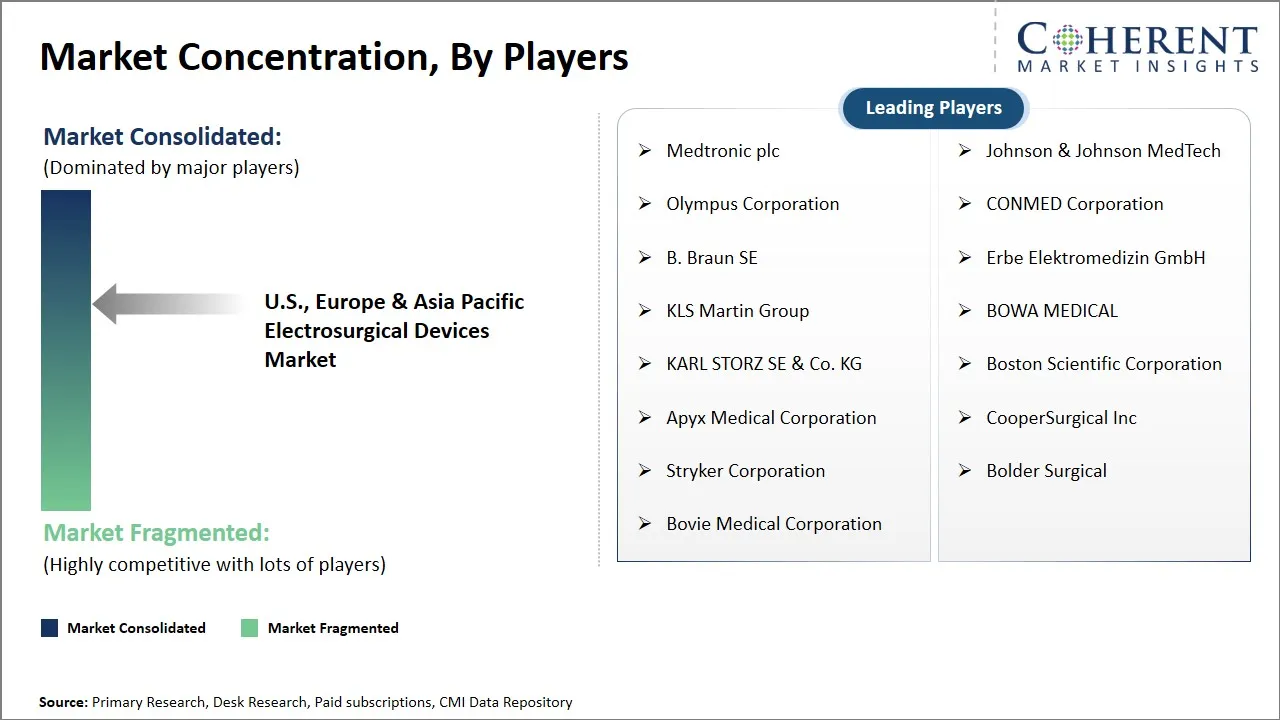
Key Developments
- In September 2025, Medtronic launched the Valleylab FT10 Electrosurgical Generator and FT10 Vessel Sealing Generator in India, expanding its surgical energy portfolio across Asia Pacific. The systems incorporate adaptive TissueFect sensing technology, which automatically adjusts energy delivery based on tissue type, improving precision and safety during surgical procedures.
- In March 2025, Johnson & Johnson MedTech announced the launch of the DUALTO Energy System, a next-generation electrosurgical platform designed for both open and minimally invasive surgical procedures. The system integrates multiple energy modalities—including monopolar, bipolar, ultrasonic, and advanced bipolar technologies—into a single consolidated platform to improve surgical workflow and operating-room efficiency.
- In February 2025, BDO announced that it provided buy-side M&A advisory support to Micro-Tech (Nanjing) Co., Ltd. in connection with its strategic partnership with Creo Medical Group plc (AIM: CREO). The transaction included the acquisition of 51% of the issued share capital of Creo Medical S.L.U., a wholly owned subsidiary of Creo Medical Group.
Regional Adoption of Minimally Invasive Surgery in the U.S., Europe & Asia Pacific Electrosurgical Devices Market
Country/Region | Minimally invasive surgery adoption rates | Market interpretation for electrosurgical devices |
U.S. | High adoption with robotic-assisted surgery materially lifting MIS use in general surgery; in hospitals that introduced robotic platforms, MIS rates for common general surgery procedures increased from 60.5% to 65.8% versus 56.1% to 57.0% in hospitals without robotics adoption. | Strong demand for advanced electrosurgical generators, vessel sealing systems, and energy instruments in laparoscopic and robotic procedures. |
Europe | Moderate to high adoption with especially strong uptake in urology; France reported robotic penetration of 54.9% in urology, ahead of gynecology 13.6%, digestive surgery 11.4%, and thoracic surgery 16.3%. Poland also reported that 73% of robotic surgery utilization was in urology, showing concentration in high-value MIS specialties. | Electrosurgical demand is strongest in urology and other specialties shifting from open to minimally invasive workflows. |
Asia Pacific | Moderate but fastest-rising adoption led by Japan, China, South Korea, India, and Australia; Japan’s nationwide robotic surgery rollout showed a 98.9% surgeon qualification rate in early implementation, while new urologic robotic platforms are expanding across Asia. India had 100+ robotic installations by 2025 according to industry reporting, indicating rapid MIS infrastructure buildout. | Fastest growth opportunity for electrosurgical devices as hospitals expand laparoscopic and robotic capacity, though penetration still trails the U.S. in many procedure categories. |
Top Strategies Followed by U.S., Europe & Asia Pacific Electrosurgical Devices Market Players
Player Type | Strategic Focus | Examples |
Established Market Leaders | Established players stay ahead by investing heavily in R&D, launching more precise and efficient surgical technologies, and strengthening their reach through partnerships with healthcare providers and OEMs. They also expand aggressively across high growth regions, especially in Asia Pacific, using broader distribution and localized market strategies. | On September 20, 2024, Boston Scientific Corporation announced the expansion of its electrosurgical and endoscopy product portfolio through new technology introductions designed to enhance precision and safety during minimally invasive gastrointestinal procedures. The development reflects ongoing efforts by major medical device companies to improve surgical outcomes while expanding their capabilities in advanced electrosurgical technologies. |
Mid-Level Players | Mid-level manufacturers compete by offering reliable electrosurgical devices at more practical price points, making them attractive to budget conscious hospitals and emerging markets. Instead of spending aggressively on large scale R&D, they often rely on partnerships and focused product portfolios to improve features, expand reach, and stay competitive without taking on excessive cost. | In June 2025, Erbe Elektromedizin introduced FiAPC plus probes for gastrointestinal and pulmonary endoscopy, expanding its electrosurgery portfolio with a targeted product upgrade rather than a broad platform overhaul. This reflects how mid-tier players often grow through focused innovation and specialty driven offerings. |
Small-Scale Players | Small scale players usually compete by focusing on niche clinical needs rather than broad product portfolios. They tend to build specialized electrosurgical tools with targeted features, faster development cycles, and more flexibility for specific procedures or regional demand. To gain traction, they often work through local partnerships with hospitals, distributors, or technology collaborators that help them validate products and enter selected markets without heavy commercial spending. | On November 15, 2024, Apyx Medical Corporation announced expanded clinical adoption of its Renuvion electrosurgical system in Europe and the U.S. for precision soft-tissue procedures. The technology combines helium plasma with radiofrequency energy to deliver controlled tissue contraction and coagulation, demonstrating how smaller innovators compete through specialized electrosurgical solutions in niche surgical applications. |
Market Report Scope
U.S., Europe & Asia Pacific Electrosurgical Devices Market Report Coverage
| Report Coverage | Details | ||
|---|---|---|---|
| Base Year: | 2025 | Market Size in 2026: | USD 5,880.6 Mn |
| Historical Data for: | 2020 To 2024 | Forecast Period: | 2026 To 2033 |
| Forecast Period 2026 to 2033 CAGR: | 6% | 2033 Value Projection: | USD 7,941.1 Mn |
| Segments covered: |
| ||
| Companies covered: | Medtronic plc, Johnson & Johnson MedTech, Olympus Corporation, CONMED Corporation, B. Braun SE, Erbe Elektromedizin GmbH, KLS Martin Group, BOWA MEDICAL, KARL STORZ SE & Co. KG, Boston Scientific Corporation, Apyx Medical Corporation, CooperSurgical Inc, Stryker Corporation, Bolder Surgical, and Bovie Medical Corporation | ||
| Growth Drivers: |
| ||
| Restraints & Challenges: |
| ||
U.S., Europe & Asia Pacific Electrosurgical Devices Market Dynamics
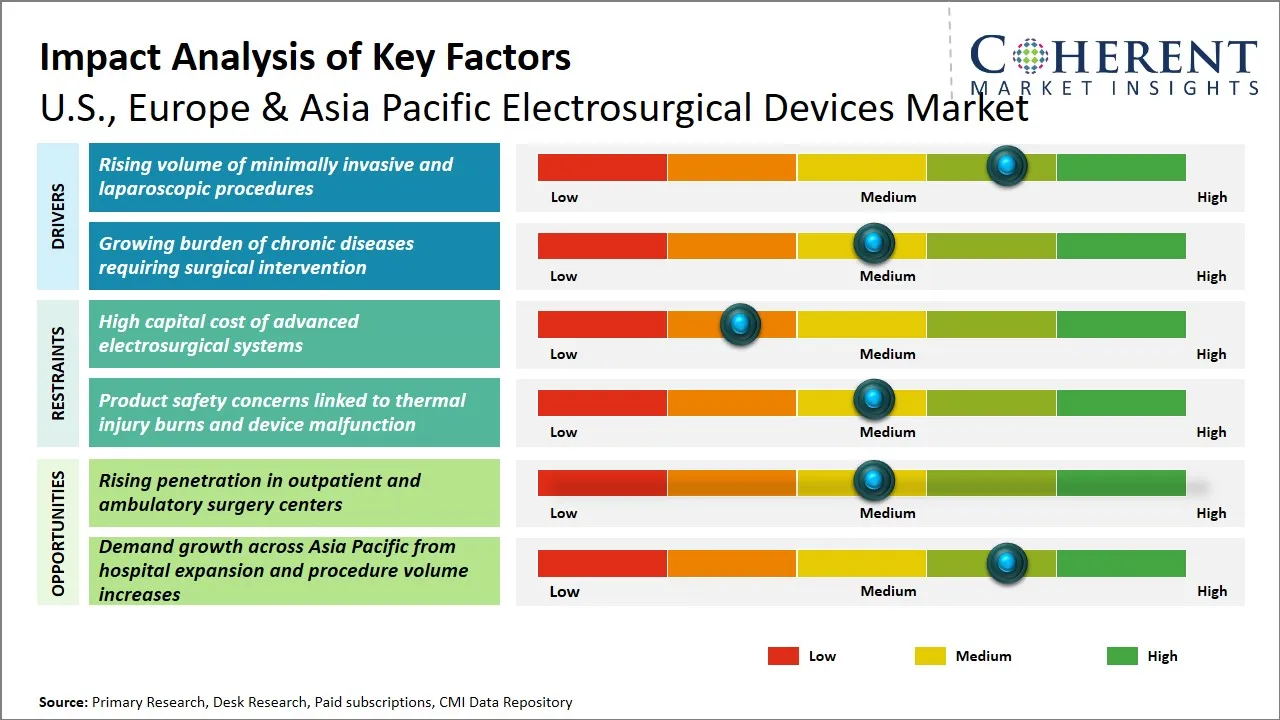
U.S., Europe & Asia Pacific Electrosurgical Devices Market Driver - Increasing Adoption of Minimally Invasive and Laparoscopic Procedures Driving Demand
The increasing popularity of electrosurgical device driven by the preference among surgeons in the U.S., Europe, and Asia Pacific towards minimally invasive and laparoscopic surgeries is a major catalyst driving the electrosurgical devices market. Both patients and medical practitioners are focusing their attention on the procedures that will be less traumatic, require less time to recover, and incur less complications as compared to the usual open surgeries. Such a change has caused a significant increase in the amount of laparoscopic and other minimally invasive procedures carried out in hospitals and surgical facilities. These procedures have electrosurgical devices, which are characterized by precision cutting, coagulation, and tissue ablation, allowing the surgeon to have a higher level of control and efficiency during his work and reducing the loss of blood.
For instance, on February 17, 2026, the first commercial U.S. surgery using Medtronic’s Hugo RAS system was performed at Cleveland Clinic, indicating that adoption is moving from approval stage to real clinical use in minimally invasive surgery workflows.
(Source- Medtronic)
U.S., Europe & Asia Pacific Electrosurgical Devices Market Opportunity - Rising Penetration in Outpatient and Ambulatory Surgery Centers
The growing population of outpatient and ambulatory surgery centers (ASCs) in the U.S., Europe, and Asia Pacific is a major growth opportunity to the electrosurgical devices market in the regions. The rise in patient preference to the minimally invasive procedures in these facilities is necessitating the demand of more advanced electrosurgical technologies that have been identified to have a host of benefits that include less time of operation, fewer chances of infection, and faster recovery of the patient. The trend in the U.S. toward value and cost containment is increasing the migration of surgical services out of the traditional hospital setting to ASCs, where providers and payers are attracted by the higher operational efficiencies and low costs. Likewise, there is increasing trend of ASCs in Europe as it attempts to reform its healthcare to streamline care delivery and ease congestion in the hospitals. The development of ASCs in the Asia Pacific region is being assisted by increased spending on healthcare, increased insurance coverage, and the growing awareness of the elective and minimally invasive surgeries, which are contributing to the rise in demand of the high-precision electrosurgical equipment.
Analyst Opinion (Expert Opinion)
- The market of electrosurgical devices in the U.S., Europe & Asia Pacific is growing steadily due to the increasing trend in healthcare systems towards minimally invasive and laparoscopic surgery in which cutting and coagulation techniques have to be highly accurate. Hospitals are actively moving to a higher level of energy platforms that enhance accuracy of the surgical procedures, minimizing the time taken to carry out the procedures and increasing the efficiency in the operating rooms. The increase is also encouraged by the increase in surgical volumes, aging population and sustained advancements in surgical energy systems. Concurrently, the market has been experiencing some difficulties including the high capital factors associated with sophisticated equipment, specialized training of surgeons, and the need to comply with the regulatory factors in various regions.
- Industry conferences and professional forums have been significant in terms of developing knowledge and adoption of technology in the industry. International surgical and medical technology conferences are also a venue that unites surgeons, hospital administrators, researchers and manufacturers to share their experiences on new surgical practices, safety and device innovation. These meetings aid in collaboration and clinical training and policy debates that would facilitate the fast uptake of improved electrosurgical platforms and enhance a general improvement of surgical infrastructure in key medical markets.
Speak to the analyst
Want personalized insights?
Take the findings above to one of our principal consultants, or have the report rebuilt around the segments, geographies and competitors you actually track.
Market Segmentation
- Product Type Insights (Revenue, USD Mn, 2021 - 2033)
- Radio Frequency/ High Frequency Ablation Electrosurgical Instruments
- Bipolar Instruments
- Monopolar Instruments
- Diathermy Instruments
- Diathermy Forceps
- Diathermy Scissors
- Diathermy Leads
- Others (Diathermy Quivers, among Others
- Ultrasonic Electrosurgical Coagulation Devices
- Generator
- Handpiece
- Accessories
- High Frequency Electrosurgical Coagulation Devices
- Monopolar
- Bipolar
- Argon Plasma Devices
- Generator
- Handpiece
- Probes
- Accessories
- Others (Electrocautery Devices, etc.)
- Radio Frequency/ High Frequency Ablation Electrosurgical Instruments
- Method Insights (Revenue, USD Mn, 2021 - 2033)
- Electrocoagulation
- Electrodesiccation
- Electrofulguration
- Electrosection
- Application Insights (Revenue, USD Mn, 2021 - 2033)
- General Surgery
- Gynecology Surgery
- Orthopedic Surgery
- Cardiovascular Surgery
- Cosmetic Surgery
- Ophthalmology Surgery
- Neurosurgery
- Others (Urology Surgery, etc.)
- End User Insights (Revenue, USD Mn, 2021 - 2033)
- Hospitals
- Ambulatory Surgical Centers
- Specialty Clinics
- Others (Academic & Research Institutes, etc.)
- Key Players Insights
- Medtronic plc
- Johnson & Johnson MedTech
- Olympus Corporation
- CONMED Corporation
- B. Braun SE
- Erbe Elektromedizin GmbH
- KLS Martin Group
- BOWA MEDICAL
- KARL STORZ SE & Co. KG
- Boston Scientific Corporation
- Apyx Medical Corporation
- CooperSurgical Inc
- Stryker Corporation
- Bolder Surgical
- Bovie Medical Corporation
Sources
Primary Research Interviews
Industry Stakeholders
- Medtronic plc
- Johnson & Johnson MedTech
End-users
- Mayo Clinic
- Cleveland Clinic
Government and International Databases
- U.S. Food and Drug Administration
- European Medicines Agency
- European Commission Health and Food Safety Directorate
- World Health Organization Global Health Observatory
- Organisation for Economic Co-operation and Development Health Statistics
- United Nations Department of Economic and Social Affairs Population Database
Trade Publications
- MedTech Dive
- Medical Device Network
- Healthcare IT News
- Becker’s Hospital Review
- MedTech Intelligence
- Medical Design and Outsourcing
Academic Journals
- The Lancet
- JAMA Surgery
- Annals of Surgery
- Surgical Endoscopy
- BMJ Open
- Journal of Surgical Research
Reputable Newspapers
- The Wall Street Journal
- The New York Times
- Financial Times
- The Guardian
- The Washington Post
- The Economist
Industry Associations
- Advanced Medical Technology Association
- MedTech Europe
- European Society of Surgical Oncology
- Society of American Gastrointestinal and Endoscopic Surgeons
- American College of Surgeons
- Asia Pacific Medical Technology Association
Public Domain Resources
- ClinicalTrials.gov
- Eurostat
- U.S. Centers for Disease Control and Prevention
- National Institutes of Health
- World Bank Open Data
- OECD Health Data
Proprietary Elements
- CMI Data Analytics Tool: Proprietary analytics tool to analyze real-time market trends, consumer behavior, and technology adoption in market
- Proprietary CMI Existing Repository of Information for Last 8 Years
Get access to 250+ pages report
Every segment, forecast, competitor profile and data table behind the analysis above — available for instant download.
- ESOMAR Member
- ISO 9001:2015 Certified
- D-U-N-S Registered
- GDPR & CCPA Compliant
Missing comfort of reading report in your local language? Find your preferred language:
Transform your Strategy with Exclusive Trending Reports
Frequently Asked Questions
The U.S., Europe & Asia Pacific electrosurgical devices market is estimated to be valued at USD 5,880.6 million in 2026 and is expected to reach USD 7,941.1 million by 2033.
The CAGR of U.S., Europe & Asia Pacific electrosurgical devices market is projected to be 6% from 2026 to 2033.
Rising volume of minimally invasive and laparoscopic procedures and growing burden of chronic diseases requiring surgical intervention are the major factors driving the growth of the U.S., Europe & Asia Pacific electrosurgical devices market.
High capital cost of advanced electrosurgical systems and product safety concerns linked to thermal injury burns and device malfunction are the major factors hampering the growth of the U.S., Europe & Asia Pacific electrosurgical devices market.
Competition is shifting toward integrated energy platforms with tissue sensing, multi-modality capability, and digital operating room management rather than basic standalone generators. Recent launches from Johnson & Johnson and Medtronic reflect that shift directly.
Hospitals are increasingly preferring integrated systems because they combine multiple energy modalities, improve workflow efficiency, and reduce operating room equipment complexity.
In terms of product type, the Radio Frequency/ High Frequency Ablation Electrosurgical Instruments segment is estimated to dominate the market revenue share in 2026.