

U.S. Work Boots Market Size and Forecast: 2026-2033
The U.S. Work Boots Market is estimated to be valued at USD 5.57 Bn in 2026 and is expected to reach USD 7.54 Bn by 2033, exhibiting a compound annual growth rate (CAGR) of 4.4% from 2026 to 2033.
Key Takeaways of the U.S. Work Boots Market
- The pull-on segment is projected to account for 23.1% of the U.S. work boots market in 2026.
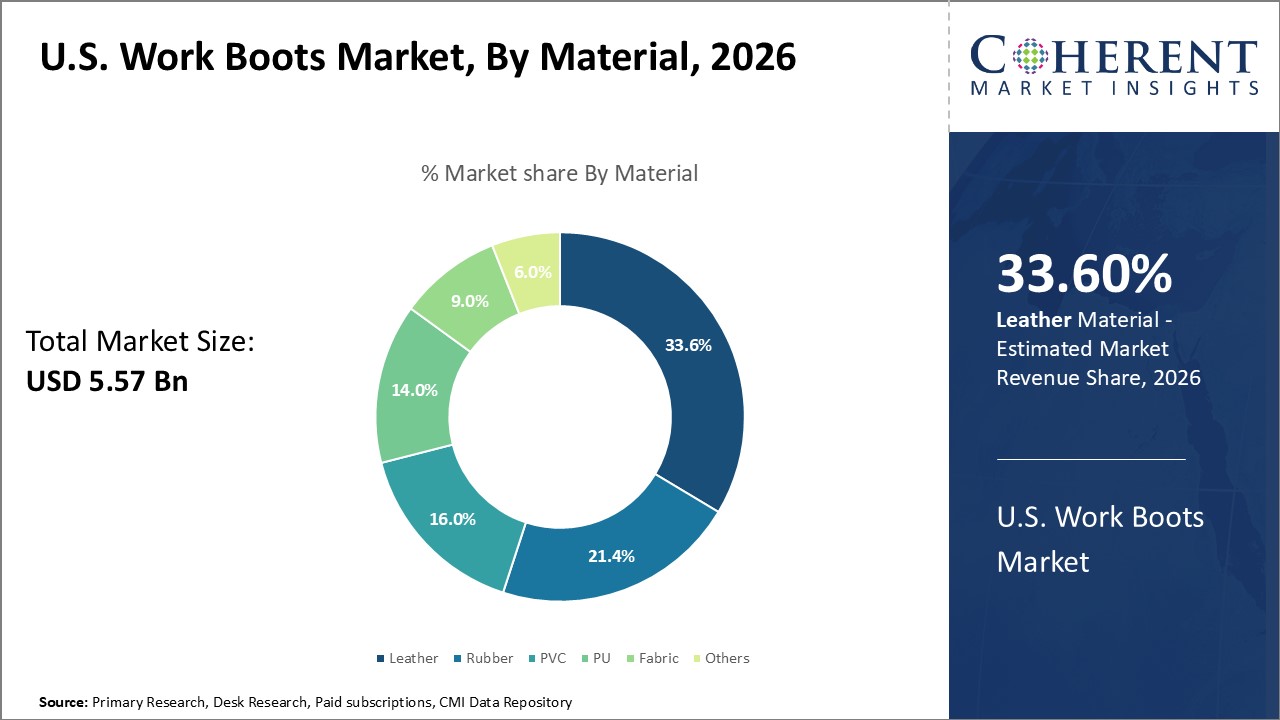
- The leather segment is expected to capture 33.6% of the U.S. work boots market in 2026.
- The construction segment is set to represent 35. 2% of the U.S. work boots market in 2026.
Market Overview
A key trend in the U.S. work boots market is the rising adoption of innovative materials and advanced manufacturing technologies to enhance comfort, durability, and safety features. Additionally, there is growing demand for eco-friendly and sustainable products as consumers and industries emphasize environmental responsibility. Digital integration, such as smart boots with embedded sensors for worker safety monitoring, is also gaining traction, thereby shaping the future landscape of the work boots market in the U.S. The increasing focus on industrial protective footwear is driving further advancements in these areas, ensuring worker safety and comfort in challenging environments.
Currents Events and their Impact
Current Events | Description and its impact |
2025 U.S. Tariff Hikes on Imported Footwear |
|
Technological Advancements in Work Boots |
|
Segmental Insights
- Current Industry Events of 2026
- Market Size Estimation
- Regional Breakdown
- Competitive Landscape
- Customer Intelligence
- Segmental Analysis
- Pricing Analysis
- Key Market Drivers, Challenges & Future Trends
- Customized Insights Section
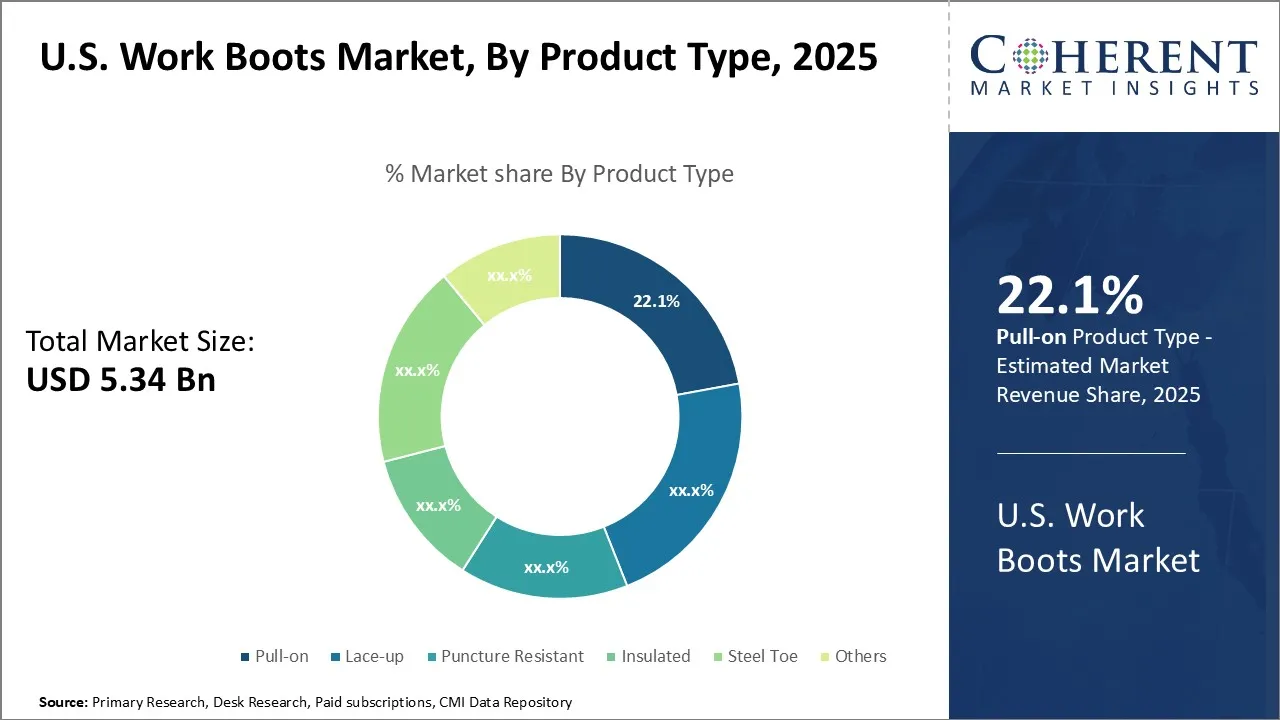
U.S. Work Boots Market Insights, By Product Type - Pull-on Segment Leads Due to its Convenience and Durability
Pull-on segment is expected to account for 23.1% share of the U.S. work boots market in 2026, owing to its unparalleled convenience and robust design tailored to demanding work environments. The primary driver of this segment’s dominance is its ease of use; workers can swiftly slip pull-on boots on and off without dealing with the hassle of laces, which is essential in industries requiring frequent removal of footwear for site safety checks or transitioning between different work zones. Furthermore, pull-on boots are often crafted with resilient materials and reinforced ankle and toe areas, making them well-suited for jobs necessitating durability and protection without compromising agility.
U.S. Work Boots Market Insights, By Material - Leather Dominates the Market due to fits Comfort, Durability, and Protection
Leather segment is expected to hold 33.6% share of the U.S. work boots market in 2026, due to its position earned through the material’s optimal balance of durability, comfort, and protection. Leather’s natural properties make it ideally suited to withstand tough environmental conditions while offering sufficient breathability—a critical factor when workers spend long hours on their feet. Unlike synthetic counterparts, leather molds to the wearer’s foot over time, which enhances comfort and reduces fatigue during physically demanding tasks common in sectors like construction and mining.
U.S. Work Boots Market Insights, By End User - Construction Segment Dominates Due to Stringent Safety Regulations, Increasing Workplace Accidents, and Advancements in Boot Technology
Construction segment is set to account for 36.2% share of the U.S. work boots market in 2026, driven by the intense need for robust protective footwear on job sites. Construction environments expose workers to a variety of hazards including falling objects, sharp debris, and uneven surfaces, making safety-compliant boots a critical component of personal protective equipment.
Construction workers require boots that offer excellent impact resistance, ankle support, and puncture protection, which has elevated features like steel toes, puncture-resistant soles, and reinforced midsoles to an industry-standard. Pull-on and leather boots are particularly favored in this segment because they combine ease of use with durability suited for sustained exposure to abrasive materials and changing weather conditions. In addition, the demand for insulated boots rises during colder months or in regions with harsh winters, underscoring a need for versatility in protective footwear.
End-user Feedback and Unmet Needs: U.S. Work Boots Market
- One notable positive feedback from end users in the industrial and construction sectors revolves around comfort and durability, particularly in the boots designed for long, physically demanding shifts. A prime example is the widespread satisfaction with boots incorporating advanced cushioning and moisture-wicking technology. For instance, several industrial workers have highlighted their appreciation for boots with memory foam insoles and ergonomic designs that enhance comfort during prolonged wear.
- Technological Gaps: While advancements have been made in comfort and safety features, there is a notable gap in integrating smart technologies into work boots. End-users have expressed a growing demand for boots that can track health metrics such as posture, fatigue, or even temperature changes that could indicate the onset of injury. Additionally, there is a need for enhanced foot protection technologies that go beyond traditional steel-toe features to address more specific hazards in industries such as utilities and oil & gas.
Market Players, Key Development, and Competitive Intelligence
Key Developments
- On August 5, 2025, Wolverine launched what it claims to be the best boots in its 142-year history, powered by the innovative Wolverine Infinity System comfort system. Designed for America's blue-collar workforce, the new boots integrate three layers of Wolverine's top technologies, providing a powerful platform to reduce the physical toll of long shifts. This launch marks a significant milestone in the company's legacy of delivering high-performance footwear for hardworking individuals.
- In June 2025, Wolverine introduced its new Made-in-America program for work boots amidst ongoing tariffs. The company's first product to debut from its new partner facility in Texas is the Workshop Wedge boot. This moves highlights Wolverine's commitment to domestic manufacturing while navigating the challenges of global trade dynamics.
Top Strategies Followed by U.S. Work Boots Market Players
- Established market leaders prioritize significant investments in research and development (R&D) to drive innovation, consistently delivering high-performance and durable products tailored for the demanding needs of industrial, construction, and outdoor work environments. Additionally, these incumbents pursue global expansion by broadening their distribution networks, enabling them to tap into emerging markets overseas were construction and infrastructure growth present new opportunities.
- For example, Red Wing Brands of America, Inc. offers its KingToe line, which provides extra room in the toe box for increased comfort without compromising safety, addressing a unique market need. Additionally, these industry giants expand globally by strengthening their distribution networks.
- Mid-level players in the U.S. work boots market adopt a contrasting yet complementary strategic stance by focusing on cost-effective solutions that successfully balance quality with affordability, aiming primarily at price-sensitive consumer segments. These companies recognize that in a market where value is critical, offering durable and safe footwear without premium pricing can create a competitive advantage. To bolster their capabilities, mid-tier firms frequently engage in collaborations and joint ventures to enhance production technologies, improve material sourcing, and expand their market presence without incurring the extensive R&D expenditures typical of larger players.
- For example, Wolverine's Raid boots provide comfort and protection at a competitive price, targeting budget-conscious professionals. To enhance their market reach, mid-tier players often form strategic partnerships or joint ventures to improve production efficiency and expand their product offerings.
- Small-scale players carve out their niche within the competitive framework through a focus on specialized features and innovation tailored to specific market needs. For instance, they may concentrate on producing boots with unique ergonomic designs, eco-friendly materials, or customizable options that larger players may overlook. These innovators actively adopt cutting-edge manufacturing technologies such as 3D printing, advanced composites, or wearable tech integrations to differentiate their offerings and maintain a competitive edge.
- For instance, KEEN Utility uses KEEN Grip technology in its boots, providing superior traction while maintaining comfort, and it also offers a line of boots made with environmentally responsible materials, such as recycled plastics.
Market Report Scope
U.S. Work Boots Market Report Coverage
| Report Coverage | Details | ||
|---|---|---|---|
| Base Year: | 2025 | Market Size in 2026: | USD 5.57 Bn |
| Historical Data for: | 2020 To 2024 | Forecast Period: | 2026 To 2033 |
| Forecast Period 2026 to 2033 CAGR: | 4.4% | 2033 Value Projection: | USD 7.54 Bn |
| Segments covered: |
| ||
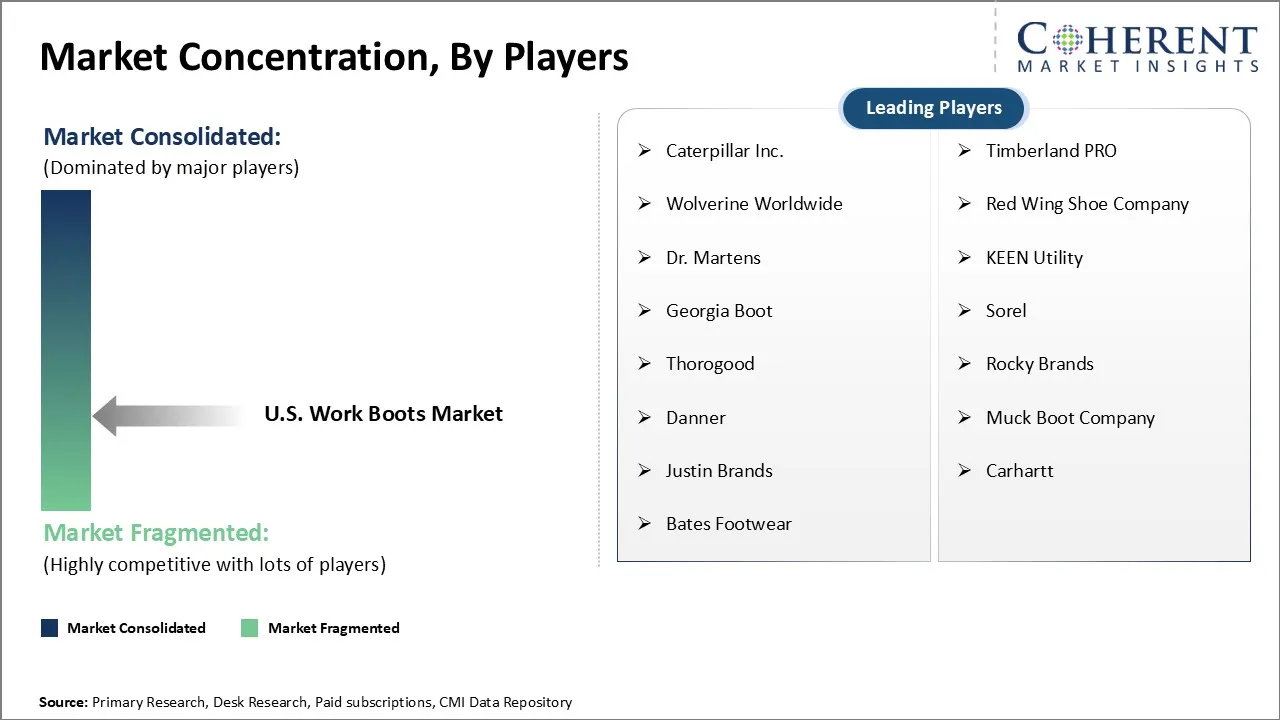
| Companies covered: | Caterpillar Inc., Timberland PRO, Wolverine Worldwide, Red Wing Shoe Company, Dr. Martens, KEEN Utility, Georgia Boot, Sorel, Thorogood, Rocky Brands, Danner, Muck Boot Company, Justin Brands, Carhartt, and Bates Footwear | ||
| Growth Drivers: |
| ||
| Restraints & Challenges: |
| ||
U.S. Work Boots Market Dynamics
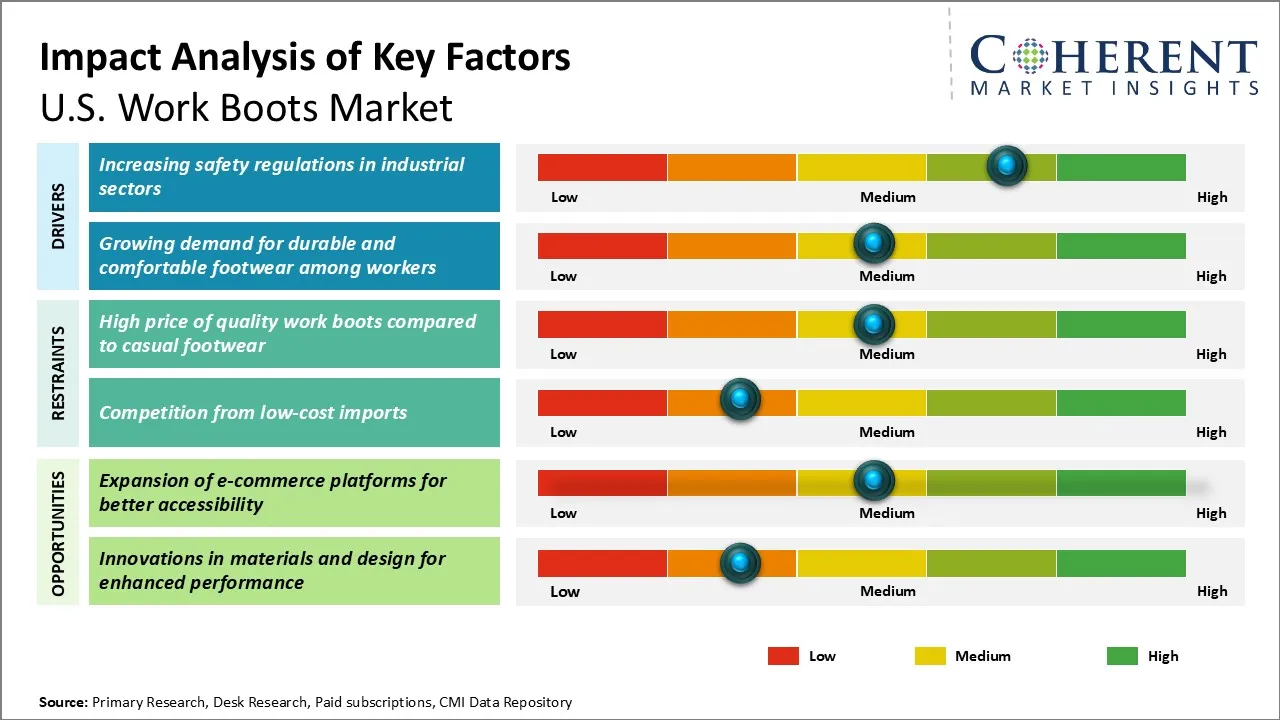
U.S. Work Boots Market Driver - Increasing Safety Regulations in Industrial Sectors
The rise in stringent safety regulations across various industrial sectors in the U.S. has significantly propelled the demand for specialized work boots designed to provide enhanced protection and compliance. Regulatory bodies such as OSHA have been intensifying workplace safety standards, mandating the use of protective footwear that meets specific criteria to guard against hazards like electrical shocks, chemical spills, heavy machinery impacts, and slip-related injuries. These evolving requirements compel employers to invest in high-quality, durable work boots that not only comply with legal guidelines but also ensure the well-being of their workforce.
The Occupational Safety and Health Administration (OSHA) has set stringent workplace safety regulations that require employers to provide protective footwear to workers in industries like construction, manufacturing, and warehousing. OSHA standards (29 CFR 1910.136) mandate that employees working in environments where foot injuries are a risk must wear safety boots meeting ASTM F2413 standards for impact and compression resistance.
U.S. Work Boots Market Opportunity - Expansion of E-Commerce Platforms for Better Accessibility
The U.S. work boots market presents a significant growth opportunity through the expansion of e-commerce platforms, which have revolutionized the way consumers access and purchase footwear. Online retail channels offer unparalleled convenience, enabling customers to browse an extensive range of work boot styles, brands, and price points without geographical limitations. This digital shift caters to the evolving preferences of tech-savvy consumers who prioritize time-saving and hassle-free shopping experiences. Additionally, e-commerce platforms provide valuable tools such as detailed product descriptions, customer reviews, and virtual fitting technologies, which help mitigate the challenges of size and fit commonly associated with footwear purchases.
Amazon has become a significant player in the U.S. work boots market, offering an extensive selection of work boots from leading brands like Timberland, Wolverine, and Dr. Martens. Amazon’s platform allows consumers to easily compare features, prices, and customer reviews, ensuring an informed purchasing decision. The convenience of online shopping, combined with fast delivery options, caters to the growing demand for work boots in industries requiring quick and efficient access to safety footwear.
Analyst Opinion (Expert Opinion)
- The U.S. work boots market is experiencing a notable transformation, driven by heightened safety regulations and increasing demand for durable, comfortable footwear across various industries. Insights from the National Safety Congress (2023) and the Workplace Safety Summit (2022) underscored the growing emphasis on ergonomic designs and advanced materials that enhance worker protection.
- Brands like Carhartt and Timberland PRO are setting the benchmark with their latest innovations in lightweight, waterproof boots that provide both comfort and safety, addressing the needs of labor-intensive sectors. For example, Carhartt's introduction of a new series featuring slip-resistant soles and reinforced toe caps reflects a strategic alignment with industry safety standards. Moreover, discussions at these conferences highlighted the increasing popularity of customizable features, allowing users to select specific attributes based on their work environments.
- As businesses increasingly recognize the importance of investing in quality work footwear for employee well-being, manufacturers that prioritize innovation and sustainability will likely dominate the market. The future of the U.S. work boots market will revolve around adaptability, enhanced safety features, and the ability to meet the evolving demands of diverse industries.
Speak to the analyst
Want personalized insights?
Take the findings above to one of our principal consultants, or have the report rebuilt around the segments, geographies and competitors you actually track.
Market Segmentation
- Product Type Insights (Revenue, USD Bn, 2021 - 2033)
- Pull-on
- Lace-up
- Puncture Resistant
- Insulated
- Steel Toe
- Others
- Material Insights (Revenue, USD Bn, 2021 - 2033)
- Leather
- Rubber
- PVC
- PU
- Fabric
- Others
- End User Insights (Revenue, USD Bn, 2021 - 2033)
- Construction
- Manufacturing
- Mining
- Agriculture
- Others
- Distribution Channel Insights (Revenue, USD Bn, 2021 - 2033)
- Online
- Offline
- Supermarkets & Hypermarkets
- Brand Outlets
- Independent Shoe Stores
- Others
- Key Players Insights
- Caterpillar Inc.
- Timberland PRO
- Wolverine Worldwide
- Red Wing Shoe Company
- Martens
- KEEN Utility
- Georgia Boot
- Sorel
- Thorogood
- Rocky Brands
- Danner
- Muck Boot Company
- Justin Brands
- Carhartt
- Bates Footwear
Sources
Primary Research Interviews
- Product Manager – Major U.S. Work Boot Manufacturer
- Supply Chain Lead – National Footwear Retailer
- Industrial Safety Director – Large Construction Contractor
- Senior Buyer – E-commerce Safety Equipment Platform
- Director of Sustainability – Leading Safety Footwear Brand
Stakeholders
- Manufacturers
- End-use Sectors
- Construction, Manufacturing, Oil & Gas, Mining, Utilities, Agriculture
- E-commerce and Offline Retail Chains specializing in work/safety footwear
- Regulatory & Certification Bodies (OSHA, ASTM International, American National Standards Institute)
- Distributors and Wholesalers (Grainger, Fastenal, Zappos, Boots.com)
- Technology Providers (companies offering smart and wearable tech integration in boots)
Databases
- U.S. International Trade Commission (USITC) DataWeb
- Bureau of Labor Statistics – Occupational Safety Data
Magazines
- Footwear News – U.S. industrial and safety footwear news
- Occupational Health & Safety Magazine – Innovations and compliance trends in work boots
- Safety+Health Magazine – Trends in PPE and site safety, including footwear
- Construction Dive – Market updates and innovations in work boots
Journals
- International Journal of Occupational Safety & Ergonomics – Ergonomics and protection in safety footwear
- Journal of Safety Research – Effectiveness and new technologies in work boots
- Journal of Vocational Education & Training – Research on safety gear adoption
- Applied Ergonomics – Studies on work boot comfort and injury prevention
Newspapers
- The Wall Street Journal – Industrial and economic drivers for U.S. safety footwear
- The New York Times – Consumer trends and labor market impact on protective boots
- USA Today – Coverage on employment changes affecting demand for industrial boots
- Financial Times, U.S. Edition – Biannual coverage on the U.S. and global work boots sector
Associations
- American Apparel & Footwear Association (AAFA)
- National Safety Council
- American Society of Safety Professionals (ASSP)
- ASTM International (footwear safety standards development)
- International Safety Equipment Association (ISEA)
Public Domain Sources
- U.S. Department of Labor – Occupational Safety and Health Administration (OSHA) PPE regulations on protective footwear
- ASTM International F2413 Standard Specification for Performance Requirements for Protective (Safety) Toe Cap Footwear
- National Institute for Occupational Safety and Health (NIOSH) Research and guidelines on industrial footwear
Proprietary Elements
- CMI Data Analytics Tool, Proprietary CMI Existing Repository of information for last 8 years
Get access to 250+ pages report
Every segment, forecast, competitor profile and data table behind the analysis above — available for instant download.
- ESOMAR Member
- ISO 9001:2015 Certified
- D-U-N-S Registered
- GDPR & CCPA Compliant
Missing comfort of reading report in your local language? Find your preferred language:
Transform your Strategy with Exclusive Trending Reports
Frequently Asked Questions
The U.S. work boots market is estimated to be valued at USD 5.57 Bn in 2026 and is expected to reach USD 7.54 Bn by 2033.
The CAGR of U.S. work boots market is projected to be 4.4% from 2026 to 2033.
Increasing safety regulations in industrial sectors and growing demand for durable and comfortable footwear among workers are the major factors driving the growth of the U.S. work boots market.
High price of quality work boots compared to casual footwear and competition from low-cost imports are the major factors hampering the growth of the U.S. work boots market.
In terms of Product Type, Pull-on segment is estimated to dominate the market revenue share in 2026.
Caterpillar Inc., Timberland PRO, Wolverine Worldwide, Red Wing Shoe Company, Dr. Martens, KEEN Utility, Georgia Boot, Sorel, Thorogood, Rocky Brands, Danner, Muck Boot Company, Justin Brands, Carhartt, and Bates Footwear are the major players.