

Global Xenotransplantation Market Size and Forecast – 2026 to 2033
According to Coherent Market Insights, the global xenotransplantation market is estimated to be valued at USD 3.21 Bn in 2026 and is expected to reach USD 6.22 Bn by 2033, expanding at a compound annual growth rate (CAGR) of 9.9% from 2026 to 2033. This growth is driven by advancements in genetic engineering, increasing prevalence of organ failure, and a shortage of donor organs, which collectively enhance the demand for xenotransplantation as a viable alternative to traditional organ transplantation.
Key Takeaways of the Xenotransplantation Market
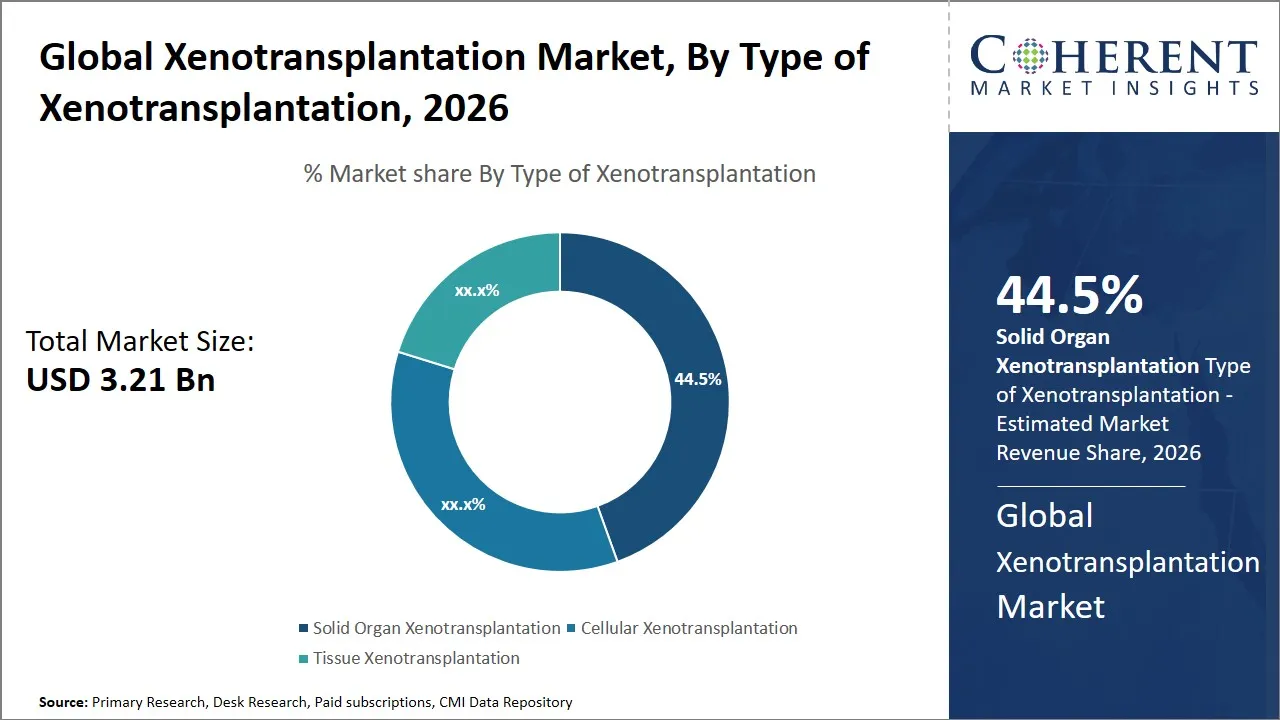
- In 2026, solid organ xenotransplantation segment is expected to lead the market, accounting for 44.5 % share.
- Pigs segment is projected to hold the largest share in the xenotransplantation market, with a 42.1 % share in 2026.
- The organ transplantation continues to be the dominant segment, representing 35.6 % of the market share in 2026.
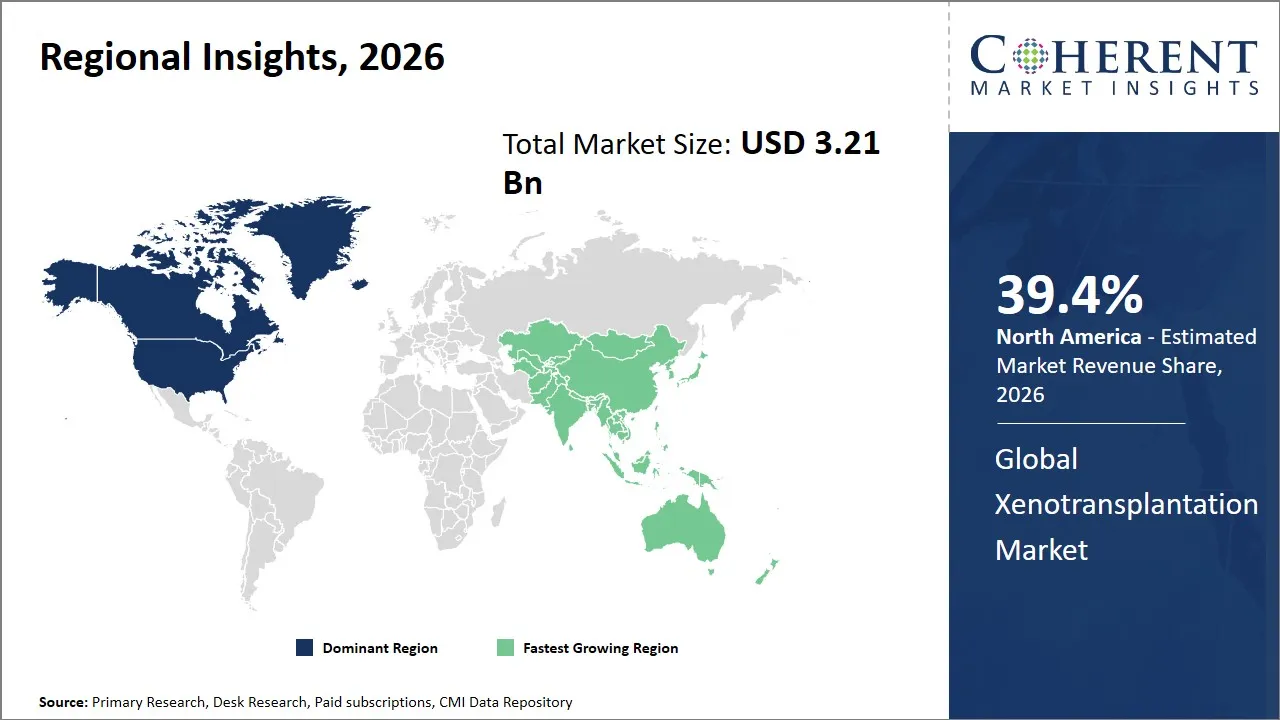
- North America is expected to lead the market, holding a share of 39.4 % in 2026.
- Asia Pacific is anticipated to be the fastest-growing region, with 24.6 % share in 2026.
Market Overview
- A key trend shaping the xenotransplantation market is the integration of cutting-edge gene-editing technologies such as CRISPR, which significantly reduces the risk of organ rejection and transmission of zoonotic diseases.
- Additionally, rising investments in research and development from both governmental and private sectors are accelerating clinical trials and regulatory approvals.
- These developments, combined with growing awareness about organ donation challenges, are expected to further propel market growth and adoption globally.
Current Events and Its Impact
Current Events | Description and its Impact |
China Includes Xenotransplantation in its 14th Five-Year Plan for Biotech Innovation |
|
Advancements in Immunogenetic Engineering |
|
Segmental Insights
- Current Industry Events of 2026
- Market Size Estimation
- Regional Breakdown
- Competitive Landscape
- Customer Intelligence
- Segmental Analysis
- Pricing Analysis
- Key Market Drivers, Challenges & Future Trends
- Customized Insights Section
What Makes Solid Organ Xenotransplantation a Promising Solution for Addressing the Growing Demand for Organ Transplants?
In 2026, solid organ xenotransplantation is expected to capture 44.5% of the market share. The shortage of human donors has created a consistent need for replacement organs. Kidneys, hearts, and livers face the longest waiting lists globally. This shortage fuels the demand for xenotransplantation as a viable alternative.
The fact that solid organ xenotransplantation can give functional organs from animal sources that save lives meets the urgent need of the clinics for transplantation, thus attracting attention of the researchers and development teams.
How is Ongoing Research into Pigs Segment Likely to Affect its Dominance in the Xenotransplantation Market?
Pigs dominate the source animal species category in the xenotransplantation market, holding an estimated 42.1% share in 2026. This trend is supported by biological, ethical, and practical factors making pigs the best donor candidates.
Pigs and humans share similarities in organ size and blood supply, leading to better transplant outcomes. These biological similarities reduce complication risks and increase the likelihood of a successful transplant compared to other animals.
How is the Increasing Demand for Organ Transplantation Influencing the Xenotransplantation Market Growth?
Organ transplantation remains the most significant application in the xenotransplantation market, contributing a projected 35.6% of the market share in 2026. The urgent need for organ replacements and inadequate transplantation systems drive this demand.
The shortage of human donor organs has significantly increased the need for alternative solutions like xenotransplantation. This approach offers the possibility of treating the most critical transplantation cases using animal organ stocks.
In February 2025, eGenesis, a biotechnology company focused on engineered organs, announced the successful transplantation of a genetically modified porcine kidney into a second patient at Massachusetts General Hospital. The patient, Tim Andrews, had been on dialysis for over two years and is now off dialysis, with his new kidney functioning as expected. eGenesis' EGEN-2784 kidney includes genetic modifications to prevent immune rejection, marking a key step in xenotransplantation and offering hope for patients with end-stage kidney disease.
Source: eGenesisbio
Genetic Modification Depth and Its Impact on Rejection Risk in Xenotransplantation
GGTA1 Knockout (KO) – Primary Step
- GGTA1 encodes α‑1,3‑galactosyltransferase, responsible for the α‑Gal epitope, a major target of preformed human anti‑pig antibodies. Knockout reduces hyperacute rejection.
- In vitro and preclinical studies show GGTA1 KO alone significantly reduces human IgM/IgG binding to porcine cells compared to wild‑
- GGTA1 KO alone is insufficient for long‑term graft survival as residual non‑Gal antigens still trigger immune responses.
CMAH Knockout – Secondary Antigen Removal
- CMAH deletion removes Neu5Gc carbohydrate, another xenoantigen recognized by human antibodies.
- Combined GGTA1/CMAH KO cells show lower human antibody binding than GGTA1 KO alone, improving crossmatch results.
- Population screening confirms improved compatibility but with variability, and no clear demographic predictors of response.
Triple Knockouts (GGTA1, CMAH, B4GALNT2) – Broader Xenoantigen Removal
- Adding B4GALNT2 KO further eliminates another carbohydrate epitope, reducing IgM/IgG binding relative to GGTA1/CMAH KO.
- More antigen removal correlates with incremental reductions in antibody binding and complements activation, lowering rejection risk in preclinical models.
Beyond KO – Expression of Human Immune Modulators
- Knockouts reduce innate antibody responses but do not fully address complement and coagulation activation. Human complement‑regulatory protein transgenes (e.g., CD46, CD55) are essential to further mitigate rejection.
- Multi‑gene engineered pigs (e.g., up to 10+ edits) show improved survival in preclinical xenotransplants by combining xenoantigen KO with human transgene expression.
Correlation Trends (Preclinical Data)
- Single KO (GGTA1): Large drop in hyperacute rejection, but residual antibody binding persists.
- Dual KO (GGTA1+CMAH): Further reduction in IgM/IgG crossmatch values compared to single KO; better than GGTA1 KO alone.
- Triple and beyond: Progressive reduction in xenoantigenicity, lower complement activation, improved graft survival in nonhuman primate models.
Practical Outcome Associations
- Increased genetic modification depth (more knockouts + human regulators) correlates with lower preformed antibody recognition and reduced hyperacute/delayed rejection in preclinical settings.
- Real‑world clinical correlation is emerging, but quantitative rejection risk curves versus specific gene edits remain limited, and current data are based on indirect measures like antibody binding and crossmatch metrics.
Risk Considerations
- Deeper editing can expose cryptic antigens, requiring broader screening for new epitopes.
- There is a balance between editing depth and maintaining functional organ integrity, as well as managing safety concerns such as zoonotic risks (e.g., PERV inactivation).
Regional Insights
North America Xenotransplantation Market Analysis and Trends
The North America xenotransplantation market is projected to account for 39.4% share in 2026, with the major factor for the region's high demand being its well-established healthcare infrastructure, significant amount of money allocated to biomedical research, and a good regulatory environment that supports the latter. The U.S. is already taking the lead inquires by providing significant funding through the NIH and the FDA, which is also involved in promoting quality clinical trials and providing ethical approval for research projects.
Furthermore, North America stands to gain considerably from having a coalition of top-level academics, support to bioindustry from the state, and an advanced biotechnological manufacturing base, which all contribute to placing this region at the forefront in terms of safety and efficacy in xenotransplantation therapies worldwide.
Asia Pacific Xenotransplantation Market Analysis and Trends
Asia Pacific is the fastest-growing market for xenotransplantation, with a projected market share of 24.6% in 2026. The healthcare infrastructure in the area is getting better and more areas of organ failure are emerging and more investments are being made in regenerative medicine technologies; these are the main reasons for the increase in demand. Among the countries leading the way with their respective adoption of xenotransplantation research are China, Japan, and South Korea, who have quietly opened up by classifying biotech development as a national health policy goal and creating strategic partnerships with both local and international companies.
The emergence of a new class of consumers who can afford advanced healthcare services coupled with government initiatives to promote scientific innovation have positively impacted the growth of this market. Global players like GenScript Biotech (China), Cyagen Biosciences, and Samsung Biologics (South Korea) are also making substantial contributions by developing novel genetic engineering platforms and conducting clinical trials focused on enhancing transplant outcomes.
Xenotransplantation Market Outlook for Key Countries
How is Xenotransplantation Adoption Evolving Across Major U.S. Transplant Centers?
The U.S. remains at the forefront of xenotransplantation, with a strong infrastructure that includes the top research clinics such as Massachusetts General Hospital and the University of Maryland. United Therapeutics has been the first to experiment with the genetic modification of pig organs to lower the chances of rejection and the FDA's open regulatory guidelines are very supportive for the clinical development and commercialization of xenotransplant products.
Public and private sector collaborations enhance translational research, driving innovative solutions that address organ shortages. The U.S. also notably benefits from a large patient pool requiring organ transplants, accelerating clinical demand for xenotransplant therapies.
What Role do Chinese Government Funding Initiatives Play in Accelerating Xenotransplantation Innovation?
The xenotransplantation industry in China has witnessed a rapid expansion owing to considerable government support for biotechnology innovations through the “Made in China 2025” program. Moreover, the country promotes local firms like GenScript Biotech, which are engaged in genetic engineering and production of medical-grade tissues from other species. The market scope is further amplified by healthcare spending, an increasing number of informed patients, and improved medical facilities.
Besides, China’s cooperative research projects with the West are a big help in the application of up-to-date transplanting techniques. The meddling to make ethical regulations stricter and at the same time to facilitate the running of clinical trials are providing a framework that is both rigid and diverse for the market to bloom.
Japan Xenotransplantation Market Trends
Japan’s scientific research in immunology and regenerative medicine has been the backbone of its xenotransplantation market development. Japan prioritizes new biological therapies and Giomed, a firm dealing with gene editing techniques and others along with it, are major contributors to this process. Money from the Japanese government is a critical factor for the above-mentioned translational research and is also accompanied by policies that are friendly for clinical trials on xenotransplantation.
Japan’s organ donation culture is still relatively low, which raises the interest in alternatives such as the use of animals for transplantation. Japan’s first-class biomedical industry combined with skilled researchers ensures the continual improvement of the xenotransplantation processes with a focus on safety and biocompatibility.
Germany Xenotransplantation Market Trends
Germany is Europe’s main xenotransplantation market, with the presence of top-notch biomedical research facilities like the Max Planck Institute and the pharmaceutical company Evotec giving it support. A good healthcare system, strict regulatory bodies that ensure high standards for clinical trials, and a lot of government support for translational medicine are some of the things that the country can do with the great research facilities that it has.
German pharmaceutical and biotech industries are always investing in gene editing and immune tolerance technologies that are relevant for the xenotransplantation process. Furthermore, Germany's membership in the EU gives it a strategic location for the importation and exportation of products, which greatly enhances the cooperation among member states that is imperative in the xenotransplantation research and commercialization process.
End User Feedback and Unmet Needs - Xenotransplantation Market
- End users in the global xenotransplantation market, especially in healthcare and research, have shared both positive and critical feedback. Researchers have praised gene-edited pigs, particularly with GGTA1 and CMAH knockouts, for reducing human antibody rejection, offering a promising foundation for clinical applications. However, many users have expressed concerns about the high costs and complexity of genetic modification processes, which limit adoption, especially in developing markets.
- Key unmet needs include the lack of customization for specific human immune system interactions and affordability issues. To address these, manufacturers could focus on making genetic modification more cost-effective and easier to integrate into existing medical practices. This would not only expand adoption but also drive innovation and improve patient outcomes.
Market Players, Key Developments, and Competitive Intelligence
Key Developments
- In February 2025, United Therapeutics Corporation announced that the U.S. FDA has cleared its Investigational New Drug (IND) application to begin a clinical study for its investigational UKidney derived from a genetically modified pig. This marks the first-ever human clinical trial for a xenotransplant, aiming to support a Biologics License Application (BLA) for the UKidney.
- In August 2025, the U.S. FDA approved the first clinical trials for pig-to-human kidney xenotransplantation. This breakthrough comes after years of research, including the first successful transplants in 2022. In 2024, the National Kidney Foundation (NKF), a leading patient advocacy group in kidney health, partnered with the U.S. FDA for the first Externally-Led Patient-Focused Drug Development (EL-PFDD) meeting on xenotransplantation.
- In February 2025, Eledon Pharmaceuticals announced that its investigational therapy, tegoprubart, was used as a key component of the immunosuppression regimen in the second xenotransplant of a genetically modified pig kidney into a human. The procedure, conducted on January 25, 2025, at Massachusetts General Hospital (MGH) in collaboration with eGenesis, marked a significant milestone in the field of xenotransplantation.
- In February 2025, Massachusetts General Hospital (MGH), a leading institution in the Mass General Brigham health care system, announced the successful completion of its second xenotransplant procedure, in which a genetically-edited pig kidney was transplanted into a living human recipient.
Top Strategies Followed by Global Xenotransplantation Market Players
Player Type | Strategic Focus | Examples |
Established Market Leaders | Heavy R&D investment in high-performance tissue dissociation products; focus on innovation to improve efficiency, accuracy, and ease of use; strategic partnerships with OEMs, key stakeholders; global expansion into emerging markets in Asia-Pacific, Latin America, and Africa. | Thermo Fisher Scientific focuses on advanced automation for tissue dissociation; STEMCELL Technologies expands distribution networks into Asia Pacific. |
Mid-Level Players | Focus on cost-effectiveness while maintaining product quality; address price-sensitive customers in research labs, universities, and regional healthcare providers; collaborative ventures for improved production capabilities. | Miltenyi Biotec offers cost-effective tissue dissociation solutions for small labs; Bio-Techne targets price-sensitive healthcare providers with reliable but affordable products. |
Small-Scale Players | Specialize in niche applications with innovation-driven products; use technologies like microfluidics, automated dissociation platforms, and custom enzyme blends; local alliances to enhance market visibility. | Cell Microsystems offers specialized microfluidic dissociation solutions; GentleMACS by Miltenyi Biotec provides custom enzyme blends for specific tissue types. |
Market Report Scope
Xenotransplantation Market Report Coverage
| Report Coverage | Details | ||
|---|---|---|---|
| Base Year: | 2025 | Market Size in 2026: | USD 3.21 Bn |
| Historical Data for: | 2021 To 2024 | Forecast Period: | 2026 To 2033 |
| Forecast Period 2026 to 2033 CAGR: | 9.9% | 2033 Value Projection: | USD 6.22 Bn |
| Geographies covered: |
| ||
| Segments covered: |
| ||
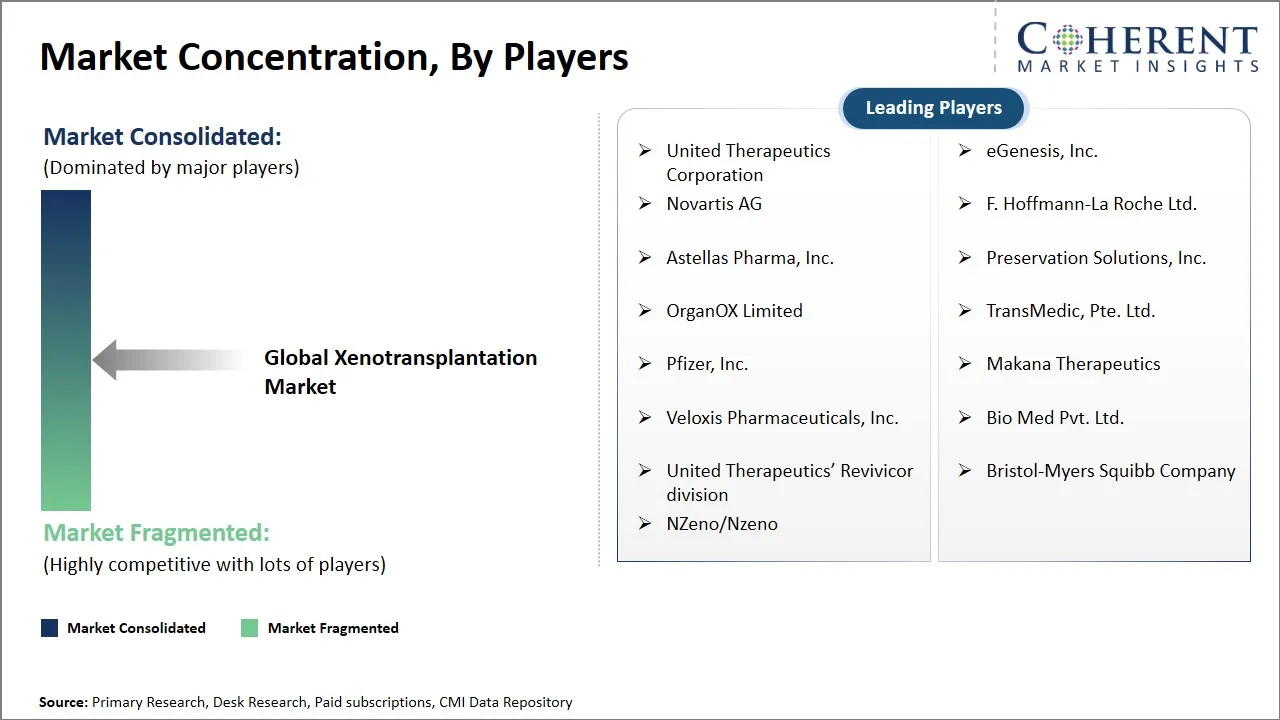
| Companies covered: | United Therapeutics Corporation, eGenesis, Inc., Novartis AG, F. Hoffmann‑La Roche Ltd., Astellas Pharma, Inc., Preservation Solutions, Inc., OrganOX Limited, TransMedic, Pte. Ltd., Pfizer, Inc., Makana Therapeutics, Veloxis Pharmaceuticals, Inc., Bio Med Pvt. Ltd., United Therapeutics’ Revivicor division, Bristol‑Myers Squibb Company, and NZeno/Nzeno | ||
| Growth Drivers: |
| ||
| Restraints & Challenges: |
| ||
Xenotransplantation Market Dynamics
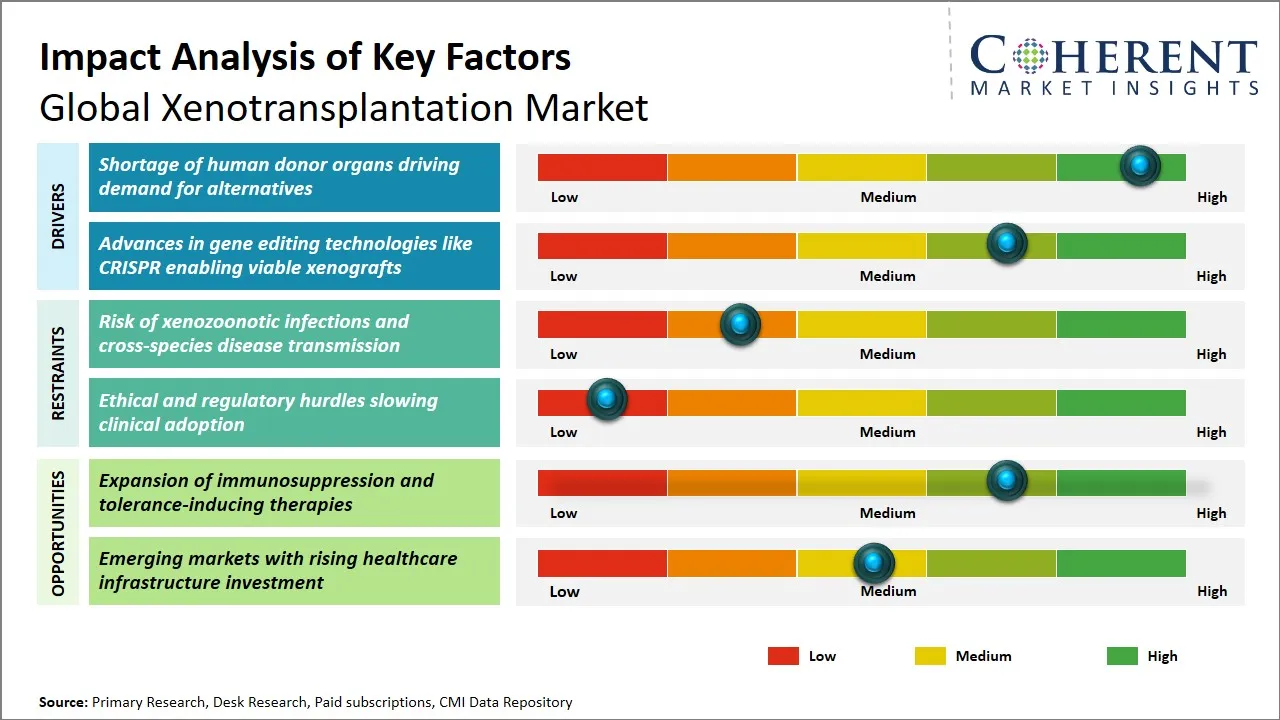
Xenotransplantation Market Driver - Shortage of Human Donor Organs Driving Demand for Alternatives
The constant and severe lack of organs from human donors is still a major problem in the healthcare sector, which in turn, urges the search for suitable alternatives like xenotransplantation to be quicker. A larger group of patients who need organ transplants is facing a longer time to wait for their transplants, thanks to the shortage, which usually results in the deterioration of the patients’ health, or even death, before the right organ comes along. The limited supply has made xenotransplantation more interesting, and the organs coming from genetically modified animals are deemed the best solution to close the demand-supply gap.
The innovations in genetic engineering and the use of immunosuppressive drugs have made it easier to transplant organs from one species to another and this has created a positive outlook on their ability to help with the problem of transplanting waitlists. Moreover, the growing number of chronic patients needing organs, like in the case of kidneys and heart failures, is adding to the shortage thereby prompting more research and investment in the development of xenotransplantation technologies.
In October 2023, Dr. Santy Sajan, Group Chief Operating Officer of Paras Health, addressed India's critical organ shortage. The country needs 2,00,000 kidneys, 1,00,000 corneas, and 50,000 hearts annually, but only a fraction of transplants are performed. The National Organ Transplant Programme (NOTP) and agencies like NOTTO, ROTTOs, and SOTTOs work to improve organ procurement and distribution. Hospitals play a key role in awareness and transplant success, ensuring donor-recipient compatibility and care.
Source: https://universalinstitutions.com/indias-organ-donation-rate-remains-critically-low/
Xenotransplantation Market Opportunity - Expansion of Immunosuppression and Tolerance-Inducing Therapies
Among the key factors unleashing the global xenotransplantation market is the irresistible challenge of immunosuppression and tolerance-inducing therapies. Xenotransplantation which is a process of transplanting organs or tissues across different species is a severely stressful process for the immune system of the recipient since it considers the donor organ foreign and hence, reacts by rejection. The discovery of more powerful immunosuppressive agents along with the approval for novel tolerance-inducing therapies would be turning point for clinical practice whereby graft rejection would be less and organ survival would be long.
On December 18, 2025, Kanazawa University researchers at the Nano Life Science Institute developed engineered extracellular vesicles to induce antigen-specific regulatory T cells (Tregs). These Tregs play a key role in controlling excessive immune responses. The study, published in Drug Delivery, offers potential for treating autoimmune and allergic diseases. Traditional treatments use broad immunosuppression, leaving patients vulnerable to infections.
Source: https://nanolsi.kanazawa-u.ac.jp/en/highlights/35393/
Analyst Opinion (Expert Opinion)
- Xenotransplantation market is gaining remarkable traction due to the combination of gene-editing technologies such as CRISPR and improved immune suppression drugs that make organ rejection less likely. Support from the regulatory bodies is not only aiding but also speeding up the research process. Besides, the increased demand for organ transplants is pulling the market towards animal-to-human solutions. Nevertheless, there are still hurdles before the industry such as making certain the safety of using animal organs for a long term and dealing with the ethics of animal-derived organs.
- Among the recent conferences, the International Xenotransplantation Association Congress has been a major contributor to scientific and regulatory developments in this area. Some leading examples, such as the eGenesis project with Massachusetts General Hospital, where genetically modified pig kidneys have been transplanted with success, are redefining the market. Besides, research conducted under government sponsorship in the U.S. and Japan is further boosting the acceptance of xenotransplantation.
Speak to the analyst
Want personalized insights?
Take the findings above to one of our principal consultants, or have the report rebuilt around the segments, geographies and competitors you actually track.
Market Segmentation
- Type of Xenotransplantation Insights (Revenue, USD Bn, 2021 - 2033)
- Solid Organ Xenotransplantation
- Cellular Xenotransplantation
- Tissue Xenotransplantation
- Source Animal Species Insights (Revenue, USD Bn, 2021 - 2033)
- Pigs
- Non-human Primates
- Others (e.g., Sheep, Cows)
- Application Insights (Revenue, USD Bn, 2021 - 2033)
- Organ Transplantation
- Cell and Tissue Transplantation
- Gene Editing Applications
- Regenerative Medicine
- Type of Organ Insights (Revenue, USD Bn, 2021 - 2033)
- Heart
- Kidney
- Liver
- Lungs
- Pancreas
- Skin
- Cornea
- Immunosuppressive Protocols Insights (Revenue, USD Bn, 2021 - 2033)
- Immunosuppressive Drugs
- Gene Editing to Modify Immune Response
- Pre-transplantation Genetic Modifications
- End User Insights (Revenue, USD Bn, 2021 - 2033)
- Hospitals
- Research Institutions
- Biotechnology and Pharmaceutical Companie
- Regional Insights (Revenue, USD Bn, 2021 - 2033)
- North America
- U.S.
- Canada
- Latin America
- Brazil
- Argentina
- Mexico
- Rest of Latin America
- Europe
- Germany
- U.K.
- Spain
- France
- Italy
- Russia
- Rest of Europe
- Asia Pacific
- China
- India
- Japan
- Australia
- South Korea
- ASEAN
- Rest of Asia Pacific
- Middle East
- GCC Countries
- Israel
- Rest of Middle East
- Africa
- South Africa
- North Africa
- Central Africa
- North America
- Key Players Insights
- United Therapeutics Corporation
- eGenesis, Inc.
- Novartis AG
- Hoffmann‑La Roche Ltd.
- Astellas Pharma, Inc.
- Preservation Solutions, Inc.
- OrganOX Limited
- TransMedic, Pte. Ltd.
- Pfizer, Inc.
- Makana Therapeutics
- Veloxis Pharmaceuticals, Inc.
- Bio Med Pvt. Ltd.
- United Therapeutics’ Revivicor division
- Bristol‑Myers Squibb Company
- NZeno/Nzeno
Sources
Primary Research Interviews
- Industry Stakeholders List
- Leading pharmaceutical companies in transplantation
- Biotech firms specializing in genetic engineering
- End-users List
- Hospitals and transplant centers
- Research institutes focused on organ transplant innovations
Government and International Databases
- World Health Organization (WHO)
- U.S. National Institutes of Health (NIH)
- European Medicines Agency (EMA)
- Centers for Disease Control and Prevention (CDC)
- U.S. Food and Drug Administration (FDA)
- Japan's Ministry of Health, Labour and Welfare (MHLW)
Trade Publications
- BioWorld
- The New England Journal of Medicine
- Nature Biotechnology
- Transplantation Proceedings
- The Lancet Transplantation
- Cell Stem Cell
Academic Journals
- Xenotransplantation
- Journal of Clinical Investigation
- The Journal of Transplantation
- Molecular Therapy
- Transplantation Journal
- The Journal of Immunology
Reputable Newspapers
- The New York Times
- The Guardian
- The Washington Post
- Financial Times
- The Wall Street Journal
- Reuters
Industry Associations
- International Xenotransplantation Association (IXA)
- American Transplantation Society (ATS)
- European Society for Organ Transplantation (ESOT)
- Organ Transplantation Alliance
- The Transplantation Society (TTS)
- American Society of Transplantation (AST)
Public Domain Resources
- National Institutes of Health (NIH) RePORTER
- U.S. National Library of Medicine
- ClinicalTrials.gov
- European Medicines Agency Public Reports
- The U.S. Centers for Disease Control and Prevention (CDC)
Proprietary Elements
- CMI Data Analytics Tool: Proprietary analytics tool to analyze real-time market trends, consumer behavior, and technology adoption in market
- Proprietary CMI Existing Repository of Information for Last 8 Years
Get access to 250+ pages report
Every segment, forecast, competitor profile and data table behind the analysis above — available for instant download.
- ESOMAR Member
- ISO 9001:2015 Certified
- D-U-N-S Registered
- GDPR & CCPA Compliant
Missing comfort of reading report in your local language? Find your preferred language:
Transform your Strategy with Exclusive Trending Reports
Frequently Asked Questions
The global xenotransplantation market is estimated to be valued at USD 3.21 Bn in 2026 and is expected to reach USD 6.22 Bn by 2033.
The CAGR of global xenotransplantation market is projected to be 9.9% from 2026 to 2033.
Shortage of human donor organs driving demand for alternatives and advances in gene editing technologies like CRISPR enabling viable xenografts are the major factors driving the growth of the global xenotransplantation market.
Risk of xenozoonotic infections and cross‑species disease transmission and ethical and regulatory hurdles slowing clinical adoption are the major factors hampering the growth of the global xenotransplantation market.
In terms of type of xenotransplantation, solid organ xenotransplantation is estimated to dominate the market revenue share in 2026.
It presents potential to reduce waitlist mortality and expand access to life‑saving organs.
Advances in genetic engineering and immunosuppression are boosting research and clinical interest.