

Alopecia Treatment Market Size and Forecast – 2026 to 2033
Alopecia Treatment Market is estimated to be valued at USD 11.38 Bn in 2026 and is expected to reach USD 16.89 Bn in 2033, exhibiting a compound annual growth rate (CAGR) of 5.8% from 2026 to 2033.
Key Takeaways
- By Drug Class, Corticosteroids acquired the prominent share of 42.2% in 2026 as high efficacy in treating autoimmune-induced hair loss.
- By Disease Type, Alopecia Areta hold the largest market share in 2026 owing to its increasing prevalence of alopecia areata.
- By Route of Administration, Oral dominates the overall market share in 2026 owing to the advancements in oral medications.
- By Distribution Channel, Hospital Pharmacies expected to hold largest market share in 2026 owing to the management of severe and complex cases.
- By Region, North America dominates the overall market with an estimated share of 35.9% in 2026 owing to the widespread prevalence & awareness.
Market Overview
The alopecia treatment market continues to grow as more people become aware of hair loss conditions and actively seek effective therapies. Advancements in treatment options, including oral JAK inhibitors and low-dose oral minoxidil, have expanded the choices available to patients. The emotional and psychological effects of hair loss drive individuals to pursue treatment. Retail and hospital pharmacies play a key role in making these solutions accessible, while interest in both medical and cosmetic treatments rise across various age groups and regions worldwide.
Current Events and their Impact on the Alopecia Treatment Market
Current Events | Description and its impact |
Geopolitical Events |
|
Healthcare Policy and Insurance Coverage |
|
Environmental and Nano-Level Industry Events |
|
End-user Feedback and Unmet Needs in the Alopecia Treatment Market
End-user Feedback and Unmet Needs
- Treatment Effectiveness and Consistency: Many patients report frustration with inconsistent results from current treatments. While some therapies promote hair regrowth, they often vary in effectiveness, duration, and relapse rates. Users seek more reliable, long-lasting solutions that offer visible improvement without frequent treatment interruptions or side effects.
- Side Effects and Safety Concerns: End-users express concerns about adverse effects, especially with systemic and corticosteroid treatments. Safety remains a priority, as patients desire therapies that minimize risks like skin irritation, hormonal imbalance, or immune suppression, while maintaining efficacy over long-term use.
- Accessibility and Affordability: High treatment costs and limited insurance coverage pose barriers for many users. Patients often struggle to access advanced therapies due to financial constraints or geographic limitations, highlighting the need for more affordable, widely available options across diverse healthcare settings.
- Current Industry Events of 2026
- Market Size Estimation
- Regional Breakdown
- Competitive Landscape
- Customer Intelligence
- Segmental Analysis
- Pricing Analysis
- Key Market Drivers, Challenges & Future Trends
- Customized Insights Section
Segmental Insights
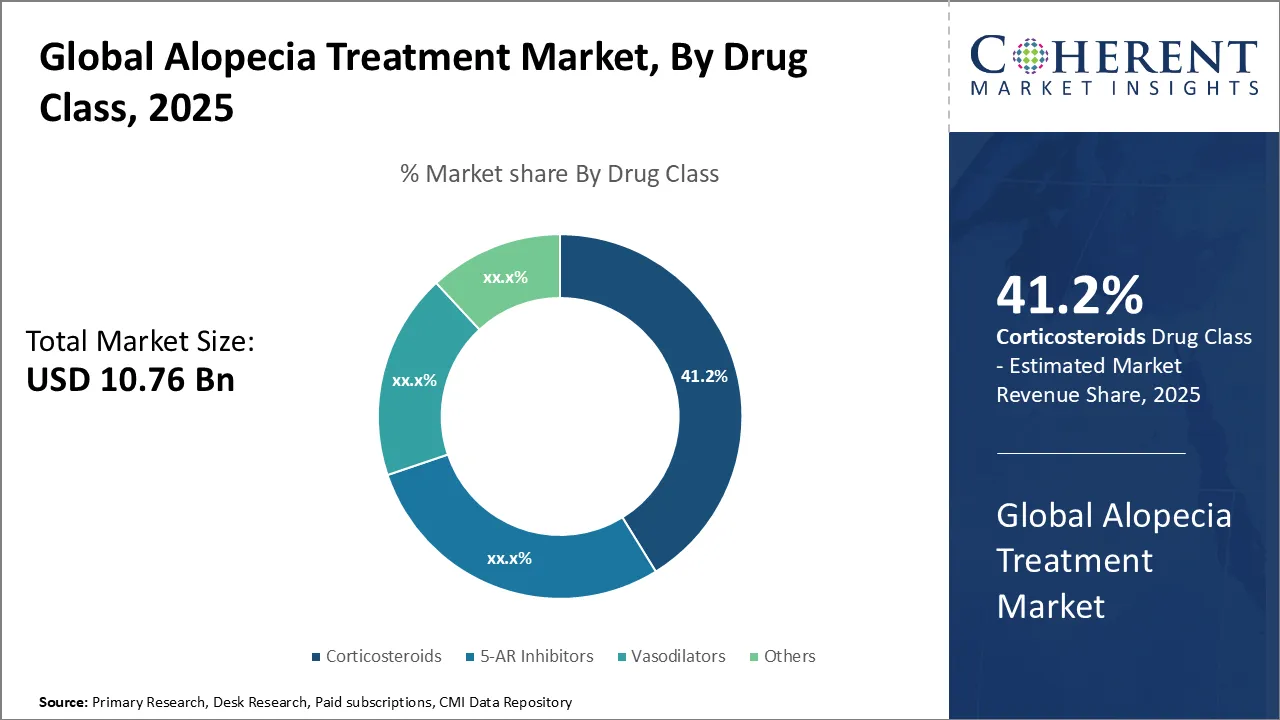
Alopecia Treatment Market Insights, By Drug Class: Corticosteroids contribute the highest share of the market owing to its established clinical use and physician trust
Corticosteroids acquired the prominent share of 42.2% in 2026. Corticosteroids play a key role in driving the alopecia treatment market demand as they effectively manage autoimmune-related hair loss, particularly alopecia areata. Physicians rely on their anti-inflammatory and immunosuppressive actions to promote hair regrowth. Healthcare providers offer corticosteroids in topical, oral, and injectable forms to suit different patient needs. Their affordability, regulatory approvals, and insurance coverage boost their adoption. Medical professionals also use them in combination therapies, reinforcing their position as a core component in comprehensive alopecia treatment across clinical environments. For instance, in October 2024, Lupin launched the generic version of the corticosteroid Prednisolone in the United States. As the first company to receive approval and introduce the generic to the market, Lupin is entitled to 180-day Competitive Generic Therapy (CGT) exclusivity.
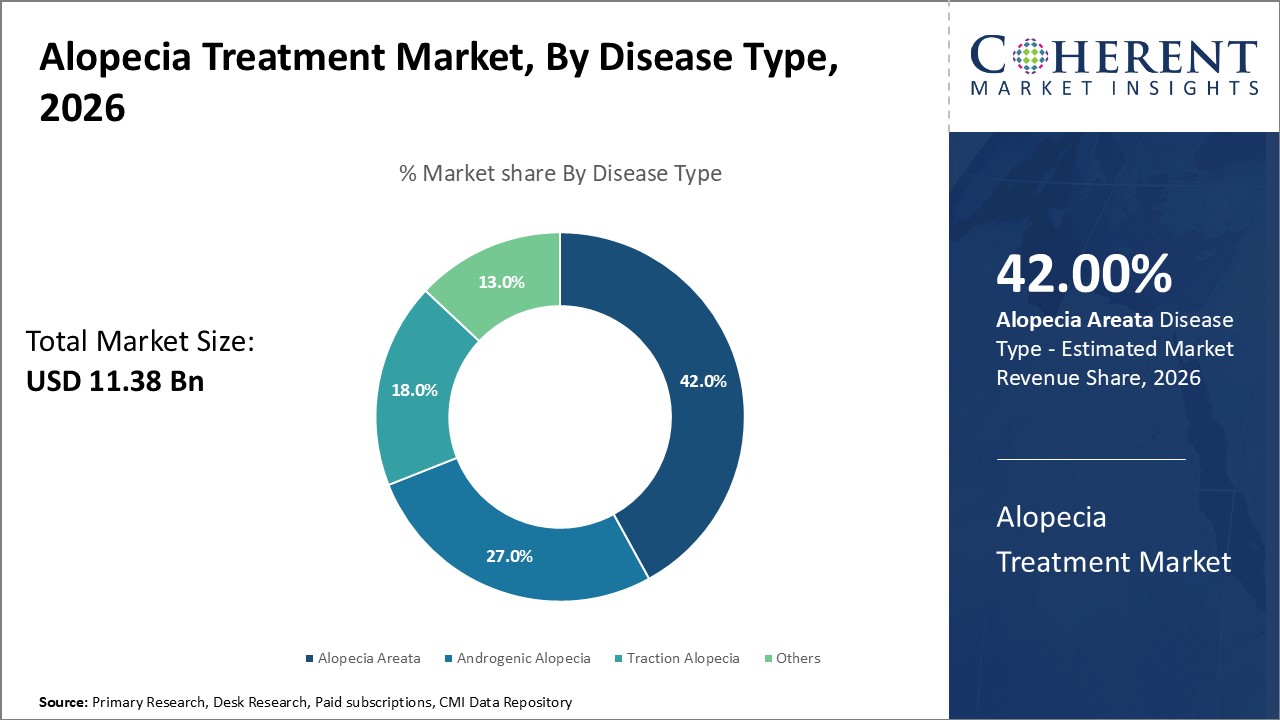
Alopecia Treatment Market Insights, By Disease Type: Alopecia Areta contribute the highest share of the market owing to its advancements in treatment options
Alopecia areata fuels growth in the alopecia treatment market as more patients seek effective solutions for this autoimmune condition. Researchers have focused on its underlying causes, leading to the development of targeted therapies such as JAK inhibitors. The sudden and visible nature of hair loss prompts individuals to pursue medical intervention. Regulatory bodies support the approval of new treatments, while increasing awareness among patients and healthcare professionals drives demand. Ongoing clinical research and innovation continue to introduce advanced therapies tailored to alopecia areata. For instance, in July 2025, Sun Pharmaceuticals announced the U.S. launch of deuruxolitinib (Leqselvi) for treating severe alopecia areata (AA) in adults. The company is offering 8-mg tablets of deuruxolitinib to health care providers and patients aged 18 and older with severe AA.
Alopecia Treatment Market Insights, By Route of Administration: Oral contributes the highest share of the market owing to its Growing awareness and demand
Oral treatments boost the alopecia treatment market by providing effective, non-invasive solutions that appeal to patients. Physicians prescribe options like low-dose oral minoxidil and JAK inhibitors for their proven ability to support hair regrowth, particularly in moderate to severe cases. Doctors favor these treatments due to their ease of use and high patient adherence. Media exposure, rising awareness, and expanded access through telehealth services continue to drive demand. Pharmaceutical companies actively develop new oral therapies, enhancing choices in both clinical and home settings. For instance, in May 2025, Pfizer Korea introduced Litfulo (ritlecitinib tosylate), a new oral Janus kinase (JAK) inhibitor, to treat severe alopecia areata in adolescents and adults. With this launch, the company is expanding treatment options for patients aged 12 and older in Korea.
Alopecia Treatment Market Insights, By Distribution Channel: Hospital Pharmacies contribute the highest share of the market owing to its collaboration with pharmaceutical companies
Hospital pharmacies drive the alopecia treatment market by distributing advanced and specialty medications, especially for severe cases like alopecia areata. They administer injectable corticosteroids and newly approved oral therapies that need clinical supervision. Hospitals actively conduct clinical trials and provide early access programs to introduce innovative treatments. With their specialized staff and infrastructure, hospital pharmacies ensure safe medication handling, educate patients, and monitor treatment progress, playing a crucial role in delivering comprehensive alopecia care within controlled settings.
Regional Insights
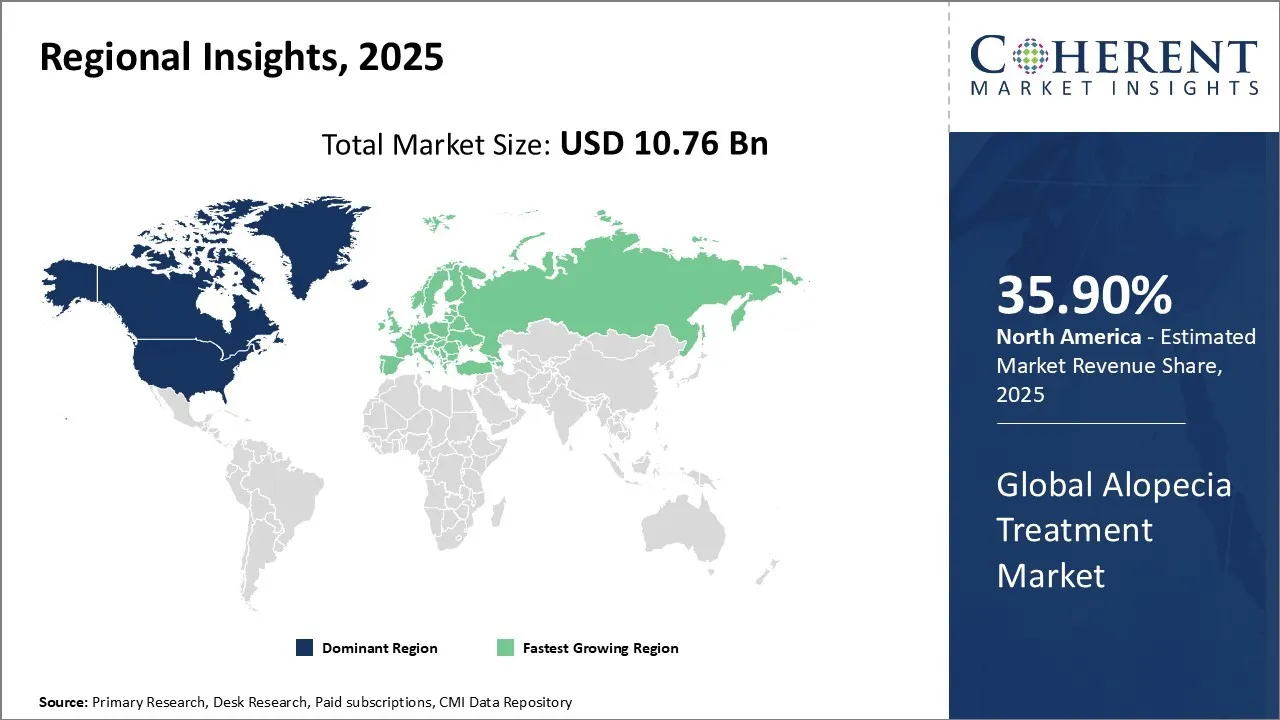
North America Alopecia Treatment Market Trends
North America dominates the overall market with an estimated share of 35.90% in 2026. Innovative therapies, such as oral JAK inhibitors and advanced topical solutions, are reshaping the North America alopecia treatment market. Patients increasingly recognize and accept medical treatments, boosting demand. Healthcare providers benefit from a strong infrastructure and easy specialist access, while telemedicine expands consultation options and treatment availability. The market diversifies further as personalized medicine and cosmetic procedures gain popularity. Researchers and regulatory bodies actively collaborate to promote the development of new, targeted alopecia therapies throughout the region. In December 2023, Pfizer Canada announced that Health Canada had issued a Notice of Compliance (NOC) for LITFULO™ (ritlecitinib). This once-daily oral medication is the first and only approved treatment in Canada for people aged 12 and older with severe alopecia areata.
Europe Alopecia Treatment Market Trends
Advanced therapies like biologics and JAK inhibitors are driving growth in the Europe alopecia treatment market demand. Patients increasingly seek timely treatment thanks to rising awareness and better diagnostic tools. Healthcare providers across the region focus on patient-centered approaches that integrate medical and cosmetic options. Digital health platforms expand access to specialists and personalized care. Governments actively support innovation, and pharmaceutical companies collaborate with research institutions to accelerate the development of effective, customized alopecia treatments throughout Europe.
United States Alopecia Treatment Market Trends
Cutting-edge therapies like oral JAK inhibitors and novel biologics rapidly drive the United States alopecia treatment market. More individuals seek treatment due to growing public awareness and a stronger focus on mental health. Healthcare providers leverage the country’s robust infrastructure to offer widespread access to specialized care and advanced diagnostics. Telehealth services expand to increase treatment accessibility nationwide. Pharmaceutical companies invest heavily and conduct ongoing clinical trials, fueling continuous innovation, while personalized treatment plans and cosmetic options gain popularity among diverse patient populations. For instance, For instance, Eli Lilly and Company and Incyte announced that the U.S. Food and Drug Administration (FDA) has approved OLUMIANT® (baricitinib), a once-daily pill, as the first systemic treatment for adults with severe alopecia areata (AA). They are making it available in 4-mg, 2-mg, and 1-mg tablet strengths.
India Alopecia Treatment Market Trends
India’s alopecia treatment market is gaining momentum as consumers become more aware of hair loss conditions and increasingly demand advanced, non‑invasive therapies. Patients are turning to treatments like platelet‑rich plasma (PRP), low‑level laser therapy (LLLT), and modern topical formulations—especially those accessible via e‑commerce and teledermatology platforms. At the same time, interest is rising in nutraceuticals and functional foods—such as biotin, collagen peptides, omega‑3s, and herbal extracts—that offer preventive and holistic support for hair health. For instance, Nile Hair N Skin Care, a leader in the hair replacement and wellness industry, unveiled its innovative baldness treatment technology in the vibrant city of Bangalore, positioning itself to make waves once again.
Market Report Scope
Alopecia Treatment Market Report Coverage
| Report Coverage | Details | ||
|---|---|---|---|
| Base Year: | 2025 | Market Size in 2026: | USD 11.38 Bn |
| Historical Data for: | 2020 To 2024 | Forecast Period: | 2026 To 2033 |
| Forecast Period 2026 to 2033 CAGR: | 5.8% | 2033 Value Projection: | USD 16.89 Bn |
| Geographies covered: |
| ||
| Segments covered: |
| ||
| Companies covered: | Stemson Therapeutics, OliX Pharmaceuticals, Inc, Pfizer Inc, Aclaris Therapeutics, Inc., Fagron, Follicum AB, Cipla Inc., Arcutis Biotherapeutics, Dr. Reddy’s Laboratories Ltd., Himalaya Wellness Company, Stemson Therapeutics, Cosmo Pharmaceuticals N.V., Equillium, Inc., Eli Lilly and Company, Concert Pharmaceuticals Inc., and Teva Pharmaceutical Industries Ltd. | ||
| Growth Drivers: |
| ||
| Restraints & Challenges: |
| ||
Alopecia Treatment Market Trend
- Integration of Digital Health Technologies
Digital health platforms, including telemedicine and mobile apps, are transforming alopecia care by enhancing patient access to dermatologists and treatment monitoring. These technologies facilitate remote consultations, adherence tracking, and early intervention, especially in underserved areas. Increased connectivity allows for better patient education and engagement, empowering users to manage their condition proactively and improving overall treatment outcomes.
Alopecia Treatment Market Opportunity
- Development of Personalized Medicine
Personalized treatment approaches based on genetic, environmental, and lifestyle factors offer vast potential. Advances in biomarker identification and diagnostic tools enable tailored therapies that improve efficacy and minimize side effects. Companies that invest in personalized medicine technologies can meet patient demand for customized solutions, differentiating their products and capturing a niche market within alopecia care.
Alopecia Treatment Market News
- In January 2025, Eirion Therapeutics Inc., a biopharmaceutical company developing innovative aesthetic prescription products, announced that it has successfully completed its first-in-man clinical trial for ET-02, a topical treatment for androgenic alopecia (age-related hair loss).
- In September 2024, Amplifica Holdings Group Inc., a privately held, clinical‑stage biopharmaceutical company, shared results from its first‑in‑human trial of AMP‑303—an innovative intradermal injectable treatment for androgenetic alopecia (AGA), the most common form of hair loss.
- In June 2024, Lumenis Be. Ltd., a leading energy-based medical device company specializing in aesthetic and eye care solutions, introduced FoLix™, the first FDA-cleared proprietary fractional laser system designed to treat hair loss. This groundbreaking technology utilizes fractional laser energy to stimulate hair follicles, promoting natural hair growth without the need for chemicals, needles, anesthesia, surgery, or downtime.
Analyst Opinion (Expert Opinion)
- The Alopecia Treatment market is entering a pivotal phase where scientific breakthroughs, particularly in targeted therapies, are reshaping clinical paradigms. Oral JAK inhibitors, such as baricitinib and ruxolitinib, represent a watershed moment, delivering unprecedented efficacy for alopecia areata patients who were previously underserved by traditional corticosteroids or topical agents. Clinical trial data—such as the phase 3 BRAVE-AA1 study demonstrating over 30% of patients achieving substantial hair regrowth within 36 weeks—validates this shift.
- However, despite these advances, significant challenges persist. The immunosuppressive nature of JAK inhibitors raises long-term safety questions, requiring vigilant post-market surveillance. Moreover, the market’s reliance on corticosteroids remains entrenched due to their cost-effectiveness and established safety profile, particularly in regions with limited healthcare budgets. This dichotomy underscores a fragmented treatment landscape, where innovation struggles to achieve universal adoption.
- Furthermore, patient adherence remains a critical bottleneck. Alopecia’s psychological burden is immense, with studies indicating that up to 70% of patients experience anxiety or depression, directly impacting treatment persistence. Current treatments often fail to address this holistic need, signaling a gap that future solutions must bridge.
- Pharmaceutical firms must therefore prioritize not only molecular innovation but also patient-centric support systems and affordability strategies. For example, the integration of digital health tools for treatment monitoring and mental health support could enhance compliance and outcomes, a concept still in nascent stages but showing promise in early pilot programs.
Speak to the analyst
Want personalized insights?
Take the findings above to one of our principal consultants, or have the report rebuilt around the segments, geographies and competitors you actually track.
Market Segmentation
- By Drug Class (Revenue, USD Bn, 2021 - 2033)
- Corticosteroids
- 5 AR Inhibitors
- Vasodilators
- Others
- By Disease Type (Revenue, USD Bn, 2021 - 2033)
- Alopecia Areata
- Androgenic Alopecia
- Traction Alopecia
- Others
- By Route of Administration (Revenue, USD Bn, 2021 - 2033)
- Topical
- Oral
- Injectable
- By Distribution Channel (Revenue, USD Bn, 2021 - 2033)
- Hospital Pharmacies
- Retail Pharmacies
- Online Pharmacies
- By Geography (Revenue, USD Bn, 2021 - 2033)
- North America
- U.S.
- Canada
- Latin America
- Brazil
- Argentina
- Mexico
- Rest of Latin America
- Europe
- Germany
- U.K.
- Spain
- France
- Italy
- Russia
- Rest of Europe
- Asia Pacific
- China
- India
- Japan
- Australia
- South Korea
- ASEAN
- Rest of Asia Pacific
- Middle East
- GCC Countries
- Israel
- Rest of Middle East
- Africa
- South Africa
- North Africa
- Central Africa
- North America
- Key Players Insights
- Stemson Therapeutics
- OliX Pharmaceuticals, Inc.
- Pfizer Inc.
- Aclaris Therapeutics, Inc.
- Fagron, Follicum AB
- Cipla Inc.
- Arcutis Biotherapeutics
- Reddy’s Laboratories Ltd.
- Himalaya Wellness Company
- Cosmo Pharmaceuticals N.V.
- Equillium, Inc.
- Eli Lilly and Company
- Concert PharmaceuticIals Inc.
- Teva Pharmaceutical Industries Ltd.
Sources
Primary Research Interviews
- Dermatologists specializing in hair loss treatment
- Clinical researchers involved in alopecia therapy trials
- Hospital pharmacists dispensing alopecia medications
- Patients undergoing alopecia treatment
Databases
- PubMed
- ClinicalTrials.gov
- WHO Global Health Observatory
- National Institutes of Health (NIH) databases
Magazines
- Dermatology Times
- Hair & Scalp Treatment Today
- Pharmaceutical Executive
- Medical Dermatology News
Journals
- Journal of the American Academy of Dermatology
- International Journal of Trichology
- Journal of Dermatological Treatment
- Experimental Dermatology
Newspapers
- The New York Times Health Section
- The Guardian Health News
- The Washington Post Health & Science
- Reuters Health
Associations
- American Academy of Dermatology (AAD)
- National Alopecia Areata Foundation (NAAF)
- European Academy of Dermatology and Venereology (EADV)
- International Society of Hair Restoration Surgery (ISHRS)
Public Domain Sources
- U.S. Food and Drug Administration (FDA)
- Centers for Disease Control and Prevention (CDC)
- World Health Organization (WHO) reports
- Government health ministry publications
Proprietary Elements
- CMI Data Analytics Tool, and Proprietary CMI Existing Repository of information for last 8 years
Get access to 250+ pages report
Every segment, forecast, competitor profile and data table behind the analysis above — available for instant download.
- ESOMAR Member
- ISO 9001:2015 Certified
- D-U-N-S Registered
- GDPR & CCPA Compliant
Missing comfort of reading report in your local language? Find your preferred language:
Transform your Strategy with Exclusive Trending Reports
Frequently Asked Questions
The Alopecia Treatment Market is estimated to be valued at USD 11.38 Bn in 2026, and is expected to reach USD 16.89 Bn by 2033.
The CAGR of the Alopecia Treatment Market is projected to be 5.8% from 2026 to 2033.
Increasing product approvals for the treatment of alopecia and increasing research and development activities for the treatment of alopecia by market playersare expected to drive the market growth.
Corticosteroids is the leading drug class segment in the market.
Hold on clinical trial is expected to hinder the market growth over the forecast period.
The major players operating in the market are Stemson Therapeutics, OliX Pharmaceuticals, Inc, Pfizer Inc, Aclaris Therapeutics, Inc., Fagron, Follicum AB, Cipla Inc., Arcutis Biotherapeutics, Dr. Reddy’s Laboratories Ltd., Himalaya Wellness Company, Cosmo Pharmaceuticals N.V., Equillium, Inc., Eli Lilly and Company, Concert PharmaceuticIals Inc., and Teva Pharmaceutical Industries Ltd.