

Antisense Oligonucleotides Market Size and Forecast — 2026-2033
The Global Antisense Oligonucleotides Market size is estimated to be valued at USD 2.48 billion in 2026 and is expected to reach USD 6.05 billion by 2033, exhibiting a compound annual growth rate (CAGR) of 13.6% from 2026 to 2033.
Overview
Antisense oligonucleotides (ASOs) are short, synthetic strands of nucleic acids designed to bind to specific messenger RNA (mRNA) sequences, thereby modulating gene expression. Products in this market are primarily used in treating genetic and rare disorders such as Duchenne muscular dystrophy, spinal muscular atrophy, and certain cancers.
Key players develop ASOs with chemical modifications like phosphorothioate backbones and 2’-O-methyl or 2’-O-methoxyethyl substitutions to enhance stability and reduce degradation. The market includes therapeutic formulations, delivery systems (such as lipid nanoparticles), and synthesis reagents. Continuous advancements in RNA therapeutics and targeted delivery technologies are expanding ASO applications into neurology, oncology, and metabolic diseases.
Key Takeaways
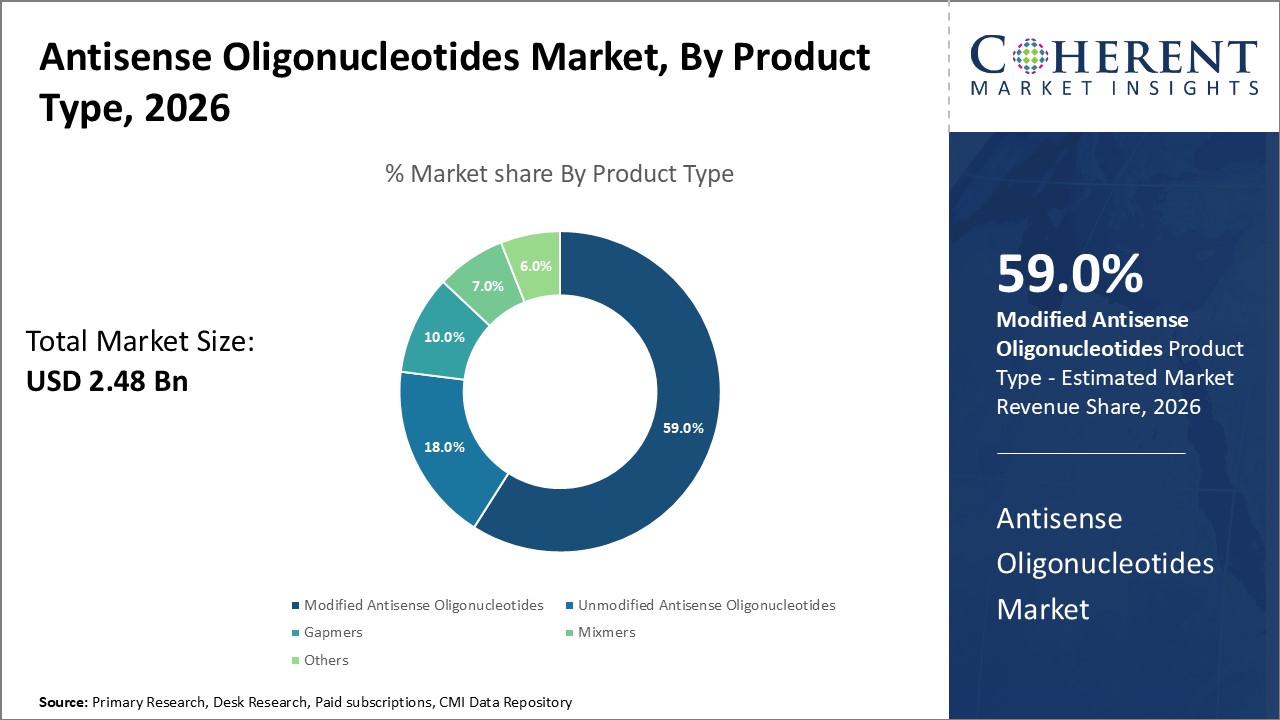
The Modified Antisense Oligonucleotides segment maintains a dominant market share with 59% due to superior stability and efficacy, with the Gapmers subsegment emerging rapidly, driven by enhanced gene silencing capabilities.
Oncology applications continue to lead industry share, leveraging increased FDA approvals and a growing number of oncology-specific clinical trials.
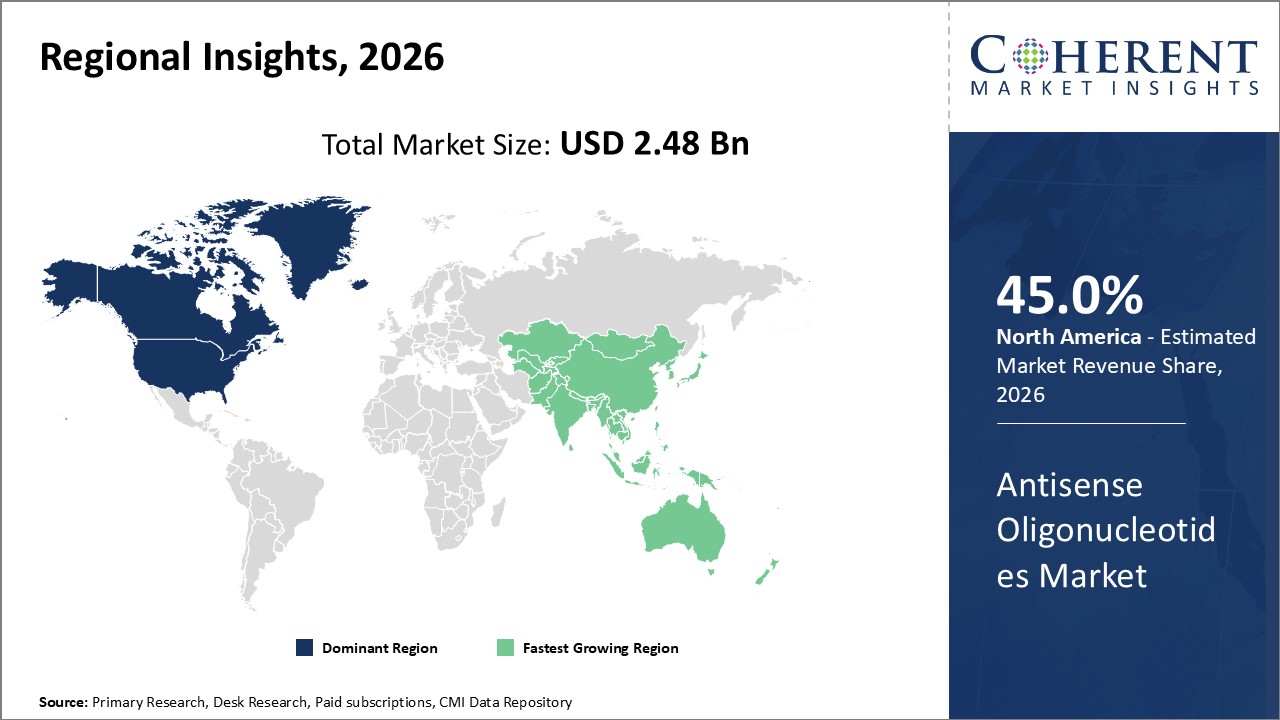
North America leads the antisense oligonucleotides market, accounting for over 45% market share, driven by robust biotech ecosystems and venture capital influx.
Asia Pacific presents the fastest market growth, owing to expanding pharmaceutical manufacturing capabilities and rising government support in countries like China and India.
Antisense Oligonucleotides Market Segmentation Analysis
Antisense Oligonucleotides Market Insights, By Product Type
Modified Antisense Oligonucleotides dominate the market share. This dominance is attributed to their enhanced nuclease resistance and binding affinity, which significantly improve therapeutic efficacy. Gapmers are the fastest-growing subsegment, driven by their unique ability to recruit RNase H for targeted mRNA cleavage, making them highly effective in multiple clinical trials across neurodegenerative and oncological applications. Unmodified ASOs maintain considerable interest due to their simpler synthesis and cost-effectiveness, but lag behind in market share due to lower stability.
Antisense Oligonucleotides Market Insights, By Application
Oncology is dominating the market share. This dominance arises from substantial investment in cancer therapeutics and a rising number of clinical trials focusing on ASO-based treatments for solid tumors and hematological malignancies. Neurological Disorders represent the fastest-growing application owing to breakthroughs in treating previously intractable diseases like amyotrophic lateral sclerosis and Duchenne muscular dystrophy, where ASOs significantly improve patient outcomes. Infectious Diseases maintain steady growth, with antisense strategies integrating into antiviral drug development platforms.
Antisense Oligonucleotides Market Insights, By Therapeutic Use
Rare Genetic Disorders dominate the current market share. This is propelled by growing FDA orphan drug approvals and prioritized regulatory designations that fast-track ASO therapies for diseases such as spinal muscular atrophy and familial hypercholesterolemia. Chronic Diseases form the fastest-growing segment, benefitting from expanding ASO pipeline programs targeting conditions like fibrosis and inflammatory diseases, providing novel treatment alternatives with higher specificity. Infectious Diseases benefit from the rising incidence of resistant pathogens, positioning ASOs as adjunctive or standalone therapeutics.
Antisense Oligonucleotides Market Trends
The Antisense Oligonucleotides market trend notably emphasizes precision medicine, wherein therapeutic candidates undergo customization using high-throughput screening and genomic profiling, accelerating clinical trial success.
For instance, the introduction of splice-switching oligonucleotides in 2025 led to novel treatments for Duchenne Muscular Dystrophy, capturing significant interest globally.
Another emerging trend is the use of chemical conjugations like lipids and peptides to enhance tissue-specific targeting, boosting therapeutic index values by over 31% in preclinical studies.
The shift from traditional small molecule drugs towards RNA-based therapeutics has enhanced the ASO market appeal, marking advanced patent filings and expanded funding for RNA drug modalities witnessed since early 2023.
This transition is supported by increasing collaborations between RNA technology developers and large pharmaceutical companies, reaffirming long-term business growth prospects.
Antisense Oligonucleotides Market Insights, By Geography
North America Antisense Oligonucleotides Market Analysis and Trends
In North America, the dominance in the Antisense Oligonucleotides market stems from a highly mature biotechnology ecosystem supported by favorable regulatory frameworks and strong funding channels. U.S.-based companies like Ionis Pharmaceuticals and Sarepta Therapeutics have significantly contributed to driving the market revenue, with accelerated FDA approvals spurring growth. The region holds over 45% industry share owing to its sophisticated R&D infrastructure and established clinical trial networks.
Asia Pacific Antisense Oligonucleotides Market Analysis and Trends
Meanwhile, the Asia Pacific exhibits the fastest growth with a CAGR surpassing 14%, driven by increased adoption of biopharmaceuticals, rising healthcare expenditure, and government incentives in China and India. Expansion of manufacturing capacities and heightened government focus on rare disease treatment policies further underpin regional growth. Companies, including Beijing-based biotech firms and Indian pharmaceutical hubs, notably contribute to scalable development and clinical deployment, emphasizing strategic market expansion.
Antisense Oligonucleotides Market Outlook for Key Countries
USA Antisense Oligonucleotides Market Analysis and Trends
The U.S. market remains the cornerstone of antisense oligonucleotide innovation, underpinned by substantial venture capital inflows and extensive clinical research activities. Notable FDA approvals in 2025—such as new exon-skipping ASOs for spinal muscular atrophy—underscore the country’s leadership in market size and development. Leading companies headquartered in the U.S. are advancing pipeline diversification through strategic collaborations and acquisitions, enhancing the overall market dynamics and revenue growth. The availability of comprehensive regulatory support and advanced biotech infrastructure fuels continuous product launches and commercialization efforts.
China Antisense Oligonucleotides Market Analysis and Trends
China's market has rapidly expanded with government initiatives to modernize its pharmaceutical sector, including streamlined clinical trial processes and increased funding allocations for biotechnologies. Prominent local market players focus on developing both generic and novel antisense oligonucleotides, targeting prevalent genetic conditions in the population. The country’s growing manufacturing capacity, coupled with rising collaboration between public research institutes and private enterprises, has propelled China to the forefront of the fastest-growing regional markets, accentuated by a progressive increase in biotech patents filed since 2023.
Analyst Opinion
The rise in demand for personalized medicine is a critical driver enhancing the antisense oligonucleotide market share. In 2025, customized ASO therapies accounted for over 43% of clinical trial pipelines, reflecting increased adoption across oncology and rare genetic disorders treated with targeted molecular approaches.
Production capacity improvements, particularly in solid-phase synthesis technology, have led to a 16% reduction in overall manufacturing costs in 2026 compared to 2023, enabling enhanced market revenue with more cost-effective product offerings in emerging markets such as India and China.
On the demand side, increased government funding and incentives in regions like North America and Europe fueled a 25% year-over-year growth in import volumes of high-purity antisense compounds during 2025, reflecting stronger clinician preference for next-generation gene therapeutics.
The expansion of applications into novel therapeutic areas, such as neuromuscular disease,s saw a 31% increase in R&D expenditure globally in 2025, directly stimulating the market growth strategies of key players focusing on developing niche ASO formulations with improved exon-skipping capabilities.
- Current Industry Events of 2026
- Market Size Estimation
- Regional Breakdown
- Competitive Landscape
- Customer Intelligence
- Segmental Analysis
- Pricing Analysis
- Key Market Drivers, Challenges & Future Trends
- Customized Insights Section
Market Scope
| Report Coverage | Details | ||
|---|---|---|---|
| Base Year: | 2025 | Market Size in 2026: | USD 2.48 billion |
| Historical Data for: | 2020 To 2024 | Forecast Period: | 2026 To 2033 |
| Forecast Period 2026 to 2033 CAGR: | 13.6% | 2033 Value Projection: | USD 6.05 billion |
| Geographies covered: |
| ||
| Segments covered: |
| ||
| Companies covered: | Ionis Pharmaceuticals, Sarepta Therapeutics, Alnylam Pharmaceuticals, Biogen, Pfizer, Novartis, Akcea Therapeutics, Wave Life Sciences, Dyne Therapeutics, ProQR Therapeutics. | ||
| Growth Drivers: |
| ||
Antisense Oligonucleotides Market Growth Factors
The expanding prevalence of rare genetic disorders and the corresponding unmet medical needs significantly propel market growth. Regulatory incentives such as orphan drug designations in the U.S. and EU during 2025 increased the development pace of antisense oligonucleotide therapies by over 20% compared to the prior year. Technological advancements in chemical modification techniques enable enhanced stability and specificity of ASOs, positively impacting market dynamics and driving higher clinical success rates. Growing investments in RNA therapeutics by pharmaceutical companies, evidenced by a 35% surge in R&D expenditure globally in 2025, facilitate rapid innovation cycles and market penetration. Additionally, increasing approvals of ASO drugs (e.g., the FDA’s nod for new exon-skipping therapies in 2026) fuel growing end-user confidence, catalyzing further market size expansion.
Antisense Oligonucleotides Market Development
In January 2026, Nusinersen had its supplemental new drug application (sNDA) accepted by the U.S. FDA and validated by the EMA for a higher-dose regimen in adults and children with Spinal Muscular Atrophy (SMA). The application, filed by Biogen, proposes a dosing schedule of two 50 mg loading doses 14 days apart, followed by 28 mg every 4 months, compared to the earlier 12 mg regimen. The decision reflects emerging data from the DEVOTE trial showing potential enhanced benefit with higher dosing.
In April 2023, Tofersen was approved by the U.S. FDA for the treatment of adults with Amyotrophic Lateral Sclerosis (ALS) associated with a mutation in the SOD1 gene. Developed by Biogen in collaboration with Ionis Pharmaceuticals, this intrathecally administered antisense oligonucleotide therapy targets the SOD1 RNA to reduce toxic protein accumulation. The approval was granted under the FDA’s accelerated-approval pathway based on a reduction in plasma neurofilament light chain (NfL), a biomarker of neuronal injury.
Key Players
Leading Companies of the Market
Sarepta Therapeutics
Alnylam Pharmaceuticals
Pfizer
Novartis
Akcea Therapeutics
Wave Life Sciences
Dyne Therapeutics
ProQR Therapeutics
The leading market players have adopted collaborative strategies, including licensing agreements and joint ventures, to enhance pipeline diversity and market scope. For instance, Ionis Pharmaceuticals’ strategic partnership with Biogen in 2025 resulted in expedited development cycles for neurodegenerative indications, boosting both companies' R&D pipeline robustness. Sarepta Therapeutics’ aggressive acquisition of niche ASO technology providers in 2026 has strengthened its foothold in neuromuscular disorders, increasing its market revenue by 18% year-over-year.
Antisense Oligonucleotides Market Future Outlook
The ASO market is poised for strong growth driven by expanding indications across neurology, oncology, and metabolic disorders. Next-generation delivery technologies, including nanoparticle conjugates and ligand-based targeting, will enhance tissue specificity and reduce dosing frequency. Rising acceptance from regulatory bodies and advances in synthetic biology are expected to reduce production costs and accelerate commercialization. Over the next decade, ASO therapies will increasingly complement gene-editing and RNA interference approaches as a core component of personalized medicine.
Antisense Oligonucleotides Market Historical Analysis
The Antisense Oligonucleotides (ASO) Market has witnessed a remarkable transformation from experimental genetic tools to clinically validated therapeutic platforms. The approval of pioneering ASO drugs in the late 2010s, such as treatments for spinal muscular atrophy and Duchenne muscular dystrophy, marked a turning point in precision medicine. Advances in backbone chemistry, improved stability, and better delivery mechanisms have addressed historical limitations like degradation and off-target effects. Growing R&D investments and collaborations between biotech innovators and large pharmaceutical firms have significantly expanded the ASO development pipeline.
Sources
Primary Research Interviews:
Molecular Biologists
Pharmaceutical R&D Directors
Geneticists
Regulatory Affairs Specialists
Databases:
NCBI Gene Therapy Database
ClinicalTrials.gov
FDA Biologic Approvals
Magazines:
Genetic Engineering & Biotechnology News
Pharma Voice
Drug Discovery World
Nature Biotechnology
Journals:
Nucleic Acid Therapeutics
Molecular Therapy
RNA Biology
Journal of Genetic Medicine
Associations:
American Society of Gene & Cell Therapy (ASGCT)
European Society of Gene Therapy (ESGT)
International Society for Antisense and RNAi Therapeutics (ISAR)
WHO Biotech Regulation Group
Get access to 250+ pages report
Every segment, forecast, competitor profile and data table behind the analysis above — available for instant download.
- ESOMAR Member
- ISO 9001:2015 Certified
- D-U-N-S Registered
- GDPR & CCPA Compliant
Missing comfort of reading report in your local language? Find your preferred language:
Transform your Strategy with Exclusive Trending Reports
Frequently Asked Questions
The market is dominated by companies such as Ionis Pharmaceuticals, Sarepta Therapeutics, and Alnylam Pharmaceuticals, which lead in innovation, strategic partnerships, and product launches targeting varied therapeutic areas.
The market size is projected to grow from USD 2.48 billion in 2026 to USD 6.05 billion by 2033, reflecting a robust CAGR of 13.6% driven by technological innovations and rising clinical application.
Oncology remains the largest end-user segment due to increasing clinical trial activities and approvals, with rare genetic disorders also presenting significant emerging opportunities.
The market will experience continued innovation in delivery mechanisms, precision therapeutics, and integration with advanced genomic tools, resulting in expanded indications and improved patient outcomes.
The competitive landscape is marked by vigorous R&D investments and partnership formation. Challenges include manufacturing complexity, delivery efficiency, and regulatory hurdles that restrict faster market penetration.
Common strategies include strategic alliances for co-development, acquisition of technology platforms, focus on orphan drug development, and niche market targeting to maximize market adoption and revenue.