

Autologous Stem Cell And Non-Stem Cell Based Therapies Market Forecast – 2026 to 2033
The Autologous Stem Cell And Non-Stem Cell Based Therapies Market is anticipated to grow at a CAGR of 14.8% with USD 6.9 Bn in 2026 and is expected to reach USD 14.2 Bn in 2033. The autologous stem cell and non-stem cell-based therapies market is gaining momentum as patients increasingly seek personalized treatments. Advances in treatment precision, and rising investments in innovative regenerative medicine technologies further accelerate market development.
Key Takeaways
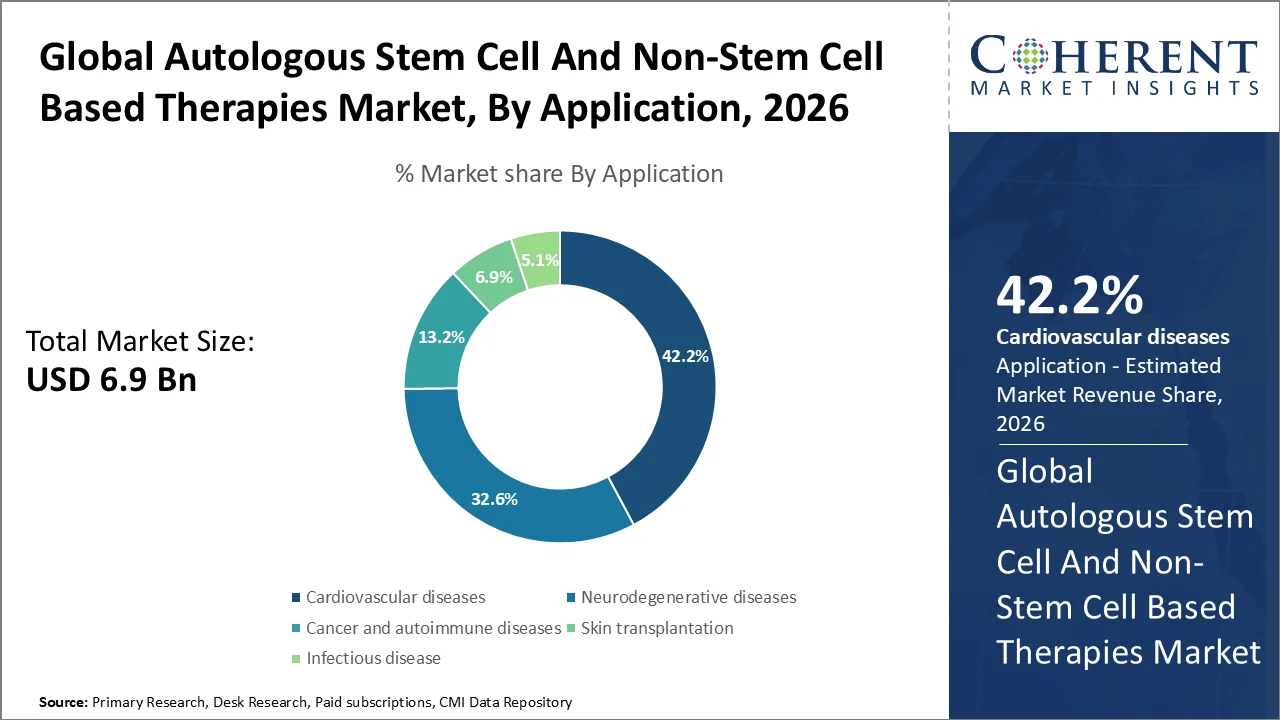
- Cardiovascular diseases hold the largest market share of 42.2% in 2026 owing to its growing burden of ischemic heart disease and heart failure. Ischemic heart disease (IHD) is the leading global cause of death and cardiovascular disease burden, with approximately 9 million deaths and 254 million prevalent cases worldwide.
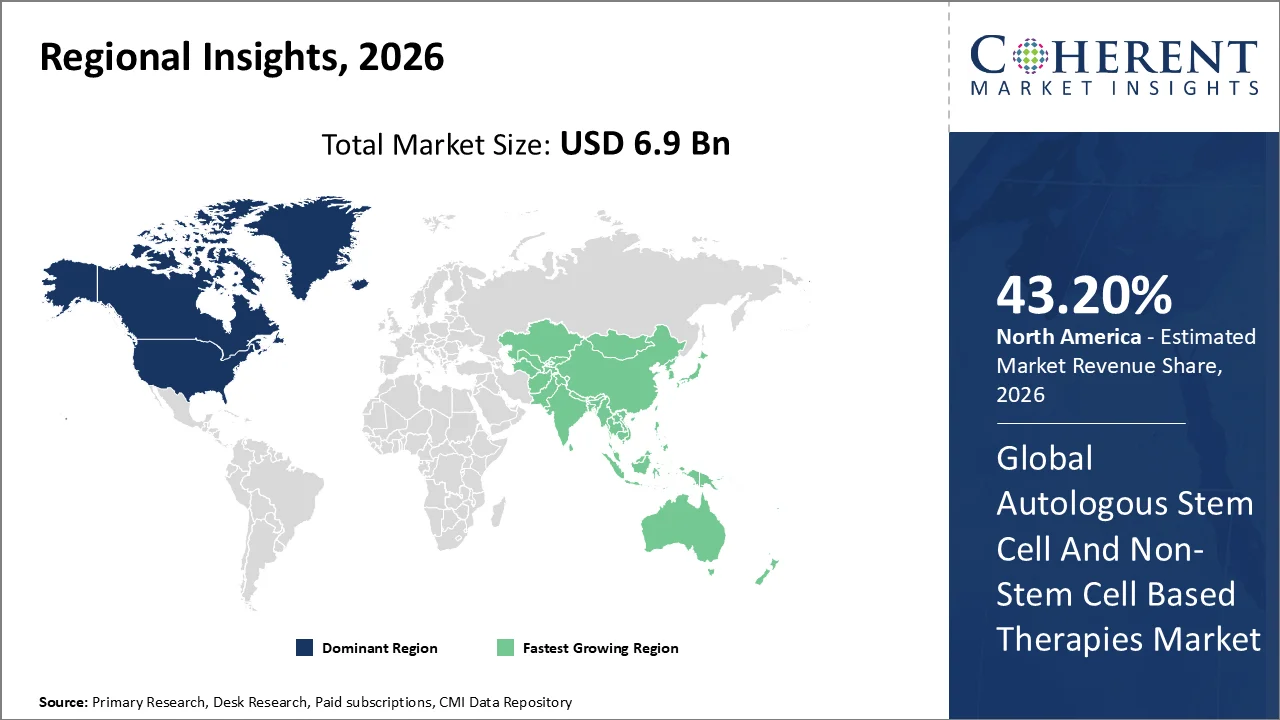
- North America is expected to acquire the dominant share of 43.2% in 2026 owing to the strong regulatory support for regenerative medicine. In June 2025, the University of Bridgeport and TulsiHub Institute partnered to launch the nation’s first regenerative medicine program.
Current Events and Their Impact on the Autologous Stem Cell And Non-Stem Cell Based Therapies Market
Current Event | Description and its Impact |
FDA introduced greater regulatory flexibility for cell and gene therapy manufacturing (January 2026) |
|
FDA opened a public evidence-development initiative for cell and tissue-based products (2025) |
|
Segmental Insights
- Current Industry Events of 2026
- Market Size Estimation
- Regional Breakdown
- Competitive Landscape
- Customer Intelligence
- Segmental Analysis
- Pricing Analysis
- Key Market Drivers, Challenges & Future Trends
- Customized Insights Section
Why is Cardiovascular diseases Acquiring the Largest Market Share?
Cardiovascular diseases hold the largest market share of 42.2% in 2026. The cardiovascular disease segment is gaining momentum as ischemic heart disease, myocardial infarction, heart failure, and vascular damage increase the demand for regenerative therapies. Aging populations and the rising prevalence of diabetes, hypertension, obesity, and other cardiovascular risk factors are driving the need for advanced treatment options. An estimated 589 million people worldwide currently have diabetes, and the number is projected to increase to 845 million by 2050. Researchers are exploring autologous stem cell and non-stem cell-based therapies to promote cardiac tissue repair, angiogenesis, and improved heart function. Revier Therapeutics raised €6 million in seed funding and launched operations to develop selective class IIa HDAC therapies for cardiometabolic diseases. KHAN Technology Transfer Fund II led the financing, with participation from High-Tech Gründerfonds, VORNvc, and private investors through Revier Invest Heidelberg.
Autologous Stem Cell And Non-Stem Cell Based Therapies Market Trends
- Growing adoption of personalized regenerative medicine encourages the use of patient-derived cells and tissues, enabling therapies to address individual disease characteristics while potentially reducing immune-compatibility concerns. The FDA has established the Regenerative Medicine Advanced Therapy (RMAT) designation for eligible regenerative-medicine therapies intended to treat serious or life-threatening diseases or conditions, providing an expedited-development pathway for qualifying products.
- Increasing clinical research in cardiovascular, orthopedic, neurological, and autoimmune applications expands the potential use of autologous stem cell and non-stem cell-based therapies. As of 2025, the FDA reported more than 200 active investigational applications for cell and gene therapy products, illustrating the scale of ongoing clinical development in the field.
- Growing investment in regenerative medicine and cell-therapy research from biotechnology companies, pharmaceutical firms, academic institutions, and healthcare organizations is accelerating clinical development. FDA reported more than 200 active investigational applications for cell and gene therapy products in 2025, demonstrating substantial ongoing development activity.
Regional Insights
North America dominates owing to expansion of clinical-trial activity
North America is expected to acquire the dominant share of 43.20% in 2026. North America’s autologous stem cell and non-stem cell-based therapies market is expanding as advanced healthcare infrastructure, substantial regenerative medicine investments, and extensive clinical-trial networks support innovation. Rising chronic disease prevalence and an aging population are increasing demand for advanced therapeutic options. Approximately 129 million people in the United States have at least one major chronic disease. Supportive regulatory pathways, including the FDA’s Regenerative Medicine Advanced Therapy framework, help developers advance qualifying therapies. Growing adoption of personalized medicine, technological improvements in cell processing, favorable reimbursement policies, and greater patient awareness further strengthen market growth across the region. Cytora Therapeutics, Made Scientific, and Zeo ScientifiX formed a strategic partnership to advance and commercialize Cytora’s allogeneic, off-the-shelf human oral mucosal stem cell therapy in the U.S. Cytora will lead development, while Made Scientific supports manufacturing and Zeo contributes clinical, commercialization, and market-access expertise.
Asia Pacific Autologous Stem Cell And Non-Stem Cell Based Therapies Market Trends
Asia Pacific’s autologous stem cell and non-stem cell-based therapies market is growing as healthcare providers increase investments and patients seek personalized regenerative treatments for chronic diseases. Researchers are expanding clinical studies, while governments and healthcare organizations improve infrastructure and strengthen regulatory support to accelerate therapy development and commercialization. In March 2025, India announced a INR 5,000 crore R&D initiative under the PRIP scheme to strengthen domestic capabilities in pharmaceutical innovation, drug discovery, medical technology, and advanced therapies, including stem-cell research, over five years. Biotechnology companies, hospitals, and research institutions are increasing collaboration and funding, which promotes innovation and adoption. China, Japan, South Korea, and India are also expanding research capabilities, manufacturing facilities, and clinical trial activities, supporting continued market growth.
United States Autologous Stem Cell And Non-Stem Cell Based Therapies Market Trends
The United States autologous stem cell and non-stem cell based therapies market benefits from substantial investment in regenerative medicine research, growing clinical trial activity, and technological advances in cell processing and delivery. FDA regulatory initiatives, including the Regenerative Medicine Advanced Therapy designation, encourage companies to develop and commercialize innovative therapies. Healthcare providers increasingly adopt these treatments across oncology, orthopedic, cardiovascular, and neurological applications as demand for personalized care rises. Strong healthcare infrastructure, research capabilities, biotechnology expertise, and evolving reimbursement support further strengthen market growth. NEI researchers launched a clinical trial to evaluate a patient-specific stem cell therapy for geographic atrophy, an advanced form of dry age-related macular degeneration that currently has no treatment.
China Autologous Stem Cell And Non-Stem Cell Based Therapies Market Trends
China’s autologous stem cell and non-stem cell based therapies market is expanding as healthcare investment rises, demand for advanced treatments grows, and regenerative medicine research accelerates. The government supports innovation and regulatory improvements, creating better opportunities for clinical development and commercialization. A large patient population and significant unmet medical needs, especially in oncology and chronic diseases, drive treatment adoption. Biotechnology infrastructure, clinical trials, cell-processing technologies, and collaboration among hospitals, research institutions, and biotechnology companies further strengthen market growth.
Who are the Major Companies in Autologous Stem Cell And Non-Stem Cell Based Therapies Industry
Some of the major key players in Autologous Stem Cell And Non-Stem Cell Based Therapies are Caladrius Biosciences, Vericel Corporation, Fibrocell Science, Inc., Genzyme Corporation, BrainStorm Cell Therapeutics, Regeneus Ltd., and Dendreon Corporation.
Key News
- In August 2025, Hope Biosciences received FDA RMAT designation for its adipose-derived mesenchymal stem cell therapy, HB-adMSCs, to treat relapsing-remitting multiple sclerosis. The designation follows research conducted by the Hope Biosciences Research Foundation.
Market Report Scope
Autologous Stem Cell And Non-Stem Cell Based Therapies Market Report Coverage
| Report Coverage | Details | ||
|---|---|---|---|
| Base Year: | 2025 | Market Size in 2026: | USD 6.9 Bn |
| Historical Data for: | 2020 To 2024 | Forecast Period: | 2026 To 2033 |
| Forecast Period 2026 to 2033 CAGR: | 14.8% | 2033 Value Projection: | USD 14.2 Bn |
| Geographies covered: |
| ||
| Segments covered: |
| ||
| Companies covered: | Caladrius Biosciences, Vericel Corporation, Fibrocell Science, Inc., Genzyme Corporation, BrainStorm Cell Therapeutics, Regeneus Ltd., and Dendreon Corporation. | ||
Analyst Opinion
- The autologous stem cell and non-stem cell based therapies market is being shaped less by speculative demand and more by the rapid transition of cell therapy from experimental research toward clinically validated applications. China alone recorded 2,794 registered cell-therapy clinical trials through August 2024, including 683 stem-cell trials, while mesenchymal stem cells represented the leading stem-cell category. In our view, this extensive clinical pipeline creates a strong commercialization base, particularly as developers target oncology, immune disorders, and regenerative applications.
- Autologous platforms have a particularly compelling strategic advantage because they use the patient’s own cells, potentially reducing donor-compatibility challenges and enabling highly personalized treatment approaches. The clearest proof of commercial relevance comes from autologous cellular therapies already reaching regulatory approval. For example, the FDA lists multiple autologous products, including CARVYKTI, ABECMA, BREYANZI, TECELRA, and Skysona. The approval of Waskyra in 2025 further demonstrated the potential of genetically modified autologous hematopoietic stem cells for rare inherited disorders.
- However, the market’s next phase will be determined by clinical evidence rather than the sheer number of therapies entering trials. China’s cell-therapy pipeline remains heavily concentrated in early development: 64.1% of identified trials were Phase I, compared with only 3.4% in Phase III. More importantly, researchers found that more than 38% of trials conducted from 2021 to 2023 focused on hematologic malignancies, indicating significant target concentration. This makes differentiation, durable clinical outcomes, manufacturing consistency, and regulatory approval the critical factors separating commercially viable therapies from crowded experimental programs.
- Safety and regulatory credibility will also become decisive market filters. The FDA reported that hematologic malignancies associated with the autologous stem-cell gene therapy Skysona increased from 3 of 67 patients at initial approval to 10 of 67 patients by July 2025. In our assessment, such developments will push developers toward tighter long-term monitoring, stronger manufacturing controls, and better patient-selection strategies. Consequently, the strongest market opportunities will favor therapies that demonstrate measurable clinical benefit while maintaining a robust safety profile, rather than products relying primarily on the broader appeal of regenerative medicine.
Speak to the analyst
Want personalized insights?
Take the findings above to one of our principal consultants, or have the report rebuilt around the segments, geographies and competitors you actually track.
Market Segmentation
- By application (Revenue, USD Bn, 2021-2033)
- Neurodegenerative diseases
- Cardiovascular diseases
- Cancer and autoimmune diseases
- Skin transplantation
- Infectious disease
- By Region (Revenue, USD Bn, 2021-2033)
- North America
- U.S.
- Canada
- Latin America
- Brazil
- Mexico
- Argentina
- Rest of Latin America
- Europe
- Germany
- U.K.
- France
- Italy
- Spain
- Russia
- Rest of Europe
- Asia Pacific
- China
- India
- Japan
- Australia
- South Korea
- ASEAN
- Rest of Asia Pacific
- Middle East
- GCC
- Israel
- Rest of Middle East
- Africa
- South Africa
- Central Africa
- North Africa
- North America
Sources
Primary Research interviews
- Cell therapy researchers and principal investigators at academic medical centers
- Hematologists, oncologists, transplant physicians, and regenerative medicine specialists
- Clinical trial investigators involved in autologous and non-stem cell therapies
- Cell therapy manufacturing and bioprocessing experts
- Hospital administrators and laboratory directors
- Regulatory and clinical-development professionals specializing in cellular therapies
Databases
- ClinicalTrials.gov — U.S. National Library of Medicine
- Chinese Clinical Trial Registry (ChiCTR)
- WHO International Clinical Trials Registry Platform (ICTRP)
- EU Clinical Trials Register
- PubMed/MEDLINE
- FDA Cellular & Gene Therapy Products database
- FDA Approved Cellular and Gene Therapy Products database
- World Health Organization databases
- National Center for Biotechnology Information (NCBI) resources
Magazines
- Nature Biotechnology
- Nature Medicine
- Cell & Gene Therapy Insights
- BioPharma Dive
- Genetic Engineering & Biotechnology News (GEN)
Journals
- Stem Cells Translational Medicine
- Cell Stem Cell
- Cytotherapy
- Stem Cell Research & Therapy
- Journal of Cellular and Molecular Medicine
- Regenerative Medicine
- Nature Reviews Drug Discovery
- Frontiers in Pharmacology
Newspapers
- The New York Times
- The Wall Street Journal
- Financial Times
- The Guardian
- The Hindu
- The Economic Times
Associations
- International Society for Cell & Gene Therapy (ISCT)
- International Society for Stem Cell Research (ISSCR)
- American Society for Transplantation and Cellular Therapy (ASTCT)
- Alliance for Regenerative Medicine (ARM)
- American Society of Hematology (ASH)
- European Society for Blood and Marrow Transplantation (EBMT)
Public Domain sources
- U.S. Food and Drug Administration (FDA) — cellular and gene therapy regulatory resources
- National Institutes of Health (NIH)
- National Center for Biotechnology Information (NCBI)
- World Health Organization (WHO)
- Centers for Disease Control and Prevention (CDC)
- European Medicines Agency (EMA)
- Chinese National Medical Products Administration (NMPA)
- National Institutes of Health ClinicalTrials.gov
- Chinese Clinical Trial Registry (ChiCTR)
- U.S. National Library of Medicine (NLM)
Proprietary Elements
- CMI Data Analytics Tool
- Proprietary CMI Existing Repository of information for last 10 years
Get access to 250+ pages report
Every segment, forecast, competitor profile and data table behind the analysis above — available for instant download.
- ESOMAR Member
- ISO 9001:2015 Certified
- D-U-N-S Registered
- GDPR & CCPA Compliant
Missing comfort of reading report in your local language? Find your preferred language:
Transform your Strategy with Exclusive Trending Reports
Frequently Asked Questions
The Autologous Stem Cell And Non-Stem Cell Based Therapies Market is anticipated to grow at a CAGR of 14.8% with USD 6.9 Bn share in 2026 and is expected to reach USD 14.2 Bn in 2033.
Autologous therapies use cells collected from the same patient who receives the treatment, while non-stem cell therapies use other therapeutic cell types that do not rely on stem cells.
Key drivers include increasing clinical validation of cell-based therapies, demand for personalized medicine, and the expansion of regenerative and immunotherapy applications.
Autologous therapies offer the advantage of using a patient's own cells, which can reduce certain donor-recipient compatibility concerns.
Oncology remains a major opportunity, particularly for autologous cellular immunotherapies. Other opportunities include cartilage repair, and tissue engineering. FDA-approved.
Advances in cell isolation, expansion, genetic modification, and potency testing are improving developers' ability to produce more consistent therapies.