

Candy Market Size and Forecast – 2026 to 2033
Candy Market is estimated to be valued at USD 95.32 Bn in 2026 and is expected to reach USD 131.46 Bn in 2033, exhibiting a compound annual growth rate (CAGR) of 4.7% from 2026 to 2033.
Key Takeaways
- By Product Type, Non-Chocolate Candy hold the largest market share in 2026 owing to the growing health & wellness trends.
- By Distribution Channel, Convenience Store acquired the prominent share of 37% in 2026 on account of impulse-driven purchases.
- By Region, North America dominates the overall market with an estimated share of 39% in 2026 owing to the premiumization & indulgence.
Market Overview
Consumers actively drive the candy market through their demand for indulgent, convenient, and innovative products. The market includes both chocolate and non-chocolate types such as gummies, hard candies, mints, and chews. Retailers like supermarkets, convenience stores, and e-commerce platforms boost sales by offering seasonal treats, premium options, and unique flavors. Health-focused products and viral trends on social media are also shaping buying behavior. As a result, the candy market continues to evolve, offering a wider and more engaging range of experiences.
Current Events and their Impact on the Candy Market
Current Events | Description and its impact |
Macro-Level Economic Shifts |
|
Regional Agricultural Developments |
|
Consumer Behavior and Health Trends |
|
Import Export of Candy
- Between October 2023 and September 2024 (TTM), India imported a total of 1,943 candy shipments. These were delivered by 237 international exporters to 194 Indian buyers, reflecting an 11% increase compared to the previous 12-month period. In September 2024 alone, India received 146 candy shipments.
- India primarily sources its candy imports from China, Indonesia, and the United Arab Emirates.
- On a global scale, the top three candy-importing countries are the United States, Vietnam, and Venezuela. The U.S. leads significantly with 118,362 shipments, followed by Vietnam with 37,916, and Venezuela in third place with 23,511 shipments.
- Current Industry Events of 2026
- Market Size Estimation
- Regional Breakdown
- Competitive Landscape
- Customer Intelligence
- Segmental Analysis
- Pricing Analysis
- Key Market Drivers, Challenges & Future Trends
- Customized Insights Section
Segmental Insights
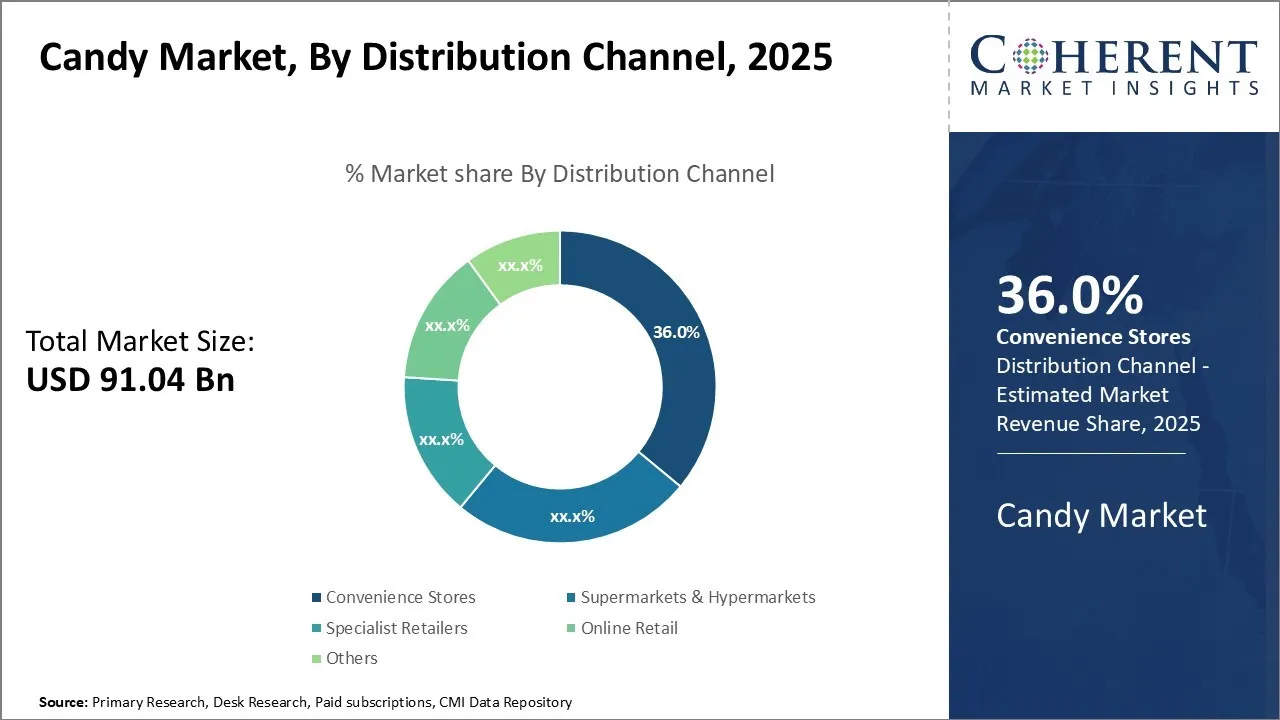
Candy Market Insights, By Distribution Channel: Convenience Store contribute the highest share of the market owing to its appeal to younger shoppers
Convenience Store acquired the prominent share of 37.0% in 2026. Consumers drive candy sales in convenience stores by making impulse purchases during quick visits. Retailers boost these sales through strategic product placement at checkout counters and high-traffic areas, encouraging unplanned buys. Shoppers often pick candy as an affordable treat, while younger customers actively seek bold flavors and novel formats. Promotions, seasonal setups, and bundled deals capture additional interest. By offering easy access, wide availability, and a fast-shopping experience, convenience stores play a key role in driving growth in the candy market. For instance, in June 2025, Pladis expanded the famous McVitie's Club brand by launching McVitie's Club Layers Orange, bringing it to both convenience and confectionery shelves.
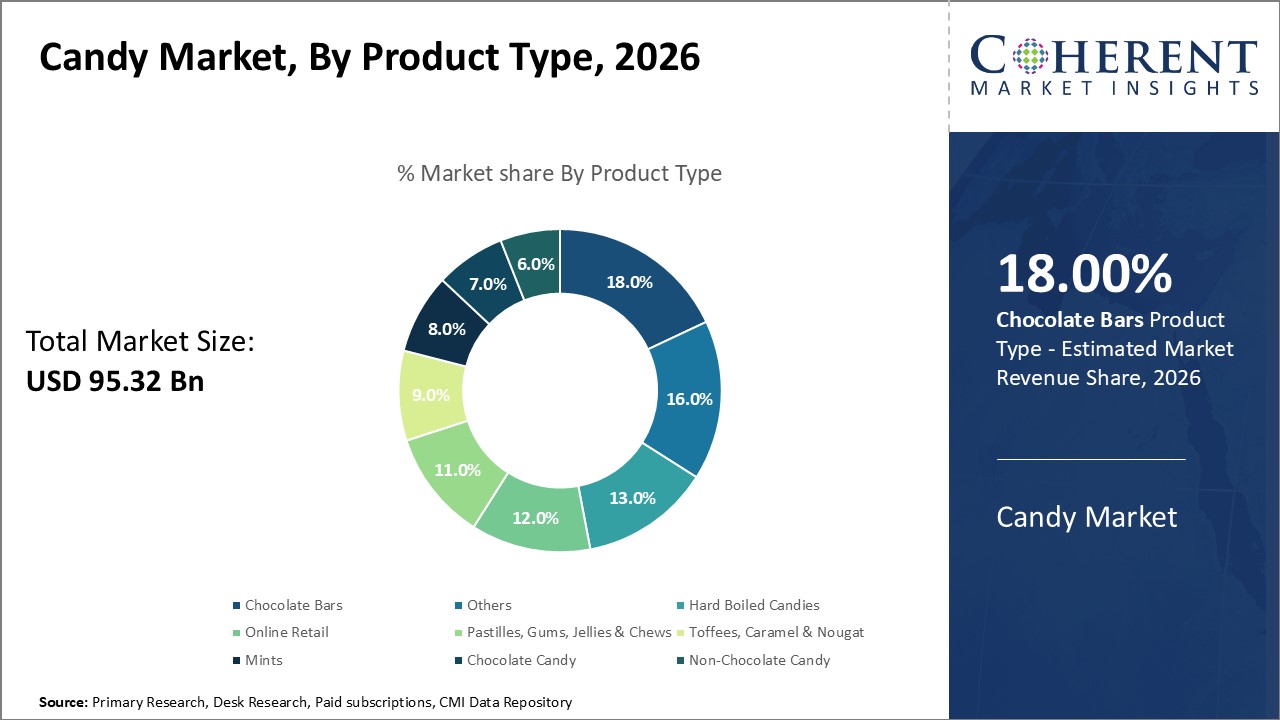
Candy Market Insights, By Product Type: Non-chocolate Candy contribute the highest share of the market owing to its marketing & social media influence
Consumers actively drive growth in the non-chocolate candy market by seeking variety, novelty, and healthier snacking options. They prefer bold flavors, unique textures, and innovative formats such as gummies, sour candies, and chewy treats. Seasonal releases and impulse buys at convenience stores further support sales. Health-minded shoppers look for sugar-free, vegan, and naturally sourced ingredients. Brands boost visibility and encourage trial through creative marketing and social media engagement, shaping non-chocolate candy into a vibrant, fast-evolving segment of the confectionery industry. For instance, in February 2025, Fazer has launched new grain-based Fazer Taste the Future candy tablets without cocoa. The company carefully analyzed the aroma profiles of various Finnish grains and paired them with other plant-based ingredients to create the new Fazer Taste the Future tablets. Such innovations are accelerating the candy market share.
Regional Insights
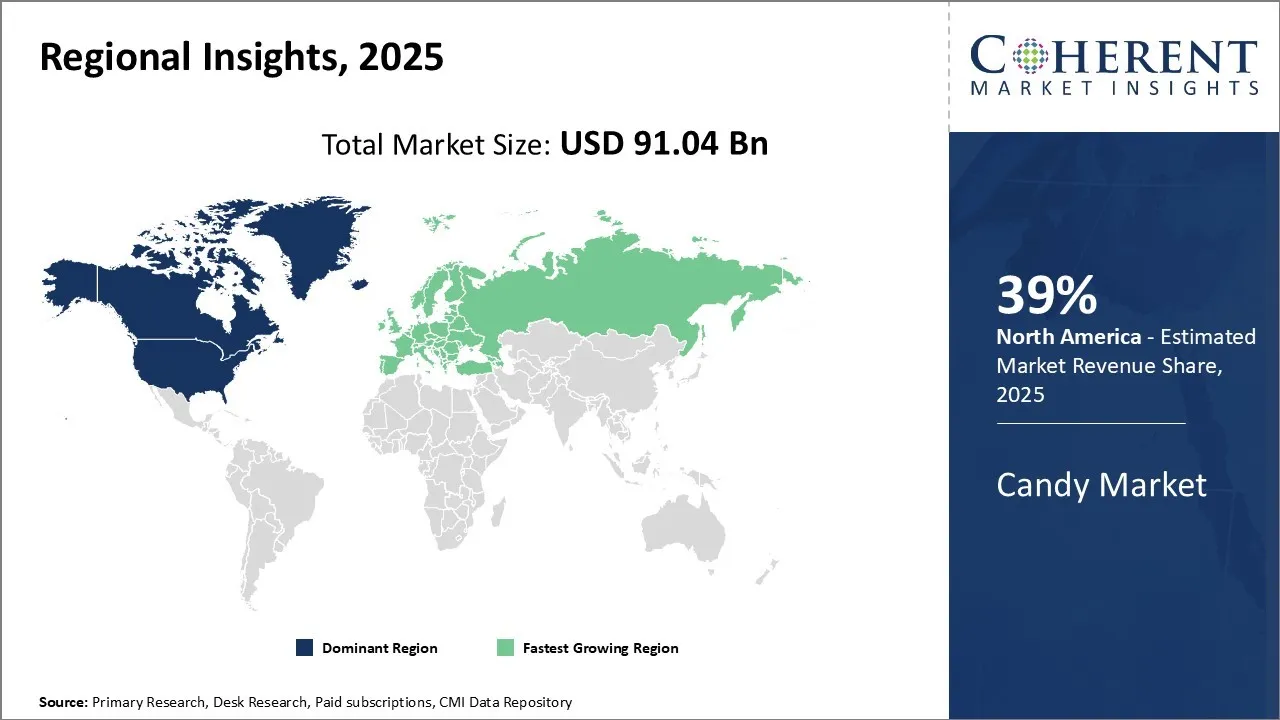
North America Candy Market Trends
North America dominates the overall market with an estimated share of 39% in 2026. Consumers in North America are driving the candy market by showing strong interest in premium and artisanal products that highlight unique flavors and high-quality ingredients. They are influencing manufacturers to develop healthier options, including low-sugar, natural, and functional candies. Seasonal and limited-edition releases generate excitement and encourage repeat purchases, while convenient, on-the-go packaging meets busy lifestyles. Brands actively use quick commerce and social media platforms to market their products, engage younger audiences, and spark innovation throughout the region. For instance, in September 2024, Protein Candy™ officially launched across North America, introducing the world's first "super candy." Containing 14 grams of protein, 4 grams of sugar, 6 grams of prebiotic fiber, and only 140 calories, Protein Candy™ delivers up to 100 times more protein than any other candy on the market.
Europe Candy Market Trends
Consumers in Europe are driving the candy market by demanding premium and ethically sourced products with high-quality ingredients and sustainable practices. They influence manufacturers to create sugar-reduced, organic, and natural candies in response to health and wellness trends. Seasonal events and innovative flavors capture consumer interest, while convenient packaging meets the needs of busy lifestyles. Brands actively use digital marketing and e-commerce to reach younger consumers and launch new products that reflect changing preferences across the region. For instance, in January 2026, The Ferrara Candy Company, a global leader in sugar confections, announced the arrival of NERDS Gummy Clusters and NERDS Rope in Europe. Bison Brands supports this expansion by simplifying supply through localized expertise, competitive pricing, and dedicated logistics hubs in the Netherlands and Spain.
United States Candy Market Trends
Consumers in the United States drive the candy market by seeking bold flavors and innovative textures, prompting brands to explore new and unconventional products. They increasingly choose better-for-you options with cleaner ingredients and less sugar. Seasonal limited-edition releases generate excitement and encourage repeat purchases, while convenient, portable packaging appeals to busy lifestyles. Brands actively use digital platforms, particularly social media, to market their products, set trends, and engage a wide range of consumers, quickly adapting to evolving preferences nationwide. For instance, in December 2024, Ferrara Candy Company, a leading sugar confections company in the U.S., launched its Holiday Candy Salad Kit. Customers can gift one of the year's sweetest—and viral—social media trends, available exclusively on its first-ever TikTok Shop while supplies last.
United Kingdom Candy Market Trends
Consumers in the United Kingdom are shaping the candy market by prioritizing sustainability and ethical sourcing alongside indulgence. They show growing interest in artisanal and craft candies that deliver unique flavor experiences. Health consciousness pushes demand for reduced-sugar and natural ingredient products. Seasonal promotions and limited-edition releases keep consumers engaged, while convenient and eco-friendly packaging attracts modern shoppers. Brands actively use online sales and social media to connect with younger audiences and quickly respond to changing market trends. For instance, in July 2026, Ruly, a new entrant in the UK confectionery sector, launched its line of caffeine-infused sweets to capture a niche in the growing functional candy market.
Market Report Scope
Candy Market Report Coverage
| Report Coverage | Details | ||
|---|---|---|---|
| Base Year: | 2025 | Market Size in 2026: | USD 95.32 Bn |
| Historical Data for: | 2020 To 2024 | Forecast Period: | 2026 To 2033 |
| Forecast Period 2026 to 2033 CAGR: | 4.7% | 2033 Value Projection: | USD 131.46 Bn |
| Geographies covered: |
| ||
| Segments covered: |
| ||
| Companies covered: | August Stork, Candy Me, CartoonCandy, Cloetta Ab, DeMet, Ferrero Group, Ferrara Candy Company, Grupo Arcor, Haribo GmbH & Co. KG, Mars Incorporated, Mondelez International, Inc., Naeemfoods, Perfetti Van Melle, Purebred Confectionery, Rock Candy, and The Hershey Company. | ||
| Growth Drivers: |
| ||
| Restraints & Challenges: |
| ||
Candy Market Trend
- Rise of Clean and Natural Ingredients
The candy market is shifting toward products made with natural sweeteners, organic components, and minimal artificial additives. Consumers want transparent labels reflecting health-conscious choices, prompting brands to reformulate recipes. This trend fuels innovation in plant-based sugars, natural colors, and preservatives sourced from nature, aiming to satisfy taste without compromising wellness. Clean-label candies are gaining traction as shoppers balance indulgence with nutritional awareness, pushing the industry toward greater ingredient transparency and sustainability.
- Innovative Flavor Blends Captivate Consumers
Candy makers are exploring bold, unexpected flavor combinations to break monotony. Mixing sweet with savory, spicy, or exotic fruit profiles appeals to adventurous palates craving novelty. This trend sees influences from global cuisines, integrating ingredients like chili, matcha, or yuzu. The focus is on creating sensory excitement through layered flavors and textures, transforming candy from a simple treat to a gourmet experience. This innovation drives consumer engagement by appealing to curiosity and exploration.
Candy Market Opportunity
- Expansion of Plant-Based Candy Options
With the surge in plant-based lifestyles, there’s a promising opportunity to develop vegan-friendly candies using natural, animal-free ingredients. Innovations in plant proteins, natural sweeteners, and gelatin alternatives allow brands to cater to vegans and flexitarians seeking ethical indulgence. This segment invites creative formulation and marketing focused on cruelty-free, sustainable, and allergy-friendly treats, tapping into a growing community driven by environmental and health values.
In May 2025, German confectionery brand Treets launched in the UK via the new Candy Kittens Introduces platform, offering three vegan snacks: Crunchy Corn, Crispy, and Salted Peanuts. The products, packaged similarly to a well-known US brand, feature ChoViva—a cocoa-free chocolate alternative made from sunflower seeds.
Candy Market News
- In August 2025, SweeTARTS®, Lemonhead®, and Spree® are tapping into candy trends by launching freeze-dried varieties for the first time. Each piece of SweeTARTS, Lemonhead, and Spree Freeze Dried candy delivers the same unique flavors from these fan-favorite brands, transformed into a light and airy bite with an unexpected burst of flavor.
- In June 2025, Hocco Ice Creams, a Gujarat-based dessert brand expanding nationally, has launched Bijlee, India’s first caffeinated ice candy. The company designed this new product to meet the evolving consumption patterns of young Indian consumers who seek both refreshment and energy in a convenient format.
- In May 2025, Creambell, one of India’s most loved and diverse ice cream brands, has partnered with KidZania, the global leader in edutainment, to launch the Creambell Ice Candy Factory at KidZania Delhi NCR. This immersive experience invites children to become ‘Ice Candy Experts’ and explore the exciting world of ice-cream making.
- In April 2025, Hormbles Chormbles has launched high-protein, zero-sugar candy bars. Each 33g bar contains 10g of protein and only 100 calories, positioning the brand as a healthier alternative in a traditionally sugar-laden category.
Analyst Opinion (Expert Opinion)
- The candy market is at a pivotal crossroads where traditional indulgence no longer guarantees loyalty. Data from Nielsen reveals that nearly 60% of consumers globally now scrutinize ingredient lists, favoring transparency and health-conscious choices. Brands clinging to sugary, artificial recipes risk obsolescence as consumers demand candy that aligns with lifestyle values—clean labels, plant-based formulations, and allergen-free options are no longer niche but baseline expectations.
- For instance, the success of Haribo’s recent launch of vegan gummies, which surged 25% in sales within six months, demonstrating the tangible consumer appetite for ethical alternatives. Similarly, Lindt’s focus on sustainably sourced cocoa, evidenced by their 2023 sustainability report citing over 70% certified cocoa usage, illustrates that ethical sourcing drives premium brand perception and justifies price premiums.
- Moreover, the explosion of functional candy—infused with collagen, caffeine, or vitamins—is not a gimmick but a market disruptor. Sugarfina’s collagen-infused gummy bears have carved a lucrative niche by merging indulgence with wellness, appealing to millennials and Gen Z consumers who blur the lines between snacks and supplements.
- In sum, the candy industry’s next chapter demands radical authenticity and innovation. Those who pivot to purpose-driven products and engage consumers on deeper emotional and ethical levels will not just survive—they will thrive.
Speak to the analyst
Want personalized insights?
Take the findings above to one of our principal consultants, or have the report rebuilt around the segments, geographies and competitors you actually track.
Market Segmentation
- Global Candy Market, By Product Type (Revenue, USD Bn, 2021 - 2033)
- Chocolate Bars
- Others
- Hard Boiled Candies
- Lollipops
- Others
- Pastilles, Gums, Jellies and Chews
- Toffees, Caramels and Nougat
- Mints
- Others
- Chocolate Candy
- Non-Chocolate Candy
- Global Candy Market, By Distribution Channel (Revenue, USD Bn, 2021 - 2033)
- Supermarkets & Hypermarkets
- Convenience Stores
- Specialist Retailers
- Online Retail
- Others
- Global Candy Market, By Region (Revenue, USD Bn, 2021 - 2033)
- North America
- U.S.
- Canada
- Latin America
- Brazil
- Argentina
- Mexico
- Rest of Latin America
- Europe
- Germany
- U.K.
- Spain
- France
- Italy
- Russia
- Rest of Europe
- Asia Pacific
- China
- India
- Japan
- Australia
- South Korea
- ASEAN
- Rest of Asia Pacific
- Middle East
- GCC Countries
- Israel
- Rest of Middle East
- Africa
- South Africa
- North Africa
- Central Africa
- North America
- Key Players Insights
- August Stork
- Candy Me
- Cartoon Candy
- Cloetta Ab
- DeMet
- Ferrero Group
- Ferrara Candy Company
- Grupo Arcor
- Haribo GmbH & Co. KG
- Mars Incorporated
- Mondelez International, Inc.
- Naeemfoods
- Perfetti Van Melle
- Purebred Confectionery
- Rock Candy
- The Hershey Company
Sources
Primary Research Interviews
- In-depth discussions with candy manufacturers, product developers, and retail buyers
- Interviews with nutritionists and food scientists specializing in confectionery
- Consumer focus groups and taste panel feedback sessions
Databases
- Food and Agriculture Organization (FAO) Statistical Database
- United States Department of Agriculture (USDA) National Nutrient Database
- Global Trade Atlas for confectionery import/export data
Magazines
- Candy Industry Magazine
- Confectionery News
- Sweets & Snacks Review
Journals’
- Journal of Food Science and Technology
- International Journal of Gastronomy and Food Science
- Food Quality and Preference
Newspapers
- The New York Times (Food Section)
- The Guardian (Food and Drink)
- Financial Times (Consumer Goods and Retail Section)
Associations
- The National Confectioners Association (NCA)
- World Cocoa Foundation
- European Candy Association
Public Domain Sources
- Government nutrition guidelines and reports
- Publicly available annual reports from major candy companies
- Patent databases for candy formulation innovations
Proprietary Elements
- CMI Data Analytics Tool, and Proprietary CMI Existing Repository of information for last 8 years
Get access to 250+ pages report
Every segment, forecast, competitor profile and data table behind the analysis above — available for instant download.
- ESOMAR Member
- ISO 9001:2015 Certified
- D-U-N-S Registered
- GDPR & CCPA Compliant
Missing comfort of reading report in your local language? Find your preferred language:
Transform your Strategy with Exclusive Trending Reports
Frequently Asked Questions
The Candy Market is estimated to be valued at USD 95.32 Bn in 2026, and is expected to reach USD 131.46 Bn by 2033.
Global candy market is estimated to surpass USD 113.67 Bn by 2033, exhibiting a CAGR of 4.7% between 2026 and 2033.
Increase in disposable income and rising demand for chocolate candies are the main factors that are expected to drive the market growth.
The CAGR of the Candy Market is projected to be 4.7% from 2026 to 2033.
Key Companies are August Stork, Candy Me, CartoonCandy, Cloetta Ab, DeMet, Ferrero Group, Ferrara Candy Company, Grupo Arcor, Haribo GmbH & Co. KG, Mars, Incorporated, Mondelez International, Inc., Naeemfoods, Perfetti Van Melle, Purebred Confectionery, Rock Candy, and The Hershey Company.
The consumption of candies leading to health issues may hinder the market growth during the forecast period.