

Cord Blood Banking Services Market Analysis & Forecast: 2026-2033
Cord Blood Banking Services Market is estimated to be valued at USD 40.45 Bn in 2026 and is expected to reach USD 62.03 Bn in 2033, exhibiting a compound annual growth rate (CAGR) of 6.3% from 2026 to 2033.
Key Takeaways
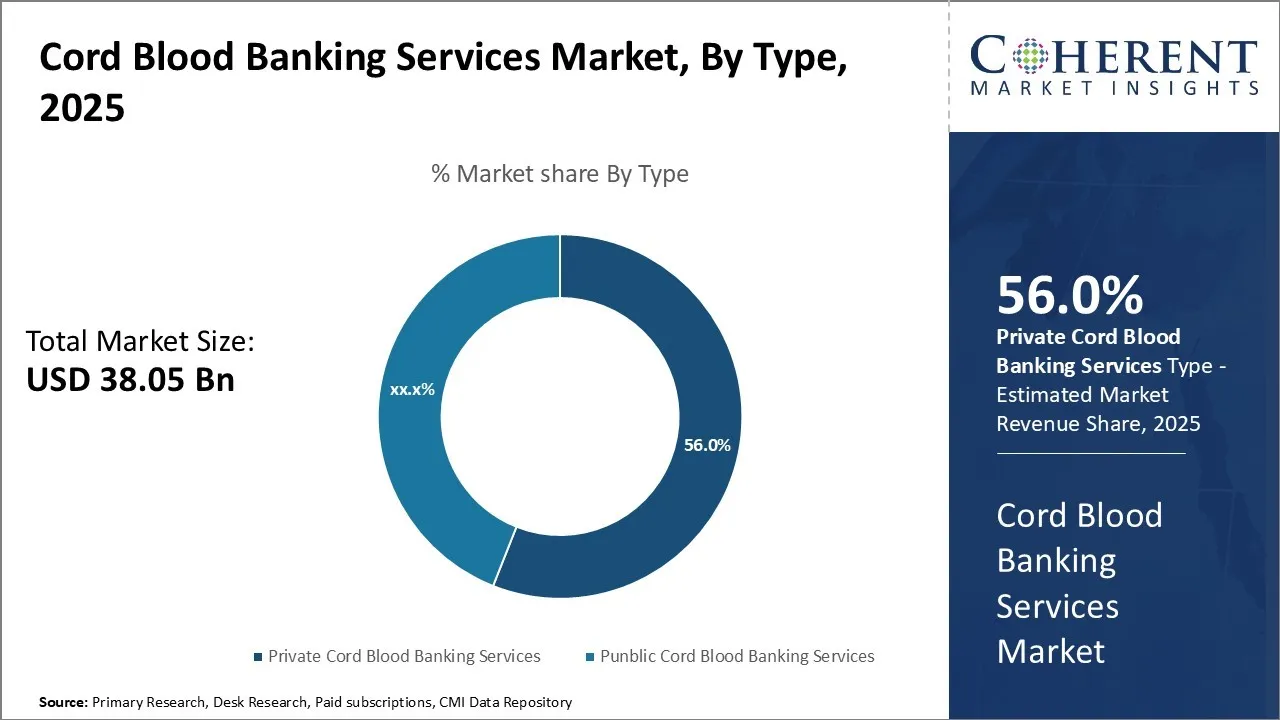
- By Type, Private cord blood banking services dominated the global market, accounting for approximately 57.0% of the total share in 2026.
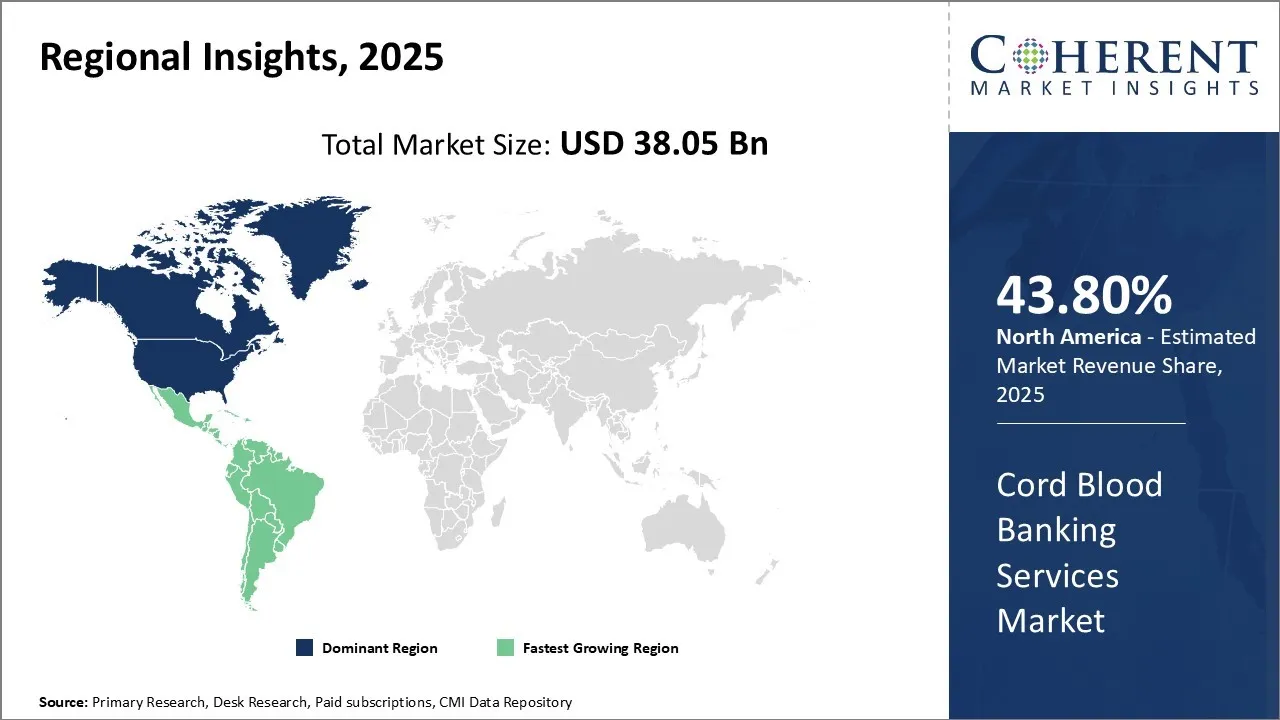
- By Region Insights: North America remains the leading region in the global cord blood banking services market, capturing around 43.8% of the total share in 2026.
Market Overview
The global Cord Blood Banking Services Market is experiencing steady growth, driven by rising awareness of stem cell therapies and their potential in treating life-threatening conditions such as leukaemia, lymphoma, and metabolic disorders. Private banking services dominate due to increasing parental preference for personalized storage options. Technological advancements in cryopreservation and stem cell processing are enhancing storage efficacy, while growing investments in stem cell research continue to expand the market’s global footprint.
Current Events and its Impact on the Cord Blood Banking Services Market
Current Event | Description and its impact |
Breakthroughs in Stem Cell Applications |
|
Industry Expansion and Strategic Alliances |
|
Regulatory Enhancements and Quality Standards |
|
Cord Blood Banking Services Market: Role of technologies like AI on the Market
Artificial Intelligence (AI) is playing a transformative role in the Cord Blood Banking Services Market by enhancing precision, efficiency, and personalization across the value chain. AI-driven algorithms are improving donor-recipient matching through advanced HLA typing and predictive analytics, leading to better clinical outcomes in stem cell transplantation.
In storage and processing, AI facilitates automated quality control and real-time monitoring of cryopreservation conditions, reducing the risk of human error and ensuring sample integrity. Additionally, AI-powered data analytics is helping cord blood banks forecast demand, optimize inventory, and streamline logistics. AI also enhances customer engagement through catboat’s, personalized communication, and educational tools that guide parents through banking decisions.
Moreover, integration with electronic medical records (EMRs) and machine learning models supports long-term tracking of therapeutic efficacy. As AI continues to evolve, its integration with biotechnology is expected to drive innovation, operational excellence, and greater adoption of cord blood banking services globally.
- Current Industry Events of 2026
- Market Size Estimation
- Regional Breakdown
- Competitive Landscape
- Customer Intelligence
- Segmental Analysis
- Pricing Analysis
- Key Market Drivers, Challenges & Future Trends
- Customized Insights Section
Pricing Analysis: Cord Blood Banking Services Market
Pricing in the Cord Blood Banking Services Market varies significantly based on the type of service (private or public), storage duration, geographic location, and value-added offerings such as genetic testing or stem cell expansion. Private cord blood banking typically involves a one-time processing fee ranging between USD 1,000 to USD 2,500, followed by annual storage fees of approximately USD 100 to USD 300.
These costs reflect advanced cryopreservation infrastructure, 24/7 monitoring systems, and secure facilities. In contrast, public banks offer free donation and storage, supported by government or non-profit funding, although donor benefits are limited. Pricing is also influenced by regulatory compliance, accreditation (e.g., AABB, FACT), and optional services like tissue banking or long-term insurance coverage.
North America and developed regions often have higher pricing structures due to premium healthcare services, while emerging markets are witnessing competitive pricing strategies to increase adoption. Flexible payment plans and bundled services are further shaping consumer choices in this market.
End User Feedback: Cord Blood Banking Services Market
End users across IVF clinics, biotechnology firms, pharmaceutical companies, research institutions, and bio banks report growing confidence in the value of cord blood banking services. IVF clinics emphasize the increasing demand from expectant parents seeking personalized stem cell preservation options, driven by heightened awareness and flexible banking packages.
Biotechnology and pharmaceutical companies highlight the reliability of cord blood-derived stem cells for clinical trials, regenerative medicine, and immunotherapy applications. Research and academic institutions value access to well-preserved, high-quality cord blood samples for genetic and therapeutic studies, noting improvements in viability due to advanced cryopreservation methods.
Biobanks appreciate the integration of digital inventory systems and AI-based sample tracking, which enhance operational efficiency and compliance. However, stakeholders also point to cost, long-term storage reliability, and regulatory variations as areas for improvement. Overall, end users view the market as essential for future medical innovation and personalized healthcare, with strong growth potential across clinical and research domains.
Cord Blood Banking Services Market Trends
- Increasing research and development activities in use of cord blood for treatment of chronic diseases
Increasing research and development in the field of use of cord blood for treatment of chronic diseases is expected to drive the global cord blood banking services market growth over the forecast period. For instance, on May 11, 2021, SingHealth Group, a Singapore-based healthcare institute’s SingHealth Duke-NUS Academic Medical Centre (AMC), carried out test of novel technology that expands the number of blood forming stem cells from stored umbilical cord blood (UCB) in a first-in-man study in Singapore by collaborating with Cordlife Group Limited, Singapore based consumer health company . This is the first time a home-grown UCB cell therapy is being tested on humans.
The technology has the potential to increase treatment options for patients suffering from blood cancers or blood related conditions. Based on pre-clinical studies the synthetic compound used in technology appears to be able to expand banked cord blood stem cells to generate sufficient quantity for adult transplant patients while maintaining its quality.
- Increasing strategies like acquisitions by key market players
Increasing strategies like acquisitions by key market players is expected to drive the global cord blood banking services market growth. For instance, in April 2021, CordVida, a Brazil-based biotechnology company, was acquired by CryoHoldco, a Mexico-based stem cell bank. The acquisition of laboratory of CordVida will benefit CryoHoldCo to consolidate the laboratory operations in São Paulo for all their companies in Brazil.
Segmental Insights
Cord Blood Banking Services Market Insights, By Type
Private cord blood banking services are expected to dominate the global Cord Blood Banking Services Market in 2026, capturing approximately 57.0% of the total market share. This leadership is primarily driven by increasing parental awareness regarding the potential use of cord blood stem cells in treating a wide range of conditions, including leukemia, lymphoma, and various genetic and neurological disorders.
Parents in high-income and medically advanced countries are increasingly opting for personalized long-term storage solutions, valuing the assurance of immediate access for their child or family members in the future. The availability of cutting-edge cryopreservation infrastructure, favourable reimbursement policies, and flexible financing options have further strengthened the private segment’s appeal.
When examining public vs private cord blood banking services, the distinction becomes clear: while private banks offer exclusive access and personalized storage for families, public banks rely on voluntary donations that are made available to the general public for transplants and research.
However, public cord blood banks often face funding constraints and lower donation volumes, especially in developing regions. These disparities continue to fuel the expansion of the private banking model across both established and emerging markets.
Regional Insights
North America Cord Blood Banking Services Market Trends and Analysis
North America is projected to lead the global Cord Blood Banking Services Market, commanding approximately 43.80% of the total market share in 2026. This regional dominance is fuelled by a combination of advanced healthcare infrastructure, heightened parental awareness regarding stem cell applications, and strong purchasing power.
The U.S. remains at the forefront, driven by educational outreach initiatives, widespread hospital collaborations with private cord blood banks, and growing inclusion of cord blood storage in insurance-backed health plans. Government initiatives supporting stem cell research and favourable regulatory frameworks further strengthen market momentum across the region.
Additionally, the presence of technologically advanced private banks offering flexible payment options and long-term storage solutions enhances customer trust and participation. The rising cord blood banking services adoption rate in North America reflects a broader shift toward personalized healthcare solutions and proactive biological insurance planning.
As demand for personalized medicine and regenerative therapies accelerates, North America is well-positioned to maintain its leadership in the global cord blood banking market, backed by innovation, infrastructure, and increasing parental engagement.
Cord Blood Banking Services Market Dominating Countries
United States
The United States dominates the Cord Blood Banking Services Market in North America, significantly contributing to the region’s estimated 43.8% global market share by 2026. Its leadership is fuelled by a robust healthcare system, strong parental awareness of stem cell therapies, and a large network of private cord blood banks.
Government support for stem cell research and favourable regulatory guidelines boost market confidence. Insurance-backed storage plans, hospital tie-ups, and extensive educational campaigns have driven consumer trust. The U.S. also benefits from high birth rates in hospital settings affiliated with private banks, ensuring steady demand.
Canada
Canada is a prominent contributor to the North American cord blood banking market, backed by growing government support for stem cell research and national awareness campaigns. The country has seen rising participation in both private and public cord blood banking programs.
Canadian parents are increasingly opting for private storage driven by personalized treatment prospects and a well-established public healthcare system that complements research efforts. Expanding clinical applications of stem cells and improved accessibility to cord blood services further solidify Canada’s position in the market.
Market Report Scope
Cord Blood Banking Services Market Report Coverage
| Report Coverage | Details | ||
|---|---|---|---|
| Base Year: | 2025 | Market Size in 2026: | USD 40.45 Bn |
| Historical Data for: | 2020 To 2024 | Forecast Period: | 2026 To 2033 |
| Forecast Period 2026 to 2033 CAGR: | 6.3% | 2033 Value Projection: | USD 62.03 Bn |
| Geographies covered: |
| ||
| Segments covered: |
| ||
| Companies covered: | China Cord Blood Corporation, Cord Blood America, Inc., CBR Systems, Inc., Cordlife Group Ltd., Cryo-Cell International, Inc., StemCyte, Inc., Americord Registry, Cryo-Save Group AV, NeoStem, Inc., Blood Centers of America, and ViaCord, Inc. | ||
| Growth Drivers: |
| ||
| Restraints & Challenges: |
| ||
Analyst Viewpoint – Cord Blood Banking Services Market
- The global Cord Blood Banking Services Market is projected to witness sustained growth, fuelled by rising awareness about stem cell therapies, advancements in regenerative medicine, and increasing demand for personalized healthcare. Analysts identify North America as the leading region, supported by well-established healthcare infrastructure, insurance-backed storage plans, and strong parental engagement.
- Industry experts emphasize the growing inclination toward private banking services, driven by flexible payment models, superior storage infrastructure, and expanding clinical applications of stem cells in treating genetic, neurological, and blood-related disorders. Technological integration, such as AI for sample tracking and block chain for data transparency, is enhancing operational efficiency and consumer trust.
- Despite facing challenges such as high storage costs and limited public bank funding in developing nations, the long-term market outlook remains optimistic. Rising investments in bio banking, supportive government policies for stem cell research, and increasing partnerships with hospitals are expected to further accelerate market expansion globally.
Cord Blood Banking Services Market: Key Development
- In March 2024, Cryo-Cell announced the spin-off of Celle Corp. (its subsidiary) to maximize shareholder value.
- In April 2022, Global Cord Blood Corporation announced that it would acquire Cellenkos, Inc. It was expected to be a 100% acquisition along with the rights to develop & commercialize its future and existing products except for the products related to Cellenkos’s existing collaboration with Incyte Corporation.
Market Segmentation
- Global Cord Blood Banking Services Market, By Type (Revenue, USD Bn, 2021 - 2033)
- Public Cord Blood Banking Services
- Private Cord Blood Banking Services
- Global Cord Blood Banking Services Market, By Region (Revenue, USD Bn, 2021 - 2033)
- North America
- U.S.
- Canada
- Latin America
- Brazil
- Mexico
- Argentina
- Rest of Latin America
- Europe
- U.K.
- Germany
- France
- Spain
- Italy
- Russia
- Rest of Europe
- Asia Pacific
- China
- Japan
- India
- Australia
- South Korea
- ASEAN
- Rest of Asia Pacific
- Middle East
- GCC Countries
- Israel
- Rest of Middle East
- Africa
- North Africa
- Central Africa
- South Africa
- North America
- Company Profiles
- China Cord Blood Corporation
- Cord Blood America, Inc.
- CBR Systems, Inc.
- Cordlife Group Ltd.
- Cryo-Cell International, Inc.
- StemCyte, Inc.
- Americord Registry
- Cryo-Save Group AV
- NeoStem, Inc.
- Blood Centers of America
- ViaCord, Inc.
Sources
The Stakeholders Consulted
- Medical directors and clinicians at public and private cord blood banks
- IVF clinics and stem cell therapy centres
- Biotechnology and pharmaceutical manufacturers involved in cell therapies
- Research institutions engaged in regenerative medicine and genomics
- Hospital procurement officers and neonatal specialists
- Regulatory authorities overseeing stem cell storage and bioethics
- Public health policymakers and insurance providers covering cord blood storage
Databases Opened
- World Health Organization (WHO) – Stem Cell Therapy Data
- U.S. Food and Drug Administration (FDA) – Biological Products and Regulations
- ClinicalTrials.gov – Cord Blood Clinical Trials Database
- European Medicines Agency (EMA) – Advanced Therapies Registry
- National Marrow Donor Program (Be The Match) – Transplant and Donor Data
- Indian Council of Medical Research (ICMR) – Stem Cell Research Guidelines
Magazines & Trade Publications
- BioTechniques Magazine
- The Scientist – Stem Cell and Cell Therapy Coverage
- GEN – Genetic Engineering & Biotechnology News
- PharmaVoice – Biopharma Insights
- Nature Biotechnology – Translational Medicine Reports
Scientific and Industry Journals
- Stem Cells Translational Medicine
- Regenerative Medicine
- Blood (ASH Journal)
- Journal of Translational Medicine
- Cell Stem Cell
Newspapers & Media Outlets
- The Wall Street Journal – Health & Biotech
- Bloomberg – Pharma & Life Sciences
- Reuters Health – Medical Technologies
- The Economic Times – Healthcare Business
- Business Standard – Life Sciences & Biotech
Associations and Regulatory Bodies
- World Marrow Donor Association (WMDA)
- Foundation for the Accreditation of Cellular Therapy (FACT)
- International Society for Stem Cell Research (ISSCR)
- Indian Society for Blood and Marrow Transplantation (ISBMT)
- U.S. Department of Health and Human Services – HRSA Cord Blood Programs
Public Domain Sources
- National Institutes of Health (NIH) – Stem Cell Research & Funding Reports
- European Commission – Biotechnology and Health Research Reports
- U.S. Centers for Disease Control and Prevention (CDC) – Maternal and Infant Health Data
- UNESCO – Global Research and Bioethics Guidelines
Proprietary Research Elements
- CMI Data Analytics Tool
- Proprietary CMI Repository of Market Data (covering past 8 years)
- CMI Expert Interviews and Transcripts (focused on stem cell banking, regenerative therapies, and cord blood regulations)
Get access to 250+ pages report
Every segment, forecast, competitor profile and data table behind the analysis above — available for instant download.
- ESOMAR Member
- ISO 9001:2015 Certified
- D-U-N-S Registered
- GDPR & CCPA Compliant
Missing comfort of reading report in your local language? Find your preferred language:
Transform your Strategy with Exclusive Trending Reports
Frequently Asked Questions
The Cord Blood Banking Services Market size is estimated to be valued at USD 40.45 Bn in 2026, and is expected to reach USD 62.03 Bn by 2033.
The CAGR of the global Market is projected to be 6.3% from 2026 to 2033.
Increasing research and development activities in use of cord blood for treatment of chronic diseases and increasing strategies like acquisitions by key market players are expected to drive the market growth.
Type is the leading segment in the market.
High cost of cord blood banking services and lack of awareness among pregnant women is expected to hinder the market growth over the forecast period.
Major players operating in the services market include China Cord Blood Corporation, Cord Blood America, Inc., CBR Systems, Inc., Cordlife Group Ltd., Cryo-Cell International, Inc., StemCyte, Inc., Americord Registry, Cryo-Save Group AV, NeoStem, Inc., Blood Centers of America, and ViaCord, Inc.
Public cord blood banks store donated stem cells for public use, while private banks preserve them exclusively for personal or family use.