

Global Flow Chemistry Market Size and Forecast – 2026-2033
The global flow chemistry market is estimated to be valued at USD 3,828.1 Mn in 2026 and is expected to reach USD 6,859.7 Mn by 2033, exhibiting a compound annual growth rate (CAGR) of 8.7% from 2026 to 2033.
Key Takeaways of the Flow Chemistry Market
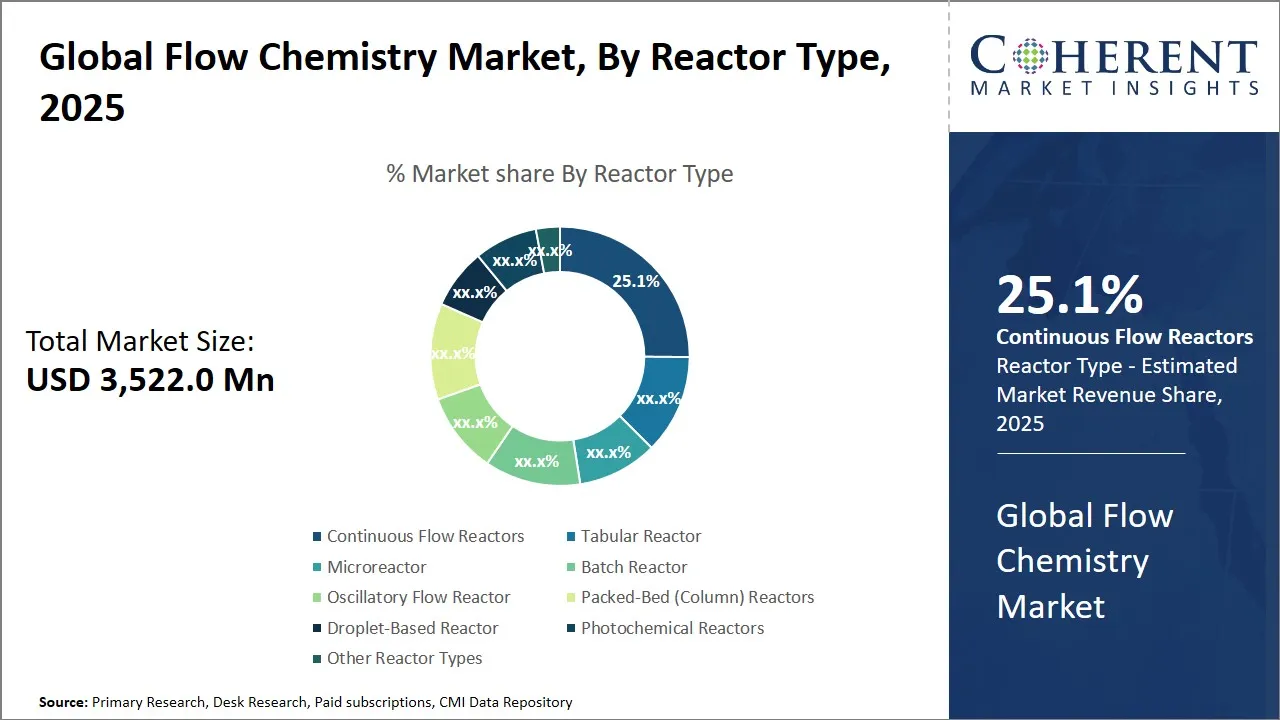
- The continuous flow reactors segment is expected to account for 26.1 % of the market share in 2026.
- Stainless steel reactor segment is expected to hold 20.6% of the global flow chemistry market share in 2026.
- The production scale segment is projected to hold 22.7 % of the market share in 2026.
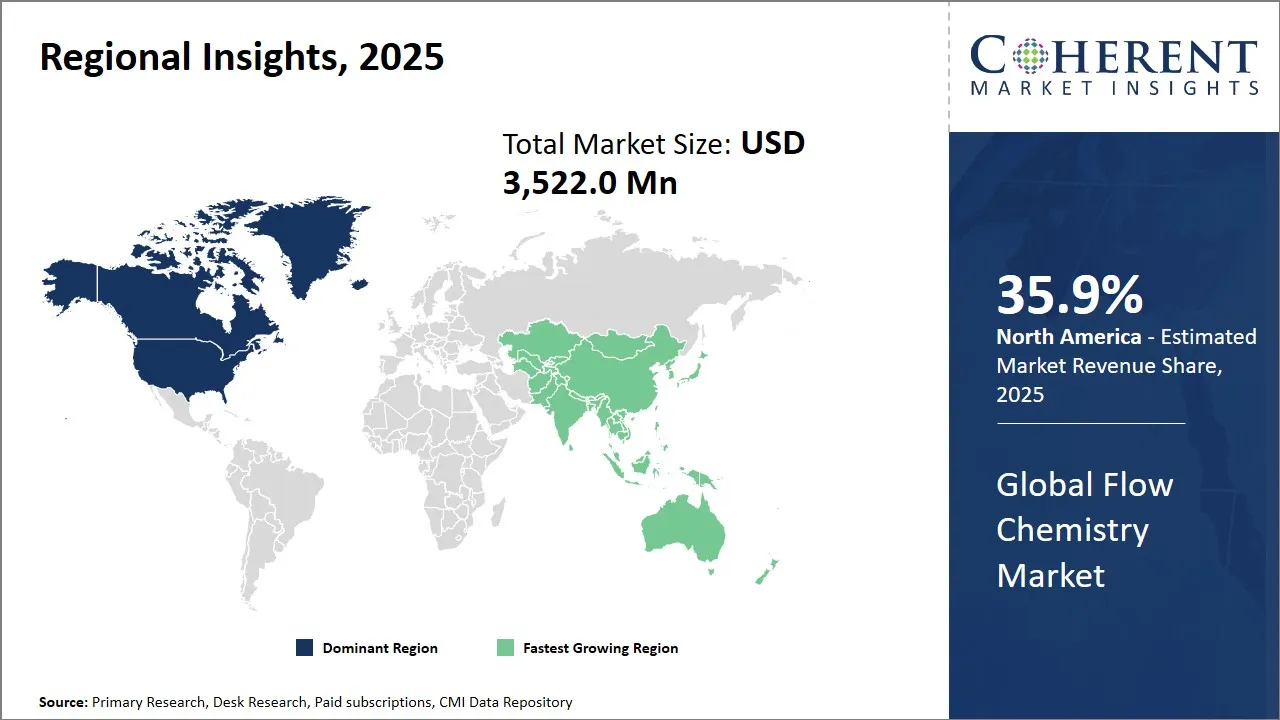
- North America is set to lead the global flow chemistry market in 2026 with a 35.9 % share. Asia Pacific, with a share of 25.7% in 2026, is projected to be the fastest-growing regional market.
Market Overview
According to the market trends, there has been an increased attention to automation and introducing digital technologies in the flow chemistry systems, improving the control of the processes and minimizing the cost of operations. Also, the increased focus on sustainable and green chemistry is driving the use of flow chemistry methods, which are safer and greener than the old batch approach to processing. All of these contribute to innovativeness and growth of the global flow chemistry market.
Currents Events and their Impact
Current Events | Description and its Impact |
Government‑industry hub launch in India |
|
Rising sustainability imperative & green‑chemistry demands |
|
Segmental Insights
- Current Industry Events of 2026
- Market Size Estimation
- Regional Breakdown
- Competitive Landscape
- Customer Intelligence
- Segmental Analysis
- Pricing Analysis
- Key Market Drivers, Challenges & Future Trends
- Customized Insights Section
Flow Chemistry Market Insights, By Reactor Type - Continuous Flow Reactors Segments Dominates the Market Due to Unparalleled Efficiency and Scalability
Continuous flow reactors segment is expected to hold 26.1% of the market share in 2026, because of their exceptional operational efficiency and process control capabilities. These reactors allow accurate control of the parameters of reactions, or the temperature, pressure, and residence time that prospectively increase the quality and yield of products generated. The inherent construction of continuous flow reactors entails the possibility to operate continuously, which greatly lowers the downtime and consequently high-throughput production which is very much in line with the current manufacturing requirements.
Among the most important motivating factors contributing to the development of continuous flow reactors is the versatility of different chemical reactions of a broad spectrum, such as complex organic reactions and multi-step reactions. This flexibility is helpful as it allows pharmaceutical and fine and specialty chemical manufacturers to quickly optimize reaction conditions and scale-up laboratory procedures to production without major equipment or methodology changes.
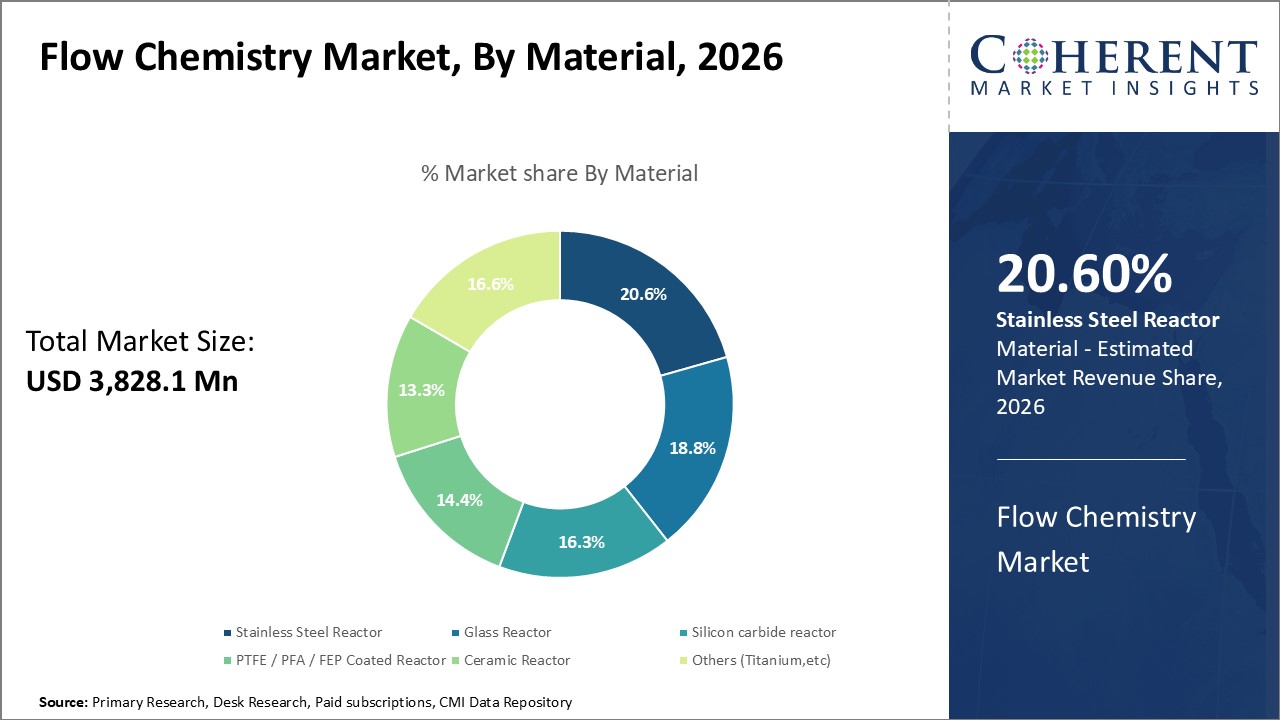
Flow Chemistry Market Insights, By Material - Stainless Steel Reactor Dominates the Market Due to Their Robustness, Cost-Effectiveness, and Compatibility with Diverse Chemical Processes
Stainless steel reactor is projected to hold 20.6% of the global flow chemistry market share in 2026, since they integrate mechanical strength, chemical resistance as well as thermal stability, which render them very versatile in numerous industrial uses. The inherent durability of the materials enables reactors to withstand high pressures and temperatures which are necessary in a number of chemical reactions carried out in flow systems. Another main cause of stainless steels domination in the market is the great resistance to corrosion particularly when using aggressive, pharmaceutical solvents, acids and bases which are used in flow chemistry.
This property guarantees the extension of reactor life, less frequency of maintenance, and has a uniform performance during the long period of operation. Also, the welding and fabrication facilitated by stainless steels facilitate the creation of highly customized reactor geometries based on the specifications of the flow demand.
Flow Chemistry Market Insights, By Scale of Operation - Production Scale Dominates Driven by Industrial Demand for Large-Scale, Cost-Efficient Chemical Synthesis
The production scale segment is set to account for 22.7% of the market share in 2026, fueled by the growing emphasis on industrial-scale manufacturing that balances throughput with precision. The flow reactors at production scale allow chemical companies to move processes through experimental or pilot-scale processes to full-scale production quickly accelerating time-to-market of important compounds.
One key benefit of flow chemistry on a large scale is that it can provide continuous and uninterrupted production essential to the large volume needs of the pharmaceutical, agrochemical and specialty chemicals market. Modular reactor designs that may be combined to scale capacity without having to overhaul the entire system help in optimizing capital spend.
Sustainability and Green Chemistry Applications
- Continuous-flow processes in flow chemistry are significantly more sustainable than traditional batch processes, showing improvements in energy efficiency, water consumption, and waste reduction.
- Flow chemistry can reduce carbon emissions substantially, with up to 79% lower CO2 emissions compared to batch methods, making it a greener alternative.
- The E-factor, which measures waste per mass of product, is much lower in continuous-flow processes, showing an average reduction of 87%, indicating less waste generation.
- Flow chemistry supports the 12 Principles of Green Chemistry by enabling safer, more efficient reactions that reduce hazardous chemicals, allow continuous product formation, and facilitate catalyst recovery and reuse.
- Technological advantages of flow chemistry include smaller equipment size, scalability without needing to restart processes, better heat management, and higher product yields, which contribute to its sustainability profile.
Regional Insights
North America Flow Chemistry Market Analysis and Trends
The North America region is expected to dominate the market with 35.9% share in 2026. Major factors contributing to the projection are mature pharmaceutical and chemical industry, investment in research and development, and government policies that favor advanced manufacturing technologies. The presence of major centers of innovation as well as known chemical production facilities is further boosting the regional market growth. The U.S. government programs in relation to sustained manufacturing and sustainability have promoted the use of flow chemistry technologies at a greater rate.
Moreover, there are prominent companies in North America such as Corning Inc., Chemtrix BV (U.S. subsidiary), and Syrris Inc., which are developing the innovative process intensification and automation solutions. The local market ecosystem has the advantages of academic, industry, and regulatory agency partnerships which guarantee quick commercial implementation and regulatory adherence. Well-established trade agreements and an extensive system of suppliers and distributors also cement the leading role of North Americas in the global flow chemistry environment.
Asia Pacific Flow Chemistry Market Analysis and Trends
The Asia Pacific region is expected to exhibit the fastest growth in the market contributing 25.7% share in 2026, because of growing pharmaceutical manufacturing industry, growing interest on green chemistry and rising demand of efficient and scalable chemical reactions. Such countries as China, India, and Japan are investing a lot in the modern chemical process technologies as they are working on the broader industrial modernization efforts.
Governments are also promoting innovation aggressively via subsidies and conducive government policies which are geared to the improvement of chemical safety and environmental standards which also favor the uptake of flow chemistry. The emerging ecosystem in the market is positive because of the growing pool of talented professionals, a substantial number of contract manufacturing organizations (CMOs), and growing partnerships with foreign players. Shandong Kexing Pharmaceutical, Beijing Easchem Lab, and the Japanese Cambridge Reactor Design are major local players in the market, which are driving the growth among others by coming up with localized solutions that satisfy the regional market.
Global Flow Chemistry Market Outlook for Key Countries
U.S. Flow Chemistry Market Trends
The U.S. flow chemistry market is the giant with its tendency to concentrate on pharmaceuticals innovation and fine chemicals production. Large-scale competitors, such as Corning Inc. and Syrris, have invented microreactor and continuous flow systems, which are highly used in drug production and optimization of the processes. The regulatory climate of the country supports its acceptance by endorsing continuous manufacturing routes.
The large pharmaceutical industry, startups, and educational institutions have close relationships that result in a thriving ecosystem of innovation that leads to market progress. The U.S. is also a center of international cooperation, which is helping it to solidify its dominant role.
Germany Flow Chemistry Market Trends
Germany has a strong chemical production foundation and is also a precision engineer, which facilitates the high utilization of flow chemistry technologies. ThalesNano and Buchi AG companies are among the companies that lead in the supply of cutting-edge equipment that is centered in process intensification and laboratory automation.
The high values of the Germanys regarding sustainability in the industry and energy-efficient processes go hand in hand with the benefits of flow chemistry, with the government encouraging the use of green manufacturing. The intersection of high technological performances and regulatory comfort is what ensures that Germany is a central European figure.
China Flow Chemistry Market Trends
The expansion of China flow chemistry market is supported by the large pharmaceutical and chemical manufacturing industries in the country that are slowly adopting continuous flow technologies in their quest to produce better and with less harm to the environment. Made in China 2026 initiative contains objectives of improvements in chemical manufacturing processes, which indirectly encourages the use of flow chemistry. Local innovation is driven by local companies such as Shandong Kexing Pharmaceutical and some of the subsidiaries of foreign multinationals. The increase in demand of generic pharmaceuticals and specialty chemicals as well as the increase in R&D spending is driving the market development.
India Flow Chemistry Market Trends
The market for flow chemistry in India is swiftly growing because it has a robust industry of generic drug producers and growing appreciation over the safety and efficiency of their processes. The government efforts to increase the exports of pharmaceuticals and R and development facilities are facilitating the adoption of technology. Jubilant Life Sciences and Syngene International are Indian firms that use flow chemistry to scale synthesis and improve its quality. Also, the partnership with international players helps to transfer the knowledge, which will allow gradual adoption of the continuous flow approaches by the manufacturing ecosystem of the country.
Japan Flow Chemistry Market Trends
Japan is a pioneer in the world of chemical processes and other firms still innovative in the field like Cambridge Reactor Design and Nikkiso Co. are providing advanced flow chemistry equipment and systems. The industrial environment of the country places an emphasis on precision, quality and safety and so, flow chemistry is a natural fit in academia and the industry. The demand is further boosted by government policy that supports the development of sophisticated manufacturing and environmental limits. There is a solid foundation to further growth in this market since Japan traditional bases are in the area of fine chemicals and pharmaceutical manufacturing.
Integration of Flow Chemistry in Pharmaceutical Manufacturing
- Flow chemistry involves continuous movement of reactants through reactors, allowing automated, telescoped, multi-step synthesis in a single streamlined process.
- It improves reaction control and safety by precisely managing reaction conditions and minimizing risks of highly exothermic or reactive intermediates.
- This technology enables significant reduction in batch times; for example, certain processes that take days in batch mode can be completed in hours through continuous flow.
- Flow chemistry supports greener manufacturing by reducing solvent waste and energy use, aligning with sustainability goals.
- It facilitates rapid scale-up from lab to commercial production with enhanced reproducibility and compliance with regulatory standards.
- Pharmaceutical companies increasingly use flow chemistry for the synthesis of drugs like Olanzapine, Tamoxifen, and Aliskiren hemifumarate with improved yields and process efficiencies.
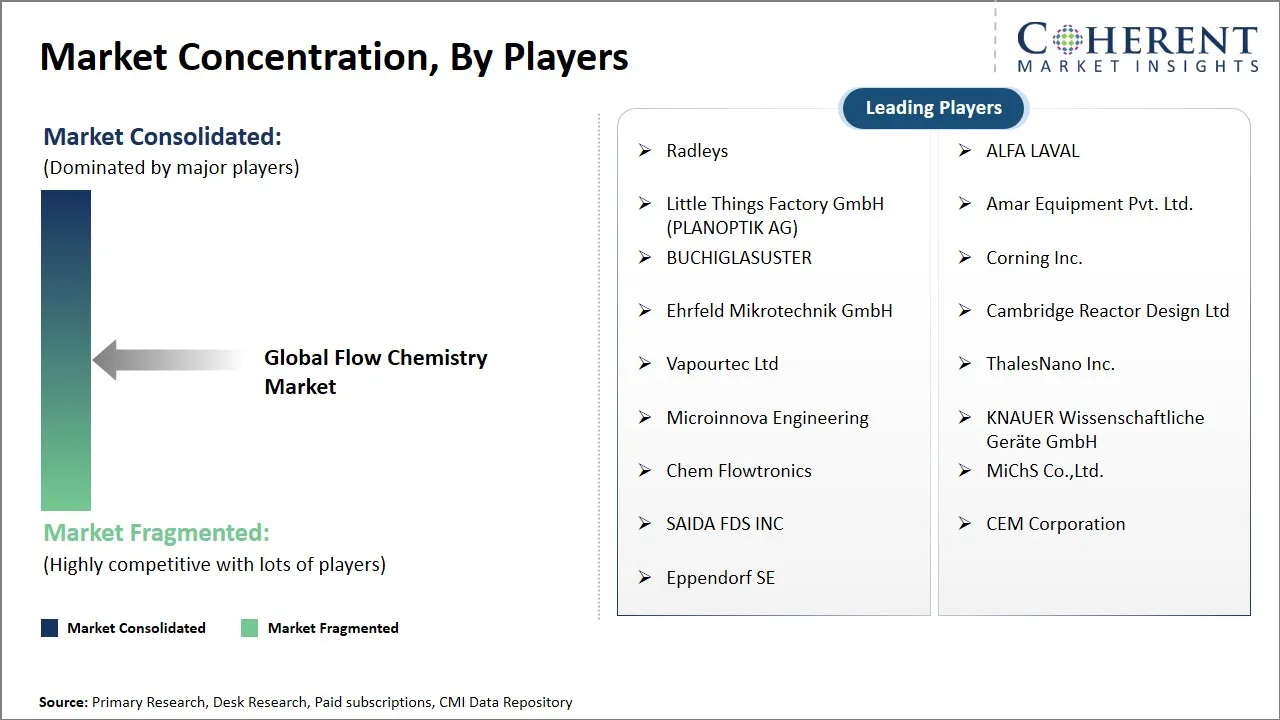
Market Players, Key Development, and Competitive Intelligence
Key Developments
- On November 01, 2025, Shilpa Medicare – the full-service contract development and manufacturing organization (CDMO) – announces the launch of its new flow chemistry Centre of Excellence (CoE) at CPHI Frankfurt. Based at the CDMO’s Bangalore site, the Centre unites cross-functional teams across R&D and manufacturing to accelerate process development, scale-up, and commercial production for continuous flow.
- In August 2025, Asymchem, a global contract development and manufacturing organization (CDMO), has expanded its flow chemistry capabilities at its Sandwich, U.K., facility with proprietary, CE-certified flow equipment that further strengthens its position in the adoption of advanced flow chemistry technologies.
Top Strategies Followed by Global Flow Chemistry Market Players
- The market is controlled by established players with large investments in research and development (R&D) to develop high-performance, customizable flow chemistry systems to meet the changing customer demands both in pharmaceutical, chemicals and materials science industries. This geographical diversification allows in addition to alleviating the risk of market saturation in developed areas to facilitate the formation of the local customer base as a result of an increase in the service range and technical support.
- As an example, Chemtrix which is one of the major actors has come up with advanced flow reactors that can serve multi-step and complex chemical reactions, which are accurate and can scale to the industry customers. They also focus on the diversification in terms of territory, as they are very strong in North America, Europe, and Asia.
- The mid-level players of the global flow chemistry market are more cost-conscious and target more with offering a solution that has a strong balance between quality and affordability. The target of these companies is mainly price-sensitive consumer markets which include academic research facilities, small and medium enterprises (SMEs), and startups that need dependable and cost-effective flow chemistry systems in their laboratory activities. The middle players in the market usually venture in joint projects which increases their production efficiencies, technology portfolio and distribution potentials.
- For example, Flow Chem Technologies, collaborated with SMEs in Europe to offer scalable flow reactors and has done so by focusing on cost structure optimization to offer affordable alternatives without undermining performance.
- Minor market participants in the flow chemistry market have their own niches in terms of specialization on a product feature or the development of innovative, leading-edge technologies that would serve unique or underserved needs. The focus of these companies is on agility, technological adaptability, and quick adoption of new technology, like microreactor designs, automation, or integration with digital platforms to keep up.
- An example is Little Things Factory GmbH, an innovative company, which has been focused on making lab-scale microreactors to facilitate high-throughput, accurate chemical synthesis to pharmaceutical startups. Their focus on short response times and approach to designing systems to meet particular needs have contributed to their ability to cut out a competitive advantage.
Market Report Scope
Flow Chemistry Market Report Coverage
| Report Coverage | Details | ||
|---|---|---|---|
| Base Year: | 2025 | Market Size in 2026: | USD 3,828.1 Mn |
| Historical Data for: | 2020 To 2024 | Forecast Period: | 2026 To 2033 |
| Forecast Period 2026 to 2033 CAGR: | 8.7% | 2033 Value Projection: | USD 6,859.7 Mn |
| Geographies covered: |
| ||
| Segments covered: |
| ||
| Companies covered: | Radleys, ALFA LAVAL, Little Things Factory GmbH (PLANOPTIK AG), Amar Equipment Pvt. Ltd., BUCHIGLASUSTER, Corning Inc., Ehrfeld Mikrotechnik GmbH, Cambridge Reactor Design Ltd, Vapourtec Ltd, ThalesNano Inc., Microinnova Engineering, KNAUER Wissenschaftliche Geräte GmbH, Chem Flowtronics, MiChS Co.,Ltd., SAIDA FDS INC, CEM Corporation, and Eppendorf SE | ||
| Growth Drivers: |
| ||
| Restraints & Challenges: |
| ||
Flow Chemistry Market Dynamics
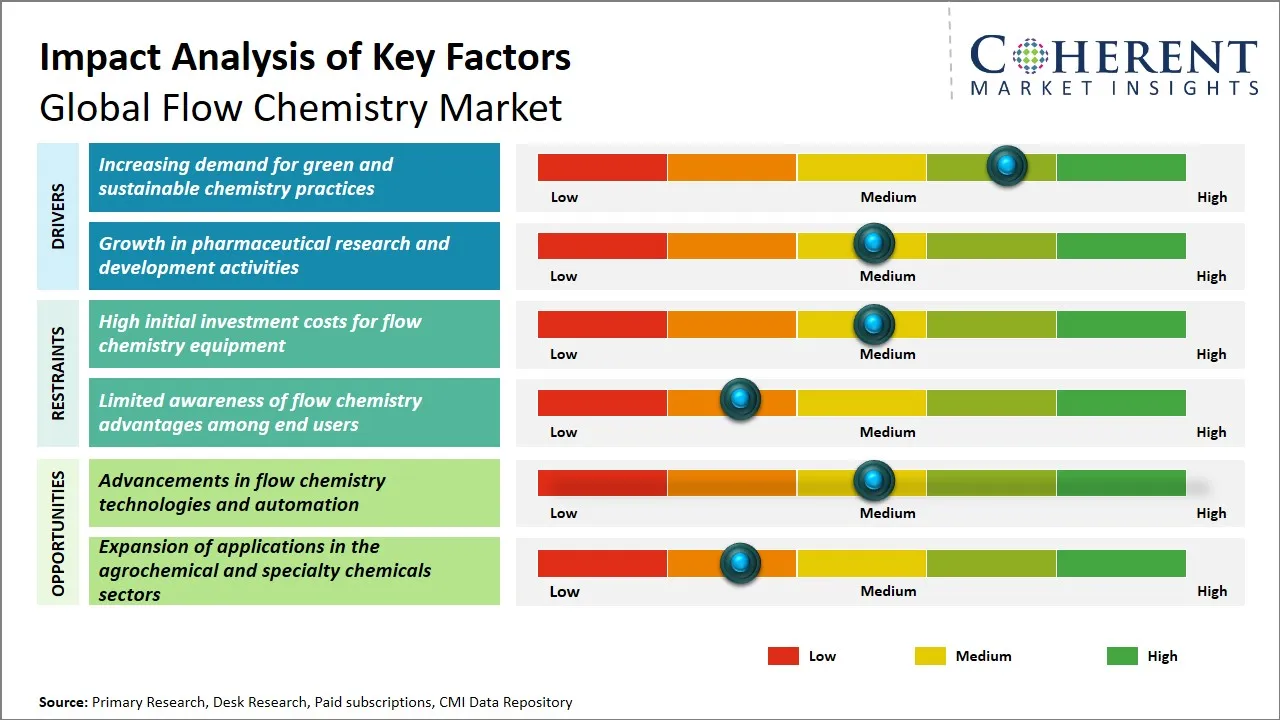
Flow Chemistry Market Driver - Increasing Demand for Green and Sustainable Chemistry Practices
The trend of increased focus on the environmental conservation and sustainable development worldwide is becoming one of the key factors propelling the use of flow chemistry technologies in industries. With regulatory bodies and end consumers requiring more clean and environmentally friendly chemical processes, businesses are increasingly beginning to resort to continuous flow chemistry processes that allow them to generate less waste, use less energy, and also improve reaction efficiency. Flow chemistry is predisposed to safer manipulation of dangerous reagents and allows to control the parameters of the reaction more precisely, which leads to reducing the number of by-products and the impact on the environment, which is less than that of traditional batches.
As an example, one of such drivers is Pharmaceutical Industry Adoption of Flow Chemistry. Johnson and Johnson and Merck companies have integrated continuous flow chemistry in manufacturing operations to achieve sustainability objectives. Such companies have used flow chemistry to cut chemical wastes drastically, decrease the use of energy and come up with more efficient reactions to make drugs.
Flow Chemistry Market Opportunity - Advancements in Flow Chemistry Technologies and Automation
Global flow chemistry market is set to grow tremendously due to the ongoing development of flow chemistry technologies and the growing adoption of automation in the processes. More recent innovations have been aimed at improving the design of reactors, better control of the process and more seamless scaling between laboratory and industrial scale. Microreactors and especially have been at the forefront because they offer a better-enhanced level of heat and mass transfer, which results in a faster reaction rate and yields greater product. On top of the technological advancement, the implementation of automation software, including real-time monitoring systems, artificial intelligence (AI) and machine learning (ML) algorithms are changing the operations of flow chemistry.
One of such opportunities is the creation of Micro Reactors by such companies as Corning Inc. and Chemtrix. Microreactors offer superior heat and mass transfer rates, which offer a significantly higher efficiency rate of chemical reactions. This technology has been found to be applied in the industry especially in high value chemical production.
Analyst Opinion (Expert Opinion)
- The global flow chemistry market is well poised to experience a high growth due to the growing popularity of efficiency and sustainability in the production of chemicals. The Flow Chemistry Conference (2023) and International Symposium on Continuous Flow Chemistry (2022) provided some insights into the transformative developments, with some companies, such as Syrris and Chemtrix, taking the lead in advancing flow reactor technology.
- The introduction of a modular flow chemistry platform by Syrris, which is meant to increase the scale and decrease the hazardous waste, can serve as an example of the fact that the industry is responding to the increasing regulatory demands and the necessity to have more eco-friendly processes. At these conferences, it was pointed out that flow chemistry is a vital issue in improving the speed of reactions and the yield of products especially in pharmaceuticals and fine chemicals. Nevertheless, issues like the high startup costs and the need to have specialized skills were often identified as obstacles to further use.
- Firms which invest in technologies that are easy to use and provide extensive training to the researchers are most likely to have a competitive advantage. Finally, the expansion of the global flow chemistry market will rely on its capability to be innovative and at the same time respond to the twin demands of the contemporary chemical processes of being both operationally efficient and environmentally responsible.
Speak to the analyst
Want personalized insights?
Take the findings above to one of our principal consultants, or have the report rebuilt around the segments, geographies and competitors you actually track.
Market Segmentation
- Reactor Type Insights (Revenue, USD Mn, 2021 - 2033)
- Continuous Flow Reactors
- Tabular Reactor
- Microreactor
- Batch Reactor
- Oscillatory Flow Reactor
- Packed-Bed (Column) Reactors
- Droplet-Based Reactor
- Photochemical Reactors
- Other Reactor Types
- Material Insights (Revenue, USD Mn, 2021 - 2033)
- Stainless Steel Reactor
- Glass Reactor
- Silicon carbide reactor
- PTFE / PFA / FEP Coated Reactor
- Ceramic Reactor
- Others (Titanium, etc.)
- Scale of Operation Insights (Revenue, USD Mn, 2021 - 2033)
- Production Scale
- Laboratory Scale
- Pilot Scale
- Mode of Operation Insights (Revenue, USD Mn, 2021 - 2033)
- Continuous Flow Chemistry
- Batch Chemistry
- Semi-Continuous Flow Chemistry
- Other Mode of Operations
- Application Insights (Revenue, USD Mn, 2021 - 2033)
- Heterogeneous Reactions
- Gas-Liquid Reactions
- Liquid-Liquid Reactions
- Solid-Liquid Reactions
- Grignard Reaction Mechanisms
- Hydrogenation Reactions
- Multi-step Reactions
- Others
- End-use Industry Insights (Revenue, USD Mn, 2021 - 2033)
- Pharmaceuticals
- Chemical Industry
- Food & Beverages
- Nanoparticles
- Biotechnology & Life Sciences
- Petrochemicals
- Academic & Research Institutions
- Others
- Regional Insights (Revenue, USD Mn, 2021 - 2033)
- North America
- U.S.
- Canada
- Latin America
- Brazil
- Argentina
- Mexico
- Rest of Latin America
- Europe
- Germany
- U.K.
- Spain
- France
- Italy
- Russia
- Rest of Europe
- Asia Pacific
- China
- India
- Japan
- Australia
- South Korea
- ASEAN
- Rest of Asia Pacific
- Middle East
- GCC Countries
- Israel
- Rest of Middle East
- Africa
- South Africa
- North Africa
- Central Africa
- North America
- Key Players Insights
- Radleys
- ALFA LAVAL
- Little Things Factory GmbH (PLANOPTIK AG)
- Amar Equipment Pvt. Ltd.
- BUCHIGLASUSTER
- Corning Inc.
- Ehrfeld Mikrotechnik GmbH
- Cambridge Reactor Design Ltd
- Vapourtec Ltd
- ThalesNano Inc.
- Microinnova Engineering
- KNAUER Wissenschaftliche Geräte GmbH
- Chem Flowtronics
- MiChS Co.,Ltd.
- SAIDA FDS INC
- CEM Corporation
- Eppendorf SE
Sources
Primary Research Interviews
- R&D Director – Leading Flow Chemistry Technology Provider
- Procurement Manager – Major Chemical Manufacturing Company
- Product Development Head – Specialty Chemicals Manufacturer
- Sustainability Manager – Flow Chemistry Certification and Standards Organization
Stakeholders
- Technology Developers and Providers
- End-use Sectors
- Pharmaceuticals and Fine Chemicals
- Agrochemicals
- Specialty Chemicals
- Food and Nutraceuticals
- Regulatory & Certification Bodies
- E-commerce Platforms and Distributors for Flow Chemistry Equipment and Reagents
- Technology Integration Players: AI and automation solution providers for flow chemistry processes
Databases
- UN Comtrade Database
- India Import Export (EXIM) Database
- Specialty Chemical Market Databases such as ICIS and CPhI Pharma
Magazines
- Flow Chemistry Today – Trends in continuous flow technology and applications
- Chemical Engineering Magazine – Innovations in flow reactors and process intensification
- Pharmaceutical Technology – Flow chemistry in drug development and manufacturing
- Green Chemistry Journal – Sustainable flow chemistry processes
Journals
- Journal of Flow Chemistry – Research and reviews on flow chemistry techniques and applications
- AIChE Journal – Process engineering advancements including flow chemistry
- Green Chemistry – Sustainable chemical processes including flow synthesis
- Organic Process Research & Development – Flow chemistry in pharmaceutical synthesis
- Chemical Engineering Science – Modelling and application of flow reactors
Newspapers
- The Financial Times – Market growth and investments in flow chemistry technologies
- The Guardian – Impact of sustainable technologies including flow chemistry on chemical industry
- Asia Chemical News – Developments in flow chemistry adoption in Asia-Pacific
- European Chemical News – Regulatory updates and industry trends in flow chemistry
Associations
- American Chemical Society (ACS) – Flow Chemistry Division
- European Federation for Flow Chemistry
- Society for Chemical Engineering and Biotechnology (DECHEMA)
- Green Chemistry Network
Public Domain Sources
- FDA – Guidelines for continuous manufacturing and flow chemistry in pharmaceuticals
- European Medicines Agency (EMA) – Regulatory perspectives on flow chemistry
- World Health Organization – Safety and quality standards for continuous processing
- OECD – Reports on sustainable and continuous chemical processing
Proprietary Elements
- CMI Data Analytics Tool, Proprietary CMI Existing Repository of information for last 8 years.
Get access to 250+ pages report
Every segment, forecast, competitor profile and data table behind the analysis above — available for instant download.
- ESOMAR Member
- ISO 9001:2015 Certified
- D-U-N-S Registered
- GDPR & CCPA Compliant
Missing comfort of reading report in your local language? Find your preferred language:
Transform your Strategy with Exclusive Trending Reports
Frequently Asked Questions
The global flow chemistry market is estimated to be valued at USD 3,828.1 Mn in 2026 and is expected to reach USD 6,859.7 Mn by 2033.
The CAGR of the global flow chemistry market is projected to be 8.7% from 2026 to 2033.
Increasing demand for green and sustainable chemistry practices and growth in pharmaceutical research and development activities are the major factors driving the growth of the global flow chemistry market.
High initial investment costs for flow chemistry equipment and limited awareness of flow chemistry advantages among end-users are the major factors hampering the growth of the global flow chemistry market.
In terms of reactor type, continuous flow reactors are estimated to dominate the market revenue share in 2026.
Radleys, ALFA LAVAL, Little Things Factory GmbH (PLANOPTIK AG), Amar Equipment Pvt. Ltd., BUCHIGLASUSTER, Corning Inc., Ehrfeld Mikrotechnik GmbH, Cambridge Reactor Design Ltd, Vapourtec Ltd, ThalesNano Inc., Microinnova Engineering, KNAUER Wissenschaftliche Geräte GmbH, Chem Flowtronics, MiChS Co.,Ltd., SAIDA FDS INC, CEM Corporation, and Eppendorf SE are the major players.
North America is expected to lead the global flow chemistry market in 2026.