

Hand Sanitizer Market Size and Trends
The hand sanitizer market is estimated to be valued at USD 7.57 Bn in 2026 and is expected to reach USD 9.06 Bn by 2033, exhibiting a compound annual growth rate (CAGR) of 2.6% from 2026 to 2033.
Key Takeaways
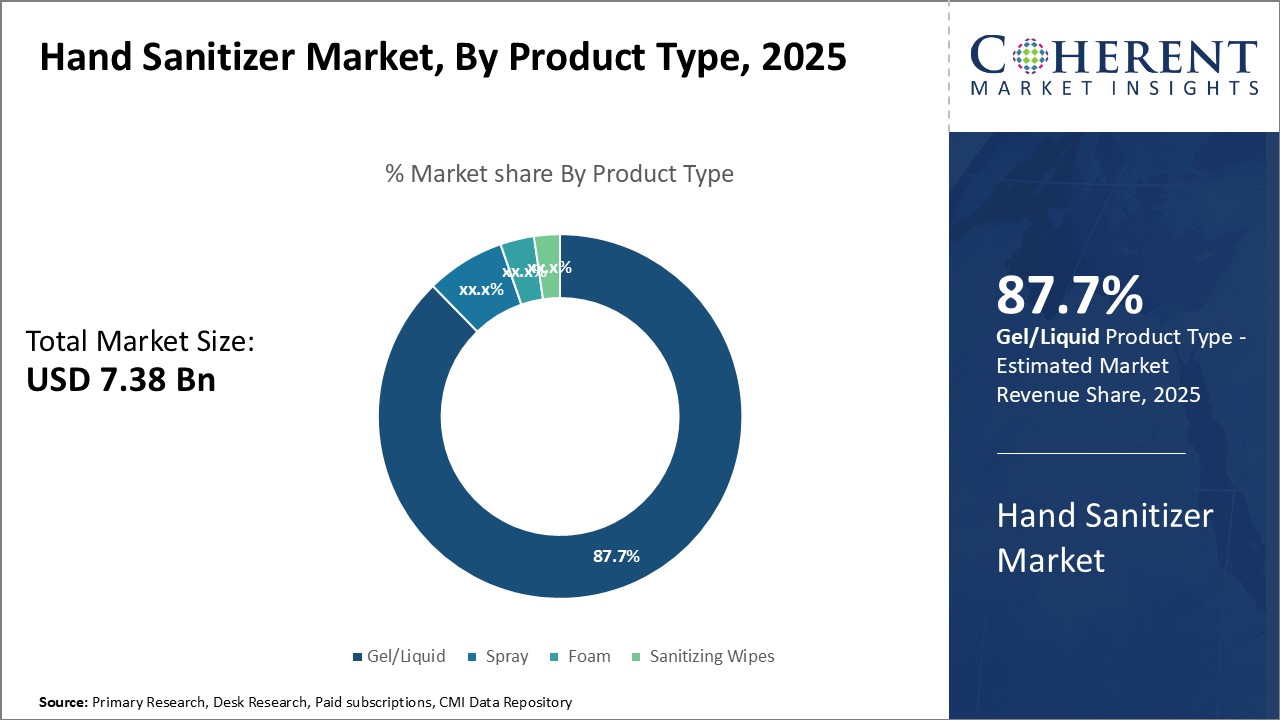
- Based on Product Type, the Gel/Liquid segment is expected to contribute 88.7% in 2026, 2026 due to its convenience and effectiveness.
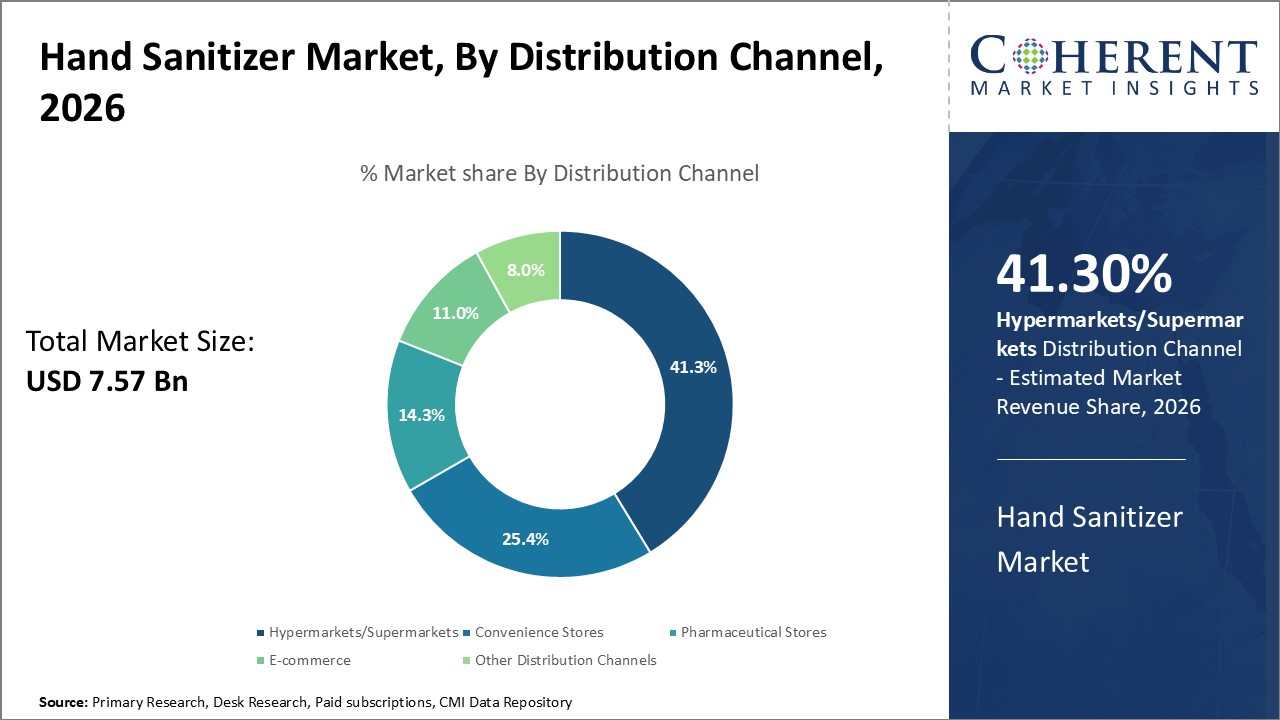
- Based on Distribution Channel, the Hypermarket/Supermarkets segment is projected to hold 41.3% share of the market in 2026, driven by expanding shelf space for hygiene products, one-stop shopping convenience, and attractive pricing enabled by large-scale procurement.
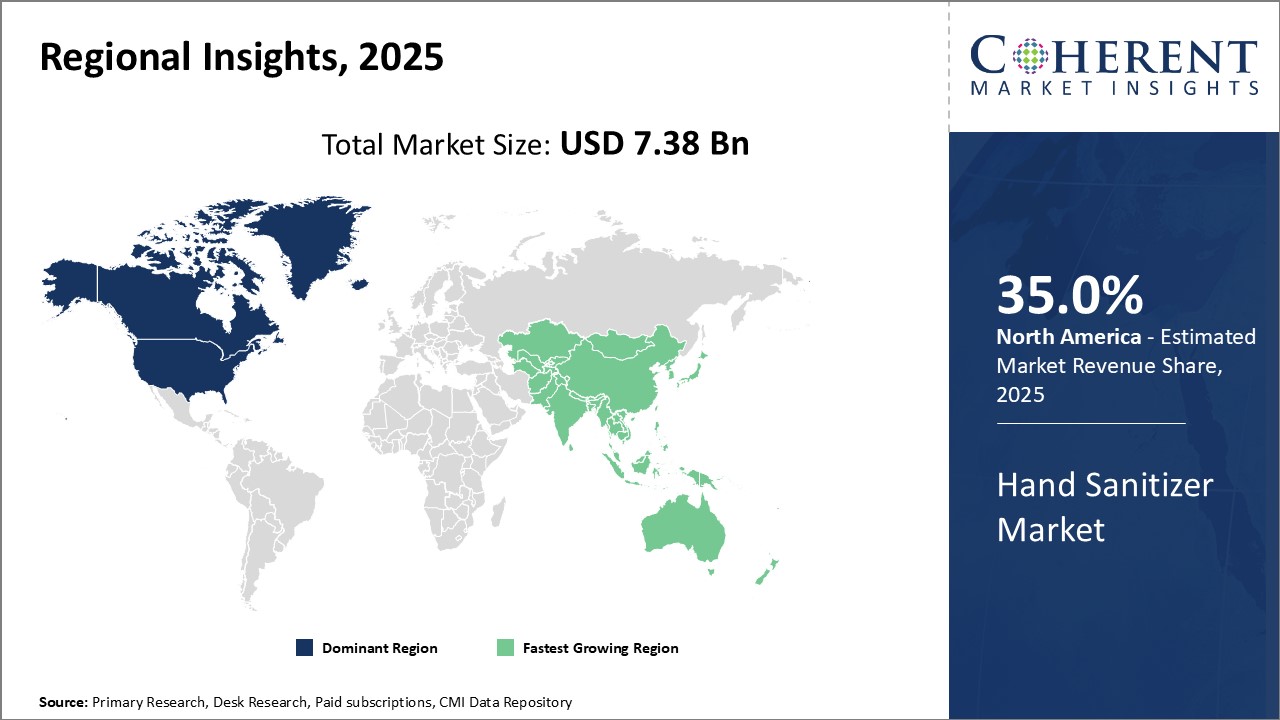
- Based on Region, North America is projected to dominate the global hand sanitizer market with a 35% share in 2026. While, Asia Pacific is expected to be the fastest growing region during the forecast period.
Market Overview
The growing awareness regarding health and hygiene, along with rising consciousness to curb the spread of infections and diseases, is expected to drive hand sanitizer market demand during the forecast period. Widespread promotion of hand hygiene by healthcare agencies and governments, along with increasing adoption of hand hygiene practices in community and commercial spaces such as offices, schools, and malls, is augmenting demand. The rising need for frequent and proper hand disinfection to limit transmission of contagious illnesses further propels market growth. Additionally, the preference for handy packaging and availability of natural and alcohol-free products catering to specific consumer needs will continue supporting the market expansion
Current Events and their Impact on the Hand Sanitizer Market
Current Event | Description and its Impact |
Regulatory Tightening and Quality Control Enforcement |
|
Sustainability Transition and Environmental Compliance |
|
Import Export of Hand Sanitizer Market
Between May 2022 and April 2023, India exported 13 shipments of alcohol-based hand sanitizers, with no growth compared to the previous year. These exports were made to just two countries—Chile and Sri Lanka—by zero active Indian exporters, indicating either exit or inactivity in the sector. Globally, the United States led hand sanitizer exports with 302 shipments, followed by Costa Rica (94) and the Netherlands (60). In contrast, worldwide exports of hand sanitizers under HSN code 30049087 saw a 33% decline from January 2022 to December 2023, with only 4 shipments made by 2 exporters to 2 buyers, and no exports recorded in December 2023.
- Current Industry Events of 2026
- Market Size Estimation
- Regional Breakdown
- Competitive Landscape
- Customer Intelligence
- Segmental Analysis
- Pricing Analysis
- Key Market Drivers, Challenges & Future Trends
- Customized Insights Section
Segmental Insights
Hand Sanitizer Market Insights, By Product Type: Convenience and Effectiveness Drive the Gel/Liquid Segment Growth
In terms of product type, the gel/liquid segment is expected to hold 88.7% of the global hand sanitizer market in 2026 due to its convenience and effectiveness. Gel sanitizers, with higher alcohol content, kill 99.9% of germs in 15 seconds without water, making them ideal for busy lifestyles. Their portable, easy-to-use bottles and quick-drying properties suit on-the-go use, while pleasant scents enhance user experience. Growing hygiene awareness from disease outbreaks further drives adoption among individuals and institutions such as hospitals and schools.
For instance, in March 2025, Miracle Brands, under Global Health Solutions (DBA Turn Therapeutics), introduced a new alcohol-free liquid hand sanitizer. Powered by benzalkonium chloride (0.13 g per 100 g), the spray effectively sanitizes hands, is safe for frequent use, and comes in a 4-fl-oz (118 mL) format.
Hand Sanitizer Market Insights, By Distribution Channel: Growing distribution through large retailers boosts the share of hypermarkets/supermarkets
In terms of distribution channel, the hypermarkets/supermarkets segment is expected to hold 41.3% of the hand sanitizer market in 2026. This is driven by expanding shelf space for feminine hygiene products, one-stop shopping convenience, and attractive pricing enabled by large-scale procurement. Dedicated displays increase visibility and encourage impulse purchases, while robust supply chains ensure consistent availability. These factors help hypermarkets drive mass-market acceptance and boost trials among new consumer segments.
For instance, in March 2025, Touchland, the cult-favorite hand sanitizer brand, expanded into fragrances with the launch of its Power Essence body and hair mists. Sephora, and Ulta for $20, the line features eight mood-evoking scents, like Lush Tropicale and Vanilla Velvet and skin-hydrating ingredients such as hyaluronic acid and niacinamide
Regional Insights
North America Hand Sanitizer Market Analysis & Trends
North America has emerged as the largest market for hand sanitizers globally. The region is expected to account for 35.0% of the market share in 2026. The U.S. accounts for the bulk of the hand sanitizer market due to rise in health awareness among the population. There is a growing culture of hand hygiene in several settings including workplaces, schools and hospitals, thereby creating robust demand for hand sanitizers. The presence of leading manufacturers in the region, such as GOJO Industries and Reckitt Benckiser, provides ease of access to consumers. These players have established dominant positions due to their long presence and extensive distribution channels across retail stores, pharmacies, and online platforms. They offer a diverse range of products at varied price points to cater to various consumer segments. The strong foothold of local brands is a major factor that has enabled North America to gain global supremacy in the hand sanitizer domain.
For instance, in August 2026, SC Johnson Professional unveiled TruShot 2.0® No-Rinse Sanitizer, a fast and easy sanitizing solution requiring no mixing or rinsing. Designed for use on hard, non-porous, food-contact surfaces, the product simplifies sanitization with a mobile dispensing system and food-safe formula, streamlining hygiene procedures.
Asia Pacific Hand Sanitizer Market Analysis & Trends
Asia Pacific has witnessed the fastest growth in the hand sanitizer segment in recent years. Countries like Indonesia and Vietnam have emerged as highly promising developing markets due to their improving economic conditions and rising focus on health and hygiene. The steady growth in urban population coupled with increasing consumer awareness about health issues like infections is driving demand. International players see significant potential in these populous nations and have intensified their advertising and branding activities. Local manufacturers are also coming up with affordable product lines targeting the cost-conscious segments, which has spurred overall market expansion. Stringent regulations regarding hand hygiene in public spaces, such as train stations, shopping malls and airports across Southeast Asian nations will further stimulate the consumption of hand sanitizers in the region over the coming years.
For instance, in August 2026, Indonesian startup SanGreat Natural Indonesia, co-founded by biotech specialist Fifin Nashirotun Nisya, has developed eco-friendly, non-toxic home-care solutions. The company’s expanding “Bye Bye” line, including pest repellents, biopesticides and even a hand sanitizer, prioritizes safety and sustainability using over 90% natural ingredients.
Hand Sanitizer Market Outlook Country-Wise
The U.S. Hand Sanitizer Market Trends
The U.S. leads global demand, supported by strong institutional requirements, strict hygiene regulations, and high consumer awareness. Extensive retail and e-commerce channels make sanitizers widely accessible across households, workplaces, and healthcare facilities.
For instance, in July 24, 2026, GOJO Industries unveiled its latest Purell innovation: an invigorating hand sanitizer spray claiming to be four times more effective than pricier mist products. Designed for on-the-go use, the new spray offers fast, refreshing germ protection and expands Purell’s consumer hand hygiene offerings.
China Hand Sanitizer Market Trends
China is the fastest-growing market, driven by government mandates for hygiene in public spaces, rapid urbanization, and strong e-commerce distribution. Growing adoption in both urban and rural areas further fuels demand.
For instance, in February 2026, INTCO Medical is strengthening its global manufacturing network with strategically located factories in Zhenjiang, China, and Quang Ninh, Vietnam. These facilities bolster supply chain efficiency, cost-effective production, rapid delivery, and flexible response to market needs. Notably, the company also produces hygiene essentials like hand sanitizer, addressing growing demand worldwide.
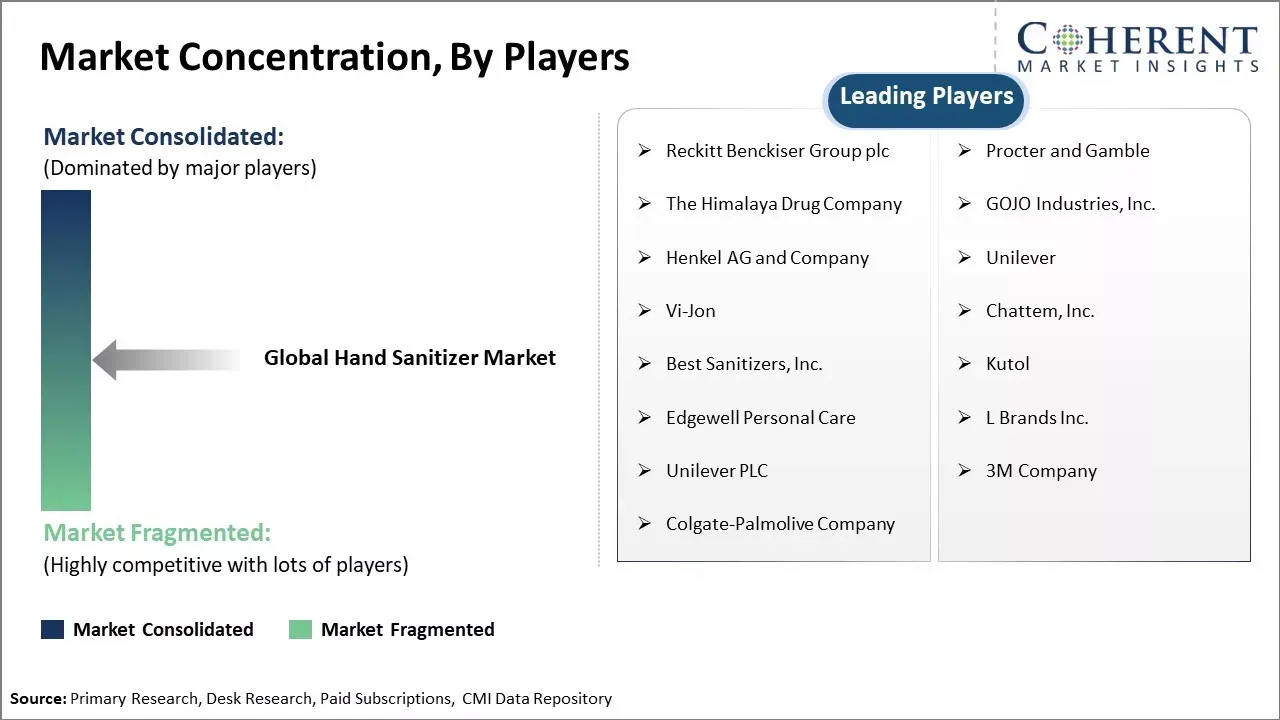
Market Concentration and Competitive Landscape
Hand Sanitizer Industry News
- In August 2025, University of Georgia researchers introduced NORel, a novel hand sanitizer gel that kills over 97% of bacteria and fungi, including antibiotic-resistant strains. Unlike conventional alcohol-based products that lose effectiveness within 30–60 minutes, NORel maintains antimicrobial activity for up to two hours. Fortified with ethanol, tea tree oil, and glycerin, it offers long-lasting protection and moisture.
- In June 2025, Researchers at Parul University have secured an Indian patent (No. 566448) for an alcohol-free herbal hand sanitizer. Formulated with cinchona and aloe vera extracts, the plant-based sanitizer effectively combats E. coli, Staphylococcus aureus and Bacillus species, while being gentler on sensitive skin and offering four natural fragrances.
Market Report Scope
Hand Sanitizer Market Report Coverage
| Report Coverage | Details | ||
|---|---|---|---|
| Base Year: | 2025 | Market Size in 2026: | USD 7.57 Bn |
| Historical Data for: | 2020 To 2024 | Forecast Period: | 2026 To 2033 |
| Forecast Period 2026 to 2033 CAGR: | 2.6% | 2033 Value Projection: | USD 9.06 Bn |
| Geographies covered: |
| ||
| Segments covered: |
| ||
| Companies covered: | Reckitt Benckiser Group plc, Procter and Gamble, The Himalaya Drug Company, GOJO Industries, Inc., Henkel AG and Company, Unilever, Vi-Jon, Chattem, Inc., Best Sanitizers, Inc., Kutol, Edgewell Personal Care, L Brands Inc., Unilever PLC, 3M Company, and Colgate-Palmolive Company | ||
| Growth Drivers: |
| ||
| Restraints & Challenges: |
| ||
Hand Sanitizer Market Driver
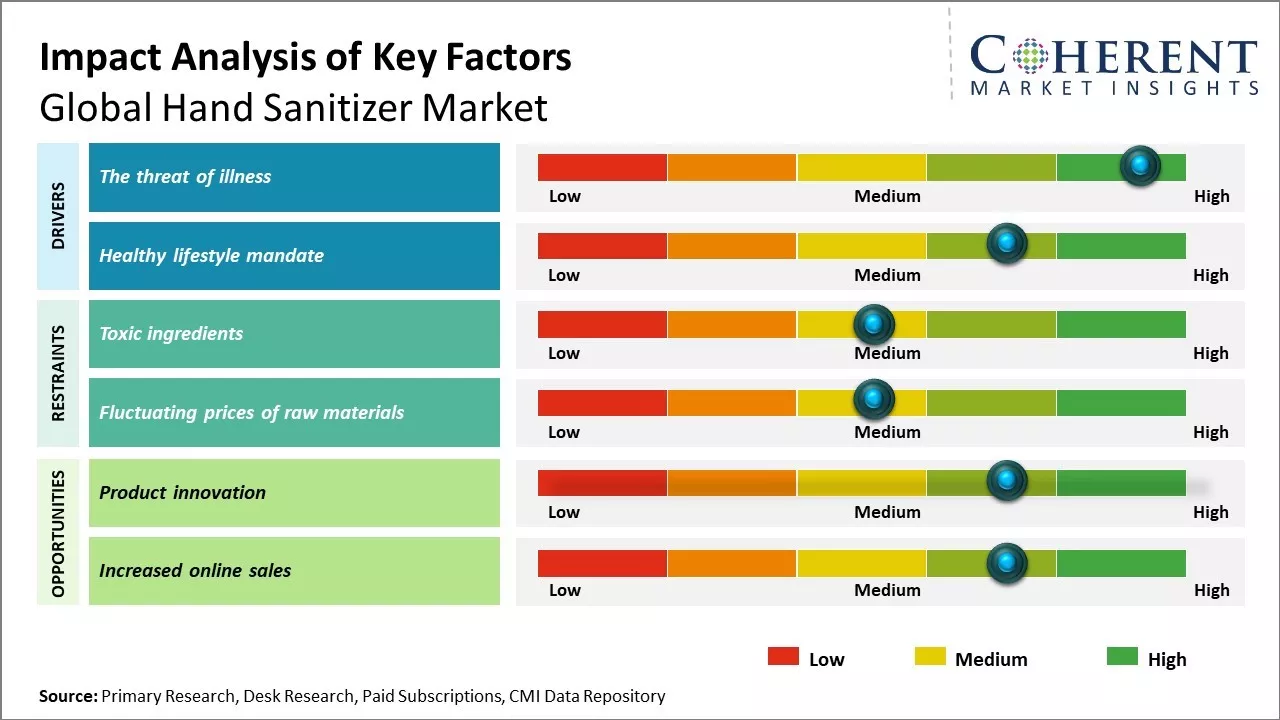
The threat of illness
The persistent threat of illness is a key factor boosting the adoption of hand sanitizers globally. Consumers are increasingly aware that frequent hand disinfection is one of the most effective ways to prevent the spread of bacteria and viruses in daily life. This heightened focus on personal hygiene extends across homes, workplaces, schools, and public spaces, driving higher product consumption. As a result, manufacturers are expanding their product ranges with convenient packaging and specialized formulations to meet diverse consumer needs. These factors collectively contribute to the growth and expansion of the hand sanitizer market share, solidifying its role as an essential hygiene product worldwide.
Healthy lifestyle mandate
Along with illness phobia, another significant driver has been the rising health consciousness worldwide. Preventive healthcare is receiving more attention than ever before. Lifestyle diseases causing millions of deaths each year are ringing serious alarm bells. Issues like diabetes, cardiac problems, obesity, etc. are not just limited to developed nations now but have become a pressing concern for developing ones as well. Their economic and social costs are immense. This realization is propelling individuals as well as governments to focus on building a preventive framework. Promoting habits like proper sanitization is an effective part of this approach.
People especially the young working professionals are now more mindful of their fitness and immunity levels. Adopting a disciplined personal care regimen forms an indispensable element of their healthy lifestyle goals.
Hand Sanitizer Market Opportunities
Product Innovation
Product innovation holds strong potential in the global hand sanitizer market. Rising consumer awareness around health and safety is pushing manufacturers to develop unique and value-added formulations. Innovations include portable, travel-friendly sanitizers in shapes like keychains or wrist straps for easy access and frequent use. Others enhance formulations with moisturizers to prevent skin dryness from repeated alcohol usage. Such advancements improve convenience and user experience, supporting growth in the hand sanitizer market forecast.
Analyst Opinion (Expert Opinion)
The hand sanitizer market is transitioning from basic hygiene utility to a value-driven category defined by premiumization, innovation, and sustainability.
From a hand sanitizer market value standpoint, products with natural extracts, moisturizers, or skin-friendly ingredients are priced 20–25% higher than standard options yet consistently achieve stronger consumer loyalty. This highlights a clear preference for formulations that merge efficacy with personal care benefits.
On the hand sanitizer market price side, bulk institutional packs are seeing stabilization, while designer variants retain a 30–35% premium. Brands like Bath & Body Works leverage seasonal scents and limited editions to sustain higher pricing power, while eco-friendly refills and portable formats further drive differentiation.
At the same time, commoditization pressures remain intense, with private labels undercutting established brands by up to 40%. Competing purely on cost is unsustainable, differentiation through brand equity and innovation is critical.
In essence, the market’s trajectory is shifting toward value creation over volume, where success hinges on balancing premium value and sustainable price positioning.
Speak to the analyst
Want personalized insights?
Take the findings above to one of our principal consultants, or have the report rebuilt around the segments, geographies and competitors you actually track.
Market Segmentation
- Product Type Insights (Revenue, USD Bn, 2026 - 2033)
- Gel/Liquid
- Spray
- Foam
- Sanitizing Wipes
- Distribution Channel Insights (Revenue, USD Bn, 2026 - 2033)
- Hypermarkets/Supermarkets
- Convenience Stores
- Pharmaceutical Stores
- E-commerce
- Other Distribution Channels
- Regional Insights (Revenue, USD Bn, 2026 - 2033)
- North America
- U.S.
- Canada
- Latin America
- Brazil
- Argentina
- Mexico
- Rest of Latin America
- Europe
- Germany
- U.K.
- Spain
- France
- Italy
- Russia
- Rest of Europe
- Asia Pacific
- China
- India
- Japan
- Australia
- South Korea
- ASEAN
- Rest of Asia Pacific
- Middle East & Africa
- GCC Countries
- Israel
- Rest of Middle East & Africa
- North America
- Key Players Insights (Revenue, USD Bn, 2021 - 2033)
- Reckitt Benckiser Group plc
- Procter and Gamble
- The Himalaya Drug Company
- GOJO Industries, Inc.
- Henkel AG and Company
- Unilever
- Vi-Jon
- Chattem, Inc.
- Best Sanitizers, Inc.
- Kutol
- Edgewell Personal Care
- L Brands Inc.
- Unilever PLC
- 3M Company
- Colgate-Palmolive Company
Sources
Primary Research Interviews from the following stakeholders
Stakeholders
- Interviews with OEM powertrain and vehicle engineering teams, Tier-1 thermal system suppliers, cooling component manufacturers, EV battery system designers, fleet operators, test & validation labs, and procurement heads across leading global markets.
Specific stakeholders
- Thermal systems / powertrain leads at global OEMs (e.g., Toyota, Volkswagen Group, Tesla).
- Thermal management and battery pack engineers at EV manufacturers (e.g., BYD, NIO, Rivian).
- Product and R&D managers at Tier-1 suppliers (e.g., Continental, Valeo, DENSO, Mahle, BorgWarner).
- Battery thermal management (BTMS) architects and cell suppliers (e.g., CATL, LG Energy Solution, Samsung SDI).
- Thermal component manufacturers (radiators, pumps, heat exchangers, PTC heaters, chillers).
- HVAC system engineers and climate control leads at light-vehicle and commercial vehicle OEMs.
- Thermal test lab managers and NVH/thermal validation engineers at independent automotive testing facilities.
- Fleet operations & maintenance managers for commercial fleets, last-mile delivery providers, and public transport operators (e.g., metro operators, major bus fleets).
- Procurement heads at large automotive Tier-1s and OEMs.
- Thermal simulation & CAE leads and software tool vendors’ integration engineers
- Facility & operations managers at vehicle assembly plants (cooling line integration, thermal test cells).
- Regulatory compliance and homologation officers (emissions, safety, thermal runaway testing).
- R&D leads at academic and national research institutes working on vehicle thermal systems and battery safety.
Databases
- World Trade Organization (WTO) Trade Statistics
- UN Comtrade Database
- International Energy Agency (IEA) datasets (transport & energy statistics)
- Eurostat (transport, vehicle registrations, trade)
- China Customs Statistics
- Korea Customs Service Data Portal
- Japan External Trade Organization (JETRO) trade data
- U.S. Bureau of Transportation Statistics (BTS) / Bureau of Economic Analysis (BEA) for transport and manufacturing stats
- OICA / International Organization of Motor Vehicle Manufacturers production & registration statistics
- National vehicle registration databases (e.g., DVLA UK, RTO databases where accessible)
- National standards/regulatory portals (e.g., NHTSA, EPA vehicle data portals)
Magazines & Trade Press
- Automotive News
- Autocar Pro (commercial/technology sections)
- Automotive World — powertrain & electrification sections
- Charged (EV and battery thermal topics)
- Engine Technology International
- Automotive Testing Technology International
- Motor Magazine — thermal/aftermarket features
- Electrification & Battery Technology special issues in mainstream auto magazines
Journals / Technical Literature
- SAE International journals (SAE Transactions; SAE Technical Papers)
- International Journal of Heat and Mass Transfer
- Applied Thermal Engineering
- IEEE Transactions on Vehicular Technology
- Journal of Power Sources (battery thermal behavior papers)
- International Journal of Automotive Technology
- Journal of Thermal Science and Engineering Applications
Newspapers & Business Press (industry & supply chain focus)
- The Wall Street Journal — Automotive & Tech sections
- Financial Times — Automotive/Transport industry coverage
- Nikkei Asia — Automotive supply chain and electronics
- The Economic Times — Auto & EV industry (India)
- South China Morning Post — China EV and supply chain reporting
Associations & Standards Bodies
- SAE International (Society of Automotive Engineers)
- International Organization of Motor Vehicle Manufacturers (OICA)
- European Automobile Manufacturers Association (ACEA)
- Society for Experimental Mechanics (relevant test standards)
- ISO technical committees relevant to thermal systems and battery safety (e.g., ISO TC 22)
- Battery Safety and Thermal Runaway working groups (industry consortia)
- Association for Unmanned Vehicle Systems (for thermal in AVs/AV fleets)
- National automotive associations (e.g., ACMA / SIAM in India)
- Automotive test & validation associations
Public Domain / Government Sources
- U.S. National Highway Traffic Safety Administration (NHTSA) technical reports and recalls database
- U.S. Environmental Protection Agency (EPA) transport & fuel economy data
- National Institute of Standards and Technology (NIST) publications relevant to thermal measurement & instrumentation
- Ministry of Heavy Industries / Ministry of Road Transport & Highways (India) publications and automotive policies
- Japan METI reports on automotive production & components
- China Ministry of Industry and Information Technology (MIIT) reports and statistics
- European Commission transport & vehicle electrification reports
- National energy/transport agencies’ reports on electrification and vehicle energy consumption
*Definition: The hand sanitizer market consists of companies that manufacture and sell hand sanitizing products to help reduce bacteria and germs on hands. Common hand sanitizers contain alcohol, usually in the form of ethyl alcohol or isopropyl alcohol, which work by killing many types of bacteria and viruses when applied to hands. Major players in the hand sanitizer market offer gel, foam, spray, and wipe formats for consumer and commercial use. During outbreaks of infectious diseases like COVID-19, the demand surges for these products as more individuals and organizations strive to increase hand hygiene practices for health protection.
Get access to 250+ pages report
Every segment, forecast, competitor profile and data table behind the analysis above — available for instant download.
- ESOMAR Member
- ISO 9001:2015 Certified
- D-U-N-S Registered
- GDPR & CCPA Compliant
Missing comfort of reading report in your local language? Find your preferred language:
Transform your Strategy with Exclusive Trending Reports
Frequently Asked Questions
The Hand Sanitizer Market is estimated to be valued at USD 7.57 Bn in 2026, and is expected to reach USD 9.06 Bn by 2033.
The CAGR of the Hand Sanitizer Market is projected to be 2.6% from 2026 to 2033.
The threat of illness and healthy lifestyle mandate are the major factors driving the growth of the global hand sanitizer market.
Toxic ingredients and fluctuating prices of raw materials are the major factors hampering the growth of the global hand sanitizer market.
In terms of product type, gel/liquid is estimated to dominate the market revenue share in 2026.
Reckitt Benckiser Group plc, Procter and Gamble, The Himalaya Drug Company, GOJO Industries, Inc., Henkel AG and Company, Unilever, Vi-Jon, Chattem, Inc., Best Sanitizers, Inc., Kutol, Edgewell Personal Care, L Brands Inc., Unilever PLC, 3M Company, and Colgate-Palmolive Company are the major players.
North America is expected to lead the global hand sanitizer market.