

Global Polyol Sweeteners Market Size and Share Analysis – (2026-2033)
Polyol Sweeteners Market is estimated to be valued at USD 4,010.6 Mn in 2026 and is expected to reach USD 6,026.4 Mn in 2033, exhibiting a compound annual growth rate (CAGR) of 6.0% from 2026 to 2033.
Key Takeaways
- Based on function, Flavoring and sweetening agents segment account for the largest share of around 64.2% of the polyol sweeteners market.
- North America has been a leading region with 44.30% shares, owing to rising demand for clean-label products.
- Europe is poised to hold around 22.70% shares in the global market, due to increasing government initiatives to reduce sugar content in food.
- Asia Pacific is the third fastest growing region with 15.50% shares in 2026, because of growth in bakery and dairy industries.
Market Overview
The market for polyol sweeteners is growing vigorously with increasing health awareness and demand for low-calorie, sugar-free, and diabetic-friendly foods. The increasing number of lifestyle diseases such as diabetes and obesity is forcing consumers and food companies to look for substitutes for sugar. Polyol sweeteners such as sorbitol, xylitol, erythritol, and maltitol are finding wide application across various markets such as confectionery, beverages, pharmaceuticals, and oral care products. Improved production efficiency and lower costs, brought about by technological advancements in fermentation and hydrogenation processes, have further aided market growth.
Current Events and Its Impact on Polyol Sweeteners Market
Current Events | Description and its impact |
Shift to Natural & Clean-Label Polyols |
|
Integration of AI in Polyol Production & Formulation |
|
Pricing Analysis
Polyol prices are extremely volatile with respect to feedstocks like propylene and ethylene oxide, which have experienced periods of tight supply and high energy costs, driving spot prices in regions like South Korea to US $2,336 per metric ton in Q4 2023.
Europe showed a falling prices trend during mid‑2024 owing to overstocking and weak demand, though supply chain losses and energy prices peaks in Q1–Q2 2025 turned it around, placing upward pressure on prices.
Pricing also differs by product type: sorbitol continues to be the most used polyol, priced relatively lower based on scale, while erythritol and xylitol—particularly those with a "naturally derived" claim—have premium pricing supported by clean‑label demand and fermentation processes. Clean‑label and bio‑based polyols tend to cost considerably higher than their synthetic counterparts, the result of consumer desire for plant origin and minimal processing of ingredient.
Structural market dynamics are represented by supplier power by virtue of raw-material supply concentration, and increasing buyer negotiation leverage from multinational food and beverage manufacturers looking for cost-effective solutions—a dynamic that constrains margins and compels price optimization strategies. Although prices are significantly higher than traditional sugar—at times as high as 10×—technology advances like CRISPR-based fermentation are improving yields and incrementally decreasing costs, especially for specialty polyols. Overall, polyol prices are high and volatile, but long-term downward pressure from scale, process innovation, and growing demand for low-calorie, health-oriented sweeteners should temper that over the long term.
- Current Industry Events of 2026
- Market Size Estimation
- Regional Breakdown
- Competitive Landscape
- Customer Intelligence
- Segmental Analysis
- Pricing Analysis
- Key Market Drivers, Challenges & Future Trends
- Customized Insights Section
Demand For Natural and Organic Sweetener
The worldwide demand for natural and organic sweeteners has seen aggressive growth in the past few years with elevated health consciousness, growing cases of lifestyle diseases such as obesity and diabetes, and changing consumer trends towards clean-label and plant-based products. Customers are more and more examining product labels, looking for alternatives to artificial sweeteners and refined sugar. Natural sweeteners like stevia, monk fruit extract, coconut sugar, agave nectar, honey, and maple syrup are becoming popular due to their perceived health advantages, low glycemic index, and minimal processing.
The food and beverage market—particularly sectors such as beverages, dairy, bakery, and functional foods—is a primary driver of demand. Natural sweeteners are also gaining substantial adoption in nutraceuticals, sports nutrition, and infant nutrition, where safety and health are top-of-mind. For example, stevia is utilized in over a thousand foods worldwide today and has experienced double-digit year-over-year growth. Likewise, monk fruit extract, while more specialty, is expanding very quickly as it has a zero-calorie nature and a natural origin.
Regional demand is most robust in Europe and North America, where regulatory systems promote clean-label ingredients and consumers pay a premium for organic certification. Yet demand is building in Asia-Pacific and Latin America too, driven by urbanization and increasing disposable incomes.
The global market has experienced high-speed expansion in recent years with high health awareness, increasing instances of lifestyle ailments like obesity and diabetes, and shifting consumer behavior towards clean-label and plant-based goods. Consumers are increasingly scrutinizing product labels, seeking alternatives to refined sugar and artificial sweeteners.
Global Polyol Sweeteners Market Drivers
- Rising Demand for Healthy Sugar Substitutes
The global polyol sweeteners market is expanding rapidly due to rising demand for healthier sugar substitutes. Sucrose, a common table sugar, has a high-calorie content and is thought to contribute to lifestyle disorders such as diabetes, obesity, cardiovascular disease, and tooth decay. Polyols are carbohydrates, so they are sugarless sweeteners.
As sugar substitutes, these are commonly found in baked goods, carbonated beverages, powdered beverage mixtures, jams, jellies, and dairy products. Polyol sweeteners with chewing gums, frozen desserts, fruit juices, chewing gums, and gelatines are also used nowadays. For instance, According to the American Heart Association, sugary drinks are the largest source of added sugars consumed by people. The rising demand for sugar-free beverages among consumers drives the growth of the global polyol sweeteners market.
For instance, Ingredion expanded its ERYSTA® erythritol line globally, aiming to meet sugar reduction claims across baked goods, beverages, and dairy applications. This strategic rollout has enabled major food and beverage manufacturers to reformulate sugary products into sugar‑free alternatives that align with health-focused trends and regulatory pressure on added sugar content.
- Growing Demand from the Food and Beverages Industry
The food and beverage industry is constantly innovating and introducing new products to meet consumer demand. For instance, In March, 2018, Nestle recently launched a range of sugar-free chocolate bars in the U.K., which use a combination of polyol sweeteners and a natural sweetener called stevia. The bars are marketed as a healthier alternative to traditional chocolate bars, which are high in sugar. This factor may propel the growth of the global polyol sweeteners market.
- Technological Advancements
One of the main challenges with polyol sweeteners is their aftertaste and texture. However, new technologies are being developed to overcome these challenges. For instance, Cargill has developed a new polyol sweetener called Zerose, which has a clean taste and texture, making it suitable for use in a wide range of products. Cargill is an agribusiness company, providing products and services in the food, financial products, agricultural, industrial and risk management fields.
Segmental Insights
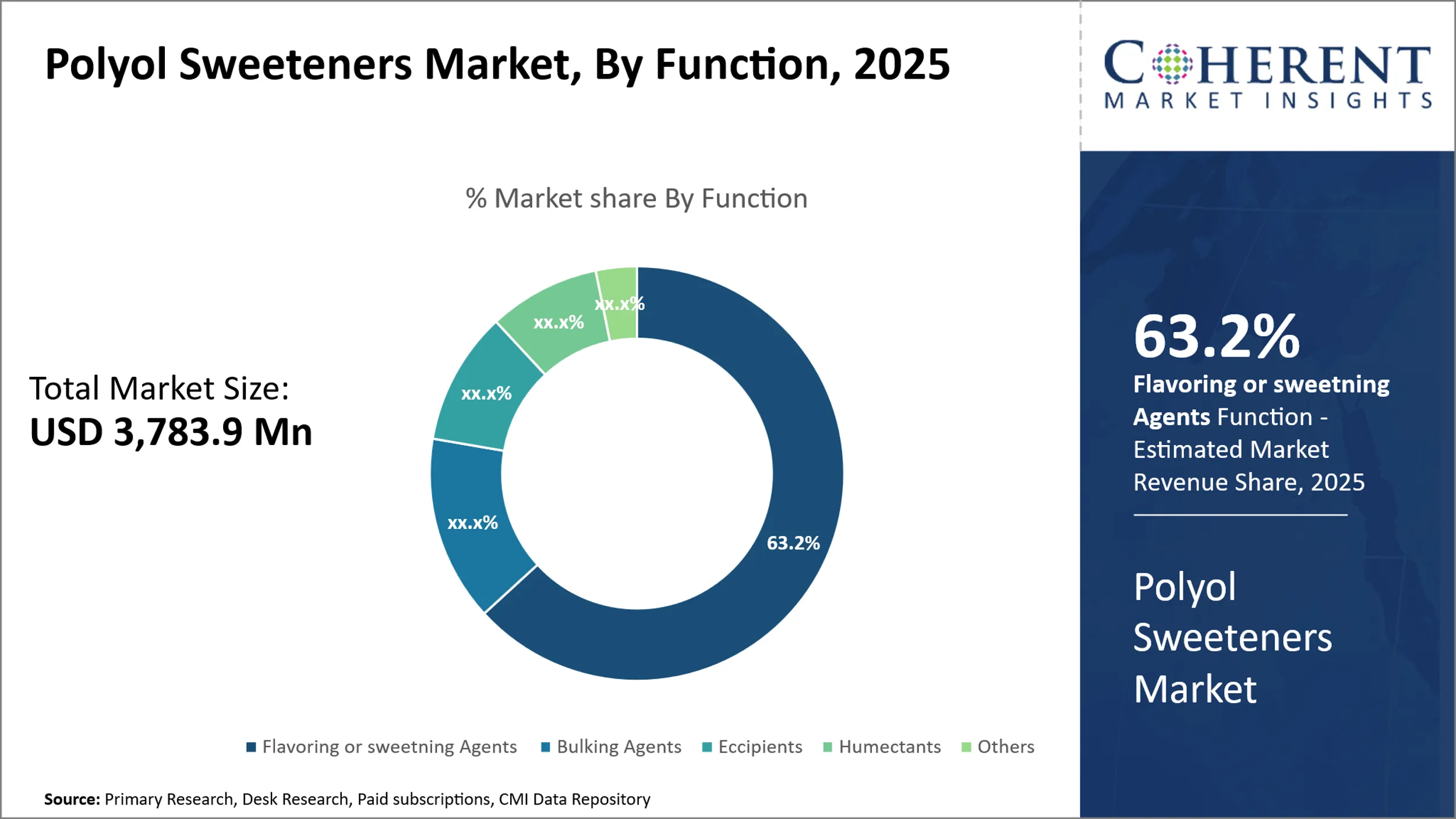
Polyol Sweeteners Market Insights, By Function
The flavoring and sweetening agents segment dominates with approximately 64.2% of the global polyol sweeteners market. Polyols provide both sweetness and bulk, closely mimicking sugar's taste and texture, making them ideal for beverages, confectionery, and baked goods. They are frequently blended with intense sweeteners like stevia or sucralose to offset aftertaste and achieve balanced flavor, versatility, and consumer appeal.
Regional Insights
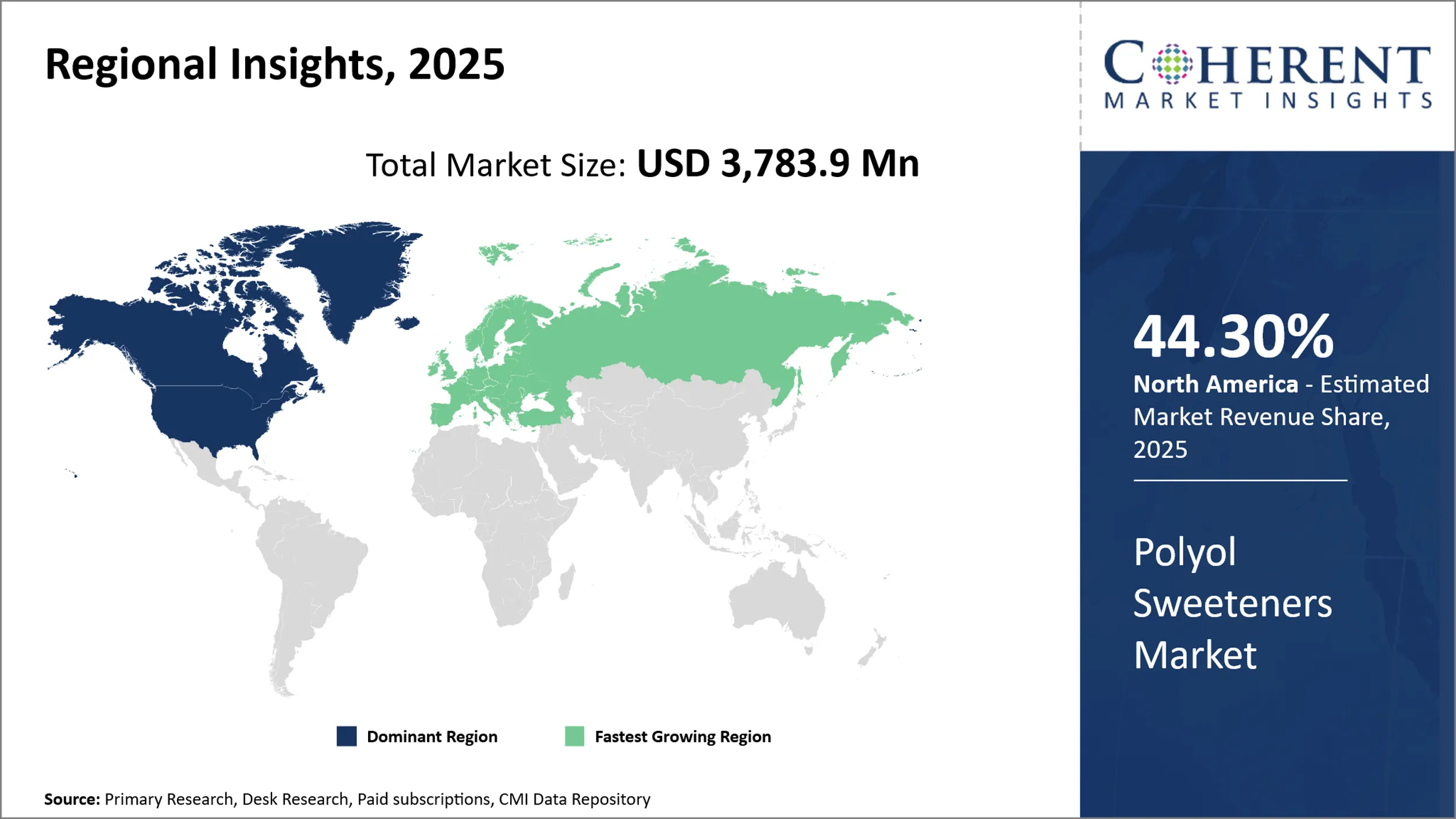
North America Polyol Sweeteners Market Analysis and Trends
North America has dominated region because of the growing popularity of clean-label products, this region to see significant growth with a market share of 44.30%, in 2026. The growing popularity of sugar-free foods and beverages is driving the growth of the global polyol sweeteners market in the region. New product launches by beverage giants, such as sugar-free energy drinks, soda, and soft drinks containing these sweeteners, are expected to contribute to the region's market growth.
Europe Polyol Sweeteners Market Analysis and Trends
Europe is expected to hold a significant market share in the global polyol sweeteners market over the forecast period. This can be attributed to increasing government initiatives in the region to reduce sugar content in food products as higher sugar intake can have adverse effects on human health and lead to diseases such as diabetes.
According to the report, ‘Sugar Reduction: Achieving the 20%’ published in March 2017 by the department of ‘Public health England’ of the government of U.K, in August 2016, the U.K. government set the aim to reduce the overall sugar content of food and beverage products by at least 20% by 2020. Therefore, lowering sugar consumption is expected to shift consumer preference towards non-sugar-based sweeteners, which in turn is expected to drive growth of the global polyol sweeteners market in the region.
Asia Pacific Polyol Sweeteners Market Analysis and Trends
Asia Pacific is the fastest-growing region in the global market. Asia Pacific held a significant revenue share in the global polyol sweeteners market in 2026, owing to the growth of end use industries such as bakery and dairy industries in the region. For instance, according to the India Brand Equity Foundation (IBEF) report on ‘Agriculture & Allied industries’ published in April 2018, in India, the dairy sector is expected to register a CAGR of 15% from 2016 to 2020 to reach US$ 146.2 billion by 2020.
United States Polyol Sweeteners Market Analysis and Trend
The U.S. dominates the polyol sweeteners market, driven by high demand for diabetic-friendly, low-calorie, and sugar-free products. The existence of a robust health-conscious consumer base and presence of top food and beverage companies in the country provides bases for consistent growth.
Approval for alternative sweeteners by regulators and widespread implementation of clean-labeling trends contribute to increased market penetration. In particular, polyol sweeteners market in sugar-free candies segment, offering manufacturers the ability to create products that are both sweet and suitable for consumers seeking reduced-calorie options.
Germany Polyol Sweeteners Market Analysis and Trend
Germany is the market leader in the European polyol sweeteners market, led by booming food processing sectors and increased demand for low-glycemic and natural sweeteners. Clean-label trend and sustainability have generated the application of bio-based polyols in confectionery, beverage, and pharmaceutical businesses.
China Polyol Sweeteners Market Analysis and Trend
China is a global manufacturing hub of polyol sweeteners like sorbitol and xylitol. Its low-cost production, huge domestic market, and growing health-consciousness among consumers have made it a leading player. The government efforts to curb the consumption of sugar are also promoting the use of substitutes such as polyols.
India Polyol Sweeteners Market Analysis and Trend
India's market for polyol sweeteners is growing at a fast rate with increasing diabetes incidence, increasing health consciousness, and expanding use of functional foods. Urbanization and an exploding middle class are driving demand for sugar substitutes, and sorbitol and maltitol have the most adoption in the food and pharma industries.
Market Report Scope
Polyol Sweeteners Market Report Coverage
| Report Coverage | Details | ||
|---|---|---|---|
| Base Year: | 2025 | Market Size in 2026: | USD 4,010.6 Mn |
| Historical Data for: | 2020 To 2024 | Forecast Period: | 2026 To 2033 |
| Forecast Period 2026 to 2033 CAGR: | 6.0% | 2033 Value Projection: | USD 6,026.4 Mn |
| Geographies covered: |
| ||
| Segments covered: |
| ||
| Companies covered: | Cargill Inc., Archer Midland Daniels Company, Ingredion Incorporated, Roquette Freres, B Food Science Co. Ltd., Tereos Starch and Sweeteners, DuPont de Nemours, Inc., Gulshan Polyols Ltd., Jungbunzlauer Suisse AG, and Merck Group | ||
| Growth Drivers: |
| ||
| Restraints & Challenges: |
| ||
Global Polyol Sweeteners Market - Recent Developments
- In 2024, Cargill introduced Zerose® erythritol, a zero‑calorie, fermentation‑derived sweetener designed to mimic sugar’s taste and mouthfeel while supporting sugar‑reduced formulations in beverages, confectionery, and bakery applications. This move strengthens beverage and food industry access to clean‑label polyols with high digestive tolerance and non‑cariogenic benefits.
- In December 2024, Gulshan Polyols Ltd. was awarded a contract to supply ethanol and polyol replacements for ethanol processing to oil marketing businesses. This move underscores the company's strategic expansion into alternative sweetener applications beyond traditional food and beverage sectors.
Analyst Opinion ( Expert Opinion)
- The polyol sweeteners industry shows strong growth powered by increasing demand for lower-calorie and diabetic-reduced food products from consumers. Consumers who are health-conscious now look for alternatives that are sweet with no glycemic effect of regular sugars, making polyols the top choice as an ingredient in food and beverage applications. The pharmaceutical and nutraceutical markets are key drivers of growth as they use polyols as sugar-free ingredients in medications and dietary supplements to improve patient compliance and product acceptability.
- Increasing obesity and diabetes levels worldwide continue to drive market growth, as companies reformulate their products to address changing nutritional standards. Potential digestive side effects from excessive consumption of polyols constitute a constraint in the market as they may arrest product uptake among sensitive consumer groups. High costs associated with manufacturing and labyrinthine regulatory approval requirements across various geographies pose operational challenges for market players.
- North America is leading the polyol sweeteners market, backed by the presence of sophisticated food processing facilities and high consumer awareness about health advantages. Yet, the Asia-Pacific market appears to be the fastest developing market, influenced by rising middle-class populations, rising disposable incomes, and enhanced health consciousness in countries such as China and India.
- Substantial potential lies in creating proprietary polyol blends that reduce digestive unease without sacrificing sweetness profiles. The growing clean-label trend introduces further opportunities for nature-derived polyols, especially as manufacturers demand clear ingredient statements. Development in extraction and processing technologies holds the promise of reducing costs and enhancing product functionality across a broad range of applications.
Speak to the analyst
Want personalized insights?
Take the findings above to one of our principal consultants, or have the report rebuilt around the segments, geographies and competitors you actually track.
Market Segmentation
- Global Polyol Sweeteners Market, By Product Type (Revenue, USD Mn, 2021 - 2033)
- Sorbitol
- Erythritol
- Maltitol
- Isomalt
- Mannitol
- Others
- Global Polyol Sweeteners Market, By Application (Revenue, USD Mn, 2021 - 2033)
- Bakery & Confectionery
- Beverages
- Dairy
- Oral Care
- Pharmaceuticals
- Others
- Global Polyol Sweeteners Market, By Function (Revenue, USD Mn, 2021 - 2033)
- Flavoring Or Sweetening Agents
- Bulking Agents
- Excipients
- Humectants
- Others
- Global Polyol Sweeteners Market, By Region (Revenue, USD Mn, 2021 - 2033)
- North America
- U.S.
- Canada
- Europe
- U.K.
- Germany
- Italy
- France
- Russia
- Rest of Europe
- Asia Pacific
- China
- India
- Japan
- ASEAN
- Australia
- South Korea
- Rest of Asia Pacific
- Latin America
- Brazil
- Mexico
- Rest of Latin America
- Middle East
- GCC
- Israel
- Rest of Middle East
- Africa
- Northern Africa
- Central Africa
- South Africa
- North America
- Company Profiles
- Cargill Inc.
- Ingredion Incorporated
- Roquette Freres
- B Food Science Co. Ltd.
- Tereos Starch and Sweeteners
- DuPont de Nemours, Inc.
- Gulshan Polyols Ltd.
- Jungbunzlauer Suisse AG
- Merck Group
Sources
Primary Research Interviews
- Food & Beverage Manufacturers
- Polyol Sweeteners Suppliers and Distributors
- Regulatory Affairs Specialists
- Food Technology Researchers
- Others
Databases
- Euromonitor International
- Others
Magazines
- Food Processing Magazine
- Nutraceuticals World
- Food & Beverage Marketing
- Prepared Foods Magazine
- Sweetener & Sugar Alternatives Magazine
- Others
Journals
- Journal of Food Science
- Food Chemistry
- International Journal of Food Science & Technology
- Others
Newspapers
- Food Business Magazine
- Beverage Industry News
- Nutraingredients
- Food Navigator
- FoodBev Media
- Others
Associations
- International Sweeteners Association (ISA)
- Calorie Control Council
- Food and Drug Administration (FDA)
- European Food Safety Authority (EFSA)
- International Food Additives Council (IFAC)
- Others
Public Domain Sources
- FDA GRAS (Generally Recognized as Safe) Database
- WHO/FAO Joint Expert Committee on Food Additives
- European Medicines Agency (EMA) Reports
- USDA National Nutrient Database
- Codex Alimentarius Commission
- Others
Proprietary Elements
- CMI Data Analytics Tool
- Proprietary CMI Existing Repository of Information for last 8 years
Get access to 250+ pages report
Every segment, forecast, competitor profile and data table behind the analysis above — available for instant download.
- ESOMAR Member
- ISO 9001:2015 Certified
- D-U-N-S Registered
- GDPR & CCPA Compliant
Missing comfort of reading report in your local language? Find your preferred language:
Transform your Strategy with Exclusive Trending Reports
Frequently Asked Questions
The Polyol Sweeteners Market size is estimated to be valued at USD 4,010.6 Mn in 2026, and is expected to reach USD 6,026.4 Mn by 2033.
Major players operating in the market include Cargill Inc., Archer Midland Daniels Company, Ingredion Incorporated, Roquette Freres, B Food Science Co. Ltd., Tereos Starch and Sweeteners, DuPont de Nemours, Inc., Gulshan Polyols Ltd., Jungbunzlauer Suisse AG, and Merck Group.
The high cost of polyol sweeteners is one of the major factors that is expected to hamper the growth of the market.
Rising demand for healthy sugar substitutes and Growing Demand from the Food and Beverage Industry are two major factors expected to drive market growth over the forecast period.
Polyol sweeteners, such as sorbitol and erythritol, offer sweetness with fewer calories than sugar because they are incompletely absorbed and metabolized by the body, resulting in a reduced caloric intake compared to sucrose.