

Propylparaben Market Size and Forecast — 2026-2033
The Global Propylparaben Market size is estimated to be valued at USD 372.0 million in 2026 and is expected to reach USD 570.6 million by 2033, exhibiting a compound annual growth rate (CAGR) of 6.3% from 2026 to 2033.
Overview
Propylparaben products consist of propyl esters of p-hydroxybenzoic acid, employed as broad-spectrum antimicrobial preservatives in pharmaceuticals, cosmetics, and personal care formulations. They inhibit bacterial and fungal growth by disrupting microbial enzymatic activity. Available in powder and liquid forms, propylparaben is used in creams, lotions, ointments, oral medications, and food products due to its stability, compatibility with various pH ranges, and long-established safety profile. It is often used in combination with other parabens to achieve synergistic preservation efficacy.
Key Takeaways
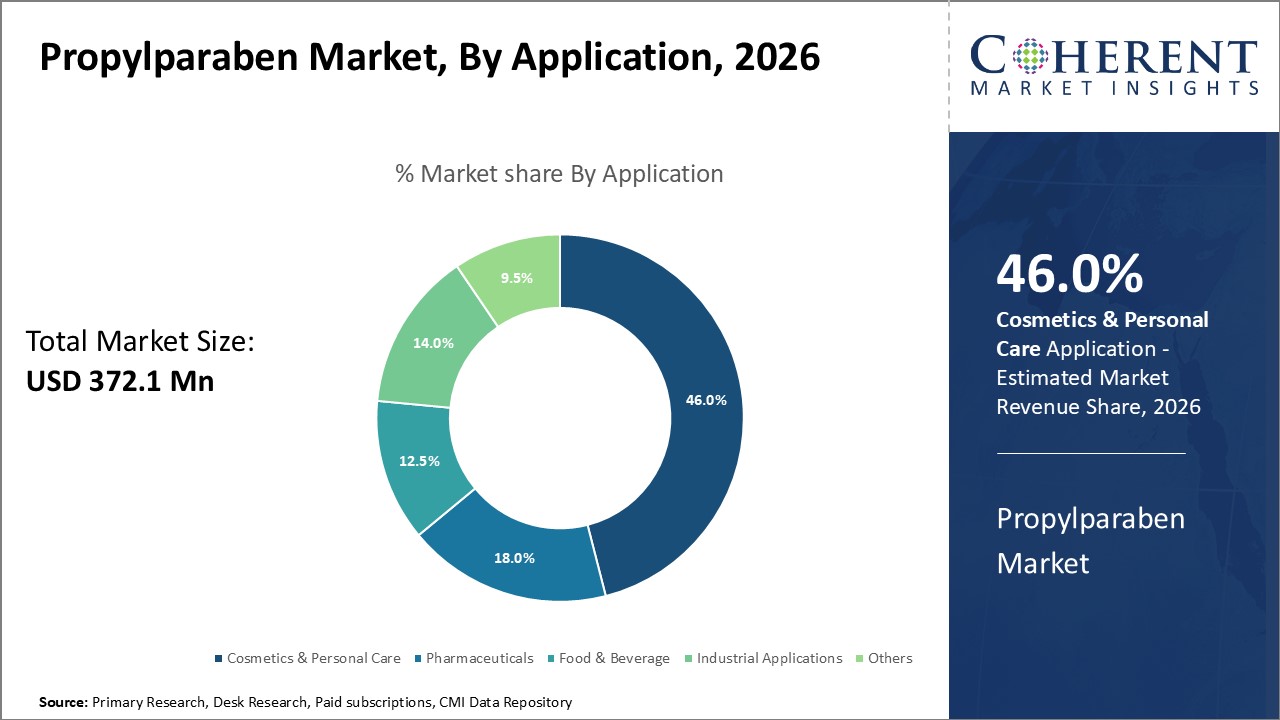
In the Cosmetics & Personal Care segment, the dominance of this segment with a 46% market share signals sustained investment in product innovation and regulatory compliance, enhancing market revenue.
Pharmaceuticals emerge as the fastest-growing end-use industry, driven by stringent hygiene protocols and increasing preservative demand in topical formulations.
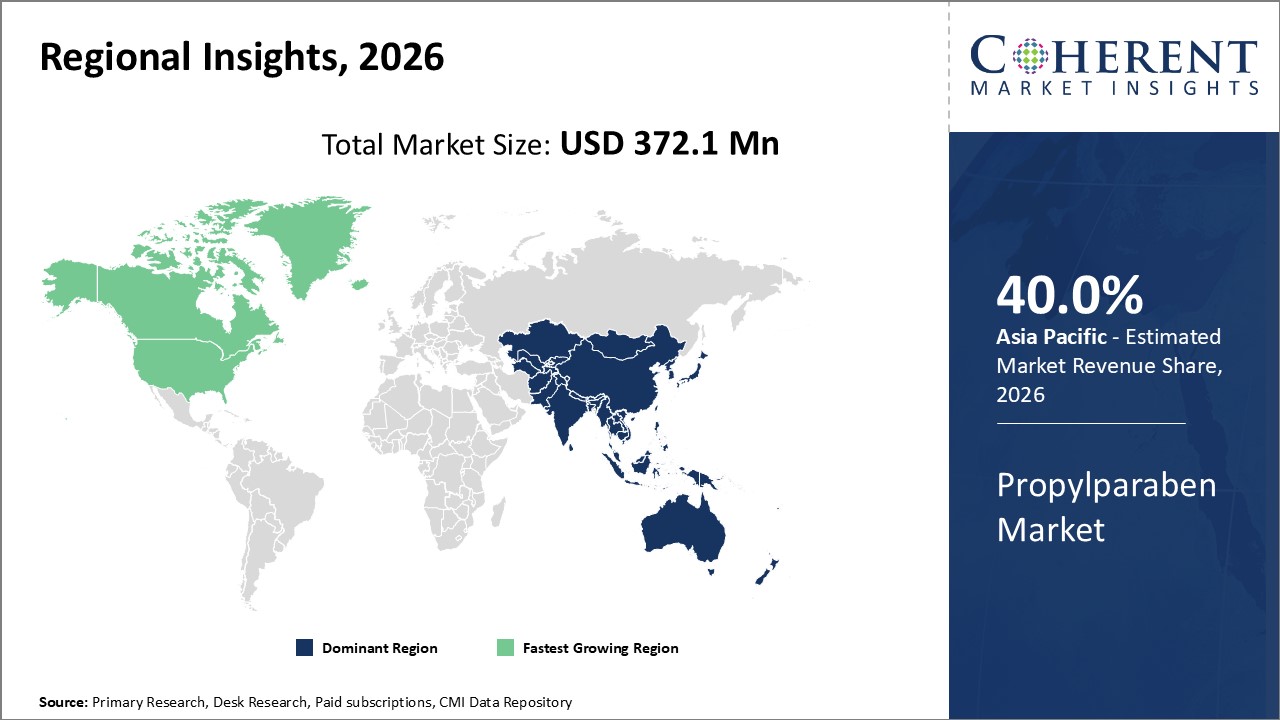
Asia Pacific remains the largest regional market due to expanding manufacturing bases and liberalized regulations supporting business growth.
North America showcases accelerated market growth propelled by high consumer awareness and technological advancements in preservative formulations.
Propylparaben Market Segmentation Analysis
Propylparaben Market Insights, By Application
Cosmetics & Personal Care leads primarily due to sustained product launches featuring propylparaben as preservative, driven by expanding global skincare trends focused on moisture retention and antimicrobial protection. The Pharmaceuticals segment is witnessing the fastest growth, expanding over 7% annually, attributed to growing usage in topical drugs and injectables, where stringent preservative efficacy is mandatory. Food & Beverage utilizes propylparaben predominantly in shelf-life extension for packaged goods, but remains a smaller segment by volume.
Propylparaben Market Insights, By Product Type
Anhydrous Propylparaben leads the market due to its broad application across pharmaceuticals and cosmetics, underpinned by higher purity and longer shelf stability, which are essential for formulations targeting stringent regulatory environments. Propylparaben Solutions represent the fastest-growing subsegment thanks to ease of incorporation in liquid-based products and the rising demand for ready-to-use preservatives. Mixtures & Blends provide formulation flexibility but currently hold a smaller share, while Others include experimental derivatives that are still in developmental phases.
Propylparaben Market Insights, By End-Use Industry
The Skin Care segment is dominant, reflecting high consumer expenditure and product innovations incorporating propylparaben for antimicrobial preservation. The fastest-growing end-use is Pharmaceuticals due to heightened regulatory expectations and increased usage in topical and injectable products. Hair Care holds a steady market share linked to anti-dandruff and moisturising formulations. Oral Care makes up a smaller share, emphasizing plaque control products. The Food Preservation segment benefits from growing packaged food markets but remains constrained by stricter food safety norms limiting preservative quantities. Others include emerging niche sectors.
Propylparaben Market Trends
Recent market trends in propylparaben emphasize a shift toward sustainable and hybrid preservative systems, as end-use industries look to satisfy rising consumer demand for clean-label solutions.
For instance, in 2025, several new formulations integrating propylparaben with natural antimicrobials were launched in European markets, reflecting a critical market shift.
Additionally, regulatory reforms focused on safety and environmental impact continue to redefine preservative application norms, stimulating innovation in the pharmaceutical and cosmetic sectors.
Another paramount trend is the escalation of localized production hubs in the Asia Pacific region, catalyzing supply chain resilience and cost optimization.
Propylparaben Market Insights, By Geography
Asia Pacific Propylparaben Market Analysis and Trends
In the Asia Pacific, the dominance in the Propylparaben market accounts for over 40% of industry revenue, propelled by extensive manufacturing infrastructure, increasing consumer base in skin care and pharmaceutical industries, and governmental support for chemical industries. China and India, in particular, play significant roles, driven by competitive production costs and growing export capabilities.
North America Propylparaben Market Analysis and Trends
Meanwhile, North America exhibits the fastest growth with a CAGR exceeding 7%, supported by high consumer awareness, stringent cosmetic and pharmaceutical regulations, and innovation in preservative blends. The presence of leading market companies and robust R&D investments further fuels this growth.
Propylparaben Market Outlook for Key Countries
USA Propylparaben Market Analysis and Trends
The USA’s propylparaben market benefits from stringent FDA regulatory frameworks ensuring product safety, fostering high adoption in pharmaceuticals and personal care. Leading companies focus heavily on innovation with investments surpassing USD 50 million annually in R&D for new preservative technologies. The US demand for topical pharmaceuticals surged by 9% in 2025, positively influencing market revenue. Regulatory approvals for hybrid preservatives also advance product scope, and trade dynamics with Asian suppliers maintain supply chain stability.
China Propylparaben Market Analysis and Trends
China’s propylparaben market is driven by its dominant production capacity, contributing to over 35% of global manufacturing output. Expanding domestic demand in cosmetics and food preservation, along with government incentives in the chemical industries, propel market growth. Increased export capabilities to Europe and Latin America, alongside investments by prominent chemical manufacturers, support continuous market growth. In 2025, Chinese manufacturers enhanced production automation, improving quality consistency and capacity by a reported 12%, reinforcing China’s role as a global market leader.
Analyst Opinion
Pricing Dynamics Remain a Key Demand-Side Driver: Propylparaben pricing has maintained relative stability in 2025, with a slight increase attributable to raw material volatility, impacting the market share among premium manufacturers. For instance, supply chain adjustments following the 2023 petrochemical sector fluctuations led to a 3% price rise in the Asia Pacific market. This trend is particularly significant in the cosmetics industry, where formulators adjust preservative usage to comply with regulatory and cost constraints.
Expanding Pharmaceutical Applications Spur Growth Momentum: The demand from the pharmaceutical segment, especially in topical creams and injectables, has increased by 8% year-over-year in 2025, supported by stricter hygiene practices globally. This uptick directly contributes to market revenue and demonstrates the micro-indicator impact of clinical safety approvals on propylparaben adoption rates.
Regional Export Capacity Constraints Influence Market Dynamics: Export figures from producing countries in Asia to North America and Europe have faced logistic challenges through 2025 with a noted 5% contraction in shipment volumes during Q1 2025, affecting overall market size and pace of market growth. This production-side indicator highlights ongoing supply chain fragilities impacting market players’ competitive positioning.
Use Case Diversification Bolsters Market Scope: Emergence of new formulations using propylparaben in packaged foods as preservatives has grown by approximately 9% in 2025, broadening application horizons. This surge is complemented by increased consumer preference for longer shelf-life products combined with rising demand for natural preservatives, influencing market trends and shareholder strategies.
- Current Industry Events of 2026
- Market Size Estimation
- Regional Breakdown
- Competitive Landscape
- Customer Intelligence
- Segmental Analysis
- Pricing Analysis
- Key Market Drivers, Challenges & Future Trends
- Customized Insights Section
Market Scope
| Report Coverage | Details | ||
|---|---|---|---|
| Base Year: | 2025 | Market Size in 2026: | USD 372.0 million |
| Historical Data for: | 2020 To 2024 | Forecast Period: | 2026 To 2033 |
| Forecast Period 2026 to 2033 CAGR: | 6.3% | 2033 Value Projection: | USD 570.6 million |
| Geographies covered: |
| ||
| Segments covered: |
| ||
| Companies covered: | Lonza Group Ltd, BASF SE, Clariant AG, Croda International Plc, Ashland Global Holdings Inc., Dow Chemical Company, Eastman Chemical Company, Galaxy Surfactants Ltd, Symrise AG, Lanxess AG, Hebei Xinhe Biotechnology Co., Ltd. | ||
| Growth Drivers: |
| ||
Propylparaben Market Growth Factors
The increasing consumer inclination towards personal hygiene and longer shelf-life products continues to propel the propylparaben market. Growing standards for pharmaceutical preservatives worldwide significantly boost demand, particularly in North America and Europe. Additionally, advancements in formulation science, allowing for safer and more effective preservative blend,s have enabled new product innovation across skin care and food preservation categories. Regulatory relaxations in emerging markets such as India and Latin America further open new growth avenues. Market revenue growth is also supported by expanding application scopes within the packaged foods industry as manufacturers seek more reliable antimicrobial solutions.
Propylparaben Market Development
In May 2026, the U.S. FDA introduced a major initiative to strengthen post-market oversight of food chemicals, including an expedited reassessment of propylparaben, as part of its broader effort to increase transparency and modernize safety evaluations. This move reflects growing regulatory scrutiny of preservatives used in food products and aims to provide clearer scientific guidance for industry while ensuring stronger consumer protection.
In April 2026, Salicylates and Chemicals Private Limited’s Unit 2 in India received the EXCiPACT GMP and GDP certification, confirming its compliance with global quality and safety standards for manufacturing paraben-based pharmaceutical excipients. The certification enhances the company’s credibility in regulated markets, supports its expansion into high-value pharma supply chains, and reinforces the rising importance of quality-assured preservative manufacturing in India’s excipient sector.
Key Players
Leading Companies of the Market
Lonza Group Ltd
BASF SE
Clariant AG
Croda International Plc
Ashland Global Holdings Inc.
Dow Chemical Company
Eastman Chemical Company
Galaxy Surfactants Ltd
Symrise AG
Lanxess AG
Hebei Xinhe Biotechnology Co., Ltd.
These market players are focusing on product innovation, strategic mergers, and capacity expansion as part of their market growth strategies. For instance, Lonza recently invested USD 40 million in increasing its preservative manufacturing capacity in Europe, aiming to meet rising demand in the pharmaceutical segment. Likewise, BASF has adopted a regional diversification strategy, enhancing its presence in the Asia Pacific, resulting in a 16% increase in regional revenue in 2025.
Propylparaben Market Future Outlook
Future demand will be shaped by pharmaceutical formulations, where propylparaben remains a key preservative. Growth in dermatology products, oral dosage forms, and injectables will sustain market stability. While cosmetic applications may face continued decline in Western markets, demand in emerging economies remains robust. Manufacturers are expected to focus on high-purity, regulatory-compliant grades and combination preservative systems to maintain relevance amid evolving safety standards.
Propylparaben Market Historical Analysis
Historically, propylparaben has been widely used as a preservative in cosmetics, pharmaceuticals, and food, driven by its broad-spectrum antimicrobial activity and low cost. Demand grew rapidly from the 1980s onward as global personal care consumption increased. However, regulatory scrutiny and “paraben-free” consumer trends in the late 2010s created pressure on the market, leading to a shift toward alternative preservatives. Despite this, the pharmaceutical sector maintained strong reliance on propylparaben due to its safety profile under regulated concentrations.
Sources
Primary Research interviews:
Pharmaceutical formulators
Cosmetic chemists
Preservative specialists
Regulatory experts
Databases:
FDA Inactive Ingredient Database
EFSA Additive Reports
Magazines:
Cosmetics & Toiletries
Pharmaceutical Technology
Personal Care Magazine
Chemical & Engineering News
Journals:
International Journal of Cosmetic Science
Journal of Pharmaceutical Sciences
Regulatory Toxicology & Pharmacology
Food Chemistry
Newspapers:
The Guardian (Science)
The New York Times (Health)
Japan Times (Cosmetics)
The Economic Times (FMCG)
Associations:
Personal Care Products Council (PCPC)
European Chemicals Agency (ECHA)
Cosmetic Ingredient Review (CIR)
International Pharmaceutical Excipients Council
Get access to 250+ pages report
Every segment, forecast, competitor profile and data table behind the analysis above — available for instant download.
- ESOMAR Member
- ISO 9001:2015 Certified
- D-U-N-S Registered
- GDPR & CCPA Compliant
Missing comfort of reading report in your local language? Find your preferred language:
Transform your Strategy with Exclusive Trending Reports
Frequently Asked Questions
Leading companies include Lonza Group Ltd, BASF SE, and Clariant AG, which collectively hold a significant portion of market share through innovation and capacity expansions.
The Propylparaben market is expected to grow from USD 372.0 million in 2026 to USD 570.6 million by 2033, showcasing a CAGR of 6.3%.
The pharmaceutical segment is witnessing the highest growth opportunity due to increasing hygiene and safety standards globally.
Market trends emphasise hybrid preservatives, bio-based propylparaben formulations, and a shift towards clean-label products while regulatory approval processes influence growth trajectories.
The market is characterised by strong competition among key players focusing on capacity expansion and innovation, with challenges including supply chain constraints and regulatory fluctuations.
Strategies involve regional expansion, product diversification, strategic partnerships, and investments in R&D to enhance preservative efficacy and sustainability profiles.