

Rheumatology Therapeutics Market Size and Share Analysis- 2026 To 2033
The Rheumatology Therapeutics Market size is anticipated to grow at a CAGR of 2.6%, with USD 52.7 Bn in 2026, and is expected to reach USD 63.1 Bn in 2033. The primary drivers are largely defined by the growing treatment demand for chronic inflammatory and autoimmune rheumatic diseases, increasing adoption of biologic and targeted therapies, wider use of JAK inhibitors, and expanding availability of biosimilars. In May 2026, the U.S. FDA approved the first interchangeable biosimilars to Simponi and Simponi Aria (golimumab), including indications for rheumatoid arthritis, further supporting the expansion of rheumatology treatment options.
Key Takeaways
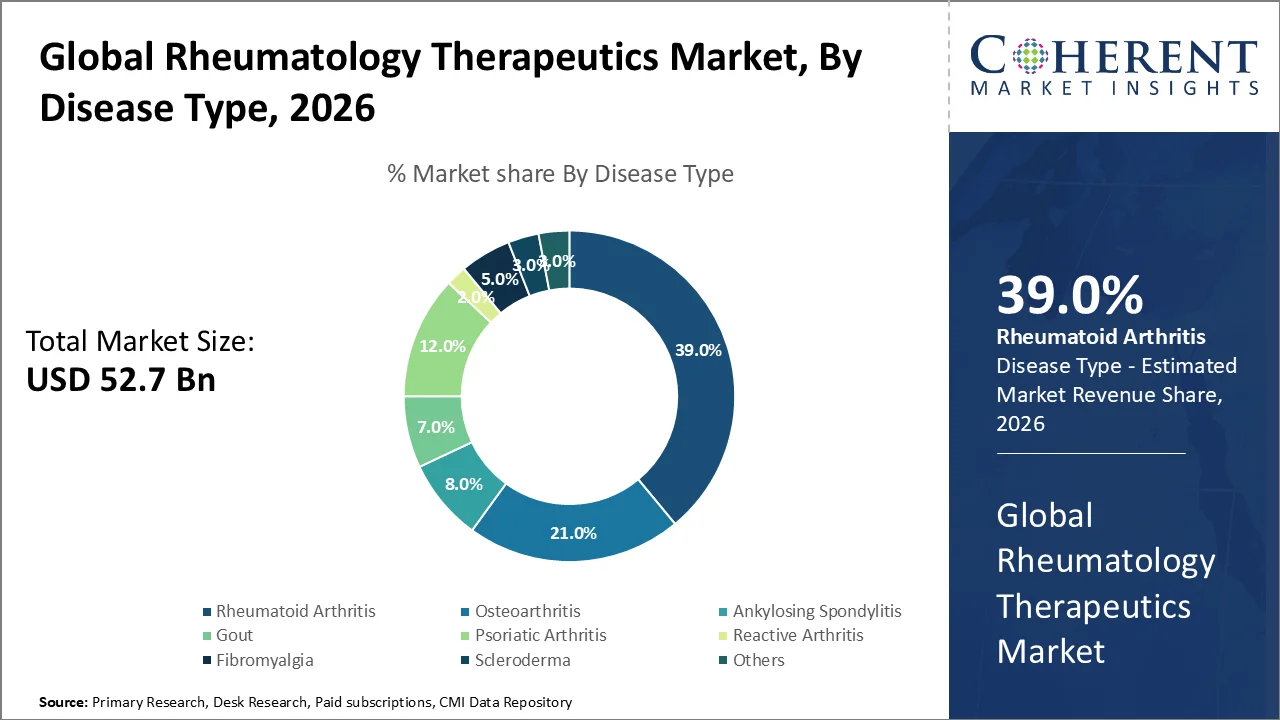
- The rheumatoid arthritis segment is likely to dominate the market with 39.0% in 2026. The segment’s growth is owing to the long-term requirement for disease-modifying therapies, increasing use of biologic and targeted synthetic DMARDs, and comparatively high drug expenditure per treated patient. A 2025 CDC study reported 10.6 million U.S. adults with rheumatoid arthritis, representing 15.8% of adults with diagnosed arthritis in the analyzed population.
- The biologics segment is set to lead with 46.0% in 2026. The segment’s growth is owing to the increasing use of TNF inhibitors and other targeted biologic DMARDs across rheumatoid arthritis, psoriatic arthritis, and ankylosing spondylitis, along with their higher treatment value compared with conventional DMARDs. In June 2025, the American College of Rheumatology highlighted adalimumab, infliximab, etanercept, golimumab, tocilizumab, abatacept, and rituximab among biologic therapies used in rheumatic diseases and noted that biologics are generally more expensive than conventional DMARDs.
- The hospitals segment is likely to dominate the market with 64.0% in 2026. The segment’s growth is owing to the administration of intravenous biologics, specialist rheumatology consultations, treatment initiation and monitoring requirements, and management of patients requiring advanced therapies. Biologics used in rheumatology are commonly administered through subcutaneous injection or intravenous infusion, supporting significant treatment activity within institutional and specialist care settings.
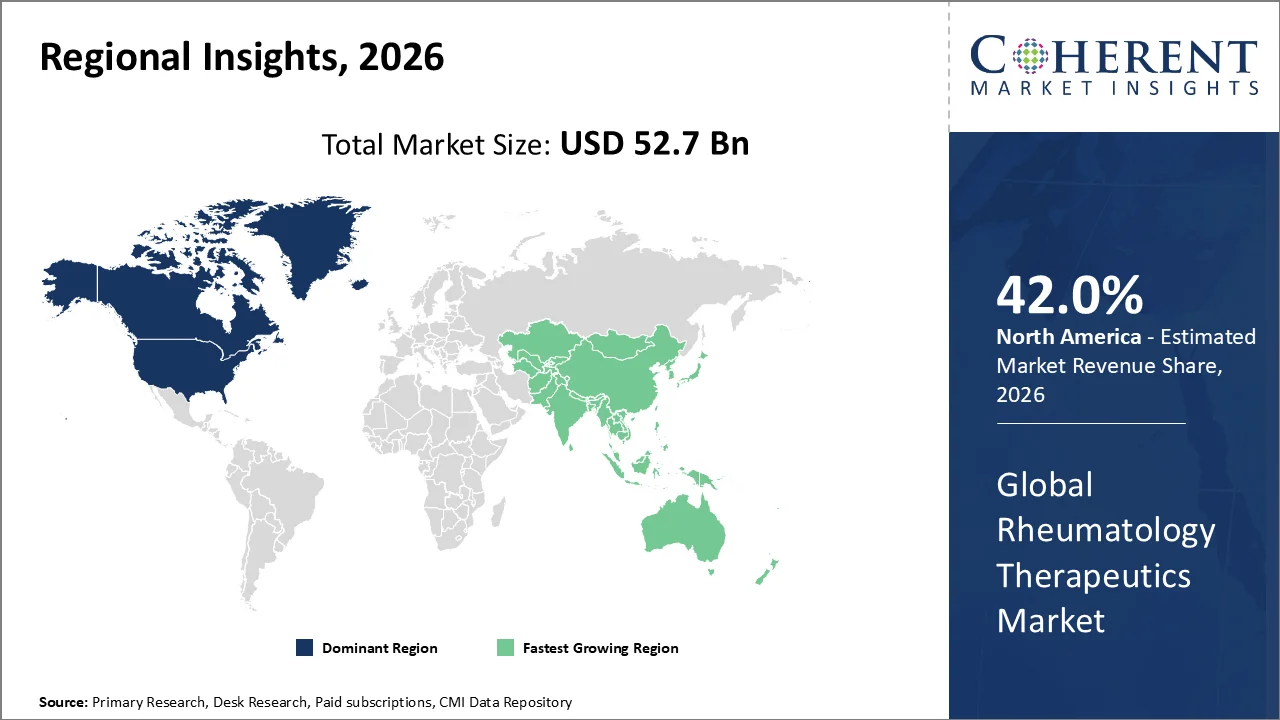
- North America is projected to hold the largest Rheumatology Therapeutics Market share of approximately 42.0% in 2026. The region’s dominance is driven by strong uptake of biologics and targeted treatments, high treatment expenditure, mature specialist rheumatology infrastructure, broad coverage of advanced therapies by insurance payors, and active clinical development in rheumatoid arthritis, psoriatic arthritis, and other rheumatic diseases. Data released by the American College of Rheumatology on December 16, 2025, found that nearly half of U.S. adults with arthritis say their arthritis limits their activities and nearly 1 in 3 adults ages 18-64 with arthritis say their arthritis limits their work.
Market Drivers
Rising Burden of Chronic Rheumatic Diseases is Expanding Long-Term Therapeutic Demand
Rheumatology Therapeutics Market is expected to grow with the increasing prevalence of chronic rheumatic diseases such as osteoarthritis, rheumatoid arthritis, psoriatic arthritis, gout and ankylosing spondylitis. These conditions usually need long-term pharmacological management, increasing the use of anti-inflammatory drugs, DMARDs, biologics and targeted treatments.
The study, published on December 16, 2025, in Frontiers in Medicine, found that globally, 453.56 million adults aged 55 and above lived with osteoarthritis in 2021 and there were about 23.86 million new cases in this age group in 2021. The study estimates the age-standardized osteoarthritis prevalence among older adults may rise by another 14% by 2050.
Increasing Availability of Biologics, Biosimilars, and Targeted Therapies is Broadening Treatment Access
The rising availability of biologic DMARDs, biosimilars, and targeted oral therapies is another important driver for the Rheumatology Therapeutics Market. These therapies offer additional therapeutic options for patients with inadequate responses to conventional DMARDs and are increasingly being used in rheumatoid arthritis, psoriatic arthritis, ankylosing spondylitis and other inflammatory rheumatic diseases.
In October 2025, the U.S. FDA had approved 76 biosimilars, including products with additional therapeutic options for rheumatoid arthritis and other chronic inflammatory conditions. The FDA’s 2025 drug approval review later reported 18 new biosimilar approvals for 10 reference products in 2025.
Current Events and Their Impact on the Rheumatology Therapeutics Market
Current Event | Description and its Impact |
U.S. Medicare Implements Negotiated Prices for Major Rheumatology Biologics (2026) |
|
EMA Adopts Streamlined Clinical Development Framework for Biosimilars (March 2026) |
|
- Current Industry Events of 2026
- Market Size Estimation
- Regional Breakdown
- Competitive Landscape
- Customer Intelligence
- Segmental Analysis
- Pricing Analysis
- Key Market Drivers, Challenges & Future Trends
- Customized Insights Section
Segmental Insights
Why is Rheumatoid Arthritis Acquiring the Largest Share?
On the basis of disease type, the rheumatoid arthritis segment is projected to account for the largest Rheumatology Therapeutics Market share of 39.0% in 2026. The segment’s growth is owing to the chronic nature of rheumatoid arthritis, long treatment duration, and extensive use of conventional DMARDs, biologic DMARDs, and targeted synthetic therapies. The comparatively high treatment expenditure per patient also increases rheumatoid arthritis’s revenue contribution compared with conditions primarily managed using symptomatic therapies.
The American College of Rheumatology also states that when conventional DMARDs do not adequately control rheumatoid arthritis inflammation, treatment can progress to biologic therapies such as adalimumab, etanercept, abatacept, and tocilizumab, or targeted therapies such as tofacitinib and upadacitinib.
In March 2026, Celltrion announced the U.S. commercial launch of AVTOZMA (tocilizumab-anoh) subcutaneous formulation, a biosimilar to tocilizumab, for several inflammatory diseases including moderately to severely active rheumatoid arthritis in adults who have had an inadequate response to one or more DMARD.
Why are Biologics Acquiring the Largest Market Share?
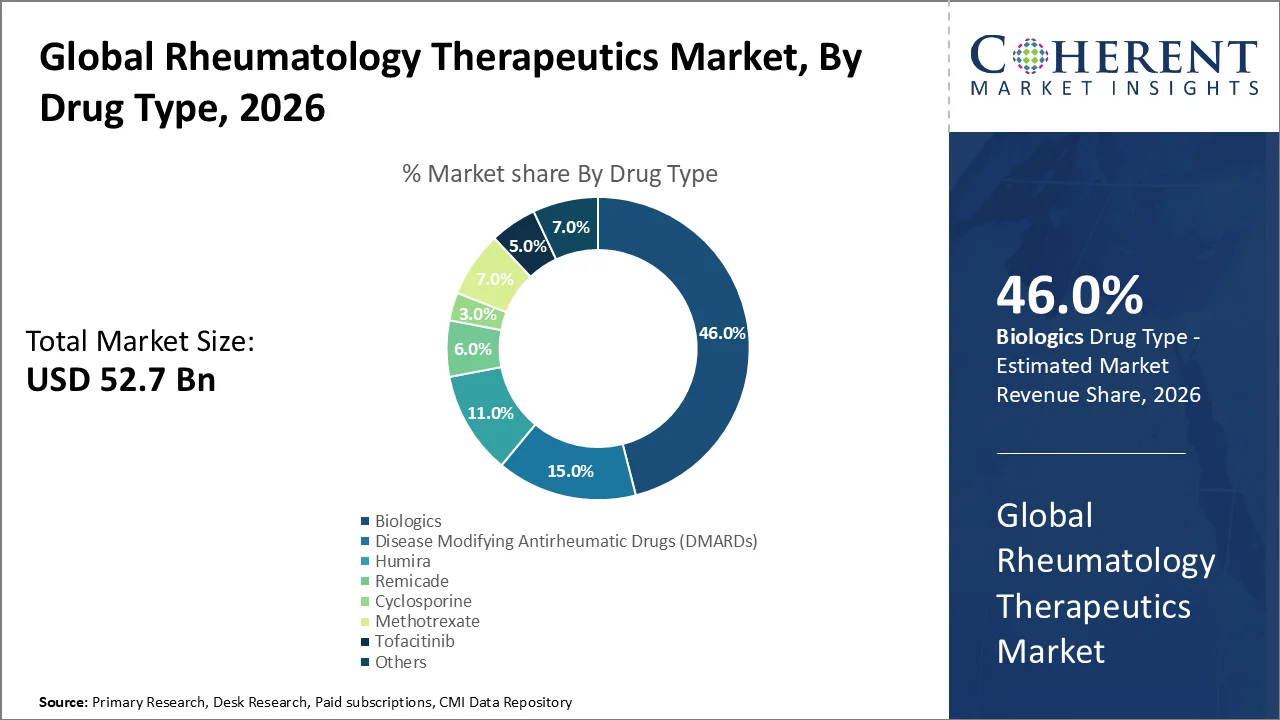
On the basis of drug type, the biologics segment is projected to lead the Rheumatology Therapeutics Market with 46.0% in 2026. The segment’s dominance is owing to the strong clinical adoption of TNF inhibitors and other biologic DMARDs for moderate-to-severe inflammatory rheumatic diseases, their use following inadequate response to conventional treatments, and considerably higher treatment value compared with traditional small-molecule DMARDs.
A U.S. study published in 2025 evaluated 17,395 veterans with rheumatoid arthritis who initiated methotrexate and found that 3,259 patients, or approximately 19%, initiated a biologic therapy within the first two years. The findings demonstrate the significant progression of patients from conventional DMARD treatment toward advanced biologic therapies when additional disease control is required.
In May 2026, UCB announced new Phase 3b data for BIMZELX (bimekizumab), an approved biologic therapy for psoriatic arthritis.
Why do Hospitals Hold the Largest Market Share?
On the basis of end user, the hospitals segment is projected to hold the largest Rheumatology Therapeutics Market share of 64.0% in 2026. The segment’s dominance is owing to the concentration of specialist rheumatology consultations, biologic infusion services, treatment initiation, laboratory monitoring, and management of moderate-to-severe or treatment-resistant rheumatic diseases within hospitals and hospital-affiliated outpatient facilities.
In July 2026, the U.S. Health Resources and Services Administration (HRSA) reported that 340B covered entities purchased USD 100.0 billion worth of outpatient drugs in 2025. Of this, disproportionate share hospitals alone accounted for USD 79.24 billion in purchases.
Rheumatology Therapeutics Market Trends
- The increasing shift toward selective oral targeted therapies is changing treatment pathways in inflammatory arthritis. In March 2026, Bristol Myers Squibb received U.S. FDA approval for Sotyktu (deucravacitinib) for adults with active psoriatic arthritis, making it the first TYK2 inhibitor approved for PsA. The approval was supported by two Phase 3 trials involving 670 and 624 patients, respectively. This trend is expanding convenient oral alternatives to injectable biologics and conventional DMARDs.
- Cell-based and deep B-cell-depletion therapies are emerging as a new treatment approach for refractory rheumatic diseases. In May 2026, Artiva Biotherapeutics reported that 71% of evaluable refractory rheumatoid arthritis patients achieved an ACR50 response at six months with AlloNK plus rituximab in its Phase 2a study. The company also reached FDA alignment for a registrational Phase 3 trial involving approximately 150 refractory RA patients, highlighting the movement of cell therapy concepts into rheumatology.
- The integration of rheumatology treatment with management of obesity and related comorbidities is becoming an important therapeutic trend. In January 2026, Eli Lilly reported that 31.7% of patients receiving Taltz plus Zepbound achieved both ACR50 and at least 10% weight reduction, compared with only 0.8% receiving Taltz alone in the Phase 3b TOGETHER-PsA study.
Regional Insights
North America Dominates Owing to High Adoption of Advanced Therapies and Strong Pharmaceutical R&D
The North America region is projected to account for 42.0% of the Rheumatology Therapeutics Market share in 2026. The region’s dominance is owing to the high utilization of biologics and targeted therapies, established reimbursement infrastructure, strong presence of innovative pharmaceutical companies, and continued investment in rheumatology research and drug development.
The commercial scale of advanced rheumatology therapies remains substantial in the region. On August 4, 2026, Amgen reported that Enbrel (etanercept) generated USD 580 million in sales during Q2 2026. Enbrel is extensively used in rheumatoid arthritis, psoriatic arthritis, and ankylosing spondylitis.
In February 2026, the American College of Rheumatology reported that U.S. fiscal-year funding included USD 48.7 billion for the National Institutes of Health, an increase of USD 415 million, along with the reinstatement of USD 10 million specifically for arthritis research within the Department of Defense Congressionally Directed Medical Research Program.
Asia Pacific Rheumatology Therapeutics Market Trends
Asia Pacific is expected to be the fastest-growing region in the Rheumatology Therapeutics Market over 2026–2033. The region’s growth is owing to its expanding rheumatoid arthritis patient population, improving diagnosis and treatment rates, increasing adoption of biologics and biosimilars, and growing pharmaceutical commercialization across China, India, Japan, South Korea, and Australia.
In May 2026 study published in the International Journal of Rheumatic Diseases assessing 27 Asia Pacific countries and territories found that the age-standardized incidence of rheumatoid arthritis increased from 10.0 to 11.6 per 100,000 population, with a projected rate of 12.1 per 100,000 in 2025. The analysis further indicated that China, India, and Indonesia together could account for around 70% of new rheumatoid arthritis cases in the region, creating a substantial addressable population for long-term therapeutic treatment.
Strong Advanced-Therapy Pipeline and Biopharmaceutical Investment is Supporting the Rheumatology Therapeutics Market in the United States
The U.S. Rheumatology Therapeutics Market is witnessing sustained demand owing to the high utilization of biologics and targeted therapies, continued investment in autoimmune drug discovery, and expansion of treatment options for rheumatoid arthritis, psoriatic arthritis, osteoarthritis, and other inflammatory rheumatic diseases.
In December 2025, Pfizer and Adaptive Biotechnologies entered into agreements to advance immune-mediated disease research, including rheumatoid arthritis. Under the rheumatoid arthritis collaboration, Adaptive is eligible to receive up to USD 890 million through upfront and development, regulatory, and commercial milestone payments.
China Rheumatology Therapeutics Market Trends
China is expected to witness strong growth in the Rheumatology Therapeutics Market over the forecast period. The growth is owing to its large rheumatoid arthritis patient population, increasing availability of domestically developed biologics and biosimilars, improving regulatory pathways for innovative medicines, and expanding use of targeted therapies for rheumatoid arthritis, psoriatic arthritis, and axial spondyloarthritis.
In June 2026, CSPC Pharmaceutical Group announced that China's NMPA accepted the marketing authorization application for its secukinumab injection, developed as a biosimilar therapeutic biological product. Secukinumab targets IL-17A, a cytokine involved in inflammatory diseases including psoriatic arthritis and axial spondyloarthritis.
Who are the Major Companies in Rheumatology Therapeutics Industry
Some of the major key players in Rheumatology Therapeutics Market are AstraZeneca, Rigel pharma, Abbott Laboratories, Pfizer, Amgen, Janssen Biotech, Merck Co. Inc., Eli Lily, and Alder Biopharmaceuticals.
Key News
- In April 2026, AstraZeneca announced U.S. FDA approval of the SAPHNELO (anifrolumab-fnia) Pen for once-weekly subcutaneous self-administration in adults with moderate-to-severe systemic lupus erythematosus (SLE) receiving standard therapy.
- In June 2026, Amgen announced new clinical and real-world evidence across autoimmune and inflammatory diseases at EULAR 2026. This included long-term Phase III MITIGATE data for UPLIZNA (inebilizumab) in IgG4-related disease and real-world evidence for TAVNEOS (avacopan) in ANCA-associated vasculitis, including evidence related to reduced steroid use.
Market Report Scope
Rheumatology Therapeutics Market Report Coverage
| Report Coverage | Details | ||
|---|---|---|---|
| Base Year: | 2025 | Market Size in 2026: | USD 52.7 Bn |
| Historical Data for: | 2020 To 2024 | Forecast Period: | 2026 To 2033 |
| Forecast Period 2026 to 2033 CAGR: | 2.6% | 2033 Value Projection: | USD 63.1 Bn |
| Geographies covered: |
| ||
| Segments covered: |
| ||
| Companies covered: | AstraZeneca, Rigel pharma, Abbott Laboratories, Pfizer, Amgen, Janssen Biotech, Merck Co. Inc., Eli Lily, and Alder Biopharmaceuticals. | ||
| Growth Drivers: |
| ||
| Restraints & Challenges: |
| ||
Analyst Opinion
- The Rheumatology Therapeutics Market is increasingly moving beyond established rheumatoid arthritis and psoriatic arthritis therapies toward targeted treatments for underserved rheumatic diseases. In June 2026, Novartis reported that Cosentyx achieved sustained remission in 41.2% of patients receiving 300 mg and 40.6% receiving 150 mg, compared with 20.4% for placebo, in the Phase III REPLENISH study for polymyalgia rheumatica.
- Immune-reset and cell-based therapies could become an important long-term disruption in difficult-to-treat rheumatology. In June 2026, Kyverna Therapeutics reported Phase I data for miv-cel CAR-T therapy in treatment-refractory rheumatoid arthritis. All six patients had previously failed a median of 6.5 biologic or targeted synthetic DMARDs, while 66.6% achieved an ACR70 response by Week 36 following a single treatment. The Phase II portion is already fully enrolled.
- The market’s long-term commercial potential remains strong, but specialist availability will be an important constraint on diagnosis, treatment initiation, and advanced therapy uptake. In August 2025, the American College of Rheumatology projected that U.S. demand for rheumatology care could exceed supply by more than 4,700 physicians by 2030. The same organization noted that eight U.S. states currently have no pediatric rheumatologists.
Speak to the analyst
Want personalized insights?
Take the findings above to one of our principal consultants, or have the report rebuilt around the segments, geographies and competitors you actually track.
Market Segmentation
- By Disease Type (Revenue, USD Bn, 2021-2033)
- Osteoarthritis
- Ankylosing spondylitis
- Rheumatoid arthritis
- Gout
- Psoriatic arthritis
- Reactive arthritis
- Fibromyalgia
- Scleroderma
- Others
- By Drug Type (Revenue, USD Bn, 2021-2033)
- Disease Modifying Antirheumatic Drugs (DMAD’s)
- Humira
- Remicade
- Cyclosporine
- Methotrexate
- Biologics
- Tofacitinib
- Others
- By End User (Revenue, USD Bn, 2021-2033)
- Hospitals
- Medical clinics
- By Region (Revenue, USD Bn, 2021-2033)
- North America
- U.S.
- Canada
- Latin America
- Brazil
- Mexico
- Argentina
- Rest of Latin America
- Europe
- Germany
- U.K.
- France
- Italy
- Spain
- Russia
- Rest of Europe
- Asia Pacific
- China
- India
- Japan
- Australia
- South Korea
- ASEAN
- Rest of Asia Pacific
- Middle East
- GCC
- Israel
- Rest of Middle East
- Africa
- South Africa
- Central Africa
- North Africa
- North America
Sources
Primary Research Interviews
- Rheumatologists and clinical immunologists
- Hospital pharmacy directors and specialty pharmacy professionals
- Clinical investigators involved in rheumatology drug trials
- Medical affairs and R&D professionals from pharmaceutical companies
- Biologics and biosimilar manufacturers
- Hospital procurement and formulary decision-makers
- Payers and reimbursement specialists
- Key opinion leaders (KOLs) in rheumatoid arthritis and autoimmune diseases
Databases
- U.S. Food and Drug Administration (FDA)
- European Medicines Agency (EMA)
- ClinicalTrials.gov
- World Health Organization (WHO)
- Centers for Disease Control and Prevention (CDC)
- National Institutes of Health (NIH)
- Centers for Medicare & Medicaid Services (CMS)
- Organisation for Economic Co-operation and Development (OECD)
Magazines
- The Rheumatologist
- Rheumatology Advisor
- Healio Rheumatology
- Pharmaceutical Technology
- BioPharma Dive
- Drug Discovery & Development
Journals
- Arthritis & Rheumatology
- Annals of the Rheumatic Diseases
- The Lancet Rheumatology
- Nature Reviews Rheumatology
- Rheumatology
- The Journal of Rheumatology
- Arthritis Research & Therapy
Newspapers
- The Wall Street Journal
- Financial Times
- Reuters
- The New York Times
- The Guardian
- The Economic Times
Associations
- American College of Rheumatology (ACR)
- European Alliance of Associations for Rheumatology (EULAR)
- Arthritis Foundation
- International League of Associations for Rheumatology (ILAR)
- British Society for Rheumatology (BSR)Asia Pacific League of Associations for
- Rheumatology (APLAR)
Public Domain Sources
- Company Annual Reports and Investor Presentations
- Pharmaceutical Company Pipeline and Clinical Development Updates
- FDA and EMA Drug Approval Databases
- Clinical Trial Registries and Study Results
- Government Healthcare and Pharmaceutical Expenditure Publications
- National Rheumatology Treatment Guidelines
- Peer-reviewed Epidemiology and Treatment Studies
- Patent Databases such as WIPO, USPTO, and Google Patents
- Public Drug Pricing and Reimbursement Databases
Proprietary Elements
- CMI Data Analytics Tool
- Proprietary CMI Existing Repository of Information for the Last 10 Years
Get access to 250+ pages report
Every segment, forecast, competitor profile and data table behind the analysis above — available for instant download.
- ESOMAR Member
- ISO 9001:2015 Certified
- D-U-N-S Registered
- GDPR & CCPA Compliant
Missing comfort of reading report in your local language? Find your preferred language:
Transform your Strategy with Exclusive Trending Reports
Frequently Asked Questions
The Rheumatology Therapeutics Market is expected to reach USD 63.1 Bn in 2033, increasing from USD 52.7 Bn in 2026.
Major players operating in the Rheumatology Therapeutics Market include AstraZeneca, Rigel Pharma, Abbott Laboratories, Pfizer, Amgen, Janssen Biotech, Merck & Co. Inc., Eli Lilly, and Alder Biopharmaceuticals.
The high treatment cost of biologics and targeted therapies and stringent regulatory approval requirements are among the major factors hampering market growth.
The increasing prevalence of rheumatoid arthritis and other chronic rheumatic diseases, along with the growing adoption of biologics and targeted therapies, is boosting demand for rheumatology therapeutics.
The Rheumatology Therapeutics Market is anticipated to grow at a CAGR of 2.6% between 2026 and 2033.
Among regions, North America is projected to account for the largest market share of approximately 42.0% in 2026, owing to strong adoption of biologics and targeted therapies, established reimbursement infrastructure, and active rheumatology drug development.
Asia Pacific is expected to be the fastest-growing region during 2026–2033, supported by an expanding rheumatoid arthritis patient population, improving diagnosis and treatment access, and increasing adoption of biologics and biosimilars.